
Reviewed · MEXICO CITY
Culinary Secrets of the Centro Histórico
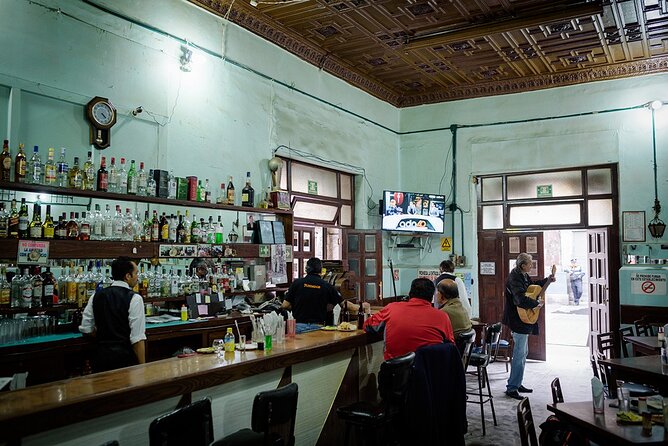
Mexico City’s Centro Histórico is best understood one bite at a time. This small-group walk links tacos, sweets, fresh juice, coffee, lunch, and mezcal with colonial buildings, murals, old neighborhoods, and stories that explain why the food tastes the way it does. You are not simply checking off restaurants. You are learning how the city eats.
I especially like the maximum group size of seven, which gives you room to ask questions and follow a guide through narrow streets and busy food stops. I also like the unusual mix of places: street stalls, markets, traditional restaurants, higher-end dining rooms, and even a food stop connected with a museum. The main drawback is the pace. This is a long walking day, sometimes close to six hours and roughly 7 kilometers, so good shoes and a strong appetite matter.
In This Review
- Key points at a glance
- Why this Centro Histórico food walk works
- Starting with coffee and Plaza de Santo Domingo
- The Justo Sierra Synagogue adds a different story
- Palacio de Minería between tacos and sweets
- House of Tiles and the art of a short stop
- Following the Camino Real de Tierra Adentro
- What you are likely to eat
- Small group size and walking demands
- Is $140 a good value?
- Who should book this experience?
- Booking, meeting point, and cancellation details
- Should you book Culinary Secrets of the Centro Histórico?
- FAQ
- How long does Culinary Secrets of the Centro Histórico last?
- Where does the tour start and end?
- What food and drinks are included?
- Is the tour vegan friendly?
- How many people can join the tour?
- Can I cancel for a full refund?
Key points at a glance
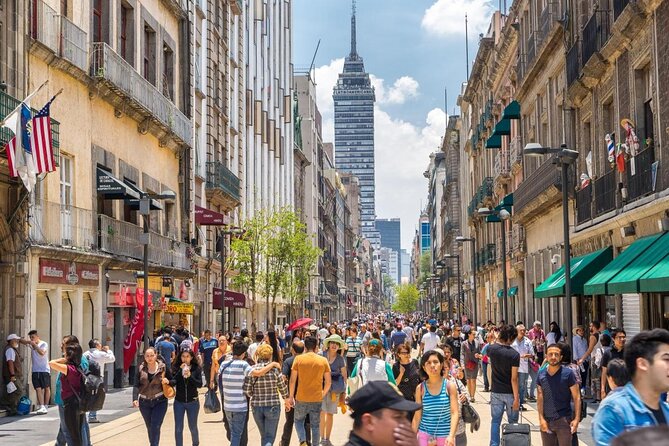
- A food tour with real range: Expect breakfast, coffee, tacos, sweets, juices, lunch, and possibly a mezcal tasting, with food served in settings that range from street stalls to restaurants.
- Only seven people maximum: The small group makes it easier to hear the guide, share food, and make quick turns into less obvious places.
- The Centro Histórico becomes the classroom: Plaza de Santo Domingo, Palacio de Minería, the House of Tiles, and the Camino Real de Tierra Adentro add context between tastings.
- The Justo Sierra Synagogue is a memorable cultural stop: It offers a different view of Mexico City’s past and adds depth beyond the usual central plaza circuit.
- Plan for a full stomach: The pacing spreads the food across the walk, but you may not need dinner afterward.
- Guides make a major difference: Ana, Victor, Liz, Raul, and Ignacio, also called Nacho, have led this experience, with each bringing a personal mix of food knowledge, local stories, humor, and historical detail.
Why this Centro Histórico food walk works
Many Mexico City food tours stay close to the obvious: a famous market, a few tacos, and a quick explanation of the Zócalo. This one takes a broader view. Food is the thread, but the setting is the Centro Histórico itself, where streets, churches, palaces, businesses, and public squares reveal how the city changed over time.
The strongest part of the experience is the connection between what you eat and where you are. A taco is not treated as a quick snack. A sweet, juice, or regional dish becomes a way to talk about ingredients, preparation, trade, migration, and daily life. That makes the tour useful even if you already know Mexican food.
The guides are central to the experience. Ana has been praised for combining food and cultural insight with a lively approach. Victor is noted for his enthusiasm and for keeping the tastings well spaced. Liz is a Mexico City native who brings local familiarity and detailed stories about food, murals, the Revolution, and the city’s neighborhoods. Ignacio, or Nacho, links ingredients and cooking methods with nearby art and city artifacts. Raul has led an upbeat outing that included street food, history, art, and mezcal.
The guide assigned to your departure may differ, so you should not book this expecting one particular person. Still, the repeated pattern is clear: the guide is not there just to point out the next plate. You get someone who interprets the city as you walk.
Other Mexico City days people book alongside this one:
- Teotihuacan, Guadalupe Shrine & Tlatelolco Day Tour with Lunch
★ 5.0 · 11,603 reviews - Xochimilco, Coyoacan and Frida Kahlo with Optional Lunch
★ 4.5 · 7,320 reviews - Balloon flight + Breakfast in cave + Pyramids + Pick up CDMX.
★ 5.0 · 6,335 reviews
Starting with coffee and Plaza de Santo Domingo
The meeting point is Café La Blanca, at Avenida 5 de Mayo No. 40. This gives the outing a practical beginning: you meet in the Centro Histórico and start with breakfast and coffee before the day’s walking gathers speed.
Plaza de Santo Domingo is the first major setting. It is a useful place to get your bearings, but the point is not simply to admire a square. The guide uses it as a launch point for the food route and for the first layer of local history. From here, you move through the old center in search of places that do not usually appear in standard guidebooks.
The food is served in stages rather than all at once. That matters. You might begin with breakfast, coffee, or tea, then move on to savory bites, sweets, and juice. This rhythm gives you time to walk between portions and keeps the experience from becoming one long restaurant meal.
Do not arrive after a large breakfast. The included food is substantial, and the day is designed as a sequence of tastings. At the same time, do not arrive expecting a light snack walk. The food can add up quickly.
The Justo Sierra Synagogue adds a different story
The stop at Justo Sierra Synagogue is one of the most distinctive parts of the route. It is described as one of the oldest synagogues in Mexico City, giving the tour a cultural angle that many food walks miss.
This stop changes the pace. After moving through food stalls and central streets, you pause for a site connected with Jewish life in Mexico City. That broader view is valuable because the Centro Histórico has never been shaped by one tradition alone. Food, commerce, migration, religion, and neighborhood life overlap here.
The synagogue has also been singled out as a highlight of the day. I can see why. A food tour can easily become a parade of dishes, but this stop gives the route a moment of reflection. It reminds you that the city’s identity is built from many communities and layers.
Because the tour combines indoor and outdoor stops, wear clothing that works for a long day on foot. The exact amount of time at each location can vary, but the planned visit is about an hour.
Palacio de Minería between tacos and sweets
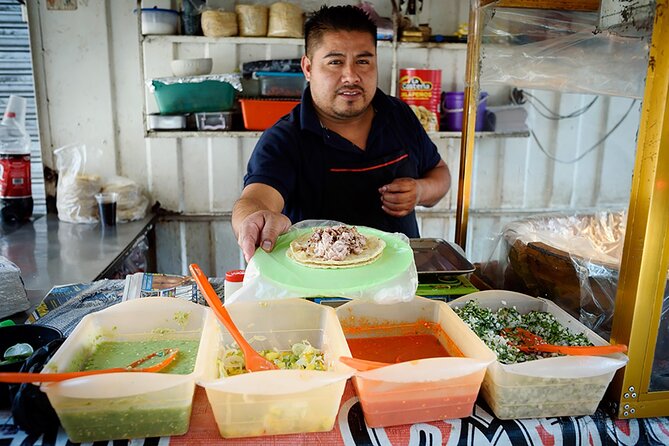
Palacio de Minería is one of the colonial-era buildings used to break up the food stops. The building itself gives the guide a chance to talk about the city’s architecture and past while you continue through the central district.
The timing is smart. You may be moving between tacos, sweets, and freshly squeezed juices, then pause at a grand old building. Food becomes easier to appreciate when you are not rushing from one plate to the next. The walk also lets you notice the contrast between formal architecture and everyday street life.
A key strength of this tour is that you are not expected to choose between food and sightseeing. You get both, but neither is reduced to a quick photo opportunity. The guide can point out details in the surrounding streets and explain how the area fits into Mexico City’s larger story.
That said, the architecture is part of the experience rather than a full interior tour of every building. If your main goal is museum admission and extended time inside historic sites, a dedicated architecture tour would suit you better. Here, the buildings support the food narrative.
A completely different day out, same corner of Mexico City:
- Teotihuacan pyramids morning or afternoon without tourist traps
★ 5.0 · 6,186 reviews - Teotihuacan Early Access Guided Tour with optional Lunch
★ 4.5 · 6,138 reviews - Balloon flight + pick up in CDMX + Breakfast in Cave + Pyramids
★ 5.0 · 5,651 reviews - Balloon Flight + Cave Breakfast + Pick Up from CDMX or We Fly
★ 5.0 · 4,410 reviews
House of Tiles and the art of a short stop
The House of Tiles, or Casa de los Azulejos, is among the Centro Histórico’s most recognizable buildings. Its tiled exterior makes it an easy visual highlight, and the stop also includes another food tasting.
The planned visit lasts about 45 minutes. That is enough time to take in the building, hear its place in the neighborhood, and enjoy the food connection without turning the day into a formal architectural lecture.
This is a good example of the tour’s overall design. You are rarely asked to look at a landmark in isolation. Instead, a building becomes part of a moving story, with a bite or drink nearby. The result feels more like exploring a neighborhood with a well-informed local than following a rigid list of monuments.
Bring a phone with space for photographs, but keep it in its place when the guide is speaking. The small group makes conversation possible, and the best parts of the walk are often the explanations that connect an ordinary-looking food stop with a much larger story.
Following the Camino Real de Tierra Adentro
The Camino Real de Tierra Adentro adds historical scale to the outing. During the colonial period, this route served as a staging ground for journeys reaching as far as what is now New Mexico.
That detail helps explain why Mexico City’s old center was more than a collection of handsome buildings. It was tied to long-distance movement, trade, administration, and the flow of goods and people across a huge territory. Food fits naturally into this story because ingredients, cooking habits, and commercial routes all depend on movement.
The scheduled stop is about 30 minutes, so expect a focused explanation rather than an extended historical presentation. For me, that is the right balance on a food walk. You get enough context to understand the place, then return to the city’s streets and kitchens.
The route also includes references to art and murals. One outing included less obvious murals connected with the Revolution and food. These details are exactly why a guide can add value in the Centro Histórico. You might walk past a wall or building without realizing what it says about the city.
What you are likely to eat
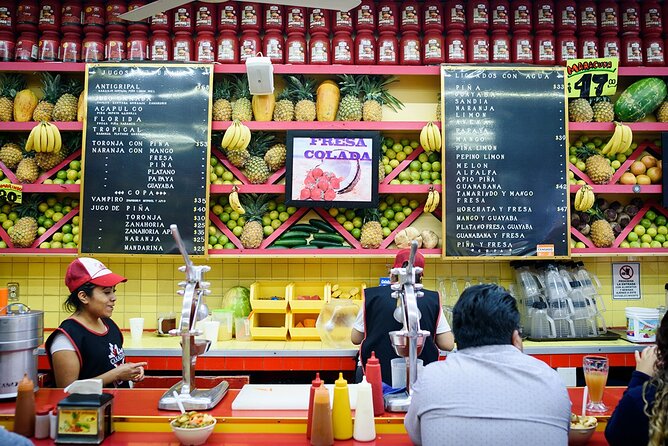
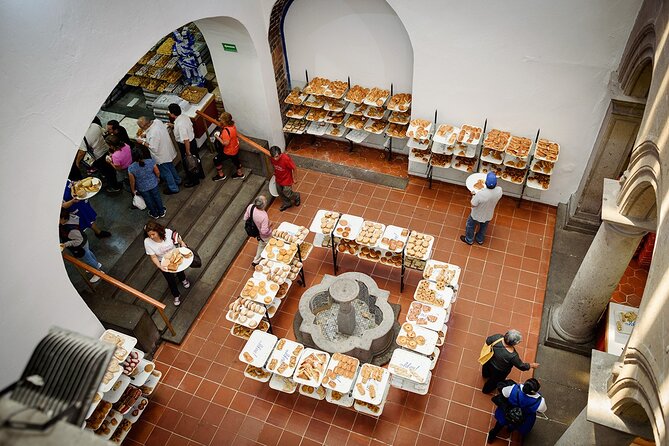
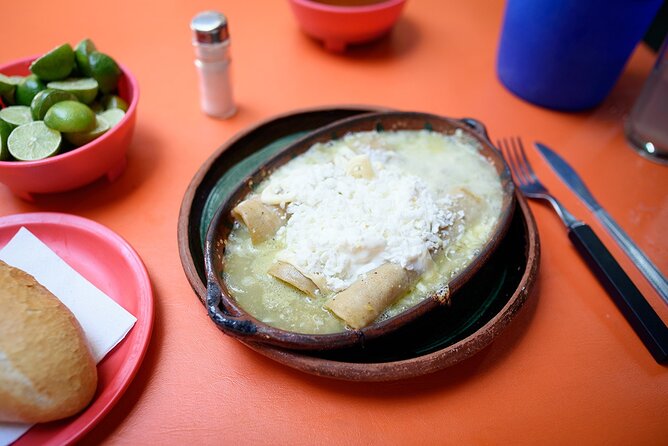
The food lineup is broad rather than tied to one dish. Included items can cover breakfast, brunch, lunch, snacks, coffee or tea, and alcoholic drinks. The descriptions of the route include tacos, enchiladas, sweets, fresh juices, and mezcal, with stops at street vendors, food markets, traditional restaurants, and more polished dining rooms.
The variety is the point. You are not paying for one large meal. You are paying to sample many kinds of food in the places where those foods make sense. A street stall offers a different lesson from a sit-down restaurant. A market shows you ingredients and daily commerce. A sweet or juice gives your palate a break from savory dishes.
Portions appear to be paced carefully. One account describes eating a great deal without feeling ill or excessively full at the end, while another simply warns that there is so much food. Both points are useful. You will be well fed, but the total depends on the day’s stops and your appetite.
A mezcal tasting may be part of the finish. It has been described as a fun ending, and it gives the day a final taste of Mexico’s drinking culture. Alcoholic beverages are included, but the experience is not suitable for someone seeking a dry tour unless you are comfortable declining those pours.
The tour is specifically not vegan friendly. If you are vegan, this is not the right choice. The supplied information does not provide a full allergy or substitution policy, so you should ask the operator before booking if you have strict dietary requirements.
Small group size and walking demands
A maximum of seven people is a real advantage in the Centro Histórico. The guide can explain a mural without shouting, answer questions as they come up, and move the group through food counters more easily than a large busload.
Small groups also help with the social side of eating. Shared tastings are more relaxed when you are sitting or standing with only a few people. The experience suits couples, friends, and families who want interaction rather than a distant lecture.
The tradeoff is the walking. One description puts the distance at about 7 kilometers, and the outing can run close to six hours even though the advertised duration is approximately five hours. Most people can participate, but you should be ready for a full day on your feet.
Wear comfortable shoes. Keep water with you unless the guide provides it, and avoid scheduling another demanding activity immediately afterward. You may finish near Plaza Manuel Tolsá, at Tacuba 8, which is a useful central endpoint but not the same place where you started.
The route uses public streets and traditional eateries, not a controlled attraction. That is part of the charm, but it also means the day may have small pauses, crowds, or changes in timing. Go with a little flexibility.
Is $140 a good value?
At $140 per person, this is not a cheap way to grab lunch in Mexico City. You could eat individual tacos, drinks, and sweets for far less if you already know where to go.
The value comes from the combination. You receive several food categories, coffee or tea, lunch or brunch-style portions, alcoholic drinks, a small group, and a guide who provides the route and interpretation. You also get access to places you might not locate through ordinary online searches, including traditional eateries that are not aimed at the tourist trade.
For a first visit to Mexico City, the price can make sense because it compresses a great deal of orientation into one day. You learn where the Centro Histórico’s food culture sits within the city, then you can return to the areas and dishes that caught your attention.
For a repeat visitor who already has favorite stalls and restaurants, the decision depends on your interest in context. If you want new places, local stories, and a guided walk through the center, the price is easier to justify. If you mainly want the lowest possible food cost, book individual meals instead.
The 99 percent recommendation rate and 5-star rating from 257 ratings suggest very strong satisfaction, but I would still read the practical details carefully. The tour is food-heavy, walking-heavy, and not vegan friendly. Those factors matter more than the headline rating.
Who should book this experience?
I would recommend it to you if you want Mexican food explained within its city setting. It is especially good for first-time visitors who feel overwhelmed by Mexico City’s size and want a guided introduction to the Centro Histórico.
It also suits people who enjoy history but do not want to spend five hours inside museums. The synagogue, Palacio de Minería, House of Tiles, Camino Real de Tierra Adentro, murals, and colonial buildings give you plenty of cultural content without separating it from lunch.
Food-focused couples and friends are a natural fit. Families can participate too, provided everyone is comfortable with the walking and the long schedule. A group of only four on one outing allowed especially easy conversation with the guide, which is one of the benefits of the seven-person limit.
I would hesitate if you dislike eating several times in one day, have limited mobility, need a vegan menu, or prefer a short activity with a fixed finish. The route is flexible by nature, and the day can last longer than the approximate five-hour description.
Booking, meeting point, and cancellation details
The tour is offered in English and uses a mobile ticket. Confirmation normally arrives at booking, though a reservation made within one day of departure is confirmed as soon as possible and depends on availability.
You meet at Café La Blanca, Avenida 5 de Mayo No. 40, in the Centro Histórico. The walk ends at Plaza Manuel Tolsá, C. de Tacuba 8. Both points are near public transportation, but you should check the route from your hotel before the start time.
Service animals are allowed, and most people can participate. The group has a maximum of seven people. Free cancellation is available up to 24 hours before the start time for a full refund. A cancellation made inside that window is not refunded, and changes are not accepted inside 24 hours.
The activity requires good weather and a minimum number of participants. If the operator cancels for either reason, you can choose another date or experience, or receive a full refund.
Should you book Culinary Secrets of the Centro Histórico?
Book it if you want a full day of eating, walking, and learning rather than a simple list of taco stops. The strongest reasons are the small group, the broad food range, the Justo Sierra Synagogue, and guides such as Ana, Victor, Liz, Raul, and Nacho who make the city’s food and past part of one story.
Skip it if your priorities are vegan food, minimal walking, or the lowest-cost meal possible. For everyone else, $140 buys more than lunch. It buys a carefully guided introduction to the Centro Histórico, with enough food to replace dinner and enough local context to change how you see the streets afterward.
FAQ
How long does Culinary Secrets of the Centro Histórico last?
The advertised duration is approximately five hours. Some descriptions of the outing indicate that it can run close to six hours, so you should keep much of the day free.
Where does the tour start and end?
The tour starts at Café La Blanca, Avenida 5 de Mayo No. 40, Centro Histórico. It ends at Plaza Manuel Tolsá, C. de Tacuba 8, in the Centro Histórico.
What food and drinks are included?
Included items are snacks, coffee or tea, alcoholic beverages, lunch, brunch, and breakfast. Food mentioned for the route includes tacos, sweets, fresh juices, and other freshly prepared Mexican dishes.
Is the tour vegan friendly?
No. The experience is specifically listed as not vegan friendly.
How many people can join the tour?
The maximum group size is seven participants.
Can I cancel for a full refund?
Yes. You can cancel at least 24 hours before the experience start time for a full refund. Cancellations or changes made less than 24 hours before the start time are not accepted for a refund.
Just added around Mexico City
- Mexico City: Hop-on Hop-off City Tour by Turibus 2-Day Pass★ 4.0 · 10 reviews
- Anthropology Museum, Chapultepec Castle & Cable Car Tour★ 4.5 · 10 reviews
- Multi-Variety Mole Class in a Condesa home or art gallery rooftop★ 5.0 · 10 reviews
- PRIVATE TOUR Colonial Town Taxco and Cuernavaca from CDMX.★ 5.0 · 10 reviews
- El Centro Street Food Walking Tour★ 5.0 · 10 reviews
- Private Round-Trip Transportation to Teotihuacan Pyramids★ 5.0 · 10 reviews
- Teotihuacan and My Grandma’s Food Tour★ 5.0 · 10 reviews
- Private Walking Tour Legends and Events Historic Center CDMX★ 4.8 · 10 reviews