
Reviewed · CYCLING TOURS
Mexico City: 19 City Highlights Bicycle Tour
Mexico City reveals itself quickly from a bicycle. In three to four hours, you ride from Roma Sur through Chapultepec, Reforma, the Historic Center, and Roma Norte, covering more than 10 miles while stopping at 19 major sights. Yibran and Daniela lead the ride, and their husband-and-wife teamwork gives the group a friendly, well-managed feel.
I like the small maximum of 10 people, which makes it easier to ask questions and stay together. I also like the practical extras: the guides take photos and send a short video afterward, so you can keep your phone in your pocket while riding.
The main thing to consider is the length. The cycling is generally easy, but three to four hours in the saddle can feel tiring, especially if you arrive without water or food. The tour suits you best if you have basic bike skills and moderate fitness.
In This Review
- Key points at a glance
- Why this bike tour works as a first look at Mexico City
- Starting in Roma Sur with quality bikes
- Chapultepec brings park, castle, and museum together
- Reforma’s monuments come one after another
- Bellas Artes and the Zócalo provide the big city scenes
- Templo Mayor adds the city’s ancient layer
- The Monument to the Revolution completes the central route
- Sunday changes the feel of the ride
- Safety, pace, and the physical effort
- Photos, video, and local suggestions add real value
- Who should book this Mexico City bicycle tour?
- Should you book it?
- FAQ
- How long does the Mexico City bicycle tour last?
- How many sights does the tour visit?
- Where does the tour begin?
- Where does the tour end?
- Is the tour offered in English?
- How many people can join the tour?
- Do I need strong cycling ability?
- Are museum admissions or guided interior visits included?
- Is Sunday a good day to take the tour?
- What happens if bad weather cancels the tour?
Key points at a glance
- Nineteen sights in one ride: Cover Chapultepec, the Angel of Independence, Bellas Artes, the Zócalo, Templo Mayor, the Monument to the Revolution, and more.
- Best on Sunday: Major roads close to cars, creating a lively open-street ride filled with cyclists, runners, and skaters.
- A small, personal group: The tour accepts no more than 10 people, with two guides helping manage the ride.
- Photos and a video included: Yibran and Daniela capture the experience while you concentrate on cycling.
- A strong first-day activity: You get a quick sense of Mexico City’s neighborhoods and can choose where to return on foot.
- Bring water and plan for distance: The route is not technically hard, but it is long enough to require sensible preparation.
Why this bike tour works as a first look at Mexico City
Mexico City can feel enormous at ground level. Its museums, parks, plazas, monuments, and neighborhoods spread across a wide area, and moving between them by car can take time. This tour gives you a useful first map of the city without trapping you in a vehicle.
You ride through several distinct parts of central Mexico City in one outing. Roma Sur and Roma Norte provide the neighborhood setting, Chapultepec gives you a huge urban park, Reforma supplies grand monuments, and the Historic Center brings you to the city’s most important public squares and buildings.
I would book this early in your stay. After the ride, you will know which places deserve a longer visit. You may decide to return to the National Museum of Anthropology, spend more time around the Zócalo, or explore Roma Norte over dinner.
The guides add a social touch without making the experience feel like a large group outing. Yibran usually takes the lead, while Daniela helps from behind the group and watches the riders. That second pair of eyes matters in a city where traffic and intersections can make cycling feel more complicated than it first appears.
More bike days around Mexico City:
- Frida Kahlo VIP [Museum Tickets Included] Bike, Markets & Churros
★ 5.0 · 1,072 reviews - Mexico bike tour
★ 5.0 · 407 reviews - Mexico City: 19 City Highlights Bicycle Tour
★ 5.0 · 302 reviews
Starting in Roma Sur with quality bikes
The meeting point is at Jalapa 272 in Roma Sur, near public transportation. The ride finishes at Coahuila and Calle Orizaba in Roma Norte, so you do not return to the starting point. Keep that in mind when planning your next activity.
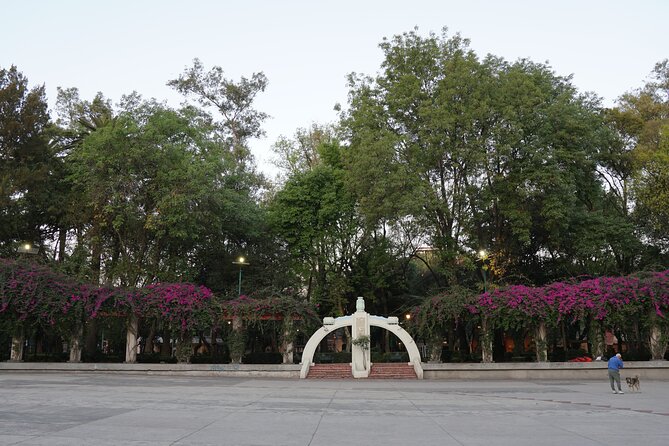
The route begins with Parque México, one of the city’s favorite green spaces. You spend about 10 minutes here, enough to see its design and hear why it matters to local life. It is a gentle start before the route moves toward larger monuments and busier roads.
The bikes receive unusually strong praise, and that is important on a ride of this length. A poor bicycle can turn a pleasant city tour into hard work. Here, the equipment is described as high quality, and riders with basic cycling ability generally find the route manageable.
You should still treat this as an active half-day, not a quick sightseeing loop. Bring your own water, and plan to eat before or after the ride. The guides check on bathroom, food, and water needs, but your own bottle remains the simplest choice.
Chapultepec brings park, castle, and museum together
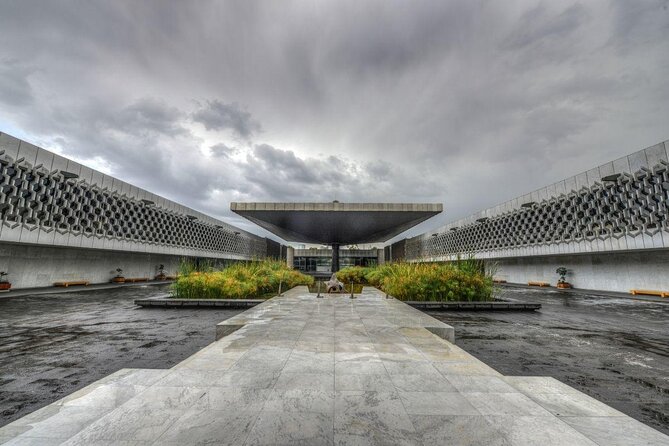
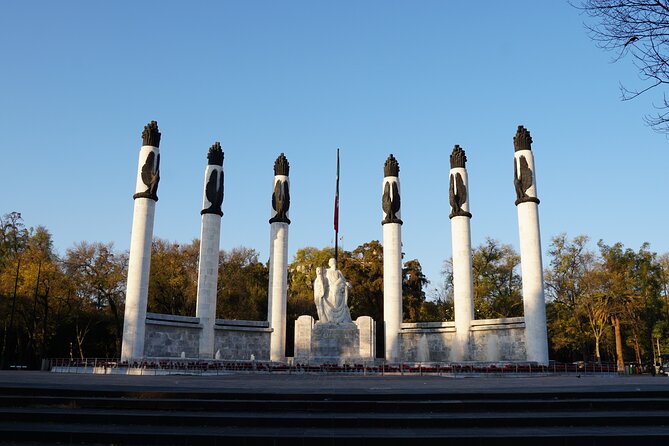
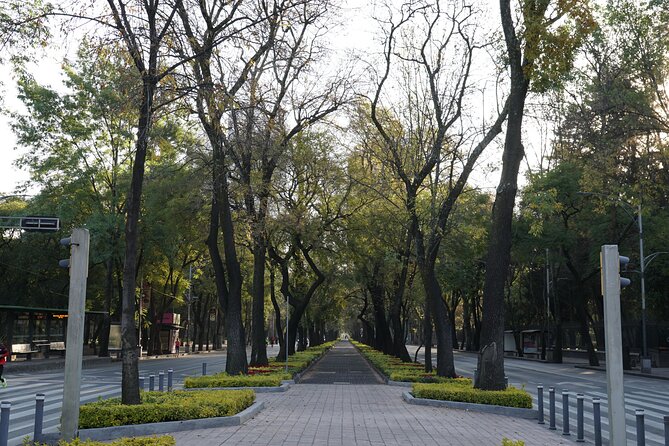
The ride continues to Chapultepec, one of Mexico City’s most important public spaces and one of the largest urban parks in the world. You spend roughly 15 minutes in the Bosque de Chapultepec, then stop for views of Chapultepec Castle.
The castle is a highlight even when you do not go inside. You learn some of its background and see its hilltop position, but this stop is not a guided visit. The same limit applies to the National Museum of Anthropology. You observe the building and hear a short explanation, but museum admission and a full museum tour are not part of the experience.
That distinction is useful. The museum deserves several hours on its own, especially if you want to understand Mexico’s many ancient cultures. This bicycle tour simply helps you identify it and decide if you want to return later.
The park section gives the ride a welcome change of pace. Instead of moving from one monument to another, you get open space, trees, and a sense of how central Chapultepec is to city life. The stop is short, so you should not expect a long park walk or time inside the castle.
Reforma’s monuments come one after another
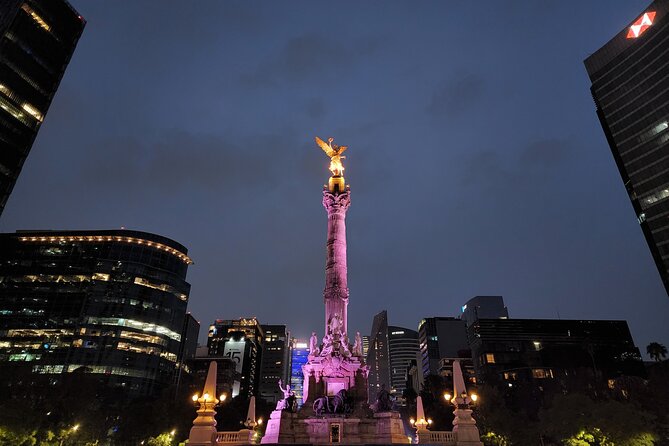
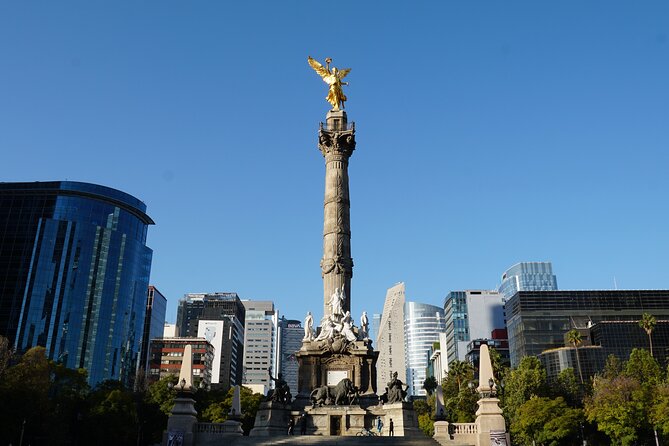
From Chapultepec, the route reaches the grand avenue of Paseo de la Reforma. The Angel of Independence is the best-known stop here, and the golden winged figure is one of Mexico City’s defining symbols.
You spend about 10 minutes at the monument. That is enough for photos and an explanation, but not enough for a detailed architectural study. Along the way, you also see the monument connected with the Bicentennial of National Independence.
This part of the ride shows why a bicycle is useful. Reforma is a long ceremonial avenue with major monuments spaced along it. Walking between all of them would take much longer, while a vehicle would give you less time to absorb the street and its public spaces.
The route then continues toward the Hemiciclo a Juárez, a white marble monument honoring former President Benito Juárez. You also pass one of the city’s older parks and several emblematic buildings before reaching Bellas Artes.
The stop-by-stop format keeps the ride moving. You get a series of short explanations rather than one long lecture. If you want a detailed account of Mexican politics, architecture, or archaeology, you will need separate museum visits. If you want a clear first orientation, the pace works well.
A completely different day out, same corner of Mexico City:
- Teotihuacan, Guadalupe Shrine & Tlatelolco Day Tour with Lunch
★ 5.0 · 11,603 reviews - Xochimilco, Coyoacan and Frida Kahlo with Optional Lunch
★ 4.5 · 7,320 reviews - Balloon flight + Breakfast in cave + Pyramids + Pick up CDMX.
★ 5.0 · 6,335 reviews - Teotihuacan pyramids morning or afternoon without tourist traps
★ 5.0 · 6,186 reviews
Bellas Artes and the Zócalo provide the big city scenes
The Palacio de Bellas Artes is one of the essential Mexico City sights. Its domed roof and pale exterior make it instantly recognizable, and the building represents the city’s long connection with music, theater, dance, and fine art.
The visit here lasts about 10 minutes. You see the exterior and learn about its role, but this is not an indoor museum tour. I would mark Bellas Artes as a place to revisit if you have time, since the short bicycle stop can only introduce it.
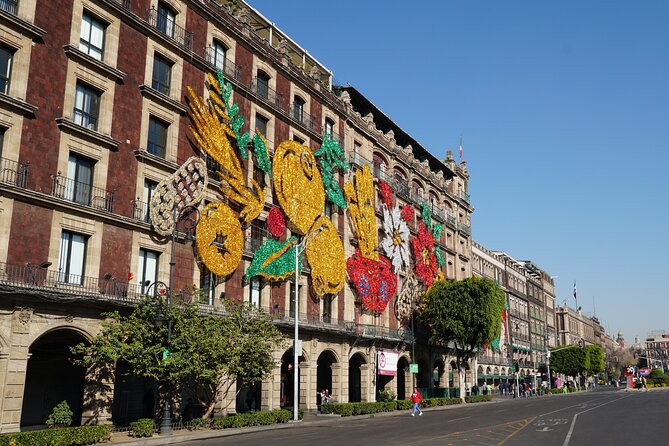
Next comes the Zócalo, officially Plaza de la Constitución. This is the central square of Mexico City, surrounded by the Historic Center’s major buildings and public spaces. The scale changes sharply from neighborhood streets and parks to a huge civic plaza.
The Zócalo is one of the most useful orientation points in the city. From here, you can later return on foot to explore the cathedral, surrounding streets, shops, and food spots at a slower pace. The bicycle tour gives you the setting, not a full walking tour of every nearby sight.
That difference matters when you decide what to book. This experience is designed to show you many places and explain their role. It is not designed to replace museum admissions, long interior visits, or a detailed walking tour.
Templo Mayor adds the city’s ancient layer
The Museo del Templo Mayor and its archaeological area provide a sharp contrast to Bellas Artes and the modern avenues. Here, the route points you toward the remains of the Aztec ceremonial center beneath the present-day Historic Center.
You get a short explanation and time to look at the site from outside. The stop does not include a guided museum visit or a full archaeological tour. If ancient Mexico is a major reason for your trip, set aside separate time for the museum.
Still, the stop is valuable because it shows how many layers occupy the same part of the city. Modern government buildings, colonial streets, Catholic landmarks, and pre-Hispanic remains all sit close together. A bicycle helps connect those places in a way that a list of isolated attractions cannot.
The tour does not try to make every stop long. Instead, it gives you enough context to recognize the place and return with a better plan. That is a good trade for a first-day overview.
The Monument to the Revolution completes the central route
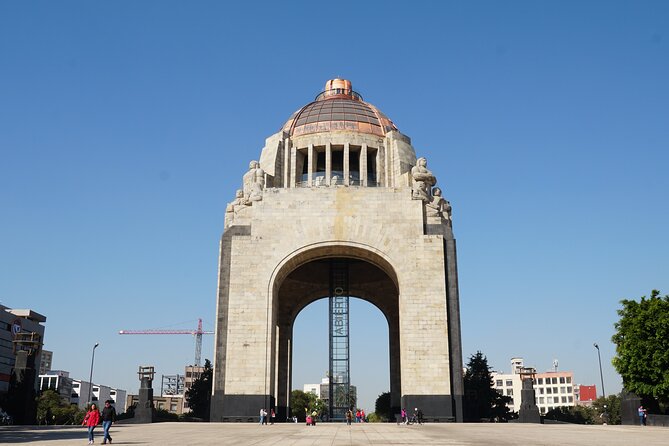
The Monument to the Revolution is another major architectural stop. It commemorates the Mexican Revolution and gives the route a final large-scale landmark before the ride heads back toward Roma Norte.
Like several other stops, this is an exterior visit rather than a guided indoor tour. You get about 10 minutes to see it, take photos, and hear its story. The monument works well near the end because it keeps the focus on the city’s public history.
The route then passes through a representative park in Roma Norte before ending at Coahuila and Calle Orizaba. Finishing in Roma Norte is convenient if you plan to eat or continue exploring the neighborhood, though you should remember that the drop-off is different from the start.
The ending also gives the tour a practical shape. You do not simply return to the same block. You finish in another part of a neighborhood known for cafés, restaurants, and city walks, with fresh suggestions from the guides about where to eat and drink.
Sunday changes the feel of the ride
If your schedule allows, choose Sunday. Several roads close to car traffic, and the route becomes part of a much larger open-street scene. You may see people cycling, running, rollerblading, and enjoying the city without the usual flow of vehicles.
This is not just a small convenience. Car-free streets make the ride feel calmer and more social, especially along major avenues. It also makes photo stops easier and can help first-time riders feel more at ease.
Sunday can bring crowds of its own, so do not expect an empty road. The benefit is that the crowd is made up of people using the streets for recreation rather than cars moving through them. For many riders, that becomes one of the most memorable parts of the morning.
An early start has another advantage. The group can see major sights before they become more crowded, and you finish around lunchtime. That leaves the afternoon free for a museum, a meal, or a return visit to one of the places you saw from the bike.
Safety, pace, and the physical effort
The tour has a maximum of 10 people, and two guides help keep the group together. Yibran leads, while Daniela follows and helps monitor traffic and rider safety. The guides also make regular checks for bathroom, food, and water needs.
The route is described as easy riding rather than technically difficult. You do not need advanced cycling ability, but you should be comfortable riding for several hours. The distance can exceed 10 miles, so the challenge is mainly duration, not steep climbs or complicated cycling.
Some riders may find the tour tiring even if the pace feels relaxed. I would not schedule a demanding afternoon immediately afterward. If you have children, the experience has worked for families with teenagers, including ages 13 and 15, but you should judge your own group’s stamina.
The tour is offered in English. The guides have also helped groups that included Spanish speakers and people who did not speak Spanish, so mixed-language couples can take part together.
Photos, video, and local suggestions add real value
The guides take photos during the ride and send them afterward. They also provide a short video of the experience. This solves a real problem: stopping to use your phone at every monument can distract you from the ride and create a safety concern.
The food advice is another useful part of the experience. At the end, Yibran and Daniela share suggestions for restaurants, drinks, and places to visit. Several riders used the tour as a way to choose where to spend the rest of their trip, and one couple even booked the company’s food tour afterward.
At $71.53 per person, the price is not the cheapest way to see Mexico City’s monuments. But you are paying for a three to four hour guided route, bicycle equipment, a small group, two guides, safety support, photos, a video, and local planning help.
The value is strongest if you are new to the city and want a broad first look. It is weaker if you prefer slow museum visits, dislike long rides, or already know the central sights well. You should also remember that the listed stops do not include guided interior visits or museum admission.
Confirmation arrives when you book, and the experience is covered by free cancellation up to 24 hours before the start time. It requires good weather. If poor weather cancels the ride, you can take another date or receive a full refund.
Who should book this Mexico City bicycle tour?
I would choose this tour for a first or second day in Mexico City, especially if you like active sightseeing and want to understand how the central neighborhoods fit together. It is also a good match for solo visitors, couples, families with older children, and anyone who prefers a personal guide to a large bus.
You should have basic bike skills and moderate fitness. Bring water, eat beforehand, and allow for a long morning. Sunday is the best choice if you want car-free roads and a more festive city ride.
I would skip it if your priority is spending serious time inside Chapultepec Castle, the Anthropology Museum, Bellas Artes, or Templo Mayor. Those places need their own visits. This tour is about coverage, context, and movement.
Should you book it?
Yes, if you want a friendly, active orientation to Mexico City and can handle several hours on a bicycle. The combination of 19 landmarks, a 10-person limit, two attentive guides, good bikes, and photo follow-up gives the tour more practical value than a simple ride between monuments.
Book it early in your trip, and choose Sunday if possible. You will finish with a better sense of where to return, what to eat, and how the city’s main districts connect. Just do not mistake a fast, wide-angle introduction for a series of full museum tours.
FAQ
How long does the Mexico City bicycle tour last?
The experience lasts approximately three to four hours.
How many sights does the tour visit?
The tour covers 19 Mexico City highlights, including parks, monuments, museums, archaeological sites, the Zócalo, and major buildings.
Where does the tour begin?
It begins at Jalapa 272, Centro Urbano Presidente Juárez, Roma Sur, Cuauhtémoc, Mexico City.
Where does the tour end?
The ride ends at Coahuila and Calle Orizaba in Roma Norte.
Is the tour offered in English?
Yes. The tour is offered in English.
How many people can join the tour?
The maximum group size is 10 people.
Do I need strong cycling ability?
You should have basic bike skills and a moderate level of physical fitness. The route is generally described as easy to ride, but it can cover more than 10 miles and last several hours.
Are museum admissions or guided interior visits included?
No. Stops at Chapultepec Castle, the National Museum of Anthropology, Museo del Templo Mayor, and the Monument to the Revolution are not guided interior visits. The tour provides exterior viewing and explanations.
Is Sunday a good day to take the tour?
Yes. On Sundays, some roads close to car traffic, allowing people to cycle, run, and skate more freely. This can make the ride more relaxed and enjoyable.
What happens if bad weather cancels the tour?
You will be offered another date or a full refund if the experience is canceled because of poor weather. You can also cancel for a full refund up to 24 hours before the start time.
Just added around Mexico City
- Mexico City: Hop-on Hop-off City Tour by Turibus 2-Day Pass★ 4.0 · 10 reviews
- Anthropology Museum, Chapultepec Castle & Cable Car Tour★ 4.5 · 10 reviews
- Multi-Variety Mole Class in a Condesa home or art gallery rooftop★ 5.0 · 10 reviews
- PRIVATE TOUR Colonial Town Taxco and Cuernavaca from CDMX.★ 5.0 · 10 reviews
- Private Round-Trip Transportation to Teotihuacan Pyramids★ 5.0 · 10 reviews
- Teotihuacan and My Grandma’s Food Tour★ 5.0 · 10 reviews
- El Centro Street Food Walking Tour★ 5.0 · 10 reviews
- Private Walking Tour Legends and Events Historic Center CDMX★ 4.8 · 10 reviews
Cycling Tours, compared.
![Frida Kahlo VIP [Museum Tickets Included] Bike, Markets & Churros](https://9.mexicocityexplorer.com/wp-content/uploads/frida-kahlo-vip-museum-tickets-included-bike-markets-churros-400x300.jpg)
Frida Kahlo VIP [Museum Tickets Included] Bike, Markets & Churros
Read our review →
Mexico City E-Bike Tour with a taco and churros stop
Read our review →
Mexico City; ART NACO : Murals & Street Art Bike Tour
Read our review →
Mexico City Highlights E-Bike Tour With Foodie Stops
Read our review →
Street Food Bike Tour / Mexico is not only Tacos / All Inclusive
Read our review →Browse the lists this tour appears in