

Reviewed · MEXICO CITY
Mexico City: Jewish Presence
Mexico City’s Jewish story begins in a difficult place: the shadow of the Spanish Inquisition, where early Jewish arrivals faced persecution and death. This 3.5-hour walk connects that painful past to a living community, taking you from the Aztec Great Temple and Catholic Cathedral to old synagogues in the Loreto district.
I like the unusual historical range, stretching from 1519 to the 20th century, and the chance to enter one of Mexico City’s oldest synagogues. I also like the focus on documents, buildings, and proven facts. Carlos, the named guide, is praised for answering questions carefully and linking Mexican Jewish history with wider world events.
The main drawback is the pace. You cover several historic sites in three and a half hours, with much of the value coming through spoken explanation. The route is not suitable for wheelchair users, people with mobility impairments, or children under 18, and one recent booking had a serious no-show problem, so confirm the meeting details before setting out.
In This Review
- Key points at a glance
- Starting beside the Great Aztec Temple
- The Cathedral and Mexico’s religious crossroads
- San Ildefonso and the changing Mexican state
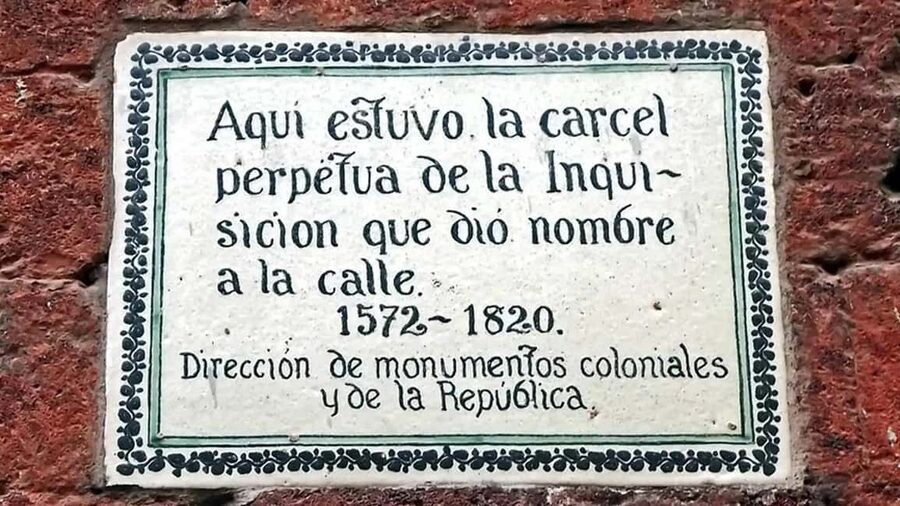
- The Palace of the Inquisition and hidden evidence
- Loreto Park and the oldest Jewish buildings
- From sewing rooms to financial power
- Mexico, anti-Fascist resistance, and World War II
- How much value do you get for $89?
- Who should book this experience?
- Should you book the Jewish Presence tour?
- FAQ
- How long does the Jewish Presence experience last?
- What language is the tour in?
- Where is the meeting point?
- Does the tour include a synagogue visit?
- Is the tour suitable for children or wheelchair users?
- What should I bring and what is not allowed?
Key points at a glance
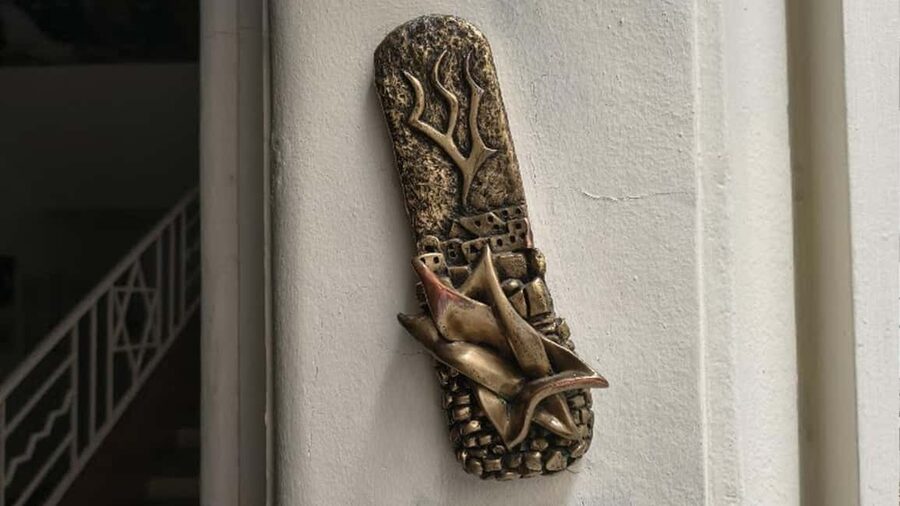
- Start beside the Aztec Great Temple: The opening talk places Jewish history inside Mexico City’s older Indigenous and colonial story.
- See the city’s religious crossroads: The route passes the Metropolitan Cathedral, a Historical Synagogue, and a Protestant church.
- Enter an old synagogue: The Loreto Park area reveals the second wave of Jewish immigration and includes a guided synagogue visit.
- Follow Jewish economic life: Learn how tailors and seamstresses helped build textile and jewelry businesses tied to Mexico’s financial growth.
- Hear the wartime story: The tour covers Mexico’s rescue of Jews during World War II and resistance to an anti-Semitic convention.
- Plan for a walking history lesson: Wear sturdy shoes, bring sun protection, and expect a serious, information-heavy experience.
Starting beside the Great Aztec Temple
Meet outside the white building at República de Argentina 15, across Justo Sierra Street from the northern entrance to the bridge over the Aztec Great Temple. The meeting point is under the main door marked number 15. Look for the full Librería Porrúa sign above the tallest entrance.
This detail matters. You do not meet inside the bookstore, on the corner, or at another doorway. Mexico City’s historic center has many entrances and plenty of street activity, so arriving a little early gives you time to identify the correct door without a rushed start.
The first stop is Patio Norte, where the guide gives a sitting-down introduction to the founding of Mexico City about 700 years ago. From here, you begin to see the city as several eras stacked together: the Aztec capital, the Spanish colonial center, the modern Mexican state, and the Jewish community that developed within all three.
That setting gives the tour its strongest idea. Jewish history in Mexico is not treated as an isolated subject. You learn how Jewish arrivals, religious control, trade, immigration law, political reform, and urban growth affected one another.
Other Mexico City days people book alongside this one:
- Teotihuacan, Guadalupe Shrine & Tlatelolco Day Tour with Lunch
★ 5.0 · 11,603 reviews - Xochimilco, Coyoacan and Frida Kahlo with Optional Lunch
★ 4.5 · 7,320 reviews - Balloon flight + Breakfast in cave + Pyramids + Pick up CDMX.
★ 5.0 · 6,335 reviews
The Cathedral and Mexico’s religious crossroads
The route continues to the Catedral Metropolitana de México, with about 45 minutes set aside for the visit. The Cathedral helps explain the power of the Catholic Church during the colonial period and gives context for the pressure placed on people whose faith did not fit official religious rules.
Nearby, the route also brings together the Historical Synagogue and a Protestant church. That close grouping is useful because it lets you compare the religious forces that shaped the city. The tour is not simply a walk from one Jewish building to another. It asks you to notice how different religious communities occupied the same central streets at different times.
The Cathedral stop may be less directly Jewish than the synagogue visit, but it supplies the political and religious background needed for the rest of the walk. You hear about Jewish arrivals in 1519 and the tragic fate that awaited many under the Inquisition, including executions at the stake.
Expect serious subject matter here. This is not a light architectural stroll. The tour deals with forced religious conformity, persecution, and the loss of lives. If you prefer history with clear moral and political weight, this section gives the experience its purpose.
San Ildefonso and the changing Mexican state
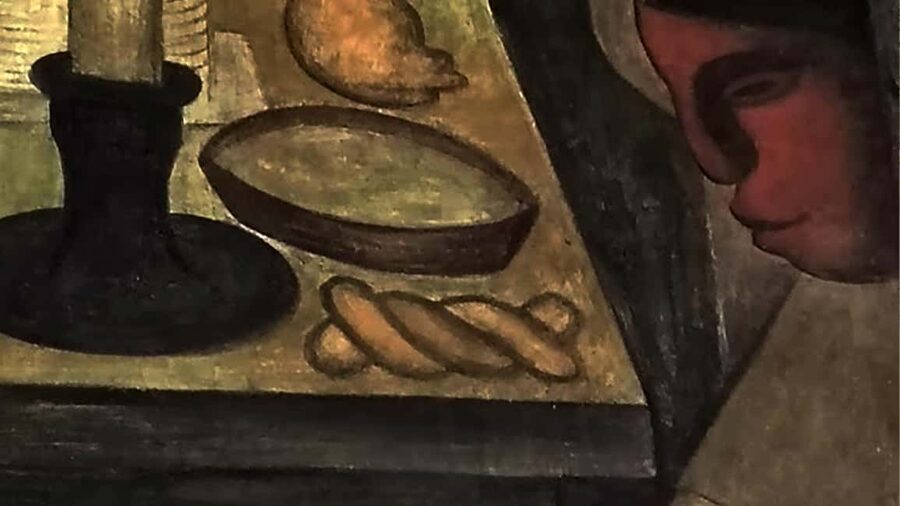
The former College of San Ildefonso receives about 30 minutes. Along with the surrounding historic center, it helps move the story beyond the colonial period and toward the Mexico of reform, civil conflict, and immigration.
The key change is political. The Laws of Reform and the Civil War of Reform helped transform Mexico into a secular state. That shift mattered greatly to Jewish immigrants and other newcomers because it created more room for religious life outside the control of the Catholic Church.
You also hear about the rise of Mexico City as the economic center of the Spanish Empire. The discussion reaches beyond Mexico itself, covering an empire that ruled territories in Asia, North America, and the Caribbean. The Central Customs House and the Palace of the Inquisition serve as physical settings for this part of the story.
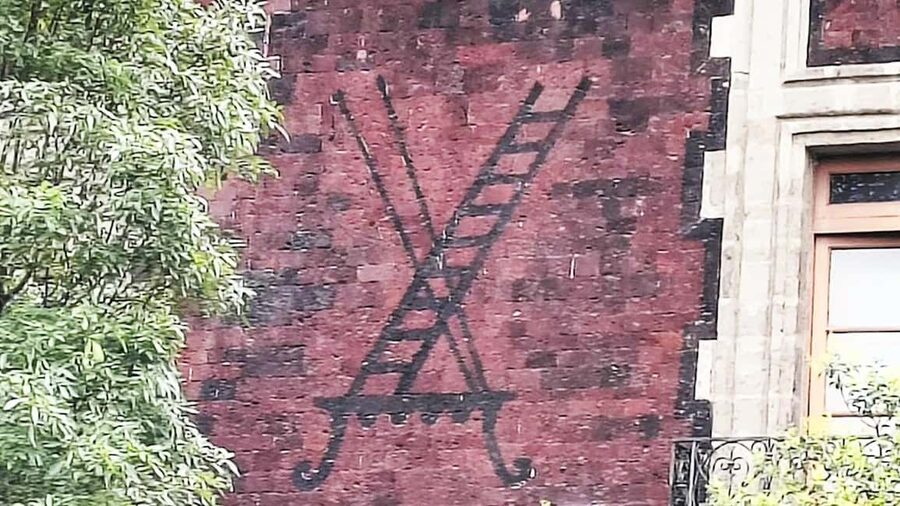
The economic angle is especially useful. Jewish people were often tied to trade, and the tour explains how commercial activity brought both opportunity and suspicion. At the Palace of the Inquisition, you learn about hidden messages connected to the persecution of Jews, mainly those involved in trading.
This is where Carlos’s teaching style appears most important. The strongest praise connected with the tour points to his command of Jewish and world history, his use of proven facts, and his willingness to answer questions. You should come ready to ask how local events fit into larger patterns, since the material reaches well beyond Mexico City.
The Palace of the Inquisition and hidden evidence
The Antiguo Palacio de la Santa Inquisición receives another 45-minute visit. Its importance is not just architectural. It is a place where the tour explains how religious authority could shape law, trade, identity, and personal safety.
The mention of hidden messages is one of the more unusual details in the experience. Rather than treating persecution as an abstract chapter, the guide points to evidence connected with the building and its use. That can make the history easier to grasp, though the subject remains grim.
You should also expect some connections to be made through explanation rather than through large displays. The tour’s value depends heavily on the guide’s ability to set each site in context. If you want a museum-style visit with extensive labels and free time, this may feel more structured and lecture-like. If you want someone to connect scattered buildings into one story, that format works well.
Because the route includes several religious and colonial sites, some entrances may have their own rules. Food and drinks, drones, flash photography, weapons, sharp objects, vaping, bikes, skateboards, and skates are not allowed. Assistance dogs are allowed, but other pets are not.
A completely different day out, same corner of Mexico City:
- Teotihuacan pyramids morning or afternoon without tourist traps
★ 5.0 · 6,186 reviews - Teotihuacan Early Access Guided Tour with optional Lunch
★ 4.5 · 6,138 reviews - Balloon flight + pick up in CDMX + Breakfast in Cave + Pyramids
★ 5.0 · 5,651 reviews - Balloon Flight + Cave Breakfast + Pick Up from CDMX or We Fly
★ 5.0 · 4,410 reviews
Loreto Park and the oldest Jewish buildings
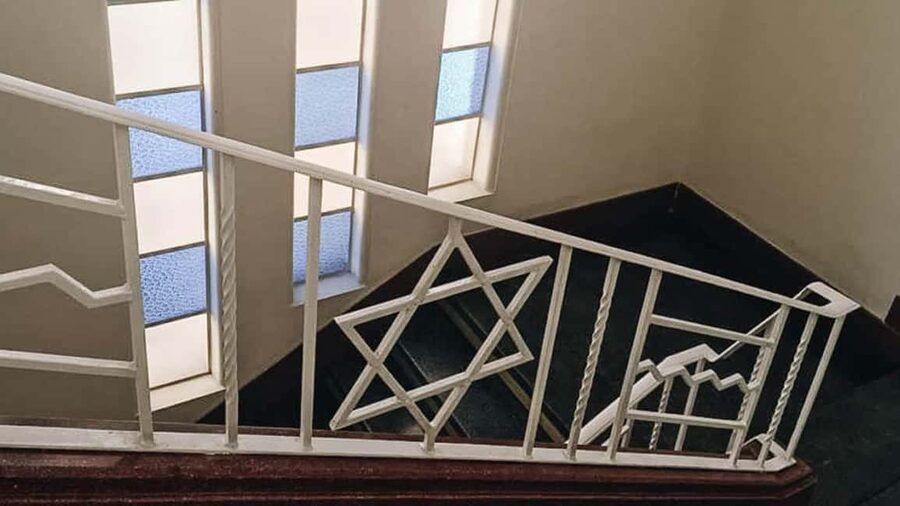
The walk reaches Loreto Park, where a second wave of Jewish immigrants settled near the end of the 19th century. These arrivals came from Eastern Europe and the Ottoman Empire, along with people who were not accepted at Ellis Island.
This detail gives the tour a strong immigration story. Mexico was not simply a destination chosen by one unified group. Jewish arrivals came from different regions, languages, and social backgrounds. Their shared religious identity did not erase the different routes that brought them to Mexico City.
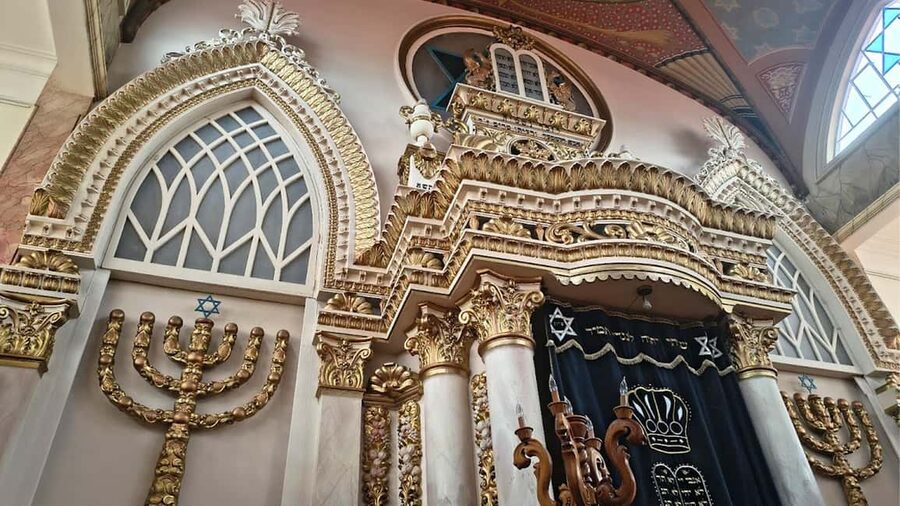
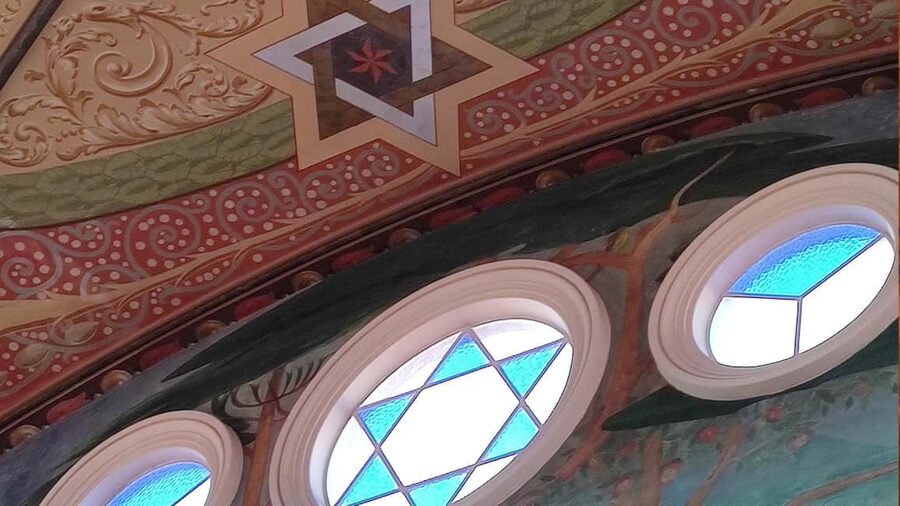
Around Loreto Park, you see two of the oldest synagogues in the city and enter one for a guided visit. This is likely the most personal part of the experience. A synagogue is not only a historic shell. It shows how families built community institutions, worshipped together, and kept a distinct identity while adapting to a new country.
The visit also gives you a break from the broader political story. After hearing about empire, law, persecution, and immigration, you see where daily religious life took place. The setting helps make the Jewish community feel like a group of people building homes, businesses, and institutions, rather than only a subject in a history lesson.
The synagogue visit is one reason to choose this tour instead of a general Mexico City walking tour. You get access to a religious site that many visitors would not find on their own. Still, the exact synagogue open to the group can depend on access and reservations, since admission is included only for locations that are open and do not require separate tickets or reservations.
From sewing rooms to financial power
The tour follows the community’s economic growth from tailors and seamstresses to the textile and jewelry industries. This is a practical way to understand immigration. New arrivals often begin with skills they can use quickly, then build businesses that create work and capital.
Here, you learn how Jewish capital helped shape Mexico’s financial system. The point is not that one community created the entire economy, but that Jewish entrepreneurs played a meaningful part in industries that became important to Mexico City.
I find this focus valuable because it moves past a narrow account of religious survival. The story includes work, family income, business networks, and social mobility. It also helps explain why Jewish families later moved from the old central neighborhoods to more affluent areas of the city.
The tour does not present progress as simple. Earlier generations faced exclusion and suspicion, while later generations gained enough security and wealth to relocate. That movement changed the old neighborhoods and left the historic synagogues with fewer nearby Jewish families by the 1970s.
Mexico, anti-Fascist resistance, and World War II
The final historical section covers Mexico’s rescue of Jews during World War II. You also learn about anti-Fascist resistance that helped cancel the first anti-Semitic convention.
These events give Mexico a place in the wider story of Jewish survival during the war. The tour links national politics, public resistance, and the choices made by a country receiving immigrants during a period of intense danger.
This section is likely most rewarding if you already know something about the Spanish Inquisition, European immigration, or World War II. If these subjects are new to you, the guide’s explanations help establish the basic sequence, but there is a lot to absorb in a short time.
The route ends at Justo Sierra 71. By then, you have followed three broad waves of Jewish arrival and seen how the community changed from the colonial era to the modern city. The ending also brings the story back to buildings and neighborhoods, especially the old synagogues that were abandoned by many families in the 1970s.
How much value do you get for $89?
At $89 per person, this is not a bargain-priced city walk. The value depends on what you want from a tour.
You are paying for a focused subject, an English-speaking expert, about three and a half hours of guiding, and entry to open private or public locations mentioned along the route. The synagogue access is a meaningful part of that value. So is the guide’s ability to connect Jewish history with Mexico’s Indigenous past, Spanish rule, secular reform, immigration, business, and World War II.
The price makes less sense if you mainly want to admire buildings or take photographs. Much of the experience comes through explanation, and the subject requires concentration. A general historic-center tour may cover more famous sights for less money.
For someone with a strong interest in Jewish history, immigration, religious freedom, or Mexico City’s old center, the focused format can justify the cost. I would think of it as a specialist history walk, not a standard sightseeing tour.
Who should book this experience?
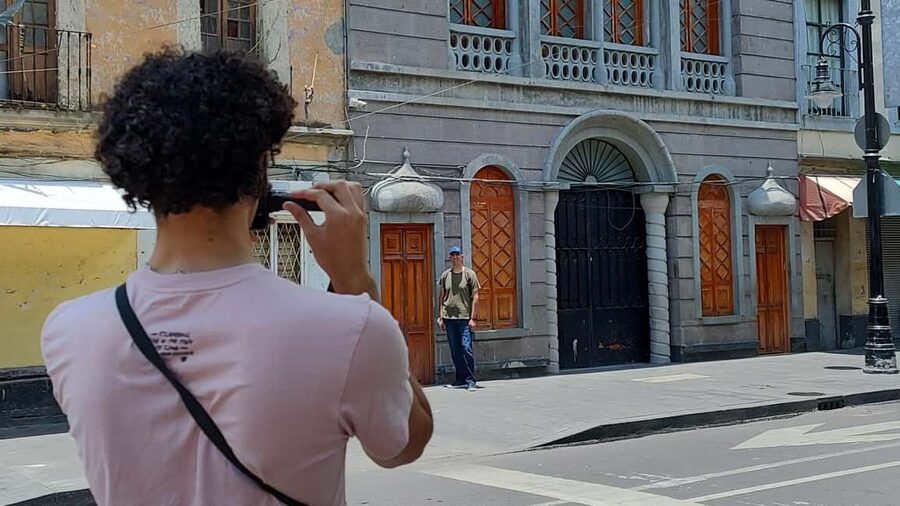
I would recommend it to adults who enjoy detailed history and want to understand how a minority community survived across changing political systems. It suits people interested in Jewish genealogy, immigration stories, religious architecture, and the relationship between business and urban development.
The tour also works well for anyone who has already seen Mexico City’s major central sights and wants a more specific theme. The Cathedral, Aztec Temple, San Ildefonso, and Inquisition Palace are familiar names, but the Jewish connections give them a different meaning.
I would not choose it for young children. The activity is limited to people 18 and older, and the content includes persecution and execution. It is also a poor fit if you need step-free access or have difficulty walking between historic locations.
Wear comfortable closed shoes. Sandals and flip flops are not allowed, and a sun hat and sunscreen are sensible for an outdoor route in the historic center. Bring questions, too. The guide’s strongest praised quality is the ability to handle detailed questions without drifting away from documented facts.
One practical caution deserves attention. A recent booking was disrupted when the guide did not appear or answer the phone. That does not define the experience, which also received several very strong ratings, but it is enough reason to verify the meeting point and contact information before the morning or afternoon begins.
Should you book the Jewish Presence tour?
Book it if you want a serious, focused account of Jewish life in Mexico City, especially one that includes an old synagogue rather than only street-level commentary. The strongest reasons are the unusual subject, Carlos’s praised command of history, and the way the route connects persecution, secular reform, immigration, business, wartime rescue, and neighborhood change.
Skip it if you want a relaxed photo walk, a family activity, or a tour with easy access for mobility devices. At $89, you should be ready to listen closely and walk through difficult history. For the right audience, this is a thoughtful way to see Mexico City’s historic center through a story that many standard tours leave out.
FAQ
How long does the Jewish Presence experience last?
The tour lasts 3.5 hours. Starting times vary, so you need to check availability when booking.
What language is the tour in?
The live guided tour is conducted in English.
Where is the meeting point?
Meet outside the white building at República de Argentina 15, across Justo Sierra Street from the northern entrance to the Aztec Great Temple bridge. Use the main door marked number 15, beneath the full Librería Porrúa sign.
Does the tour include a synagogue visit?
Yes. The route shows two of the oldest synagogues near Loreto Park and includes a guided visit to one of them, when the location is open and does not require a separate reservation or ticket.
Is the tour suitable for children or wheelchair users?
No. The experience is not suitable for children under 18, wheelchair users, or people with mobility impairments.
What should I bring and what is not allowed?
Bring comfortable shoes, a sun hat, and sunscreen. Sandals and flip flops, weapons, sharp objects, food, drinks, drones, vaping devices, bikes, pets other than assistance dogs, flash photography, skateboards, and skates are not allowed.
Just added around Mexico City
- Mexico City: Hop-on Hop-off City Tour by Turibus 2-Day Pass★ 4.0 · 10 reviews
- Anthropology Museum, Chapultepec Castle & Cable Car Tour★ 4.5 · 10 reviews
- Multi-Variety Mole Class in a Condesa home or art gallery rooftop★ 5.0 · 10 reviews
- PRIVATE TOUR Colonial Town Taxco and Cuernavaca from CDMX.★ 5.0 · 10 reviews
- Private Round-Trip Transportation to Teotihuacan Pyramids★ 5.0 · 10 reviews
- Teotihuacan and My Grandma’s Food Tour★ 5.0 · 10 reviews
- El Centro Street Food Walking Tour★ 5.0 · 10 reviews
- Private Walking Tour Legends and Events Historic Center CDMX★ 4.8 · 10 reviews