
Reviewed · MEXICO CITY
Mexico City: Mexico Tram, Iconic Landmarks, and Legends
Mexico City’s historic center packs centuries into a small area, and this 45-minute tram ride gives you a quick, comfortable look at its grandest sights. As you roll past palaces, the Metropolitan Cathedral, and old monuments, a Spanish-speaking guide connects the modern city with Tenochtitlán and the colonial era.
I like the small groups of up to 10 people, which should make the ride feel more personal than a large sightseeing bus. I also like the choice of routes: you can focus on colonial buildings, local legends, or a broad introduction to the city. The main drawback is simple: the tour is in Spanish, and the meeting point can vary by booking option, so you need to check those details carefully.
In This Review
- Key Points to Know Before You Board
- Why This Short Tram Ride Works in Mexico City
- The Ride Through Mexico City’s Historic Heart
- From Tenochtitlán to Colonial Mexico
- The Metropolitan Cathedral and the Central Monuments
- Choosing a Route That Matches Your Interests
- What a Small Group Changes
- Is $8 a Fair Price for 45 Minutes?
- Timing, Meeting Point, and the One Important Booking Risk
- Who Will Like This Tram Experience Most?
- Practical Tips for Getting More From the Ride
- Should You Book This Mexico City Tram Tour?
- FAQ
- Where does the Mexico City tram tour take place?
- How long is the tram ride?
- How much does the experience cost?
- What language is the tour in?
- What is included in the price?
- How many people are in the group?
- Can I choose a particular type of route?
- Is the activity refundable if I cancel?
Key Points to Know Before You Board
- A 45-minute route through the historic center: You get a compact look at Mexico City’s most important central sights without committing half a day.
- Three possible ways to shape the ride: Routes may focus on colonial heritage, city legends, or a general sightseeing circuit.
- Spanish narration only: The stories and explanations are delivered by a live Spanish-speaking guide.
- Small groups capped at 10 people: This is a better fit for visitors who prefer a quieter ride and a chance to follow the guide’s commentary.
- Major sights viewed from the tram: Expect palaces, the Metropolitan Cathedral, and monuments linked to several eras of Mexican history.
- Good value at $8 per person: The price is modest for guided transportation, though the short duration keeps this an introduction rather than a full historical tour.
Why This Short Tram Ride Works in Mexico City
Mexico City can feel enormous when you first arrive. The historic center alone brings together the remains of ancient Mexico, Spanish colonial power, religious buildings, public monuments, and today’s city life. A tram helps you cover more ground than walking, while still keeping you close to the streets and buildings.
I see this experience as a city orientation with stories attached. You are not simply passing a cathedral and a palace while someone reads out dates. The guide places the sights within a longer story, moving from Tenochtitlán to colonial Mexico and then to the contemporary capital.
That format is useful if you have limited time or want an easy first look before exploring on foot. It is also a reasonable choice after a long arrival day, when your feet are tired but you still want to see the center.
The tradeoff is depth. Forty-five minutes goes by quickly, especially in a historic district with so much to explain. You will see important places and hear selected legends, but you should not expect a complete history lesson or extended time at each monument.
Other Mexico City days people book alongside this one:
- Teotihuacan, Guadalupe Shrine & Tlatelolco Day Tour with Lunch
★ 5.0 · 11,603 reviews - Xochimilco, Coyoacan and Frida Kahlo with Optional Lunch
★ 4.5 · 7,320 reviews - Balloon flight + Breakfast in cave + Pyramids + Pick up CDMX.
★ 5.0 · 6,335 reviews
The Ride Through Mexico City’s Historic Heart
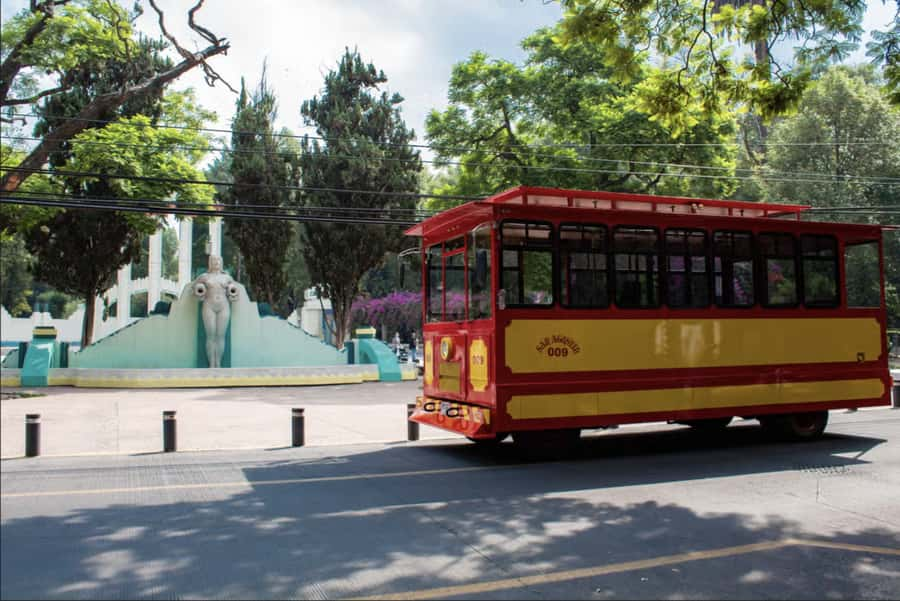
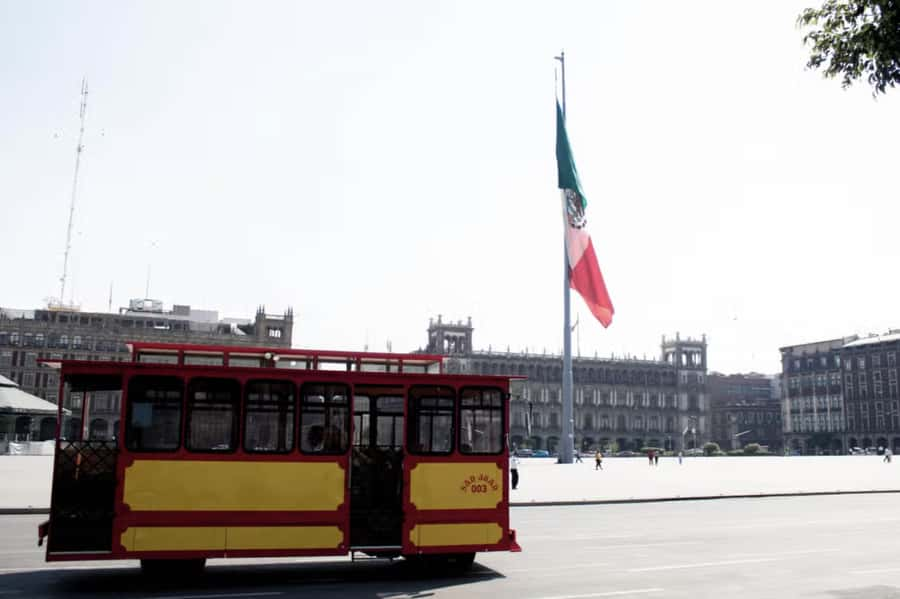
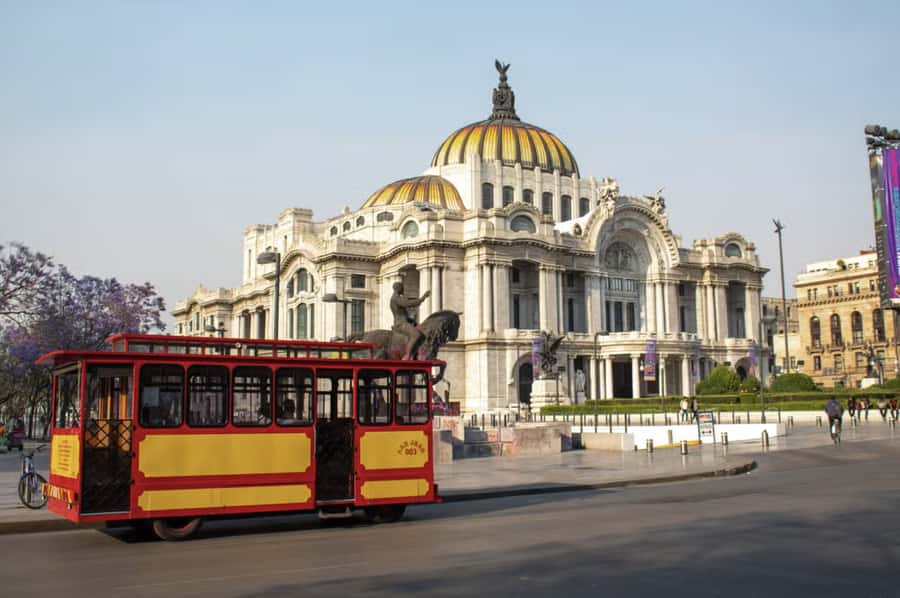
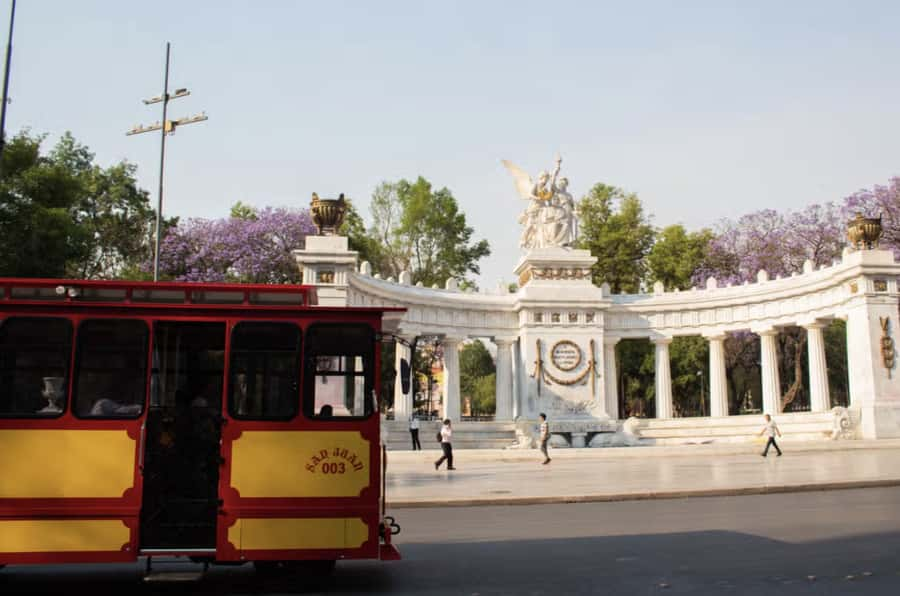
The tram itself is part of the appeal. It is designed to evoke an older Mexico City, giving the sightseeing trip a more characterful feel than standard road transport. You remain seated while the city passes around you, which makes it easier to pay attention to the guide and the buildings.
The route takes you through the historic center, where the most important sights are close together. That matters because a short ride can still show you several major landmarks. You get the broad picture first, then you can decide which buildings deserve a closer visit later.
Do not expect the tram to replace walking. From the vehicle, you will get a useful view of the streets and façades, but you will not have much time to stop, enter buildings, study architectural details, or take your own route through the district.
I would treat the ride as a moving introduction. Keep your eyes open for the large landmarks, listen for names and stories, and make a note of the places you want to revisit independently.
From Tenochtitlán to Colonial Mexico
One of the most valuable parts of the narration is its long time span. The tour links the old world of Tenochtitlán with the colonial city that followed and the modern capital you see today.
That connection gives the buildings more meaning. A palace is not just an impressive façade. A cathedral is not only a place to take a photograph. Each monument belongs to a city that has been rebuilt, reshaped, and reinterpreted over centuries.
The guide also tells legends connected with ancient Mexico. These stories may not provide the same information as a formal museum lecture, but they help explain how a city remembers its past. Legends are often easier to recall than a list of dates, especially when you are seeing the streets at the same time.
Because the live narration is in Spanish, this part works best for you if you understand Spanish comfortably. Some content is presented in its original language, so Spanish is not a minor detail here. If you do not speak the language, you may still enjoy the tram and the architecture, but you will miss a large part of what you are paying for.
The Metropolitan Cathedral and the Central Monuments
The Metropolitan Cathedral is one of the key sights on the route. Its scale and importance make it a natural anchor for a tour of the historic center. Seeing it from the tram gives you an immediate sense of how much religious and civic power was concentrated in this part of the city.
You should think of this as an exterior sightseeing experience. The tour includes views of the cathedral and other monuments, but the information provided does not indicate an interior visit or dedicated time to explore inside.
The same applies to the palaces. Their grand façades help tell the story of colonial and later Mexico City, and the tram lets you see several of these important buildings in one circuit. The benefit is coverage. The drawback is that you may pass before you have absorbed every detail.
If architecture is your main interest, sit where you can look outward clearly and keep your camera ready. The ride is short, and an attractive building can appear and disappear quickly. Still, use the camera as a backup rather than letting it replace your attention. The guide’s explanation is the part you cannot recreate as easily on your own.
A completely different day out, same corner of Mexico City:
- Teotihuacan pyramids morning or afternoon without tourist traps
★ 5.0 · 6,186 reviews - Teotihuacan Early Access Guided Tour with optional Lunch
★ 4.5 · 6,138 reviews - Balloon flight + pick up in CDMX + Breakfast in Cave + Pyramids
★ 5.0 · 5,651 reviews - Balloon Flight + Cave Breakfast + Pick Up from CDMX or We Fly
★ 5.0 · 4,410 reviews
Choosing a Route That Matches Your Interests
The ability to choose among different routes adds useful flexibility. The available themes include the colonial legacy, the city’s legends and secrets, and a more general sightseeing ride.
For a first visit, I would favor the broad historic-center route. It should give you the best sense of how the major sights fit together and help you decide where to spend more time afterward.
If you already know the central landmarks, a route focused on legends may be more appealing. The stories add a different layer to familiar buildings and can make a short ride feel less like a standard monument circuit.
The colonial-focused option suits you if you care most about palaces, historic façades, and the city’s Spanish-era development. It may be less useful if you are hoping for a detailed account of ancient Mexico or a wide tour beyond the central district.
The exact route depends on the option you book. That makes it important to read the route description before paying, especially if one theme matters more to you than the others.
What a Small Group Changes
The group is limited to 10 participants. That is a strong point for a short guided ride because the experience does not need to spend time managing a large crowd.
A small group may also make it easier to hear the Spanish narration and follow the guide’s stories. In a larger vehicle, commentary can become distant or hard to follow. Here, the setting should feel more focused.
One verified booking had only a married couple on the ride, and they praised the attention they received, rating the service very highly. That does not guarantee a private ride for you, but it shows how personal the experience can feel when demand is low.
The smaller format comes with one practical uncertainty: availability may be limited compared with a big hop-on, hop-off operation. Check the available departure time before you plan the rest of your day.
Is $8 a Fair Price for 45 Minutes?
At $8 per person, this is inexpensive for a guided sightseeing ride in a major capital. The cost includes the tram and a guide, so you are paying for both transportation and an organized explanation of what you are seeing.
The value is strongest if you want a quick orientation. A taxi or ordinary public transport might move you through the area, but it would not provide the same historical framing or legends. A walking tour could offer more detail, but it would likely require more time and energy.
The value is weaker if you expect several stops, museum entry, or a long lecture. None of those are part of the stated experience. You are buying a compact overview, not a full day of sightseeing.
I would consider the $8 worthwhile for families, first-time visitors, and anyone with a short schedule. It can also work well as a low-cost add-on before or after a longer visit to the historic center.
Timing, Meeting Point, and the One Important Booking Risk
The tour lasts 45 minutes, with starting times based on availability. The meeting point can vary according to the option you select, so do not assume that every route begins in the same place.
This detail matters more than it might seem. One person missed the tour after receiving an incorrect meeting point. The experience was rated poorly in that case, and the practical lesson is clear: check the meeting instructions carefully, confirm the location before departure, and allow time to reach it.
The activity is non-refundable. That makes accuracy at booking even more important. Confirm the route, date, time, and meeting point before completing the purchase, since changing plans later may not be possible.
Who Will Like This Tram Experience Most?
I would recommend it most strongly to you if:
- You want a short introduction to Mexico City’s historic center.
- You understand Spanish and enjoy guided stories.
- You prefer seated sightseeing to a long walking tour.
- You like historic buildings but do not need to enter every one.
- You are traveling with children, older relatives, or anyone who tires easily.
- You want a low-cost activity that fits around other plans.
You may want something else if you need English narration, extensive historical detail, interior visits, or plenty of time at each monument. The Spanish-only format is the clearest limitation, and the 45-minute schedule leaves little room for questions or detours.
For Spanish speakers, the small group and themed routes make this more appealing than the price alone suggests. You get the comfort of a tram with the added value of local legends and historical context.
Practical Tips for Getting More From the Ride
Read the route options closely before choosing. The general sightseeing route is likely the safest pick for a first introduction, while the colonial and legend-focused routes make more sense if you already know what kind of story you want.
Arrive with the meeting point confirmed. Since it may differ by option, save the exact location and check it again on the day of the tour. The non-refundable policy means this is not the place to guess.
Plan extra time around the 45-minute ride if you want to visit the cathedral or examine the palaces afterward. The tram shows you where the sights are, but it does not provide a long stop at each one.
Finally, remember that the guide’s language is Spanish. If you understand Spanish, listen for the links between ancient Mexico, colonial rule, and the modern city. If you do not, decide if the vehicle, route, and landmark views alone justify the price.
Should You Book This Mexico City Tram Tour?
Book it if you want an affordable, easy introduction to the historic center, especially if Spanish narration works for you. The tram covers major sights, the group is small, and the choice of themes lets you shape the ride around your interests.
Skip it if you need English commentary, interior access, or a detailed stop-by-stop history. For everyone else, $8 is a modest price for 45 minutes of orientation, architecture, and city legends.
The best way to use it is as a starting point, not the whole day. Let the tram show you the center, then return on foot to the palace, cathedral, or monument that caught your attention.
FAQ
Where does the Mexico City tram tour take place?
The tour takes place in the historic heart of Mexico City, in the State of Mexico, Mexico. The route includes major central landmarks, palaces, monuments, and the Metropolitan Cathedral.
How long is the tram ride?
The activity lasts 45 minutes. Starting times depend on availability.
How much does the experience cost?
The listed price is $8 per person.
What language is the tour in?
The live tour guide provides the narration in Spanish. Some content is shown in its original language.
What is included in the price?
The experience includes the tour guide and tram transportation.
How many people are in the group?
The group is limited to 10 participants, making it a small-group activity.
Can I choose a particular type of route?
Yes. Different route options are available, including routes focused on the colonial legacy, city legends, or a general sightseeing experience.
Is the activity refundable if I cancel?
No. The activity is non-refundable. The meeting point may also vary depending on the option booked, so check those details carefully before purchasing.
Just added around Mexico City
- Ticket to Frida Kahlo Museum (Blue House)★ 5.0 · 3 reviews
- Valle de Bravo: Forest Hiking Adventure★ 4.4 · 3 reviews
- Chapultepec Castle and Anthropology Tour, starting from CDMX★ 5.0 · 3 reviews
- La Roma Private Art Tour★ 5.0 · 3 reviews
- Private Transportation: Pickup and Drop-Off★ 5.0 · 3 reviews
- Mexico City: Relaxing or Decontracting Massage Experience★ 5.0 · 3 reviews
- Grutas de Tulantongo★ 3.0 · 3 reviews
- Mexico City: Local Walking Tour with Mezcal & Wrestling Show★ 5.0 · 3 reviews