Reviewed · TOURS
Mexico City Poetry Tour
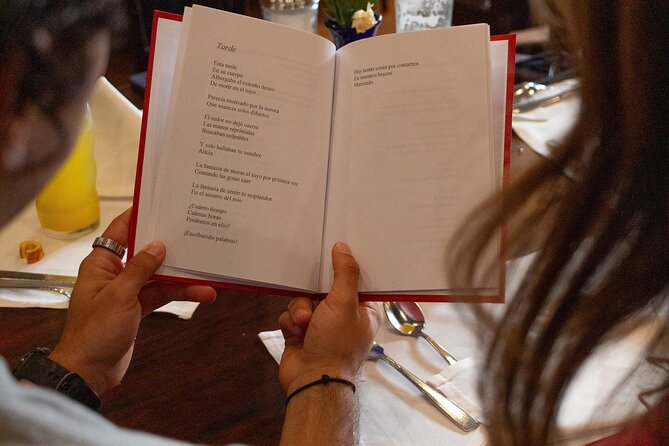
Mexico City’s Centro Histórico becomes a poetry book on this unusual two-hour tour. You read Octavio Paz, Sor Juana Inés de la Cruz, Nezahualcoyotl, and other major voices at the places that give their words weight. Casa de los Azulejos supplies the elegant opening, while the Zócalo and Templo Mayor bring conquest and indigenous memory into sharp focus.
I like the way the tour links literature to place instead of treating poems as classroom material. I also like the small maximum of 15 people, the bilingual guide, and the chance to hear about extra sites from José, the guide named in the feedback. The main consideration is simple: this is a focused poetry experience, not a broad sightseeing tour, and $53.74 is a serious price when admission to each stop is free.
In This Review
- Key points at a glance
- Why poetry works so well in Mexico City’s historic center
- Casa de los Azulejos opens with Octavio Paz and Mexican identity
- San Francisco brings Sor Juana into the conversation
- The Zócalo gives voice to indigenous testimony
- Templo Mayor connects poetry with the pre-Hispanic world
- The two-hour format keeps the experience focused
- Is $53.74 fair for a poetry tour?
- Who should book this experience?
- Should you book the Mexico City Poetry Tour?
- FAQ
- How long does the Mexico City Poetry Tour last?
- Where does the tour begin?
- Where does the tour end?
- Is the tour offered in English?
- Does the price include food or admission tickets?
- How many people can join the tour?
Key points at a glance
- Poetry at four meaningful sites: Read works at Casa de los Azulejos, the atrium of San Francisco, the Zócalo, and the Templo Mayor archaeological windows.
- A compact two-hour route: The schedule gives the opening stop about an hour, followed by three shorter readings of roughly 20 minutes each.
- Mexican identity is the thread: Expect discussion of loneliness, communion, religious blending, conquest, indigenous testimony, and pre-Hispanic poetry.
- Bilingual guidance: The experience is offered in English and includes a bilingual guide.
- A small-group setting: The group can include no more than 15 people, which matters when poems and discussion are central.
- Extra local suggestions: José has recommended additional Centro Histórico sites beyond the formal route, useful if you want to keep exploring after the tour.
Why poetry works so well in Mexico City’s historic center
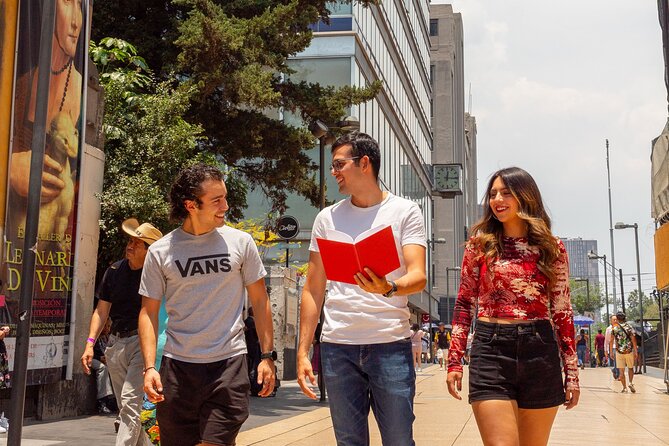
Many city tours give you dates, rulers, and building names. This one asks what Mexico feels like through its poets. That shift is the real reason to book it.
The discussion begins with loneliness and communion, two ideas that help connect private poetry with public life. You are not simply standing in front of old buildings while a guide recites names. The places become prompts for thinking about identity, faith, conquest, and the meeting of different cultures.
That approach suits you if you like literature, ideas, and local context. It also works if you want a short experience that feels different from the standard city tour. The review describes it as a special way to learn Mexican history through a short, powerful selection of poems, and that is a fair description of the format.
Still, know what you are buying. The tour does not promise long visits inside museums or a broad survey of Mexico City. It uses four central locations as reading rooms. If you prefer architecture, food, or fast sightseeing, the pace may feel too reflective.
Other Mexico City days people book alongside this one:
- Teotihuacan, Guadalupe Shrine & Tlatelolco Day Tour with Lunch
★ 5.0 · 11,603 reviews - Xochimilco, Coyoacan and Frida Kahlo with Optional Lunch
★ 4.5 · 7,320 reviews - Balloon flight + Breakfast in cave + Pyramids + Pick up CDMX.
★ 5.0 · 6,335 reviews
Casa de los Azulejos opens with Octavio Paz and Mexican identity
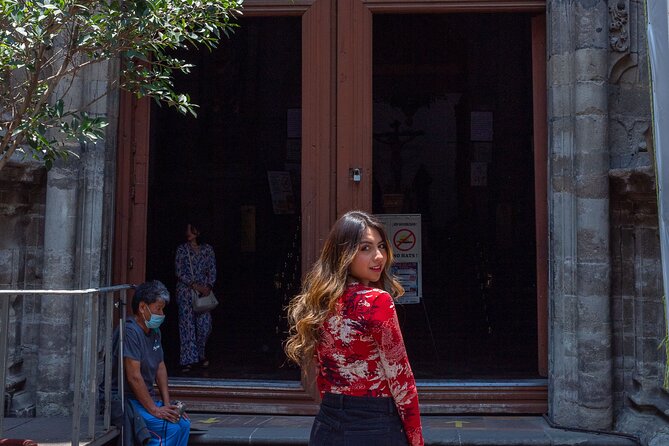
The meeting point is Casa de los Azulejos, at Avenida Francisco I. Madero 4 in Centro Histórico. The blue-and-white tiled palace is now home to a Samborn’s restaurant, and it provides a memorable first setting for the readings.
You begin with José Vicente Figueroa, Octavio Paz, and Jaime Sabines. The conversation centers on loneliness and communion, themes that give the opening stop more shape than a simple introduction to famous writers.
The schedule allows about an hour here, by far the longest part of the experience. That tells you something important. The tour gives its main ideas room to develop before moving into the shorter stops. You should expect discussion, reading, and interpretation rather than a quick photograph and a few facts.
There is no admission ticket included because none is needed for the listed stops. Food and drinks at the restaurant are not included, and the cost can vary. You might choose to treat the setting as a place to pause, but do not assume a snack is part of your $53.74 ticket.
Casa de los Azulejos also makes a practical meeting point. It is near public transportation, and the tour ends at the Zócalo, so you finish in one of the easiest places in the center to continue your day.
San Francisco brings Sor Juana into the conversation
The next stop is the atrium of the Templo de San Francisco, a beautiful church setting where the focus turns to Sor Juana Inés de la Cruz. The tour presents her as the greatest reference in New Spain poetry, and her place in the program gives the experience a clear historical bridge.
Sor Juana’s work lets the guide discuss religion and the Mexican practice of combining different traditions. The subject here is religious and mythical syncretism, an important idea for understanding how belief systems met and changed in Mexico.
The reading lasts about 20 minutes. That is enough time for a concentrated passage and discussion, but not enough for a full treatment of Sor Juana’s life or work. I see this as a strength if you want a tour with momentum. It could feel brief if Sor Juana is the main reason you booked.
The stop also shows how the tour uses setting as part of the lesson. A church atrium is not just a convenient point on the route. It frames questions about faith, colonial society, and the blending of religious traditions. You get a literary reading, but you also get a way to look at the building with more purpose.
The Zócalo gives voice to indigenous testimony
At the Zócalo, in front of the government palace, the program turns to The Anonymous of Tlatelolco. This work is presented as indigenous testimony against the conquest of Mexico.
The setting matters. You are in the central public square of the capital, facing one of the country’s key government buildings. The reading places an indigenous account within the civic heart of modern Mexico City. That contrast gives the passage force without requiring a long lecture.
This stop also changes the emotional direction of the tour. The opening conversation considers personal and shared identity. San Francisco brings in faith and cultural blending. The Zócalo confronts power, invasion, and the voices left outside official accounts.
The scheduled time is about 20 minutes. I would treat it as a focused reading, not a complete lesson on the conquest. The tour gives you a strong starting point for further study, but it cannot cover every side of a subject this large in one brief stop.
The Zócalo is also the end point. That makes the tour practical for building into a day of sightseeing, though the center can be busy with activity and movement. Stay close to the guide and be ready for an open public setting rather than a quiet gallery.
A completely different day out, same corner of Mexico City:
- Teotihuacan pyramids morning or afternoon without tourist traps
★ 5.0 · 6,186 reviews - Teotihuacan Early Access Guided Tour with optional Lunch
★ 4.5 · 6,138 reviews - Balloon flight + pick up in CDMX + Breakfast in Cave + Pyramids
★ 5.0 · 5,651 reviews - Balloon Flight + Cave Breakfast + Pick Up from CDMX or We Fly
★ 5.0 · 4,410 reviews
Templo Mayor connects poetry with the pre-Hispanic world

The final stop is outside the Museo del Templo Mayor, at the archaeological windows of the main temple. You do not enter the museum as part of this experience. Instead, the reading takes place from the outside, using the visible archaeological remains as its setting.
Here you hear Nezahualcoyotl, poet, emperor of Texcoco, and engineer. The program presents him as a major figure in mythical poetry before the Spanish conquest. His inclusion gives the tour an important chronological balance. You do not end with colonial or modern voices. You finish by looking back toward an indigenous intellectual and political world that existed before the conquest.
This stop lasts about 20 minutes. The outside setting keeps the tour moving and avoids adding a museum visit to the schedule, but it also limits what you see. If the Templo Mayor Museum is high on your list, plan a separate visit. The poetry tour gives you a meaningful introduction from outside, not a full archaeological experience.
I like this as the closing stop because it widens the story. The program has already considered colonial religion and indigenous testimony. Nezahualcoyotl reminds you that poetry, engineering, government, and philosophy were part of the region’s intellectual life long before Spanish rule.
The two-hour format keeps the experience focused
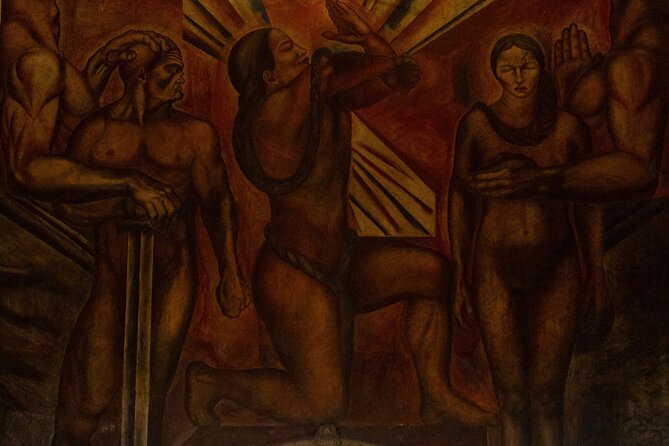
The total duration is about two hours. The timing is divided into roughly one hour at Casa de los Azulejos and 20 minutes at each of the other three locations.
That structure favors quality of attention over quantity of sights. You spend enough time at the first stop to settle into the method, then move through shorter readings that build a sequence of ideas. The route does not try to make you an expert in Mexican poetry. Instead, it gives you several names, themes, and locations worth following up later.
The experience is available in English and includes a bilingual guide. That is important for a poetry tour, since the meaning depends on more than a literal translation. The exact balance between original language, English explanation, and discussion is not specified, so you should think of the bilingual format as guidance for an English-speaking audience rather than a promise of a full literary translation workshop.
With a maximum of 15 people, the group is limited enough for the readings to remain audible and the discussion to feel manageable. It is not a private tour, and the size may reach the full limit, but the cap is still useful for an experience built around listening.
The tour is near public transportation, and most people can participate. The start and finish are both in Centro Histórico, with Casa de los Azulejos as the meeting point and the Zócalo as the end point. Confirmation arrives when you book, so the basic arrangements are clear.
Is $53.74 fair for a poetry tour?
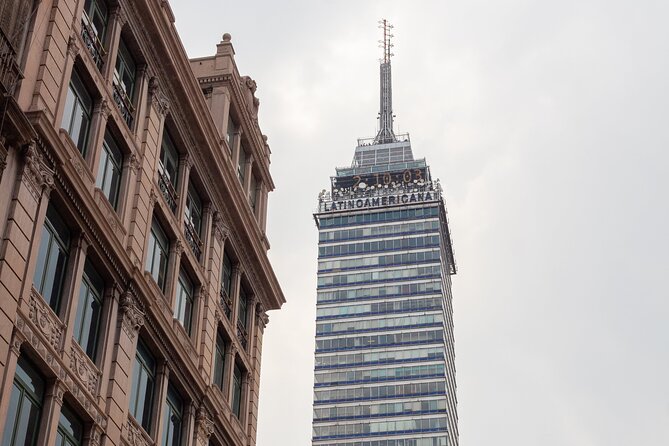
At $53.74 per person, this is not a bargain city orientation. The listed stops have free admission, and snacks at the restaurant cost extra. Your payment mainly covers the bilingual guide, the planning of the literary route, and the interpretation that ties each poem to its location.
The value depends heavily on your interests. If you already enjoy poetry, Mexican culture, or thoughtful walking tours, the price can make sense because the experience offers a prepared literary framework that is hard to create on your own in two hours. You are paying for selection and connection, not entry tickets.
If you mainly want to see the major sights, the value is weaker. You can visit the Zócalo and view the Templo Mayor archaeological windows without this tour. The added benefit is the reading and discussion, so book only if that added layer matters to you.
The 5.0 rating comes from eight reviews, a small sample. I would treat that as encouraging rather than conclusive. The strongest praise centers on the tour’s unusual format, its short but powerful selection of poems, and the way José offered suggestions for other sites that were not on the formal route. That last detail may be especially useful if you want to continue exploring Centro Histórico independently.
The tour is generally booked about nine days ahead. That does not guarantee availability at any particular time, but it gives you a sensible planning window.
Who should book this experience?
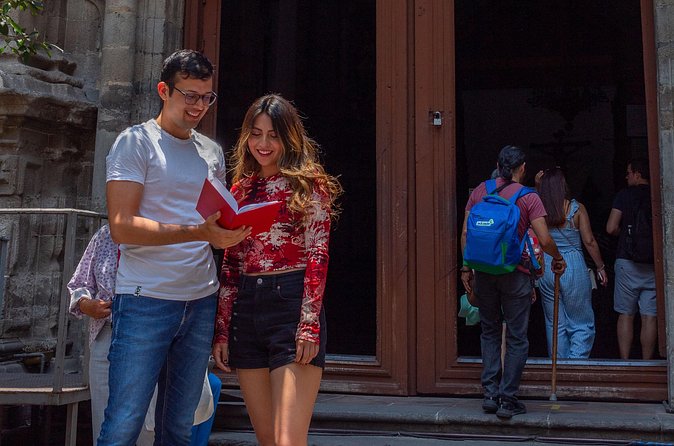
I would recommend it most strongly to:
- Readers who want to encounter Mexican poets in the places connected to the country’s cultural story.
- People who prefer a thoughtful, small-group experience to a standard list of monuments.
- Visitors with only two hours who want a focused introduction to Mexican identity and literature.
- Anyone interested in Sor Juana, Octavio Paz, Jaime Sabines, Nezahualcoyotl, or indigenous accounts of the conquest.
- Independent explorers who may appreciate José’s suggestions for additional sites.
I would be more cautious if you want a full Centro Histórico tour, museum entry, long architectural explanations, or a food-focused outing. The route is literary first. Its success depends on your willingness to listen, consider context, and let a poem slow the sightseeing pace.
The free cancellation policy helps reduce the risk. You can cancel for a full refund up to 24 hours before the start time. Cancellations within 24 hours are not refunded, and changes in that final period are not accepted.
Should you book the Mexico City Poetry Tour?
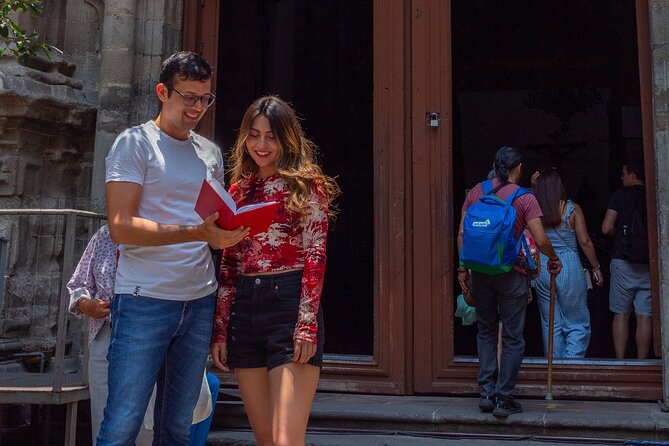
Book it if you want Mexico City to speak through its poets, not just its buildings. The combination of Casa de los Azulejos, San Francisco, the Zócalo, and Templo Mayor creates a compact route through private feeling, colonial religion, indigenous testimony, and pre-Hispanic thought.
I especially like the final pairing of The Anonymous of Tlatelolco with Nezahualcoyotl. Together, they keep the story from being told only through colonial or modern voices. Add the small group, English availability, and José’s useful suggestions for extra places, and this becomes a strong choice for literature lovers and curious independent visitors.
Skip it if $53.74 feels too high for a tour with no paid admissions, or if poetry is not central to the way you like to see a city. For the right audience, though, this is a rare chance to read in context and leave the Zócalo with more than photographs.
FAQ
How long does the Mexico City Poetry Tour last?
The tour lasts approximately two hours. The schedule includes about one hour at Casa de los Azulejos and about 20 minutes at each of the three remaining stops.
Where does the tour begin?
It begins at Casa de los Azulejos, located at Avenida Francisco I. Madero 4 in Mexico City’s Centro Histórico.
Where does the tour end?
The tour ends at the Zócalo, also called Plaza de la Constitución, in Centro Histórico.
Is the tour offered in English?
Yes. The experience is offered in English and includes a bilingual guide.
Does the price include food or admission tickets?
The price does not include snacks. Food at the restaurant has a variable cost. The listed stops have no admission ticket charge as part of the experience.
How many people can join the tour?
The maximum group size is 15 people. Most people can participate, and the route is near public transportation.
Just added around Mexico City
- Valle de Bravo: Forest Hiking Adventure★ 4.4 · 3 reviews
- Ticket to Frida Kahlo Museum (Blue House)★ 5.0 · 3 reviews
- Chapultepec Castle and Anthropology Tour, starting from CDMX★ 5.0 · 3 reviews
- La Roma Private Art Tour★ 5.0 · 3 reviews
- Private Transportation: Pickup and Drop-Off★ 5.0 · 3 reviews
- Mexico City: Relaxing or Decontracting Massage Experience★ 5.0 · 3 reviews
- Grutas de Tulantongo★ 3.0 · 3 reviews
- Mexico City: Local Walking Tour with Mezcal & Wrestling Show★ 5.0 · 3 reviews
Tours, compared.
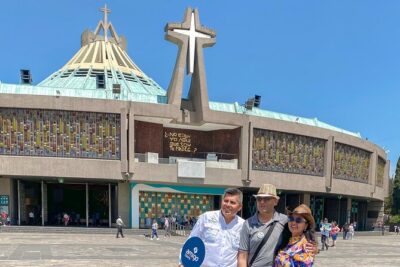
Teotihuacan, Guadalupe Shrine & Tlatelolco Day Tour with Lunch
Read our review →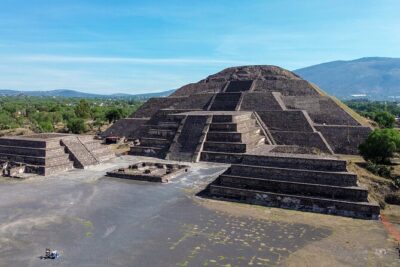
Teotihuacan Early Access Guided Tour with optional Lunch
Read our review →
Teotihuacan, Tlatelolco & Guadalupe Shrine Tour
Read our review →
Xochimilco, Coyoacan, Frida Kahlo Museum & Murals Tour
Read our review →
Hot Air Balloon Flight with Breakfast Cave and Pyramids Tour
Read our review →