Reviewed · TICKETS
Mexico City: Ticket de entrada Museo Memoria y Tolerancia
The Memory and Tolerance Museum asks you to face some of humanity’s darkest crimes, then consider what you can do with that knowledge. Its permanent exhibition covers the Holocaust and genocides in Armenia, Rwanda, Guatemala, Cambodia, Darfur, and Yugoslavia through 43 rooms and more than 1,200 objects, documents, and audiovisual pieces.
I especially like the clear link between historical memory and daily choices, and I like that the museum uses art, architecture, and interactive installations instead of relying only on written panels. The main consideration is emotional: the permanent exhibition is recommended for children over 15, and even adults should allow time to process what they see.
In This Review
- Key points to know before you go
- Finding the museum beside the Hemicycle to Juarez
- Beginning with the Holocaust and the danger of indifference
- Armenia, Rwanda, Guatemala, Cambodia, Darfur, and Yugoslavia
- Forty-three rooms built for a slow visit
- The objects that make history physical
- Temporary exhibitions add a second layer
- How the $13 ticket earns its price
- Who will get the most from this museum
- Practical advice for a more meaningful visit
- Should you book the Memory and Tolerance Museum?
- FAQ
- Where is the Memory and Tolerance Museum located?
- How much does admission cost?
- What does the ticket include?
- How long is the ticket valid?
- Is the museum wheelchair accessible?
- Can children visit the permanent exhibition?
Key points to know before you go
- The Holocaust section anchors the visit: The museum examines the Holocaust alongside other crimes against humanity, showing how discrimination and indifference can lead to mass violence.
- More than 1,200 objects fill 43 rooms: Documents, photographs, audiovisual material, and physical artifacts give the subject a human scale.
- Art breaks up the historical material: Look for installations by Jan Hendrix, metronomes by Lozano-Hemmer, and interactive works by Jorge Marin and Rivelino.
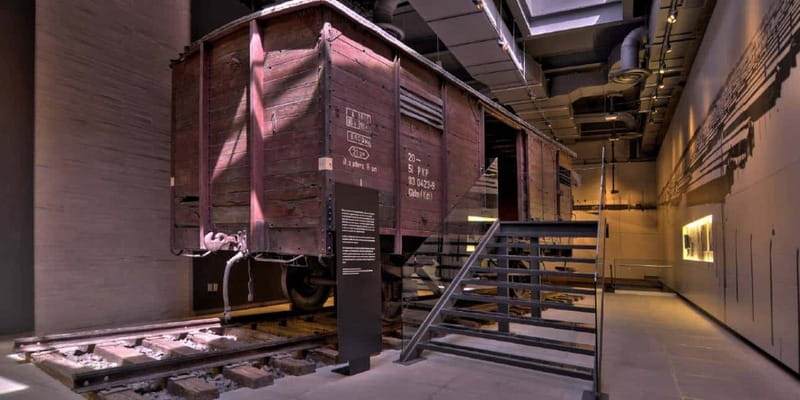
- A World War II prisoner transport wagon is on display: This object connects the museum’s historical information to a stark piece of physical evidence.
- The ticket includes temporary exhibitions: Your visit is not limited to the permanent galleries.
- An English or Spanish audioguide comes with admission: You can choose the language that best suits you and move through the museum at your own pace.
Finding the museum beside the Hemicycle to Juarez
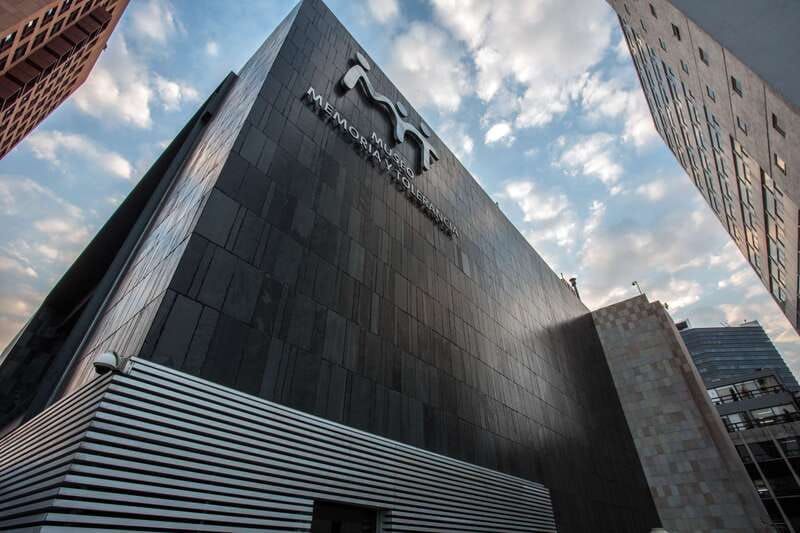
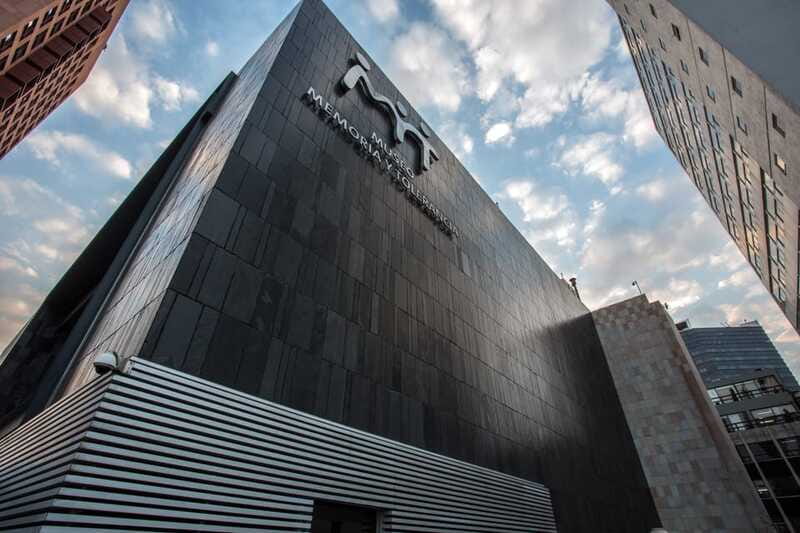
The museum is in Plaza Juarez, in downtown Mexico City. You will find it next to the Secretaria de Relaciones Exteriores and directly in front of the Hemicycle to Juarez, a useful landmark when you are making your way across the central district.
This location makes the museum easy to pair with other downtown sights, though the museum itself deserves more than a quick stop between appointments. The subject matter is serious, and the 43-room permanent exhibition can ask a lot of your attention. I would plan this as a main activity for part of your day rather than treating it as a short add-on.
Your ticket is valid for one day. Starting times depend on availability, so check the schedule before you book. The ticket also offers free cancellation up to 24 hours ahead and a reserve-now, pay-later option, which is useful if your Mexico City plans are still shifting.
The museum is wheelchair accessible. Food and drinks are not allowed inside, so finish your snack before entering and plan any break for outside the exhibition areas.
A few more Mexico City half-days to weigh up
- Lucha Libre Tickets & Tacos & Beer & Mezcal – BEST NIGHT EVER!
★ 5.0 · 1,077 reviews - Frida Kahlo VIP [Museum Tickets Included] Bike, Markets & Churros
★ 5.0 · 1,072 reviews - Frida Kahlo VIP [Museum Tickets Included] Walk, Markets & Churros
★ 5.0 · 982 reviews
Beginning with the Holocaust and the danger of indifference
The permanent exhibition is built around a difficult idea: mass violence does not appear from nowhere. Discrimination, prejudice, propaganda, dehumanization, and silence can create the conditions for terrible crimes.
That makes the museum different from a simple collection of wartime objects. You are not only asked to learn what happened. You are also asked to consider how ordinary decisions, public attitudes, and government actions can affect the lives of entire communities.
The Holocaust section forms a central part of the visit. It is presented through historical material, photography, documents, audiovisual pieces, and personal human stories. The Anne Frank material is especially affecting, giving the larger subject an individual face and helping you connect broad historical events with the life of one young person.
I would not rush this section. The museum’s purpose is reflection, not speed. If you normally race through museums, the audioguide can help you slow down and follow the ideas in a logical order.
The permanent exhibition is recommended for children older than 15. Younger children must be accompanied by an adult, but the age guidance matters. The content includes genocide, persecution, and violence, so parents should decide carefully if the subject is right for their child.
Armenia, Rwanda, Guatemala, Cambodia, Darfur, and Yugoslavia
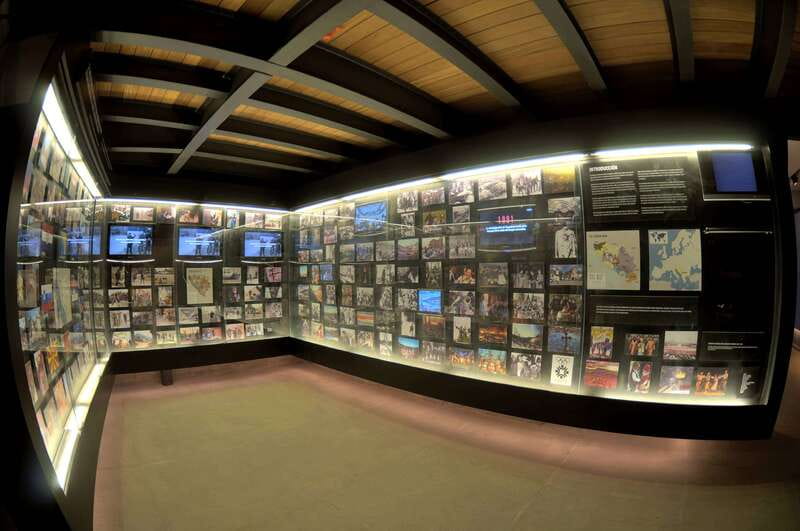
One of the museum’s most valuable choices is to place the Holocaust beside other genocides and crimes against humanity. The galleries address Armenia, Rwanda, Guatemala, Cambodia, Darfur, and Yugoslavia.
This wider scope helps you see both shared warning signs and different political and social circumstances. The museum’s goal is not to flatten these events into one story. Instead, the exhibitions point you toward a larger question: how can discrimination and violence take hold in different places and periods?
The range also gives the visit a global reach. You are not left with the impression that genocide belongs to one era or one country. The museum connects historical memory with human rights, respect, tolerance, social action, and a culture of peace.
The amount of material can feel heavy. You might find yourself needing pauses between galleries, especially if you read every panel and listen to the full audio commentary. That is not a flaw, but it does affect how you should plan the day. Give yourself room to stop, reflect, and continue when you are ready.
Forty-three rooms built for a slow visit
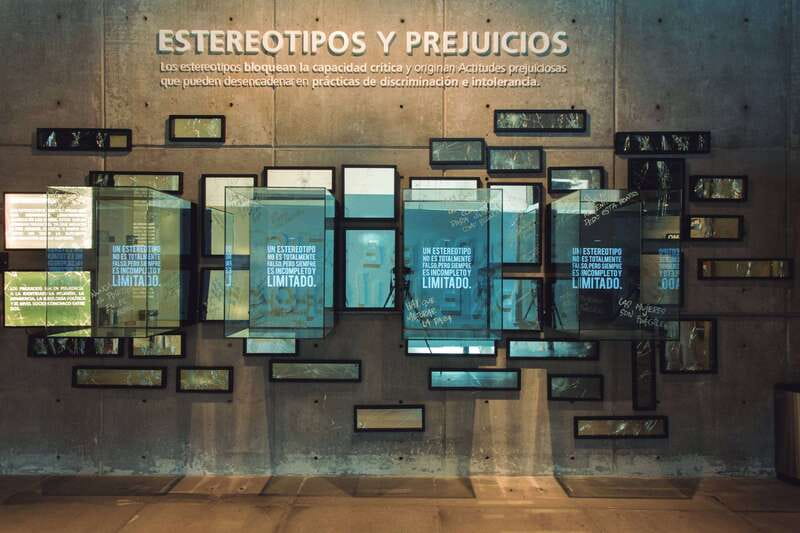
The permanent exhibition contains 43 rooms, with more than 1,200 objects, documents, and audiovisual pieces. That scale gives the museum room to move beyond a few famous images or familiar textbook events.
You may find historical records alongside photographs, filmed material, objects, and larger installations. The mix keeps the experience from becoming a long line of text-heavy rooms, though visitors who prefer a very quick museum visit may find the amount of information demanding.
The audioguide is available in Spanish and English and is included with admission. That is an important part of the value, particularly because the subject needs context. You can listen in your preferred language while moving at your own pace rather than relying on a scheduled tour.
No individual guide is named for this experience, so you should not expect a live guide leading a group through the museum. The format gives you independence, but it also means you should pay attention to the audio instructions and allow enough time to follow the exhibition’s sequence.
I like this self-directed setup for a museum with such a personal subject. You can pause at an object that affects you, move more quickly through a section you already know, or return to a gallery without waiting for a group.
A completely different day out, same corner of Mexico City:
- Teotihuacan, Guadalupe Shrine & Tlatelolco Day Tour with Lunch
★ 5.0 · 11,603 reviews - Xochimilco, Coyoacan and Frida Kahlo with Optional Lunch
★ 4.5 · 7,320 reviews - Balloon flight + Breakfast in cave + Pyramids + Pick up CDMX.
★ 5.0 · 6,335 reviews - Teotihuacan pyramids morning or afternoon without tourist traps
★ 5.0 · 6,186 reviews
The objects that make history physical
Several large works give the museum a strong visual and physical presence. A World War II train wagon used to transfer prisoners is one of the most direct reminders that the machinery of persecution involved real spaces, transport, and human bodies.
The museum also includes a fragment of the Berlin Wall and a sculpture from the Non-Violence Project by Carl Fredrik Reuterswärd. These pieces widen the story beyond the galleries focused on genocide, bringing in themes of division, political conflict, and the possibility of peace.
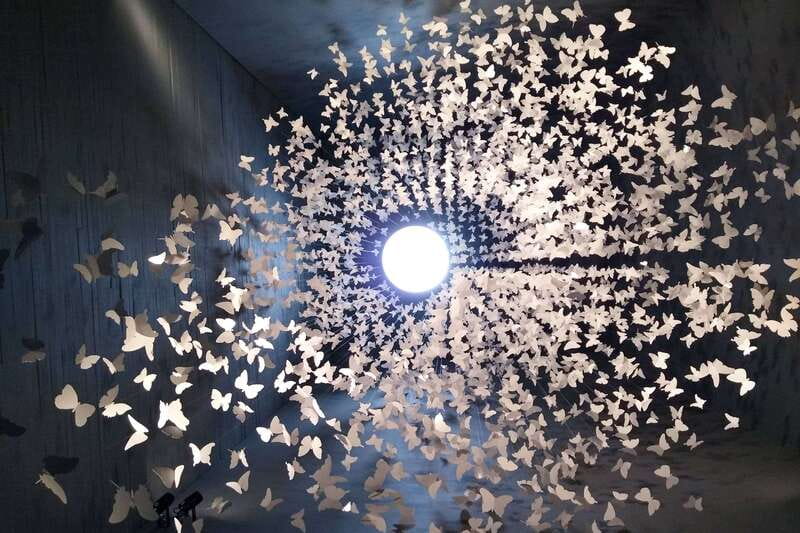
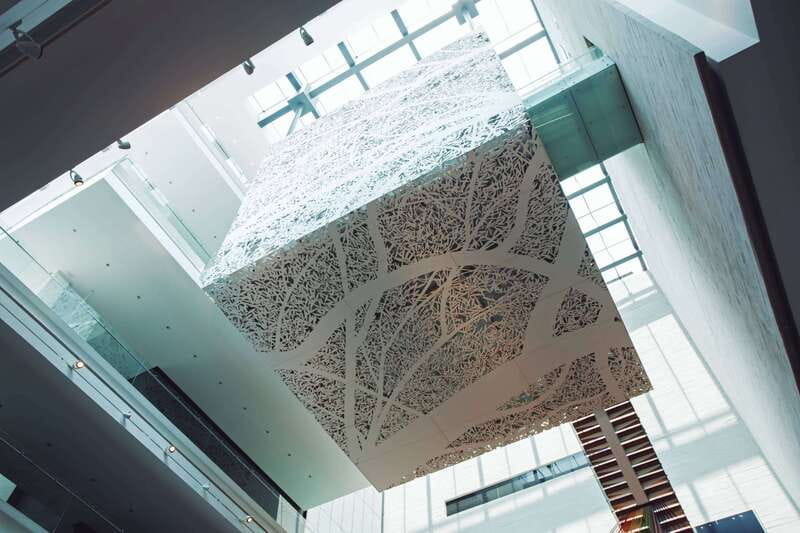
The permanent installations by Jan Hendrix include Lost Potential and Cube. These works add an artistic layer to the museum’s message, encouraging you to think about lives interrupted and the choices societies make.
Other installations include Lozano-Hemmer’s metronomes, The Wings of Peace by Jorge Marin, and YOU by Rivelino. The latter two are described as sculptural and interactive works, so the museum is not asking you to remain a passive observer throughout the whole visit.
These installations matter because the museum’s subject can become abstract when it is reduced to dates and statistics. Art gives the ideas another route into your mind. You might not respond to every piece in the same way, but the change in scale and mood can help you keep thinking after you leave a particular room.
Temporary exhibitions add a second layer
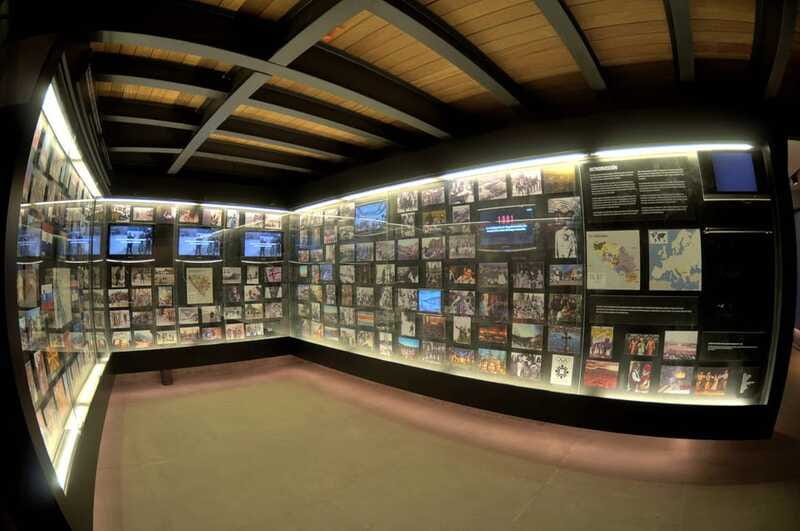
Admission includes the museum’s temporary exhibitions. Their content can change, so you should check what is showing on your chosen date rather than assuming a particular exhibit will be available.
This inclusion improves the value of a $13 ticket. You are paying for access to a substantial permanent collection as well as the current temporary displays, not just one small gallery. It also gives you a reason to return if you visit Mexico City again and the temporary program has changed.
The temporary rooms may offer a different pace or focus from the permanent galleries. After the weight of the Holocaust and genocide sections, a temporary exhibition can provide another way to consider tolerance, social change, art, or human rights. I would save it for the end if you want to follow the permanent exhibition’s full argument first, though you can adjust that order to suit your energy.
How the $13 ticket earns its price
At $13 per person, the ticket is fairly priced for a full-day museum admission with an English or Spanish audioguide and access to temporary exhibitions.
The value comes from the amount of material and the freedom to set your own pace. The ticket is not for a short photo stop. It gives you a serious museum visit with 43 permanent rooms, more than 1,200 objects and documents, major installations, and a temporary exhibition program.
The cost is easier to justify if you are interested in modern history, human rights, Holocaust education, genocide studies, or museums that use art as part of their message. It is also a good choice if you want an indoor cultural activity in downtown Mexico City.
The value is less clear if you only have a few spare minutes or prefer light, entertaining attractions. This museum deals directly with mass violence and discrimination. Its purpose is to inform and challenge you, not provide a carefree break from sightseeing.
The reserve-now, pay-later option can help if you want to hold a place without paying immediately. You can also cancel for a full refund up to 24 hours in advance, giving you some protection if your plans change.
Who will get the most from this museum
I recommend this experience to adults and older teenagers who are ready for a thoughtful, serious museum visit. It suits you particularly well if you want historical context rather than a quick collection of famous objects.
It is also a strong choice for anyone who has visited other museums about tolerance or genocide and wants a broader international focus. The Mexico City museum links the Holocaust with Armenia, Rwanda, Guatemala, Cambodia, Darfur, and Yugoslavia, then brings the discussion toward tolerance, peace, and social action.
Families with children under 15 should think carefully before booking. Younger children must have an adult with them, and the permanent exhibitions are recommended for older children. The material may be too intense or complex for some younger visitors.
The museum also works for solo visitors because of the audioguide and self-paced format. You do not need to coordinate with a group, and you can spend as much time as you want with the installations or documents that matter most to you.
Practical advice for a more meaningful visit
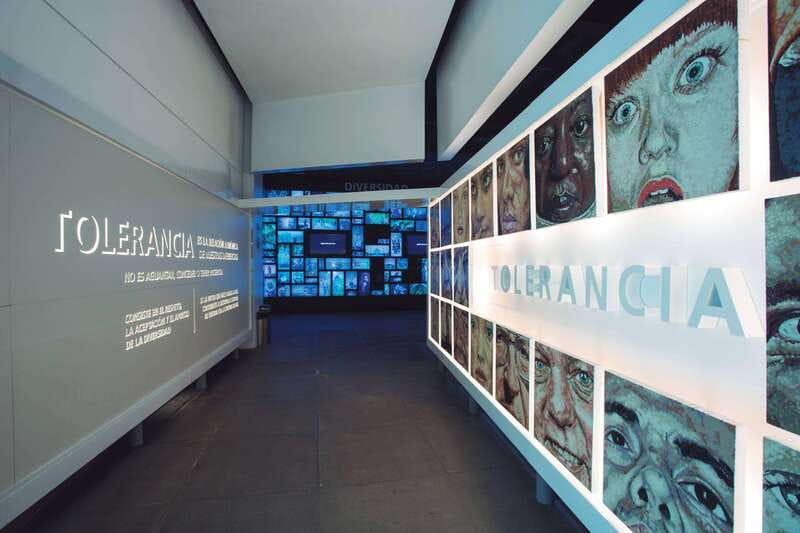
Give yourself plenty of time. The ticket lasts one day, but the permanent galleries contain enough material to make a hurried visit unsatisfying. If you listen to the audioguide and examine the objects closely, plan for a substantial part of your day.
Choose English or Spanish audio before you begin. The language option removes a major barrier, but the exhibition’s emotional weight remains the same in either language.
Wear something comfortable and keep your schedule light afterward. The museum deals with persecution, genocide, and human suffering, and the most powerful parts may stay with you for a while.
Do not plan to eat inside. Food and drinks are not allowed, so handle those needs before or after your visit. Its downtown location makes it practical to combine with other central Mexico City sights, but avoid squeezing the museum between two tightly timed activities.
Look for the train wagon, Berlin Wall fragment, and the works by Jan Hendrix, Jorge Marin, Rivelino, Lozano-Hemmer, and Carl Fredrik Reuterswärd. These pieces give you visual anchors as you move through the many rooms.
Should you book the Memory and Tolerance Museum?
Book it if you want an honest, serious look at the Holocaust, genocide, discrimination, and human rights, with art and interactive installations adding emotional weight. The $13 admission is good value because it includes 43 permanent rooms, more than 1,200 objects and documents, temporary exhibitions, and a Spanish or English audioguide.
Skip it if your schedule allows only a brief visit or if you are looking for a light attraction. For the right audience, this is one of Mexico City’s most purposeful museum experiences. It does not simply ask you to remember the past. It asks you to notice the warning signs of intolerance in the present.
FAQ
Where is the Memory and Tolerance Museum located?
It is in Plaza Juarez in downtown Mexico City, next to the Secretaria de Relaciones Exteriores and in front of the Hemicycle to Juarez.
How much does admission cost?
The listed price is $13 per person.
What does the ticket include?
Admission includes entry to the permanent exhibition, temporary exhibitions, and an audioguide in Spanish or English.
How long is the ticket valid?
The ticket is valid for one day. Available starting times depend on the schedule shown when you check availability.
Is the museum wheelchair accessible?
Yes, the museum is wheelchair accessible.
Can children visit the permanent exhibition?
Children younger than 15 must be accompanied by an adult. The permanent exhibitions are recommended for children older than 15 because of their serious subject matter.
Just added around Mexico City
- Mexico City: Hop-on Hop-off City Tour by Turibus 2-Day Pass★ 4.0 · 10 reviews
- Anthropology Museum, Chapultepec Castle & Cable Car Tour★ 4.5 · 10 reviews
- Multi-Variety Mole Class in a Condesa home or art gallery rooftop★ 5.0 · 10 reviews
- PRIVATE TOUR Colonial Town Taxco and Cuernavaca from CDMX.★ 5.0 · 10 reviews
- El Centro Street Food Walking Tour★ 5.0 · 10 reviews
- Private Round-Trip Transportation to Teotihuacan Pyramids★ 5.0 · 10 reviews
- Teotihuacan and My Grandma’s Food Tour★ 5.0 · 10 reviews
- Private Walking Tour Legends and Events Historic Center CDMX★ 4.8 · 10 reviews
Tickets, compared.

Lucha Libre Tickets & Tacos & Beer & Mezcal – BEST NIGHT EVER!
Read our review →![Frida Kahlo VIP [Museum Tickets Included] Bike, Markets & Churros](https://9.mexicocityexplorer.com/wp-content/uploads/frida-kahlo-vip-museum-tickets-included-bike-markets-churros-400x300.jpg)
Frida Kahlo VIP [Museum Tickets Included] Bike, Markets & Churros
Read our review →![Frida Kahlo VIP [Museum Tickets Included] Walk, Markets & Churros](https://9.mexicocityexplorer.com/wp-content/uploads/frida-kahlo-vip-museum-tickets-included-walk-markets-churros-400x267.jpg)
Frida Kahlo VIP [Museum Tickets Included] Walk, Markets & Churros
Read our review →
Frida Kahlo Museum Entry Ticket w/Digital Guide
Read our review →
Frida Kahlo and Anahuacalli Museums Ticket with Digital Guide
Read our review →