
Reviewed · DAY OF THE DEAD TOURS
Special Pre-Hispanic Day of the Dead Tour
Mexico City’s Day of the Dead story makes the most sense when you see it against the long sweep of Mexican history. This compact walking tour begins with Diego Rivera’s mural, crosses the city’s old civic center, and ends at Templo Mayor with the Aztec view of life, death, and ritual.
I like the clear route and the mix of art, architecture, and archaeology. I also like that the guide explains the city while you walk, rather than keeping you in one museum room. The main drawback is pace: two to two and a half hours is not enough for long visits at every stop, and some places appear to be viewed from the outside or discussed briefly.
In This Review
- Key points to know before booking
- Why this short walk works for Mexico City history
- Starting with Diego Rivera’s mural
- Alameda Central and the city’s public heart
- Palacio Postal and Mexico City’s decorative side
- The theater and Esperanza Iris
- The Palace of Medicine and the Inquisition
- Ending at Templo Mayor
- What the guide adds to the experience
- Is $58.51 a fair price?
- Who should book this Day of the Dead tour?
- Should you book it?
- FAQ
- Where does the tour begin?
- Where does the tour end?
- How long does the tour last?
- Is the tour offered in English?
- How much does the tour cost?
- What is included in the price?
- Are meals included?
- Is tipping included?
- What is the cancellation policy?
Key points to know before booking
- Diego Rivera opens the story: You begin with a mural that brings together figures who shaped Mexico’s past.
- The walk links three eras: Spanish colonial power, modern Mexican identity, and the Aztec world all appear along one central route.
- Templo Mayor provides the finale: The tour closes with Aztec ideas about death, ritual, and the gods.
- Guide quality matters: Ana, one guide named in the tour feedback, was praised for making a large amount of history easy to follow.
- The group can reach 25 people: That keeps the price reasonable, but a larger group may make questions and close listening harder.
- The price is moderate for a guided city walk: At $58.51 per person, tickets and guiding are included, while food and tips are extra.
Why this short walk works for Mexico City history
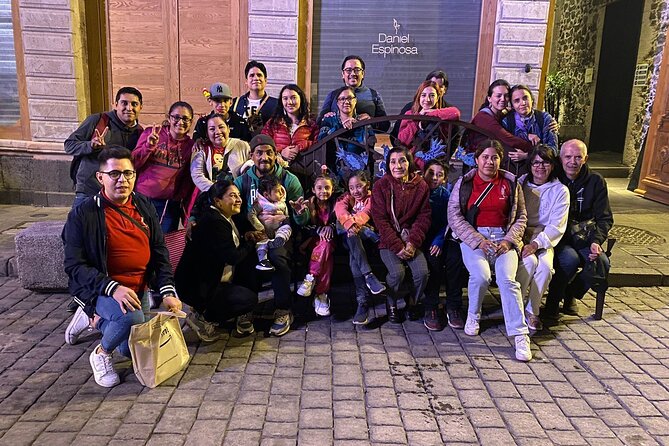
I see this tour as a fast, organized introduction to the historic center rather than a slow museum day. You move from a modern mural to a sixteenth-century public park, ornate civic architecture, old theater history, the Inquisition, and finally the Aztec ceremonial center.
That order has a useful logic. Diego Rivera gives you a visual outline of Mexico’s changing political and cultural identity. The streets then fill in the details, showing how colonial institutions and later public buildings were placed over the older Aztec capital.
The final stop at Templo Mayor brings the Day of the Dead theme into focus. The tour explains how the Aztecs understood life and death and how rituals were organized for their gods. That gives you more than a quick look at skull imagery or seasonal decorations. You get a cultural framework for understanding why death occupies such an important place in Mexican traditions.
The walk is offered in English and lasts about two to two and a half hours. That makes it easy to fit into a morning or afternoon in Mexico City. It also means you should expect an overview. If you want to study every mural detail, tour every museum room, or linger over architecture, plan separate visits after the walk.
More Day of the Dead experiences:
- Mexico City: Day of the Dead Guided Tour
★ 3.4 · 97 reviews - Day of the Dead Tour in Mexico City
★ 3.5 · 78 reviews - Day of the Dead Tour in San Andres Míxquic From Mexico City
★ 3.7 · 52 reviews
Starting with Diego Rivera’s mural
The tour begins at the Museo Mural Diego Rivera on Calle Colón Balderas. The admission ticket is included, and the visit lasts about 25 minutes.
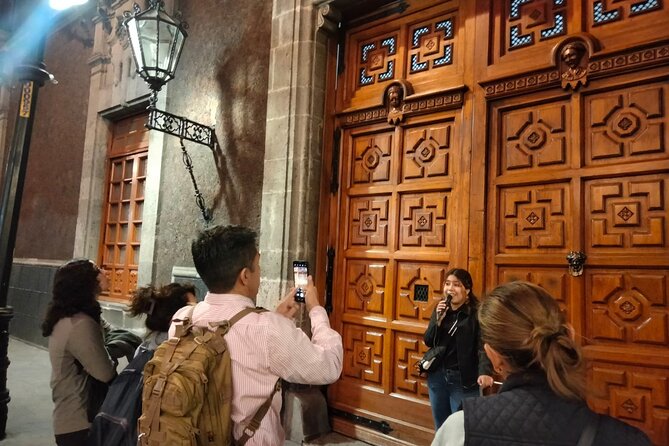
The mural presents a large cast of people connected with Mexico’s past. Your guide explains the figures and uses them to trace major changes in the country. This is a smart place to begin because the artwork acts like a visual index. Instead of hearing disconnected dates, you can attach historical names and events to a single scene.
I would pay close attention to the guide’s explanation here. The mural can feel crowded at first, with many characters competing for your eye. A good explanation helps you understand who matters, why they appear together, and how the image reflects Mexico’s complicated past.
The first stop also gives the tour an artistic beginning rather than a strictly political one. You are not simply walking from monument to monument. You start with a work that asks you to think about how national history is told and remembered.
The 25-minute limit is both useful and restrictive. It keeps the group moving, but you will not have unlimited time to inspect every section. If Rivera’s work interests you, note the museum’s location and consider returning later at your own pace.
Alameda Central and the city’s public heart
From the mural, the group continues to Alameda Central, described as the first public park in the Americas. It was ordered in 1592 by Viceroy Luis de Velasco.
The stop lasts about 15 minutes and has no separate admission charge. Your guide explains the park’s original role, its classic sculptures, and the ways it changed over time.
This is one of the places where the walking format pays off. A park can look like a pleasant open space until you know why it was created and how its use shifted. Here, the trees, paths, and sculptures become part of the city’s colonial and civic story.
You should not expect a full garden tour. Fifteen minutes is enough for an explanation and a look at the key features, but not for an extended stroll. Still, the pause breaks up the museum time and gives you a chance to orient yourself in the center.
Alameda Central also helps you see how public space carries political meaning. The tour connects the park to the city’s changing identity, so you are looking at more than statues and walkways. You are seeing how a major capital presented itself to the people who lived there.
Palacio Postal and Mexico City’s decorative side
The next named stop is Palacio Postal, one of the city’s most ornate buildings. The visit lasts about 15 minutes and does not require a separate admission ticket.
The guide points out the building’s eclectic architecture and explains its legends. That combination is useful. Architecture tells you what you can see in the stonework, metal details, and interior spaces, while legends show how people have remembered and retold the building’s past.
A short stop here is enough to appreciate the visual effect and hear the main story. It is not enough for an architectural study. If you enjoy historic interiors, you may want to return after the tour, assuming access is available at that time.
I like the contrast between Palacio Postal and the Rivera mural. The mural speaks in broad political images. Palacio Postal communicates through decoration and design. Together, the stops show two different ways Mexico City expresses its history.
A completely different day out, same corner of Mexico City:
- Teotihuacan, Guadalupe Shrine & Tlatelolco Day Tour with Lunch
★ 5.0 · 11,603 reviews - Xochimilco, Coyoacan and Frida Kahlo with Optional Lunch
★ 4.5 · 7,320 reviews - Balloon flight + Breakfast in cave + Pyramids + Pick up CDMX.
★ 5.0 · 6,335 reviews - Teotihuacan pyramids morning or afternoon without tourist traps
★ 5.0 · 6,186 reviews
The theater and Esperanza Iris
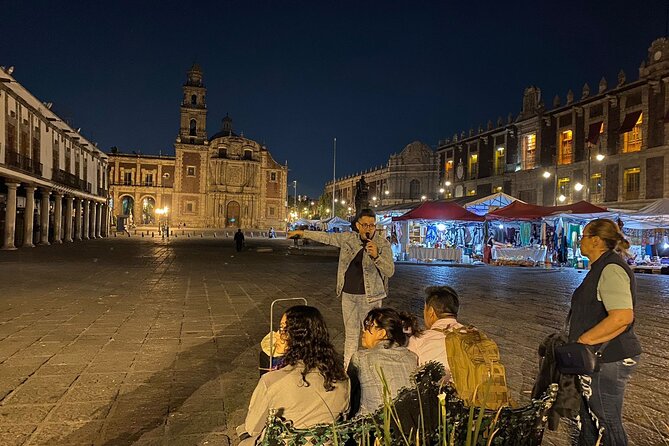
The route also includes one of the city’s earliest important theaters, created by operetta star Esperanza Iris. The supplied information does not give this stop a numbered position or a separate duration, so you should treat it as part of the walking commentary rather than expect a long theater visit.
Esperanza Iris adds a personal and cultural note to the route. The story is not limited to presidents, conquerors, priests, and military figures. A theater founded by a celebrated performer brings music, performance, and public entertainment into the account of Mexico City.
Because no admission detail is specified for this stop, ask your guide how much time is planned and whether you will enter. That small question can help you set expectations. The experience is designed as a connected city walk, so some locations may be explained as you pass rather than visited in depth.
The Palace of Medicine and the Inquisition
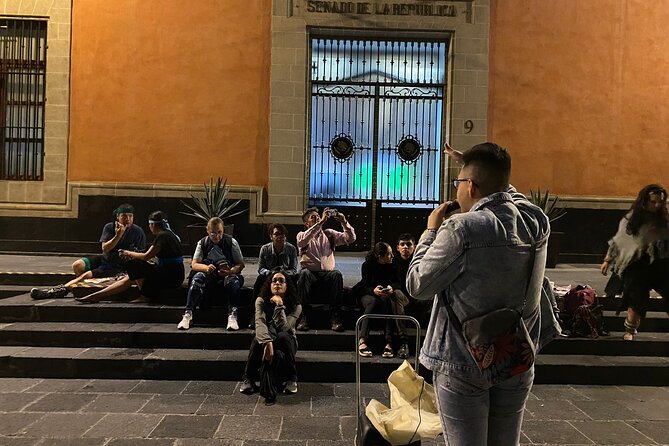
Another brief historical point concerns the building that was once the Palace of the Inquisition and is now the Palace of Medicine. The guide explains the Holy Office and the building’s change in purpose.
This is a sobering part of the route. It shows how colonial institutions shaped public life and how a place associated with religious control can later serve medicine and education. The building’s history is not just an architectural footnote. It opens a discussion about authority, belief, punishment, and the institutions that controlled colonial society.
Again, the available details do not state a separate visit length or admission arrangement here. You should expect an explanation tied to the building and the surrounding streets. If you want to visit the Palace of Medicine inside, set aside another time rather than assuming this tour provides a full museum visit.
That distinction matters. The tour’s value comes from the connections between places. It is less suited to someone who wants every stop treated as a complete attraction.
Ending at Templo Mayor
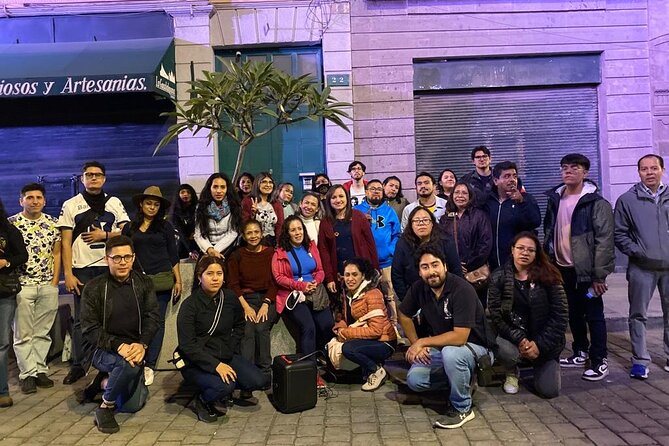
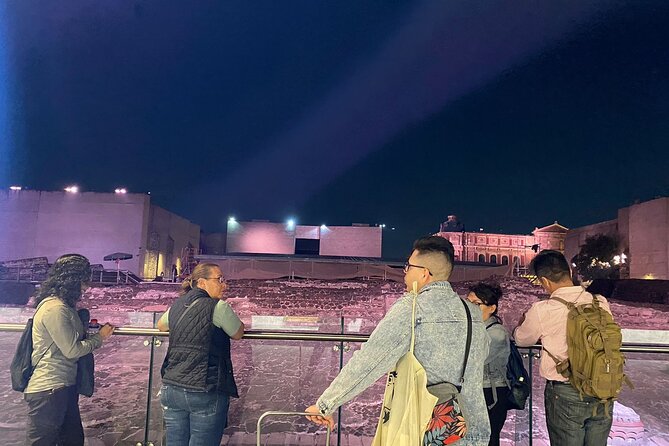
The tour ends at the Museo del Templo Mayor on Seminario 8. The scheduled explanation lasts about 30 minutes, and the experience ends at this point.
This is the strongest stop for the pre-Hispanic and Day of the Dead focus. Here, the guide explains the Aztec worldview concerning life and death, along with the rituals organized for the gods.
The location gives the earlier stops a useful counterpoint. Much of central Mexico City reflects Spanish colonial planning and later national history, but Templo Mayor brings you to the city that existed before the conquest. The tour helps you see that the modern center is built over layers of older power and belief.
Thirty minutes gives you time to understand the main ideas, but it is not a substitute for a complete museum visit. If archaeology is your priority, plan to return to the Museo del Templo Mayor with more time. The guided explanation should help you know what questions to ask and what themes deserve closer attention.
Ending here also makes practical sense. You finish at a major historic site rather than circling back to the starting museum. If your next plan is in the Centro Histórico, this location is convenient. The tour does not include a return transfer.
What the guide adds to the experience
The best reason to choose a guided walk is the interpretation between stops. Mexico City’s historic center can give you a lot of visual information at once, but it does not always explain how the pieces fit together.
One guide specifically identified in the tour feedback is Ana. She was praised for giving a thorough account of Mexican history while walking through the city and for making the details easy to follow. You should not assume Ana will lead every departure, but her approach shows what this experience is trying to provide: a connected explanation rather than isolated facts.
I would listen for the links between the stops. The guide is most useful when explaining how the Spanish colonial city, later Mexican identity, and Aztec beliefs overlap in the same central district.
The group maximum is 25 people. That is not a private tour, and you may need to stay close to the guide in busy streets. On the positive side, the limit prevents the group from becoming enormous. If you want frequent personal questions or a very quiet pace, a smaller private walk may suit you better.
Is $58.51 a fair price?
At $58.51 per person, the price is reasonable if you want an English-speaking guide, an organized route, and the included tickets listed for the experience. You are paying for the historical explanation and the structure as much as for entry to a single museum.
The value is strongest for a first visit to Mexico City. You cover several central landmarks in one outing and learn enough context to decide where you want to spend more time later. The route also saves you from planning the sequence yourself.
The value is less clear if you already know the historic center well or prefer to move at your own speed. The short stops may feel rushed, especially at the Rivera mural and Templo Mayor. Meals are not included, and tips are not included, so budget for those separately.
Since the tour is usually booked about 12 days ahead, it is sensible to reserve early if your dates are fixed. Confirmation arrives at booking, and free cancellation is available up to 24 hours before the start time. Within 24 hours, the payment is not refunded, and changes are not accepted.
Who should book this Day of the Dead tour?
I would recommend it to first-time visitors who want a clear introduction to Mexico City’s central history without committing to a full-day excursion. It also suits anyone interested in how Aztec beliefs, colonial power, Mexican art, and public life meet in one part of the city.
The tour can work well for adults and families who prefer learning through short stops. Most people can participate, it is near public transportation, and service animals are allowed.
You may want something else if you dislike group walks, need long museum visits, or want a tour focused only on Day of the Dead customs. Despite its title, the route covers a wide history of Mexico. The Day of the Dead theme is most direct at Templo Mayor, while the rest of the experience builds the larger cultural background.
Wear comfortable shoes and keep your attention on the guide between stops. The route is short in clock time but full of subjects. A notebook or phone for quick notes may help if you plan to revisit the museums independently.
Should you book it?
Book this tour if you want a brisk, guided introduction to Mexico City’s historic center and the ideas behind its Day of the Dead traditions. The route is well chosen, the end at Templo Mayor gives the experience a clear purpose, and the guide’s historical explanation is its main strength.
Skip it if you want a slow museum day or a private, highly flexible tour. At two to two and a half hours, it offers a useful first look, not a complete examination of every building. For many visitors, that is exactly the point: take the walk early in your stay, then return to the Rivera and Templo Mayor museums with a better sense of what you are seeing.
FAQ
Where does the tour begin?
The tour begins at the Diego Rivera Mural Museum on Calle Colón Balderas, Centro, Cuauhtémoc, Mexico City.
Where does the tour end?
The tour ends at the Templo Mayor Museum on Seminario 8 in Mexico City’s Centro Histórico.
How long does the tour last?
The experience lasts approximately two to two and a half hours.
Is the tour offered in English?
Yes. The tour is offered in English.
How much does the tour cost?
The listed price is $58.51 per person.
What is included in the price?
Tickets and a guide are included.
Are meals included?
No. Meals are not included.
Is tipping included?
No. Tips are not included.
What is the cancellation policy?
You can cancel up to 24 hours before the experience start time for a full refund. Cancellations or changes made within 24 hours are not accepted and are not refunded.
Just added around Mexico City
- Mexico City: Hop-on Hop-off City Tour by Turibus 2-Day Pass★ 4.0 · 10 reviews
- Anthropology Museum, Chapultepec Castle & Cable Car Tour★ 4.5 · 10 reviews
- Multi-Variety Mole Class in a Condesa home or art gallery rooftop★ 5.0 · 10 reviews
- PRIVATE TOUR Colonial Town Taxco and Cuernavaca from CDMX.★ 5.0 · 10 reviews
- Teotihuacan and My Grandma’s Food Tour★ 5.0 · 10 reviews
- El Centro Street Food Walking Tour★ 5.0 · 10 reviews
- Private Round-Trip Transportation to Teotihuacan Pyramids★ 5.0 · 10 reviews
- Private Walking Tour Legends and Events Historic Center CDMX★ 4.8 · 10 reviews
Day of the Dead Tours, compared.

Day of the Dead Tour in San Andres Míxquic From Mexico City
Read our review →
The real “Dia de muertos” tour in Mixquic + secret cemetery
Read our review →
Day of the Dead Tour in Mixquic from Mexico City
Read our review →Browse the lists this tour appears in