
Reviewed · MEXICO CITY
The Best of Santa Maria de la Ribera
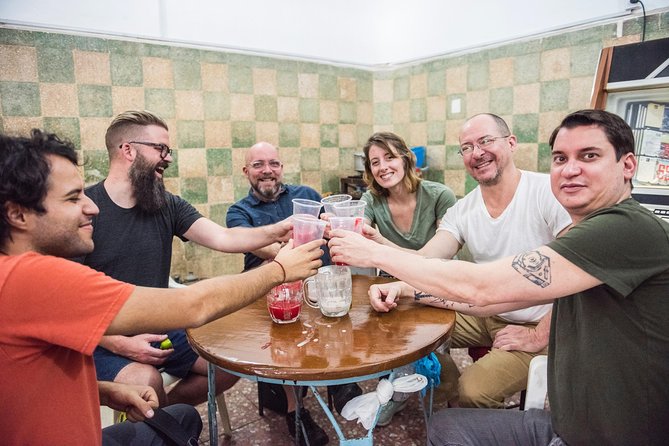
Santa María la Ribera gives you a very different Mexico City food outing. Instead of hopping between famous downtown sights, you spend about three and a half hours eating through a neighborhood founded in the 1860s, where old buildings, local markets, family businesses, and a century-old pulquería still shape daily life.
I especially like the working tamales factory, with more than 20 varieties made each day, and the hands-on stop at a garden where you make your own herb-infused Mexican salt. The small-group format also matters here. With a maximum of eight people, guide Nico Garcia can make the walk feel personal rather than rushed.
The main consideration is the price: $122.46 per person is a serious spend for a food tour in Mexico City. Still, the amount of food is intended to cover a large breakfast and lunch combined, and the experience includes several drinks and access to places you would be unlikely to find on your own.
In This Review
- Key points to know before booking
- Why Santa María la Ribera makes a better food walk
- Making herb-infused salt in a local garden
- The tamales factory with more than 20 daily choices
- A quick walk through the traditional city market
- A cooking school that supports local food businesses
- Entering the no-sign pulquería
- Santa María la Ribera landmarks and the geology museum
- Buñuelos, agua fresca, and the final drink
- What the $122.46 price really covers
- Group size, walking, and timing
- Who should book this experience
- Should you book The Best of Santa Maria de la Ribera?
- FAQ
- Where does the tour begin?
- Where does the tour end?
- What time does the tour start?
- How long does the experience last?
- How much does the tour cost?
- How many people can join the tour?
- Is transportation included?
- What drinks are included?
- Is the tour offered in English?
- Can I cancel for a full refund?
Key points to know before booking
- More than 20 tamale varieties: Visit a working neighborhood factory that makes tamales daily.
- A secret pulquería: Enter a no-sign bar with swinging doors and a tradition dating back more than 100 years.
- A full meal, not just snacks: The included food is enough for a large breakfast and lunch combined.
- A small neighborhood setting: Explore Santa María la Ribera with a maximum of eight people.
- Hands-on Mexican flavor: Make herb-infused salt and sample traditional pulque, buñuelos, and agua fresca.
- Useful end point: Finish at El Estanquillo El 32, where you can buy coffee, honey, salsas, mezcal, and craft beer.
Why Santa María la Ribera makes a better food walk
Mexico City has no shortage of food tours. Many focus on famous markets or well-known central neighborhoods. This one takes you to Santa María la Ribera, a district with a quieter, more local feel and a strong connection to the city’s older architecture and working food culture.
The neighborhood was founded in the 1860s and still holds onto much of its turn-of-the-century character. That gives the tour more depth than a simple meal crawl. You are not only trying Mexican dishes. You are also seeing how food fits into a residential part of the city that many visitors skip.
The route begins at Alameda de Santa María, a useful meeting point because it places you right in the neighborhood rather than at a hotel or tourist office. The tour starts at 1:00 pm and finishes at Restaurante El Estanquillo El 32 on Calle Dr. Enrique González Martínez.
That afternoon start is worth noting. You should arrive ready to eat, since the included portions add up to a substantial meal. I would keep breakfast light, but not skip it entirely if you are sensitive to spicy food, rich dishes, or fermented drinks.
Other Mexico City days people book alongside this one:
- Teotihuacan, Guadalupe Shrine & Tlatelolco Day Tour with Lunch
★ 5.0 · 11,603 reviews - Xochimilco, Coyoacan and Frida Kahlo with Optional Lunch
★ 4.5 · 7,320 reviews - Balloon flight + Breakfast in cave + Pyramids + Pick up CDMX.
★ 5.0 · 6,335 reviews
Making herb-infused salt in a local garden
One of the more unusual stops is a garden where you make your own herb-infused Mexican salt. It is a small activity, but it gives you a direct connection to the flavors used throughout the rest of the day.
Food tours often let you taste ingredients without explaining how they are used. Here, you get to handle the seasoning and understand how herbs and salt can change a dish. You also leave with something you made yourself, although souvenirs are not included as part of the tour.
This stop should appeal to you if you enjoy food preparation as much as eating. It is less useful if you want a tour built only around large tastings, but the activity helps break up the walking and adds a practical touch.
The tamales factory with more than 20 daily choices
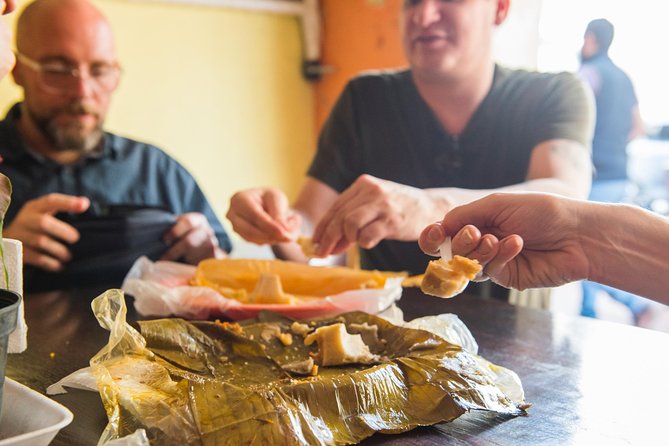
The tamales factory is likely to be the food centerpiece. It is a working neighborhood business that prepares more than 20 varieties daily, giving you a chance to see tamales as an everyday food rather than a single standard dish.
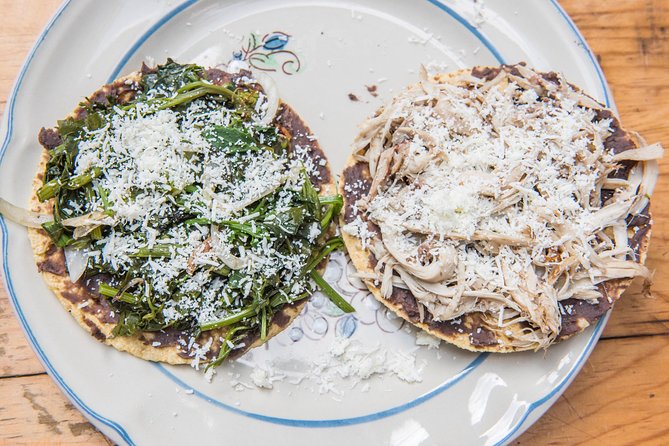
Tamales can vary widely in filling, seasoning, texture, and preparation. A factory with that many options shows the breadth of the dish far better than one sample at a restaurant. You may also get a clearer sense of how important tamales are in ordinary Mexican eating.
The supplied tour details describe this as the place the organizers consider the best tamale source in the city. That is a strong claim, so I would treat it as a personal recommendation rather than an objective ranking. The useful point is that you are visiting a working producer with an unusually broad daily selection.
Expect this stop to be filling. Since the food allowance covers a large breakfast and lunch combined, you do not need to save room by avoiding the tamales altogether. Instead, pace yourself and take small portions when possible.
A quick walk through the traditional city market
The market stop is brief, but it gives the tour a needed change of pace. You will see how a traditional Mexico City market looks and feels, with the focus on ordinary neighborhood shopping rather than a polished food hall.
The value here is context. After tasting prepared food, you can look at the setting where local ingredients are bought and sold. It helps connect the dishes on your plate with the daily food economy around them.
Because the itinerary describes this as a quick stroll, do not expect a long market visit or an extended shopping period. This is a stop for observation and orientation. If you want time to browse every stall, ask questions, or buy ingredients, the schedule may feel short.
The market also adds variety to the afternoon. The tour is not simply a series of seated tastings. You move between food production, shopping, cooking, drinking, and neighborhood landmarks.
A completely different day out, same corner of Mexico City:
- Teotihuacan pyramids morning or afternoon without tourist traps
★ 5.0 · 6,186 reviews - Teotihuacan Early Access Guided Tour with optional Lunch
★ 4.5 · 6,138 reviews - Balloon flight + pick up in CDMX + Breakfast in Cave + Pyramids
★ 5.0 · 5,651 reviews - Balloon Flight + Cave Breakfast + Pick Up from CDMX or We Fly
★ 5.0 · 4,410 reviews
A cooking school that supports local food businesses
You will also visit a neighborhood cooking school and restaurant that helps local people who want to start food businesses. This stop gives the tour a social side without turning it into a lecture.
I like this kind of visit because it shows food as work, training, and opportunity. Mexico City cuisine is not only about recipes handed down at home. It also depends on people learning skills, building small businesses, and finding ways to earn a living through cooking.
The cooking school and restaurant may be especially interesting if you want to understand how local food businesses get started. The supplied information does not specify a formal cooking lesson here, so you should not book expecting a full class. Think of it as a visit that connects the meal to the people and enterprises behind it.
This is also a good place for Nico Garcia’s role to matter. A culinary guide can explain why a neighborhood restaurant or training program has a place on the route, rather than treating it as just another stop for a bite.
Entering the no-sign pulquería
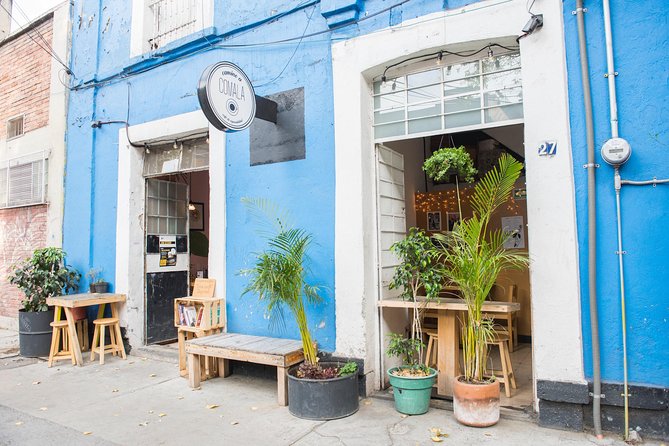
The pulquería may be the most distinctive stop of the afternoon. It is hidden behind swinging saloon doors and has no sign, yet it has served neighborhood residents for more than 100 years.
Pulque is a fermented Mexican drink with roots reaching back to pre-Hispanic times. It is not simply another alcoholic beverage to check off a tasting list. It connects the present-day neighborhood with a much older drinking tradition.
The tour includes a generous taste of traditional pulque. You also receive one Mexican microbrew or mezcal, giving you a choice between another beer or a stronger agave-based drink. Additional personal beverages are not included, so budget separately if you want more than the stated drinks.
The pulquería may not suit everyone. Fermented drinks have a particular flavor and texture, and some people may prefer to sample only a small amount. You can still appreciate the place and its history without treating the tasting like a challenge.
I would also keep an open mind about the setting. A no-sign neighborhood bar with swinging doors is part of the appeal, but it may feel less polished than a modern cocktail venue. That is exactly why it fits this tour.
Santa María la Ribera landmarks and the geology museum
Between food stops, the walk points out landmarks that help explain Santa María la Ribera. One listed highlight is a geology museum more than 100 years old.
The museum gives the route an architectural and cultural anchor. You are not moving through an anonymous collection of eateries. You are seeing a district with public institutions and buildings that have lasted through major changes in Mexico City.
The tour details do not promise a full museum visit, so plan to see it as one of the neighborhood landmarks rather than a separate museum tour. If you have a special interest in geology or historic buildings, you may want to return on your own if your schedule allows.
This portion also helps the afternoon feel balanced. After the tamales, pulque, and sweets, a short walk makes the experience easier to manage. You get time to notice the streets and buildings instead of eating continuously for three and a half hours.
Buñuelos, agua fresca, and the final drink
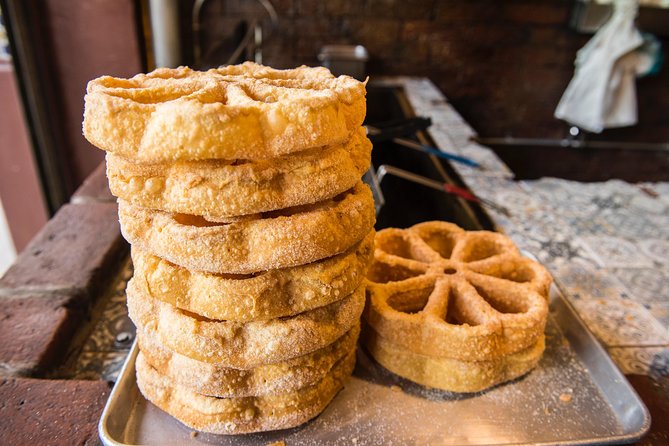
The sweet finish is buñuelos, crunchy fried dough covered with sugar syrup. It is a simple dessert, but it provides a clear contrast to savory tamales and fermented pulque.
You also receive one agua fresca and one coffee or tea at the end of the tour. Agua fresca adds a nonalcoholic Mexican drink to the mix, while coffee or tea gives you a gentler finish after the heavier food.
The inclusion of these drinks strengthens the value of the tour. You are not paying only for samples and then buying every beverage separately. The package includes a broad range of flavors, from herbal salt and savory fillings to sweet syrup, fruit-based refreshment, coffee or tea, pulque, and either beer or mezcal.
Still, you should check your own eating habits before booking. Anyone with dietary restrictions, allergies, or strong limits around alcohol should contact the provider before committing. The supplied details do not list specific substitutions or dietary accommodations.
What the $122.46 price really covers
At $122.46 per person, this tour costs more than simply visiting a market and buying tamales on your own. The price makes more sense if you value the guide, the route, the small group, and the amount of included food.
You are receiving enough food for a large breakfast and lunch combined. You also get one agua fresca, one coffee or tea, a generous pulque tasting, and one Mexican microbrew or mezcal. That is a substantial package, not a few token samples.
The less obvious part of the value is access. The no-sign pulquería and working tamales factory are not the sort of places most visitors would locate without local help. The cooking school, garden, market, and neighborhood landmarks add further stops that would be difficult to combine efficiently on your own.
The price is easiest to justify if this is one of your main food experiences in Mexico City. It is less appealing if you are mainly looking for a cheap lunch or a quick introduction to Mexican snacks. You are paying for the entire afternoon and the guide’s ability to connect the stops.
Group size, walking, and timing
The tour has a maximum of eight people, which is small enough for questions and conversation without the logistics of a large bus group. One description of the experience refers to a group of four people, but the stated booking limit is eight, so you should not assume the smaller number every time.
A small group is particularly helpful in a market, factory, or narrow neighborhood bar. You can hear the guide more easily, move through local businesses with less disruption, and ask for explanations about ingredients or customs.
The tour lasts about three hours and 30 minutes, with the itinerary itself described as roughly three hours. Allow the full stated duration when planning the rest of your day. Starting at 1:00 pm means the tour can occupy much of your afternoon.
You arrange your own transport to the Alameda meeting point and from El Estanquillo El 32 at the end. The area is near public transportation, which helps, but transportation is not included. Plan your route in advance and leave enough time to arrive before the 1:00 pm start.
The end point is useful rather than random. El Estanquillo El 32 is a family-run restaurant and store selling craft beer, artisanal mezcal, coffee, honey, salsas, and other products. You can browse for edible souvenirs or continue your meal there, but purchases are extra.
Who should book this experience
I would recommend this tour to you if you enjoy eating in ordinary neighborhoods, trying foods with a strong cultural story, and spending time with a guide who can explain local traditions. It is also a good fit if you want to get beyond the most familiar parts of Mexico City.
Food-focused visitors will get the most from the tamales factory and the broad tasting menu. Curious drinkers will appreciate the pulque and the choice of microbrew or mezcal. People interested in small businesses may find the cooking school especially worthwhile.
The tour may be less suitable if you want a formal museum visit, a long market-shopping session, or a purely culinary class. It also may not be the best match if you dislike fermented drinks, fried sweets, or large amounts of food.
The food-heavy format means you should pace yourself. You do not need to eat every item in large quantities to enjoy the range, and the small group should make it easier to ask the guide about ingredients and portions.
Should you book The Best of Santa Maria de la Ribera?
Book it if you want a personal, food-centered look at a part of Mexico City that many visitors miss. The tamales factory, century-old pulquería, herb-salt activity, local market, and cooking school create a varied afternoon rather than a standard restaurant crawl.
At $122.46, it is not a bargain tour. But the included food and drinks are generous, and the route offers access to places that would be hard to find alone. For a first or second visit to Mexico City, this is a strong choice if you value local food culture more than famous sights.
FAQ
Where does the tour begin?
The tour begins at Alameda de Santa María, on Calle Salvador Díaz Mirón in Santa María la Ribera, Cuauhtémoc, Mexico City.
Where does the tour end?
The tour ends at Restaurante El Estanquillo El 32, at Calle Dr. Enrique González Martínez 32 in Santa María la Ribera.
What time does the tour start?
The tour starts at 1:00 pm.
How long does the experience last?
The experience lasts approximately three hours and 30 minutes. The itinerary itself is described as about three hours.
How much does the tour cost?
The listed price is $122.46 per person.
How many people can join the tour?
The maximum group size is eight travelers.
Is transportation included?
No. Transportation to the meeting point and from the end point is not included.
What drinks are included?
You receive one agua fresca, one coffee or tea, a generous taste of traditional pulque, and one Mexican microbrew or mezcal.
Is the tour offered in English?
Yes. The tour is offered in English.
Can I cancel for a full refund?
Yes. You can cancel at least 24 hours before the start time for a full refund. Cancellations made less than 24 hours before the start time are not refunded, and changes within that period are not accepted.
Just added around Mexico City
- Mexico City: Hop-on Hop-off City Tour by Turibus 2-Day Pass★ 4.0 · 10 reviews
- Anthropology Museum, Chapultepec Castle & Cable Car Tour★ 4.5 · 10 reviews
- Multi-Variety Mole Class in a Condesa home or art gallery rooftop★ 5.0 · 10 reviews
- PRIVATE TOUR Colonial Town Taxco and Cuernavaca from CDMX.★ 5.0 · 10 reviews
- El Centro Street Food Walking Tour★ 5.0 · 10 reviews
- Private Round-Trip Transportation to Teotihuacan Pyramids★ 5.0 · 10 reviews
- Teotihuacan and My Grandma’s Food Tour★ 5.0 · 10 reviews
- Private Walking Tour Legends and Events Historic Center CDMX★ 4.8 · 10 reviews