
Reviewed · MEXICO CITY
The hidden archaeology in the CDMX
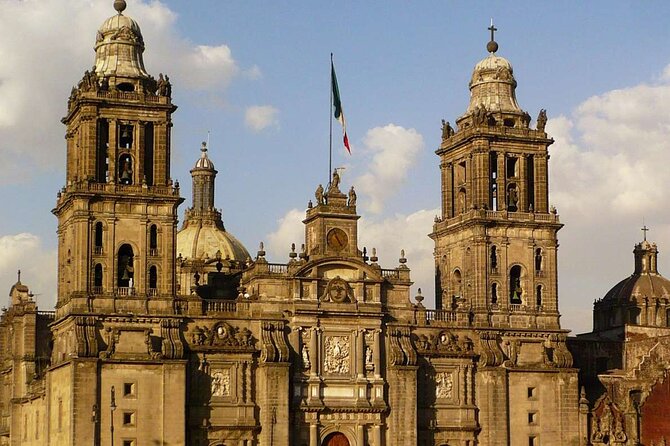
Mexico City’s grandest streets conceal traces of Tenochtitlán, the Aztec capital that existed beneath today’s Centro Histórico. This four-hour private walk links those clues, from Hospital de Jesús and the Zócalo to archaeological windows near the former archbishop’s palace and the sacred precinct of Templo Mayor.
I like the focused route and the private format, since your group can follow one English-speaking guide without being folded into a large crowd. I also like the modest $30.49 price, especially if you want historical context before exploring the area on your own.
The main drawback is clear: the sites are visited from outside, so this is an interpretive street walk rather than a museum tour. One serious service failure is also on record: a guide once missed the appointment because of a family medical emergency and did not notify the group, so confirm your arrangements before setting out.
In This Review
- Key points to know before booking
- Why this route matters in Mexico City
- Starting on José María Izazaga
- Hospital de Jesús and the first colonial layer
- The Museo de la Ciudad de México in 10 minutes
- Reading the Zócalo beyond the flagpole
- Archaeological windows near the old archbishop’s palace
- Templo Mayor and the Mexica sacred precinct
- Centro Cultural España and the old school for Mexica elites
- Casa de los Azulejos and the route toward Bellas Artes
- What $30.49 buys you
- Who should book this walking tour
- Booking advice and cancellation terms
- Should you book The Hidden Archaeology in CDMX?
- FAQ
- How long does the tour last?
- What language is the tour offered in?
- Is this a private tour?
- Where does the tour start?
- Where does the tour end?
- Are admission tickets included?
- Can I cancel for a full refund?
Key points to know before booking
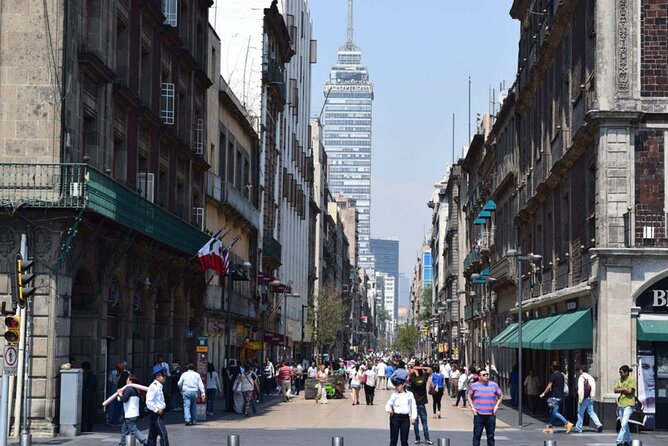
- Tenochtitlán beneath modern streets: The walk helps you picture the Mexica capital and its defeat by Spanish forces and Indigenous allies.
- Private, English-language format: Only your group takes part, with a mobile ticket and an approximate four-hour duration.
- Eight central Mexico City stops: The route includes the Historic Center, Hospital de Jesús, the City Museum, Zócalo, Templo Mayor, Casa de los Tiles, and more.
- Outside viewing only: Museums and historic buildings are discussed from the street, with no admission tickets included.
- A useful final location: The tour ends at the Plaza del Palacio de Bellas Artes, a handy point for continuing your day.
- Best for walkers without babies: Most people can participate, but the operator does not recommend bringing babies.
Why this route matters in Mexico City
A first visit to Mexico City can feel like a collision of grand colonial buildings, modern traffic, civic plazas, and ancient ruins. The key to understanding the Centro Histórico is recognizing that these layers occupy the same ground.
This tour is built around that idea. Instead of treating each building as a separate sight, the guide connects the present-day streets with Mexico Tenochtitlán, the Mexica capital that was defeated by Spanish forces and their Indigenous allies. You are not simply checking off monuments. You are being shown how power, religion, conquest, and urban life overlap in the center of CDMX.
I find that approach useful because many archaeological clues are easy to miss when you are walking quickly toward the Zócalo or Palacio de Bellas Artes. A short explanation can change the way you see a wall, a plaza, or an otherwise ordinary section of pavement.
The route lasts about four hours and is private. That gives you a more personal setting than a large group tour, though the quality depends heavily on the guide who arrives and how clearly the history is explained.
Other Mexico City days people book alongside this one:
- Teotihuacan, Guadalupe Shrine & Tlatelolco Day Tour with Lunch
★ 5.0 · 11,603 reviews - Xochimilco, Coyoacan and Frida Kahlo with Optional Lunch
★ 4.5 · 7,320 reviews - Balloon flight + Breakfast in cave + Pyramids + Pick up CDMX.
★ 5.0 · 6,335 reviews
Starting on José María Izazaga
The meeting point is José María Izazaga 129 in the Centro Histórico, near public transportation. This is a practical starting area for a walking route through central Mexico City, but you should allow time to locate the exact address. In a dense historic district, a few minutes spent finding the right entrance can matter.
The tour begins with roughly one hour and 50 minutes in the Historic Center. That is the longest portion of the experience, and rightly so. The center contains the main story: the former Mexica capital, the Spanish takeover, and the later city built over the earlier one.
Because the sites are viewed from outside, you should arrive ready to listen and look closely rather than expecting a series of indoor visits. This format works best if you enjoy context, architectural details, and a guide’s explanation of what may be difficult to interpret on your own.
Hospital de Jesús and the first colonial layer
The stop at Hospital de Jesús Nazareno lasts about 10 minutes. The guide explains the hospital’s history, its importance, and the unusual magic associated with the site.
The supplied information does not specify every detail you will see there, so I would treat this as a concise orientation stop rather than a full building visit. Its value comes from placing the early colonial period into the route. The hospital is part of the story of what followed the fall of Tenochtitlán, when Spanish institutions began taking root in the former Mexica capital.
Ten minutes is enough for a sharp explanation and a look from outside. It is not enough for a long architectural study, so keep your expectations in line with the format.
The Museo de la Ciudad de México in 10 minutes
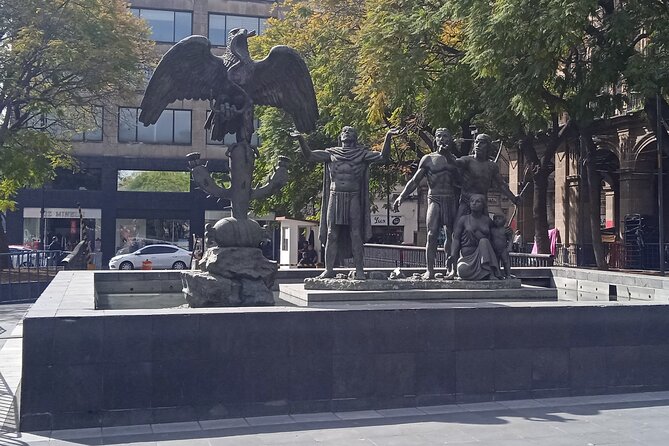
Next comes the Museo de la Ciudad de México, housed in a building connected with the history of Mexico City. The stop lasts about 10 minutes and is also an exterior visit.
This is a useful pause in the larger story. The route moves from the ancient Mexica city and early colonial rule toward the broader development of Mexico City itself. You can see how the city’s identity expanded beyond one period or one ruling group.
If you want to enter the museum and examine its collections, you would need to do so separately. The tour gives you the building and its place in the city’s story, not an indoor museum experience or included admission.
A completely different day out, same corner of Mexico City:
- Teotihuacan pyramids morning or afternoon without tourist traps
★ 5.0 · 6,186 reviews - Teotihuacan Early Access Guided Tour with optional Lunch
★ 4.5 · 6,138 reviews - Balloon flight + pick up in CDMX + Breakfast in Cave + Pyramids
★ 5.0 · 5,651 reviews - Balloon Flight + Cave Breakfast + Pick Up from CDMX or We Fly
★ 5.0 · 4,410 reviews
Reading the Zócalo beyond the flagpole
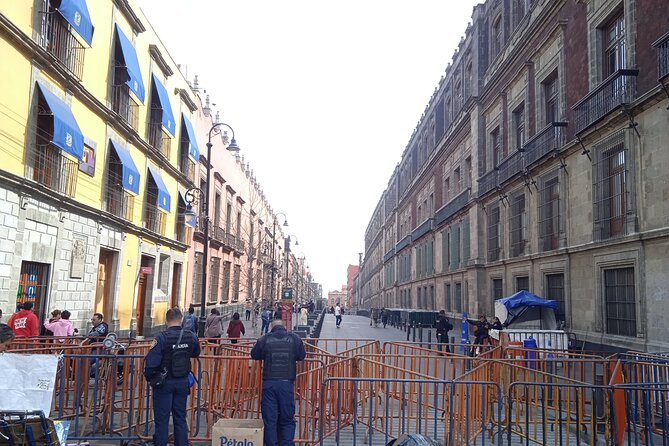
The Zócalo receives about 20 minutes. This is one of Mexico City’s most recognizable public spaces, and it can be easy to see only the wide plaza, the national flag, and the buildings around it.
The guide’s job here is to point out the important details that make the square more than a photo stop. The Zócalo sits at the heart of the city’s political and ceremonial life, and this tour places it within the earlier Mexica sacred and civic center.
Twenty minutes is a sensible amount of time for a guided overview. You get a framework for the plaza without spending the whole afternoon there. I would pay close attention to directions and spatial relationships, since the point is to imagine what stood here before the modern city took shape.
Archaeological windows near the old archbishop’s palace
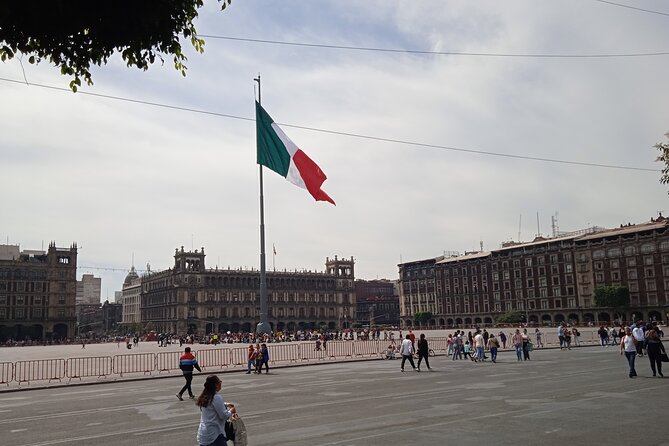
At the Museo de Arte SHCP, housed in the Antiguo Palacio del Arzobispado, the guide shows a series of archaeological windows in the area. This stop lasts about 20 minutes.
These archaeological windows are among the route’s most distinctive details. They offer a way to see evidence of earlier construction within a living city, rather than treating archaeology as something found only in a fenced-off ruin zone.
The stop is especially valuable for visitors who want to understand how old layers remain present in the Centro Histórico. Still, remember that the tour visits sites from outside. The guide can explain what the windows reveal, but you should not book this expecting a full visit to the art museum or palace.
Templo Mayor and the Mexica sacred precinct
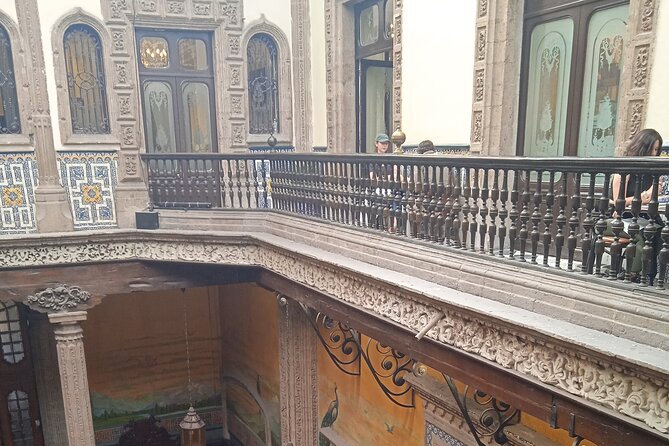
The Museo del Templo Mayor receives about 30 minutes, making it one of the tour’s major stops. Here the guide explains how the Aztec sacred space worked and what its structure was like.
This is the point where the earlier parts of the walk come together. The Zócalo, nearby colonial buildings, and archaeological remains are not isolated attractions. They belong to the same central zone, where the Mexica capital once organized religious and civic life.
The tour does not include museum admission, and the site is visited from outside. That distinction matters. If you want to examine the Templo Mayor collection or spend time among the excavated remains, you will need a separate visit. But as a guided introduction, 30 minutes can help you understand what you are looking at before you return independently.
I like having Templo Mayor explained as a working sacred space rather than just a pile of ruins. That interpretation gives the central district a stronger sense of structure and purpose.
Centro Cultural España and the old school for Mexica elites
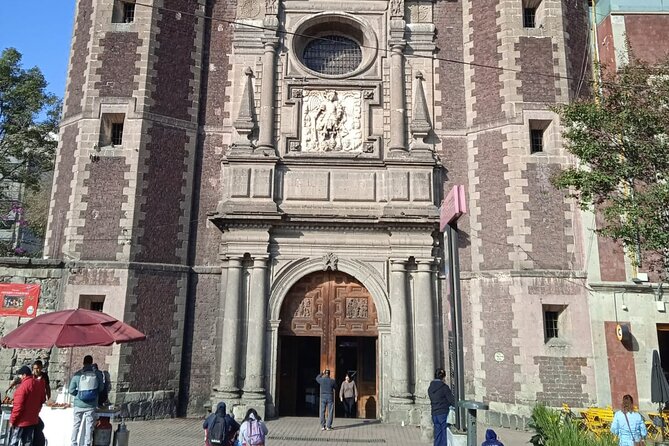
The route then reaches Centro Cultural España en México for about 20 minutes. The guide presents it as the location of the old university for the Mexica elite.
This stop adds an educational side to the story. The Mexica capital was not only a place of temples and warfare. It also had systems for training and preparing its ruling class. That makes the route broader than a simple conquest narrative.
As with the other stops, you should expect an explanation from outside rather than a scheduled indoor cultural-center visit. The strength of the stop is the connection between a present-day cultural institution and the older Mexica world beneath and around it.
Casa de los Azulejos and the route toward Bellas Artes
The final listed stop is the House of Tiles, one of the most beautiful houses in the Historic Center. The visit lasts about 15 minutes.
The building provides a change of pace after the heavier archaeological and conquest material. Its appearance reminds you that Mexico City’s historic center is also a place of grand domestic and civic architecture. The tour does not provide a detailed interior program here, so the stop is best understood as an exterior look and a chance to appreciate the building’s place in the city.
The tour ends at the Plaza del Palacio de Bellas Artes. This is a useful finish because Bellas Artes is one of the central district’s key orientation points. From there, you can continue sightseeing, arrange transportation, or make your own way to another part of the city.
What $30.49 buys you
At $30.49 per person, the cost is reasonable for a private, four-hour, English-language walking experience if you value interpretation more than admissions. You are paying for a guide’s time, a carefully connected route, and the convenience of seeing several major sites in one organized outing.
The value is less compelling if you want extensive indoor access. Admission tickets are listed as free because the tour does not charge for entry, but the sites are visited from outside. You may decide to return to Templo Mayor, the City Museum, or another museum separately, adding both time and cost to your day.
The private format improves the value for couples, families with older children, or small groups who want to ask questions and move at their own pace. It is less useful for someone who prefers to wander alone with a guidebook and stop only at places they plan to enter.
The overall rating is 4.6, with 90 percent of participants recommending the experience. That points to generally strong approval, but the service record deserves a practical note. One booking ended badly when the guide did not arrive and failed to send a cancellation message. The guide later apologized and explained there had been a family medical emergency, but the lack of notice left the group waiting for an hour.
I would not treat one failure as proof that the tour is unreliable. I would, however, confirm the meeting details and contact information before the start time. If the guide is late, do not silently wait for a full hour without trying to reach the operator.
Who should book this walking tour
I would choose this tour if you are visiting Mexico City for the first time and want a clear story for the Centro Histórico. It suits anyone who likes archaeology, city history, and the idea of seeing old layers in ordinary streets.
It is also a good fit if you have only part of a day. The route covers a large number of significant points in about four hours, then leaves you at Bellas Artes for more independent sightseeing.
The tour is less suitable if your main goal is museum time, close access to ruins, or a relaxed café-and-photography walk. The schedule includes eight stops, so expect steady movement and short explanations at several locations.
Babies are not recommended, and the operator says most people can participate. Since it is a walking route through the center, think carefully about your group’s ability to stay with the guide for nearly four hours. The private format helps, but it does not turn the experience into a seated tour.
Booking advice and cancellation terms
Confirmation arrives when you book, and the ticket is mobile, so you do not need a printed voucher. The area is near public transportation, which makes the starting point practical for a central Mexico City visit.
Free cancellation is available up to 24 hours before the local start time for a full refund. Cancellations or changes made less than 24 hours before the experience are not refunded or accepted.
Because the tour is private, only your group participates. That is helpful for keeping the pace comfortable and for asking questions about specific buildings, but it also means the experience depends on one guide rather than the energy of a larger group.
Should you book The Hidden Archaeology in CDMX?
Book it if you want an affordable, private introduction to how Tenochtitlán, Spanish conquest, colonial institutions, and modern Mexico City occupy the same center. The route is strongest when the guide makes you look twice at places you might otherwise pass without thought.
Skip it if you expect included museum entry or long visits inside each building. This is a four-hour exterior walking tour, not a collection of museum admissions.
For most first-time visitors who want the city’s archaeological story explained in plain language, I think the $30.49 price is fair. Confirm the appointment before you leave, wear suitable walking shoes, and keep a separate block of time for any museum you want to enter.
FAQ
How long does the tour last?
The experience lasts approximately four hours.
What language is the tour offered in?
The tour is offered in English.
Is this a private tour?
Yes. Only your group participates.
Where does the tour start?
It starts at José María Izazaga 129 in Centro Histórico, Mexico City.
Where does the tour end?
It ends in the Plaza del Palacio de Bellas Artes.
Are admission tickets included?
No admission charge is listed, and all sites are visited from outside. The experience does not provide an indoor museum visit.
Can I cancel for a full refund?
Yes. You can cancel at least 24 hours before the local start time for a full refund. Cancellations or changes made less than 24 hours before the start are not accepted or refunded.
Just added around Mexico City
- Ticket to Frida Kahlo Museum (Blue House)★ 5.0 · 3 reviews
- Valle de Bravo: Forest Hiking Adventure★ 4.4 · 3 reviews
- Chapultepec Castle and Anthropology Tour, starting from CDMX★ 5.0 · 3 reviews
- La Roma Private Art Tour★ 5.0 · 3 reviews
- Private Transportation: Pickup and Drop-Off★ 5.0 · 3 reviews
- Mexico City: Relaxing or Decontracting Massage Experience★ 5.0 · 3 reviews
- Grutas de Tulantongo★ 3.0 · 3 reviews
- Mexico City: Local Walking Tour with Mezcal & Wrestling Show★ 5.0 · 3 reviews