
Reviewed · MEXICO CITY
THE REAL CDMX: Under the skin of the city
Mexico City reveals itself through its food, and this tour starts where many visitors never look: working-class Guerrero. You’ll eat Oaxacan tamales, browse a local market, ride the Metro, taste pulque, and work your way toward Bellas Artes and the Zócalo. Guides such as Olin and Fernando mix city history with jokes, personal stories, and practical advice.
I like the way the tour uses food as a key to the city. I also like the small group size, capped at 10, which makes a crowded market and busy Metro ride easier to manage. The main caution is the pace: there is a lot of walking, and the four-hour estimate can stretch past five hours.
In This Review
- Key points to know before booking
- Why this Mexico City tour feels different
- Tamales and chocolate in Guerrero
- A local market and the language of Mexican food
- Cecina tacos at an old market taquería
- Taking the Metro like a chilango
- Pulque and fried quesadillas
- Blue corn tlacoyos and the move downtown
- Bellas Artes, Torre Latino, and stories beyond the textbook
- Tacos and a rooftop finish near the Zócalo
- What the $47.79 price buys you
- Walking, timing, and who should book
- Cancellation and weather details
- Should you book The Real CDMX?
- FAQ
- Where does the tour begin?
- What time does the experience start?
- Where does the tour end?
- How long does the tour last?
- What food is included?
- Are drinks included?
- Are vegetarian options available?
- How large is the group?
- Is the tour offered in English?
- What is the cancellation policy?
Key points to know before booking
- A Guerrero start: Begin with tamales and chocolate in a neighborhood most sightseeing routes skip.
- Four food stops: Expect tamales, a cecina taco, a fried quesadilla, and a blue-corn tlacoyo, with vegetarian choices available.
- Three drinks: The route includes chocolate, pulque, and other local drinks, with exact servings depending on the day.
- A real Metro ride: You cross part of the city as residents do, rather than staying only in the historic center.
- A useful first-day tour: The route helps you understand how Guerrero, the central sights, and the Zócalo fit together.
- A small English-language group: The maximum is 10 people, and the listed start time is 9 a.m.
Why this Mexico City tour feels different
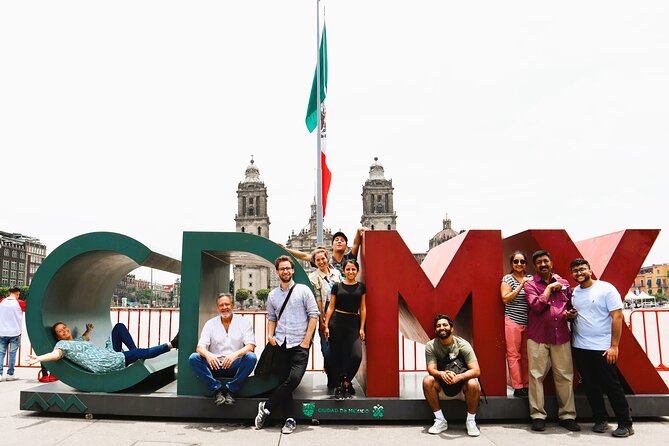
Many Mexico City walks begin at the Zócalo and spend the day among the grandest buildings. This one takes the opposite route. You start at Lerdo 196 in Guerrero, north of the postcard center, then gradually move toward the city’s best-known landmarks.
That choice matters. Guerrero gives you a look at an everyday part of the capital before the route turns toward the monuments. You are not simply walking between famous buildings and checking off sights. You are learning how food stalls, markets, public transport, old architecture, and central plazas connect.
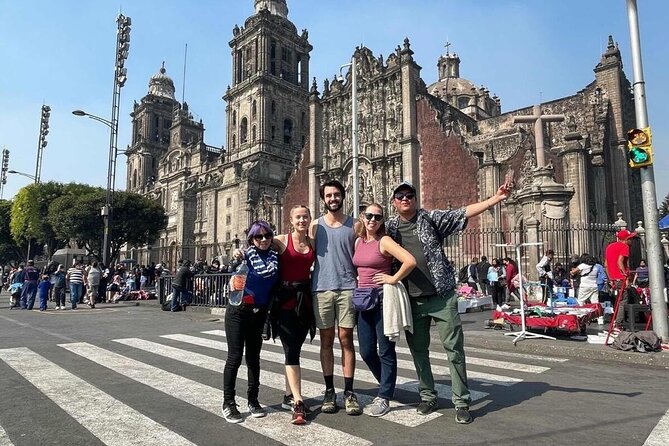
The tour also has a social tone. Olin, sometimes listed as Ollin or Oliverdo, has led many outings, while Fernando and Alex have also guided the experience. Their approach combines short history lessons with questions, jokes, recommendations, and personal stories. One recurring feature is the guide’s comic account of his love life, which keeps the historic material from feeling like a lecture.
The published rating is 4.9 from 111 ratings, with 98 percent of customers recommending the experience. Those numbers suggest a strong track record, but the more useful point is what the tour actually offers: food, transport, architecture, history, and a local point of view in one morning.
Other Mexico City days people book alongside this one:
- Teotihuacan, Guadalupe Shrine & Tlatelolco Day Tour with Lunch
★ 5.0 · 11,603 reviews - Xochimilco, Coyoacan and Frida Kahlo with Optional Lunch
★ 4.5 · 7,320 reviews - Balloon flight + Breakfast in cave + Pyramids + Pick up CDMX.
★ 5.0 · 6,335 reviews
Tamales and chocolate in Guerrero
The day begins at 9 a.m. in Guerrero. Do not eat a full breakfast first. The opening meal is not a token sample. It is the first of several substantial food stops.
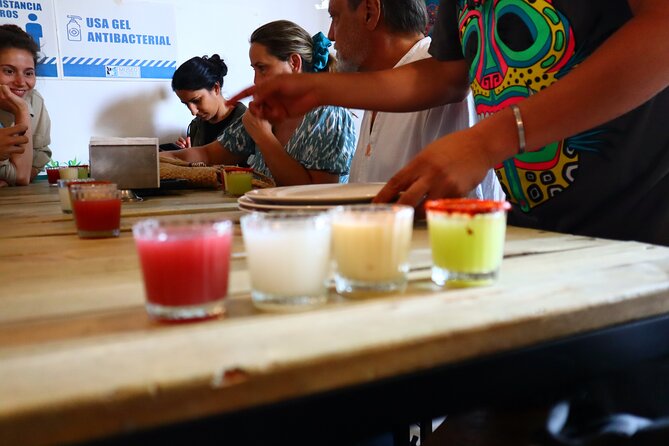
You begin with homemade tamales prepared by a family from Oaxaca, served with chocolate. A tamal is masa, usually corn dough, steamed around a filling and wrapped for cooking. Oaxacan cooking gives this first stop a regional angle, since Mexico City’s food culture is built from traditions brought in by families from across the country.
Some descriptions of the experience also mention atole, a warm corn-based drink, with the tamales. The exact drink service can vary, but the point is the same: you start with a traditional breakfast rather than coffee and a pastry aimed at tourists.
This is one of the strongest parts of the tour for first-time visitors. You get a proper introduction to Mexican food customs, not just a list of dishes. The guide explains what you are eating and helps you approach unfamiliar flavors without making the meal feel formal.
The drawback is clear for picky eaters. Food is central to the experience, and you should tell the provider about dietary needs when booking. Vegetarian options are available, and dietary requests have been accommodated on past outings, but a highly selective eater may want to bring a snack as backup.
A local market and the language of Mexican food
From Guerrero, the route moves into a local market. This is a chance to see ingredients in their working setting instead of behind glass in a food museum.
The market portion includes an introduction to chiles and mole. Mole is not one single sauce. It is a broad family of sauces that may include chiles, spices, nuts, seeds, fruit, or chocolate, depending on the region and recipe. A stop among jars, powders, and fresh ingredients helps you understand why Mexican food has so many layers.
You may also try a fresh green juice and additional food along the way. The itinerary promises four dishes and three drinks, although the supplied menu lists the main food examples rather than every serving. Come hungry, but pace yourself. The morning builds one taste after another.
I especially like the market stop because it gives you useful context for later meals. After seeing the raw materials, a taco or tlacoyo becomes more than a quick bite. You can recognize the corn, chile, beans, cactus, and meat traditions that shape daily cooking.
The market is also one of the places where a small group helps. Ten people is still enough to create a little movement in a narrow aisle, but it is far more practical than a large coach group. Keep your belongings close and stay with the guide, since the experience takes place in active public areas rather than a controlled attraction.
Cecina tacos at an old market taquería
One scheduled food stop features a cecina taco at what is described as the oldest taquería in the local market. Cecina is thin, salted, seasoned meat, often beef, that is cooked quickly and served in a tortilla with the usual additions.
This is the kind of stop that explains the tour’s purpose. You are not being sent to a polished restaurant with a menu designed for foreign visitors. You are eating in a market setting, where the food is part of the neighborhood’s normal rhythm.
The tacos are also a practical lesson in vitamin T, the joking local shorthand for tacos, tamales, tortas, and other staples built around the letter T. The phrase appears during the tour as a bit of humor, but it also describes the food focus accurately. You will eat repeatedly, and much of it will be served in compact portions from small local businesses.
If you do not eat meat, ask about substitutions in advance. The experience offers plenty of vegetarian options, but the sample menu specifically names cecina, so it is wise to confirm how that stop will be handled for your group.
A completely different day out, same corner of Mexico City:
- Teotihuacan pyramids morning or afternoon without tourist traps
★ 5.0 · 6,186 reviews - Teotihuacan Early Access Guided Tour with optional Lunch
★ 4.5 · 6,138 reviews - Balloon flight + pick up in CDMX + Breakfast in Cave + Pyramids
★ 5.0 · 5,651 reviews - Balloon Flight + Cave Breakfast + Pick Up from CDMX or We Fly
★ 5.0 · 4,410 reviews
Taking the Metro like a chilango
The Metro ride is one of the most memorable parts of the route. The tour uses local public transport to connect the less-touristed opening area with the historic center.
That sounds simple, but it changes the feel of the morning. Instead of viewing Mexico City only from a guide’s route on foot, you get a short lesson in how the capital moves. The guide can help you understand the city’s scale and point out the difference between a visitor’s central itinerary and an ordinary cross-town trip.
For many first-time visitors, riding the Metro with a local guide removes some of the uncertainty. You are not left to figure out the system alone on your first attempt. At the same time, this is still public transportation, not a private vehicle, so you should expect crowds and keep your group together.
The Metro also breaks up the walking. That is helpful because the tour covers a lot of ground. Still, do not treat the ride as a rest day. Once you return to the streets, more food and sightseeing follow.
Pulque and fried quesadillas
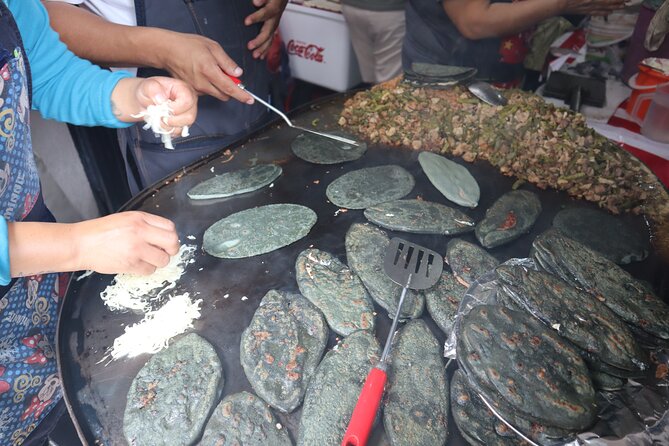
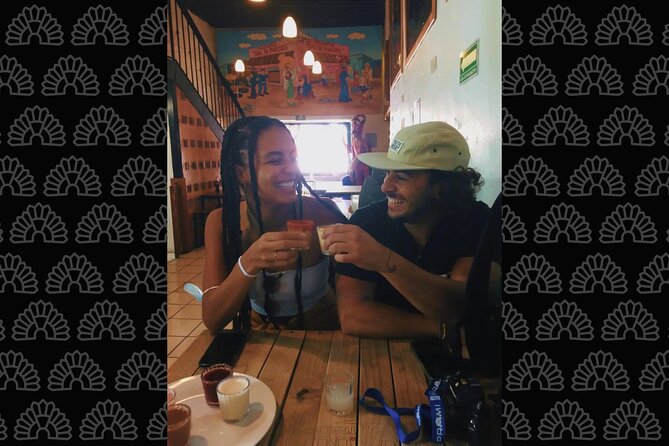
The next food and drink stops bring in older Mexican traditions. Pulque is a fermented drink made from the sap of the maguey plant. It has pre-Hispanic roots and a texture and flavor unlike beer, wine, or tequila.
The pulque tasting is a small but valuable part of the experience because it introduces a drink many visitors might not order on their own. You do not need to be an alcohol expert. The guide explains what it is and gives you a chance to try it in a local setting.
You also stop for a deep-fried quesadilla at a very small street stand. In much of Mexico, a quesadilla may or may not include cheese, depending on the region. The fried corn dough version here is a reminder that the familiar names on a Mexican menu can conceal local differences.
The food is filling, not decorative. This tour works best if you enjoy trying things with an open mind. It is less suited to someone who wants to choose every ingredient or sit down for a long restaurant meal.
Blue corn tlacoyos and the move downtown
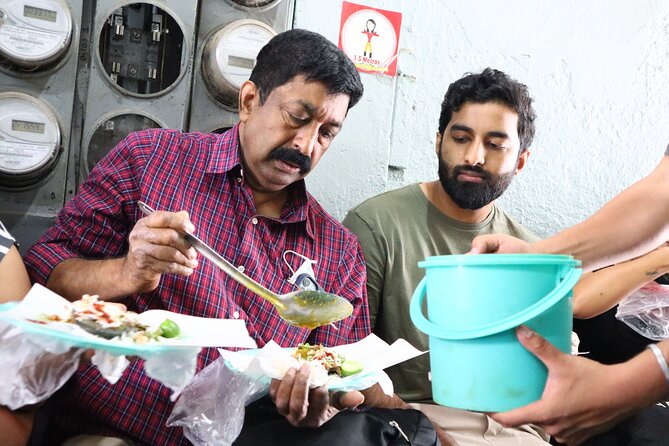
A blue-corn tlacoyo is another listed dish. It is a thick oval masa cake, often filled with beans and topped with ingredients such as cactus, cheese, or salsa. The blue color comes from the corn variety, not artificial coloring.
This stop gives you a closer look at the importance of corn in Mexican cooking. Tortillas, tamales, quesadillas, tlacoyos, and many other foods begin with masa, but their shape, cooking method, and toppings create very different meals.
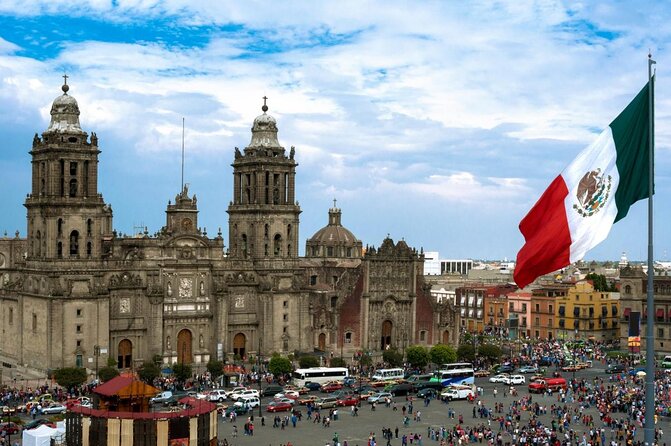
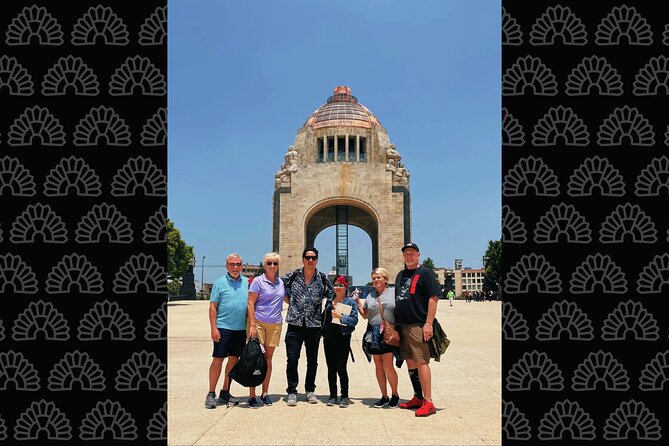
After the neighborhood food stops, the walking route reaches the city’s famous central sights. You pass Palacio de Bellas Artes, one of Mexico City’s most recognizable cultural buildings, and see Torre Latinoamericana. These landmarks are not treated as the entire point of the outing. Instead, they become reference points after you have seen a less polished side of the city.
That order is smart. You first learn how the city works at street level, then use the grand center to orient yourself. If you plan to explore downtown independently later, you will have a better sense of where the main areas connect and which streets deserve more of your time.
Bellas Artes, Torre Latino, and stories beyond the textbook
The historic information is delivered in short sections rather than one long speech. That suits the route. You may be eating, crossing a street, entering a market, or watching the city pass from the Metro, so brief explanations work better than a formal lecture.
The guides cover Mexican and Mexico City history, architecture, language, food, and drinking customs. The stories are designed to be entertaining, with personal anecdotes and jokes mixed into the facts. That balance received strong praise from people who wanted substance without an exhausting classroom session.
I like this format for a first visit. You get enough background to make sense of the buildings and neighborhoods, but the tour does not try to explain every century of Mexican history in four hours. You should still plan separate visits to major museums and interiors if you want detailed art or architectural study.
The walking also gives you a practical map. You see how Palacio de Bellas Artes relates to Torre Latinoamericana and how both fit into the approach to the Zócalo. That orientation is one of the tour’s best values, especially if you book it near the start of your stay.
Tacos and a rooftop finish near the Zócalo
The final stretch brings you into Centro Histórico, where the tour ends near the Zócalo. Before the finish, you stop for tacos described as some of the best in town. This last savory course makes sense after a morning that has moved from breakfast food to market dishes and street snacks.
The official ending is at P.za de la Constitución 58, near the city’s main square. The tour then finishes on a rooftop terrace with drinks and views over the Zócalo. After the close quarters of a market and Metro ride, the open terrace offers a calmer place to talk, take in the city, and ask the guide for recommendations.
This final setting is attractive, but it may also be the easiest part to miss if the tour runs late. One person reported leaving before the end to catch a flight, and another said the outing lasted more than five hours. The listed duration is about four hours, so avoid scheduling a tight appointment, airport transfer, or museum entry immediately afterward.
What the $47.79 price buys you
At $47.79 per person, the price is fair if you make use of the included food, drinks, transport, guiding, and orientation. You are not paying only for a walk through the center. You are getting a small-group route that links Guerrero, a market, local food businesses, the Metro, major central sights, and a rooftop finish.
The value is strongest for a first visit. Hiring separate guides for history, food, and city orientation would cost more and take additional planning. This experience combines all three in one morning.
The value is lower if you mainly want famous monuments or a slow restaurant meal. The route gives you views of important central buildings, but it is not a museum tour and does not promise long interior visits. It is also a poor fit if you dislike public transportation, street food, or a changing schedule.
Booking 27 days ahead on average suggests that you should reserve before your trip, especially if you need a particular date. The group maximum of 10 keeps the experience personal, though the small size does not guarantee a private tour.
Walking, timing, and who should book
Wear comfortable walking shoes. The route includes neighborhoods, market aisles, city streets, landmark areas, and the Metro, so the surface and pace will change often.
Bring water even though drinks are included. The food is plentiful, but water is the practical choice between tastings. An early start also means you should arrive ready to eat, not after a large breakfast.
This tour suits you best if you:
- Are visiting Mexico City for the first time
- Want local food more than polished dining
- Enjoy learning through stories and conversation
- Need help getting oriented before exploring alone
- Can manage several hours of walking and public transport
- Are open to unfamiliar foods and drinks
- Want vegetarian choices but are willing to confirm details ahead of time
It can work for a mixed-age family. A family group with a teenager and people in their seventies enjoyed the combination of food and manageable history, though you should consider your group’s walking ability. The tour is also suitable for solo visitors and couples, since the group is small and the guide keeps people involved.
The language offered is English. Confirmation is provided at booking, and the meeting point is near public transportation. Most people can participate, but the supplied information does not describe specific accessibility arrangements, so contact the provider if anyone in your group has mobility needs.
Cancellation and weather details
You can cancel at least 24 hours before the 9 a.m. start for a full refund. Cancellations or changes inside that 24-hour window are not accepted for a refund.
The experience requires good weather and a minimum number of participants. If poor weather or low enrollment causes cancellation, you are offered another date or experience, or a full refund.
Should you book The Real CDMX?
I would book this near the beginning of a Mexico City stay, not on your final morning. The route gives you food ideas, neighborhood context, a first Metro ride, a look at the central landmarks, and recommendations you can use for the rest of your visit.
Book it if you want to eat like a local, enjoy a talkative guide, and see the city beyond its grandest squares. Skip it if you prefer a private car, a short walk, carefully chosen restaurant meals, or a strict four-hour schedule.
For the right person, the $47.79 cost is a solid deal. You get a full stomach, a better city map in your head, and a more useful understanding of how Mexico City connects its working neighborhoods with its historic center.
FAQ
Where does the tour begin?
It begins at Lerdo 196 in Guerrero, Cuauhtémoc, Mexico City.
What time does the experience start?
The scheduled start time is 9 a.m.
Where does the tour end?
It ends at P.za de la Constitución 58 in Centro Histórico, near the Zócalo. The final stop is a rooftop terrace overlooking the city’s main square.
How long does the tour last?
The stated duration is about four hours. It can run longer, with some outings lasting more than five hours, so do not schedule a tight appointment afterward.
What food is included?
The sample menu includes Oaxacan tamales with chocolate, a cecina taco, a fried quesadilla, and a blue-corn tlacoyo filled with beans and cactus. The experience includes four dishes in total.
Are drinks included?
Yes. The experience includes three drinks. Examples include chocolate, pulque, and fresh green juice.
Are vegetarian options available?
Yes. Vegetarian options are available, and you should share dietary needs when booking. The sample menu includes meat, so confirm substitutions in advance if needed.
How large is the group?
The maximum group size is 10 people.
Is the tour offered in English?
Yes. The experience is offered in English.
What is the cancellation policy?
You can cancel at least 24 hours before the start time for a full refund. Cancellations within 24 hours are not refundable. Weather or minimum-participant cancellations may result in another date, another experience, or a full refund.
Just added around Mexico City
- Mexico City: Hop-on Hop-off City Tour by Turibus 2-Day Pass★ 4.0 · 10 reviews
- Anthropology Museum, Chapultepec Castle & Cable Car Tour★ 4.5 · 10 reviews
- Multi-Variety Mole Class in a Condesa home or art gallery rooftop★ 5.0 · 10 reviews
- PRIVATE TOUR Colonial Town Taxco and Cuernavaca from CDMX.★ 5.0 · 10 reviews
- El Centro Street Food Walking Tour★ 5.0 · 10 reviews
- Private Round-Trip Transportation to Teotihuacan Pyramids★ 5.0 · 10 reviews
- Teotihuacan and My Grandma’s Food Tour★ 5.0 · 10 reviews
- Private Walking Tour Legends and Events Historic Center CDMX★ 4.8 · 10 reviews