
Reviewed · TEOTIHUACáN PYRAMID TOURS
Tour Teotihuacan and Guadalupano Sanctuary
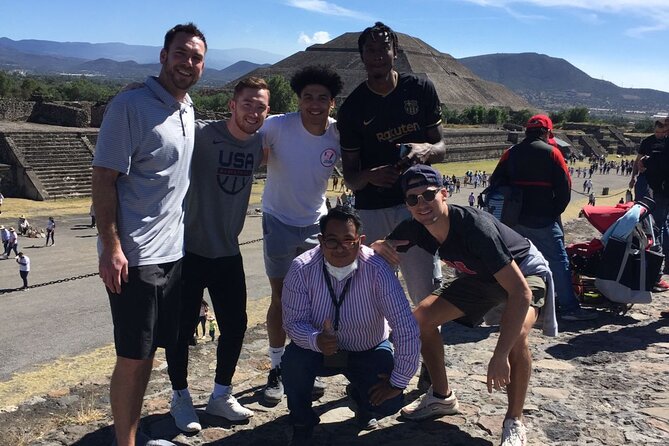
Teotihuacan gives this outing its main punch: you move from Mexico City’s layered past to the broad avenues and pyramids of an ancient city, then finish with tequila, mezcal, and pulque. I like the private format, which keeps the day focused on your group of up to four, and I like the mix of archaeology, religion, craft, and food culture.
Guide Juan Carlos is praised for punctuality, warmth, and careful explanations, with a professional driver alongside him. The main catch is time: seven hours covers a lot, and the Teotihuacan admission fee is not included. Expect a useful overview rather than a slow, museum-style study of each site.
In This Review
- Key points to know before booking
- A day that links ancient Mexico with modern Mexico City
- Tlatelolco and the Plaza of Three Cultures
- A short stop for Mexican silver
- The Guadalupe Basilica at the foot of Tepeyac Hill
- Three hours among the monuments of Teotihuacan
- Pulque, tequila, and mezcal after the ruins
- What the private vehicle and guide mean
- Is seven hours enough for all four stops?
- The guide’s style and the human side of the day
- Booking, weather, and cancellation
- Should you book this Mexico City tour?
- FAQ
- How long does the tour last?
- What places are included?
- Is transportation included?
- Is the Teotihuacan entrance ticket included?
- Where does the tour start and end?
- Can I cancel for a refund?
Key points to know before booking
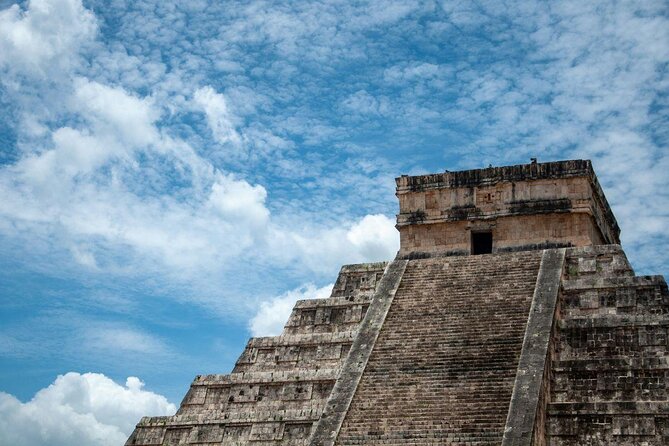
- Teotihuacan is the main event: You get about three hours at Mexico’s best-known ancient city, with the Avenue of the Dead, Pyramid of the Moon, Pyramid of the Sun, and a museum in the complex.
- The day covers four very different stops: Tlatelolco, a silver workshop, the Guadalupe Basilica, and Teotihuacan give you archaeology, faith, crafts, and local drinks.
- Juan Carlos leads with personal warmth: His guiding style centers on history, symbolism, and helping you understand what you are seeing.
- Private transport keeps the pace flexible: Only your group participates, and the vehicle is air-conditioned with bottled water included.
- Budget for the Teotihuacan ticket: All fees and taxes are included except admission to the archaeological zone.
- The pickup details need attention: The listed meeting point is the Angel of Independence, while hotel pickup is also offered through an identified guide with a reservation banner.
A day that links ancient Mexico with modern Mexico City
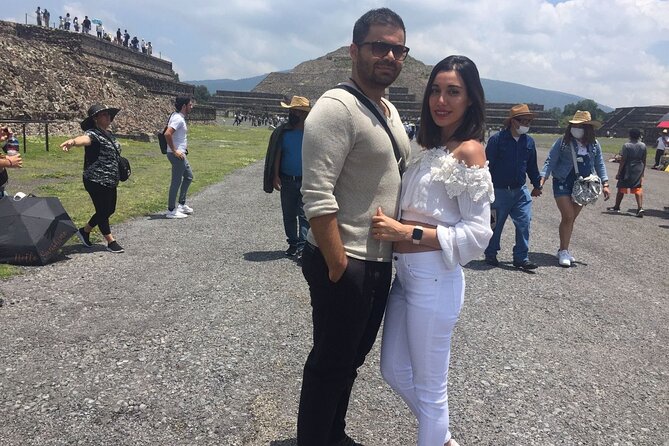
This is not a single-site pyramid trip. It is a day built around connections. Tlatelolco introduces the layers of Mexico City. The Guadalupe sanctuary shows the continuing power of Catholic devotion in Mexico. Teotihuacan then gives you the large-scale ancient setting that most people picture when they think of pyramids near the capital.
I find that combination useful because it prevents Teotihuacan from feeling isolated. You see how archaeology, religion, art, and national identity sit beside one another in Mexico City. The stops are short in places, so you will need to keep moving, but the variety helps the seven-hour schedule feel full.
The tour costs $250 per group of up to four people. For one person, that is a high price. Split four ways, it becomes a much more sensible deal for private transportation, a guide, water, and a full day away from the city center. You also avoid sharing the vehicle with strangers.
The price works best for a small family or group of friends. If you are traveling alone or as a couple, compare it with a group excursion before booking. The value here is privacy and direct attention, not the lowest possible fare.
More ways to reach the Teotihuacán pyramids:
- Teotihuacan, Guadalupe Shrine & Tlatelolco Day Tour with Lunch
★ 5.0 · 11,603 reviews - Teotihuacan pyramids morning or afternoon without tourist traps
★ 5.0 · 6,186 reviews - Teotihuacan Early Access Guided Tour with optional Lunch
★ 4.5 · 6,138 reviews
Tlatelolco and the Plaza of Three Cultures
The first stop is the Zona Arqueológica Tlatelolco, with about 30 minutes set aside. This area, centered on the Plaza de las Tres Culturas, brings several periods of Mexico together in one place.
The name points to the three cultural layers presented here: the pre-Hispanic remains, the colonial structures, and the modern city. The archaeological remains date mainly from the fifteenth and sixteenth centuries, while the surrounding district shows how the site remains part of present-day Mexico City rather than a remote ruin.
I like starting here because it sets a thoughtful tone. You are not simply looking at one pyramid and moving on. You are seeing how an older city survives beside later buildings and modern streets.
Thirty minutes is enough for an introduction, especially with a guide who can explain what you are looking at. It is not enough for a long, unhurried examination of every structure. If Tlatelolco is your main interest, you may want a separate visit with more time. On this tour, treat it as a compact history lesson that prepares you for Teotihuacan.
A short stop for Mexican silver
The visit to Plateria Rafael lasts about 30 minutes and has no separate admission charge. Mexican silver jewelry has a long craft tradition, and this stop gives the cultural program a practical, handmade side.
You will likely see silverwork and learn about the work of artisans. The supplied details do not specify whether a purchase is required, so you should feel free to ask about the format before the visit begins. As with many craft stops, the value depends on your interest in jewelry and on how much time you want to spend browsing.
I see this as a change of pace between archaeological sites. After stones, plazas, and old structures, a silver workshop brings attention to living Mexican craftsmanship. It also creates a chance to take home something tied to the country’s artistic traditions, though you should judge prices and quality for yourself.
The half-hour limit keeps the stop from taking over the day. If shopping is not your reason for booking, it should remain a manageable pause rather than a major burden.
The Guadalupe Basilica at the foot of Tepeyac Hill
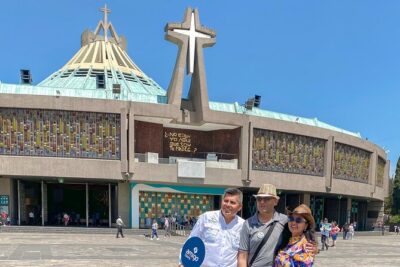
The Basilica de Santa María de Guadalupe receives about one hour. Officially called the Insigne and National Basilica of Santa María de Guadalupe, it is a major Catholic sanctuary dedicated to the Virgin Mary in her Guadalupe form.
The basilica sits at the foot of Tepeyac Hill in Mexico City’s Gustavo A. Madero area. The setting matters. This is not only an architectural stop, but also a place of worship with major religious meaning for Mexico.
The tour description promises time at the basilica but does not specify a service, interior access details, or a particular religious program. I would approach the visit as a respectful cultural and spiritual stop. Dress and behave appropriately for an active sanctuary, and follow any instructions given at the site.
This part of the day can be especially valuable if you want to understand how faith shapes Mexican identity. Even if you are not religious, the basilica offers a way to see an important part of the country beyond museums and ruins.
One hour gives you a reasonable look without turning the entire outing into a religious pilgrimage. The contrast with Tlatelolco and Teotihuacan is one of the tour’s strengths. You move from pre-Columbian remains to colonial and modern religious life, then back to the ancient world.
A completely different day out, same corner of Mexico City:
- Xochimilco, Coyoacan and Frida Kahlo with Optional Lunch
★ 4.5 · 7,320 reviews - Balloon flight + Breakfast in cave + Pyramids + Pick up CDMX.
★ 5.0 · 6,335 reviews - Balloon flight + pick up in CDMX + Breakfast in Cave + Pyramids
★ 5.0 · 5,651 reviews - Balloon Flight + Cave Breakfast + Pick Up from CDMX or We Fly
★ 5.0 · 4,410 reviews
Three hours among the monuments of Teotihuacan
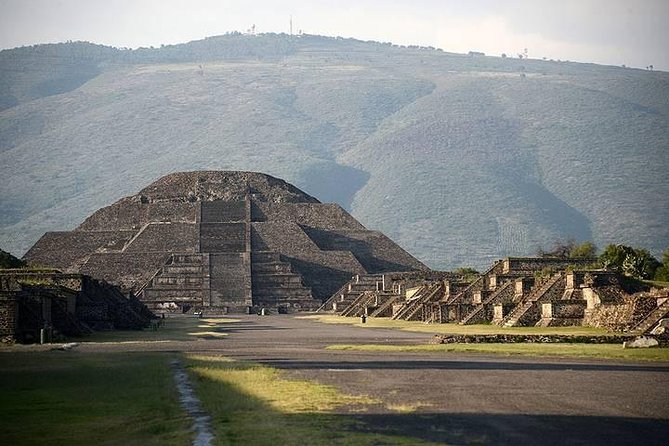
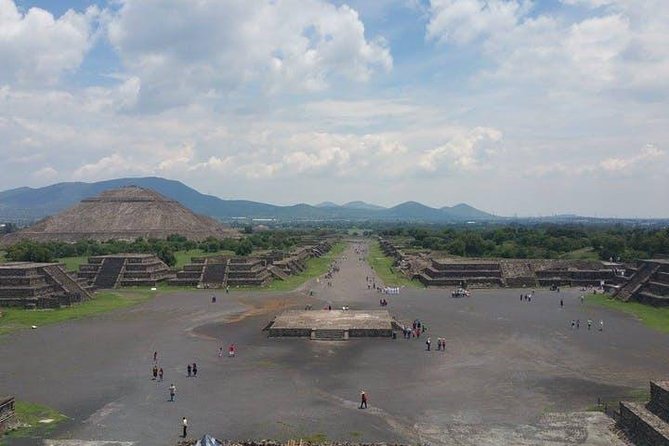
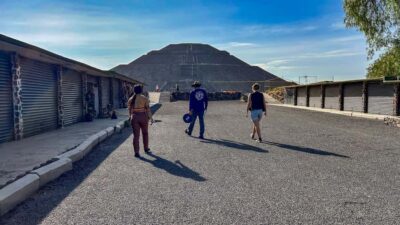
Teotihuacan is the longest stop, with about three hours. That is appropriate. The site is large, and the central Causeway of the Dead connects several major structures.
The main landmarks named for this visit are the Temple of Quetzalcoatl, the Pyramid of the Moon, and the Pyramid of the Sun. The last two offer panoramic views from their tops, although access conditions can vary. The tour information does not guarantee that every visitor will climb every pyramid, so ask Juan Carlos about the current rules and physical demands when you arrive.
Three hours allows you to get a sense of the site’s scale. You can walk along the central avenue, study the monumental architecture, and hear how the city functioned as a major pre-Columbian center. The Teotihuacana Culture Museum adds smaller objects to the experience, including pottery and bone works.
I like the balance between wide views and close details. The pyramids give you the dramatic scale, while the museum helps explain daily life and craftsmanship. Without the museum, the site could become a sequence of huge stone platforms. With it, you get a better sense of the people who made and used the city.
The main practical issue is the admission ticket. It is not included in the $250 group price, even though other fees and taxes are covered. Plan for that extra expense, and confirm the current ticket cost before the outing if your budget is tight.
Teotihuacan can also be physically demanding. The details provided say most people can participate, but they do not promise an easy route or special accessibility arrangements. If you have trouble with long walks or steps, tell the operator in advance and ask how the visit can be adjusted.
Pulque, tequila, and mezcal after the ruins
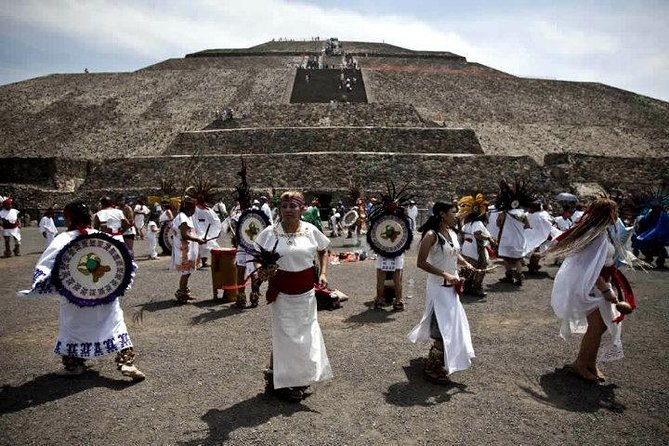
The Teotihuacan visit includes a tasting of pulque, tequila, and mezcal. This is a useful addition because it gives you three different windows into Mexican drink culture rather than offering only a standard tequila sample.
Tequila and mezcal are familiar names to many visitors, but pulque is less familiar outside Mexico. Tasting them together helps you notice that they are not interchangeable drinks. The tour information does not state the number of samples, serving sizes, or whether food accompanies the tasting, so do not treat it as a full meal or a formal spirits class.
Alcoholic beverages are included, along with bottled water. If you do not drink, confirm with the operator how the tasting can be handled. The basic details only promise the alcoholic tasting, not a nonalcoholic replacement.
I like that the tasting comes as part of the wider cultural program. It gives the day a social finish after the concentration required at the archaeological site. Still, pace yourself. You have a return drive to Mexico City, and a tasting is best enjoyed slowly.
What the private vehicle and guide mean
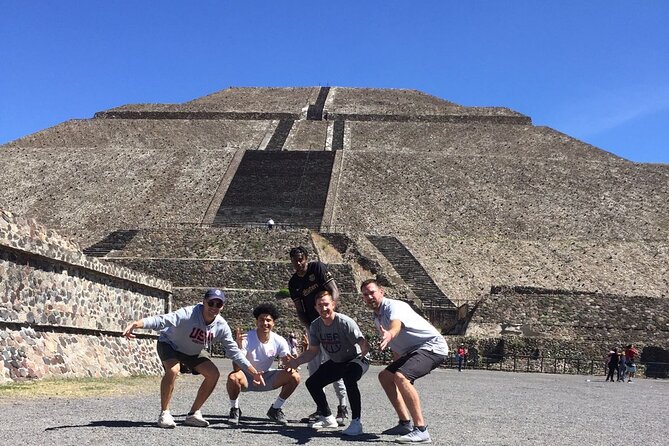
The tour includes private transportation in an air-conditioned vehicle. Only your group participates, with a maximum of four people. That changes the feel of the day in useful ways.
You can ask questions without waiting for a busload of people to catch up. Your group can also discuss how much detail you want at each stop. The schedule remains fairly fixed because four locations must fit into roughly seven hours, but a private format usually makes transitions less awkward.
Bottled water is included, which is a small but welcome detail for a day with outdoor walking. The driver is described as professional, and the guiding is led by Juan Carlos, who is praised for punctuality, patience, and a strong sense of connection to Mexico.
The pickup information needs a careful read. The stated start point is the Angel of Independence on Avenida Paseo de la Reforma, and the tour ends back there. At the same time, hotel pickup is offered, with the guide and operators identified and a banner showing the name on the reservation.
Because both arrangements appear in the details, confirm your exact pickup point after booking. Do not assume that hotel pickup is automatic. This is the one logistical point I would settle early, especially if you are staying outside the central area.
Is seven hours enough for all four stops?
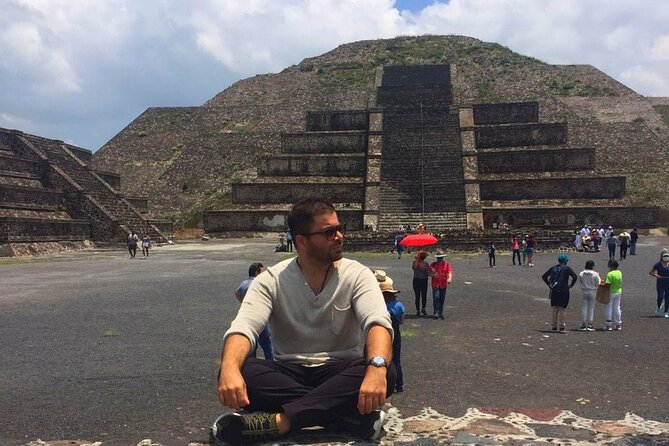
Seven hours is a brisk but workable outline. Tlatelolco receives 30 minutes, the silver stop another 30, the basilica one hour, and Teotihuacan three hours. The remaining time covers transport and transitions.
That schedule gives Teotihuacan priority, which is the right choice for most first-time visitors. The other stops function as focused introductions rather than long visits. You will not have unlimited time to linger, shop, photograph every angle, or read every museum label.
I would book this if you want a broad first look at several important places and prefer having the day organized. I would not choose it if your main goal is slow archaeological study, extensive shopping, or a long religious visit.
The tour is offered in English, which makes it a practical choice for English-speaking visitors who want live explanations throughout the day. Confirmation arrives at booking, and the experience is available near public transportation, though the private pickup makes public transit less important.
The guide’s style and the human side of the day
The strongest part of the experience is likely to be the human connection. Juan Carlos is described as attentive, punctual, and eager to explain details rather than simply point out landmarks. His guiding also emphasizes the meaning behind what you see and the chance to experience Mexico as more than a collection of monuments.
That matters at Teotihuacan, where a site can feel impersonal without context. It matters at the Guadalupe Basilica, where religious symbols may not be obvious to someone seeing them for the first time. It also matters at Tlatelolco, where the whole point is the meeting of different periods.
The driver is presented as professional and familiar with the country’s history as well. Since you spend much of the day in the vehicle, a calm and reliable driving team is part of the value, not just a minor extra.
The available feedback is consistently warm, with special praise for honesty, hospitality, punctuality, and passion for Mexican history. I would place the greatest weight on those practical traits. A friendly guide can make a tightly scheduled day work; a disorganized one can make the same route tiring.
Booking, weather, and cancellation
You can cancel for a full refund up to 24 hours before the experience start time. Cancellations inside that window are not refunded, and changes made inside 24 hours are not accepted.
The tour requires good weather. If poor weather causes a cancellation, you will be offered another date or a full refund. Since Teotihuacan includes substantial outdoor time, check the forecast and wear practical walking clothes.
The experience is described as suitable for most people, but no special accessibility details are provided. If stairs, long walks, or uneven archaeological surfaces are a concern, ask before booking rather than relying on the general participation statement.
Should you book this Mexico City tour?
Book it if you want one private day covering archaeology, religion, crafts, and Mexican spirits. The route gives you a useful sense of Mexico City’s cultural range, and the three hours at Teotihuacan keeps the ancient city at the center.
I especially recommend it for small groups of up to four who value direct access to a guide and private transport. Juan Carlos’s warm, detail-focused approach is a major reason to consider it, as is the professional driver and included water.
Think twice if you want a low-cost outing, a slow visit, or a tour devoted only to Teotihuacan. The extra archaeological admission fee and the packed schedule matter. For the right group, though, the $250 price can be fair: you are paying for privacy, transportation, a bilingual-style cultural focus in English, and a guide who aims to connect the sites rather than rush through them.
FAQ
How long does the tour last?
The experience lasts approximately seven hours.
What places are included?
The route includes the Zona Arqueológica Tlatelolco, Plateria Rafael, the Basilica de Santa María de Guadalupe, and the Zona Arqueológica de Teotihuacan.
Is transportation included?
Yes. The tour includes private transportation in an air-conditioned vehicle and bottled water.
Is the Teotihuacan entrance ticket included?
No. Admission to the Teotihuacan archaeological zone is not included. Other fees and taxes are included.
Where does the tour start and end?
The listed meeting point is the Angel of Independence on Avenida Paseo de la Reforma. The tour ends back at the meeting point.
Can I cancel for a refund?
You can cancel at least 24 hours before the start time for a full refund. Cancellations within 24 hours are not refunded. If bad weather cancels the experience, you will be offered another date or a full refund.
Just added around Mexico City
- Ticket to Frida Kahlo Museum (Blue House)★ 5.0 · 3 reviews
- Valle de Bravo: Forest Hiking Adventure★ 4.4 · 3 reviews
- La Roma Private Art Tour★ 5.0 · 3 reviews
- Private Transportation: Pickup and Drop-Off★ 5.0 · 3 reviews
- Chapultepec Castle and Anthropology Tour, starting from CDMX★ 5.0 · 3 reviews
- Mexico City: Relaxing or Decontracting Massage Experience★ 5.0 · 3 reviews
- Grutas de Tulantongo★ 3.0 · 3 reviews
- Mexico City: Local Walking Tour with Mezcal & Wrestling Show★ 5.0 · 3 reviews
Teotihuacán Pyramid Tours, compared.
Teotihuacan, Guadalupe Shrine & Tlatelolco Day Tour with Lunch
Read our review →
Teotihuacan pyramids morning or afternoon without tourist traps
Read our review →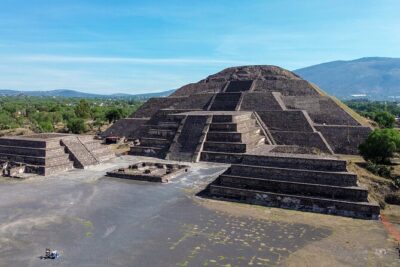
Teotihuacan Early Access Guided Tour with optional Lunch
Read our review →
Teotihuacan, Tlatelolco & Guadalupe Shrine Tour
Read our review →
Teotihuacan Hot Air Balloon Flight from Mexico City / Volare
Read our review →
Balloon flight + pick up in CDMX + Breakfast in Cave + Teotihuacan
Read our review →
Browse the lists this tour appears in