
Reviewed · MEXICO CITY
Urban Orchard in Desierto de los Leones in Mexico City
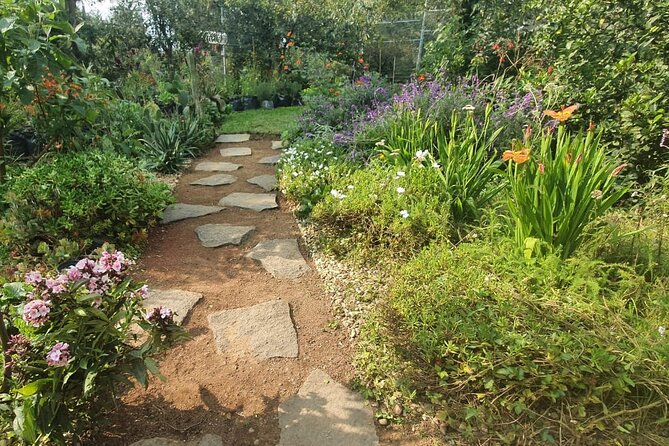
The most memorable part of this Mexico City outing is its close look at how a small garden can support an entire living system. Near Desierto de los Leones, Rubén and David have built an orchard where plants, soil, chickens, bees, birds, and people all play a part. You will not just walk past beds and trees. You will crush leaves for their scent, taste edible plants, listen for insects and birds, and forage for ingredients.
I like the hands-on plant work and the way the hosts connect food with soil, biodiversity, and local culture. I also like the quiet change of pace from central Mexico City, plus the chance to learn practical ideas about composting, medicinal plants, chickens, and cooking. The main consideration is the long day: traffic can make the trip to the orchard last 45 minutes to an hour each way, and the experience depends on good weather.
In This Review
- Key points at a glance
- Leaving Roma Norte for a quieter Mexico City
- Meeting Rubén and David in the orchard
- Exploring trees, vegetables, flowers, and native plants
- Using your senses instead of just taking pictures
- Compost, chickens, bees, and the work behind the garden
- Foraging for the day’s freshest ingredients
- What the five-hour schedule means for your day
- Is the $75 price a good value?
- Who will enjoy this orchard most
- My verdict: book it for the garden, not just the food
- FAQ
- Where does the Urban Orchard experience begin?
- How long does the experience last?
- What language is the experience offered in?
- What is included in the price?
- Are alcoholic drinks included?
- What happens if the weather is poor?
Key points at a glance
- A private orchard outside central Mexico City: Only your group participates, giving Rubén and David room to shape the visit around your interests.
- Plants are explored with all five senses: You can touch leaves, smell crushed herbs, taste edible flowers and plants, and listen to the birds and insects drawn to the garden.
- Foraging leads to a simple meal: You gather what is ready that day, then use the produce in a fresh snack or small dish.
- A practical look at biodiversity: Composting, chickens, bees, native plants, soil care, and garden design all fit into the story.
- A five-hour escape from the city: The outing includes transportation, coffee or tea, and snacks, but not alcoholic drinks.
- Best for curious eaters and plant lovers: You do not need a botany background, but you should enjoy being outdoors and trying unfamiliar flavors.
Leaving Roma Norte for a quieter Mexico City
Your meeting point is on Avenida Chapultepec in Roma Norte. From there, the ride to the orchard takes about 45 minutes to an hour, depending on traffic. That range matters in Mexico City, where a short distance can take much longer than expected, so I would keep the rest of your day fairly open.
The air-conditioned vehicle is included, which is welcome after time in the city. This is not a quick stop squeezed between major sights. The full activity takes about five hours, with the transfer forming a meaningful part of the outing. You trade museums, traffic, and concrete for a quieter setting near Desierto de los Leones.
The destination gives the experience its character. You are not visiting a standard public garden with neat labels and a fixed route. This is a private working orchard and garden, shaped by the people who care for it. That makes the visit more personal, but it also means the focus is on observation, conversation, and participation rather than a formal attraction with a long list of displays.
Other Mexico City days people book alongside this one:
- Teotihuacan, Guadalupe Shrine & Tlatelolco Day Tour with Lunch
★ 5.0 · 11,603 reviews - Xochimilco, Coyoacan and Frida Kahlo with Optional Lunch
★ 4.5 · 7,320 reviews - Balloon flight + Breakfast in cave + Pyramids + Pick up CDMX.
★ 5.0 · 6,335 reviews
Meeting Rubén and David in the orchard
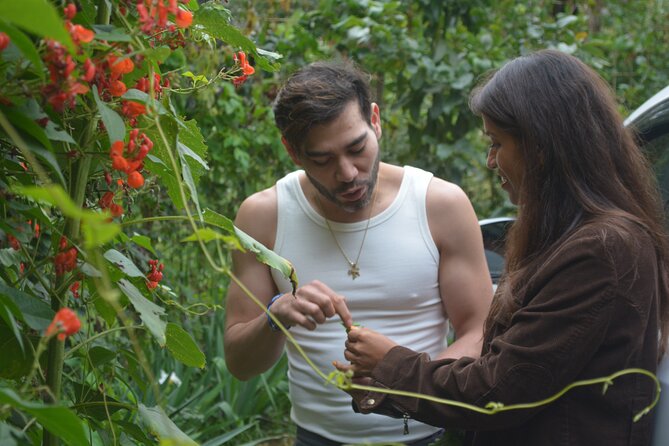
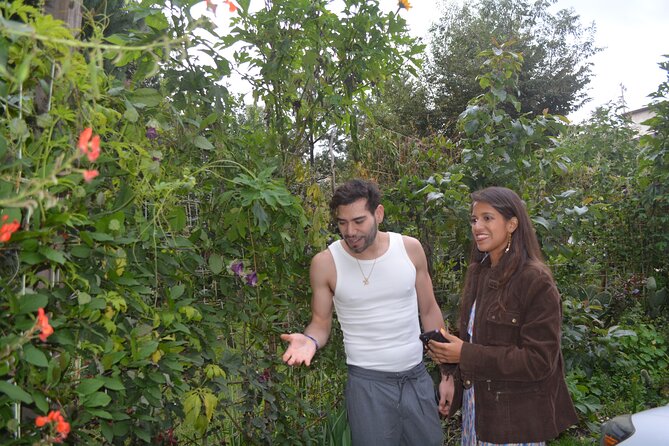
Rubén is the welcoming host and storyteller, while David brings strong practical skill to the plant and food side of the visit. Together, they explain how the orchard was built, which methods they adapted, and which techniques they developed themselves.
Their approach is useful because it links large ideas to small actions. You may hear about biodiversity, soil health, and native species, then see those ideas in compost, a chicken flock, a flowering plant, or a patch of vegetables. The garden becomes easier to understand when you can connect each choice with something you can see, touch, or eat.
The private format is an advantage here. Only your group participates, so you can ask questions without worrying about holding up a large party. If you are interested in urban gardening, sustainability, botany, cooking, or Mexican plant traditions, this is the kind of setting where a conversation can go beyond a standard introduction.
Still, the personal format may not suit everyone. If you prefer a fast-moving tour with a strict schedule and many major sights, this orchard will feel slow. Its appeal comes from looking carefully and allowing the hosts to explain why small details matter.
Exploring trees, vegetables, flowers, and native plants
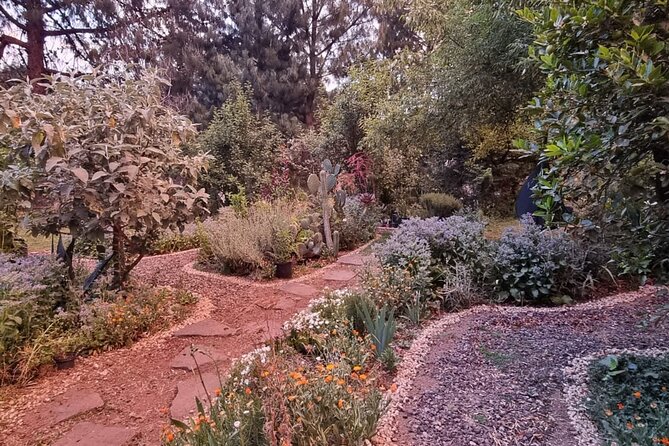
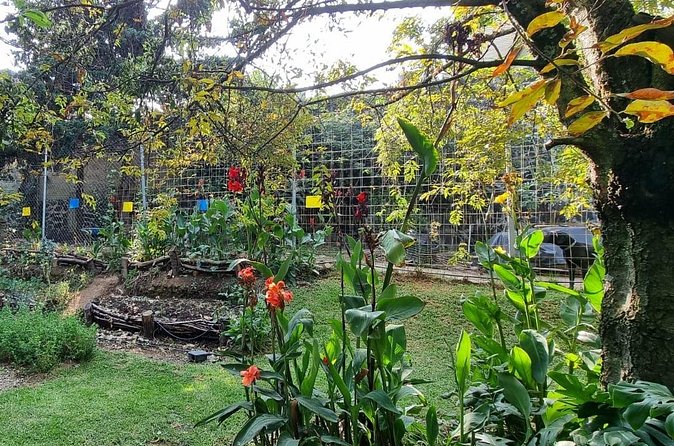
The first part at the orchard is an orientation to the space. Rubén and David introduce the trees, plants, and vegetables that make up the garden, along with the methods used to care for them.
You may find ornamental plants growing beside edible species, a useful reminder that a productive garden does not need to look like a farm row by row. The garden also provides examples of how food production and beauty can share the same space. Several accounts of the experience point to the variety of local plants and the care visible in each corner.
The emphasis on native flora gives the visit a clear Mexico City connection. You are not simply learning generic gardening tips. You are learning how plants fit into this region, how they support other creatures, and how their uses can include food, decoration, health, and traditional knowledge.
One especially useful subject is the difference between recognizing a plant and understanding its purpose. Rubén and David explain qualities, health benefits, and medicinal uses where relevant. You should still treat these as cultural and botanical information, not as a replacement for professional medical advice.
Using your senses instead of just taking pictures
This orchard is designed to be experienced with more than your eyes. You may crush a leaf and notice the fragrance released from it, touch different textures, or taste a plant to discover a flavor you would not meet in a supermarket.
The tasting element gives the visit a playful edge. A leaf that looks plain may have a sharp scent or surprising taste. A flower may offer more than color. The point is not to sample everything randomly, but to learn how plants communicate their qualities through smell, texture, color, and flavor.
The sound of the place matters too. Birds and insects visit the orchard throughout the day, and the hosts explain how the garden attracts them. Hummingbirds have been spotted around the flowers, and bees and chickens are part of the wider system you will learn about.
I like this sensory method because it makes the information easier to remember. Instead of hearing a list of plant names, you attach each one to a smell, taste, texture, or story. Bring curiosity rather than an expectation of a polished botanical lecture.
A completely different day out, same corner of Mexico City:
- Teotihuacan pyramids morning or afternoon without tourist traps
★ 5.0 · 6,186 reviews - Teotihuacan Early Access Guided Tour with optional Lunch
★ 4.5 · 6,138 reviews - Balloon flight + pick up in CDMX + Breakfast in Cave + Pyramids
★ 5.0 · 5,651 reviews - Balloon Flight + Cave Breakfast + Pick Up from CDMX or We Fly
★ 5.0 · 4,410 reviews
Compost, chickens, bees, and the work behind the garden
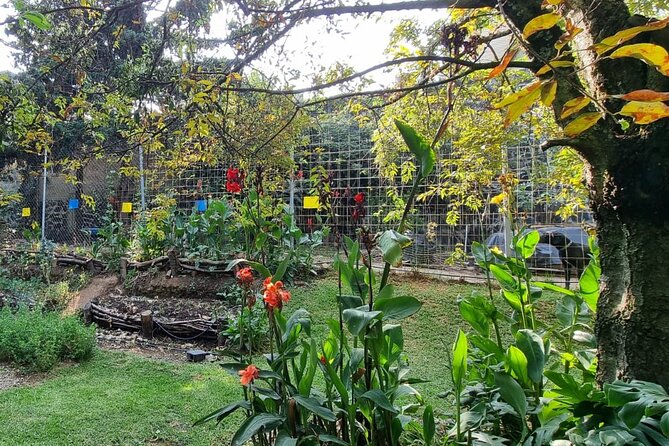
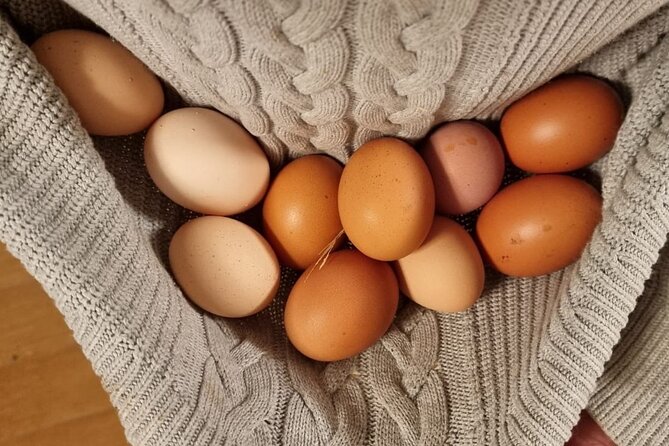
The orchard also shows the maintenance behind an attractive garden. Composting is one topic covered during the visit, along with care for the flock of chickens. These details help explain how waste, soil, animals, and plants can work together in a smaller food system.
The chickens are not just a charming extra. Their care forms part of the larger discussion about responsible gardening and the daily work required to keep an orchard healthy. Bees, birds, and insects also have a role, since the garden is shaped to support more than human needs.
You will learn how selected plants relate to the soil and to the other species around them. That connection is one of the strongest parts of the outing. It changes the question from What can I grow here? to What kind of living system am I creating?
If you are hoping to copy the entire project at home, keep your expectations realistic. The experience can give you ideas and inspiration, but the information provided does not promise a take-home gardening plan or supplies. Its value is in seeing methods in practice and discussing how they work.
Foraging for the day’s freshest ingredients
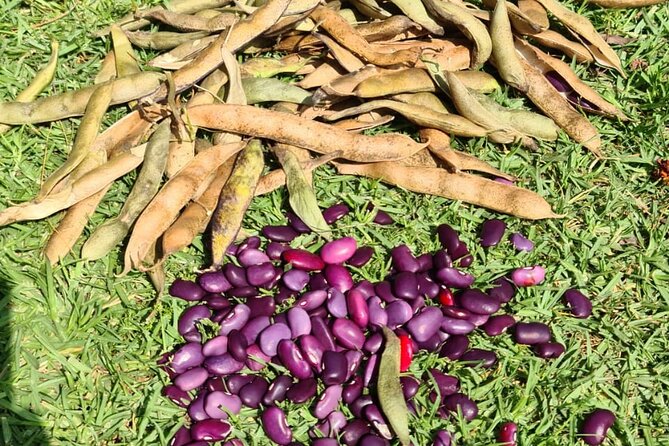
Later, you shorten the distance between garden and plate by foraging among whatever is ready at that moment. The exact produce will depend on the season and the orchard’s condition, so you should expect variation rather than a fixed menu.
That changing menu is part of the appeal. You are working with what the garden can offer now, not with ingredients chosen months in advance. The activity encourages you to notice ripeness, abundance, and the limits of a local food source.
The hosts then help you imagine something simple to eat. This is not presented as a long cooking class or a formal restaurant meal. It is a creative use of very fresh produce, with the garden supplying both the ingredients and the ideas.
David’s cooking is an important part of the experience. He has demonstrated traditional Mexican cooking, and one preparation described from the garden used lemon oleocitrate, a method that makes use of more of the food’s properties than many people normally do. That detail points to a broader lesson: peels, leaves, flowers, and other parts often have uses we overlook.
Coffee, tea, and snacks are included. Alcoholic drinks are not, so do not count on wine or beer with the food. The meal is best understood as the final chapter of the garden visit, not as a substitute for a full restaurant lunch.
What the five-hour schedule means for your day
The listed operating window is Monday through Saturday from 9:30 a.m. to 4 p.m. The activity itself lasts about five hours, including the trip from Roma Norte and the return to the same meeting point.
That timing makes this a half-day commitment with a little flexibility needed around traffic. I would avoid booking a timed museum entry, restaurant reservation, or airport transfer immediately afterward. The return journey can be affected by road conditions just as the outbound trip can.
The orchard’s distance is also the reason this feels like a genuine change of setting rather than another central-city activity. You get a break from the dense urban core without leaving Mexico City entirely. For some people, that contrast will be the main value of the day.
The experience requires good weather. If poor conditions force a cancellation, you are offered another date or a full refund. You can cancel for a full refund up to 24 hours before the start time, but cancellations or changes made inside that window are not accepted and are not refunded.
Is the $75 price a good value?
At $75 per person, the experience costs more than a simple city walking tour, but the comparison is not quite fair. Your price includes private participation, an air-conditioned vehicle, the long transfer, host-led instruction, coffee or tea, snacks, orchard access, tastings, foraging, and a fresh food activity.
The strongest value comes if you would normally pay for several separate interests: a nature outing, a food experience, a sustainability talk, and time with local hosts. You get all of those in one private visit, though none is treated as a long formal class.
The price may feel less worthwhile if you mainly want a meal or a quick look at plants. The food portion is simple, and the orchard is not described as a major public attraction. You are paying for time, attention, access to a working private space, and the chance to ask questions directly.
Because the group is private, the value improves for people traveling together. You can share the cost while keeping the conversation focused on your group’s interests. Solo participants should decide if the personal format and unusual subject are worth the higher per-person price.
Who will enjoy this orchard most
I would recommend this outing to plant lovers, home gardeners, curious cooks, and anyone who wants a quieter side of Mexico City. It also suits people interested in urbanism, sustainability, traditional Mexican food, medicinal plants, and local biodiversity.
You do not need technical training. The explanations are intended to be accessible, and the hands-on activities make the subject easy to follow. At the same time, someone with a background in botany or ecological gardening can ask more detailed questions and find plenty to consider.
Families and mixed-interest groups may also enjoy it if everyone is comfortable with a slow outdoor experience. The format is not built around a major landmark, a performance, or a set of fast activities. Someone who dislikes plants, tasting unfamiliar ingredients, or spending several hours away from the city center may find the focus too narrow.
Service animals are allowed, and the meeting point is near public transportation. Most people can participate, but the supplied details do not specify the full terrain or every mobility feature at the orchard, so ask before booking if you have specific access needs.
My verdict: book it for the garden, not just the food
Book this experience if you want to see how people can create a small, productive ecosystem close to a huge city. Rubén and David give the orchard a human scale, and the sensory approach turns plant care into something you can smell, taste, and remember.
The best reasons to go are the private setting, the thoughtful links between plants and animals, the chance to forage, and the quiet break from Mexico City. The main drawbacks are the traffic-prone transfer, the weather requirement, and the fact that the final food preparation is simple rather than a full cooking course.
If those limits suit you, the $75 price is reasonable for a five-hour private outing with transportation and food included. If you want a tightly timed sightseeing tour or a substantial meal, spend your money elsewhere. For a calm, practical, plant-centered day with local hosts, this is a strong choice.
FAQ
Where does the Urban Orchard experience begin?
It begins at Avenida Chapultepec in Roma Norte, Mexico City, at the listed meeting point. The activity ends back at that same meeting point.
How long does the experience last?
The activity lasts approximately five hours. The ride to the orchard takes about 45 minutes to one hour, depending on traffic.
What language is the experience offered in?
The experience is offered in English.
What is included in the price?
The price includes an air-conditioned vehicle, coffee or tea, and snacks. The listed price is $75 per person.
Are alcoholic drinks included?
No. Alcoholic beverages are not included.
What happens if the weather is poor?
The experience requires good weather. If it is canceled because of poor weather, you will be offered a different date or a full refund. You can also cancel at least 24 hours before the start time for a full refund.
Just added around Mexico City
- Ticket to Frida Kahlo Museum (Blue House)★ 5.0 · 3 reviews
- Valle de Bravo: Forest Hiking Adventure★ 4.4 · 3 reviews
- Chapultepec Castle and Anthropology Tour, starting from CDMX★ 5.0 · 3 reviews
- La Roma Private Art Tour★ 5.0 · 3 reviews
- Private Transportation: Pickup and Drop-Off★ 5.0 · 3 reviews
- Grutas de Tulantongo★ 3.0 · 3 reviews
- Mexico City: Relaxing or Decontracting Massage Experience★ 5.0 · 3 reviews
- Mexico City: Local Walking Tour with Mezcal & Wrestling Show★ 5.0 · 3 reviews