
Reviewed · TEOTIHUACáN PYRAMID TOURS
Guided Walking Tour to the Archaeological Zone of Teotihuacán
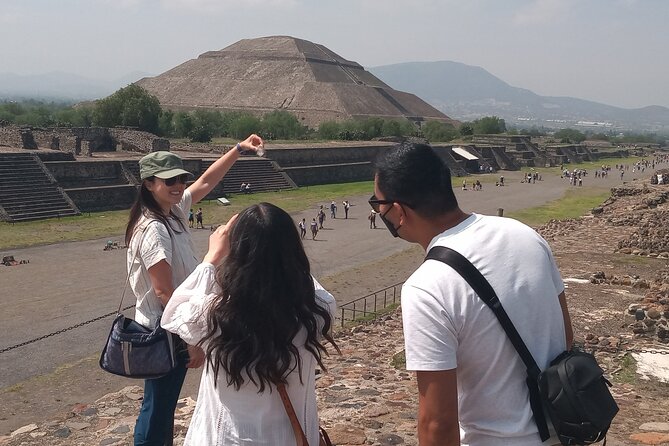
Teotihuacán is best understood on foot, and this tour gives you three hours to follow its grand ceremonial route from the Quetzalcóatl Temple to the Pyramid of the Moon. Along the way, you’ll see sunken patios, old apartments, palaces, plazas, and the broad Avenue of the Dead while your guide explains how the pyramids were built.
I like the clear point-to-point route, which begins at Gate 1 and ends at Gate 3, and I like the focus on details you could easily miss alone, especially acoustics, symmetry, obsidian, and the sound of the quetzal. The main drawback is the early, fixed schedule and the long walk, with no bottled water included, so you’ll need to arrive ready for several hours outdoors.
In This Review
- Key points to know before booking
- Why the Avenue of the Dead makes this tour worthwhile
- Starting at Gate 1 and getting oriented
- Quetzalcóatl Temple and the Citadel
- Walking the Avenue of the Dead
- Apartments, palaces, and everyday Teotihuacán
- The Pyramid of the Sun and the site’s great scale
- The Palaces and the Pyramid of the Moon
- What the three-hour format really gives you
- Price, group size, and practical value
- Who should book this Teotihuacán walk
- Should you book this tour?
- FAQ
- How long does the Teotihuacán walking tour last?
- Where does the tour begin?
- Where does the tour end?
- Is admission to Teotihuacán included?
- Is bottled water included?
- Is the tour offered in English?
- How many people can join the tour?
Key points to know before booking
- A full ceremonial route: Walk from Quetzalcóatl Temple along the Avenue of the Dead to the Pyramid of the Moon.
- Guide Joel may lead your visit: He is praised for his warm manner, helpful pacing, and ability to find strong viewing spots.
- Acoustics are part of the tour: You may hear about the birdlike sound produced by clapping near one of the temples.
- The tour runs about three hours: It starts at Gate 1 and finishes at Gate 3, not back at the original entrance.
- Admission is included: Water is not, and the site has a bathroom at the starting point.
- Groups can reach 40 people: This is worth considering if you prefer quiet, personal guiding.
Why the Avenue of the Dead makes this tour worthwhile
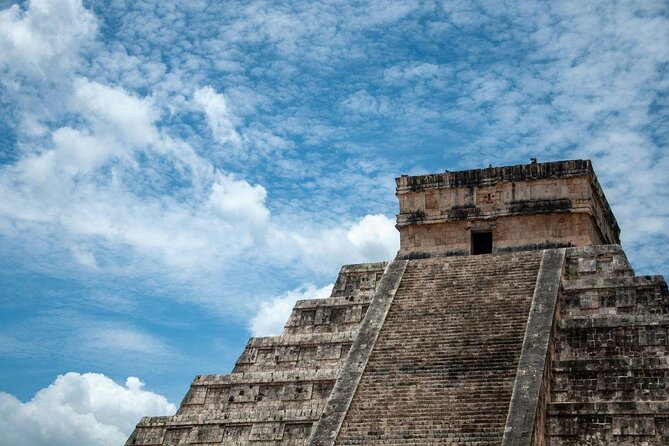
The main reward here is the chance to read Teotihuacán as a planned city rather than a collection of giant pyramids. The Avenue of the Dead gives the visit its spine. You walk along the route used to connect major temples, plazas, residences, and ceremonial spaces, with the pyramids appearing as part of a larger design.
I like this approach because it gives scale to the site. The Pyramid of the Sun is impressive on its own, but the surrounding plazas and structures help you see how much planning went into the city. Your guide can point out symmetry, open courtyards, and the way natural resources shaped construction and daily life.
This is not a quick photo stop. The route involves steady walking over a large archaeological area. You should have a moderate level of fitness, and comfortable shoes matter more here than stylish ones. The path is long, and you’ll spend much of the three hours outside.
More ways to reach the Teotihuacán pyramids:
- Teotihuacan, Guadalupe Shrine & Tlatelolco Day Tour with Lunch
★ 5.0 · 11,603 reviews - Teotihuacan pyramids morning or afternoon without tourist traps
★ 5.0 · 6,186 reviews - Teotihuacan Early Access Guided Tour with optional Lunch
★ 4.5 · 6,138 reviews
Starting at Gate 1 and getting oriented
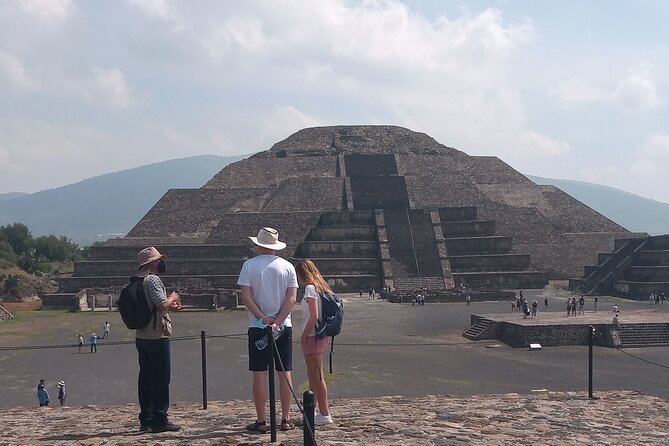
Meet at the Teotihuacán archaeological zone parking area at Gate 1. The tour begins in the parking lot, where you can use the bathroom before setting out. You can also buy water there, which is useful because bottled water is not part of the tour price.
The early orientation includes a viewpoint over the archaeological zone. This is a smart beginning. Before you walk into the site, you get a sense of its size and layout, which makes the later stops easier to understand. I find that a wide view can do more than a long list of dates when you first arrive at a major ancient site.
The starting area is also near public transportation, and Uber service is available. The information provided for the tour does not give a full route from Mexico City, so you’ll need to plan your own transport to Gate 1. The meeting point is specific: Zona Arqueológica de Teotihuacan Estacionamiento Puerta 1.
Arrive prepared for the morning schedule. The advertised operating window is 8:30 AM to 11:30 AM, Monday through Sunday, for the dates shown. Since the tour lasts about three hours, this is not a flexible drop-in experience. Check your confirmation carefully for the meeting time.
Quetzalcóatl Temple and the Citadel
From the first viewpoint, the walking route heads toward the Temple of Quetzalcóatl. This area is known as the Citadel, a large enclosed ceremonial space that helps you understand how Teotihuacán organized public life.
The temple is one of the most interesting parts of the visit because the decoration is more detailed than the massive scale of the Pyramid of the Sun might suggest. Your guide can direct your attention to the architecture and the carved forms connected with Quetzalcóatl.
This is also where the tour’s sound element becomes memorable. One review highlights the birdlike sound created by clapping in front of the temple associated with the Moon’s rise on the day of a full moon. The exact sound you experience may depend on where you are standing and how the demonstration is handled, but it gives you a reason to listen instead of simply looking.
That focus on acoustics is a real plus. Ancient sites are often treated as silent ruins, yet sound was part of how people experienced plazas and temples. You’ll hear about how the design of the site can affect echoes and other sounds, making the architecture feel less abstract.
Walking the Avenue of the Dead
After the Citadel, the route continues along the Avenue of the Dead. This is the section where the scale of Teotihuacán really sinks in. The avenue is broad, formal, and long, with major buildings arranged along its path.
The walk includes sunken patios and the West Plaza. These spaces add texture to the visit. Instead of seeing only monumental faces and steep steps, you’ll notice lower courtyards and areas that supported gathering, movement, and daily activity.
I appreciate tours that explain how a city worked at ground level. The pyramids get most of the attention, but patios and plazas help you imagine how people moved through the site. Your guide may also point out the relationship between the open spaces and the larger buildings, including the way the layout uses balance and repeated forms.
The route can feel demanding if you are not used to long walks. Three hours is enough time for a meaningful visit, but it is not enough time to linger everywhere. If you want to study every carved surface or spend a long time taking photographs, the group schedule may feel brisk.
More walking tours in Mexico City:
- Historic Downtown Walking Tour
★ 5.0 · 1,289 reviews - Mexico City: Historic Downtown Walking Tour
★ 4.8 · 1,039 reviews - Frida Kahlo VIP [Museum Tickets Included] Walk, Markets & Churros
★ 5.0 · 982 reviews - Walking Tour of the Historic Center of Mexico City
★ 5.0 · 870 reviews
Apartments, palaces, and everyday Teotihuacán
The ancient city was not made only of temples. Along the way, you’ll see apartment compounds where Teotihuacán’s people lived. These structures help shift the visit away from a pyramid-only view of the site.
The apartment areas are valuable because they bring ordinary life into the picture. You can ask about how people lived, how residential spaces related to ceremonial buildings, and how the city supported a large population. The supplied tour details do not give a full reconstruction of daily routines, so expect broad interpretation rather than a room-by-room social history.
The route also includes palaces. These buildings show another side of Teotihuacán’s organization, with more enclosed spaces and formal architecture alongside the vast public avenues.
This mix is one of the tour’s strongest features. You see religious and civic areas, residential compounds, plazas, and monumental pyramids in one continuous walk. That makes the site easier to place in context than a short visit focused only on the two famous pyramids.
The Pyramid of the Sun and the site’s great scale
The Pyramid of the Sun is one of the major points along the route. You pass through the Avenue of the Dead and reach the pyramid as part of the larger city plan, rather than treating it as an isolated monument.
Your guide explains how the pyramids were made and how the construction relates to the available natural resources. Obsidian is one material discussed during the tour. This is a useful detail because it connects the architecture to the area’s geology and to the practical resources that supported Teotihuacán.
The information provided does not say that this tour includes climbing the Pyramid of the Sun. You should therefore expect a guided walk and explanation around the site, not assume that climbing is part of the experience.
The pyramid is also a good place to pause and consider the labor behind the city. Even without adding unsupported claims about exact construction methods or dates, its size makes the basic point clear: Teotihuacán required planning, materials, organization, and sustained work on a very large scale.
The Palaces and the Pyramid of the Moon
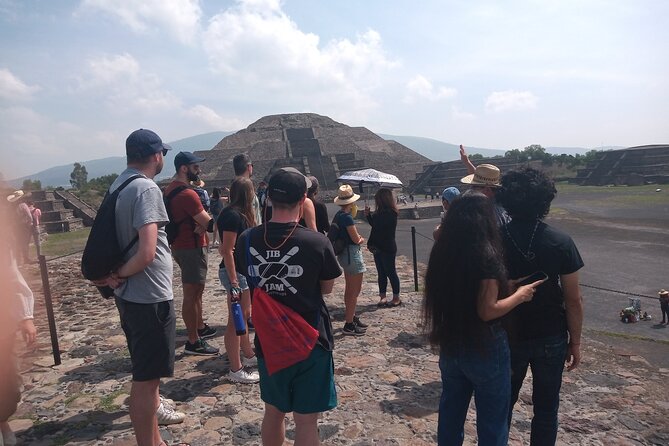
The walk continues toward the palaces and finally the Pyramid of the Moon. This ending gives the route a strong visual finish. The Pyramid of the Moon sits at the far end of the Avenue of the Dead, creating a natural focal point as the buildings and open spaces lead your eye forward.
The last section can be especially rewarding because you have already seen the avenue from within the city. By the time you reach the Moon Pyramid, you can better understand how the major monuments were placed in relation to one another.
The tour’s emphasis on symmetry and natural resources also fits well here. Ask your guide to explain how the builders used proportion, alignment, and the setting around the ceremonial route. Those details can turn a grand view into something you can actually read.
You may also hear local knowledge that adds color beyond the standard monument names. Guide Joel, also listed as Joël, is specifically associated with a hospitable style and good stopping points. That matters at a large site. A guide who watches where the group gathers and chooses useful places to explain can make the walk less tiring and the information easier to follow.
What the three-hour format really gives you
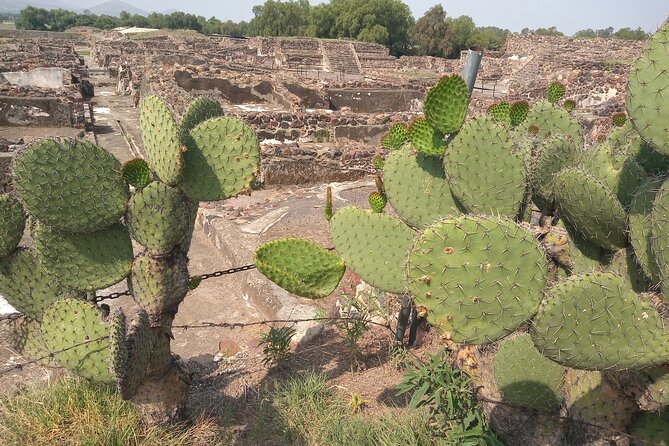
Three hours is a sensible length for a first visit. It gives you enough time to cover the Citadel, Avenue of the Dead, apartments, palaces, Pyramid of the Sun, and Pyramid of the Moon without turning the outing into an all-day commitment.
The tradeoff is depth. You will not have unlimited time at every structure, and a group of up to 40 people can affect how personal the conversation feels. If the maximum group size is reached, you may need to stay close to the guide and listen from farther back during explanations.
The route also ends at Gate 3, not Gate 1. This is important for your transport plan. Gate 3 has bathroom services, Uber service, a bus stop to Mexico City, and a nearby restaurant. Finishing there is convenient, but you should not expect to walk back to the original meeting point unless you arrange extra time and transport.
The English offering is helpful if you want explanations in English. The guide names associated with the experience include Joel and Joël. Confirmation is provided when you book, and the activity is available with a mobile ticket.
Price, group size, and practical value
At $73 per person, this tour is priced above a simple entry visit, but admission and all fees and taxes are included. The value comes from having a guide connect the monuments, residential areas, building methods, materials, acoustics, and city plan during one route.
I would consider it good value if you want structure and interpretation. Teotihuacán covers a wide area, and the key sights are spread along the Avenue of the Dead. A guided route saves you from guessing what you are looking at and helps you notice details such as sunken patios, the West Plaza, apartment compounds, and the acoustic effect near the temples.
The value is less clear if you already know the site well or prefer to wander alone. A group of up to 40 people may limit personal questions, and the fixed three-hour schedule leaves less room for your own pace.
The non-refundable policy also deserves attention before you pay. The booking cannot be changed or refunded after cancellation, so confirm your date, meeting point, and transportation plans first.
Who should book this Teotihuacán walk
I would choose this tour for a first visit, especially if you want the major monuments explained in a logical order. It suits you if you enjoy history, architecture, ancient city planning, and small details such as acoustics and obsidian rather than only taking pyramid photographs.
It also works well if you want a morning activity with a clear finish point near a bus stop, restaurant, bathroom services, and ride-hailing access. The Gate 3 ending can make the next part of your day easier, particularly if you are returning toward Mexico City.
You should think twice if you dislike long walks, need a flexible start time, or want a private guide. The walk is physically moderate, the schedule is fixed, and the group may be large. Bring water money or buy water at Gate 1, wear sensible shoes, and keep your phone charged for the mobile ticket.
Should you book this tour?
Book it if you want a guided introduction to Teotihuacán that covers more than the two famous pyramids. The strongest parts are the full Gate 1 to Gate 3 route, the Citadel and Quetzalcóatl Temple, the Avenue of the Dead, the apartments and palaces, and the attention to sound, symmetry, and local materials.
Skip it if you want to explore at your own speed or need a refundable reservation. For most first-time visitors who value clear explanations and do not mind a steady three-hour walk, the included admission and focused route make the $73 price reasonable.
FAQ
How long does the Teotihuacán walking tour last?
The tour lasts approximately three hours.
Where does the tour begin?
It begins at Zona Arqueológica de Teotihuacan Estacionamiento Puerta 1 in Mexico State.
Where does the tour end?
The walk ends at Gate 3, also called Acceso por Puerta 3.
Is admission to Teotihuacán included?
Yes. Admission tickets, all fees, and taxes are included.
Is bottled water included?
No. Bottled water is not included, but you can buy water at the starting area near Gate 1.
Is the tour offered in English?
Yes. English is one of the offered languages, and the experience uses a mobile ticket.
How many people can join the tour?
The activity can have a maximum of 40 people.
Just added around Mexico City
- Ticket to Frida Kahlo Museum (Blue House)★ 5.0 · 3 reviews
- Valle de Bravo: Forest Hiking Adventure★ 4.4 · 3 reviews
- Chapultepec Castle and Anthropology Tour, starting from CDMX★ 5.0 · 3 reviews
- La Roma Private Art Tour★ 5.0 · 3 reviews
- Private Transportation: Pickup and Drop-Off★ 5.0 · 3 reviews
- Mexico City: Relaxing or Decontracting Massage Experience★ 5.0 · 3 reviews
- Grutas de Tulantongo★ 3.0 · 3 reviews
- Mexico City: Local Walking Tour with Mezcal & Wrestling Show★ 5.0 · 3 reviews
Teotihuacán Pyramid Tours, compared.
Teotihuacan, Guadalupe Shrine & Tlatelolco Day Tour with Lunch
Read our review →
Teotihuacan pyramids morning or afternoon without tourist traps
Read our review →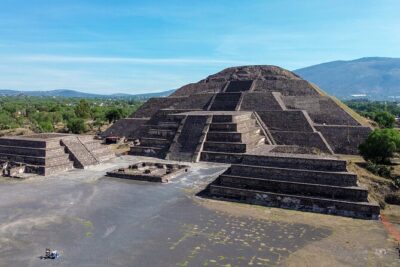
Teotihuacan Early Access Guided Tour with optional Lunch
Read our review →
Teotihuacan, Tlatelolco & Guadalupe Shrine Tour
Read our review →
Teotihuacan Hot Air Balloon Flight from Mexico City / Volare
Read our review →
Balloon flight + pick up in CDMX + Breakfast in Cave + Teotihuacan
Read our review →
Browse the lists this tour appears in