
Reviewed · HISTORIC CENTRE WALKING TOURS
Walking Tour of the Historic Center of Mexico City
Mexico City’s center is a place where an Aztec temple, a Spanish cathedral, revolutionary murals, and a working post office all sit within a fairly compact walk. This tour gives you that big picture in three hours, with guides such as Fernanda, Luis, Alexia, and Nat bringing the buildings and street scenes into focus.
I like the small group limit of 10, which makes it easier to ask questions and cross busy streets together. I also like the mix of major sights and useful local subjects, from indigenous languages and Day of the Dead traditions to politics, music, and food.
The main drawback is physical: this is a real walking tour over uneven streets, with limited chances to sit. One group moved slowly enough that it did not reach every planned stop, so allow extra time and wear sensible shoes.
In This Review
- Key points to know before you book
- A strong first look at Mexico City’s historic center
- Starting beneath the National Palace at the Zócalo
- The Metropolitan Cathedral and the Spanish city built over the Mexica capital
- Templo Mayor and the buried center of Mexica life
- Diego Rivera inside the Ministry of Education
- Plaza de Santo Domingo and the colonial world
- Plaza Tolsá, shade, and modern Mexican life
- The Ventana Arqueológica beneath the street
- Palace of Fine Arts, Postal Palace, and House of Tiles
- What three hours really feels like
- Value, inclusions, and what you still pay for
- Who should book this Mexico City walk?
- Should you book it?
- FAQ
- How long is the walking tour?
- Where does the tour begin?
- Where does the tour end?
- Is the tour offered in English?
- What is the maximum group size?
- Are admission tickets included?
Key points to know before you book
- Aztec and Spanish Mexico in one walk: The route links the Zócalo, Templo Mayor, the Metropolitan Cathedral, and colonial plazas.
- Diego Rivera murals are a highlight: The Ministry of Education visit includes a substantial collection of Rivera’s early 20th-century murals.
- Small groups help: The tour accepts no more than 10 people, and guides can better handle questions, street crossings, and short comfort breaks.
- Several landmarks are exterior visits: The cathedral, Templo Mayor, Palace of Fine Arts, and Postal Palace are mainly explained from outside.
- Plan for altitude and hard pavement: You may spend much of the three hours standing or walking, with shade and rest stops dependent on the day and group.
- The ending is useful for further exploring: You finish beside the Palace of Fine Arts and House of Tiles, close to several central sights.
A strong first look at Mexico City’s historic center
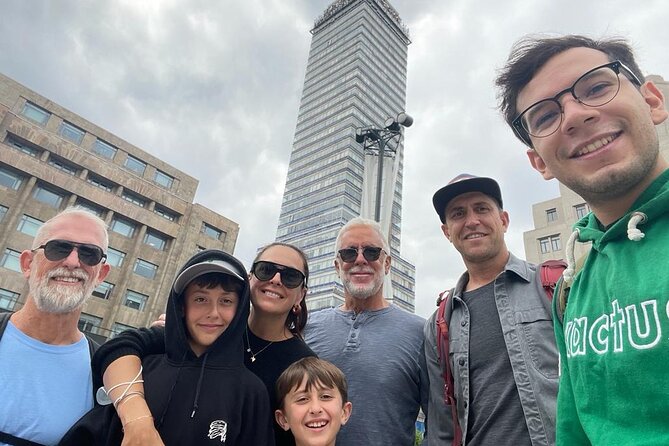
This walking tour works best as an orientation to Centro Histórico, not as a detailed museum tour. You move from the political heart of modern Mexico to the remains of the Mexica capital, then through colonial plazas and grand civic buildings toward the Palace of Fine Arts.
I like that the route does not treat Mexico City as only Spanish or only indigenous. The guide explains how the city grew from a pre-Hispanic center into the capital of New Spain and then into the modern capital you see today. That blend gives the buildings more meaning than a simple list of dates.
The guides are a major part of the experience. Fernanda is described as warm, funny, and good at connecting older events with present-day life. Luis is praised for his passion for his hometown and for offering useful recommendations after the walk. Alexia brings thoughtful commentary on both architecture and current life, while Nat has been especially good at answering questions and sharing personal context.
You may be assigned another guide, but the pattern is clear: the tour depends on a personable English-speaking leader who can make a crowded street feel manageable. Green shirts and umbrellas help you identify the guides at the meeting point.
More walks through the historic centre:
- Historic Downtown Walking Tour
★ 5.0 · 1,289 reviews - Historic Center Food Tour in Mexico City
★ 5.0 · 1,263 reviews - Mexico City: Historic Downtown Walking Tour
★ 4.8 · 1,039 reviews
Starting beneath the National Palace at the Zócalo
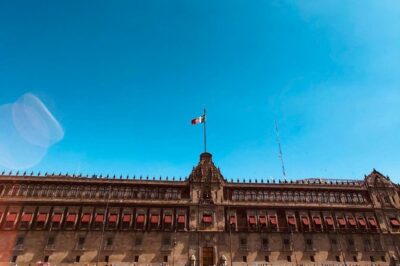
The tour begins at Plaza de la Constitución, better known as the Zócalo. This enormous square is the right place to start because it brings Mexico City’s power, religion, commerce, and layered past into one view.
The National Palace occupies one side, while the Supreme Court of Justice and shops associated with silverwork help frame the square. Your guide uses the surrounding buildings to explain how the center has functioned as a political and civic stage over time.
The Zócalo can be crowded, and that matters. A guide who keeps the group together is valuable here, especially when traffic, pedestrians, and street activity compete for your attention. One guide, Luis, was specifically praised for helping with street crossings and finding shade.
Do not expect a quiet introduction. The square is open, exposed, and often busy. Bring water, use sunscreen, and arrive ready to stand while the guide speaks.
The Metropolitan Cathedral and the Spanish city built over the Mexica capital
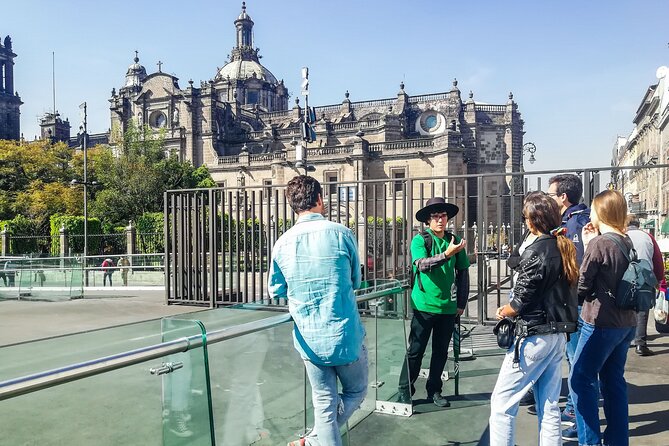
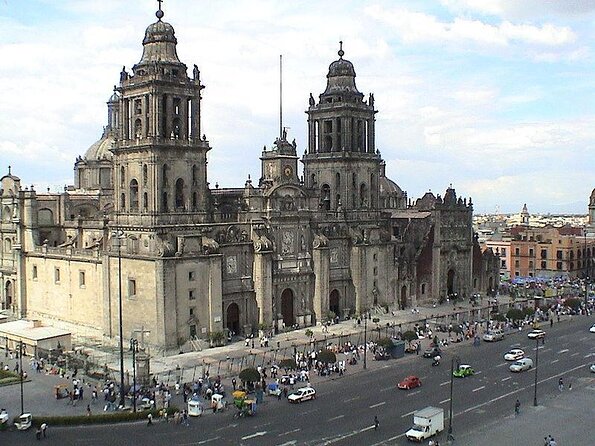
The Metropolitan Cathedral is explained from the outside, with attention to its long construction and its Baroque and neoclassical features. Ten minutes is enough for a first explanation, but not enough for a full architectural study or an interior visit.
That limitation is important. The cathedral is one of the central landmarks, but this experience does not include an admission ticket or a guided interior visit. You will get context for what you see, then continue along the route.
The useful part is the setting. The cathedral stands beside the Zócalo and close to the archaeological remains of Templo Mayor. Seeing those places together helps you understand the physical story of the city: older Mexica structures beneath and around the colonial capital, with later Mexico built on top of both.
Templo Mayor and the buried center of Mexica life
The route pauses outside the archaeological ruins of Templo Mayor, the major Mexica temple dedicated to the rain god and the sun god. The guide explains its importance and the way the sacred center was arranged geographically.
This is one of the most meaningful stops for first-time visitors because it counters the idea that Mexico City began with the Spanish conquest. The ruins show the scale and importance of the Mexica capital, while the nearby colonial buildings show how the next city was built over it.
You will view the ruins from outside rather than take a full museum visit. If archaeology is a top interest, you may want to return later for more time. As part of a three-hour overview, though, the stop gives you a clear framework for the rest of the walk.
More history walks in Mexico City:
- Mexico City Historical Centre Food Tour with 7 Authentic Tastings
★ 5.0 · 723 reviews - Walking Tour in Mexico City for Exploring their Cultural Heritage
★ 5.0 · 245 reviews - Walking Tour – Impressive murals in Historical Center of Mexico City
★ 5.0 · 224 reviews - Mexico City: Guided walking tour through the most historic parts of the city.
★ 4.5 · 172 reviews
Diego Rivera inside the Ministry of Education
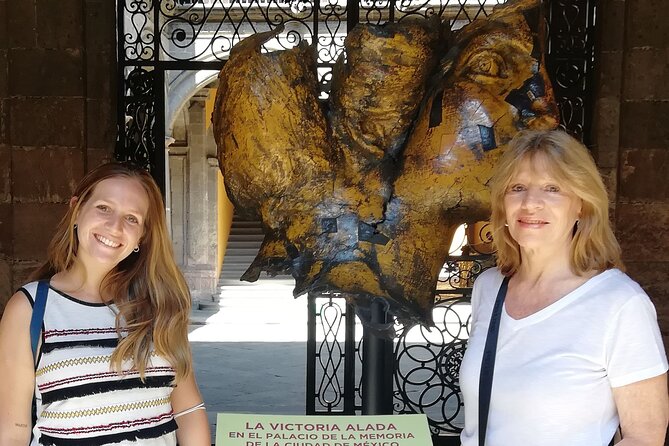
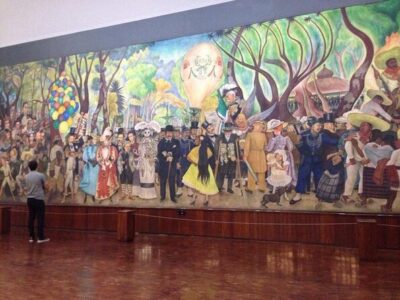
The Museo Vivo del Muralismo is the tour’s included interior visit and one of its strongest features. You enter the Ministry of Education, where a large share of the murals Diego Rivera painted during his career can be seen.
The planned visit lasts about 25 minutes. That is short, but the murals are not treated as mere decoration. They show festivals, traditions, work, social struggle, trade, and politics in early 20th-century Mexico.
I especially like this stop because it connects art with everyday life. Rivera’s murals are large public statements, and the Ministry setting makes them part of the city rather than isolated pieces in a quiet gallery. A guide can point out how the scenes present Mexican identity, labor, and social conflict.
One guide, Fernanda, allowed extra time in the courtyard when the group wanted to look more closely. That kind of flexibility can make the difference here, since a rushed glance is not enough to take in the scale of the paintings.
Plaza de Santo Domingo and the colonial world
Plaza de Santo Domingo offers a change of mood. The guide discusses its role during the viceroyalty of New Spain, including trade in spices and goods with Asia, the Holy Inquisition, and France’s attempts to conquer Mexico.
This stop helps broaden your view beyond the best-known landmarks. Mexico City was not simply a local colonial capital. It was tied to long-distance trade and imperial politics, with goods and ideas moving across the Pacific as well as the Atlantic.
The stop is free and mainly outdoors, lasting about 15 minutes. Depending on the day, you may be standing in the square or moving around its edges. It is a good place to ask questions because the tour has shifted from ancient Mexico and architecture toward the forces that shaped colonial society.
Plaza Tolsá, shade, and modern Mexican life
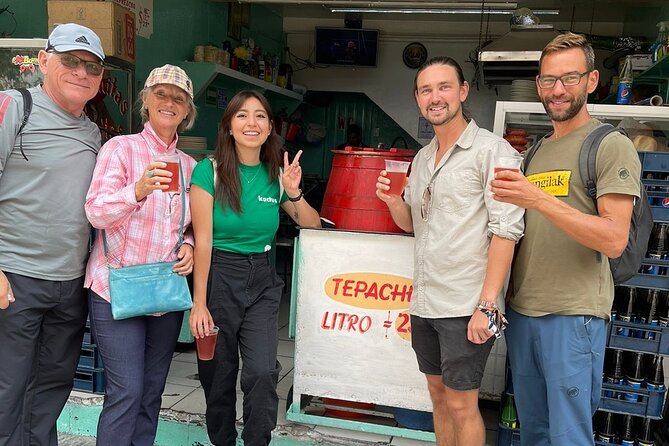
Plaza Tolsá is the route’s informal pause. Here, you stop in the shade and talk about subjects that connect the past to Mexico City today: indigenous languages, Day of the Dead traditions, music, politics, and gastronomy.
I like this part because it gives the guide room to speak in a less scripted way. The tour is not only about facades and famous names. It also gives you a chance to ask about the cultural details you may notice during the rest of your stay.
The square also provides views of the equestrian statue of Charles IV, commonly called El Caballito, as well as the exterior of the National Museum of Art and the Mining Palace. The 20-minute stop helps break up the walking, though it may not be a full seated rest.
This is where guides show their individual style. One may focus on food, another on politics or language. If you want recommendations for the rest of your visit, this is a good time to ask. Luis, in particular, has been praised for sharing a useful list of suggestions.
The Ventana Arqueológica beneath the street
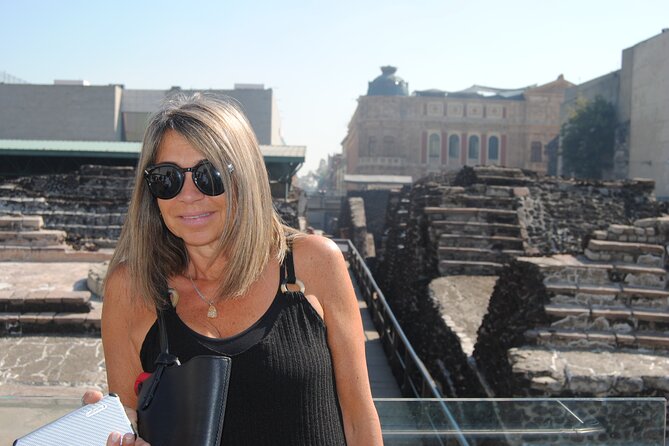
The Ventana Arqueológica is a brief but clever stop. You look at remains from the past through an archaeological window beneath a street near the main temple.
Only about five minutes are scheduled here, but the idea is memorable. It shows how much of central Mexico City is concealed below the pavement and inside later buildings. The guide explains how the site was discovered and points out the secrets that old structures in the center can hide.
Admission is included. Do not expect a long archaeological presentation. Think of it as a quick visual clue that reinforces the main theme of the tour: several cities occupy the same ground.
Palace of Fine Arts, Postal Palace, and House of Tiles
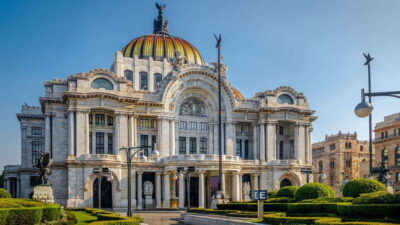
The Palace of Fine Arts is one of the final major sights. Its exterior and interior are described as artistic highlights, but the planned stop lasts about 15 minutes and the tour does not list a separate admission ticket. Treat this as an orientation and viewing stop rather than a full performance or museum visit.
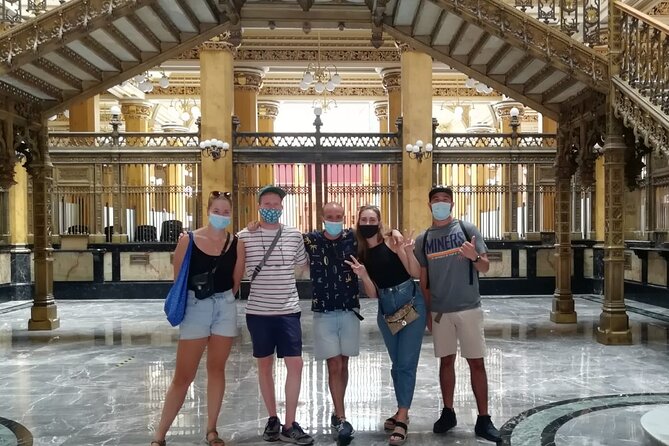
You then see the Postal Palace, a grand building that is still operating. The guide explains the economic and political meaning behind such an ornate public project. Admission is not included, so your visit here is focused on the outside unless you choose to return independently.
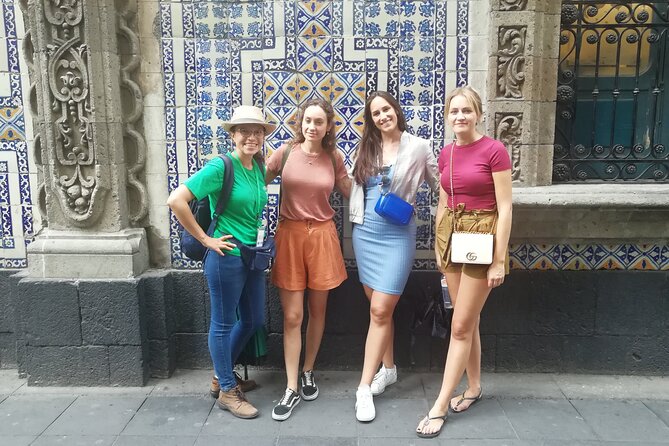
The final landmark is the House of Tiles, or Casa de los Azulejos. Its tiled facade has become one of the city’s most photographed views, and it makes a fitting end to a route built around architecture, public life, and layers of history.
The tour ends at Edificio Guardiola on Avenida 5 de Mayo, beside the Palace of Fine Arts and the House of Tiles. That location is useful because you can continue exploring on foot after the guide says goodbye.
What three hours really feels like
The scheduled stops add up to roughly two hours, leaving the rest of the three-hour period for walking, explanations, street crossings, and the transitions between sites. That sounds generous, but Centro Histórico is not a controlled museum setting. Crowds, pavement, traffic, and group pace all affect the timing.
You should be comfortable walking for much of the experience. One group found that uneven streets and limited seating were tiring, especially for people who had not adjusted to Mexico City’s elevation. The guide helped with shade and comfort, but no walking tour can remove those demands.
Wear shoes with good support and bring water. If heat is a concern, a morning or later afternoon departure may feel easier, though the supplied details do not specify a fixed best departure time. Guides have used umbrellas and shade to help the group, but you should still prepare for sun.
The maximum group size of 10 is a real advantage. A small group makes it easier to hear explanations, ask questions, and keep the pace manageable. It also lets the guide respond to individual needs, such as a bathroom break or a few extra minutes with the murals.
Value, inclusions, and what you still pay for
The experience includes the three-hour guided walk and admission to the Ventana Arqueológica and Museo Vivo del Muralismo. The Zócalo, Plaza de Santo Domingo, Plaza Tolsá, Palace of Fine Arts, and House of Tiles are listed as free stops, while the cathedral and Postal Palace are explained without included admission.
Food, sweets, transportation to the meeting point, and tips are not included. You meet at the Zócalo, so you need to arrange your own way there. Public transportation is nearby, which makes the start practical if you are already staying in or visiting the central area.
The value depends on what you want. If you need a structured introduction, the fee pays for an English-speaking guide, a small group, and access to the Ministry of Education murals. If you prefer a donation-based walk led directly by a student, one participant felt that option offered better value. That is a fair comparison to consider before booking.
The strongest reason to choose this paid tour is the mixture of context and route management. You are not just shown the Zócalo and sent on your way. You get a connected explanation of Mexica, colonial, revolutionary, and present-day Mexico, plus a practical route through a busy part of the city.
Who should book this Mexico City walk?
I would choose this tour for a first visit, especially if you want to understand how Centro Histórico fits together before returning to individual museums and buildings. It also suits solo visitors and couples who want company without joining a huge group.
English-speaking visitors should find the format comfortable. The guides have been praised for clear English, humor, patience, and their ability to answer questions. The experience is also a good fit for anyone who enjoys architecture but wants social and political context along with it.
I would hesitate if you have difficulty walking, need frequent seating, or want extended indoor visits. The itinerary moves quickly between many places, and several stops are outdoor explanations rather than admissions. It is also less suitable if your main goal is a full visit to the cathedral, Templo Mayor Museum, Palace of Fine Arts, or Postal Palace.
The experience allows service animals, and most people can participate, but the cobblestones, sun, and elevation remain practical concerns. Free cancellation is available up to 24 hours before the start time. Within 24 hours, changes and refunds are not accepted, and poor weather or an insufficient number of bookings can lead to a rescheduled tour or full refund.
Should you book it?
Book this walk if you want a lively three-hour introduction to the historic center, with Aztec ruins, colonial architecture, Rivera murals, and modern cultural themes tied together by a local English-speaking guide. The small group and strong guide lineup make it more personal than a large coach tour.
Skip it if you want long museum visits, much sitting, or a purely donation-based experience. For most first-time visitors who can manage the walking, it is a useful way to get your bearings fast, then decide which parts of Mexico City deserve a slower second look.
FAQ
How long is the walking tour?
The tour lasts approximately three hours.
Where does the tour begin?
It begins at Plaza de la Constitución, the Zócalo, in Mexico City’s Centro Histórico.
Where does the tour end?
It ends at Edificio Guardiola on Avenida 5 de Mayo, beside the Palace of Fine Arts and the House of Tiles.
Is the tour offered in English?
Yes. The experience is offered in English.
What is the maximum group size?
The tour accepts a maximum of 10 participants.
Are admission tickets included?
Admission to the Museo Vivo del Muralismo and Ventana Arqueológica is included. The cathedral and Postal Palace do not include admission, while several other stops are listed as free outdoor visits.
More Walking Tours in Mexico City
- Frida Kahlo VIP [Museum Tickets Included] Walk, Markets & Churros
★ 5.0 · 982 reviews - Anthropology Museum Private Experience Walking Tour
★ 5.0 · 355 reviews - Muralist Art Semi Private Walking Tour in Mexico City Downtown
★ 5.0 · 188 reviews - Coyoacán Walking Tour: Access to Frida Kahlo Museum & Tacos
★ 5.0 · 181 reviews
Just added around Mexico City
- Mexico City: Hop-on Hop-off City Tour by Turibus 2-Day Pass★ 4.0 · 10 reviews
- Anthropology Museum, Chapultepec Castle & Cable Car Tour★ 4.5 · 10 reviews
- Multi-Variety Mole Class in a Condesa home or art gallery rooftop★ 5.0 · 10 reviews
- PRIVATE TOUR Colonial Town Taxco and Cuernavaca from CDMX.★ 5.0 · 10 reviews
- El Centro Street Food Walking Tour★ 5.0 · 10 reviews
- Private Round-Trip Transportation to Teotihuacan Pyramids★ 5.0 · 10 reviews
- Teotihuacan and My Grandma’s Food Tour★ 5.0 · 10 reviews
- Private Walking Tour Legends and Events Historic Center CDMX★ 4.8 · 10 reviews
Historic Centre Walking Tours, compared.



Muralist Art Semi Private Walking Tour in Mexico City Downtown
Read our review →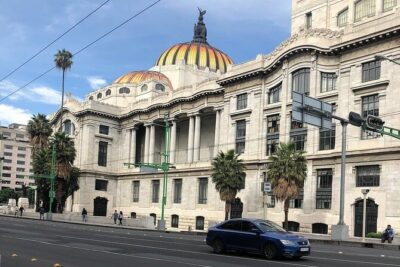
Mexico City Layover Tour: Downtown City Sightseeing
Read our review →
Private Walking Tour Gems of the Historic Center of Mexico City
Read our review →Browse the lists this tour appears in