
Reviewed · HISTORICAL TOURS
Walking Tour in Mexico City for Exploring their Cultural Heritage
Mexico City’s historic center packs several centuries into a few walkable blocks. This tour begins at the Zócalo, where Aztec foundations, Spanish churches, government power, public protests, and daily city life all meet, then follows that story to the Palace of Fine Arts.
I like the low $25 price, especially for a first look at the center, and I like the way the route links ruins, murals, palaces, and public squares instead of treating them as separate sights. Guides such as Diana, David, Carmina, Jesús, Sofía, and Ulysses have been praised for clear explanations and thoughtful answers. The catch is simple: you need to be ready to walk for up to three hours, and food, drinks, and any paid museum admission are not included.
In This Review
- Key points at a glance
- Why the Zócalo is the right place to begin
- Cathedral and National Palace: faith and government side by side
- Templo Mayor and the story beneath modern Mexico City
- Santo Domingo and the shift from colonial rule to Mexican identity
- Museo Nacional de Arte and the city’s 20th-century face
- The Tile Palace and a change of visual mood
- Palace of Fine Arts makes a strong final stop
- The guides make the difference
- Price, timing, and walking demands
- Who should book this Mexico City walking tour
- Should you book it?
- FAQ
- How much does the walking tour cost?
- How long does the tour last?
- What time does the tour start?
- Where does the tour begin?
- Where does the tour finish?
- Is the tour offered in English?
- How many people can join the tour?
- Can I cancel for a full refund?
Key points at a glance
- The Zócalo gives you Mexico City’s big story first, from ancient Tenochtitlan to modern politics and public life.
- The route covers several eras on foot, including Mexica ruins, Spanish colonial buildings, 20th-century architecture, and Mexican mural art.
- The Palace of Fine Arts is the grand finish, with special attention to its murals and role as a city icon.
- The guide is the main value, with past tours led by Sofía, Carmina, Diana, David, Jesús, Marco, and Ulysses.
- The 9:00 am start helps you get oriented, though you should wear comfortable shoes and plan for a steady walk.
- A maximum of 20 people keeps the group manageable, while a smaller booking can make the experience feel more personal.
Why the Zócalo is the right place to begin
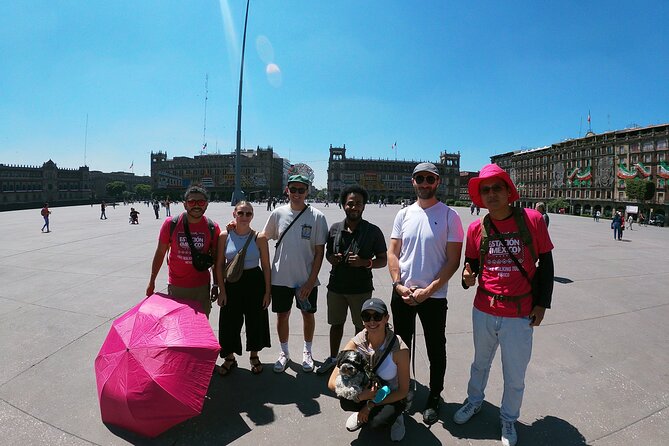
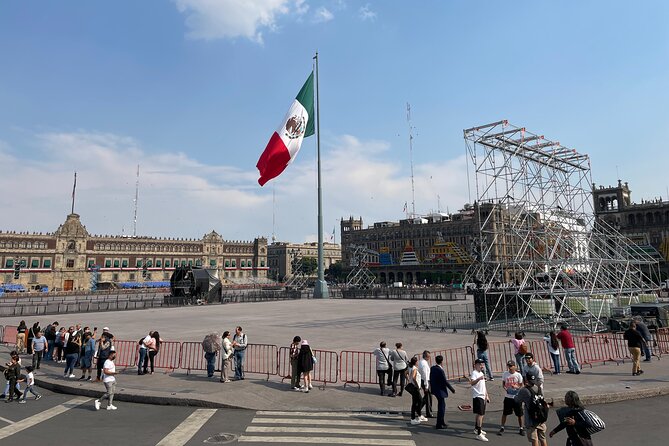
The tour starts at 9:00 am at P.za de la Constitución 463, on the edge of the Zócalo in Centro Histórico. This is not just a large square to photograph. It is the city’s main stage, a place tied to politics, social movements, traditions, and public celebrations.
Your guide uses the square to explain how Mexico City grew from the ancient Mexica capital of Tenochtitlan into the Spanish colonial capital and later the modern national capital. That opening context matters. Without it, the surrounding buildings can look like an attractive but confusing mix of churches, offices, museums, and monuments.
The Zócalo also gives you an early look at the city’s layered character. You may be standing in front of a colonial building while hearing about an older city beneath your feet, then turning toward a modern public event or government ceremony. The tour’s strength is in making those connections clear.
The listed stop lasts about 30 minutes. That is enough time to get the main story and ask questions, but not enough for a full study of every building around the square. If you want detailed architecture notes or time for photographs, you will need to return later on your own.
More history walks in Mexico City:
- Historic Downtown Walking Tour
★ 5.0 · 1,289 reviews - Historic Center Food Tour in Mexico City
★ 5.0 · 1,263 reviews - Mexico City: Historic Downtown Walking Tour
★ 4.8 · 1,039 reviews
Cathedral and National Palace: faith and government side by side
Two important buildings around the Zócalo receive attention: the Metropolitan Cathedral and the main office of Mexico’s federal government, the National Palace. The cathedral is described as the largest on the continent, so it naturally gives the tour a sense of scale.
Your guide can help you read the cathedral as more than a large religious building. It represents the Spanish colonial order that followed the fall of Tenochtitlan, and its position beside the Zócalo shows how closely religion and government were placed in the colonial city.
The National Palace provides the political counterpoint. It is tied to the federal government and to the public events that still shape life in the square. This is one of the best parts of having a guide: you get a basic explanation of why these buildings matter instead of simply walking past impressive facades.
The tour does not promise a long interior visit to either building. Treat this section as an introduction to the area, then decide which place deserves more of your own time. That approach works well for first-time visitors who want a clear plan for the rest of their stay.
Templo Mayor and the story beneath modern Mexico City
The Museo del Templo Mayor area brings the ancient city into view. Here you see the remains of the most important temple complex of Tenochtitlan, along with the story of the Aztecs, more accurately described in many historical contexts as the Mexica people and culture.
This stop lasts about 20 minutes, making it brief but important. The ruins help explain why the historic center feels so layered. The Spanish city was built over the Mexica capital, and the remains of the temple complex sit close to the cathedral and government buildings you have just seen.
That physical closeness is the point. You are not hearing about ancient Mexico in a distant museum room. You are looking at remains in the same central district where later powers built their own symbols.
The information provided for this stop lists no separate admission charge for the activity, but it does not promise a full museum visit. I would plan on an exterior or short site explanation unless your guide tells you otherwise. If the ancient Mexica past is your main reason for visiting, save extra time for a longer visit to the museum on another part of your day.
Santo Domingo and the shift from colonial rule to Mexican identity
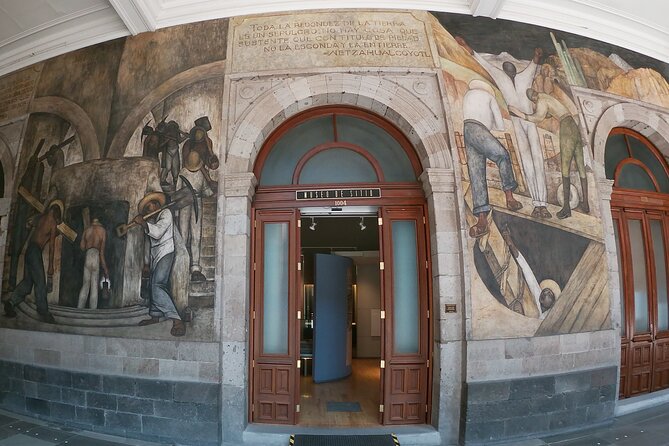
Plaza de Santo Domingo adds another layer to the walk. The square shows the contrast between Mexico’s Spanish past and the beginnings of the Mexican muralist movement, a subject that connects history, politics, and public art.
This is a useful stop because it moves the tour beyond the simple story of ancient Mexico followed by Spanish conquest. You begin to see how Mexican identity continued to change after colonial rule, especially through art that brought national history and social themes into public spaces.
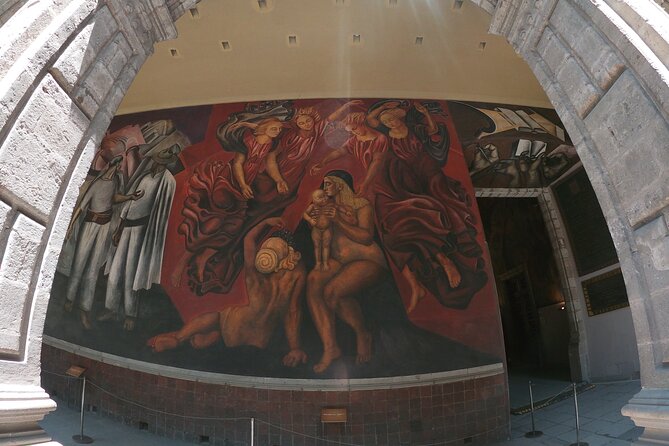
The stop lasts about 30 minutes. That gives your guide room to explain the square and point out details you might otherwise miss. This is also where the tour’s emphasis on murals becomes more useful. The experience includes a place with murals, so you are not only hearing about Mexico’s artists in the abstract.
The itinerary does not specify a particular mural at this stop, so do not expect a complete art tour here. Instead, think of Santo Domingo as a bridge between the colonial city and the artistic movements that shaped modern Mexico.
More walking tours in Mexico City:
- Frida Kahlo VIP [Museum Tickets Included] Walk, Markets & Churros
★ 5.0 · 982 reviews - Walking Tour of the Historic Center of Mexico City
★ 5.0 · 870 reviews - Anthropology Museum Private Experience Walking Tour
★ 5.0 · 355 reviews - Walking Tour – Impressive murals in Historical Center of Mexico City
★ 5.0 · 224 reviews
Museo Nacional de Arte and the city’s 20th-century face
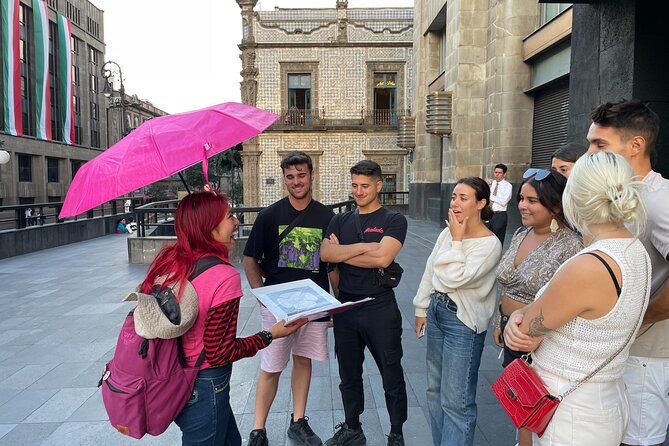
At the Museo Nacional de Arte, the focus shifts toward modern architecture and the way the 20th century changed the center. The building itself is part of the lesson. Its scale and design show how Mexico City continued to express national ambition through public architecture.
The stop is planned for about 30 minutes. That is a good amount of time for an orientation and selected highlights, but not for a full museum visit. If you want to study the collection, check the museum’s current opening hours and admission rules separately.
I like this part of the route because it prevents the walk from becoming a strictly colonial history lesson. You move from ancient ruins to Spanish institutions, then to a modern Mexico that uses museums, murals, and public buildings to tell its own story.
A guide can also help you avoid a common problem in art museums: looking at famous works without understanding why they were made or how they fit into national history. Diana, in particular, has been praised for connecting art and history in a way that made the murals and paintings more accessible, even to someone who does not usually seek out art museums.
The Tile Palace and a change of visual mood
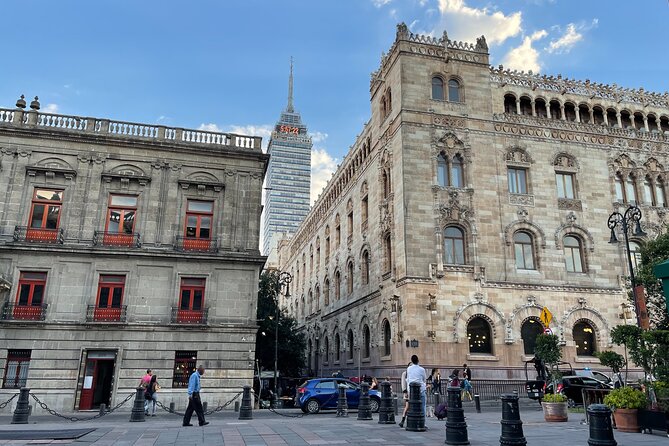
The route also includes the beautiful palace known for its tiles, widely recognized as the Casa de los Azulejos. Its tiled exterior gives you a sharp change from the grand open spaces of the Zócalo and the formal scale of government buildings.
This is a short visual stop, but it earns its place. The building is easy to appreciate at a glance, yet a guide can add useful context about its place in the historic center and the way decorative details distinguish one building from another.
Do not expect a lengthy interior visit based on the time allowed. The value here is seeing how Mexico City’s architecture shifts from heavy stone facades and public monuments to a more decorative palace style within a short walk.
This is also a good point to take photographs, though you should keep pace with the group. The tour is designed as a moving overview, not as a slow architecture workshop.
Palace of Fine Arts makes a strong final stop
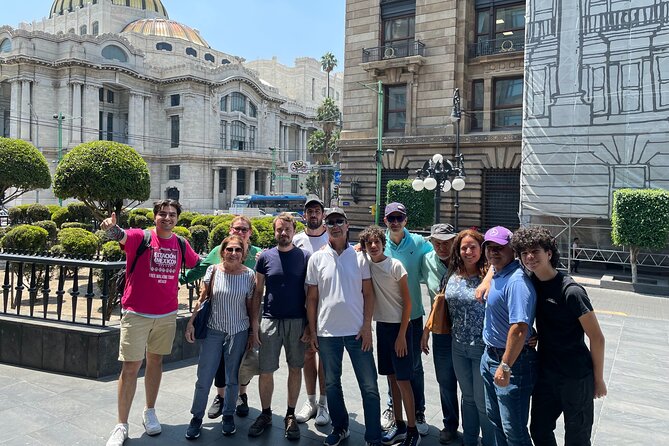
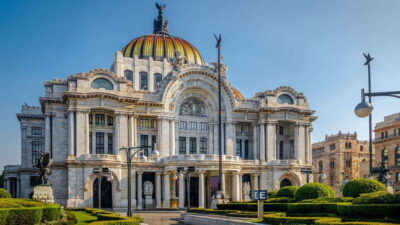
The walk ends near the Palace of Fine Arts on Av. Juarez 39. This magnificent building is one of Mexico City’s best-known symbols, and finishing here gives the tour a clear visual high point.
The Palace of Fine Arts is especially important for its murals and its role in Mexican cultural life. The guide’s explanation can help you understand the art as part of a larger national story rather than as decoration on a grand wall.
Past tours have placed particular value on this section. Diana’s approach to the murals has been singled out for making the art feel understandable and connected to history. Another guide, on a tour of the historic center, gave a strong explanation of the murals at Bellas Artes. That makes the final stop more than a photo opportunity.
The end point is practical, too. You finish close to the Palace of Fine Arts rather than returning to the Zócalo, so you can continue exploring from there. You may want to visit the palace, seek lunch nearby, or use the location as a starting point for more of the center.
The tour itself does not include food or drinks, so plan your next stop before you set out. The 9:00 am start should leave you near Bellas Artes around late morning or midday, depending on the group’s pace and the amount of discussion at each stop.
The guides make the difference
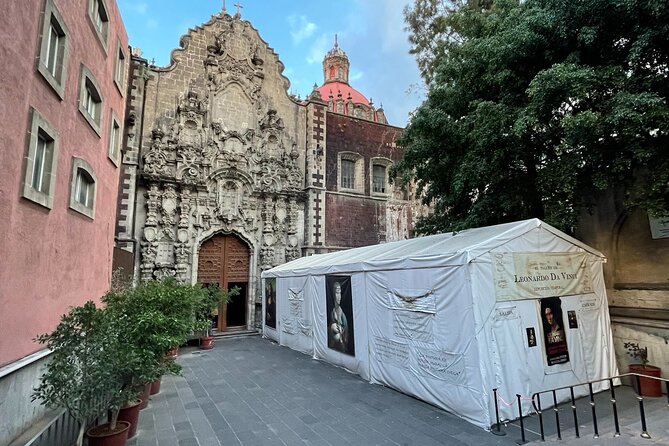
This is a guide-led experience, and the guide matters more here than on a route made up of simple viewpoints. The historical center is full of names, dates, political changes, and artistic references. A good guide turns that material into a story you can follow.
Several guides have received strong praise for different strengths. Sofía has been described as open to questions and generous with information. Carmina was noted for her enthusiasm and for answering questions carefully. Jesús combined historical knowledge with an entertaining style that encouraged further interest in the city.
Diana’s strength is art and history, especially at the Palace of Fine Arts. David has been praised for making a solo tour feel personal and interactive, while Marco was appreciated for adjusting the pace and offering extra food and sightseeing tips at the end. Ulysses was described as polite, friendly, and well informed.
You cannot choose a specific guide from the details provided, so the experience may vary in style. That is normal for a small operator with several guides. Still, the repeated pattern is encouraging: the best part of the walk is likely to be the guide’s ability to answer questions and connect each place to the larger story.
Price, timing, and walking demands
At $25 per person, this is a strong value if you want orientation rather than a full museum day. You are paying for an English-speaking guide for roughly two to three hours, with a route that covers several major sites in the historic center.
The price is especially reasonable for a first morning in Mexico City. A good introduction can help you decide which buildings deserve a longer return visit and can prevent you from spending your first day moving between sights without context.
The tradeoff is that the price does not include food or drinks. It also does not promise full entry time at each museum or major building. Think of the tour as a guided introduction to the district, not an all-inclusive sightseeing package.
You should be able to walk for three hours. Comfortable shoes are essential, and you should be ready to remain on your feet while listening in public squares and outside buildings. The group can reach 20 people, which is still workable but may feel less personal than a private walk. If only a small number book, the experience can become much more flexible. One past booking had just one party, allowing the guide to answer questions and adjust the pace closely.
The meeting point is near public transportation, and the activity allows service animals. Most people who can manage a three-hour urban walk can participate.
Who should book this Mexico City walking tour
I would recommend this tour most strongly to first-time visitors, solo travelers who want a friendly introduction, couples, and anyone who enjoys history but does not want to spend the first morning inside museums.
It is also a good choice if you want to understand the relationship between ancient Tenochtitlan, Spanish colonial rule, federal government, and Mexican mural art. The route gives you a usable map of the historic center and finishes at a major cultural landmark.
Art lovers should pay close attention to the Palace of Fine Arts section. History lovers will get the most from the Zócalo and Templo Mayor. Families can benefit from the short stops, although young children still need to manage a long walk and several periods of listening.
I would hesitate to recommend it if you want a slow, detailed museum visit, a food-focused tour, or a route with very little walking. It also may not suit someone who prefers to explore alone and set their own pace at every sight.
Free cancellation is available if you cancel at least 24 hours before the 9:00 am start. Cancellations or changes made within 24 hours do not receive a refund, so keep that deadline in mind when planning around flights and other activities.
Should you book it?
Book this walking tour if you want a clear, affordable introduction to Mexico City’s historic center and you value an English-speaking guide who can connect ruins, churches, government buildings, museums, and murals.
I especially like it as a first-day activity. You start at the Zócalo, finish near Bellas Artes, and leave with a better sense of where the city’s major stories fit together. Just wear good shoes, bring your own water and snacks, and leave time to return to the places that catch your interest.
FAQ
How much does the walking tour cost?
The tour costs $25 per person.
How long does the tour last?
The experience lasts approximately two to three hours.
What time does the tour start?
The tour starts at 9:00 am.
Where does the tour begin?
It begins at P.za de la Constitución 463 in Centro Histórico, near the Zócalo.
Where does the tour finish?
It finishes at Av. Juarez 39, close to the Palace of Fine Arts.
Is the tour offered in English?
Yes. The tour is offered in English.
How many people can join the tour?
The maximum group size is 20 people.
Can I cancel for a full refund?
Yes, if you cancel at least 24 hours before the experience start time. Cancellations made less than 24 hours before the start time are not refundable.
Just added around Mexico City
- Mexico City: Hop-on Hop-off City Tour by Turibus 2-Day Pass★ 4.0 · 10 reviews
- PRIVATE TOUR Colonial Town Taxco and Cuernavaca from CDMX.★ 5.0 · 10 reviews
- Anthropology Museum, Chapultepec Castle & Cable Car Tour★ 4.5 · 10 reviews
- Multi-Variety Mole Class in a Condesa home or art gallery rooftop★ 5.0 · 10 reviews
- El Centro Street Food Walking Tour★ 5.0 · 10 reviews
- Private Round-Trip Transportation to Teotihuacan Pyramids★ 5.0 · 10 reviews
- Teotihuacan and My Grandma’s Food Tour★ 5.0 · 10 reviews
- Private Walking Tour Legends and Events Historic Center CDMX★ 4.8 · 10 reviews
Historical Tours, compared.


Mexico City Historical Centre Food Tour with 7 Authentic Tastings
Read our review →
Walking Tour – Impressive murals in Historical Center of Mexico City
Read our review →
Guided walking tour through the most historic parts of the city.
Read our review →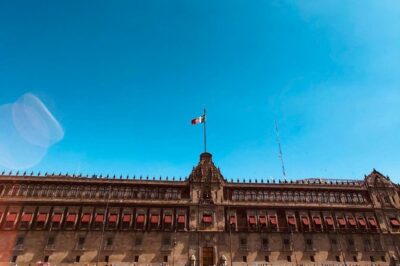
Private Walking Tour Gems of the Historic Center of Mexico City
Read our review →Browse the lists this tour appears in