
Reviewed · ART & MURAL TOURS
Walking Tour – Impressive murals in Historical Center of Mexico City
Mexico City’s mural movement is not just a gallery subject. It is a public record of revolution, religion, indigenous identity, labor, and political power painted across the city’s grandest buildings. This walking tour brings you close to those works, especially Diego Rivera’s murals, while guides such as Balaam and Miguel explain the people and arguments hidden in the walls.
I like the route for two clear reasons: it links several major mural sites in the Historic Center, and it gives you the background needed to read the paintings rather than simply admire their color. The main consideration is the walking. The tour can run close to three hours, and one group found that slower walkers had trouble keeping up.
In This Review
- Key points before you book
- Why Mexican murals deserve a walking tour
- San Ildefonso and Rivera’s first mural
- The Education Ministry’s enormous courtyards
- Walking through the Historic Center
- Bellas Artes and the grand finale
- What the guides add
- Is $51 a fair price?
- Who should book this experience?
- My verdict on the Mexico City mural walk
- FAQ
- How long does the mural tour last?
- Where does the tour begin and end?
- Is the Ministry of Public Education open every day?
- Is admission included?
- Is transportation provided?
- How large can the group be?
- Can I cancel for a full refund?
Key points before you book
- See muralism where it began: San Ildefonso houses La Creación, Diego Rivera’s first mural and a key work in the birth of Mexican muralism.
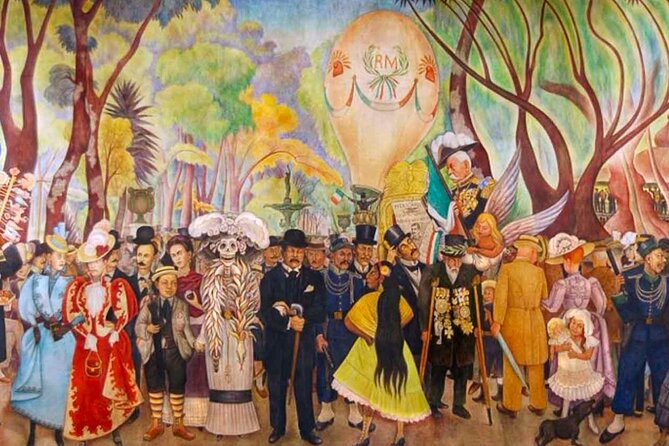
- Compare several artists: Rivera is the main focus, but you may also see works by Orozco, Siqueiros, Jean Charlot, Amado de la Cueva, Roberto Montenegro, and others.
- Expect politics and history: Guides explain Mexican history, indigenous symbols, the Revolution, and the political ideas behind the paintings.
- Plan for a long walk: The route connects sites in the Historic Center, with much of the time spent on your feet.
- Tuesday changes the plan: The Ministry of Public Education is closed that day, so the tour substitutes other mural sites, including the Diego Rivera Mural Museum.
- Check the final cost: The tour is $51 per person. Museum admission is included at some stops, but the Bellas Artes entry is listed as not included.
Why Mexican murals deserve a walking tour
Mexican muralism works best when you see it in the setting for which it was made. These are not small canvases tucked into quiet rooms. They cover courtyards, stairways, amphitheater walls, and public buildings where students, workers, officials, and ordinary city residents once passed every day.
That setting matters. A guide can point out how a mural speaks to the building around it, how an artist places historical figures beside workers or gods, and how a scene changes when you know the political moment behind it. I find that useful because muralism can seem crowded at first. There may be dozens of faces, symbols, dates, and scenes competing for your attention.
The strongest part of this experience is the interpretation. Balaam, in particular, is described as passionate about Rivera and Orozco, with a gift for explaining political positions and the meaning of individual figures. Miguel is praised for connecting art and Mexican history, then adding details about architecture, archaeological remains, and local food along the route.
This is not the best choice if you want a quick photo stop. It is closer to an art-history lesson conducted while walking through the city. The discussion can include Mexico from the Aztec period through the Conquest, Revolution, and decades when the mural movement took shape.
More mural and street art walks in Mexico City:
- CDMX: Xochimilco, Coyoacan, Frida Kahlo Museum & Murals Tour
★ 4.4 · 3,025 reviews - Mexico City; ART NACO : Murals & Street Art Bike Tour
★ 5.0 · 284 reviews - La Catrina & Muralism: Diego Rivera’s Legacy & Frida Kahlo
★ 4.5 · 197 reviews
San Ildefonso and Rivera’s first mural
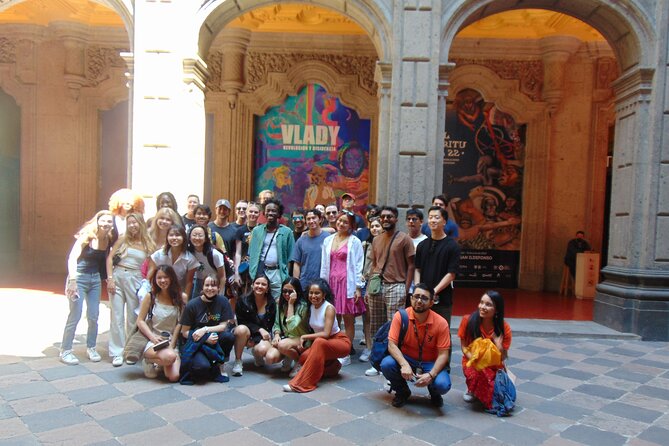
The tour begins at the Former College of San Ildefonso, at Justo Sierra 16 in the Historic Center. This old National Preparatory School is presented as the birthplace of Mexican muralism, making it a fitting starting point rather than just another museum entrance.
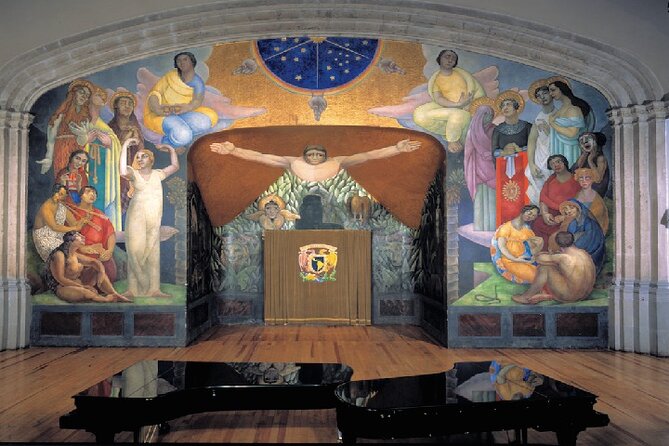
The centerpiece is La Creación, Diego Rivera’s first mural. It decorates the college amphitheater, a formal interior that gives the work a different feel from Rivera’s later public murals. You also learn about Rivera’s first meeting with a teenage Frida Kahlo at the school, an encounter that adds a personal thread to the artistic story.
The scheduled visit here lasts about 30 minutes, with admission included. That is enough time for a focused explanation and a careful look, but not enough to examine every detail at length. I would pay close attention to the guide’s explanation of the composition, since this is the point where the tour establishes Rivera’s early ideas and the broader purpose of Mexican public art.
San Ildefonso also gives you a sense of the scale of the project. Mexican muralism was intended for public walls and public discussion. Starting in a former school helps explain why education became such an important part of the movement.
The Education Ministry’s enormous courtyards
The second planned stop is the Ministry of Public Education, known in Spanish as the Secretaría de Educación Pública. Here, the murals spread through the Fiestas and Trabajo courtyards, covering more than 3,000 square meters.
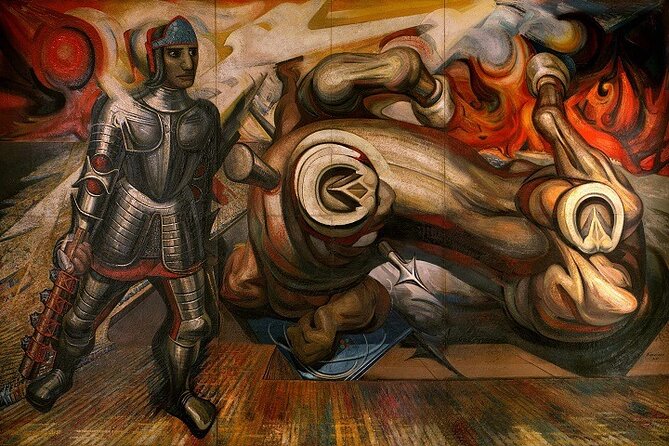
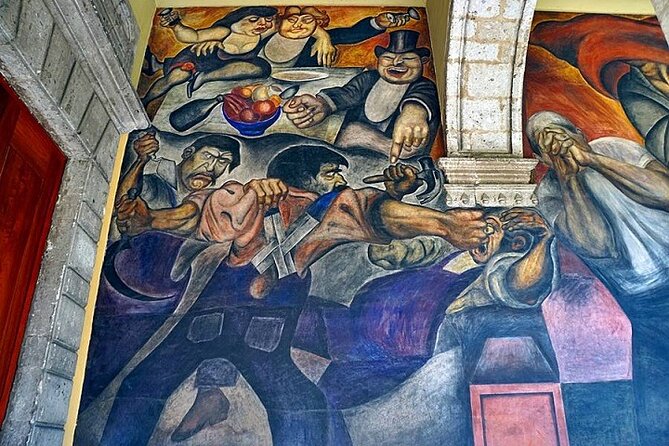
The sheer amount of work is the appeal. Instead of seeing one famous Rivera panel, you walk through a broad collection of scenes linked to festivals, labor, daily life, and political ideals. Diego Rivera is the main draw, but the collection also includes works by Jean Charlot, Amado de la Cueva, and Roberto Montenegro.
The visit is scheduled for about 40 minutes, with entry included. I would expect this stop to feel more expansive than San Ildefonso. You move from wall to wall, looking at how artists used repeated figures, bright colors, local customs, and social scenes to address a large public audience.
The building also includes two rooms devoted to muralism and a multisensory hall with artistic and historical material. A library, children’s reading room, bookstore, and café are also part of the complex. Those extras may not be central to the walking tour, but they make the site more than a quick corridor visit.
There is one important scheduling warning. The ministry is closed on Tuesdays. On that day, the tour changes to other mural sites, including the Diego Rivera Mural Museum. That substitute can still provide a worthwhile art experience, but it is not the same as seeing Rivera’s huge courtyard cycle in its original setting.
I would avoid Tuesday if the Education Ministry is your main reason for booking. If Tuesday is your only available day, ask yourself if seeing other Rivera murals will still meet your goal. The tour operator has also used murals in Alameda Park, the Diego Rivera Mural Museum, and other relevant sites as alternatives.
Walking through the Historic Center
The spaces between museums are part of the experience. This is a walking tour through Mexico City’s Historic Center, not a series of isolated indoor visits with a vehicle waiting outside.
Guides may point out churches, architecture, archaeological digs, historic squares, and other murals as you go. That extra context gives the route more value. You begin to see the murals as part of a city filled with layers of indigenous, colonial, revolutionary, and modern Mexican life.
The walking can also be the hardest part. One account describes the route as ambitious, especially for someone moving slowly, and another points out that much of the three-hour tour is spent on your feet. Wear comfortable shoes and bring water. The route may be adjusted with bathroom breaks, and one guide helped a participant arrange a street-food snack, but this remains an active outing.
The group limit is 25 people. That is small enough for a guide to manage, but it is not a private tour. A group of about a dozen felt too large for one person because it was harder to hear and keep up. Smaller departures can feel more personal, and a Sunday afternoon departure once operated with only one participant, allowing the guide to adapt the route and pace.
You should also allow flexibility. A protest once closed the Education Ministry during a tour, and the guide waited and adjusted the plan so the group could see the promised murals after the building reopened. That kind of patience is useful in the Historic Center, where public events and building schedules can affect the route.
More history walks in Mexico City:
- Historic Downtown Walking Tour
★ 5.0 · 1,289 reviews - Historic Center Food Tour in Mexico City
★ 5.0 · 1,263 reviews - Mexico City: Historic Downtown Walking Tour
★ 4.8 · 1,039 reviews - Walking Tour of the Historic Center of Mexico City
★ 5.0 · 870 reviews
Bellas Artes and the grand finale
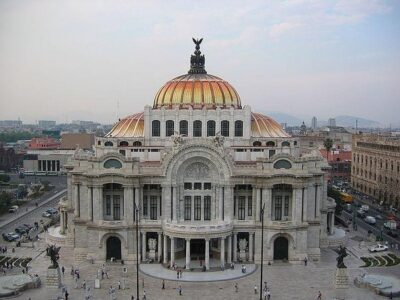
The final planned stop is the Palacio de Bellas Artes on Avenida Juárez. The building itself is one of Mexico City’s major cultural landmarks, with exhibitions, dance, theater, and other performances under its domed exterior.
The mural collection is the main reason to enter. Shortly before the building’s inauguration in 1934, prominent Mexican muralists received commissions for its walls. The museum opened at the same time and is described as Mexico’s first museum, giving the visit both artistic and institutional importance.
The scheduled stop lasts about 40 minutes. Here you may see murals by Diego Rivera and other major Mexican artists, including works associated with the political and artistic debates of the period. The guide’s role is especially helpful because Bellas Artes can feel like a quick succession of famous names unless someone explains how the artists differed.
Admission to Bellas Artes is listed as not included, even though museum tickets are included at other stops. Add that cost to your budget and confirm the current arrangement before you go. This is the main price detail that could surprise you.
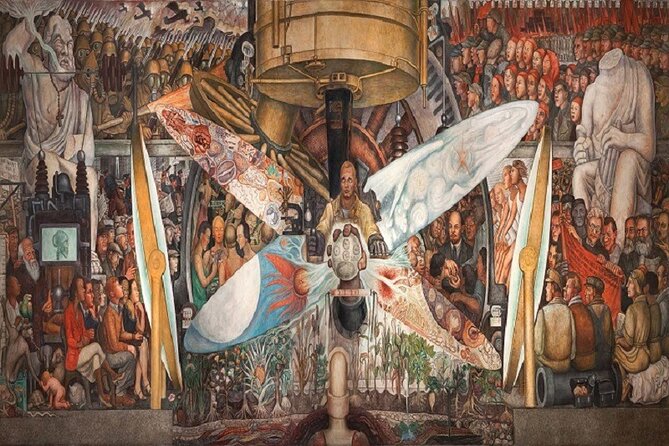
The route may also include Rivera’s famous mural associated with Rockefeller Center, now displayed at Bellas Artes, as well as a Rivera mural in Alameda Park. The exact mix depends on the day and access to the main buildings. That flexibility can be helpful, but it means you should not treat every departure as an identical three-stop program.
What the guides add
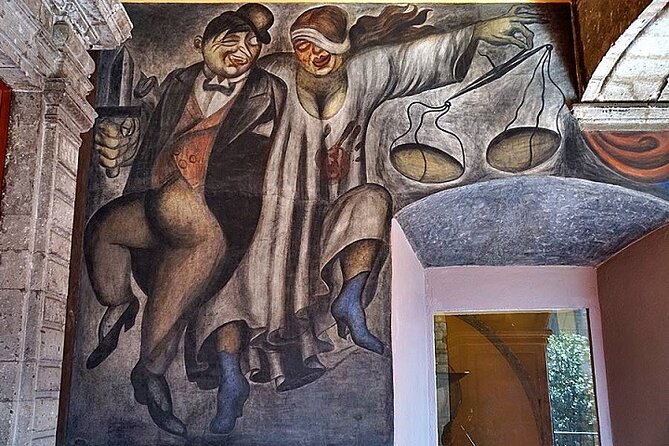
The guides are the heart of this experience. Balaam is repeatedly described as passionate about muralism, Mexican culture, history, and politics. His strongest contribution is showing how to read symbols that might otherwise pass unnoticed, especially indigenous religious references, origin stories, and political figures.
Miguel brings a similarly lively approach. He explains the murals, then connects them to the streets outside, including architecture, archaeological remains, and food. He has also adapted tours to a group’s interests, which matters when one person wants more art analysis and another wants more historical background.
The tour is offered in English. The quality of communication can vary by guide and group size. One participant found the guide’s English difficult to follow at times, while other accounts describe Balaam as an effective English speaker. If you have detailed questions or hearing concerns, stay near the guide and ask for clarification when needed.
I like that the guides welcome questions rather than treating the tour as a fixed speech. Balaam was described as flexible with breaks and willing to explain a mural in greater detail when someone showed interest. That makes the experience useful for both beginners and people who already know Rivera’s name but want more substance.
Is $51 a fair price?
At $51 per person, this is not the cheapest way to see murals in Mexico City. You can encounter public art on your own for less, especially if you are comfortable navigating museums and researching the artists beforehand.
The price becomes easier to justify if you want context. The tour links several important sites, provides a guide, and includes museum admission at the included venues. You are paying for the route, the interpretation, and the time saved deciding which works matter most.
The value is strongest for a first visit or a short stay. One person used the tour during only 36 hours in Mexico City and covered San Ildefonso, Bellas Artes, Alameda Park, and other historic locations in under three hours. That is an efficient introduction when your time is tight.
The value is weaker if you dislike group pacing, cannot walk comfortably for several hours, or mainly want to see the Ministry of Public Education on a Tuesday. The maximum group size of 25 also means the experience may feel less intimate than a private art guide.
Who should book this experience?
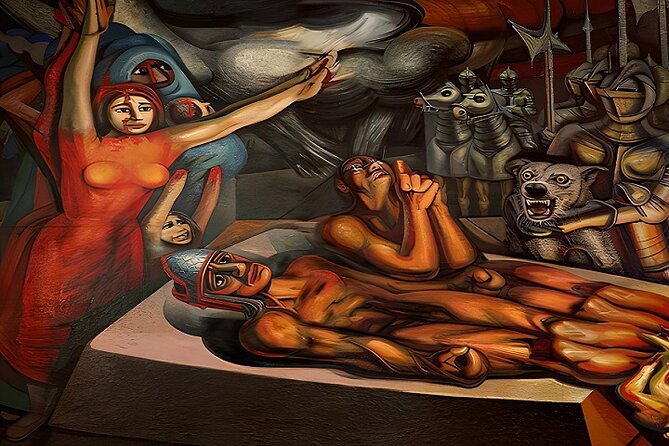
I would recommend it to art lovers, first-time visitors, and anyone who wants to understand why Rivera, Orozco, Siqueiros, and their peers painted on such a large scale. It also suits people who like history with their art, since the explanation reaches from Aztec stories to the Mexican Revolution and twentieth-century politics.
Families can benefit from it, but younger children may find three hours of standing and discussion demanding. The Education Ministry’s reading rooms and café add interest, though the core tour is still built around looking closely at murals and listening to interpretation.
I would also suggest it for solo visitors. The guide can make a short Mexico City stay feel organized without turning the route into a rushed checklist. Couples and small groups are likely to enjoy it most when everyone is willing to walk, ask questions, and spend time looking rather than racing from one site to the next.
Free cancellation is available up to 24 hours before the start time. Cancellations or changes made within 24 hours are not refunded, so leave room in your schedule before committing.
My verdict on the Mexico City mural walk
Book this tour if you want the murals explained, not merely photographed. Its greatest strength is the human guide: Balaam and Miguel are praised for linking art to indigenous culture, politics, architecture, and everyday Mexico City life.
Before booking, check three things: your date, the Tuesday closure at the Education Ministry, and the extra admission cost at Bellas Artes. Then wear good walking shoes and expect the full outing to approach three hours.
I would choose this tour early in a Mexico City visit. It gives you a useful key for reading the city’s public art, and the Historic Center will make more sense afterward. If you want a slow, private museum visit, choose another format. If you want a thoughtful introduction to Mexico’s mural movement with a lively walk through the center, this is a strong choice.
FAQ
How long does the mural tour last?
The tour is listed as lasting approximately one to three hours. Several stops are scheduled for 30 to 40 minutes, and the full experience can approach three hours depending on the pace and route.
Where does the tour begin and end?
It begins at the Former College of San Ildefonso at Justo Sierra 16 in Mexico City’s Historic Center. It generally ends at the Palacio de Bellas Artes on Avenida Juárez.
Is the Ministry of Public Education open every day?
No. The Ministry of Public Education is closed on Tuesdays. On Tuesdays, the tour visits substitute mural sites, including the Diego Rivera Mural Museum.
Is admission included?
Museum entrance tickets are included at some of the stops. Admission to Palacio de Bellas Artes is listed as not included, so confirm the current cost before booking.
Is transportation provided?
No. Transportation is not included. The experience is a walking tour through the Historic Center, though an e-bike taxi was used as an optional adjustment during one route.
How large can the group be?
The tour has a maximum of 25 participants. Group size can affect how easy it is to hear the guide and keep pace between sites.
Can I cancel for a full refund?
Yes, if you cancel at least 24 hours before the experience begins. Cancellations or changes made less than 24 hours before the start time are not refunded.
More Walking Tours in Mexico City
- Frida Kahlo VIP [Museum Tickets Included] Walk, Markets & Churros
★ 5.0 · 982 reviews - Anthropology Museum Private Experience Walking Tour
★ 5.0 · 355 reviews - Walking Tour in Mexico City for Exploring their Cultural Heritage
★ 5.0 · 245 reviews - Muralist Art Semi Private Walking Tour in Mexico City Downtown
★ 5.0 · 188 reviews
Just added around Mexico City
- Mexico City: Hop-on Hop-off City Tour by Turibus 2-Day Pass★ 4.0 · 10 reviews
- Anthropology Museum, Chapultepec Castle & Cable Car Tour★ 4.5 · 10 reviews
- Multi-Variety Mole Class in a Condesa home or art gallery rooftop★ 5.0 · 10 reviews
- PRIVATE TOUR Colonial Town Taxco and Cuernavaca from CDMX.★ 5.0 · 10 reviews
- Teotihuacan and My Grandma’s Food Tour★ 5.0 · 10 reviews
- El Centro Street Food Walking Tour★ 5.0 · 10 reviews
- Private Round-Trip Transportation to Teotihuacan Pyramids★ 5.0 · 10 reviews
- Private Walking Tour Legends and Events Historic Center CDMX★ 4.8 · 10 reviews
Art & Mural Tours, compared.
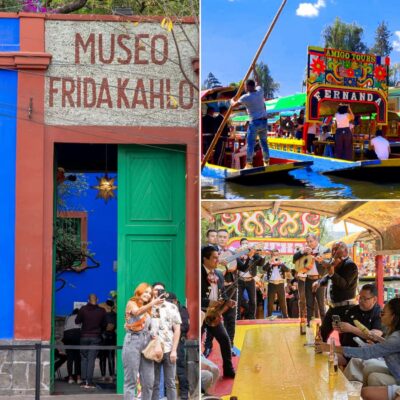
Xochimilco, Coyoacan, Frida Kahlo Museum & Murals Tour
Read our review →
Mexico City; ART NACO : Murals & Street Art Bike Tour
Read our review →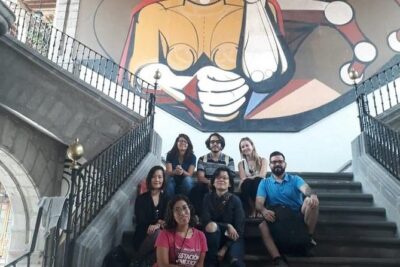
La Catrina & Muralism: Diego Rivera’s Legacy & Frida Kahlo
Read our review →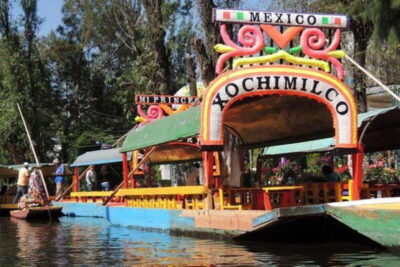
Xochimilco floating gardens, Coyoacan and UNAM murals
Read our review →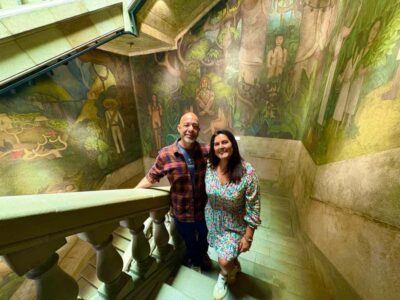
Browse the lists this tour appears in