
Reviewed · ART & MURAL TOURS
Palace of Fine Arts Mural Tour
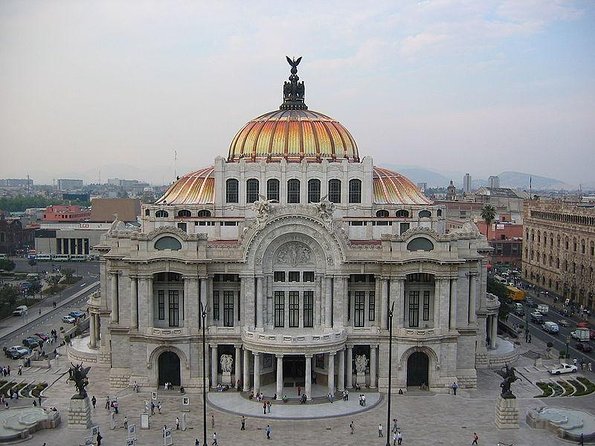
Mexico City’s Palacio de Bellas Artes is more than a grand marble building. Its walls hold a compact history of Mexican politics, art, revolution, and national identity. This tour focuses on the murals, including Diego Rivera’s Man at the Crossroads, the work that once caused a storm at New York’s Rockefeller Center.
I like the clear focus on the art and the way guides such as León and Diego explain both symbols and historical setting. I also like that the tour covers artists with very different voices, from Rivera and Orozco to Siqueiros and Tamayo.
The main drawback is the price: $56.75 for about 1 to 1.5 hours is not cheap, especially since the admission wording is unclear. The details say entries are included, while the itinerary also says the admission ticket is not included, so confirm this before paying.
In This Review
- Key points to know before booking
- Why the murals deserve a focused tour
- Inside the Palacio de Bellas Artes
- Diego Rivera and the Rockefeller Center controversy
- Orozco’s Katharsis
- Rivera’s Carnival of Huejotzingo
- Siqueiros and the struggle for a new society
- Camarena, Tamayo, and Rodríguez Lozano
- What the guide adds to the experience
- Is $56.75 a fair price?
- Timing, language, and access
- Who should book this mural tour?
- Should you book it?
- FAQ
- Where does the Palace of Fine Arts Mural Tour begin?
- Where does the tour end?
- How long does the tour last?
- Is the tour offered in English?
- Which artists are covered?
- Is admission to Palacio de Bellas Artes included?
- Can I cancel for a full refund?
Key points to know before booking
- The mural focus is unusually specific: You spend the visit studying major works rather than racing through the whole museum.
- León and Diego are named guides: Both have led English tours, with special praise for clear explanations and strong preparation.
- You see work by several major muralists: The route includes Rivera, Orozco, Siqueiros, Camarena, and Tamayo.
- Rivera’s Rockefeller Center mural gets special attention: You learn why the original was destroyed and how the Bellas Artes version connects to that dispute.
- The group can reach 35 people: That is manageable, but a large group may make it harder to hear or get a close view.
- The meeting point is central: The tour begins and ends at Palacio de Bellas Artes in the Centro Histórico.
Why the murals deserve a focused tour
Mexican muralism is not simply large painting on a wall. These works were made to speak to the public, often about revolution, class, education, religion, industry, indigenous identity, and the future of Mexico.
That can make the murals difficult to read on your own. A crowd of figures may look impressive, but the meaning can slip past you. A good guide gives you a set of tools: who is pictured, what symbols to notice, which political argument is being made, and how the artist’s own life shaped the work.
That is the value of this visit. You are not just looking at famous names. You are given the context needed to understand why the murals were created and why they still matter.
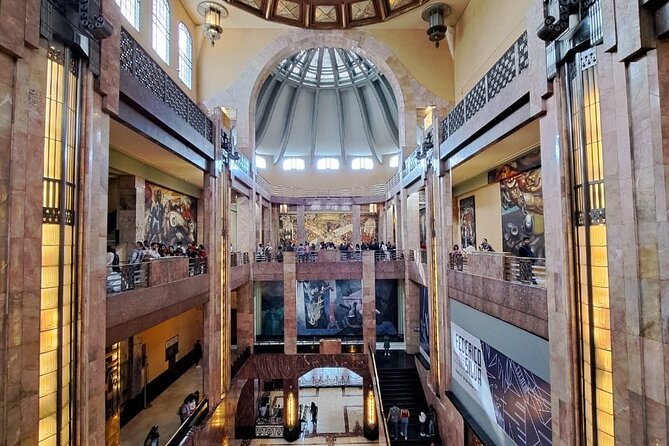
The tour is also a useful introduction to the Palacio de Bellas Artes itself. The building was commissioned during the government of Porfirio Díaz and became one of the defining landmarks of Mexico City’s historic center. Its exterior and interior architecture receive a detailed explanation before the focus turns fully to the murals.
The result is a short but concentrated cultural lesson. If you prefer art with a story attached, this format should suit you better than wandering through the building with only a guidebook.
More mural and street art walks in Mexico City:
- CDMX: Xochimilco, Coyoacan, Frida Kahlo Museum & Murals Tour
★ 4.4 · 3,025 reviews - Mexico City; ART NACO : Murals & Street Art Bike Tour
★ 5.0 · 284 reviews - Walking Tour – Impressive murals in Historical Center of Mexico City
★ 5.0 · 224 reviews
Inside the Palacio de Bellas Artes
The meeting point is Palacio de Bellas Artes, Av. Juárez, in the Centro Histórico. This is a central location near public transportation, and the activity returns to the same place at the end.
Expect the visit to begin with the building itself. The guide explains the exterior and interior design, then places the museum in the political and cultural setting of Porfirio Díaz’s Mexico. That opening matters because the palace is not a neutral container for art. Its design and history reflect the ambitions of the era in which it was planned and built.
Once inside, the guide turns to the mural collection. The supplied description refers to 17 murals by leading Mexican artists, though the named works in the route highlight a smaller group of especially important pieces. You should expect the guide to organize the visit around selected murals rather than give every work equal time.
That is a sensible approach. In 60 to 90 minutes, a detailed explanation of a handful of paintings is more useful than a hurried list of every artist in the room.
Diego Rivera and the Rockefeller Center controversy
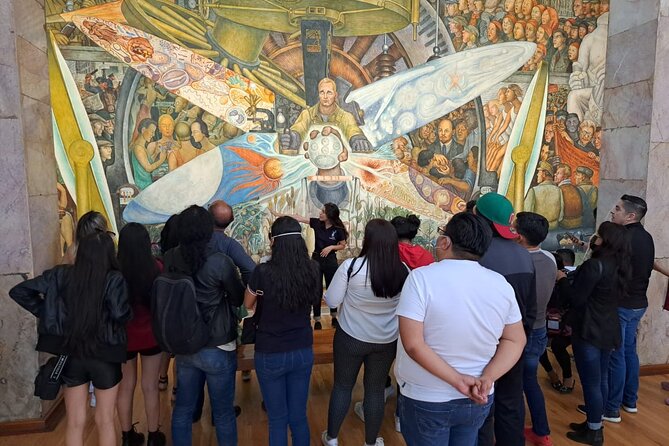
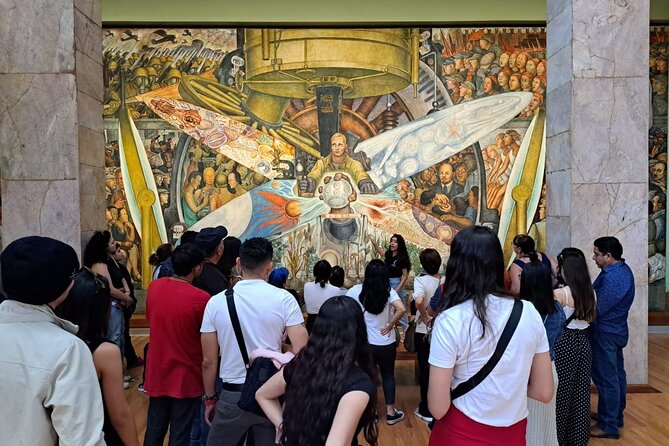
One of the strongest parts of the tour is the discussion of Diego Rivera’s Man at the Crossroads, also called Man Controller of the Universe. Rivera first painted the work for Rockefeller Center in New York, but the mural was destroyed after a dispute over its political imagery.
That episode gives you a direct way into Rivera’s art. His murals often connect workers, industry, science, politics, and social change. The controversy was not a minor footnote. It shows how public art can become a political battleground, especially when a prominent commission meets an artist who refuses to remove an ideological image.
At Bellas Artes, you can examine the version Rivera later recreated. A guide can point out the composition, the central figure, and the political details that make the mural more than a decorative wall painting.
This is the kind of story that makes the tour worth considering. You leave with a specific memory, not just the general impression that Rivera was important.
Orozco’s Katharsis
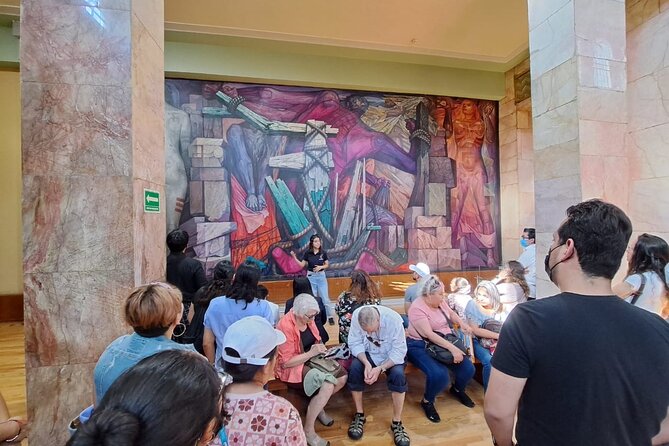
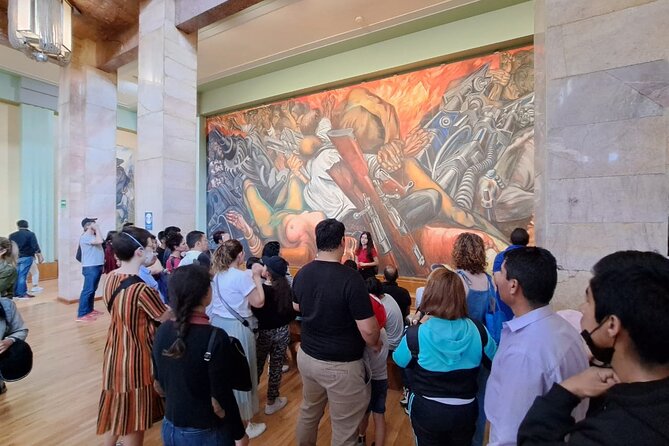
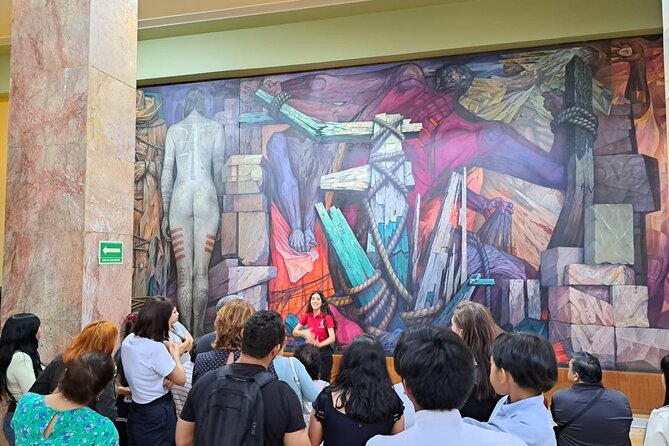
José Clemente Orozco’s Katharsis offers a very different mood. Orozco’s work is often severe and dramatic, with less of Rivera’s confidence in progress and more concern about violence, greed, and the damage caused by modern society.
The title itself suggests a release through emotional shock. Your guide explains the figures, movement, and symbolism so you can follow the painting’s argument rather than see only a chaotic mass of bodies and color.
This is a good example of why a guide helps. Orozco’s murals can feel harsh at first glance. With some direction, you can begin to see how the arrangement of the figures and the intensity of the scene express his view of a society in crisis.
If you are especially interested in political art, Katharsis may be one of the most rewarding stops. If you prefer calm, purely decorative art, this section may feel intense. That tension is part of Orozco’s purpose.
A completely different day out, same corner of Mexico City:
- Teotihuacan, Guadalupe Shrine & Tlatelolco Day Tour with Lunch
★ 5.0 · 11,603 reviews - Xochimilco, Coyoacan and Frida Kahlo with Optional Lunch
★ 4.5 · 7,320 reviews - Balloon flight + Breakfast in cave + Pyramids + Pick up CDMX.
★ 5.0 · 6,335 reviews - Teotihuacan pyramids morning or afternoon without tourist traps
★ 5.0 · 6,186 reviews
Rivera’s Carnival of Huejotzingo
Rivera’s The Carnival of Huejotzingo shifts the subject toward popular culture and historical memory. The work draws on a Mexican carnival tradition and connects local celebration with broader questions of identity and power.
This mural gives the guide a chance to explain how Rivera used scenes from everyday and traditional life in a large public setting. You can look for costumes, gestures, groups, and details that carry social meaning.
The painting is also useful for seeing how Rivera balances storytelling with a crowded composition. There is plenty to inspect, and a rushed visit could leave you with only a blur of color and movement. Give yourself time to follow the guide’s chosen details.
I would pay close attention here if you want to understand how muralism reached beyond portraits of political leaders. Rivera’s Mexico includes workers, communities, festivals, and ordinary people, not just official history.
Siqueiros and the struggle for a new society
David Alfaro Siqueiros brings a forceful political edge to the route. The tour includes his Diptych Torment and Apotheosis of Cuauhtémoc and his Triptych of the New Democracy.
The Cuauhtémoc work connects the last Aztec emperor with ideas of resistance and national identity. The subject gives the guide a way to explain how Mexican artists reclaimed indigenous history and used it to speak to the present.
The Triptych of the New Democracy is more openly tied to political struggle. Siqueiros was interested in movement, conflict, and the fight against oppression. His work can feel physically active, with figures and forms pushing toward the viewer.
This is where historical context becomes especially important. Without explanation, the murals may look like dramatic scenes from the past. With a guide, you can see how Siqueiros links earlier resistance with modern political ideals.
The two Siqueiros works also help you compare his approach with Rivera’s. Rivera often builds broad scenes filled with social detail. Siqueiros tends to push harder, using sharper movement and a more confrontational visual language. The tour is at its best when it makes those differences clear.
Camarena, Tamayo, and Rodríguez Lozano
The route also includes Liberation by González Camarena, giving you another view of Mexican muralism. The title points toward themes of freedom and national change, and the guide explains the imagery within its historical setting.
Rufino Tamayo and the Pietà by Rodríguez Lozano broaden the visit beyond the three names most often associated with Mexican muralism. That is useful because it keeps the tour from becoming a simple Rivera, Orozco, and Siqueiros greatest-hits lesson.
Tamayo’s approach differs from the more direct political style of Rivera and Siqueiros. Rodríguez Lozano’s Pietà brings religious imagery into the discussion, allowing you to consider how artists adapted familiar subjects within a modern Mexican setting.
These stops may appeal most if you enjoy comparing artists. You can see that Mexican muralism was not one fixed style. Artists shared a commitment to public art and national themes, but their moods, symbols, and political positions differed.
What the guide adds to the experience
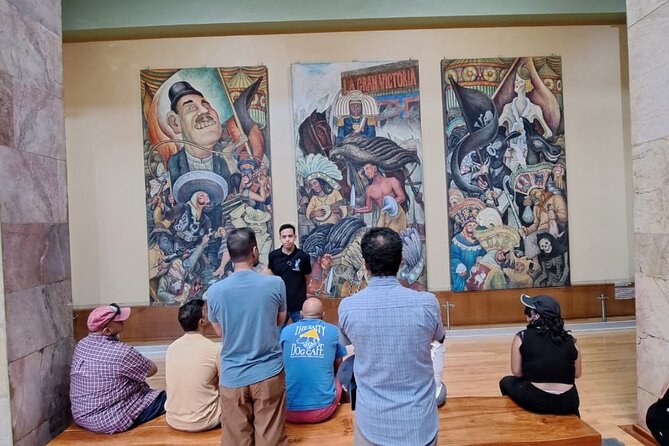
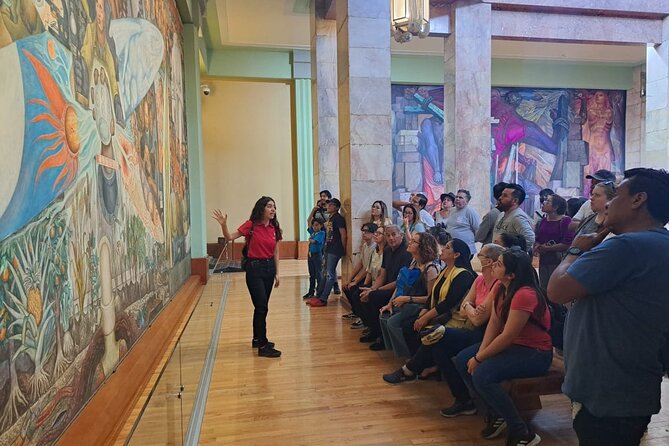
The strongest part of this tour is the spoken explanation. The guides are not there simply to identify the paintings. They explain symbolism, historical background, and the artists’ intentions.
León has been described as especially effective in English, with clear details about both the murals and the surrounding culture. Diego is also praised for telling the mural stories with energy and care. One note about León points out that he was leading the tour in English despite it being his first time doing this particular route, yet he handled the explanations very well and remained friendly and prepared.
That detail is worth keeping in mind. You are booking a guide-led interpretation, not an audio guide or a self-guided museum visit. The quality of the experience depends heavily on the person leading the group, but the named guides have shown strong command of the material.
Ask questions if the group format allows it. The murals contain enough symbols and political references that your own interests can shape the visit. You might want to ask about Rivera’s Rockefeller Center dispute, the treatment of indigenous history, or the differences between the muralists.
The group may contain up to 35 people. That is the maximum stated, not a promise that every departure will have that many. Still, you should be ready for a shared tour rather than a private conversation with the guide. Arrive prepared to stay near the guide and listen closely.
Is $56.75 a fair price?
At $56.75 per person, this is a premium short tour. The visit lasts about one hour to one hour and 30 minutes, so the cost works out higher than a basic museum entry or a casual self-guided walk.
The price can make sense if you want structure and interpretation. The murals are the main reason to visit Bellas Artes, yet their meaning is not always obvious. A strong English-speaking guide can turn a quick look at famous paintings into a clear lesson in Mexican politics and art.
The value is weaker if you already know the muralists or enjoy studying paintings alone. In that case, the short duration may not justify the added cost.
There is also an important practical inconsistency. The included section says entries are covered, while the itinerary says the admission ticket is not included. Because the distinction affects the real price, confirm exactly what your booking covers before you commit.
Food and drinks are not included, though that is hardly a concern for a visit of this length. The tour begins and ends at Bellas Artes, so you can easily plan a separate meal or another historic-center activity afterward.
Timing, language, and access
The tour is offered in English and uses a mobile ticket. Confirmation arrives at the time of booking, which makes it easy to keep the details on your phone.
Most people can participate, and service animals are allowed. The location is near public transportation, which is helpful in Mexico City, where traffic can make cross-town plans unpredictable.
The experience is usually booked around six days ahead. That does not guarantee a sellout, but it suggests you should avoid leaving it until the last minute if the timing matters to you.
Build a little flexibility into your schedule. The stated duration is approximate, ranging from one hour to 90 minutes, and the museum setting may affect the pace. Since the tour starts and ends at the same point, it is easy to pair with other Centro Histórico sights without arranging another pickup.
Free cancellation is available if you cancel at least 24 hours before the start time. Cancellation within 24 hours receives no refund, and changes inside that window are not accepted.
Who should book this mural tour?
I would choose this tour if you want a focused introduction to Mexican muralism and prefer listening to a guide rather than reading labels. It is particularly useful for first-time visitors to Bellas Artes who want to understand why the murals matter.
It also suits art lovers who want to compare several artists in one visit. Rivera, Orozco, Siqueiros, Camarena, Tamayo, and Rodríguez Lozano do not all make the same kind of work, and the tour gives you a framework for spotting those differences.
Families and mixed-interest groups may find the short duration helpful. You get a serious cultural experience without committing half a day to a museum.
I would think twice if you want an unhurried museum visit or dislike group tours. With as many as 35 people, you may not always have the best position in front of each mural. The $56.75 price also deserves scrutiny, especially if admission is extra.
Should you book it?
Book this tour if you want the stories behind the murals, especially Rivera’s destroyed Rockefeller Center commission and Siqueiros’s political works. The strongest reasons to go are the focused route, the English explanations, and the guides’ clear attention to symbolism and historical setting.
Before booking, verify the admission charge and decide if guided interpretation is worth the premium for you. If the answer is yes, this is a compact, worthwhile way to read Bellas Artes with more than your eyes. If not, visit the palace on your own and spend the savings on another Mexico City experience.
FAQ
Where does the Palace of Fine Arts Mural Tour begin?
The tour begins at Palacio de Bellas Artes, Av. Juárez S/N, Centro Histórico, Cuauhtémoc, Mexico City.
Where does the tour end?
The activity ends back at the meeting point at Palacio de Bellas Artes.
How long does the tour last?
The approximate duration is one hour to one hour and 30 minutes. The detailed schedule lists about 1 hour and 30 minutes.
Is the tour offered in English?
Yes. The experience is offered in English.
Which artists are covered?
The tour discusses murals by Diego Rivera, José Clemente Orozco, David Alfaro Siqueiros, González Camarena, Rufino Tamayo, and Rodríguez Lozano.
Is admission to Palacio de Bellas Artes included?
The information is inconsistent. One section says entries are included, while another says the admission ticket is not included. Confirm this point before booking.
Can I cancel for a full refund?
Yes, if you cancel at least 24 hours before the experience start time. Cancellations made less than 24 hours before the start receive no refund.
Just added around Mexico City
- Mexico City: Hop-on Hop-off City Tour by Turibus 2-Day Pass★ 4.0 · 10 reviews
- Anthropology Museum, Chapultepec Castle & Cable Car Tour★ 4.5 · 10 reviews
- Multi-Variety Mole Class in a Condesa home or art gallery rooftop★ 5.0 · 10 reviews
- PRIVATE TOUR Colonial Town Taxco and Cuernavaca from CDMX.★ 5.0 · 10 reviews
- El Centro Street Food Walking Tour★ 5.0 · 10 reviews
- Private Round-Trip Transportation to Teotihuacan Pyramids★ 5.0 · 10 reviews
- Teotihuacan and My Grandma’s Food Tour★ 5.0 · 10 reviews
- Private Walking Tour Legends and Events Historic Center CDMX★ 4.8 · 10 reviews
Art & Mural Tours, compared.
Xochimilco, Coyoacan, Frida Kahlo Museum & Murals Tour
Read our review →
Mexico City; ART NACO : Murals & Street Art Bike Tour
Read our review →
Walking Tour – Impressive murals in Historical Center of Mexico City
Read our review →
La Catrina & Muralism: Diego Rivera’s Legacy & Frida Kahlo
Read our review →
Xochimilco floating gardens, Coyoacan and UNAM murals
Read our review →
Browse the lists this tour appears in