
Reviewed · HISTORICAL TOURS
Mexico City: Guided walking tour through the most historic parts of the city.
Mexico City’s historic center makes the most sense when someone connects the ruins beneath your feet with the grand buildings around you. This three-hour walk moves from the Zócalo and Metropolitan Cathedral to Templo Mayor, Santo Domingo, the Postal Palace, Casa de los Azulejos, and the Palace of Fine Arts.
I like the three-era structure, which links pre-Hispanic Mexico, the Viceroyalty, and the Republic instead of presenting a string of unrelated buildings. I also like the practical side: guides such as Areli, Oscar, Laura, and Alexia give advice on street food, public transportation, photo spots, and places to continue exploring. The main drawback is that the tour can begin with a long explanation in one spot before the walking really gets going, and entrance fees and food are extra.
In This Review
- Key points to know before you book
- Why this walk is a smart first look at Centro Histórico
- Meeting at the Cathedral and finding the group
- The Zócalo: Mexico City’s story in one square
- Inside the Metropolitan Cathedral
- Templo Mayor and the Aztec capital
- Santo Domingo and the colonial center
- The Postal Palace and Manuel Tolsá’s Mexico
- Casa de los Azulejos and the final walk to Fine Arts
- What the guides do best
- Food advice without a meal included
- Pace, weather, and comfort
- Who should book this tour
- Should you book it?
- FAQ
- Where does the Mexico City walking tour begin?
- Where does the tour finish?
- How long does the tour last?
- Which languages are available?
- Are food and drinks included?
- Are entrance fees included?
- What should I bring?
Key points to know before you book
- Three hours, nine major stops: The route covers the city’s central landmarks from the Cathedral to the Palace of Fine Arts.
- History with local context: You hear about Moctezuma, Hernán Cortés, Diego Rivera, Pancho Villa, Emiliano Zapata, Porfirio Díaz, and important women in Mexican history.
- Guides make the difference: Areli, Oscar, Laura, Alexia, Luis, Gabriela, and Netza have been praised for clear storytelling, energy, and helpful answers.
- Useful food advice: Street food is not included, but the guide can help you make sensible choices and suggest places for tacos and lunch.
- Bring practical gear: Wear comfortable shoes, carry water and cash, and prepare for sun or rain because the tour operates in all weather.
- A good first-day orientation: The walk helps you understand the center before you return on your own for museums, meals, and further sightseeing.
Why this walk is a smart first look at Centro Histórico
Mexico City’s center is not a place you understand by checking buildings off a list. Aztec foundations, Spanish colonial power, nineteenth-century ambition, and modern Mexican identity all sit close together. A guide gives you the links between them.
The tour’s central idea is the movement through three major periods: pre-Hispanic Mexico, the Viceroyalty, and the Republic. That framework gives the walk shape. You are not simply hearing that a building is old. You are learning what changed, who held power, and how the city developed around the remains of Mexico-Tenochtitlan.
I would book this near the beginning of your stay. You receive practical advice about getting around, food stalls, and places worth revisiting. Several guides also give recommendations for things to see after the walk, which makes the tour useful beyond its three-hour route.
The price is $30 per person. That is fair value for a live guide, a carefully arranged central route, and an introduction that covers several of the city’s biggest sights. It is less of a bargain if you expect museum admissions, a meal, or private guiding, since transportation, entrance fees, and food are not included.
More history walks in Mexico City:
- Historic Downtown Walking Tour
★ 5.0 · 1,289 reviews - Historic Center Food Tour in Mexico City
★ 5.0 · 1,263 reviews - Mexico City: Historic Downtown Walking Tour
★ 4.8 · 1,039 reviews
Meeting at the Cathedral and finding the group
The meeting point is the main entrance of the Metropolitan Cathedral, facing the Zócalo and its large flag. Look for a guide wearing a green uniform and carrying a green umbrella.
Give yourself plenty of time to reach the center. The instructions recommend allowing at least one hour for transportation to the meeting point. That is especially useful if you are coming from another part of Mexico City and are still learning the city’s public transportation system.
Keep a phone with a working number, preferably WhatsApp, so the guide can contact you if plans need to change. The tour is offered in English and Spanish, with some content presented in its original language.
The Zócalo: Mexico City’s story in one square
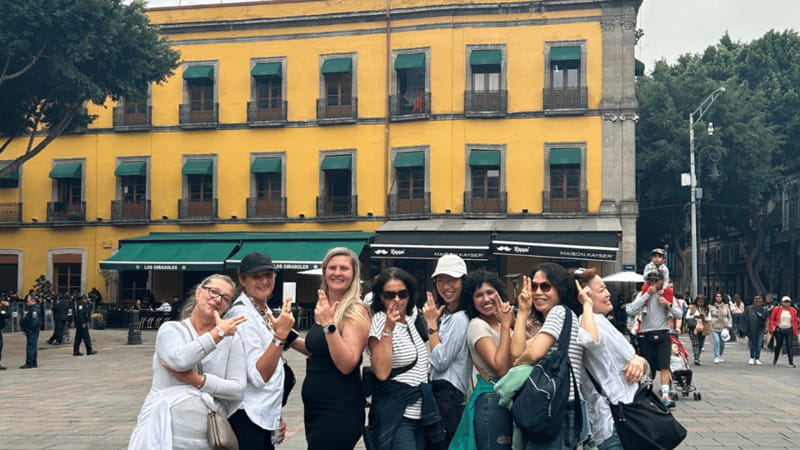
The walk begins in the Zócalo, the enormous central plaza. This is the right place to set the scene because the square brings several layers of Mexico City together: the former Aztec capital, Spanish colonial rule, national government, public ceremony, and daily city life.
Expect roughly 25 minutes here. Your guide explains the origins of Mexico-Tenochtitlan and how the Aztec empire gave way to the Spanish conquest and, later, modern Mexico City.
The best part is the sense of physical connection. The city’s current buildings are not separate from the ancient capital. They occupy the same ground, and the tour helps you picture the older city beneath and around the one you see today.
The Zócalo can also be busy and distracting. Groups gather here, people cross the plaza, and the scale makes it easy to lose track of the guide. Stay close, especially during the opening explanation. One useful improvement would be to keep this first talk concise and start walking sooner. A past participant specifically found that the opening discussion lasted too long before the group moved.
Inside the Metropolitan Cathedral
The Metropolitan Cathedral receives about 20 minutes. From the outside, its size and layered architecture make an immediate impression. Inside, you get a closer look at the religious building that became one of the central symbols of colonial Mexico.
The cathedral also helps explain the change from Aztec religious power to Spanish Catholic rule. Your guide can give the building meaning rather than leaving you to admire its stonework without context.
Because entrance fees are not included in the tour price, check how the interior visit is handled on your chosen departure. The itinerary includes a visit inside, but the general conditions say entrance fees are extra. That small point is worth clarifying before you arrive.
More walking tours in Mexico City:
- Frida Kahlo VIP [Museum Tickets Included] Walk, Markets & Churros
★ 5.0 · 982 reviews - Walking Tour of the Historic Center of Mexico City
★ 5.0 · 870 reviews - Anthropology Museum Private Experience Walking Tour
★ 5.0 · 355 reviews - Walking Tour in Mexico City for Exploring their Cultural Heritage
★ 5.0 · 245 reviews
Templo Mayor and the Aztec capital
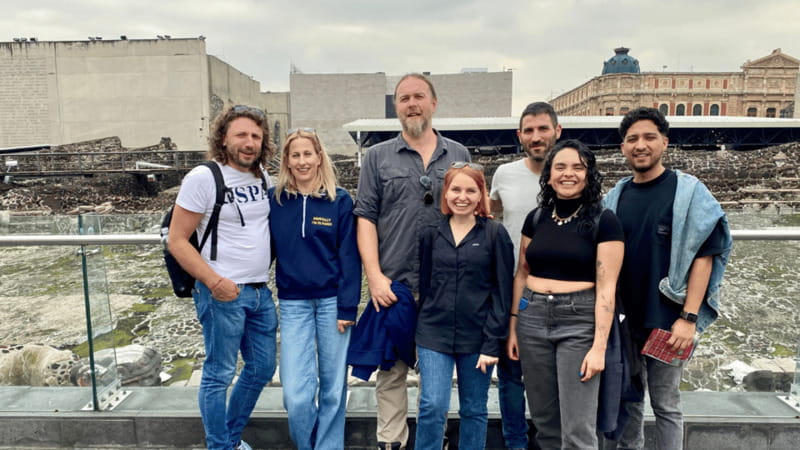
The Templo Mayor section lasts about 30 minutes and is the historical heart of the walk. Here, the remains of the Aztec ceremonial center sit beside the colonial cathedral and the modern city. Few places make Mexico City’s layers so easy to see.
Your guide explains the importance of Mexico-Tenochtitlan and the scale of the Aztec capital. The ruins are not treated as an isolated archaeological site. They are part of the larger story of conquest, rebuilding, and the way later rulers used the old city’s foundations.
The plan includes the Templo Mayor Museum area and a guided explanation. Since entrance fees are not part of the $30 price, confirm whether your booking covers only the exterior archaeological area or any museum admission. If you want a longer museum visit, set aside extra time after the tour rather than expecting the three-hour walk to cover everything.
This stop is especially valuable for first-time visitors. Without context, the ruins can look like scattered stones beside major buildings. With a guide, they become evidence of a city that was deliberately transformed.
Santo Domingo and the colonial center
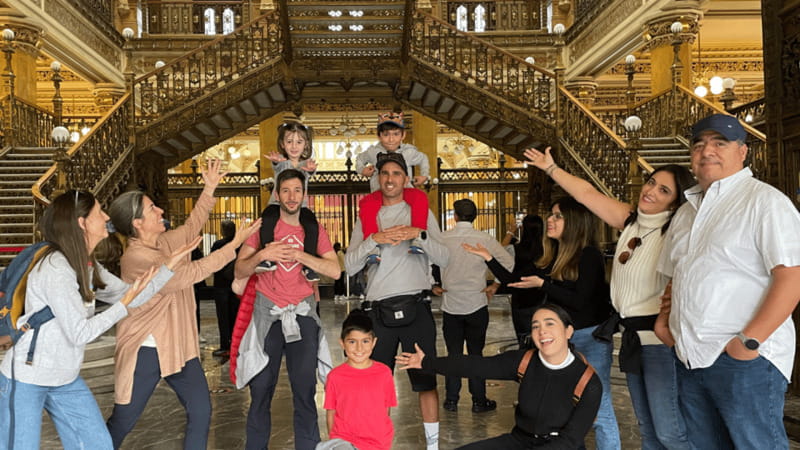
The group then reaches Plaza de Santo Domingo for about 25 minutes, mainly as a photo stop and outdoor explanation. Here you learn about the influence of the Dominican order and the colonial religious network.
This pause adds a different tone to the route. The Zócalo and Templo Mayor deal with the largest changes in Mexican history. Santo Domingo brings the focus down to the institutions that shaped colonial life, education, religion, and public space.
You should expect to remain outdoors here. Bring sunscreen, sunglasses, and a hat, especially for a midday departure. The tour continues in all weather, so a light rain layer is sensible during the wet season.
The Postal Palace and Manuel Tolsá’s Mexico
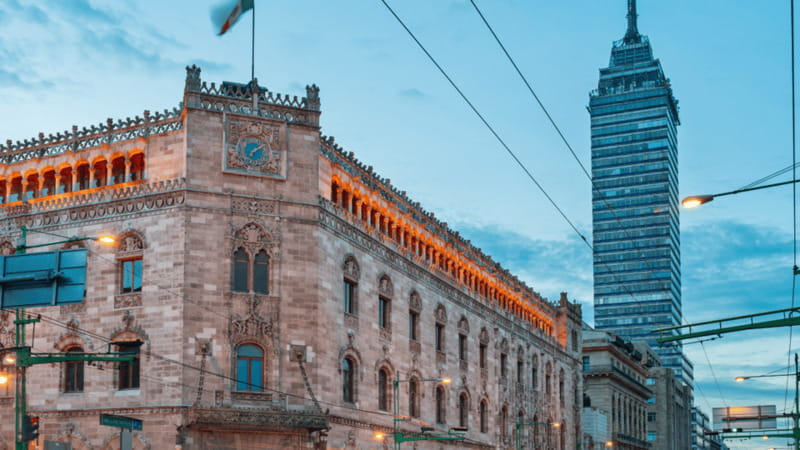
The route includes the Palacio de Correos de México for about 25 minutes, with time for photographs, a visit, and free time. The building is one of the center’s more ornate architectural stops, and it offers a welcome change from the vast spaces of the Zócalo.
Nearby Plaza Manuel Tolsá brings in the nineteenth-century Republic. Your guide points out the architecture and the monumental equestrian statue of Carlos IV. The stop helps you see how Mexico presented itself during a period of changing political ideas and national identity.
I like this part because it prevents the tour from becoming only an Aztec and colonial history lesson. Mexico City’s story continues through the independent nation, its leaders, artists, and public monuments.
Casa de los Azulejos and the final walk to Fine Arts
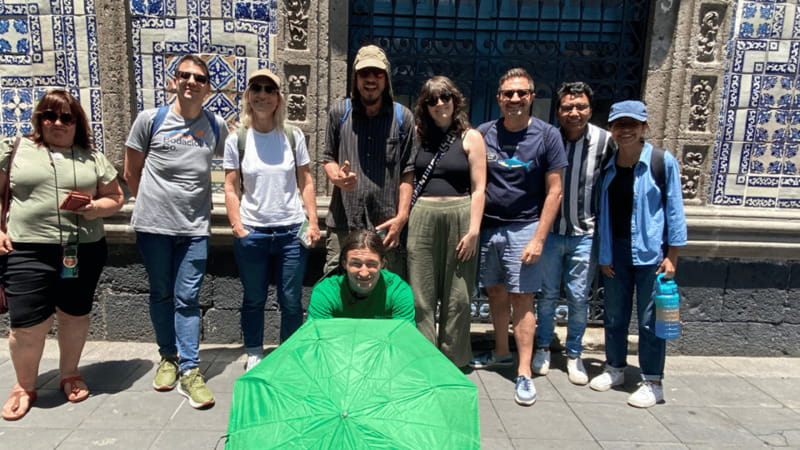
Casa de los Azulejos receives around 20 minutes for photographs and a visit. Its tiled exterior makes it one of the easiest places on the route to recognize in your own photos, and the stop gives the group time to look closely rather than rush past.
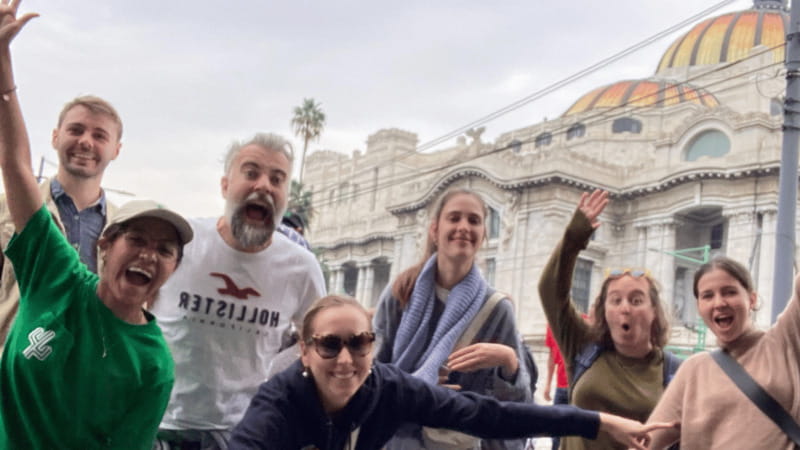
The final major stop is the Palace of Fine Arts, where the tour ends after about 20 minutes. Its monumental design makes a fitting finish to a route that has moved from ancient ruins to colonial churches and republican architecture.
The tour ends at Palacio de Bellas Artes, not at the starting Cathedral. Plan your onward route from there. The ending is useful because you are positioned near further cultural sights, but it also means you should know how you will return to your hotel or continue sightseeing.
What the guides do best
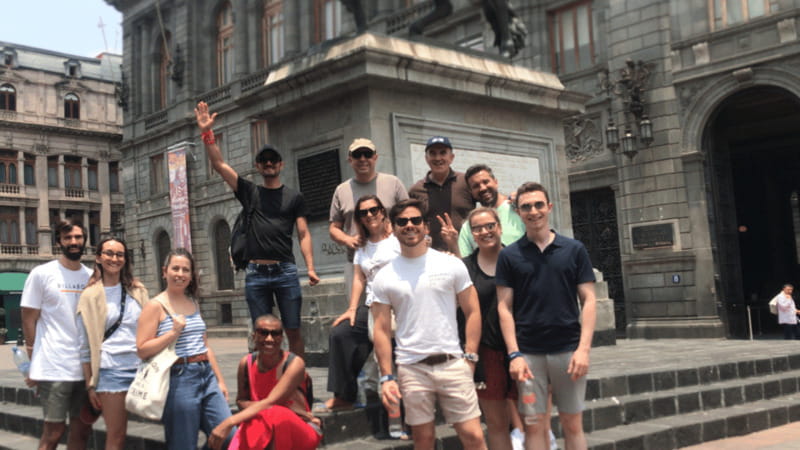
The strongest part of this experience is the guiding. The tour has used several guides, so the exact personality and presentation will vary. Areli has been noted for her respectful, clear treatment of Mexico City’s past and for helping the group choose street food wisely. Oscar is described as warm, story-focused, and strong on both local and national history.
Laura brings advice about city life, food, and places to eat, while Alexia has been praised for high energy, historical context, and recommendations for lunch and further visits. Luis has kept groups engaged and handled questions well. Gabriela has combined myths, cultural curiosities, and historical detail in Spanish, while Netza has been praised for energy and passion.
That range matters. This is not a silent audio walk. You can ask questions about history, food, culture, and everyday life. One guide adapted the route to include more Day of the Dead material during the season, showing that the experience can respond to local events and the interests of the group.
The guides also use visual aids at times. That can help when explaining buildings or historical figures in a crowded square, where a spoken explanation alone might be hard to follow.
Food advice without a meal included
Food is part of the tour’s appeal, but lunch and snacks are not included. If you buy something during the walk, you pay separately.
What you do receive is guidance on local eating. The tour promises suggestions for taco spots and hidden places beyond the usual guidebook list. Guides also explain how locals judge food stands and how to make sensible choices. That is useful on your first day, when every stand can look equally tempting and you may not yet know what to look for.
Bring cash if you want to eat or drink along the way. Do not rely on the tour to provide a scheduled meal. If lunch matters to your plans, ask the guide for a recommendation at the end and make a separate reservation or stop.
Pace, weather, and comfort
This is a three-hour walking tour through central Mexico City. Comfortable shoes are essential. You will spend time standing in plazas, walking between sights, and moving through public areas where the pavement and crowds may slow the group.
The tour operates regardless of weather. Pack sun protection, weather-appropriate clothing, and something light for rain if the forecast looks uncertain. Water and snacks are particularly important for children, since the tour does not provide them.
The experience is not suitable for wheelchair users. It is also listed as unsuitable for people over 95. Families can join, and one guide kept younger children interested with topics such as quinceañera dresses, but parents should bring toys, water, or snacks to help children manage the full walk.
Group size is not specified in the activity details. Some departures have been described as small, including a group of five and another of six. A smaller group can make it easier to ask questions and adjust the pace, but you should not assume every departure will be that intimate.
Who should book this tour
I would choose this walk if you are visiting Mexico City for the first time, want a clear explanation of the center, and prefer a guide who can connect major sites with ordinary city life. It is also a good fit if you want food suggestions and transportation tips along with history.
Families can benefit from the short stops and varied subjects, though the amount of standing may test very young children. History fans will appreciate the three-period structure, while photographers will like the succession of grand façades, tiled buildings, plazas, and monuments.
I would look elsewhere if you need a fully accessible route, want a private tour, or expect museum admissions and food to be included. You should also allow extra time if you want to explore Templo Mayor or the Palace of Fine Arts in detail after the guided portion.
Should you book it?
For $30, this is a sensible introduction to Mexico City’s historic center. The route covers the essential landmarks, but its real value is the connection between them: Aztec foundations, Spanish rule, national independence, public art, food, and daily city habits.
Book it early in your stay, wear good shoes, and arrive prepared for the weather. If you want a lively guide who can answer questions and offer practical local advice, this tour is a strong choice. Just remember that transportation, admissions, and food cost extra, and that the opening talk may feel too long if your group prefers to start walking at once.
FAQ
Where does the Mexico City walking tour begin?
It begins at the main entrance of the Metropolitan Cathedral, facing the Zócalo and its large flag. Look for a guide in a green uniform with a green umbrella.
Where does the tour finish?
The walk finishes at the Palace of Fine Arts, also called Palacio de Bellas Artes.
How long does the tour last?
The tour lasts three hours. Starting times vary, so check availability when booking.
Which languages are available?
The tour is offered in English and Spanish. Some content may be presented in its original language.
Are food and drinks included?
No. Food and beverages are not included, and you pay separately for anything you consume during the walk.
Are entrance fees included?
No. Entrance fees are not included in the tour price. Confirm the admission details for any interior visit you particularly want to make.
What should I bring?
Bring comfortable shoes, sunglasses, a hat, sunscreen, cash, and clothing suited to the weather. If you bring children, also bring any water, snacks, or toys they need during the three-hour walk.
Just added around Mexico City
- Mexico City: Hop-on Hop-off City Tour by Turibus 2-Day Pass★ 4.0 · 10 reviews
- Anthropology Museum, Chapultepec Castle & Cable Car Tour★ 4.5 · 10 reviews
- Multi-Variety Mole Class in a Condesa home or art gallery rooftop★ 5.0 · 10 reviews
- PRIVATE TOUR Colonial Town Taxco and Cuernavaca from CDMX.★ 5.0 · 10 reviews
- El Centro Street Food Walking Tour★ 5.0 · 10 reviews
- Private Round-Trip Transportation to Teotihuacan Pyramids★ 5.0 · 10 reviews
- Teotihuacan and My Grandma’s Food Tour★ 5.0 · 10 reviews
- Private Walking Tour Legends and Events Historic Center CDMX★ 4.8 · 10 reviews
Historical Tours, compared.


Mexico City Historical Centre Food Tour with 7 Authentic Tastings
Read our review →
Walking Tour in Mexico City for Exploring their Cultural Heritage
Read our review →
Walking Tour – Impressive murals in Historical Center of Mexico City
Read our review →
Private Walking Tour Gems of the Historic Center of Mexico City
Read our review →Browse the lists this tour appears in