
Reviewed · CITY TOURS
Mexico City: Night City Tour in a Double Decker Bus
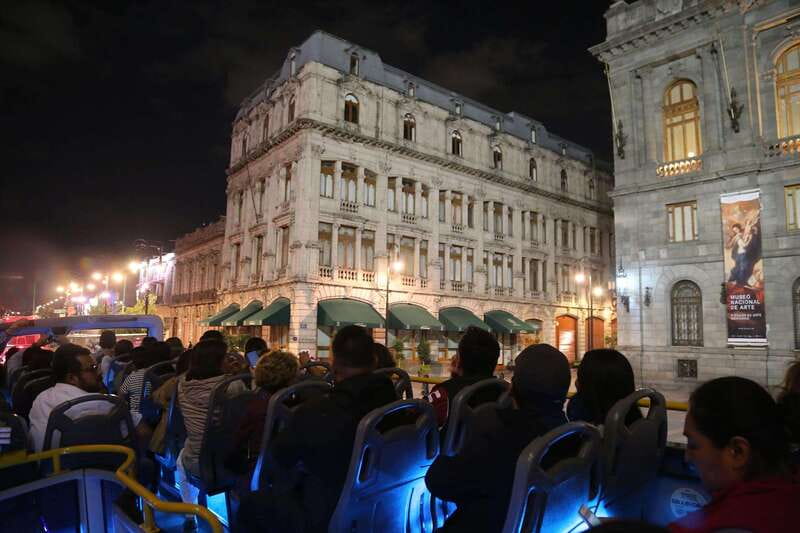
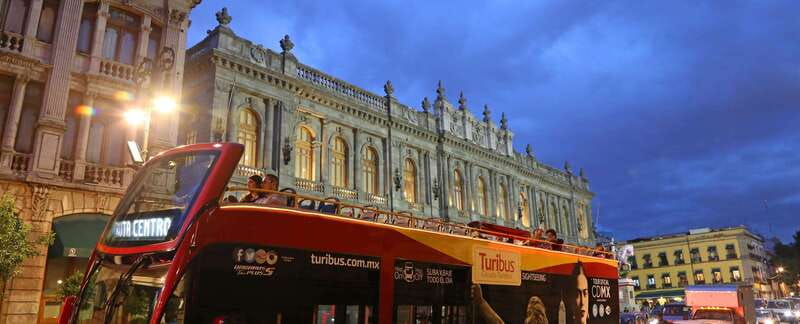
Mexico City changes character after sunset. From the upper deck of a red Turibus, you’ll watch the Historic Center give way to the grand sweep of Paseo de la Reforma, with monuments and fountains lit against the night sky. It is a quick, easy way to get your bearings fast.
I like two things here: the low price makes a one-hour overview easy to fit into almost any itinerary, and the ride gives you photo-friendly views of the Angel of Independence, Diana Cazadora, Reforma 222, and Hemiciclo a Juárez without the effort of crossing the city on foot. The audio guide also lets you follow along in seven languages.
The main drawback is that this is a sightseeing ride, not a walking tour. You see many places from the bus but do not spend meaningful time at each one, and traffic, weather, road closures, or public demonstrations can change the route. Bring a jacket, and arrive early enough to find the correct bus and a working audio-guide port.
In This Review
- Key points at a glance
- Why this short night ride works
- Finding the red bus beside the cathedral
- Choosing your seat and setting up the audio
- From the Zócalo to Monumento a la Revolución
- Reforma’s grand avenue and the Angel of Independence
- Reforma 222 and the modern side of Mexico City
- Diana Cazadora and Fuente de Cibeles
- The Hemiciclo a Juárez and the return to the center
- What the audio guide adds, and what it cannot do
- Weather, traffic, and the limits of a one-hour tour
- Who gets the most value from this ride
- Is $10 a fair price?
- Should you book the Mexico City night bus?
- FAQ
- How long is the Mexico City night bus tour?
- What language options are available for the audio guide?
- Is the tour guided by a live person?
- Is this a hop-on hop-off tour?
- Where does the tour meet?
- How can I identify the correct bus?
- What sights does the bus pass?
- Should I bring a jacket?
- How early should I arrive?
- Is the bus wheelchair accessible?
Key points at a glance
- A nighttime route along Reforma: The bus leaves the Historic Center and heads down Mexico City’s grandest central avenue.
- Strong photo opportunities: Illuminated monuments, fountains, and busy city streets make the upper deck especially appealing.
- Seven audio languages: Choose Spanish, English, French, German, Portuguese, Italian, or Japanese.
- About one hour for $10: It is a modest-cost introduction, especially useful on your first evening.
- Fixed route, not hop-on hop-off: You stay aboard for the sightseeing loop and return to the starting area.
- A jacket matters: Several people found the evening air colder than expected, especially in December.
Why this short night ride works
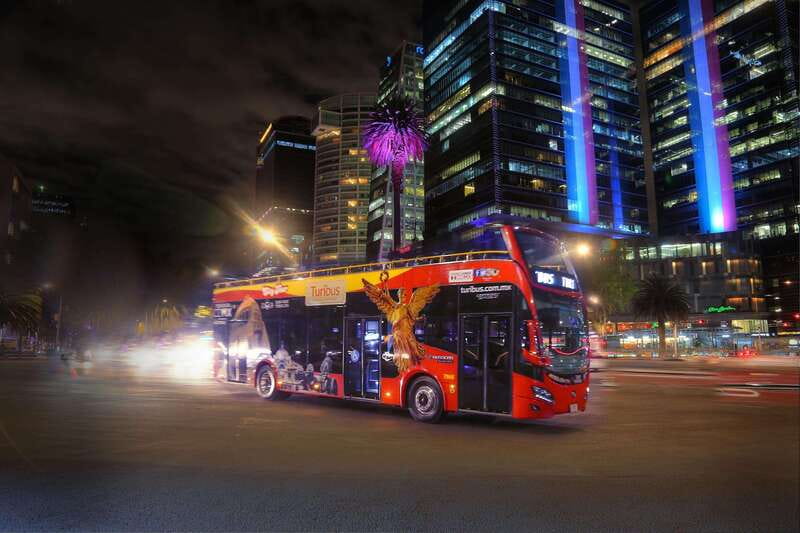
I see this Turibus trip as a city orientation ride rather than a major attraction in itself. You are paying for a moving overview, a comfortable seat, and a chance to see Mexico City’s central monuments under lights. At roughly $10 per person, that is a fair trade if you want a broad first look without committing half a day.
The timing is one of the tour’s best features. You can spend the afternoon visiting museums or historic buildings, eat near the Zócalo, then use the bus to see the city after dark. The ride is also useful if you have only a short stay and want to cover several well-known sights in one sweep.
The bus route is advertised as lasting about an hour, while the ride itself may sometimes run closer to 45 minutes or a little longer depending on traffic. That difference matters if you are scheduling dinner or another activity. I would leave some breathing room rather than planning a tight connection.
The atmosphere is part of the appeal. Mexico City’s monuments are often more dramatic at night, when lighting draws your eye to columns, statues, domes, and fountains. You will not get the same close-up detail as on foot, but you get a wider sense of how the central districts connect.
More evenings out in Mexico City:
- Lucha Libre Tickets & Tacos & Beer & Mezcal – BEST NIGHT EVER!
★ 5.0 · 1,077 reviews - Mexico City: Double Decker Bus Night Tour
★ 3.8 · 373 reviews - A Night of Tacos and Mezcal in Mexico City
★ 5.0 · 262 reviews
Finding the red bus beside the cathedral
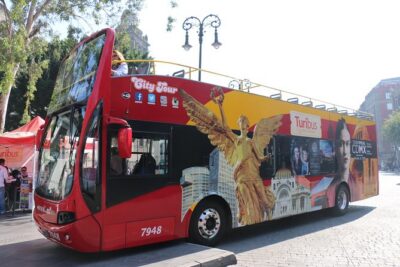
The meeting point is at Turibus Tours between Avenida 5 de Mayo and Calle Tacuba, next to the cathedral in the Historic Center. Look for a red double-decker bus with the Turibus logo, and staff wearing a Turibus vest and badge.
I would not treat this as a place to arrive at the last second. The meeting point is on a street rather than inside a clearly marked building, and it can be confusing when more than one tour operation is gathering nearby. Arrive at least 15 minutes before departure, then confirm the language and route with the staff before boarding.
The central location is convenient, but it also means you should allow time to reach it. The tour does not include hotel pickup or drop-off. You make your own way to the Historic Center and return there after the loop.
Choosing your seat and setting up the audio
You can ride upstairs or downstairs. The upper deck offers the best open view and the strongest chance of getting clear photographs, but the evening air can be cool. Downstairs gives you more shelter and may be the better choice if rain begins.
The audio guide is included in Spanish, English, French, German, Italian, Portuguese, and Japanese. The narration is recorded rather than delivered by a live guide, so you should think of it as background information that helps identify what you are seeing, not as a personal conversation.
Bring your own headphones if you have them. The bus provides access to audio-guide ports, but finding a seat with a working port may take some attention. Check your connection before the bus leaves, especially if hearing the commentary matters to you.
There are seats on both levels, and the ride is generally a straightforward sit-down outing. Smoking, alcohol, and drugs are not allowed in the vehicle. Comfortable clothes and shoes are sensible, even though you will not be walking much.
From the Zócalo to Monumento a la Revolución
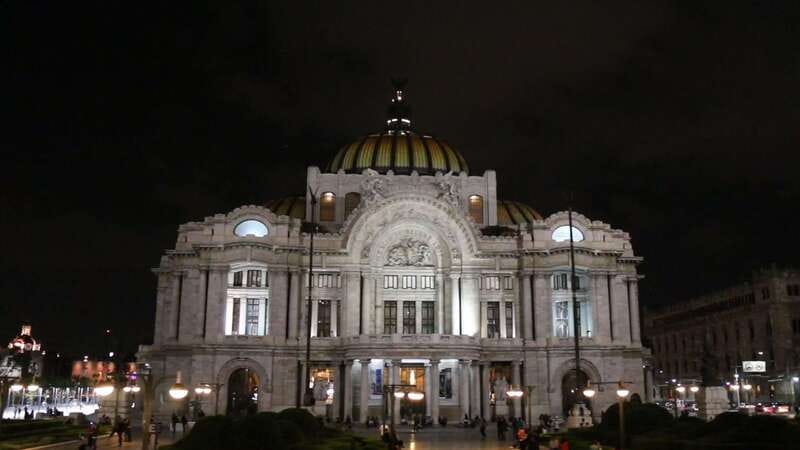
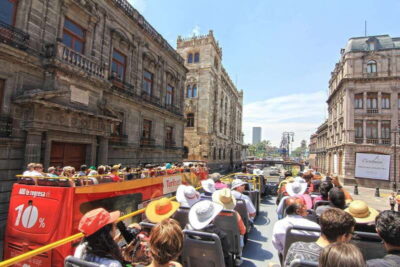
The route begins near the Historic Center and passes the Zócalo, Mexico City’s huge central square. You do not get off for an extended visit, so use this part of the ride to look toward the cathedral and the surrounding historic buildings. At night, the square gives you a quick visual reminder that this is not simply a modern capital, but a city built layer upon layer.
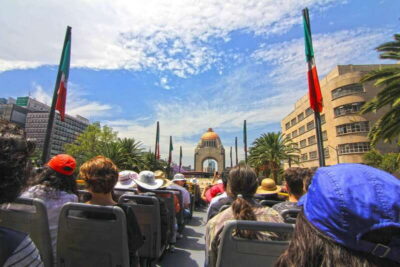
The bus then passes Monumento a la Revolución. This large domed structure is one of the city’s most recognizable monuments, and its lighting makes it easy to spot from the road. The view is brief, so listen to the audio and keep your camera ready rather than waiting until the last moment.
These first sights are useful for orientation. The Historic Center feels dense and monumental, while Reforma opens into a broad ceremonial avenue. The bus lets you see that shift without needing to navigate unfamiliar streets in the dark.
A few more Mexico City half-days to weigh up
- Mexico City: Hop-on Hop-off Bus Tour
★ 4.0 · 1,043 reviews - Mexico City: Hop-on Hop-off City Tour by Turibus 1-Day Pass
★ 4.1 · 691 reviews - Private City Tour in Frida Kahlo, Coyoacan, and Xochimilco
★ 5.0 · 626 reviews - Private City Tour Mexico City – Best Rated
★ 5.0 · 402 reviews
Reforma’s grand avenue and the Angel of Independence
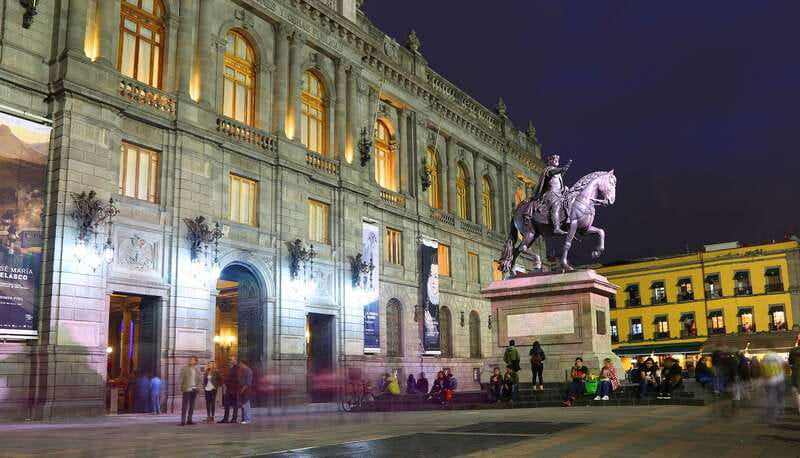
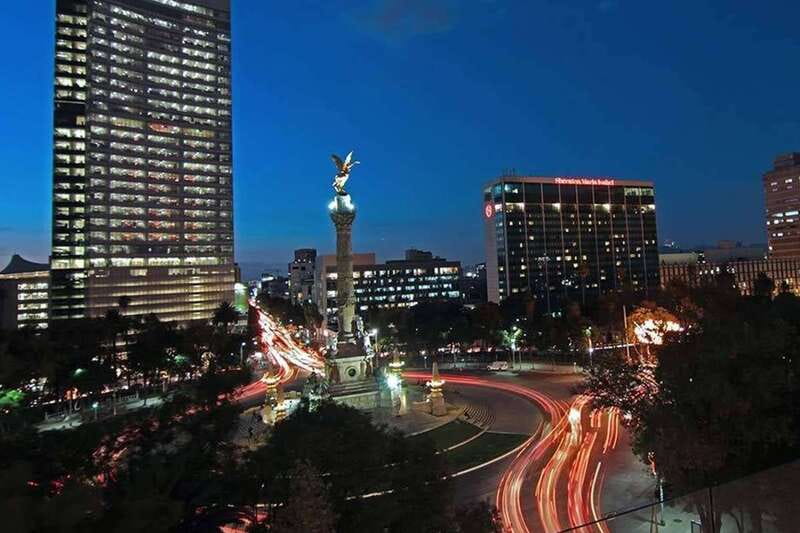
Paseo de la Reforma is the centerpiece of the ride. This wide avenue links major parts of the city and is lined with monuments, offices, shops, hotels, and large intersections. At night, the combination of traffic, streetlights, and illuminated architecture gives the ride its main visual energy.
The Angel of Independence is the highlight for many people. Known locally as El Ángel, the tall golden monument rises above a major traffic circle and is one of Mexico City’s most familiar symbols. From the bus, you get a strong overall view rather than a close examination of its details.
This is one of the moments when the upper deck pays off. Keep your camera ready as the bus approaches, but do not expect a long photo stop. The tour passes the monument as part of the route, so traffic and timing determine how long it remains in view.
I like this portion because it gives you a sense of scale. A visit to the Angel on foot lets you study the monument, while this ride shows how it functions within the avenue and the city around it. For a first evening, that wider view is useful.
Reforma 222 and the modern side of Mexico City
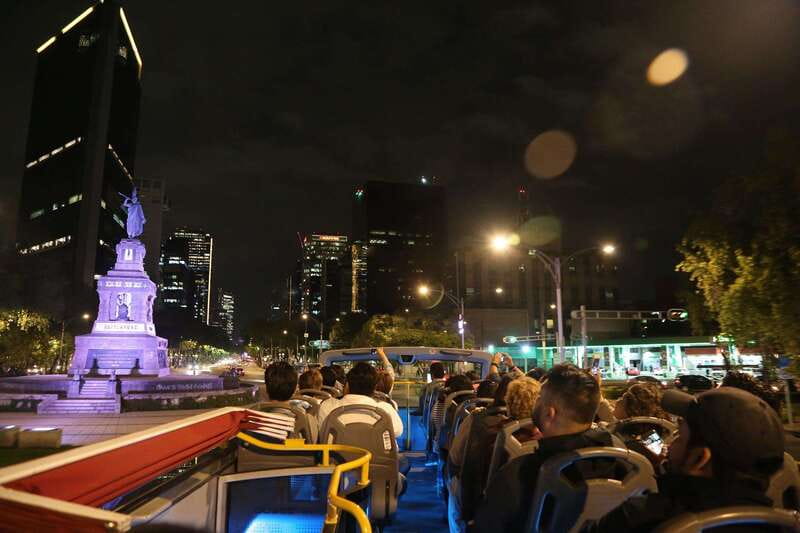
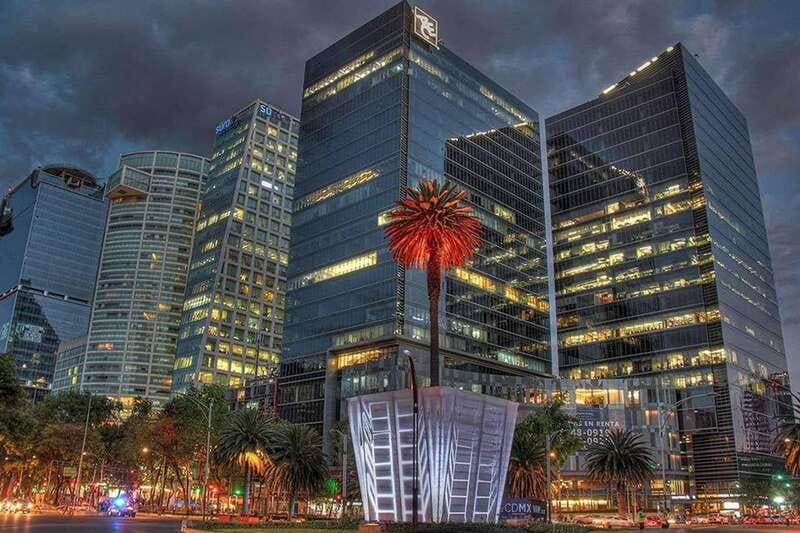
The route also takes in Reforma 222, a modern shopping and office complex along the avenue. Its illuminated design provides a clear contrast with the older monuments and grand civic buildings.
This pairing is one of the tour’s quiet strengths. You see Mexico City as a living capital rather than a collection of preserved sights. Historic symbols, newer commercial buildings, traffic, restaurants, and fountains all appear within the same short ride.
The tradeoff is that the bus does not stop for shopping or exploration. If Reforma 222 interests you, note its location and return another time. Here, it is a passing view that helps fill out the city’s modern face.
Diana Cazadora and Fuente de Cibeles
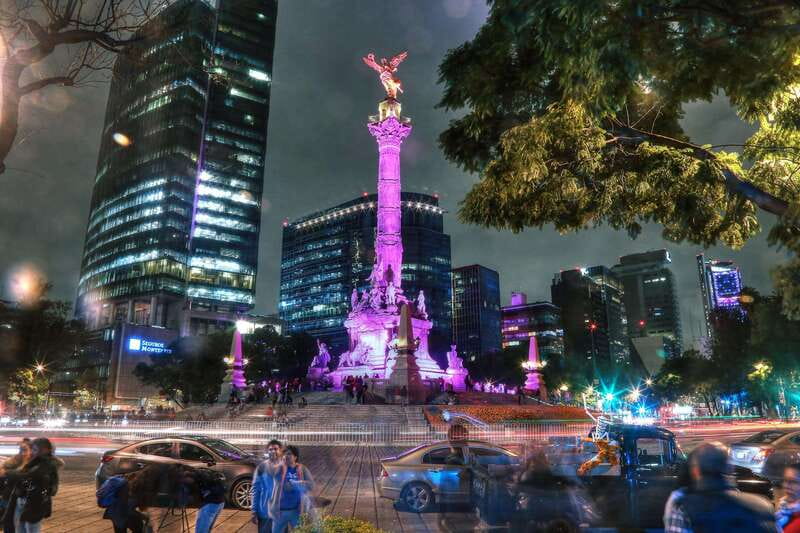
The Diana Cazadora Fountain is another eye-catching point along Reforma. Its statue and fountain are especially suited to nighttime viewing, when the lighting gives the monument a sharper outline. You will pass it rather than stop for a long visit, so a seat with a clear forward or side view is helpful.
The route also passes Fuente de Cibeles. This fountain is tied to Mexico City’s long connection with Spanish culture and is one of the more distinctive public monuments on the ride. Again, the view is short, but the audio guide gives you a chance to place it within the city’s story.
These passing sights are best treated as a visual sampler. If you want to photograph every monument carefully, the bus may feel too quick. If your goal is to see a string of major locations and decide where to return later, the pace works well.
The Hemiciclo a Juárez and the return to the center
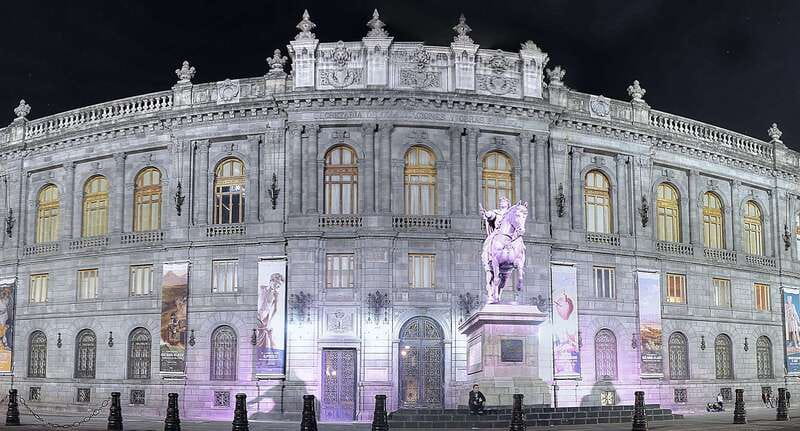
The tour includes the elegant Hemiciclo a Juárez, a white marble monument dedicated to Benito Juárez. Its classical form is easy to recognize when illuminated, and it provides a fitting final sight before the bus returns toward the starting point.
The Hemiciclo is near the Alameda Central and the Historic Center, so it helps bring the route back to the area where the ride began. You get one last view of Mexico City’s formal monuments before the bus ends at the Turibus area.
The itinerary also lists a pass by the Zócalo, Monumento a la Revolución, Angel of Independence, and Fuente de Cibeles. Exact timing can shift because of traffic and road conditions. If a demonstration, closure, or bad weather affects the route, the operator may change the itinerary, and those changes do not qualify for a refund.
What the audio guide adds, and what it cannot do
The recorded narration is worthwhile if you want basic context while you look out the window. It helps turn a string of attractive lights into a sequence of places with names and meaning. The seven-language choice is also useful for mixed-language groups.
Still, I would keep expectations sensible. There is no live guide walking you through the details or answering questions as you go. The host or greeter languages include Spanish, English, French, German, Portuguese, Italian, and Japanese, but that does not mean the bus commentary is live in each language.
One practical issue is equipment. A seat may have a port that does not work, or you may need to change buses to find the correct language. Confirm that you are on the English, Spanish, or other requested audio service before the ride starts. A mix-up can leave you enjoying the sights but missing the explanation.
Weather, traffic, and the limits of a one-hour tour
Mexico City evenings can be cooler than expected. A jacket is especially important in the open upper deck, and it remains useful downstairs if the temperature drops. Comfortable shoes are listed among the suggested items, although the tour itself involves little walking.
Rain does not necessarily ruin the experience. The city lights and monuments can still look attractive in wet conditions, but visibility and photographs may suffer. If poor weather or transportation problems prevent you from reaching the meeting point, the ticket does not cover that missed outing.
Traffic is the bigger variable. Reforma is a major avenue, and the trip can take longer or move more slowly than the planned schedule. Road closures and public demonstrations can also force a route change. I would book this as a flexible evening plan, not as the one activity you must fit between two fixed reservations.
The bus is not wheelchair accessible according to the activity information. If you use a wheelchair, this tour is not suitable.
Who gets the most value from this ride
I would recommend it most strongly for first-time visitors, families who want an easy evening activity, and anyone staying near the Historic Center. It also suits you if you enjoy city lights and photography more than lengthy guided explanations.
The ride is a good choice on your first night because it gives you a visual map. Afterward, you may know which places deserve a daytime visit, where Reforma begins to feel different from the Historic Center, and how the monuments relate to one another.
It is less suitable if you want to explore each landmark, walk through neighborhoods, or hear detailed stories from a local guide. You will spend most of the hour seated and looking outward. The bus is transport for sightseeing, not a series of stops with free time.
It can also be a weak choice for anyone who dislikes fixed routes. This is not a hop-on hop-off service. You cannot get off at the Angel of Independence for photographs, stay at Fuente de Cibeles for dinner, and rejoin later. You remain on the bus for the loop and return to the starting area.
Is $10 a fair price?
At $10 per person, I consider this a strong value for a one-hour nighttime overview. You get transport along Reforma, views of several famous monuments, and multilingual audio without paying for a longer excursion or private vehicle.
The price works because the tour is simple. There is no hotel transfer, meal, entrance ticket, or extended stop. If you judge it as a guided visit to each monument, it may feel limited. If you judge it as a low-cost evening circuit with good city views, it makes sense.
The strongest value comes when you use it as a starting point. Take notes or photographs of the places you want to revisit, then return during daylight for a closer look. You get more from the ride when you do not expect it to replace those visits.
Free cancellation is available up to 24 hours before departure, and you can reserve while postponing payment. Those terms help if your evening plans are not settled, but weather and unexpected road conditions can still affect the route.
Should you book the Mexico City night bus?
I would book this tour if you want an inexpensive, low-effort introduction to Mexico City after dark. The Angel of Independence, Diana Cazadora, Reforma 222, Fuente de Cibeles, Monumento a la Revolución, and Hemiciclo a Juárez give you plenty to look at in a short period.
Choose it for the atmosphere, the broad city view, and the chance to take photographs from the upper deck. Bring a jacket, arrive 15 minutes early, confirm your audio language, and keep your evening schedule flexible.
Skip it if you need wheelchair access, want long stops, or prefer a live guide who can answer questions. For most other visitors, especially on the first evening, $10 is a sensible price for a quick look at Mexico City’s monuments and lights.
FAQ
How long is the Mexico City night bus tour?
The tour lasts approximately one hour. The ride may sometimes be closer to 45 minutes or run longer because of traffic and road conditions.
What language options are available for the audio guide?
The audio guide is available in Spanish, English, French, German, Italian, Portuguese, and Japanese.
Is the tour guided by a live person?
The activity includes a recorded audio guide. Hosts or greeters may speak Spanish, English, French, German, Portuguese, Italian, or Japanese.
Is this a hop-on hop-off tour?
No. The night city tour is a fixed sightseeing ride, so you remain on the bus and return to the starting area.
Where does the tour meet?
Turibus Tours is between Avenida 5 de Mayo and Calle Tacuba, next to the cathedral in the Historic Center.
How can I identify the correct bus?
Look for a red double-decker bus with the Turibus logo. Staff should be wearing a Turibus vest and badge.
What sights does the bus pass?
The route passes the Zócalo, Monumento a la Revolución, Angel of Independence, Fuente de Cibeles, Diana Cazadora, Reforma 222, and Hemiciclo a Juárez.
Should I bring a jacket?
Yes. The upper deck can feel cold at night, and evening temperatures may be lower than expected, especially in December.
How early should I arrive?
All passengers should arrive at the meeting point 15 minutes before the scheduled departure.
Is the bus wheelchair accessible?
No. The activity is not suitable for wheelchair users.
Just added around Mexico City
- Mexico City: Hop-on Hop-off City Tour by Turibus 2-Day Pass★ 4.0 · 10 reviews
- Anthropology Museum, Chapultepec Castle & Cable Car Tour★ 4.5 · 10 reviews
- Multi-Variety Mole Class in a Condesa home or art gallery rooftop★ 5.0 · 10 reviews
- PRIVATE TOUR Colonial Town Taxco and Cuernavaca from CDMX.★ 5.0 · 10 reviews
- El Centro Street Food Walking Tour★ 5.0 · 10 reviews
- Private Round-Trip Transportation to Teotihuacan Pyramids★ 5.0 · 10 reviews
- Teotihuacan and My Grandma’s Food Tour★ 5.0 · 10 reviews
- Private Walking Tour Legends and Events Historic Center CDMX★ 4.8 · 10 reviews
City Tours, compared.
Private City Tour in Frida Kahlo, Coyoacan, and Xochimilco
Read our review →

Puerto Vallarta: City Tour, Tequila and Coffee Factory Tour
Read our review →
Mexico City Layover Tour: Downtown City Sightseeing
Read our review →Browse the lists this tour appears in