Reviewed · GUIDED
Mexico City Private Guided Tour – Best Rated
Mexico City’s historic center packs centuries into a few blocks, and this private walk gives you a quick, useful introduction to the whole story. In about two hours, you move from Aztec ruins and the great Zócalo to ornate Spanish-era buildings, a working post office, a pastry shop, and the city’s grandest churches.
I like the private format, since your guide can adjust the pace and focus. I also like the small food stop at Pastelería Ideal, where the past becomes something you can taste. The main drawback is time: ten stops in two hours means you see many places from the outside or make short visits, rather than touring each one at length.
In This Review
- Key points at a glance
- Why this two-hour walk works in central Mexico City
- Bellas Artes opens the story with art and architecture
- Torre Latinoamericana and the city’s earthquake story
- Palacio Postal is a working building, not just a photo stop
- Plaza Tolsá and the horseman watching the square
- Palacio de Minería keeps the route rooted in science
- The House of Tiles gives you a close look at decoration
- Pastelería Ideal adds a taste of local history
- Templo Mayor reveals the Aztec city beneath the modern one
- The Zócalo is the center of the center
- The Metropolitan Cathedral closes the historical arc
- What $39 per person really buys you
- Who will get the most from this experience
- Booking details worth keeping in mind
- Should you book this Mexico City walk?
- FAQ
- How long does the Mexico City private tour last?
- What language is the tour offered in?
- Is this a private tour?
- Where does the tour start?
- Where does the tour end?
- Is transportation included?
- What is included in the price?
- Can I cancel for a full refund?
Key points at a glance
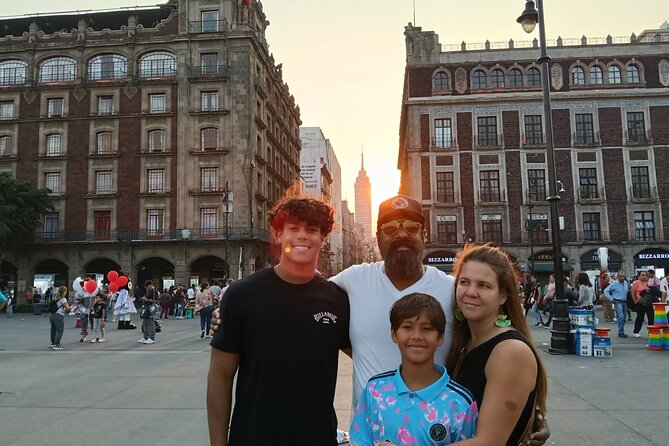
- A private walk for your group only: You do not share the guide with strangers, and the route can respond to your questions and pace.
- Three layers of Mexico City: The walk connects Aztec remains, colonial architecture, and modern city landmarks in one compact route.
- Guides with a personal touch: Carolina has provided detailed explanations for families, Alejandro has supplied strong cultural context, and Jesus has adjusted the walk to group feedback.
- A pastry tasting built into the route: Pastelería Ideal adds a brief, edible look at Mexican baking.
- $39 buys orientation, not a full museum day: The price is sensible for a private English tour, but the short duration limits interior visits.
- No private transportation: You meet at Palacio de Bellas Artes, walk through the center, and finish back at the same point.
Why this two-hour walk works in central Mexico City
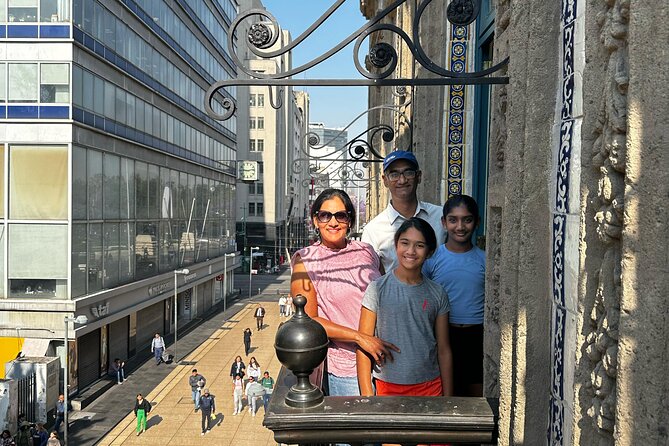
The best feature here is the route itself. Mexico City’s historic center can feel like a giant puzzle of plazas, domes, towers, ruins, and government buildings. A guide helps you connect the pieces instead of simply taking photos of one handsome facade after another.
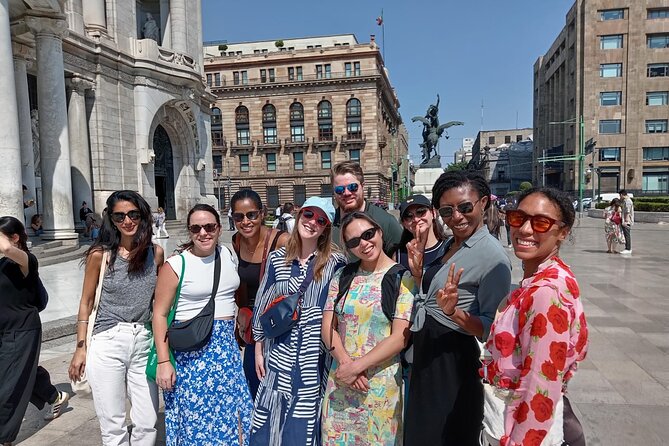
You begin at Palacio de Bellas Artes, one of the city’s most recognizable buildings. The opening talk covers the city and the palace, along with the place of art in Mexico. That gives you a useful frame for the rest of the walk, since the route keeps shifting between architecture, religion, archaeology, food, and public life.
This is a walking experience, not a transportation tour. That matters. You will see the streets at ground level and move through the historic core under your own power, but you should wear comfortable shoes and plan for a steady pace. The route has several short stops, so it rewards curiosity more than lingering.
The private setup is especially useful for families and small groups. A guide can spend more time on the parts that interest you, and Jesus, one of the guides associated with this experience, has tailored the walk based on group feedback. Carolina has also led families with a child and provided detailed explanations of museums and cathedrals. You cannot assume a particular guide will be available, but the named guides give you a sense of the personal approach.
A few more Mexico City half-days to weigh up
- Teotihuacan Private Tour from Mexico City
★ 5.0 · 1,890 reviews - Private Tour: Teotihuacan and Guadalupe Shrine
★ 5.0 · 938 reviews - Private City Tour in Frida Kahlo, Coyoacan, and Xochimilco
★ 5.0 · 626 reviews
Bellas Artes opens the story with art and architecture
Palacio de Bellas Artes is a fitting place to begin. Its pale exterior and grand scale announce that this is not an ordinary neighborhood walk. The opening stop lasts about 15 minutes, long enough for your guide to explain the building, the city around it, and the importance of art in Mexico.
Admission is listed as free for this stop, but the experience is primarily an introduction rather than a full museum visit. If you want time with the murals and exhibitions inside Bellas Artes, you would need a separate visit beyond this short walk.
That is one of the useful tradeoffs of the tour. You get context before going farther into the center, but you do not spend the whole morning inside one attraction. For a first day in Mexico City, that broad view can be more useful than a single long museum visit.
Torre Latinoamericana and the city’s earthquake story
The route then reaches the Mirador Torre Latino. The building was once the tallest in Latin America and has survived three major earthquakes. Those facts turn a familiar skyscraper into a quick lesson about Mexico City’s difficult ground conditions and changing skyline.
The stop is listed with free admission, but the information provided does not promise an elevator ride or ticket to the observation deck. You should treat this as a viewpoint and a guide-led explanation, not as a guaranteed tower visit. If getting above the rooftops is a priority, ask for clarification before booking.
Even from street level, the tower gives the walk a change of mood. You have just considered a palace devoted to art, and now you are looking at a modern symbol of engineering and endurance. That contrast is part of what makes the route work.
Palacio Postal is a working building, not just a photo stop
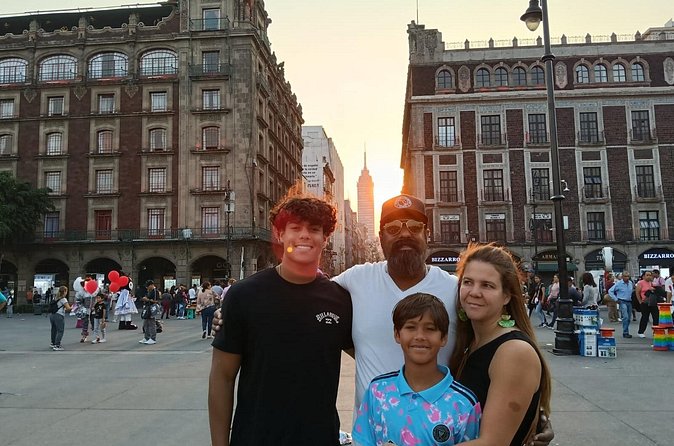
Palacio Postal is one of the route’s most charming surprises. The building is known for Italian marble and gold decoration, yet it still functions as a post office. That working purpose gives it a little more life than a preserved facade that exists only for sightseeing.
Plan on about 15 minutes here. You can appreciate the ornate interior and hear how the building fits into Mexico City’s architectural story. The short stop is enough to look around, but not enough for a slow architectural study.
I like this kind of stop because it links beauty with ordinary city life. You are not looking at an isolated monument. People still use the building for its original public purpose, which makes the visit feel connected to present-day Mexico City.
A completely different day out, same corner of Mexico City:
- Teotihuacan, Guadalupe Shrine & Tlatelolco Day Tour with Lunch
★ 5.0 · 11,603 reviews - Xochimilco, Coyoacan and Frida Kahlo with Optional Lunch
★ 4.5 · 7,320 reviews - Balloon flight + Breakfast in cave + Pyramids + Pick up CDMX.
★ 5.0 · 6,335 reviews - Teotihuacan pyramids morning or afternoon without tourist traps
★ 5.0 · 6,186 reviews
Plaza Tolsá and the horseman watching the square
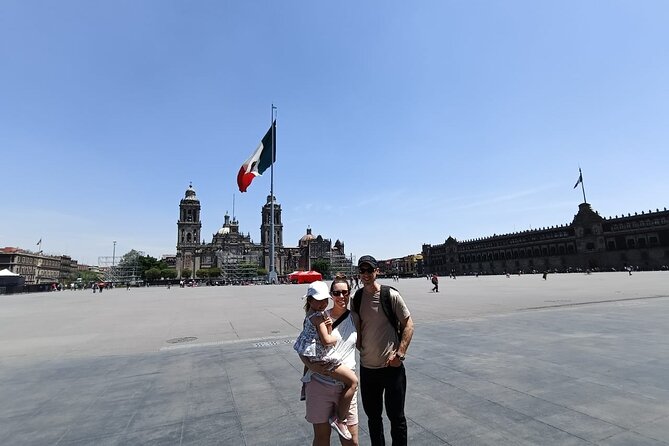
Plaza Tolsá sits beside the National Art Museum and is known for the statue of El Caballito, Charles IV. The square offers a clean pause in the walking route, with the mounted figure placed in a grand pose over the surrounding city.
The supplied timing does not assign a separate duration to this stop, so expect it to be a brief outdoor look and explanation. That is appropriate here. A plaza like this is best understood through its setting, its buildings, and the way public art shapes the space.
Your guide can help you read the square as more than a place to pass through. The statue, the National Art Museum, and the nearby historic buildings create a visual conversation about power, art, and Mexico’s colonial past. You will not have time for a full museum visit, so save that for another stop if it matters to you.
Palacio de Minería keeps the route rooted in science
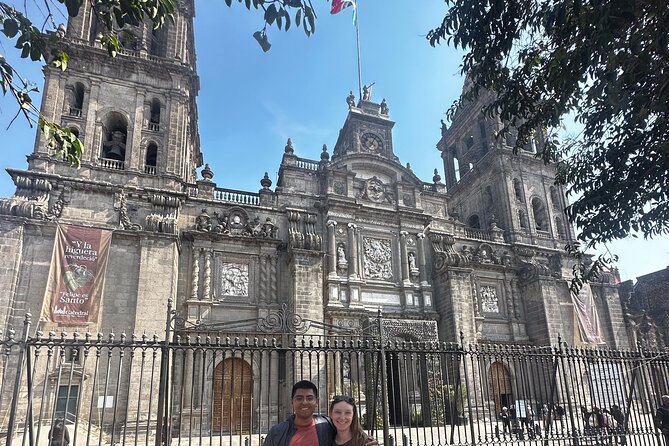
Palacio de Minería was built in 1797 and originally served as a mining school. The five-minute stop is short, but the building adds an important subject to the walk: Mexico’s scientific and technical development.
Admission is listed as included. Still, five minutes is not enough for a detailed interior tour, so think of this as a quick architectural and historical visit. Your guide’s explanation is the main value here.
I appreciate this pause because it widens the story beyond churches and government buildings. Mexico City’s old center was also a place of education, engineering, and industry. The former mining school helps show that the city’s historic identity is not only religious or political.
The House of Tiles gives you a close look at decoration
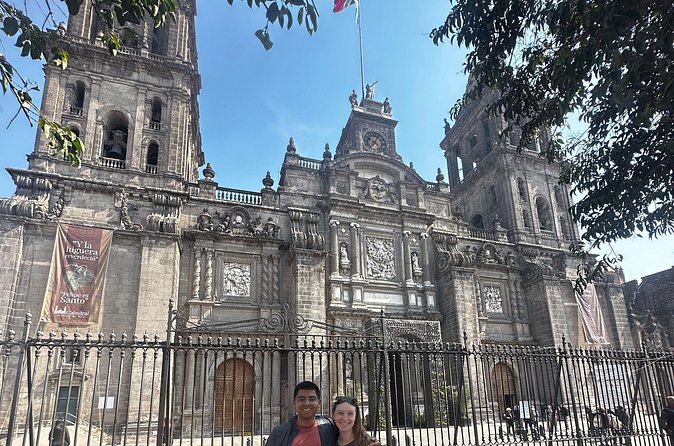
The House of Tiles is one of the more immediately eye-catching stops. Its facade is covered in blue and white tiles, while the inside includes murals, frescoes, and sculptures. The visit lasts about 15 minutes, and admission is listed as included.
This is a good place to slow down briefly. The tilework makes the exterior memorable, but the interior decoration gives your guide more to explain. Look closely at how the materials change from facade to interior, and ask questions if you want more than a quick photo.
The limitation is the same as at Bellas Artes and Palacio Postal: fifteen minutes is an introduction, not a full architectural visit. If you enjoy decorative arts, you may want to return later with more time.
Pastelería Ideal adds a taste of local history
Pastelería Ideal is the most playful stop on the route. This historic pastry shop provides an introduction to Mexican baked goods, followed by a chance to try them. The stop lasts about ten minutes.
That small tasting matters because food can make a place easier to remember. You are not only hearing about buildings and past civilizations. You are also getting a brief sense of how a city’s baking traditions fit into daily life.
Do not expect a full meal or a long food tour. The stop is short, and the experience is designed as a taste rather than a major culinary event. Still, it is a welcome change after several architecture-heavy stops, and it makes this route more engaging for families.
Templo Mayor reveals the Aztec city beneath the modern one
At the Museo del Templo Mayor, you reach a real Aztec ruin in the middle of Mexico City. The stop is listed at about five minutes, with free admission. Your guide uses the site to discuss the ancient civilizations of Mexico.
Five minutes is enough to understand the basic importance of the ruins, but not enough to explore the museum or archaeological area properly. If Aztec history is one of your main interests, plan a separate visit. The guided stop works best as an introduction that tells you why the remains matter.
This is also the point where the route’s layers become especially clear. Modern Mexico City was built over an older city, and the ruins make that fact visible. After the ornate colonial buildings, Templo Mayor changes your sense of what lies under the streets.
The Zócalo is the center of the center
The Zócalo receives about 20 minutes, making it one of the longer outdoor stops. It is described as the largest square in this hemisphere and the second-largest in the world. Grand claims aside, the important point is its scale and central role in Mexico City.
This is the place to pause and take in the surrounding buildings. The square is not merely an open space between attractions. It is the civic heart of the historic center, and your guide can help explain why so many political, religious, and public events have gathered here.
The Zócalo can also be a busy public place, so stay close to your guide and keep track of your belongings. The tour description does not promise time for independent wandering, and twenty minutes passes quickly when the guide is explaining the square’s role.
The Metropolitan Cathedral closes the historical arc
The final major stop is the Mexico City Metropolitan Cathedral, with about 20 minutes inside or around the building. It is the country’s most important church and offers a long list of stories for your guide to explain.
Admission is listed as free. The short visit lets you see the cathedral and hear about its importance, but it does not replace a dedicated church tour. If you want quiet time for details, art, or prayer, you may need to return outside the scheduled walk.
Ending here makes sense. The route has moved from pre-Hispanic remains to colonial power and religious life, with art, education, food, and modern engineering along the way. You finish back at the Palacio de Bellas Artes meeting point, so you are not left across town looking for your next connection.
What $39 per person really buys you
At $39 per person, the experience offers fair value if you want a private introduction to the historic center. You are paying for a professional English-speaking guide, a route that links ten meaningful places, and support through WhatsApp from the time of booking. For a private activity, that is a reasonable price, especially if you are splitting the experience with a small group.
The price is less compelling if you expect long interior visits or paid attraction access. Several stops are brief, and transportation is not included. You meet at Palacio de Bellas Artes, walk through the center, and return there, so the fee is mainly for interpretation and organization.
Group discounts may improve the value for larger private parties. The exact discount is not specified, so check the price shown for your group before paying. The tour is offered in English and normally confirms at booking.
Who will get the most from this experience
I would choose this walk for a first visit to Mexico City, especially if you want a clear overview before deciding which places deserve more time. It is also a good fit for families, since the pastry stop breaks up the architecture and the private guide can respond to a child’s pace.
It suits you if you enjoy history told through buildings, plazas, and short conversations. Carolina’s family-focused approach, Alejandro’s attention to cultural context, and Jesus’s flexible style suggest that the guide can make the material personal rather than simply reciting dates.
You may want another option if your main goal is museum time, a long food experience, or a full archaeological tour. The two-hour length is a strength for orientation, but a limit for detailed sightseeing.
The tour is near public transportation, and most people can participate. Service animals are allowed. Since the experience is private, only your group takes part, which can make the pace easier to manage.
Booking details worth keeping in mind
The meeting point is Palacio de Bellas Artes, Av. Juarez S/N, Centro Histórico de la Ciudad de México. The activity ends back there, so you can use the same area as your starting point for the next part of your day.
Free cancellation is available up to 24 hours before the start time for a full refund. Cancellations or changes made less than 24 hours before the start time are not refunded or accepted, and the cut-off uses local Mexico City time.
The experience is often booked about 24 days ahead. That does not guarantee every date will sell out, but it is a useful sign to avoid leaving a preferred time until the last minute. Since WhatsApp support is included from booking, use it to confirm any question about the guide, meeting point, or what the short stops include.
Should you book this Mexico City walk?
Book it if you want a private, efficient introduction to the historic center, with a guide who can explain the links between Aztec Mexico, colonial rule, art, religion, and modern city life. The pastry tasting, Templo Mayor, Zócalo, and cathedral give the two hours a good mix.
Skip it if you want to spend a full hour inside Bellas Artes, explore Templo Mayor in depth, or ride up Torre Latinoamericana. At $39 per person, the value comes from the guide and the carefully connected walk, not from a long list of included admissions.
For most first-time visitors with limited time, I would book it early in the trip. Use the walk to learn the center’s layout, then return on your own to the buildings that deserve a slower look.
FAQ
How long does the Mexico City private tour last?
The tour lasts approximately two hours.
What language is the tour offered in?
The experience is offered in English.
Is this a private tour?
Yes. Only your group participates in the activity.
Where does the tour start?
The meeting point is Palacio de Bellas Artes at Av. Juarez S/N in Mexico City’s Centro Histórico.
Where does the tour end?
The activity ends back at the Palacio de Bellas Artes meeting point.
Is transportation included?
No. Private transportation is not included. The experience is a walking tour through the historic center.
What is included in the price?
A professional tour guide and WhatsApp support from the moment of booking are included.
Can I cancel for a full refund?
Yes. You can cancel up to 24 hours before the experience start time for a full refund. Cancellations or changes made less than 24 hours before the start time are not refunded or accepted.
Just added around Mexico City
- Mexico City: Hop-on Hop-off City Tour by Turibus 2-Day Pass★ 4.0 · 10 reviews
- Anthropology Museum, Chapultepec Castle & Cable Car Tour★ 4.5 · 10 reviews
- Multi-Variety Mole Class in a Condesa home or art gallery rooftop★ 5.0 · 10 reviews
- PRIVATE TOUR Colonial Town Taxco and Cuernavaca from CDMX.★ 5.0 · 10 reviews
- Private Round-Trip Transportation to Teotihuacan Pyramids★ 5.0 · 10 reviews
- Teotihuacan and My Grandma’s Food Tour★ 5.0 · 10 reviews
- El Centro Street Food Walking Tour★ 5.0 · 10 reviews
- Private Walking Tour Legends and Events Historic Center CDMX★ 4.8 · 10 reviews
Guided, compared.
Teotihuacan Early Access Guided Tour with optional Lunch
Read our review →
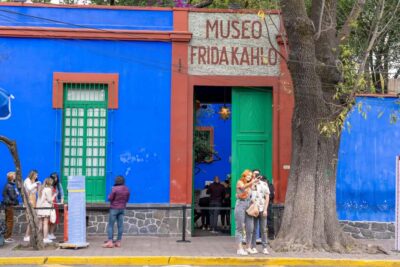
Frida Kahlo Museum Entry Ticket w/Digital Guide
Read our review →
Guided Tour in Teotihuacan with Cave Breakfast and Transportation
Read our review →
Teotihuacan Private Tour with Expert Guide & Cultural Insights
Read our review →
Teotihuacan Early Morning Tour: Avoid Crowds, & Expert Guide
Read our review →