
Reviewed · MEXICAN COOKING CLASSES
Muchos moles: Multi-variety mole cooking class and feast
Mexican mole is not one dish. It is a whole family of sauces, and this small-group cooking class gives you a useful taste of that range. With Jim as your guide, you’ll prepare a fruity manchamanteles, a fresh green mole, and the corn tortillas needed to eat them properly.
I like the relaxed dinner-party feel and the chance to learn about local produce, crafts, and cooking traditions at Jim’s Condesa home. I also like that the meal moves beyond the familiar chocolate-based mole poblano. The main drawback is practical: the home has two cats and no elevator, and the $130 price is high for a cooking class.
In This Review
- Key points to know before booking
- Mexican mole is a family of dishes, not one sauce
- The first two hours: ingredients, techniques, and tortillas
- Manchamanteles brings pineapple and plantain to the table
- Green mole offers a fresher contrast
- A four-hour class that ends as a proper feast
- Jim’s teaching style suits curious beginners
- Who will get the most from the $130 price?
- Dietary needs, cats, and access details
- Is this mole class right for you?
- FAQ
- How long does the mole cooking class last?
- What dishes will I prepare?
- Is food and drink included?
- What languages does Jim speak?
- Can dietary requirements be accommodated?
- Is the class accessible to wheelchair users?
Key points to know before booking
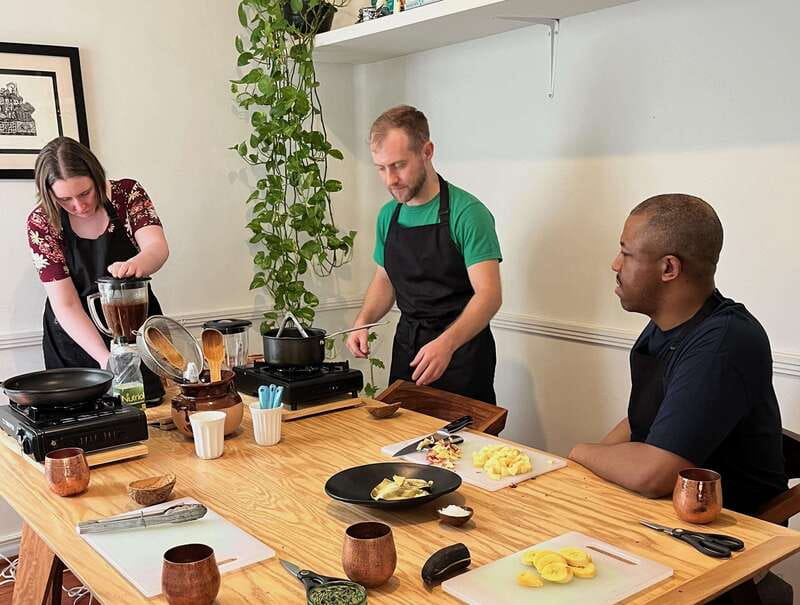
- Two very different moles: Make sweet-tart manchamanteles with pineapple and plantain, then prepare a lighter green mole based on fresh green leaves.
- A real hands-on meal: You cook both sauces from scratch and make the tortillas that carry them to your plate.
- Jim leads the class: He teaches in English or Spanish and is especially good at explaining ingredients, origins, and cooking steps.
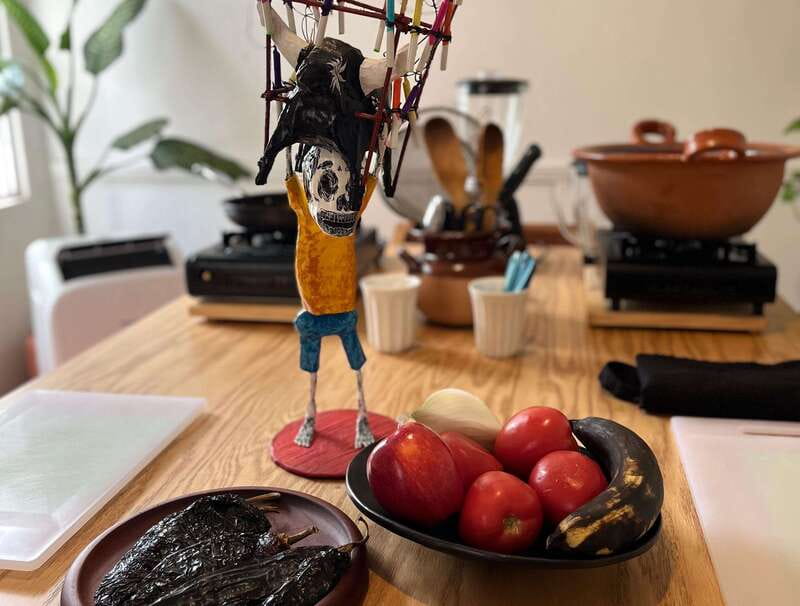
- A home setting in Condesa: The meal takes place around a picture-perfect table with locally made Mexican dinnerware.
- Small groups keep it personal: Private and small-group options are available, which suits cooks of all skill levels.
- Check the practical details: There is no elevator, two cats live in the home, and strict kosher requirements cannot be accommodated.
Mexican mole is a family of dishes, not one sauce
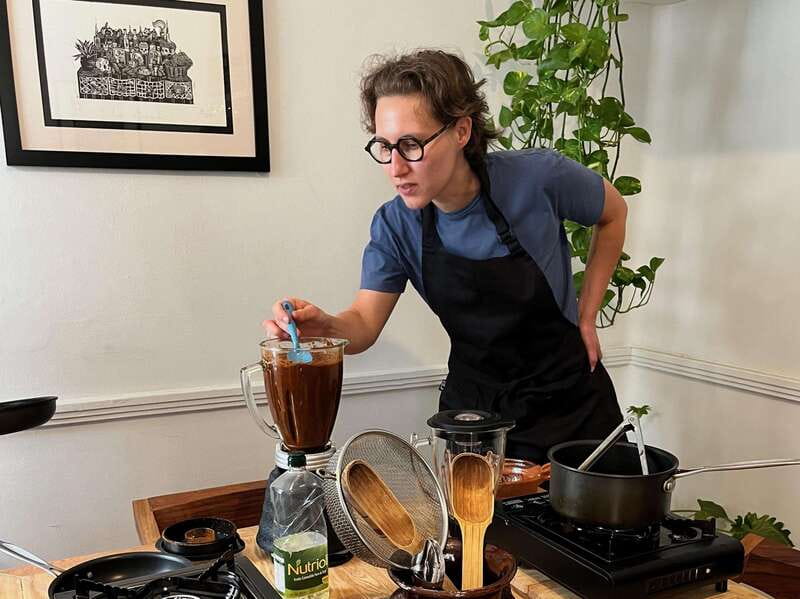
Many first-time visitors hear mole and picture mole poblano: dark, smooth, complex, and often made with dried chiles, spices, nuts, seeds, and chocolate. That famous version is only one member of a much bigger family.
This class begins with that idea. You’ll learn about the striking range of Mexican moles before cooking two versions that show how far the dish can go. The lesson is not just about following a recipe. It helps you see how fruit, fresh greens, chiles, and local ingredients can change a sauce’s character.
That variety is the best reason to book. Restaurant menus often give you one familiar mole, perhaps served with chicken or another main course. Here, you get to compare two distinct preparations at the same meal and understand the choices behind them.
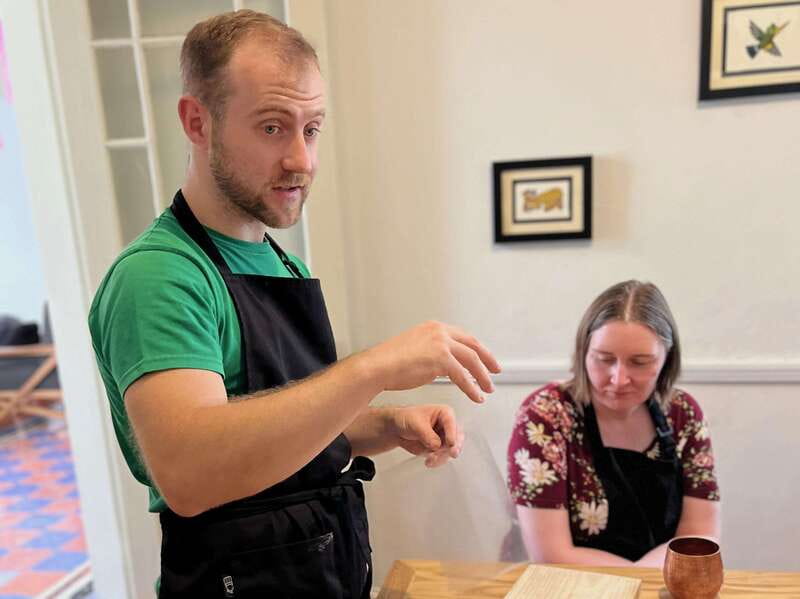
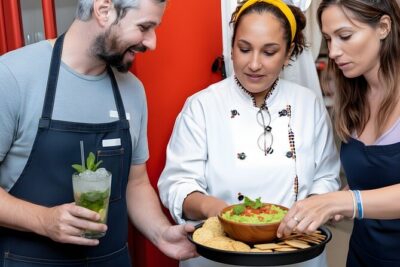
I also like the setting. Instead of a large demonstration kitchen, you cook in Jim’s Condesa home. The atmosphere is informal, and the small size leaves room for questions. You can expect a class that feels closer to being invited to a friend’s dinner than attending a formal culinary lecture.
More Mexican cooking classes:
- Mexican Cooking Class with Food Market Visit in Mexico City
★ 5.0 · 506 reviews - Essence of Mexico: Authentic Mexican Cooking Class & Market Tour
★ 5.0 · 289 reviews - Mexican Cooking Class & Cocktails in Mexico City
★ 5.0 · 134 reviews
The first two hours: ingredients, techniques, and tortillas
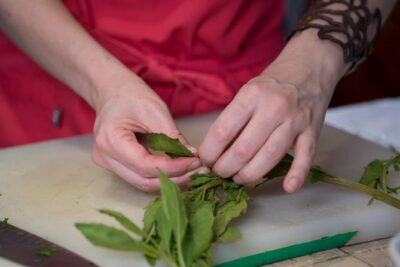
The opening part of the four-hour experience is devoted to the cooking. Jim introduces the ingredients and explains the role each one plays. You then put on an apron and prepare the two moles from scratch.
The class is designed for different cooking abilities. You do not need to arrive as an experienced home cook, and you should have something useful to do even if you already know your way around a kitchen. Jim’s calm, patient teaching style helps keep the work approachable.
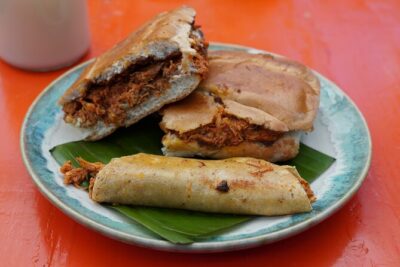
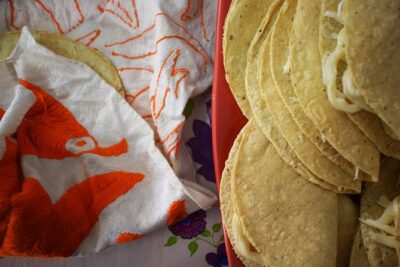
You’ll also make fresh corn tortillas. This is an important part of the meal rather than a decorative extra. Mole is meant to be eaten with something that can hold and scoop the sauce, and a warm tortilla gives you a more direct way to taste the texture and seasoning.
The class takes about two hours before you sit down to eat. That pace matters. You have enough time to take part, ask about Mexican ingredients, and watch the sauces develop without being pushed through a rushed demonstration.
I would treat the first half as a lesson in balance. Moles can contain many ingredients, but the goal is not to make a sauce that tastes like everything at once. You’ll see how sweetness, heat, acidity, freshness, and texture need to work together.
Manchamanteles brings pineapple and plantain to the table
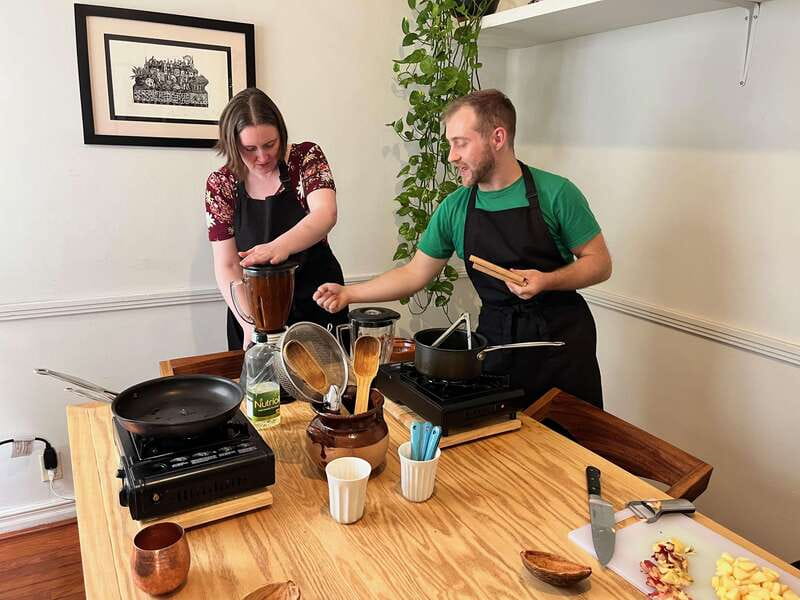
Manchamanteles shares some ingredients and methods with mole poblano, but it takes a different path. Instead of relying on chocolate for part of its depth and sweetness, this version uses generous pieces of pineapple and plantain.
That fruit changes the whole mood of the dish. Pineapple brings brightness and acidity, while plantain gives a softer, fuller sweetness. The result should appeal to you if you like savory food with fruit, but it may feel unusual if you expect every mole to be dark, smoky, or heavily spiced.
The dish also helps explain why Mexican cooking is so varied from one region and household to another. A mole is not a fixed formula. The ingredients can shift according to local produce, family practice, and the cook’s purpose.
You’ll have the advantage of eating manchamanteles soon after preparing it. That lets you notice the sauce at its freshest, rather than meeting it after it has sat in a restaurant kitchen or arrived as part of a standard menu.
For me, this is the dish that gives the class its strongest sense of discovery. It uses familiar fruit in a combination that many people will not have tried before, yet it remains easy to understand once you taste the sweet and savory balance.
Green mole offers a fresher contrast
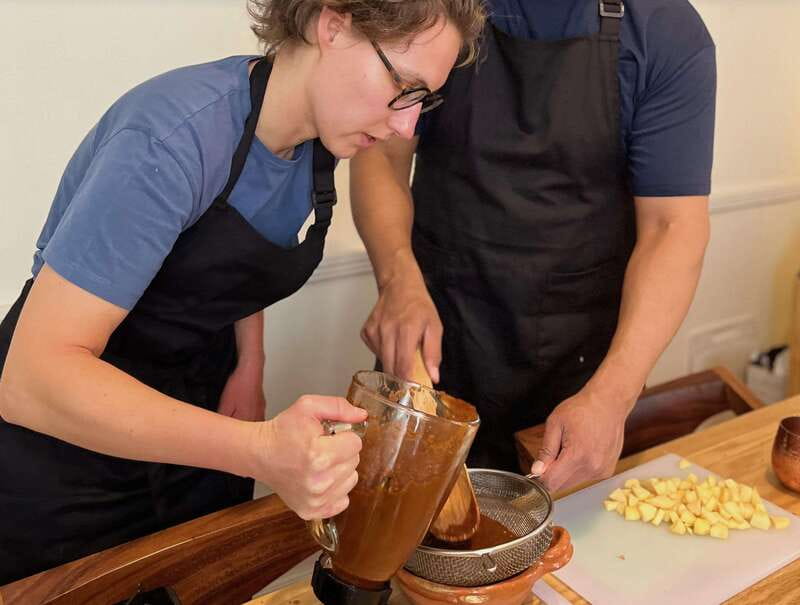
The second dish is a green mole made with crisp green leaves. It provides a clear contrast to manchamanteles, both in color and in feel.
Instead of the deeper, heavier profile associated with some dark moles, green mole is presented as fresh and uplifting. The exact flavor will depend on the ingredients used that day, but the point is clear: Mexican mole can be light on the palate as well as dense and powerful.
Cooking both versions in one sitting makes the lesson work. You are not simply learning two unrelated recipes. You are comparing two ways to build a sauce and two ways to express Mexican cooking through color, produce, and texture.
If you are visiting Mexico with someone who is unsure about mole, this pairing is useful. The green mole may be an easier introduction for a person who prefers fresh flavors, while the manchamanteles shows how fruit can play a serious role in a savory dish.
I would pay close attention to Jim’s explanations here. The cooking process is the practical part of the class, but the larger value comes from learning why one mole tastes fresh and another tastes sweet, layered, or more substantial.
A few more Mexico City half-days to weigh up
- Private Mexican Cooking Class with Gastronomic Historian, Lucia
★ 5.0 · 110 reviews - Mexican Churros Master Class
★ 5.0 · 91 reviews - Mexico City: Mexican Cooking Class
★ 4.8 · 85 reviews - 3h Cooking Class in Mexico City: 8 Recipes & Bottomless Drinks
★ 5.0 · 59 reviews
A four-hour class that ends as a proper feast
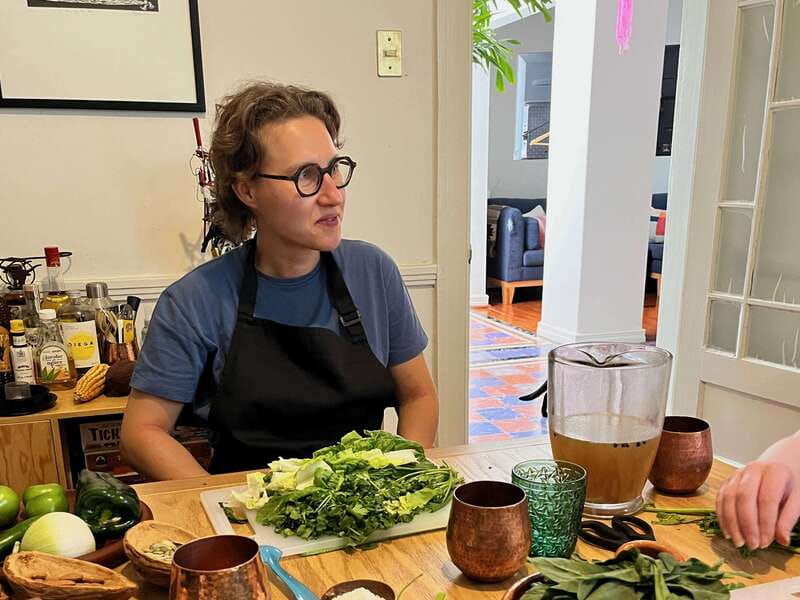
After the cooking, you help set the table with locally made Mexican dinnerware. This is a small but meaningful part of the experience. The meal is not served as an afterthought in a busy cooking space. You shift from preparing food to sharing it at a carefully arranged table.
The setting is described as picture-perfect, and the locally made pieces add a sense of place without turning the meal into a staged show. Jim is happy to explain the artisans and craftspeople connected with the objects in his home, so you can ask about the pottery and other pieces you see.
Then you eat the two moles, along with the fresh tortillas. Mexican beer, wine, and soft drinks are included, giving you choices throughout the class and meal.
This final stretch is where the dinner-party mood becomes strongest. You can continue talking with Jim about Mexican food, ingredients, and regional traditions while enjoying what you have made. The atmosphere is casual rather than formal, which suits a class built around participation.
I would not book this if you want a quick cooking demonstration followed by a short tasting. Four hours is a substantial commitment. The benefit is that you get a full afternoon or evening of cooking, conversation, and food rather than a rushed sampler.
Jim’s teaching style suits curious beginners
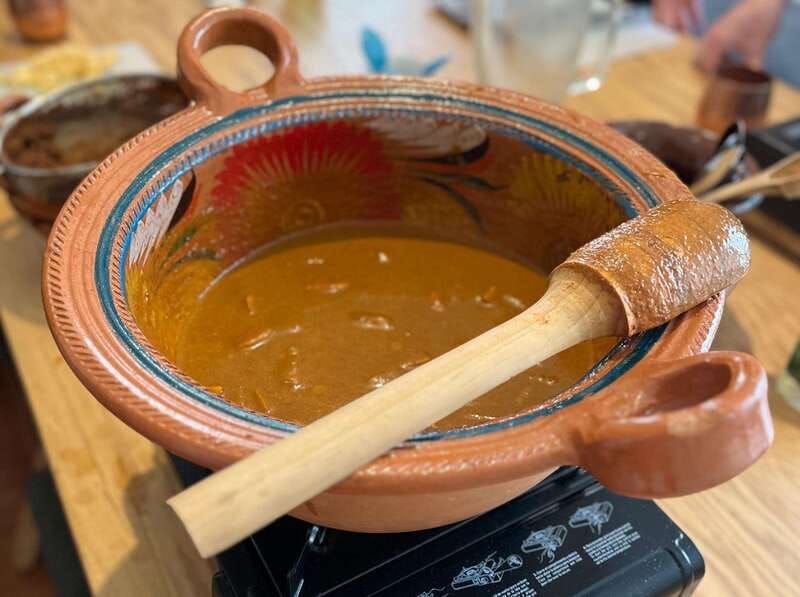
Jim is the chef and guide for the experience. He teaches in English and Spanish, and his role goes beyond giving instructions. He explains the background of the food, answers questions patiently, and helps each person take part.
A major strength is the way he connects cooking with local life. He supports local produce and Mexican crafts, and he can share the names of artisans connected with the dinnerware and objects in the home. If you like knowing where food and handmade goods come from, those conversations add real value.
The class also works for mixed-skill groups. One person can enjoy the cultural and food background while another takes on more of the preparation. You do not need to compete with anyone or produce restaurant-perfect results.
The informal style may not suit you if you prefer a polished cooking school with individual workstations and a tightly timed lesson. Here, the appeal is personal contact. You are in a home, working in a small group, and learning through conversation as much as through written steps.
Recipes are sent by email after the class. That is useful because mole involves enough ingredients and stages that relying on memory alone would be risky. You can recreate the dishes later and use the class as a starting point for further experiments.
Who will get the most from the $130 price?
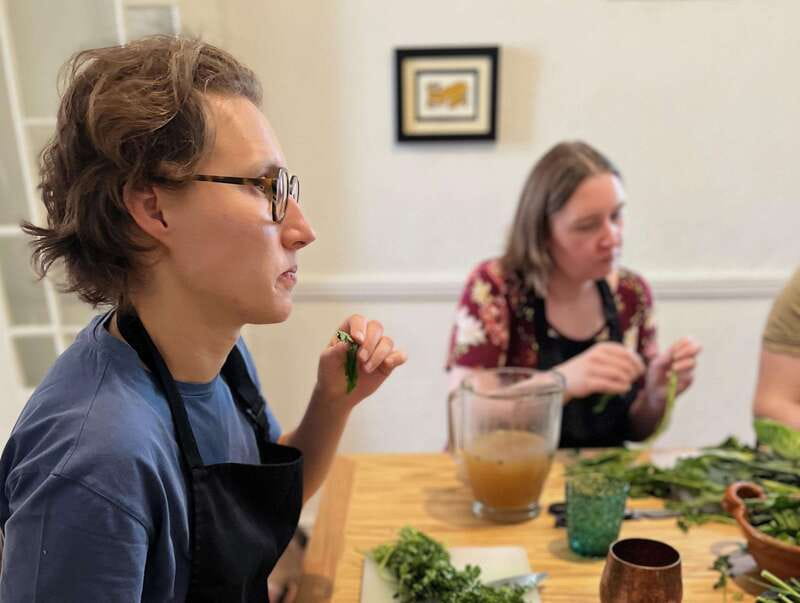
At $130 per person, this is not a budget meal. I judge the price against what is included: four hours of instruction, all ingredients for two types of mole and tortillas, beer, wine, soft drinks, the meal itself, and recipes afterward.
The value is strongest if you would normally pay for a good dinner and also want a private or small-group food lesson. You are paying for the time with Jim, the home setting, the unusual pairing of moles, and the chance to prepare the meal rather than simply order it.
The price is less attractive if your main goal is to eat Mexican food cheaply. You could spend far less on a restaurant meal, and this class requires a larger block of your schedule. It also makes most sense for people who enjoy asking questions, trying unfamiliar flavors, and taking part in the preparation.
One detail deserves attention before you pay. The same experience may cost less if you book directly through the Martaja website. I would compare the direct price with the booking platform price, then weigh that saving against the flexibility and cancellation terms you prefer.
You can cancel up to 24 hours ahead for a full refund, and you can reserve now while paying later. Those terms help if your Mexico City plans are still changing.
Dietary needs, cats, and access details
Dietary requirements can usually be accommodated, but you should watch your email after booking because Jim will contact you about them. Strict kosher cooking is not possible at this time.
Two cats live in the home. They are kept out of the cooking area, and allergy pills are available for people who need them, but this is not a pet-free environment. If you have a serious allergy, I would contact the provider before booking rather than rely on the arrangements in place.
Wheelchair users have attended the class before, but the building does not have an elevator. The meeting point can vary depending on the option you book, so check the final instructions carefully and ask about access if stairs may be a problem.
These points do not cancel out the appeal of the class, but they can affect your comfort. A home experience has advantages over a commercial kitchen, and it also has limits that you would not face in a purpose-built venue.
Is this mole class right for you?
I would book this experience if you want a personal food lesson with a clear focus. The strongest reasons are the two contrasting moles, the fresh tortillas, Jim’s patient instruction, and the chance to eat in a welcoming home rather than simply visit another restaurant.
It is especially well suited to food lovers, curious beginners, couples, and small groups who enjoy a relaxed dinner-party setting. It also works for people who already know mole poblano and want to understand the wider range of Mexican sauces.
I would think twice if you dislike cats, need strict kosher preparation, cannot manage stairs, or want a short and inexpensive activity. The $130 cost is fair only if you value the cooking instruction and four-hour social meal as much as the food itself.
For most people who enjoy Mexican cooking, the unusual manchamanteles and fresh green mole make this more memorable than a standard taco lesson. If you want to leave with new recipes, a better sense of Mexican ingredients, and a full meal you helped prepare, this is a strong pick.
FAQ
How long does the mole cooking class last?
The experience lasts four hours. About two hours are spent preparing the two moles and fresh corn tortillas before you sit down to eat.
What dishes will I prepare?
You will prepare manchamanteles, a fruity mole with pineapple and plantain, and a green mole made with fresh green leaves. You will also make the corn tortillas served with the meal.
Is food and drink included?
Yes. Ingredients for both moles and the tortillas are included, along with Mexican beer, wine, and soft drinks.
What languages does Jim speak?
The class is offered in English and Spanish.
Can dietary requirements be accommodated?
Most dietary requirements can be accommodated. Strict kosher preparation is not possible, and you should respond to Jim’s email after booking with your needs.
Is the class accessible to wheelchair users?
Wheelchair users have attended before, but the building has no elevator. Check the meeting details for your booking and contact the provider if you need specific access information.
Just added around Mexico City
- Ticket to Frida Kahlo Museum (Blue House)★ 5.0 · 3 reviews
- Valle de Bravo: Forest Hiking Adventure★ 4.4 · 3 reviews
- Chapultepec Castle and Anthropology Tour, starting from CDMX★ 5.0 · 3 reviews
- La Roma Private Art Tour★ 5.0 · 3 reviews
- Private Transportation: Pickup and Drop-Off★ 5.0 · 3 reviews
- Mexico City: Relaxing or Decontracting Massage Experience★ 5.0 · 3 reviews
- Grutas de Tulantongo★ 3.0 · 3 reviews
- Mexico City: Local Walking Tour with Mezcal & Wrestling Show★ 5.0 · 3 reviews
Mexican Cooking Classes, compared.
Mexican Cooking Class with Food Market Visit in Mexico City
Read our review →
Essence of Mexico: Authentic Mexican Cooking Class & Market Tour
Read our review →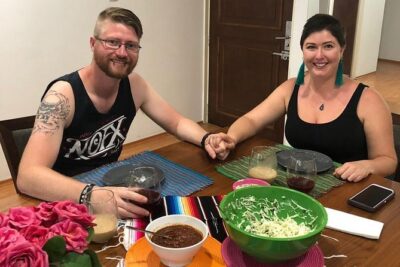
Mexican Cooking Class & Cocktails in Mexico City
Read our review →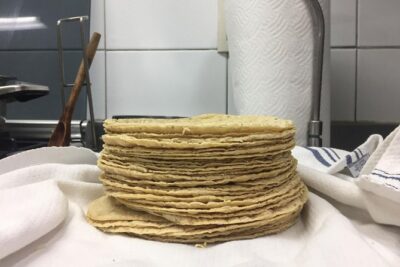
Private Mexican Cooking Class with Gastronomic Historian, Lucia
Read our review →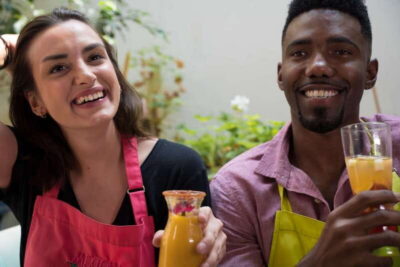
3h Cooking Class in Mexico City: 8 Recipes & Bottomless Drinks
Read our review →Browse the lists this tour appears in