
Reviewed · DAY OF THE DEAD TOURS
Tour cultural e inmersivo en Casa Dia de Muertos
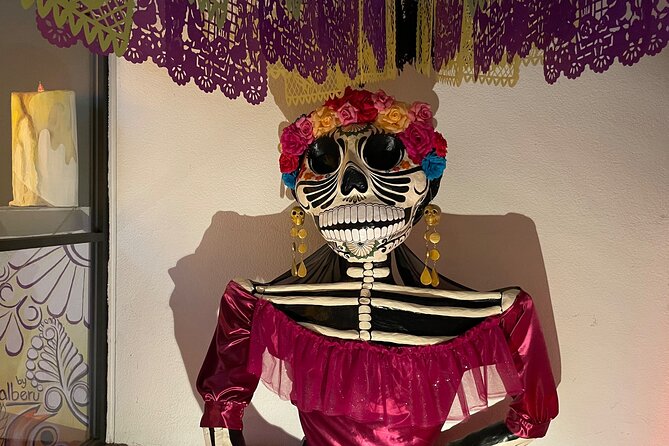
The most unusual thing about this experience is that it brings Day of the Dead into a real working house and craft studio, not just a seasonal parade or museum display. You’ll see an authentic offering, artistic installations tied to the holiday, and the people who make tequila decanter sets sold abroad. I like the year-round access and the way the visit connects the celebration to both history and living craft.
I also like the small group limit of 15 and the low price of $11.91. The main caution is that part of the visit is a sales-oriented artesanías business. If you come during the actual Day of the Dead season, the one-hour house tour may feel less special than the city’s larger public celebrations.
In This Review
- Key points to know before booking
- What Casa Día de Muertos offers beyond a seasonal parade
- Inside the house: altar, art, and meaning
- From ancient custom to modern Mexico
- The working artesanías studio and its sales pitch
- Why the one-hour length works
- Price and value at $11.91
- Getting to Rincón Pozo 42 in Xochimilco
- Who will get the most from this visit
- Practical booking advice and cancellation terms
- Should you book Casa Día de Muertos?
- FAQ
- How long does the Casa Día de Muertos experience last?
- Where does the tour begin?
- Where does the activity end?
- Which languages are available?
- Is transportation included?
- What is included in the price?
- What is the cancellation policy?
Key points to know before booking
- A year-round Day of the Dead visit: See an altar and themed art even when Mexico City’s October and November festivities are over.
- A working craft studio: Watch artists connected with tequila decanter sets exported to more than 20 countries.
- Ancient roots and Spanish influence: The guide explains how older traditions blended with Catholic customs after the Spanish arrival.
- A short, focused visit: The experience lasts about one hour and ends where it begins.
- Low-cost cultural stop: At $11.91 per person, it offers an inexpensive way to add local culture to a Mexico City day.
- A clear trade-off: Expect some merchandise selling alongside the cultural explanation.
What Casa Día de Muertos offers beyond a seasonal parade
Day of the Dead is often associated with Mexico City’s late-October and early-November calendar: painted faces, marigolds, public altars, costumes, and crowded streets. Casa Día de Muertos takes a quieter approach. It gives you a fixed place to look closely at the symbols and ideas behind the celebration at any time of year.
That matters if your schedule does not line up with the holiday. You do not need to wait for the final days of October to see an offering or learn why families honor the dead with food, decoration, and remembrance. The experience gives you a compact introduction without requiring a full day at a major museum or festival.
The setting also adds a useful layer. This is not described as a simple gallery. The house includes several artistic interventions connected to Day of the Dead, while also serving as an artesanías workshop. You get culture and commerce in the same stop, which can feel more personal than viewing objects behind glass, though it also means the visit has a clear business side.
More Day of the Dead experiences:
- Mexico City: Day of the Dead Guided Tour
★ 3.4 · 97 reviews - Day of the Dead Tour in Mexico City
★ 3.5 · 78 reviews - Day of the Dead Tour in San Andres Míxquic From Mexico City
★ 3.7 · 52 reviews
Inside the house: altar, art, and meaning
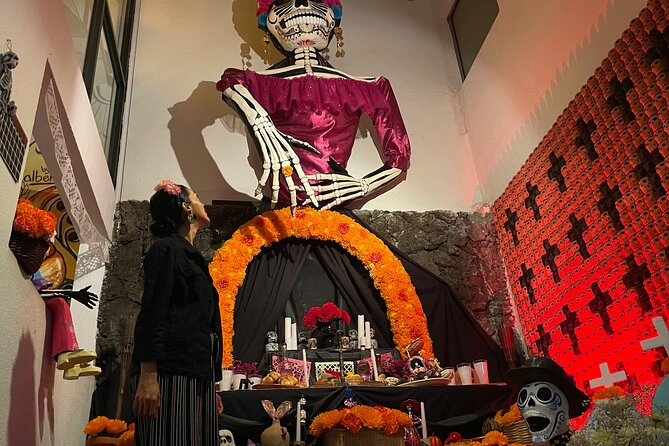
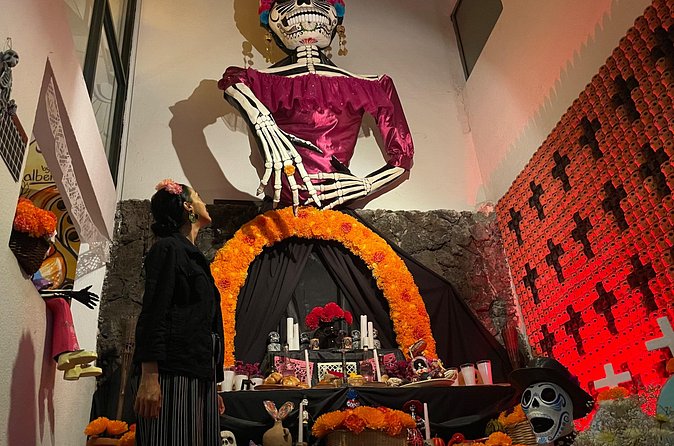
The central focus is an authentic offering, the altar used to honor the dead. An altar is not just a decorative arrangement. It helps explain the emotional side of the holiday, where remembrance is active, visible, and shared through objects, images, food, and careful display.
The exact objects and arrangement are not specified, so I would not arrive expecting a particular set of flowers, photographs, or dishes. Instead, expect the guide to use the offering and the house’s art as a starting point for explaining the custom. The value comes from seeing how the celebration is presented in a dedicated home setting rather than only hearing a classroom-style lecture.
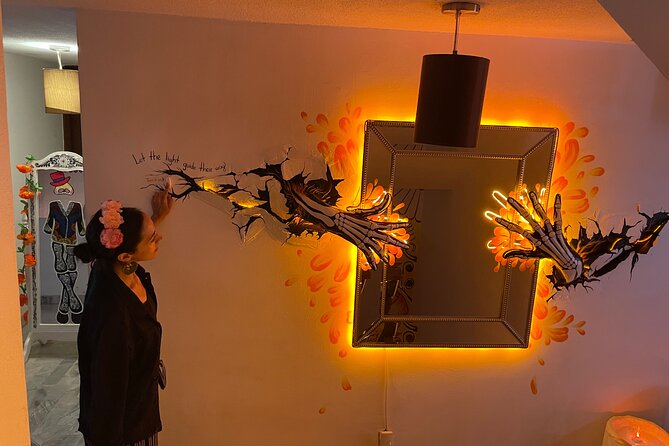
The artistic installations give the stop more visual interest than a talk alone. You might find that the house works best for you if you enjoy taking time with handmade pieces and symbolic decoration. If you want a large-scale parade, elaborate public performance, or many hours of activity, this one-hour format will feel limited.
The intimate scale helps keep the visit manageable. With no more than 15 people, you should have a better chance of hearing the guide and seeing the displays than you would in a crowded public event. The group is not private, however, so the experience still depends on the pace of the full party.
From ancient custom to modern Mexico
One of the strongest parts of the visit is its historical frame. The explanation covers the celebration’s ancient origin, the changes brought by the Spanish, and the way Day of the Dead is practiced today.
That sequence is useful because it avoids treating the holiday as a single, unchanging tradition. The celebration has older Indigenous roots, then developed through contact and blending with Spanish and Catholic customs. The result is not simply an ancient ritual preserved untouched, nor a modern tourist invention. It is a living practice shaped by time.
You will hear about syncretism, the mixing of traditions that took place after the Spanish arrival. This is an important point for anyone who has only encountered Day of the Dead through films, costumes, or souvenir shops. The holiday has layers, and the guide’s job is to connect the art and altar to those layers.
The tour also brings the story into the present. Day of the Dead is still lived today, not just reconstructed for display. That makes Casa Día de Muertos a useful off-season choice, especially if your Mexico City trip happens outside the holiday period. You get context for what you may later see in markets, museums, neighborhood celebrations, or family altars.
The working artesanías studio and its sales pitch
Casa Día de Muertos also functions as a craft workshop. You have a chance to see artists behind the production of tequila decanter sets exported to more than 20 countries.
This is a specific and unusual detail. The stop is not limited to Day of the Dead objects. It introduces you to a Mexican craft business with an international market, showing how handmade production can connect local work with buyers far beyond Mexico.
For many people, this will be a plus. You can see the making side of Mexican design and perhaps find a distinctive souvenir rather than a mass-produced item. The craft element also gives the tour a practical economic angle: traditions and artistic skills can support a working business.
You should also set your expectations correctly. The workshop includes a sales component, and one published account specifically warns that there is a lot of selling alongside the house visit. That does not make the stop a bad choice, but it changes how you should judge it.
If you dislike any commercial pressure, you may prefer a museum or public cultural center. If you are open to browsing and understand that the artisans’ work is part of the experience, the shop side may feel like a fair exchange for the low admission price. The important thing is to book this as a house, culture, and craft visit, not as a purely academic history lesson.
A completely different day out, same corner of Mexico City:
- Teotihuacan, Guadalupe Shrine & Tlatelolco Day Tour with Lunch
★ 5.0 · 11,603 reviews - Xochimilco, Coyoacan and Frida Kahlo with Optional Lunch
★ 4.5 · 7,320 reviews - Balloon flight + Breakfast in cave + Pyramids + Pick up CDMX.
★ 5.0 · 6,335 reviews - Teotihuacan pyramids morning or afternoon without tourist traps
★ 5.0 · 6,186 reviews
Why the one-hour length works
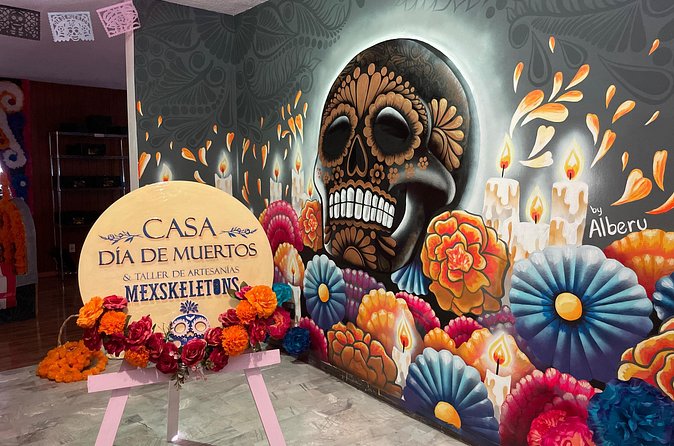
At approximately one hour, this is a small piece of a Mexico City day. I see that as both a strength and a limit.
The short length makes the experience easy to fit between other plans. You can visit Casa Día de Muertos without giving up half a day, and the activity returns to its starting point. That is handy if you are arranging a wider outing in the southern part of the city.
A compact visit also keeps the subject focused. You will cover the house, the altar, the art, the holiday’s background, and the craft workshop without the fatigue that can come with a long, heavily scripted tour. For a first introduction, an hour may be enough to give you useful context before you explore other parts of Mexico City on your own.
The limit is equally clear. You will not receive an exhaustive study of Indigenous belief systems, colonial history, modern family practice, or Mexican folk art in 60 minutes. Think of the tour as an entry point. It can sharpen your understanding, then help you notice more when you see Day of the Dead displays elsewhere.
Price and value at $11.91
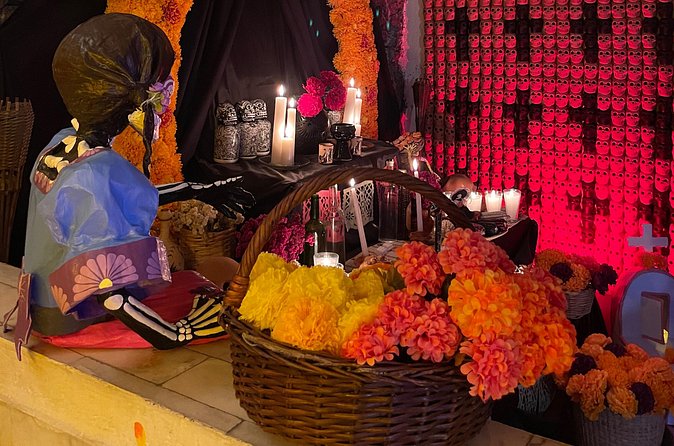
At $11.91 per person, this is priced as an accessible cultural add-on rather than a major paid attraction. Admission is included, and a guide is provided in English and Spanish. Snacks are also included, with dietary requirements handled if you state them when booking.
The value is strongest when you are visiting outside the Day of the Dead season. The experience gives you a physical altar, themed artwork, historical explanation, and craft workshop for less than the cost of many large attractions. You also avoid needing to plan around a festival date.
During the holiday season, the calculation changes. Mexico City offers much more public activity then, and Casa Día de Muertos may feel like a modest one-hour stop beside those larger events. It can still work as a quieter supplement, but I would not make it your only Day of the Dead plan if you are in the city at the right time of year.
The price also reflects the mixed purpose of the visit. You are paying for cultural interpretation and access to the house, but the craft business benefits from the opportunity to show and sell its work. If that arrangement is acceptable to you, the cost is easy to justify. If you want every minute devoted to noncommercial interpretation, the value will be less convincing.
Getting to Rincón Pozo 42 in Xochimilco
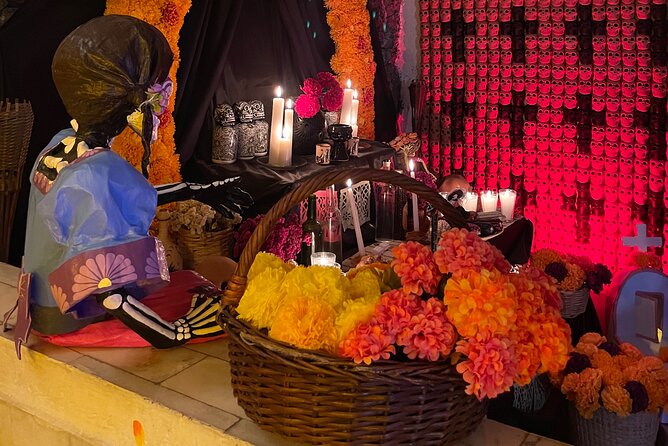
The meeting point is Rincón Pozo 42, Bosque del Sur, Xochimilco, Mexico City, postal code 16010. You should plan your route carefully because no private transportation is included.
The activity is near public transportation, which gives you an alternative to arranging a private car. The provided details do not specify the exact transit line, travel time, or walking distance from a station, so check your route before setting out rather than assuming the address will be obvious.
The tour ends back at the meeting point. That makes onward planning simpler. You can continue your day from the same area, but you will need to account for your own transportation both to and from the house.
Because the visit is short, arriving late could take a large bite out of the experience. Give yourself enough time to find Rincón Pozo 42, particularly if you are unfamiliar with Xochimilco. Confirmation arrives at booking, so keep the meeting details available on your phone.
Who will get the most from this visit
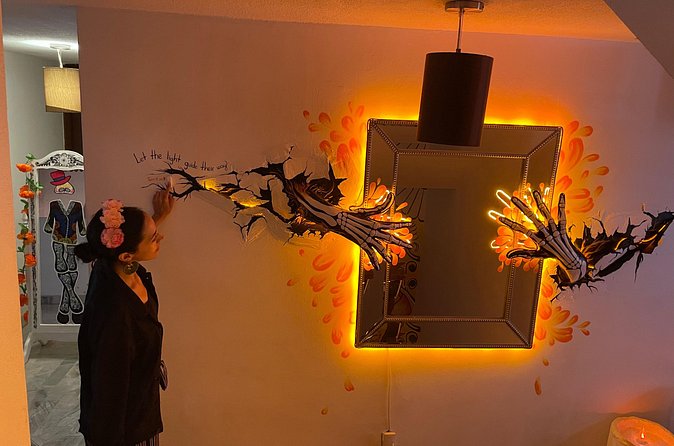
I would recommend Casa Día de Muertos to you if you want a clear, low-cost introduction to the holiday and your trip falls outside the main celebration period. It also suits anyone interested in Mexican craft production, handmade decorative art, or the connection between cultural tradition and a working workshop.
Families and mixed-age groups may appreciate the short length and the visual focus. Most people can participate, and service animals are allowed. The small group size should help the guide keep the explanation accessible, though the experience is not presented as a private tour.
English speakers can book with confidence because English and Spanish guiding are offered. If you prefer Spanish, the same language option is available. No individual guide names are provided, so you should not expect to request a particular guide.
I would be more cautious if you are coming to Mexico City specifically for large Day of the Dead spectacles. In that case, treat this as a supplement. The house offers a close look at symbols and craft, but it will not replace the scale and public energy of seasonal events.
Practical booking advice and cancellation terms
The activity is commonly reserved well ahead of time, with an average booking lead of 41 days. That does not mean you must book that far out, but it suggests that planning ahead is sensible, especially if your dates are fixed.
You can cancel for a full refund up to 24 hours before the local start time. Cancellations or changes made inside that 24-hour window are not accepted for a refund. Check your dietary needs when booking so the snack arrangement is clear.
The group maximum is 15 people. Mobile tickets are accepted, and confirmation is issued at the time of booking. These details make the experience fairly simple to add to a larger Mexico City plan, as long as you arrange your own transportation.
Should you book Casa Día de Muertos?
Book it if you want an affordable off-season look at Day of the Dead with a real offering, house-based art, historical context, and a working craft studio. The English and Spanish guide options, one-hour length, and small group cap make it easy to fit into a busy Mexico City schedule.
Think twice if you want a full festival experience or a strictly museum-style visit. The commercial side is real, and the stop may feel brief during the actual holiday season.
For the right visitor, the $11.91 price is a sensible buy. Go for the context and the chance to see craft being made, and regard the shop as part of the arrangement rather than an unexpected surprise.
FAQ
How long does the Casa Día de Muertos experience last?
The visit lasts approximately one hour.
Where does the tour begin?
It begins at Rincón Pozo 42, Bosque del Sur, Xochimilco, 16010 Ciudad de México, CDMX, Mexico.
Where does the activity end?
The experience ends back at the meeting point.
Which languages are available?
Guiding is available in English and Spanish. The activity is offered in English.
Is transportation included?
No. Private transportation is not included, although the meeting point is near public transportation.
What is included in the price?
Admission, a tour guide, and snacks are included. You should state any dietary requirements in the special requirements section when booking.
What is the cancellation policy?
You can cancel at least 24 hours before the local start time for a full refund. Cancellations or changes made less than 24 hours before the start are not accepted for a refund.
Just added around Mexico City
- Ticket to Frida Kahlo Museum (Blue House)★ 5.0 · 3 reviews
- Valle de Bravo: Forest Hiking Adventure★ 4.4 · 3 reviews
- Chapultepec Castle and Anthropology Tour, starting from CDMX★ 5.0 · 3 reviews
- La Roma Private Art Tour★ 5.0 · 3 reviews
- Private Transportation: Pickup and Drop-Off★ 5.0 · 3 reviews
- Mexico City: Relaxing or Decontracting Massage Experience★ 5.0 · 3 reviews
- Grutas de Tulantongo★ 3.0 · 3 reviews
- Mexico City: Local Walking Tour with Mezcal & Wrestling Show★ 5.0 · 3 reviews
Day of the Dead Tours, compared.
Day of the Dead Tour in San Andres Míxquic From Mexico City
Read our review →
The real “Dia de muertos” tour in Mixquic + secret cemetery
Read our review →
Day of the Dead Tour in Mixquic from Mexico City
Read our review →
Browse the lists this tour appears in