
Reviewed · ANTHROPOLOGY MUSEUM TOURS
Anthropology Museum Tour: Discover Pre-Hispanic Treasures
Mexico City’s National Museum of Anthropology holds the country’s great pre-Hispanic treasures under one remarkable roof. The main reward here is not simply seeing famous objects, but learning how Olmec, Maya, Aztec, and other cultures fit into the long story of Mexico. The 22-ton Aztec Sun Stone is the headline piece, yet the museum’s two floors give you much more to think about.
I like that the tour lasts about three hours, long enough to make sense of the major galleries without turning the visit into an all-day march. I also like the chance to request a private visit, especially if you want a guide such as Clara, Diana, Maida, Ivan, or Silvia to adjust the pace and explain religious ideas, political life, and art in plain language.
The main caution is that guide quality and depth can vary. Some guides offer a lively, well-structured explanation, while one poor experience found the commentary little more than the signs. Tickets are bought when you arrive, not through a fast entrance, so a wait is possible.
In This Review
- Key points to know before you book
- Why this museum deserves three hours
- Starting with the Olmec Group of Figures
- Meeting the Aztec Sun Stone
- Maya and Aztec culture in one visit
- Ancient human remains and the museum’s harder subjects
- The upper floor and living Indigenous communities
- Private visit or small group?
- Is $50 a fair price?
- Timing, tickets, and what to bring
- Who will get the most from this visit?
- Should you book the Anthropology Museum tour?
- FAQ
- Where does the Anthropology Museum tour begin and end?
- How long does the tour last?
- Is museum admission included?
- Is transportation included?
- Is the tour private or shared?
- What languages are available?
- Can I cancel the tour for a refund?
Key points to know before you book
- The Sun Stone anchors the visit: This colossal Aztec object gives your guide a natural starting point for explaining time, belief, and world history.
- Olmec art gets special attention: The museum’s famous Group of Figures is one of the tour’s most distinctive stops.
- Three hours is a useful middle ground: You can see major sections without trying to cover every display case.
- Private and small-group options differ: Private visits are confirmed for any group size and can be adjusted, while small groups need at least three participants and can include up to 12.
- The guides can shape the experience: Clara, Diana, Maida, Ivan, and Silvia have all led strong visits, though the style may range from warm and conversational to formal and academic.
- You arrange your own way there: The meeting point is at the museum in Chapultepec, and transportation is not included.
Why this museum deserves three hours
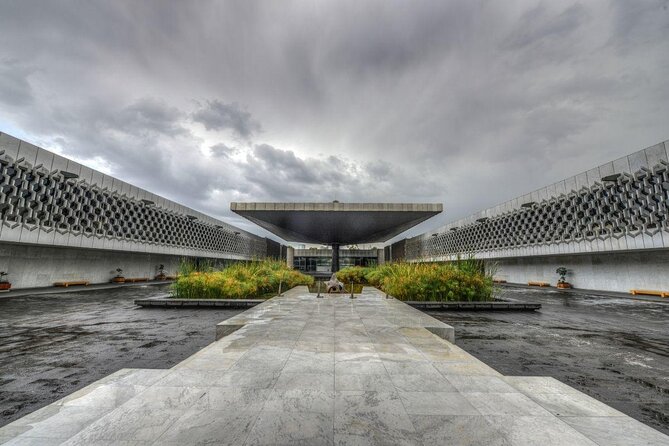
You begin at the Museo Nacional de Antropología on Paseo de la Reforma, in Chapultepec. The activity starts and ends at the museum, so you do not spend your paid tour time crossing Mexico City in a van.
That simple arrangement is useful. Mexico City traffic can eat up a morning, and the museum is near public transportation. You can make your own way there, meet the guide, and use the full visit for the collections. The meeting address is Av. Paseo de la Reforma s/n, Polanco, Bosque de Chapultepec I Secc.
The museum covers two spacious floors. The lower level focuses on ancient Mexican cultures, while the upper level presents ethnographic material about Indigenous communities in modern Mexico. The exact route can vary, especially on a private visit, but the central purpose remains the same: connect objects with the people, beliefs, and societies that made them.
Three hours will not let you study every room. That is not a weakness. A museum this large can easily become a blur of stone, pottery, jewelry, and labels. A guide helps you choose the pieces that carry the clearest story, then gives you enough context to understand why they matter.
More visits to the Anthropology Museum:
- Chapultepec Castle & Anthropology Museum Tour
★ 4.5 · 1,348 reviews - Anthropology Museum Guided Tour
★ 4.5 · 1,035 reviews - Mexico City: Anthropology Museum Guided Visit
★ 4.4 · 708 reviews
Starting with the Olmec Group of Figures
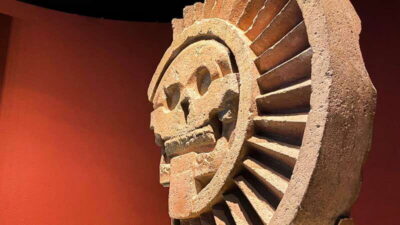
One of the notable displays is the Olmec Group of Figures. This work gives the tour an early anchor, before you move toward the better-known Maya and Aztec material.
The value of seeing it with a guide is the chance to place the art in a wider sequence. You are not just looking at an old sculpture. You are considering how early Mesoamerican cultures represented people, authority, ritual, and community. The guide can also help you compare the work with later traditions in the museum.
This is where the guide’s style matters most. A good explanation will connect the object to the larger development of pre-Hispanic Mexico rather than recite a date and move on. Maida was praised for tailoring the visit closely to the group, while Silvia was described as warm, clear, and strong on Mesoamerican civilization. Those are useful qualities in a museum where context matters more than speed.
If your guide moves quickly, ask to pause here. The Olmec galleries deserve more than a passing glance, particularly if you are interested in how early cultures shaped later art and religious ideas.
Meeting the Aztec Sun Stone
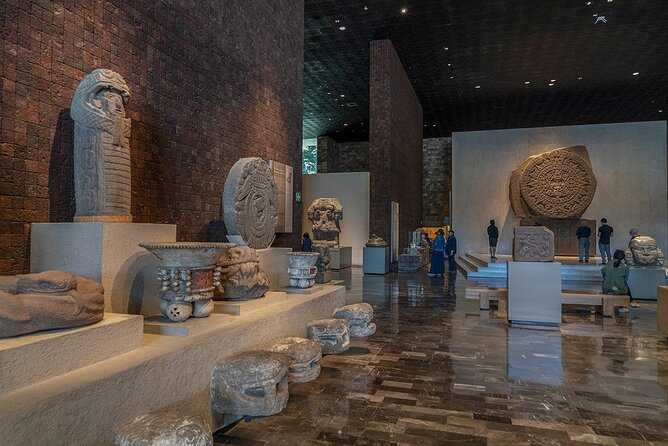
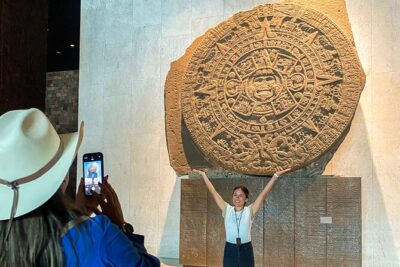
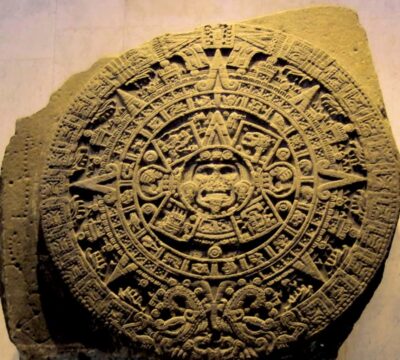
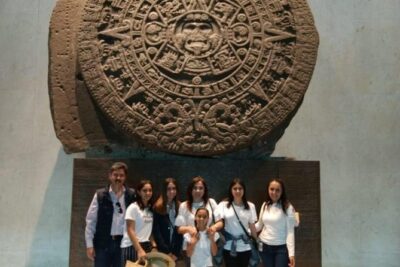
The Aztec Sun Stone is the museum’s great visual stop. At 22 tons, it is impossible to treat as just another object in a case. Its size alone catches you, but the symbols carved into it require explanation.
Your guide can help you read the stone as a statement about Aztec ideas of time and the world. The tour description presents it as a profound representation of world history, and that is the right way to approach it. Do not expect one quick translation to explain every detail. The point is to see how a society put its ideas about creation, cycles, danger, and order into a single immense work.
This is also a good moment to ask questions. The Sun Stone is famous enough that many people arrive with half-remembered facts. A guide can sort out what you are seeing and relate it to the other Aztec objects around it.
The museum’s scale gives this stop extra force. After smaller artifacts and human remains, the Sun Stone changes your sense of proportion. It reminds you that the cultures represented here were not simple or isolated. They built cities, organized power, developed belief systems, and produced art on a huge scale.
Maya and Aztec culture in one visit
Several positive tour experiences centered on learning about Maya and Aztec culture. That makes this visit a strong choice if you want a broad introduction rather than a narrow study of one civilization.
You will see how the museum brings different periods and cultures together. The guide may explain religious beliefs, artistic forms, and the meaning of objects as you move through the rooms. Clara, for example, was praised for taking visitors to the best areas and explaining the religious ideas behind the artifacts. Diana was noted for making the story of Mexico easier to follow from the Maya period through the colonial era and post-Revolution period.
That broader frame can help you understand Mexico City beyond the museum. The capital is full of layers, and the museum gives you a base for recognizing the long Indigenous story beneath later Spanish and modern influences.
Still, keep your expectations realistic. The tour is listed as an Anthropology Museum visit, not a full city history course. A guide may touch on the colonial and post-Revolution periods to explain the country’s larger story, but most of your time remains inside the pre-Hispanic collections and ethnographic galleries.
More museums and galleries in Mexico City:
- CDMX: Xochimilco, Coyoacan, Frida Kahlo Museum & Murals Tour
★ 4.4 · 3,025 reviews - Frida Kahlo VIP [Museum Tickets Included] Bike, Markets & Churros
★ 5.0 · 1,072 reviews - Frida Kahlo VIP [Museum Tickets Included] Walk, Markets & Churros
★ 5.0 · 982 reviews - EXCLUSIVE TOUR Frida Kahlo Museum – SMALL GROUPS
★ 5.0 · 901 reviews
Ancient human remains and the museum’s harder subjects
The displays include ancient human remains. For some people, this adds an important human dimension to the archaeology. You are reminded that these cultures were made by real people, not just by anonymous stoneworkers or names in a textbook.
For others, this section may feel more serious or uncomfortable. You should be prepared for a museum visit that includes death, ritual, and physical evidence from the past. The guide can provide context, but the tone may not suit very young children or anyone looking for a light sightseeing stop.
One family chose a private tour partly so four children would not distract other people. The guide, Ivan, gave an unusually academic explanation, and the adults learned a great deal, but the presentation was not especially child-focused. That is a useful warning. Private does not automatically mean playful or designed for children. If your group includes kids, say so clearly when booking and ask for a family-friendly approach.
The upper floor and living Indigenous communities
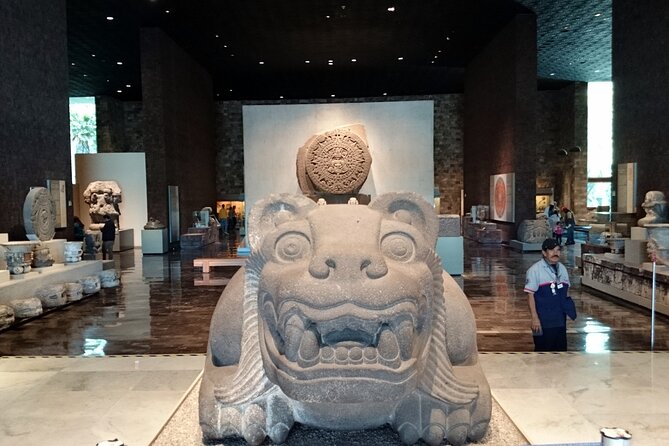
The museum is not only about ancient objects. Its ethnographic exhibits portray contemporary Indigenous communities in Mexico, giving the visit a bridge between the distant past and present-day cultural life.
This upper-floor material matters because it prevents the museum from presenting Indigenous cultures as something that ended before the Spanish arrival. You can use this part of the visit to think about continuity, change, clothing, craft, community life, and identity.
The supplied tour details do not promise a fixed list of upper-floor rooms, so your guide’s choices may shape how much time you spend there. On a private tour, you can ask to give this section more attention. On a small-group visit, the route is not customizable, so the guide will follow the planned focus for the group.
Private visit or small group?
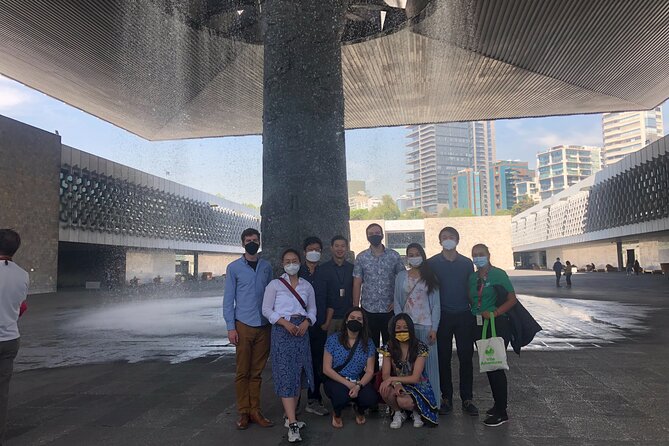
The booking information describes both formats, and the difference is worth checking carefully before paying.
A small-group tour requires at least three participants to confirm and accepts up to 12 people. Its departure time is fixed, and the route is not customizable. If fewer than three people are confirmed, it may be canceled with a full refund two days before the tour.
A private tour is confirmed for one person or more, includes only your group, and has a flexible departure time. You can adjust the time spent in different parts of the museum. You may also request a nearby attraction, market, or restaurant if it fits within the three-hour period and does not require a major route change.
That flexibility is valuable for couples, families, and visitors with a strong interest in one culture. It also gives you a better chance of asking for slower explanations or more time with the Sun Stone and Olmec material.
There are limits. Extending the tour, changing the route, or adding people requires notice at least 48 hours ahead and may cost extra. The small-group option may be cheaper or more social, but you give up control over timing and focus.
One warning comes from an awkward private-tour cancellation. A guide failed to arrive because of confusion within the organizing team, and the group received a refund but lost the museum visit that day. The company acknowledged the error. This appears to be an isolated service failure, but it shows why you should keep your phone available and confirm the meeting details before leaving for the museum.
Is $50 a fair price?
At $50 per person, the tour includes the guide, museum entrance, and guided visit. You pay separately for transportation, insurance, food, personal purchases, and tips.
For a private visit, that price can be fair if you value a focused explanation and the ability to shape the route. A well-prepared guide can save you from wandering through a huge museum without knowing which objects deserve your attention. It can also make the difference between recognizing the Sun Stone and understanding why it matters.
For a small group, value depends more on the guide and the final group size. With up to 12 people, questions may take longer and the experience may feel less personal. The price also includes a commission from the online sales platform, sometimes up to 30 percent, so do not expect the operator to have much room for last-minute discounts.
The rating is 4.4 from 13 reviews, with several strong reports praising the guides’ explanations and attention. The mixed results mean you should book for the structure and access, not on the assumption that every guide will deliver the same level of detail.
Timing, tickets, and what to bring
The visit lasts about three hours, but there is no fast entrance. Tickets are bought upon arrival, and waiting time can occur. The operator cannot control that delay, so avoid placing a tight lunch reservation or another timed attraction immediately afterward.
The small-group departure time is fixed. A private tour can be adjusted, which is useful if you want to avoid a busy period or coordinate with other plans. One group had its time moved from 10:00 a.m. to 9:00 a.m. because of expected crowds, only to find the museum not crowded. Treat any time change as something to confirm, not as proof that the museum will be packed.
Wear comfortable clothes and shoes. Bring a hat, sunscreen, sunglasses, cash, and a personal ID or copy. Cash is useful because not every merchant in Mexico accepts bank cards. The provider also advises personal travel insurance, including cover for medical emergencies and lost or damaged property.
You must provide a valid phone number with an international prefix, such as +11111111111, and keep it available on the day. The guide may need to contact you at the meeting point. If the guide cannot find or reach you, the tour can be treated as a no-show.
The experience is offered in English, and the guides are bilingual in Spanish and English. Other languages, including French, German, Italian, and Portuguese, may be possible depending on guide availability, but you need to ask before booking.
Who will get the most from this visit?
I would choose this tour if you are visiting the museum for the first time and want a clear route through its major treasures. It is also a good fit if you enjoy religious symbolism, archaeology, art, and the way museums connect objects to larger events.
A private booking makes the most sense for:
- Couples who want to ask many questions
- Families who need a flexible pace
- People with a strong interest in Maya, Olmec, or Aztec culture
- Visitors with limited time in Mexico City
- Anyone who prefers a guide to select the essential rooms
A small group may suit you if you are happy with a fixed schedule and do not need to control the route. It can also work well if you want a lower-cost guided introduction.
I would be cautious about booking it for young children unless you request a suitable guide in advance. The museum includes ancient human remains, and at least one guide used a formal, lecture-style approach. Likewise, if you already know Mesoamerican archaeology well, ask about the guide’s depth before paying. One disappointing visit found that the explanation added little beyond the signs.
Should you book the Anthropology Museum tour?
Book it if you want help making sense of Mexico City’s most important museum and you value stories over a quick photo stop. The best version of this experience gives you a clear path from Olmec art to Maya and Aztec culture, explains the beliefs behind the objects, and makes the Sun Stone more than a giant carved disk.
Choose the private option if you need flexible timing or have a particular interest. Choose the small group only if you accept a fixed route and the possibility of up to 12 people. At $50, the value rests heavily on the guide, so confirm the language, meeting time, and preferred focus before the day arrives.
I would book this for a first visit to the museum, especially with a strong guide such as Clara, Diana, Maida, or Silvia. I would leave extra time afterward, keep the afternoon open, and treat the three-hour tour as an introduction to a museum that deserves a second look.
FAQ
Where does the Anthropology Museum tour begin and end?
The tour begins at the Museo Nacional de Antropología, Av. Paseo de la Reforma s/n, Polanco, Bosque de Chapultepec I Secc, Miguel Hidalgo, Mexico City. It ends back at the meeting point.
How long does the tour last?
The guided museum visit lasts approximately three hours.
Is museum admission included?
Yes. The price includes the museum entrance ticket and guided visit.
Is transportation included?
No. You arrange your own transportation to and from the museum.
Is the tour private or shared?
Both formats are available. A private tour includes only your group. A small-group tour can include up to 12 people and requires at least three participants to confirm.
What languages are available?
The tour is offered in English, and guides are bilingual in English and Spanish. French, German, Italian, or Portuguese may be available depending on the guide, but you must ask in advance.
Can I cancel the tour for a refund?
The experience is normally non-refundable and cannot be changed after booking. If poor weather causes the operator to cancel it, you will be offered another date or a full refund.
Just added around Mexico City
- Mexico City: Hop-on Hop-off City Tour by Turibus 2-Day Pass★ 4.0 · 10 reviews
- Anthropology Museum, Chapultepec Castle & Cable Car Tour★ 4.5 · 10 reviews
- Multi-Variety Mole Class in a Condesa home or art gallery rooftop★ 5.0 · 10 reviews
- PRIVATE TOUR Colonial Town Taxco and Cuernavaca from CDMX.★ 5.0 · 10 reviews
- Teotihuacan and My Grandma’s Food Tour★ 5.0 · 10 reviews
- El Centro Street Food Walking Tour★ 5.0 · 10 reviews
- Private Round-Trip Transportation to Teotihuacan Pyramids★ 5.0 · 10 reviews
- Private Walking Tour Legends and Events Historic Center CDMX★ 4.8 · 10 reviews
Anthropology Museum Tours, compared.
Chapultepec Castle & Anthropology Museum Tour
Read our review →
Anthropology Museum Private Experience Walking Tour
Read our review →
5 Hour Tour through Chapultepec, Anthropology Museum and Castle
Read our review →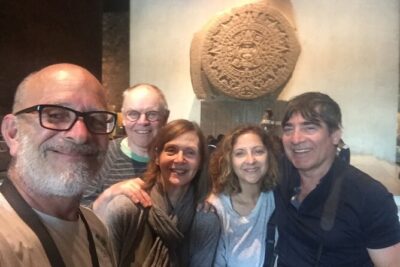
PRIVATE Tour in Chapultepec Castle and Museum of Anthropology
Read our review →
Teotihuacan & Anthropology Museum, Templo Mayor & City Tour
Read our review →Browse the lists this tour appears in