
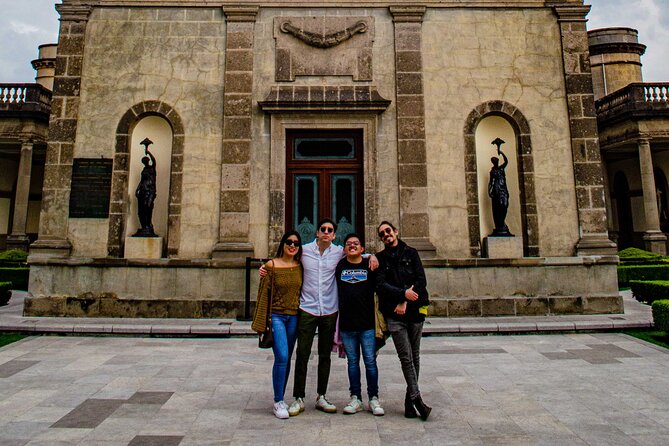
Reviewed · CHAPULTEPEC CASTLE TOURS
EXCLUSIVE TOUR Chapultepec Castle – Small Groups
Chapultepec Castle turns a museum visit into a walk through Mexico’s past. Inside this hilltop palace, you move from the conquest of Tenochtitlan through independence, empire, the presidency of Porfirio Díaz, and the Revolution. The rooms of Maximilian and Carlota, grand murals, and political symbols give the story a human face.
I like the way the English-speaking guides connect art, architecture, and politics instead of handing you a string of dates. I also like the small-group limit of 15, which gives you room to ask questions and hear the explanation without standing in a large tour crowd.
The main catch is the approach. You must walk uphill through Chapultepec Forest, and the route can feel long before the museum even begins. Bring sunscreen, wear firm shoes, and allow extra time to find the meeting point.
In This Review
- Key points at a glance
- Why Chapultepec Castle matters
- The uphill walk through Chapultepec Forest
- Inside the National Museum of History
- The castle rooms of Maximilian and Carlota
- Porfirio Díaz and the presidential era
- Murals, symbols, and Mexico’s public memory
- The assault on Chapultepec Castle
- How the two-hour format works
- Is $65.72 a fair price?
- Choosing a guide and preparing for the visit
- Who should book this Chapultepec Castle tour?
- Should you book it?
- FAQ
- How long does the Chapultepec Castle tour last?
- What language is the tour offered in?
- What does the price include?
- Is transportation included?
- How large is the tour group?
- Is the castle easy to reach on foot?
Key points at a glance
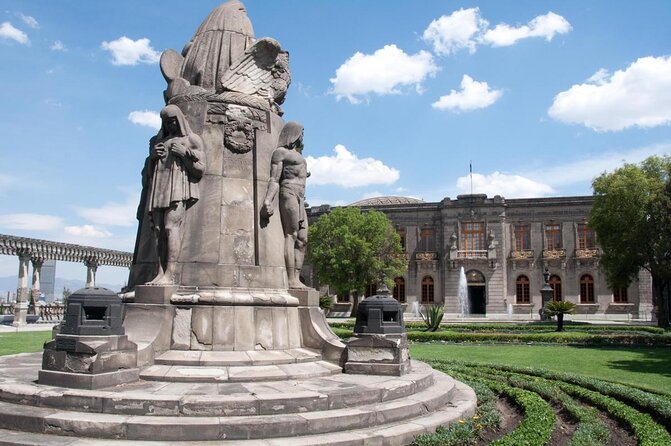
- The walk begins before the museum: Reach the castle through Chapultepec Forest, with an uphill approach that calls for comfortable shoes.
- Two museums in one visit: See 12 permanent galleries tracing Mexico’s national story, plus 22 rooms that recreate the castle’s former interiors.
- Royal and presidential rooms: Visit spaces linked with Maximilian and Carlota, as well as the era of President Porfirio Díaz.
- Murals carry the story: Guides often spend time explaining the castle’s major murals, symbols, and links to Mexican identity.
- Small groups keep it personal: The maximum group size is 15 people, with an in-person English-speaking guide.
- Strong value for a focused visit: At $65.72 per person for about two hours, the tour makes sense if you want context rather than a quick photo stop.
Why Chapultepec Castle matters
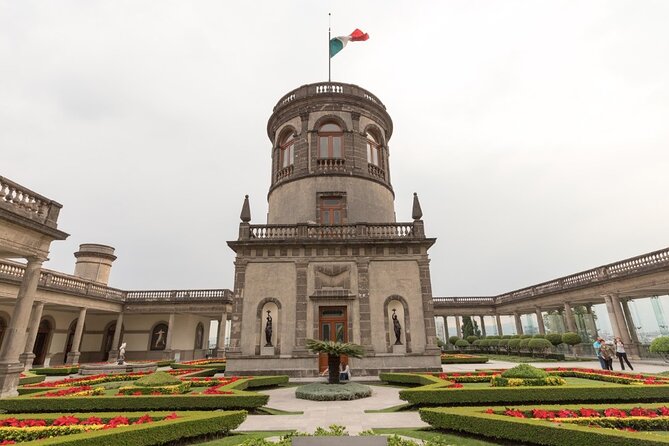
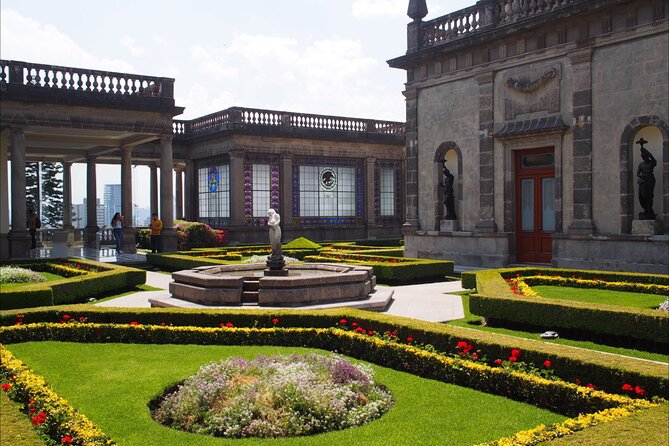
Chapultepec Castle is not simply an attractive building in a city park. It holds the National Museum of History, and its rooms trace several of the defining eras of Mexico. The building itself also changed purpose over time, which makes the visit feel like a tour through both national events and private lives.
You begin with the long story of Mexico, from the conquest of Tenochtitlan onward. The displays then move through the country’s major political and social shifts, ending with the Revolution. You are not only looking at objects in glass cases. You are seeing how power was displayed, how leaders shaped public life, and how artists helped define the country’s image of itself.
That range can be hard to manage on your own. A first-time visitor might notice a striking painting, a grand ceiling, or a ceremonial room without knowing why it matters. A good guide gives each part a place in the larger story. Alex, Daniel, Maite, Cinthya, Roman, Isaac, Rodrigo, and other guides associated with the experience have different areas of strength, but the most useful quality is their ability to connect separate periods and rooms.
More ways to see Chapultepec Castle:
- Chapultepec Castle & Anthropology Museum Tour
★ 4.5 · 1,348 reviews - Mexico City: Chapultepec Castle and Anthropology Museum Tour
★ 4.5 · 637 reviews - 5 Hour Tour through Chapultepec, Anthropology Museum and Castle
★ 5.0 · 239 reviews
The uphill walk through Chapultepec Forest
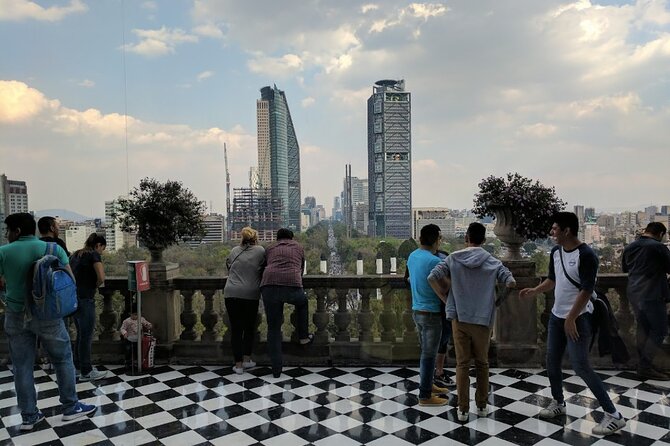
The tour meeting point is at Chapultepec Castle, Av. Heroico Colegio Militar 172, inside the first section of Bosque de Chapultepec in Miguel Hidalgo. The castle sits above the park, so reaching it involves a walk up the hill. The route is part of the setting, but it is also the clearest physical demand of the experience.
Give yourself extra time. Roads in the area can occasionally close, and the forest path is longer than a simple sidewalk stroll. The walk may be manageable for most people with moderate fitness, but you should not treat this as a fully effortless museum visit.
I would arrive prepared with:
- Comfortable walking shoes with good grip
- Sunscreen
- Water for the approach
- A phone ready for WhatsApp or SMS contact with your guide
The guides can explain the site as you walk, and several accounts describe a relaxed pace with pauses when needed. That matters if someone in your group is tired or not feeling well. Still, you should plan around the hill rather than assume the guide can remove the physical challenge.
The forest also helps set the mood. You leave the city streets behind and approach a building with military, royal, and presidential associations. By the time you reach the entrance, the castle feels connected to the park and the hill, not dropped into the city as an isolated monument.
Inside the National Museum of History
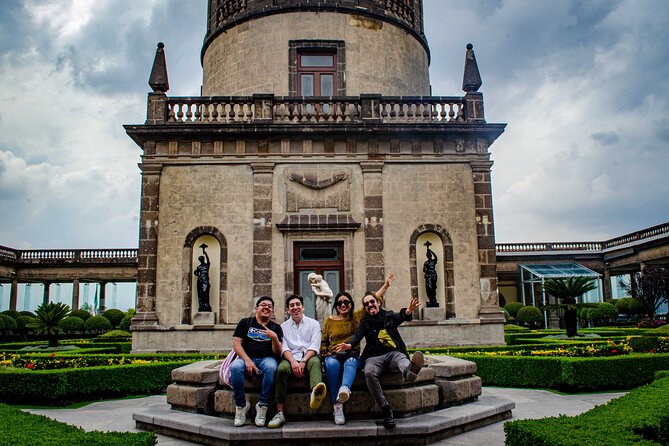
The museum includes 12 permanent exhibition halls devoted to Mexico’s historical trajectory. In practical terms, that gives you a broad introduction to the country, but two hours is not enough for every label and display. The guide’s job is to select the most useful pieces and explain how they fit together.
Expect attention to the major turning points: the conquest of Tenochtitlan, later struggles over national identity and government, the brief empire of Maximilian, the long rule of Porfirio Díaz, and the Revolution. The visit can also touch on national symbols, including the eagle on the nopal devouring the snake, a familiar image whose meaning becomes more memorable when explained in context.
The strongest part of a guided museum visit is often the connection between objects. One artifact may tell you about a leader, while a mural shows how later generations wanted that leader or event remembered. A room may reveal wealth and status, while a political scene elsewhere shows the conflict surrounding that power.
Alex has been praised for explaining the large murals and the stories behind them. Isaac has also been singled out for using the artworks, spaces, and murals to build a timeline. That approach is especially helpful if you usually find museums difficult to follow. Instead of treating every gallery as a separate stop, you get a narrative thread.
The castle rooms of Maximilian and Carlota
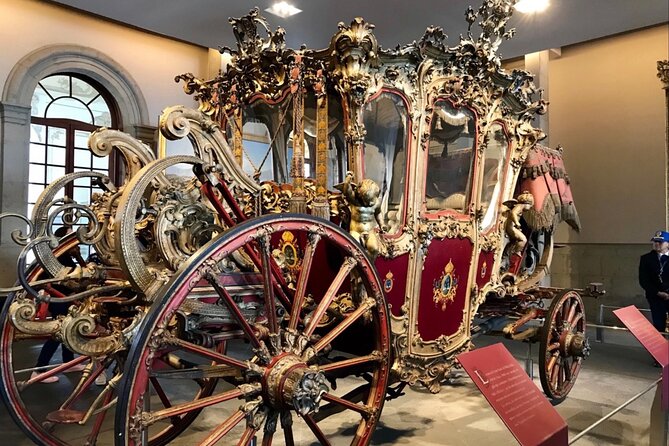
The castle’s recreated chambers are the part most likely to appeal to people who enjoy architecture, interiors, and personal stories. Among the 22 rooms are spaces associated with Maximilian and Carlota, figures tied to Mexico’s Second Empire. Their rooms let you see how royal life was presented inside a building that later became a national museum.
The value here is not just decoration. The furnishings and room layouts help explain how power was staged. You can look at a formal interior and consider who used it, what impression it was meant to create, and how that image fit into a contested period of Mexican history.
Guides often make this section more engaging by discussing the relationship between Carlota and Maximilian, rather than treating them as names on a plaque. Cinthya has been praised for giving attention to historically important women and for explaining the people who once lived in the castle. That added focus can correct the usual habit of telling political history only through male leaders.
You should expect the guide to balance personal stories with national events. The castle works best when those two strands meet. Private rooms show the daily side of authority, while the wider galleries explain the forces that shaped the country around it.
A completely different day out, same corner of Mexico City:
- Teotihuacan, Guadalupe Shrine & Tlatelolco Day Tour with Lunch
★ 5.0 · 11,603 reviews - Xochimilco, Coyoacan and Frida Kahlo with Optional Lunch
★ 4.5 · 7,320 reviews - Balloon flight + Breakfast in cave + Pyramids + Pick up CDMX.
★ 5.0 · 6,335 reviews - Teotihuacan pyramids morning or afternoon without tourist traps
★ 5.0 · 6,186 reviews
Porfirio Díaz and the presidential era
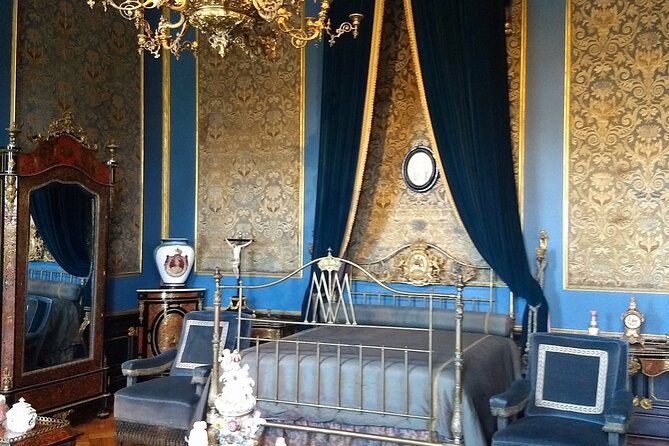
Other reconstructed rooms relate to President Porfirio Díaz. These interiors show another phase in the building’s life and provide a useful contrast with the rooms associated with Maximilian and Carlota.
The tour can use the castle to explain how its occupants changed and how Mexico’s political culture shifted. Details of architecture and design are not random decoration. They can signal wealth, taste, authority, and the public image a ruler wanted to project.
Roman is especially well regarded for linking those details to wider questions about art, politics, architecture, and personalities. That style suits you if you want more than a basic list of dates. He has been described as explaining why design choices were made, what symbols communicated, and how people in power influenced the space.
A guide will not give every historical argument in two hours, and that is a fair limitation. The tour is best seen as a strong introduction. It gives you a framework, then leaves you with enough questions to explore later if the subject catches your interest.
Murals, symbols, and Mexico’s public memory
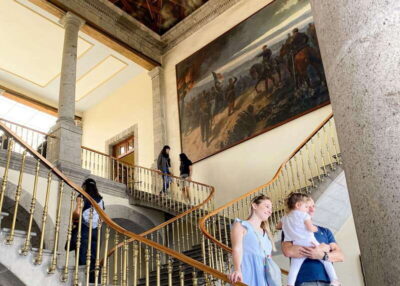
The murals are among the most important reasons to take a guide. Their scale and color may catch your eye immediately, but their meaning is not always obvious. The strongest explanations tie the images to Mexican identity, political change, and the way artists interpreted national events.
You can expect attention to particular figures, symbols, and scenes rather than a quick glance followed by a photograph. Alex has been praised for describing the major murals in an accessible way, while other guides use the artwork to connect different periods of the museum.
This is also where the tour becomes more than a royal-house visit. The castle contains elegant rooms, but the murals bring the country’s broader story into those rooms. They help you understand why this site is a national museum, not just a former residence.
I especially like the chance to ask questions here. Small groups matter most around art. In a group capped at 15 people, you have a better chance of hearing the guide clearly and pausing for an explanation without holding up a large crowd.
The assault on Chapultepec Castle
One of the castle’s rooms commemorates the assault on Chapultepec Castle. This section adds a military and emotional dimension to the visit. It reminds you that the site was not only a residence or a setting for official ceremony. It also played a role in conflict.
The guide can place the event within the larger national story and explain why the castle has such symbolic weight. A self-guided visit may show you the memorial and its surrounding displays, but the context is what makes the room matter.
This part may be more serious than the palace interiors, and that contrast is useful. You move from private rooms and grand art to a reminder of sacrifice, defense, and the cost of political struggle. It keeps the tour from becoming a parade of beautiful rooms without consequences.
How the two-hour format works
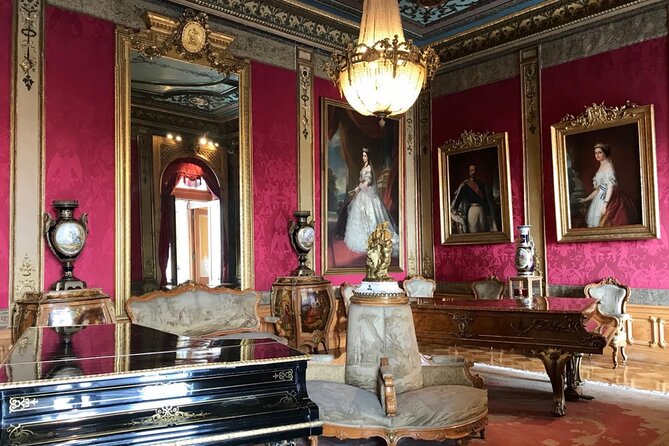
The advertised duration is about two hours. That is a sensible length for a focused introduction, but you should set your expectations correctly. You will see important galleries and rooms, yet you will not study every object or read every caption at leisure.
Guides may divide their time between the permanent museum galleries and the castle rooms. One account describes splitting the visit between both areas, which is a good way to use the limited time. If you want the full museum experience in detail, plan to return on your own, if permitted by your schedule and admission conditions.
The group maximum is 15 people. That is not a private tour, but it is small enough to support questions and a more direct exchange with the guide. Several guides are praised for patience, clear pacing, and staying on topic while answering questions.
The English-language format makes the visit useful for people who do not read Spanish comfortably. You still need to follow the meeting instructions closely and respond to your guide by WhatsApp or SMS. Your guide provides museum access, so communication before the tour matters.
Is $65.72 a fair price?
At $65.72 per person, this is not the cheapest way to enter Chapultepec Castle. The price includes an in-person guide, museum access, and the permanent exhibitions. Private transportation is not included, and neither are attractions outside the castle.
The value depends on how you like to visit museums. If you are content to walk through, take photos, and read at your own speed, admission without a guide may suit you better. If you want the murals, rooms, symbols, and political periods explained in English, the extra cost buys structure and interpretation.
I see the price as reasonable for a first visit, especially if you have only a short time in Mexico City. A strong guide can prevent the castle from becoming a sequence of attractive rooms with disconnected facts. The experience also saves you the work of building your own route through the 12 history halls and 22 recreated rooms.
The value is less clear if you already know Mexican history well or prefer long, independent museum visits. Two hours will feel brief if your aim is detailed study. You are paying for focus, access, and a human explanation, not an entire day inside the museum.
Choosing a guide and preparing for the visit
The experience is offered in English, with guides assigned by the operator. Names appearing in the guide feedback include Alex, Daniel, Maite, Cinthya, Roman, Isaac, Rodrigo, and Leonora. Their strengths vary: Alex is noted for murals, Cinthya for personal stories and significant women, Roman for connecting architecture and politics, and Isaac for building a clear timeline through art and space.
You may not be able to select a particular guide, so book for the format and subject rather than one individual. The consistent pattern is a guide-led visit that values explanation, questions, and historical context.
Bring only what you need. Selfie sticks may need to be checked before entering the castle, though one person was able to collect theirs after the visit. Follow the museum’s instructions on the day.
Service animals are allowed, and the meeting point is near public transportation. The tour ends back at the starting point. Private transportation is not supplied, so getting to Chapultepec Castle and allowing for the uphill walk are your responsibility.
The cancellation rule is straightforward: cancel at least 24 hours before the start time for a full refund. Changes or cancellations within 24 hours are not refunded.
Who should book this Chapultepec Castle tour?
I would choose this tour for a first visit to Mexico City, especially if you want a clear introduction to Mexican history without spending a full day in a museum. Families can benefit from the stories and shorter structure, and solo visitors gain an easy way to ask questions and get oriented.
It also suits people who care about murals, interiors, and the connection between art and politics. The guides do more than point out famous rooms. They explain why the spaces, symbols, and people matter.
You should think twice if you have trouble with uphill walking or do not want to spend time in a large park before reaching the entrance. The forest route is long, and the tour calls for moderate physical fitness. You should also reconsider it if you want private transportation or a completely private guide.
Should you book it?
Book this experience if you want Chapultepec Castle to make sense, not just look beautiful in your photos. The strongest reasons are the English explanations, small group size, attention to murals and royal rooms, and the way the guides link the castle to Mexico’s wider political story.
Skip it if you prefer to explore slowly on your own, already know the subject well, or want transportation included. For most first-time visitors who can manage the uphill approach, $65.72 is a fair price for a focused, well-structured two-hour visit.
FAQ
How long does the Chapultepec Castle tour last?
The tour lasts approximately two hours.
What language is the tour offered in?
The experience is offered in English.
What does the price include?
The $65.72 price includes an in-person guide, museum access, and the permanent exhibitions.
Is transportation included?
No. Private transportation is not included. You must make your own way to the meeting point at Chapultepec Castle.
How large is the tour group?
The maximum group size is 15 people.
Is the castle easy to reach on foot?
The route through Chapultepec Forest includes a long uphill walk. Comfortable shoes and sunscreen are recommended, and you should allow extra time to reach the castle.
Just added around Mexico City
- Mexico City: Hop-on Hop-off City Tour by Turibus 2-Day Pass★ 4.0 · 10 reviews
- Anthropology Museum, Chapultepec Castle & Cable Car Tour★ 4.5 · 10 reviews
- Multi-Variety Mole Class in a Condesa home or art gallery rooftop★ 5.0 · 10 reviews
- PRIVATE TOUR Colonial Town Taxco and Cuernavaca from CDMX.★ 5.0 · 10 reviews
- El Centro Street Food Walking Tour★ 5.0 · 10 reviews
- Private Round-Trip Transportation to Teotihuacan Pyramids★ 5.0 · 10 reviews
- Teotihuacan and My Grandma’s Food Tour★ 5.0 · 10 reviews
- Teotihuacan Pyramids Tour from Mexico City★ 5.0 · 10 reviews
Chapultepec Castle Tours, compared.
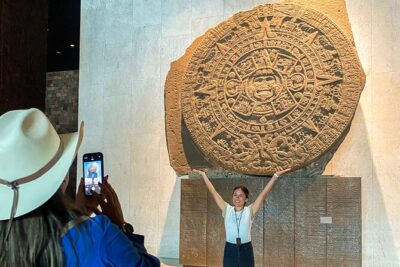
Chapultepec Castle & Anthropology Museum Tour
Read our review →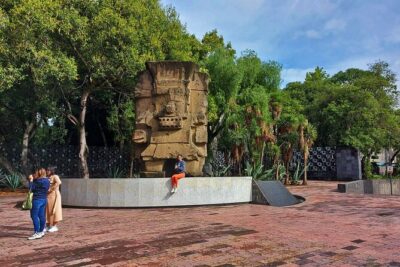
5 Hour Tour through Chapultepec, Anthropology Museum and Castle
Read our review →
PRIVATE Tour in Chapultepec Castle and Museum of Anthropology
Read our review →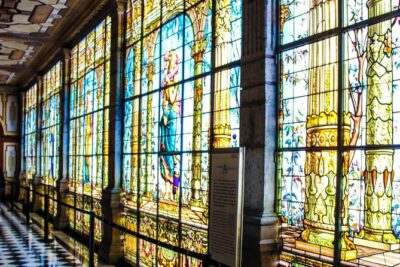

Private Walking Tour Anthropology Museum & Chapultepec Castle
Read our review →
Explore Chapultepec & Mexico City sights by Bike
Read our review →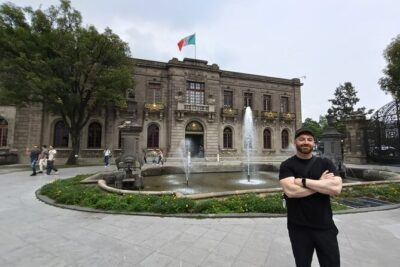
Browse the lists this tour appears in