
Reviewed · ANTHROPOLOGY MUSEUM TOURS
Mexico City: Chapultepec Castle and Anthropology Museum Tour
Chapultepec Castle sits high above Mexico City, but its story reaches far beyond its fine rooms and grand views. You’ll stand in the former home of Maximilian I of Habsburg, then trace Mexico’s older civilizations at the National Museum of Anthropology, where a guide helps turn a huge collection into a manageable story.
I like the way this tour links pre-Hispanic Mexico with the country’s later imperial and national chapters. I also like the bilingual format and the chance to ask questions as you go, especially since some museum labels are not translated into English. The main drawback is the pace: five hours is enough for highlights, not a full look at either museum, and the day includes a fair amount of walking.
In This Review
- Key points to know before you book
- Why these two Mexico City sights work well together
- Starting inside the National Museum of Anthropology
- What you can realistically see in 100 minutes
- The coffee break on Avenida Grutas
- Walking through Chapultepec Park
- Entering Chapultepec Castle and the Maximilian story
- Guide quality and the value of a bilingual tour
- Price, timing, and what the five hours buy you
- Practical advice for a smoother day
- Who should book this tour
- Should you book it?
- FAQ
- How long does the tour last?
- What sites are included?
- Which museum do you visit first?
- Is a guide included?
- Is the tour private?
- How much does the tour cost?
- How much walking is involved?
- Is there a break during the tour?
- What happens if Chapultepec Castle closes because of rain?
- Can I cancel the booking?
Key points to know before you book
- The Anthropology Museum comes first: Begin with about 100 minutes focused on selected rooms and major Mesoamerican cultures.
- Chapultepec Castle requires an uphill walk: The route through the park includes roughly 25 minutes on foot before the castle visit.
- Guides make a major difference: Guides such as Leonardo, Alex, Lili, Antonio, Gio, Alicia, and Jacqueline have been praised for clear explanations, good pacing, and strong command of Mexican history.
- The tour connects two eras: You move from Maya, Toltec, Aztec, and other pre-Hispanic cultures to Mexico’s imperial and modern national story.
- Plan for a long active morning or afternoon: The scheduled program includes walking, standing, stairs, museum galleries, and a hill climb.
- Rain can change the plan: Chapultepec Castle may close for security reasons on rainy days, with a partial refund provided if that happens.
Why these two Mexico City sights work well together
Many Mexico City sightseeing days feel like a pile of unrelated stops. This one has a clear thread. At the Anthropology Museum, you look at the cultures that shaped Mexico before Spanish rule. At the castle, you see later chapters involving conquest, empire, independence, and national identity.
That connection matters. A guide can point out how Mexico’s past was presented, remembered, and sometimes reshaped over time. You are not simply moving from one impressive building to another. You are building a basic timeline for the country.
I would put this tour early in your Mexico City visit. The museum gives you a useful foundation for seeing other sites across the city, and the castle adds a strong visual sense of Mexico’s political past. You will not learn everything in five hours, but you will leave with a better framework for understanding what you see later.
More visits to the Anthropology Museum:
- Chapultepec Castle & Anthropology Museum Tour
★ 4.5 · 1,348 reviews - Anthropology Museum Guided Tour
★ 4.5 · 1,035 reviews - Mexico City: Anthropology Museum Guided Visit
★ 4.4 · 708 reviews
Starting inside the National Museum of Anthropology
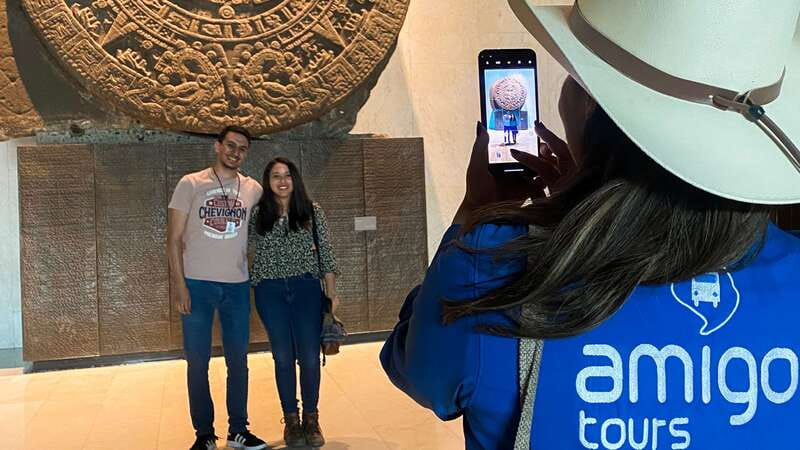
The visit begins at the Museo Nacional de Antropología. This is an enormous museum, and that size is both its strength and its biggest challenge. A full visit could easily take much longer than the scheduled 100 minutes, so your guide has to make choices.
Expect a focused route through selected rooms rather than a march through every gallery. The subject matter includes the Maya, Toltec, Aztec, and other ethnic groups across the pre-Hispanic era. The goal is not to inspect every object. It is to understand the main cultures, their beliefs, their art, and their place in Mexican history.
This is where a guide earns the admission price. Some plaques are not available in English, and the objects often need more context than a short label can offer. A good explanation can tell you why a sculpture matters, what kind of society produced it, and how it fits into the larger story.
Guides named Alex, Lili, Gio, Antonio, Nadia, Roberto, and Francisco have been praised for making the museum easier to navigate and for concentrating on major themes. Names are not guaranteed, but the strongest part of the experience is clearly the personal explanation. If you get a guide who invites questions, use that chance. This is not a silent audio tour.
What you can realistically see in 100 minutes
The Anthropology Museum is too large to cover properly in one short visit. Even with a quick pace, you will see only a portion of the displays. That is not a flaw in the museum, but it is an important limit to understand before booking.
The tour works best if you want an introduction rather than a specialist visit. You can expect your guide to steer you toward important objects and cultural sections, with the route shaped by time and group interest. If you care most about Aztec and Maya material, say so early. One guide was specifically praised for connecting related displays so the visit felt less scattered.
The amount of information can also feel heavy. You are absorbing dates, names, symbols, and cultural details while standing in a large public museum. Guides such as Alex, Hector, and Roberto have been praised for keeping the material clear and for answering questions without losing the schedule.
I suggest treating the museum portion as a well-chosen introduction. If it catches your interest, return later with your ticket and spend more time on your own if the ticket terms for your booking allow it. One visitor specifically noted being able to return to the museum after the castle, but confirm this detail when booking because options can vary.
The coffee break on Avenida Grutas
After the museum, the route includes about ten minutes on foot and a 20-minute break near Avenida Grutas. This is a modest pause, but it comes at the right point. You have just spent time indoors, standing and listening, and you still have the park walk and castle hill ahead.
The break is listed for coffee, but you may also find juice and simple snacks in the area. Mango, churros, and elote were singled out as good choices by one participant. I would use this stop to drink something, visit the restroom if available, and get ready for the second half.
Do not expect a full restaurant meal here. The overall program is tight, and lunch is described as a break between the castle and museum portions rather than a long sit-down meal. Since the exact order and meeting details can vary by option, eat a solid breakfast and carry the essentials allowed by the venues.
More ways to see Chapultepec Castle:
- 5 Hour Tour through Chapultepec, Anthropology Museum and Castle
★ 5.0 · 239 reviews - PRIVATE Tour in Chapultepec Castle and Museum of Anthropology
★ 5.0 · 144 reviews - PRIVATE Tour Chapultepec Castle
★ 5.0 · 130 reviews - Mexico City: Chapultepec Castle Skip-the-Line Ticket
★ 3.8 · 122 reviews
Walking through Chapultepec Park
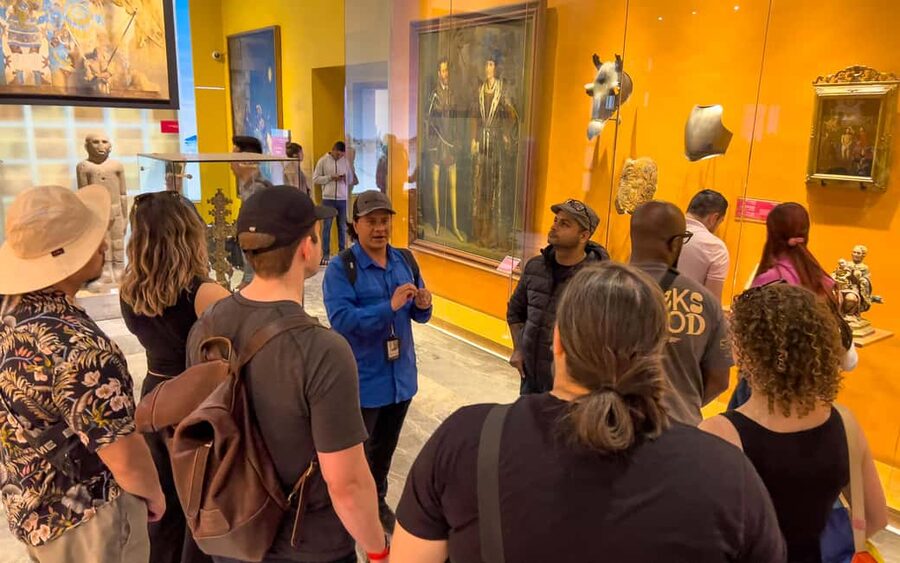
The next section takes you through Chapultepec Park. The planned sightseeing walk lasts about 20 minutes, followed by roughly 25 minutes on foot to Chapultepec Castle. This is one of the more pleasant parts of the route because you get a change of setting between two indoor attractions.
It is also where you should pay attention to your footwear. The castle sits on Chapultepec Hill, and the approach involves an uphill trek. Several people found the climb manageable because their guide slowed the pace and continued explaining the history along the way, but the route still requires effort.
The park walk is not merely a transfer. Chapultepec Hill was once sacred to the Aztecs, so the setting gives the castle visit an older historical layer. You are walking through a place tied to Mexico’s pre-Hispanic past before entering a building associated with empire and national power.
The schedule does not provide many long rest periods. One person recommended adding another 20-minute break for sitting and restroom use, and another described the full outing as tiring despite enjoying it. If you have children, older family members, or anyone recovering from illness, plan your pace carefully and tell the guide if you need to stop.
Entering Chapultepec Castle and the Maximilian story
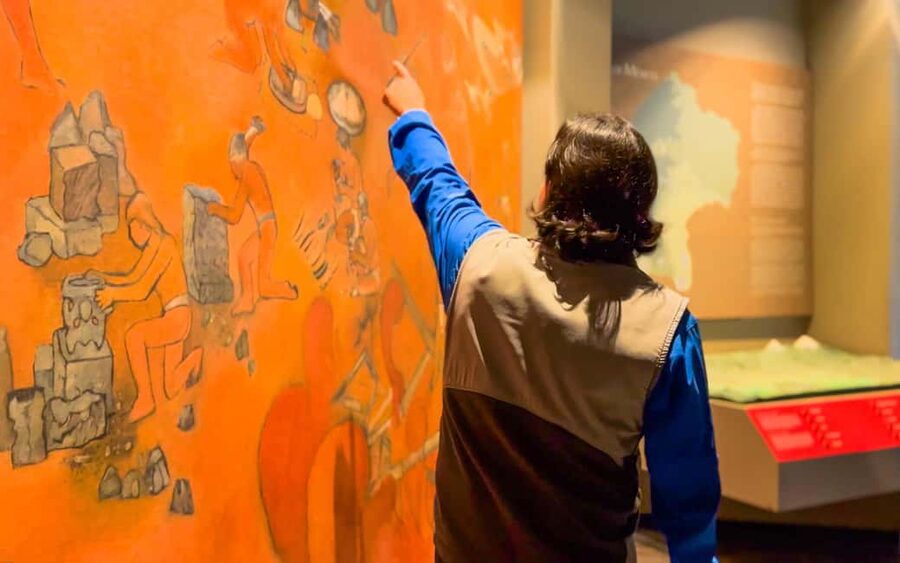
Chapultepec Castle, also known as the National Museum of History, is the visual centerpiece of the tour. It occupies the hilltop and offers a very different experience from the Anthropology Museum.
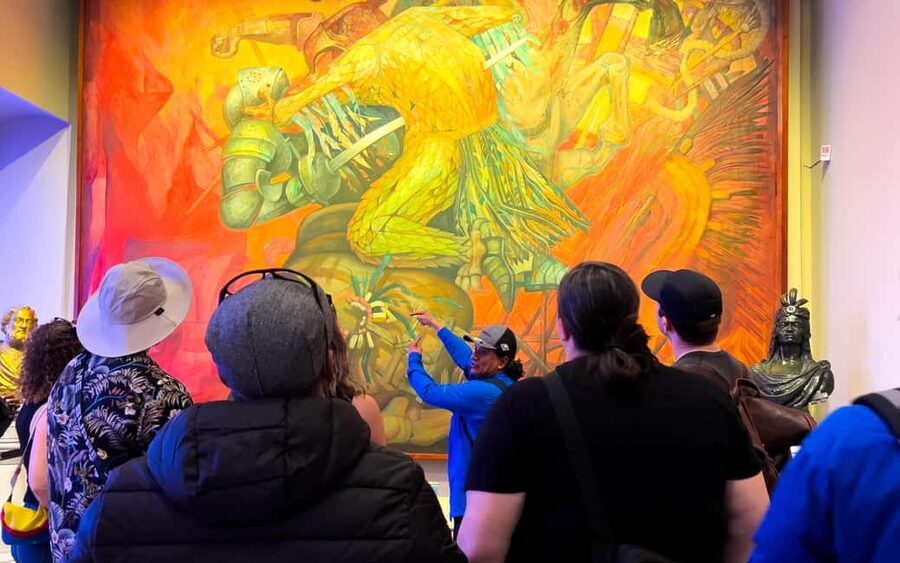
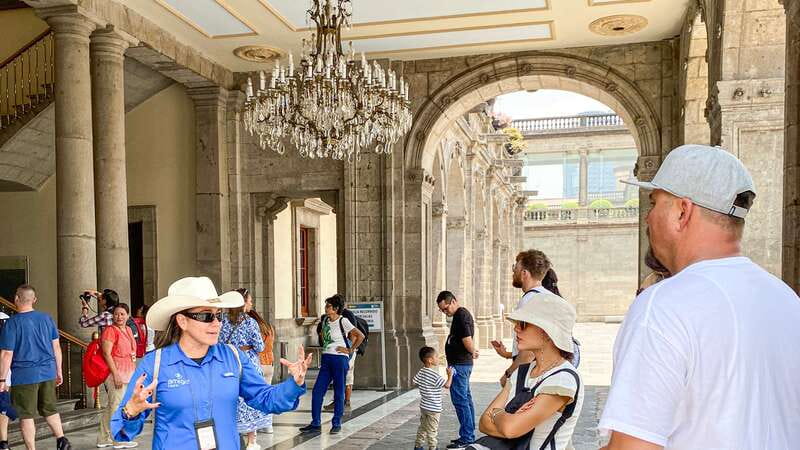
Inside, you will see rooms with classical European ornament, bright halls, marble stairways, sculptures, and busts of historical figures. The building’s style reflects Mexico’s links with Europe and the country’s complicated political history. The rooms connected with Maximilian I of Habsburg help explain the short-lived Mexican Empire and the role of a European monarch in Mexico.
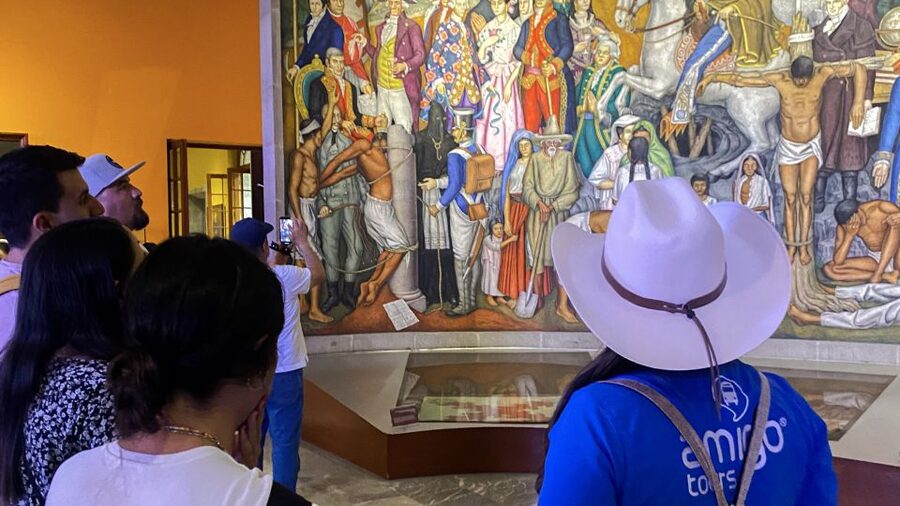
The castle is not just a royal residence frozen in time. It also presents Mexico’s changing national story. Along the route, you may see references to figures such as Emperor Cuauhtémoc and Hernán Cortés, whose presence together points to the tension between Indigenous Mexico, Spanish conquest, and later national memory.
Several details repeatedly draw attention: the stained-glass windows, large murals, sculptures, and views over Mexico City. The hilltop position gives you several city perspectives, and the building itself supplies a strong contrast to the archaeological displays from the first half of the tour.
Allow yourself a little mental room here. The Anthropology Museum can feel dense because it covers so much ground. The castle is easier to absorb visually, but the guide’s explanations help connect its rooms, political figures, and works of art to the larger story.
Guide quality and the value of a bilingual tour
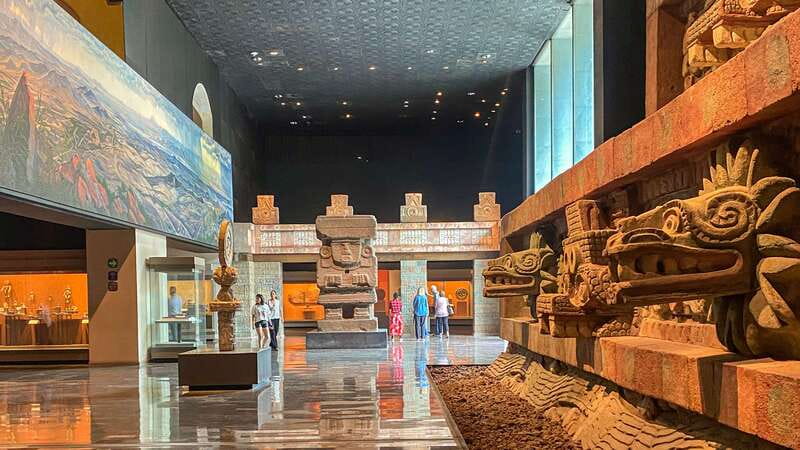
The guide is the key variable in this experience. The strongest guides are described as warm, energetic, patient, and able to explain complicated material in plain language. Leonardo was praised for his clear directions and passion for Mexico. Alex was noted for answering difficult questions and keeping the day on schedule. Lili, Gio, Antonio, Alicia, and Jacqueline were also praised for strong explanations and a friendly manner.
A guide can also help with practical matters. Some have handled tickets, kept groups together, provided individual headsets, and taken photos. That is useful at busy museums, where it is easy to lose the thread of a talk or drift away from your group.
The bilingual setup is helpful if you want English explanations while visiting Mexico City’s Spanish-language cultural institutions. You can also ask questions in Spanish or English, depending on your comfort and the guide assigned to you.
The experience is not identical with every guide. One person felt the guide was stronger at the Anthropology Museum than at the castle. Another found the guide a little impatient, while a separate participant felt uncomfortable when children needed attention. These are small but useful reminders that guide style varies. The tour provider offers private groups, which may be the better choice if you want a slower pace, have children, or prefer to shape the emphasis.
Price, timing, and what the five hours buy you

At $47 per person, the tour is reasonably priced if you want both admission tickets and a guide who helps you use your limited time well. Buying entry alone may cost less, but that does not solve the scale problem at the Anthropology Museum or the lack of English translation on some displays.
You are paying for structure as much as access. The guide chooses highlights, explains the objects, manages the route, and links two major institutions. For a first visit to Mexico City, that can be a good trade.
The price is less attractive if you prefer long, unhurried museum visits. Five hours sounds generous, but it includes walking between sites, a coffee break, and the uphill route to the castle. You will not have time to study every room or linger over each display.
The tour can be booked with free cancellation up to 24 hours in advance, and a reserve-now, pay-later option is available. Starting times depend on availability, and the meeting point may change according to the option you choose. Check those details carefully before you set up the rest of your day.
Practical advice for a smoother day
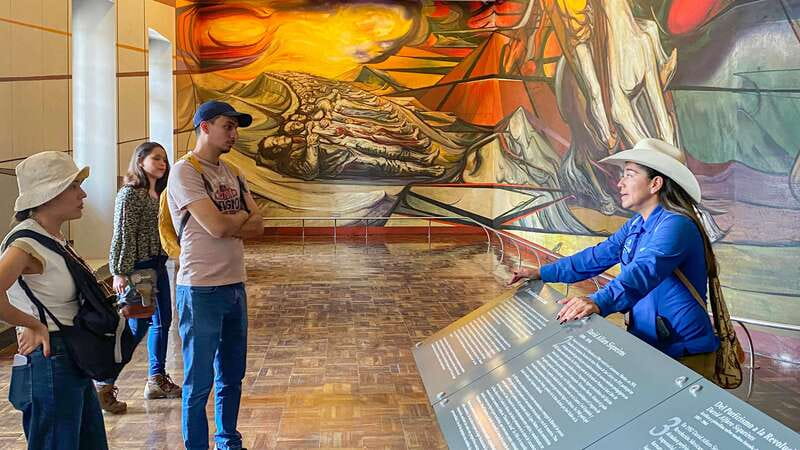
Wear comfortable shoes. This is not a tour for spending five hours in one easy gallery. You will walk through a large museum, cross part of the park, climb toward the castle, and spend more time on your feet indoors.
Eat before you start. The coffee and snack break is useful, but it is not a substitute for a proper meal. The route is active enough that a good breakfast will improve the second half.
Bring questions. The best moments come when the guide connects an object to a bigger idea or explains a figure you do not recognize. If you have a special interest in the Aztecs, Maya, Toltecs, Maximilian, or Mexican political history, mention it at the start.
Keep your schedule flexible. The tour ends at Chapultepec Castle, not back at the museum. Do not book a tight appointment immediately afterward, especially if you want time for the castle gardens or need to cross the city.
Rain is a real consideration. For security reasons, Chapultepec Castle may close without advance notice on rainy days. If that happens, a partial refund is provided, but the day will not be the full two-site experience.
Who should book this tour
I would recommend it to first-time visitors who want a clear introduction to Mexico City’s cultural history without spending hours planning a museum route. It also suits you if English-language context matters, if you want to ask questions, or if large museums tend to overwhelm you.
Families can enjoy it, but the walking and standing deserve attention. A private option may work better if your group includes children or anyone who needs frequent pauses.
I would choose a different plan if you are a museum specialist who wants to examine every room slowly. In that case, visit the Anthropology Museum separately and give it a full day, then see Chapultepec Castle at your own pace.
Should you book it?
Book this tour if you want the highlights, clear historical connections, and the convenience of admission and guiding handled together. The best guides turn a huge museum into a sensible route and make the castle’s European interiors and Mexican political story easier to understand.
Skip it if you dislike fixed pacing or want to spend most of the day in one museum. For $47, the value is strongest when you see the guide as the main purchase, not just the tickets. Start early in your Mexico City stay, wear good shoes, and leave room afterward to return to the museum or explore more of Chapultepec.
FAQ
How long does the tour last?
The tour lasts five hours.
What sites are included?
The tour includes the National Museum of Anthropology and Chapultepec Castle, also known as the National Museum of History.
Which museum do you visit first?
The scheduled route begins at the National Museum of Anthropology and finishes at Chapultepec Castle.
Is a guide included?
Yes. A live guide is included, with tours offered in English or Spanish.
Is the tour private?
A private group option is available, but the exact group format depends on the option you book.
How much does the tour cost?
The listed price is $47 per person.
How much walking is involved?
The plan includes about ten minutes walking after the museum, a 20-minute walk through Chapultepec Park, and about 25 minutes walking toward the castle. The approach to the castle is uphill.
Is there a break during the tour?
Yes. The schedule includes a 20-minute break near Avenida Grutas for coffee or snacks.
What happens if Chapultepec Castle closes because of rain?
The castle may close without advance notice for security reasons. If it closes, a partial refund is provided.
Can I cancel the booking?
You can cancel up to 24 hours in advance for a full refund. A reserve-now, pay-later option is also available.
More Museums and Galleries in Mexico City
- CDMX: Xochimilco, Coyoacan, Frida Kahlo Museum & Murals Tour
★ 4.4 · 3,025 reviews - Frida Kahlo VIP [Museum Tickets Included] Bike, Markets & Churros
★ 5.0 · 1,072 reviews - Frida Kahlo VIP [Museum Tickets Included] Walk, Markets & Churros
★ 5.0 · 982 reviews - EXCLUSIVE TOUR Frida Kahlo Museum – SMALL GROUPS
★ 5.0 · 901 reviews
Just added around Mexico City
- Mexico City: Hop-on Hop-off City Tour by Turibus 2-Day Pass★ 4.0 · 10 reviews
- Anthropology Museum, Chapultepec Castle & Cable Car Tour★ 4.5 · 10 reviews
- Multi-Variety Mole Class in a Condesa home or art gallery rooftop★ 5.0 · 10 reviews
- PRIVATE TOUR Colonial Town Taxco and Cuernavaca from CDMX.★ 5.0 · 10 reviews
- El Centro Street Food Walking Tour★ 5.0 · 10 reviews
- Private Round-Trip Transportation to Teotihuacan Pyramids★ 5.0 · 10 reviews
- Teotihuacan and My Grandma’s Food Tour★ 5.0 · 10 reviews
- Private Walking Tour Legends and Events Historic Center CDMX★ 4.8 · 10 reviews
Anthropology Museum Tours, compared.
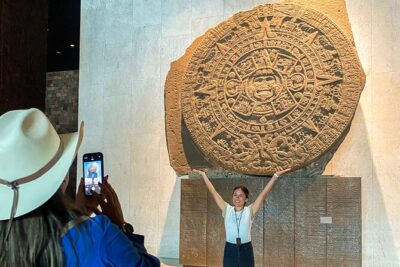
Chapultepec Castle & Anthropology Museum Tour
Read our review →
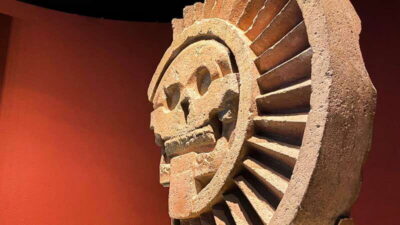
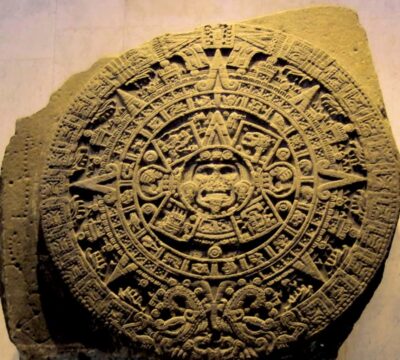
Anthropology Museum Private Experience Walking Tour
Read our review →
5 Hour Tour through Chapultepec, Anthropology Museum and Castle
Read our review →
PRIVATE Tour in Chapultepec Castle and Museum of Anthropology
Read our review →
Teotihuacan & Anthropology Museum, Templo Mayor & City Tour
Read our review →Browse the lists this tour appears in