
Reviewed · FOLKLORIC BALLET SHOWS
Exploring Mexican Muralism: A Journey through Bellas Artes Palace
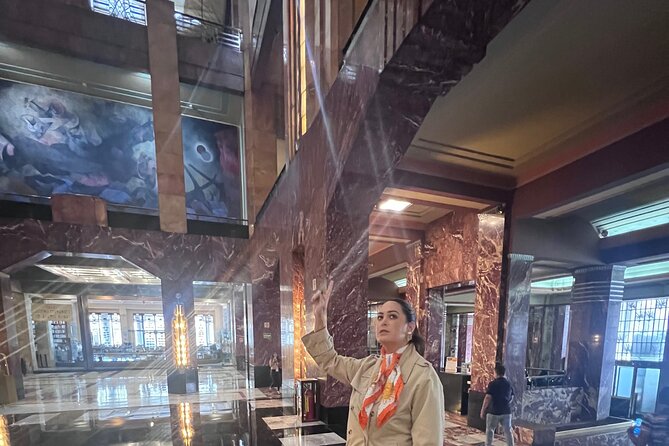
The best reason to visit Mexico City’s Palace of Fine Arts with a guide is that the murals are not just large pictures on elegant walls. They form a visual account of revolution, work, mythology, industrial change, and Mexican identity. Mercedes Iriondo leads the tour in English, connecting each artist’s style to the political and social world behind the paint.
I like the small maximum of six people, which gives you a real chance to ask questions. I also like the clear focus on the murals, rather than a rushed tour of every corner of the building. The one drawback is the short length: with only about 90 minutes, you will see the main works and architectural details, but not study every part of the palace at leisure.
In This Review
- Key points
- Why the Palace of Fine Arts works so well for this tour
- Beginning at the Madero Monument at 11:00
- The first 10 minutes: reading the palace façade
- Inside for 80 minutes of Mexican muralism
- Comparing Rivera, Orozco, Siqueiros, and Tamayo
- How the murals explain Mexico’s social change
- A small group changes the pace
- Is $60 a fair price?
- Who should book this experience?
- Practical timing, language, and cancellation
- Should you book the Palace of Fine Arts mural tour?
- FAQ
- Where does the tour begin?
- What time does the tour start?
- How long does the experience last?
- Is the tour offered in English?
- How many people can join the tour?
- Is admission to the Palace of Fine Arts included?
- Where does the tour end?
- Can I cancel for a full refund?
Key points
- Four major muralists: See works associated with Diego Rivera, José Clemente Orozco, David Alfaro Siqueiros, and Rufino Tamayo.
- A focused 90-minute visit: Spend about 10 minutes outside and 80 minutes inside with the murals.
- Small English-language group: The group is limited to six people, making questions easier.
- A guide-led reading of Mexican art: Connect the images to revolution, labor, mythology, and social change.
- Central meeting point: Begin at the Madero Monument in Centro and return there at the end.
- Useful booking flexibility: Free cancellation is available up to 24 hours before the start time.
Why the Palace of Fine Arts works so well for this tour
Mexico City’s Palace of Fine Arts gives you two different experiences in one stop. Outside, the building presents a formal architectural face, with a façade whose details help explain why the palace is considered distinctive. Inside, the tone changes. The walls carry scenes of conflict, work, belief, and national development.
That contrast matters. If you simply enter, take a few photographs, and leave, you can admire the scale and color of the murals without understanding how they fit together. The guide’s job is to connect the images, artists, and periods so you can read the building as more than a grand cultural venue.
This tour is especially useful if you are new to Mexican muralism. The art can look crowded at first, with imposing figures and many small details competing for your attention. A good explanation helps you know where to look and why a particular scene matters.
More folkloric ballet evenings:
- Mexico City: Mexican Folklore Ballet
★ 4.5 · 111 reviews - Small Group: Discover the Folkloric Ballet of Mexico
★ 4.5 · 101 reviews - EXCLUSIVE TOUR to Palacio de Bellas Artes – small groups
★ 5.0 · 72 reviews
Beginning at the Madero Monument at 11:00
The meeting point is the Madero Monument in Mexico City’s Centro district. The start time is 11:00 in the morning, and the tour ends back at the same meeting point.
This central location makes the activity easy to combine with other sightseeing in the historic center. Public transportation is nearby, though the supplied details do not specify a particular station or route. Allow enough time to reach the monument without rushing, especially if you are unfamiliar with Centro.
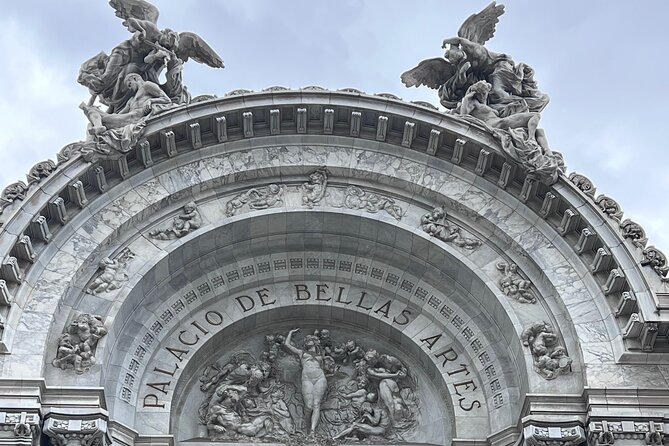
Starting outside is a smart choice. Before the murals take over your attention, Mercedes introduces the palace’s architecture and points out features of the façade that make the building special. This opening lasts about 10 minutes. It is brief, but it gives you a useful frame for the interior visit.
Do not expect a long architectural lecture. The value here is practical: you get the main visual clues before entering, then move quickly to the art that forms the heart of the experience.
The first 10 minutes: reading the palace façade
The exterior portion helps you notice details you might otherwise pass without a second look. The palace is impressive at a distance, but the tour asks you to consider the elements that give it its particular character.
That approach suits the building. It is easy to treat a famous façade as a backdrop for photographs. A guide can instead direct your attention to design choices and lesser-noticed features. Since the outdoor introduction is short, it works best as a preview rather than a separate architectural tour.
I would arrive ready to look closely. You are not spending an hour outside, so the guide has to move efficiently. If architecture is your main interest, you may wish the exterior section were longer. If the murals are your priority, the compact introduction keeps the tour moving.
Inside for 80 minutes of Mexican muralism
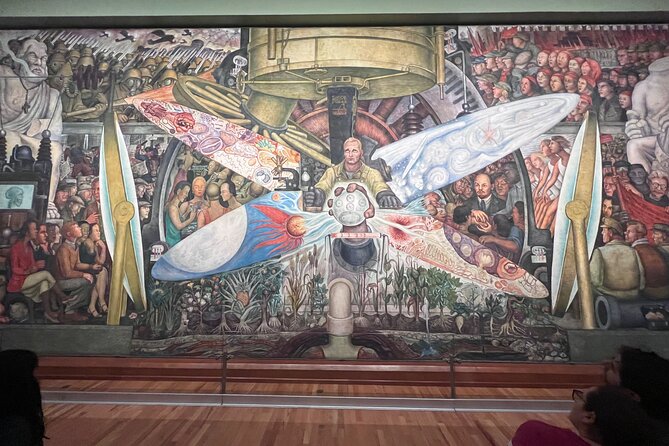
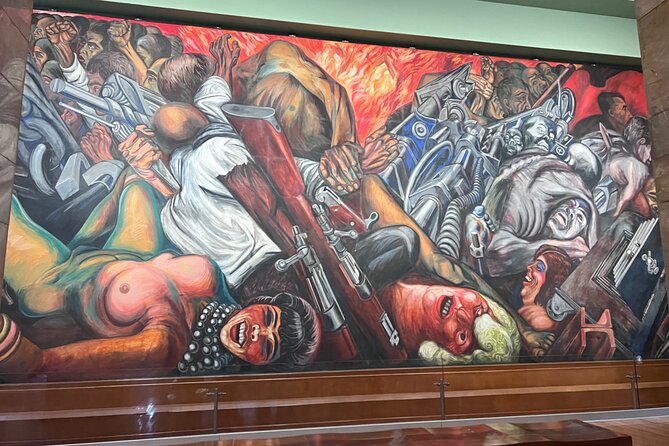
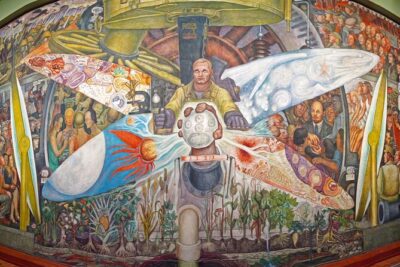
Most of the tour takes place inside the palace, where murals by leading Mexican artists cover the walls. The works associated with Diego Rivera, José Clemente Orozco, David Alfaro Siqueiros, and Rufino Tamayo give you a chance to compare different artistic voices in one setting.
The murals address the Mexican Revolution, labor struggles, mythology, social change, and the country’s changing economy. You will also encounter scenes that move between rural and urban life, nature and industry, and the pre-Hispanic past and modern Mexico.
This broad subject range is what makes the visit more than an art lesson. The murals are political and cultural statements. They ask how a nation understands its past, how ordinary people fit into national stories, and what progress costs.
A guide-led visit helps you work through those themes without trying to memorize every name and date. Mercedes is described as patient with questions and generous with her time. That matters here because muralism invites discussion. You may notice a figure, symbol, or contrast that raises a question, and a small group gives you a better chance to stop and ask.
More mural and street art walks in Mexico City:
- CDMX: Xochimilco, Coyoacan, Frida Kahlo Museum & Murals Tour
★ 4.4 · 3,025 reviews - Mexico City; ART NACO : Murals & Street Art Bike Tour
★ 5.0 · 284 reviews - Walking Tour – Impressive murals in Historical Center of Mexico City
★ 5.0 · 224 reviews - La Catrina & Muralism: Diego Rivera’s Legacy & Frida Kahlo
★ 4.5 · 197 reviews
Comparing Rivera, Orozco, Siqueiros, and Tamayo
One of the strongest parts of this experience is the chance to see how the muralists differ. You are not presented with one single version of Mexican identity. Each artist brings a different way of handling people, power, movement, and history.
Diego Rivera is associated with large-scale scenes that connect individuals to national development and social struggle. José Clemente Orozco’s work can lead you toward the darker and more painful side of revolution and human conflict. David Alfaro Siqueiros brings force and movement to the political message. Rufino Tamayo offers another voice, with a different relationship to mythology, modern life, and form.
The supplied details do not assign specific works or scenes to each section of the tour, so you should not expect a fixed checklist of murals. Instead, expect the guide to use the works on view to explain changing styles and ideas.
That flexibility is useful. You can ask about the work that catches your eye rather than being pushed through a rigid script. It also means the exact balance of artists may depend on the guide’s approach and the current museum presentation.
How the murals explain Mexico’s social change
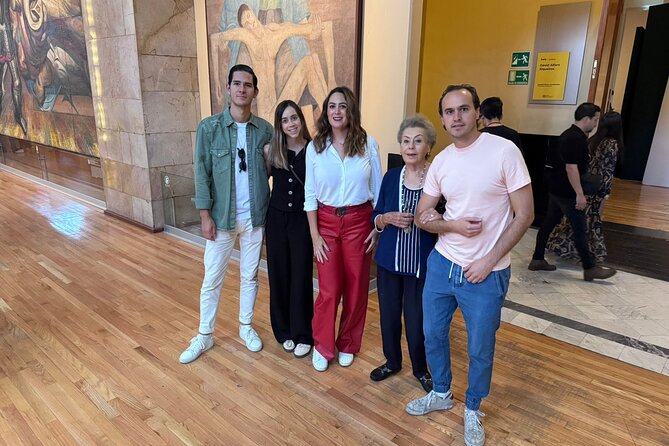
The tour’s central strength is its connection between art and national development. The murals are not isolated decorations. They refer to labor, industrialization, rural life, political upheaval, mythology, and the tension between older traditions and modern change.
You will see how artists used walls as public storytelling spaces. Their work could reach people who did not visit a traditional gallery, and the scale made the ideas difficult to ignore. The palace setting adds another layer: art associated with public life appears inside one of Mexico City’s most important cultural buildings.
The tour also helps you avoid a common mistake. It is easy to look at a mural only for its color and dramatic figures. The guide encourages you to consider the context, including the economic and political shifts that shaped the country’s development.
That context was the most consistently praised part of the experience. Mercedes is credited with explaining the chronology of the murals through politics, culture, and economic change, while also welcoming questions. If you enjoy connecting art to current and past social issues, this should be a rewarding use of 90 minutes.
A small group changes the pace
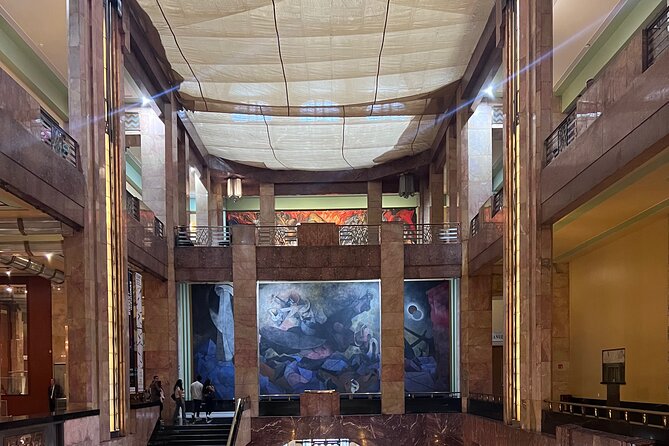
The group maximum is six people. That is a meaningful advantage in a museum setting, where a large crowd can make it hard to hear, see, or ask anything beyond the standard introduction.
A small group also allows the tour to feel more like a guided conversation. Mercedes has been described as patient, enthusiastic, and generous with her time. Those qualities are especially useful when looking at complex murals, since different people may focus on different symbols or historical events.
The tradeoff is that the experience depends heavily on the guide. The tour does not rely on a long list of activities or multiple locations. Its value comes from interpretation, explanation, and discussion. Mercedes has received full marks from the supplied feedback, with repeated praise for her facts, patience, love of Mexico City, and willingness to answer questions.
The group size also makes this a better choice for people who dislike large guided tours. You will not be standing in a mass of visitors while trying to follow a distant voice.
Is $60 a fair price?
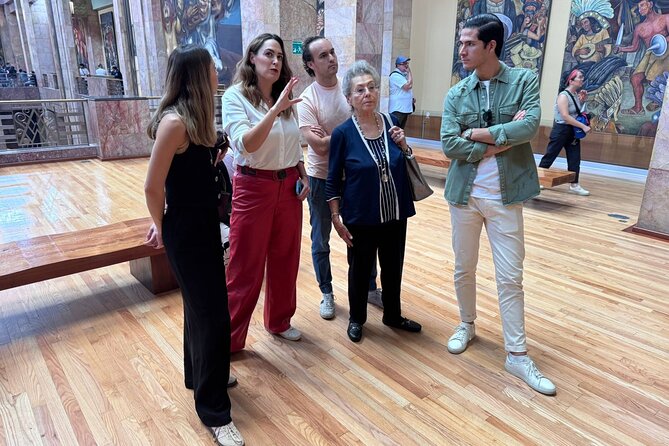
At $60 per person, this is not the cheapest way to see the Palace of Fine Arts. You can admire the exterior on your own, and the building’s interior may be accessible without paying for a private guide, depending on the museum’s current admission arrangements.
The question is what you want from the visit. If you are comfortable reading art labels and doing your own research, the price may feel high for a 90-minute activity. If you want a focused explanation of Mexican muralism, the small group and guide’s time add real value.
You are paying for interpretation rather than transportation, food, or a full-day itinerary. The admission ticket for the interior is included, and the tour is conducted in English. It also concentrates on a subject that can be difficult to understand without context.
I would consider the price reasonable for someone who has a strong interest in art, politics, or Mexican culture and wants direct access to a guide who can answer questions. For a casual visitor who only wants a quick look inside the palace, it may be more than necessary.
Who should book this experience?
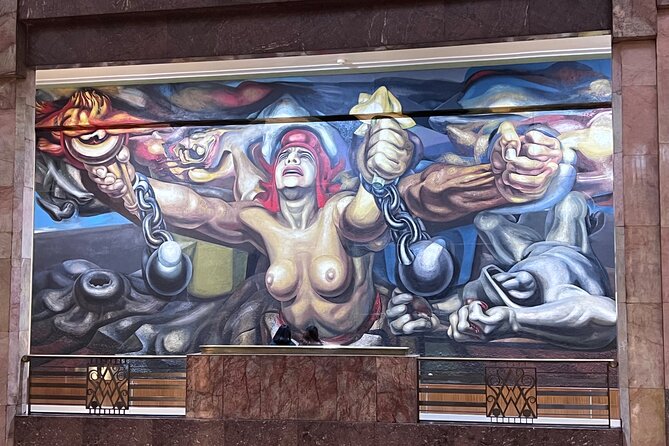
This tour is a good fit if you want to understand what you are seeing rather than simply photograph it. It suits first-time visitors to the palace, art students, museum lovers, and anyone curious about the link between Mexican art and national identity.
It also works well for couples or friends who enjoy asking questions. The guide’s style appears particularly suited to people who bring their own interests to the conversation. You do not need specialist art training, and most people can participate.
Families and mixed-interest groups may find the short length helpful, though the subject matter is serious. The murals address revolution, labor, social conflict, and political change, so this is not a light sightseeing stop.
You may want to skip it if you prefer to explore museums silently at your own pace, or if you want a longer tour devoted equally to architecture, decorative arts, and the wider history of the palace. The activity has a clear focus: muralism first, architecture second.
Practical timing, language, and cancellation
The tour lasts approximately one hour and 30 minutes. About 10 minutes are spent outside examining the palace, followed by roughly 80 minutes inside with the murals.
It is offered in English and begins at 11:00 in the morning. The group returns to the Madero Monument at the end, so you can plan your next Centro activity from the same general area.
Confirmation is provided when you book. The experience is near public transportation, and most people can participate. The maximum group size is six.
Free cancellation is available if you cancel at least 24 hours before the local start time. Cancellations made less than 24 hours ahead are not refunded, and changes within that period are not accepted. That deadline is worth noting if your Mexico City plans are still shifting.
Should you book the Palace of Fine Arts mural tour?
Book it if you want the murals explained through Mexican politics, culture, labor, and social change. The small group, English-language format, included admission, and Mercedes Iriondo’s patient approach make this more useful than a quick self-guided look.
Think twice if you want a broad palace tour or a longer architectural visit. The itinerary moves quickly and gives most of its time to the mural collection.
For the right visitor, $60 buys a focused lesson in one of Mexico City’s most important art movements, with enough time for questions and comparison. I would choose it when the goal is to understand the art, not merely see it.
FAQ
Where does the tour begin?
The tour begins at the Madero Monument in Colonia Centro, Centro, Cuauhtémoc, Mexico City.
What time does the tour start?
The tour starts at 11:00 am.
How long does the experience last?
The experience lasts approximately one hour and 30 minutes.
Is the tour offered in English?
Yes. The tour is offered in English.
How many people can join the tour?
The activity has a maximum of six participants.
Is admission to the Palace of Fine Arts included?
Admission is included for the main interior portion of the tour. The exterior introduction has no admission charge.
Where does the tour end?
The activity ends back at the Madero Monument, the original meeting point.
Can I cancel for a full refund?
Yes. You can cancel at least 24 hours before the local start time for a full refund. Cancellations or changes made less than 24 hours before the start are not accepted, and the amount paid is not refunded.
Just added around Mexico City
- Ticket to Frida Kahlo Museum (Blue House)★ 5.0 · 3 reviews
- Valle de Bravo: Forest Hiking Adventure★ 4.4 · 3 reviews
- La Roma Private Art Tour★ 5.0 · 3 reviews
- Private Transportation: Pickup and Drop-Off★ 5.0 · 3 reviews
- Chapultepec Castle and Anthropology Tour, starting from CDMX★ 5.0 · 3 reviews
- Mexico City: Relaxing or Decontracting Massage Experience★ 5.0 · 3 reviews
- Grutas de Tulantongo★ 3.0 · 3 reviews
- Mexico City: Local Walking Tour with Mezcal & Wrestling Show★ 5.0 · 3 reviews
Folkloric Ballet Shows, compared.


Small Group: Discover the Folkloric Ballet of Mexico
Read our review →
EXCLUSIVE TOUR to Palacio de Bellas Artes – small groups
Read our review →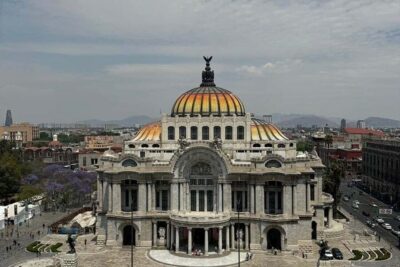
Mexico City Downtown Centro private tour+ Palacio de Bellas Artes
Read our review →Browse the lists this tour appears in