
Reviewed · CITY TOURS
Hop-on Hop-off or Night Tour Tourist Bus in Mexico City
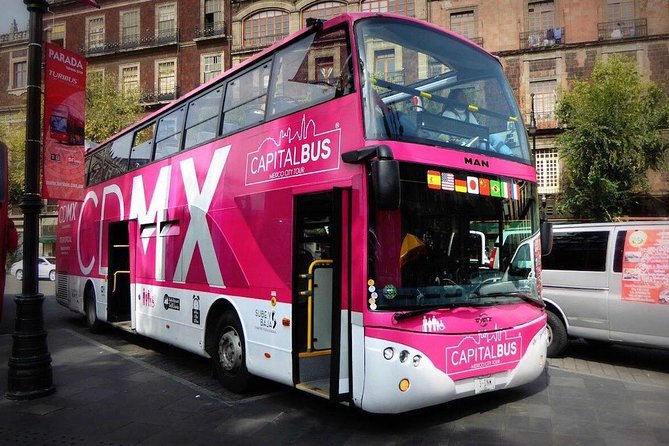
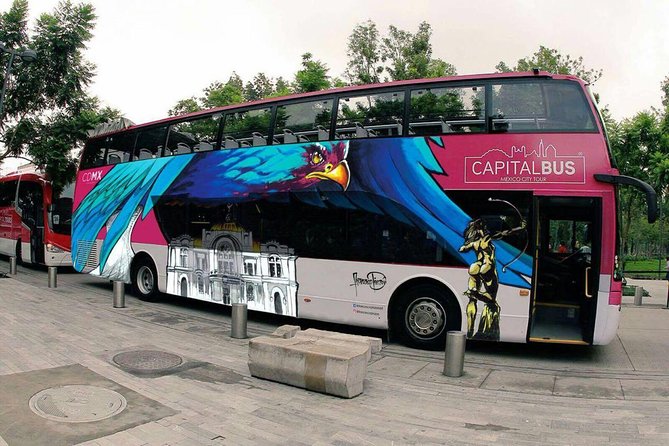
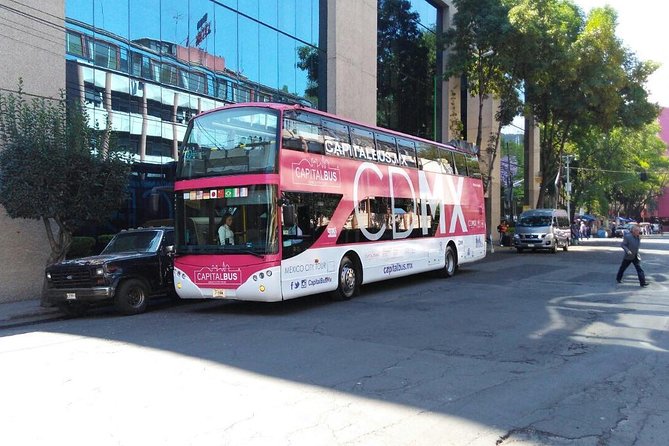
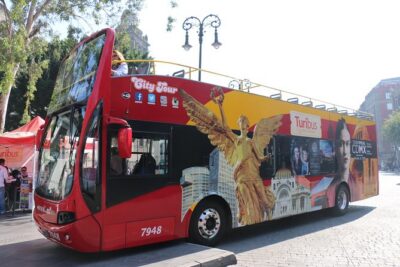
Mexico City is too large to understand from one neighborhood, and this open-top double-decker bus gives you a quick look at its grand avenues, major museums, parks, and shopping districts. You can ride the full route first, then use the 24-hour ticket to return to the places that catch your eye.
I like the freedom to hop off as often as you wish and the clear views from the upper deck. The audio commentary is useful when traffic makes walking impractical. The main caution is the middling 3 out of 5 rating from 127 reviews, so treat this as a practical orientation tool rather than a deeply guided cultural tour.
In This Review
- Key points to know before you ride
- Why this bus works well for a first look at Mexico City
- Starting at the Zócalo and finding your bearings
- Chapultepec, Mexico City’s great urban park
- Plaza Carso and the Nuevo Polanco museums
- Moliere Avenue and Lincoln Park
- Auditorio Nacional and Mexico City’s major avenues
- Reforma’s monuments: El Ángel, Diana, and Cibeles
- Santa Fe, shopping, and breaks from sightseeing
- Audio commentary, group size, and the overall feel
- How I would plan the day
- Who should book this bus?
- FAQ
- Where does the Mexico City bus tour start?
- Where does the tour end?
- How long is the experience?
- How long is the ticket valid?
- Is the tour offered in English?
- Can I get off the bus more than once?
- What attractions are included along the route?
- How large is the tour group?
- Is cancellation free?
Key points to know before you ride
- A 24-hour ticket gives you room to plan slowly, with time for museums, meals, shopping, and independent walks.
- The route connects very different parts of Mexico City, from the Zócalo and Chapultepec to Polanco, Reforma, and Santa Fe.
- The upper deck is the best place for photographs, with unobstructed views of avenues, monuments, and city buildings.
- English audio commentary provides background as you ride, but this is not a personal walking tour with a named guide.
- The listed starting point is at the Zócalo, even though the route description also refers to Zona Rosa as a place to begin exploring.
- The full experience can last from about one to 11 hours, depending on how often you get off.
Why this bus works well for a first look at Mexico City
Mexico City can feel enormous on arrival. Its historic center, museum district, Polanco shopping streets, and western business areas are spread across a wide area. Walking between them is not realistic for most people, especially on a first day.
This bus solves that basic problem. You sit back, watch the city pass by, and decide where you want to stop. The route is useful for getting your bearings before you commit half a day to a single museum or neighborhood.
The best use of the ticket is not simply riding around for 24 hours. I would first take a long ride to see how the city fits together. Then I would choose one or two stops for proper exploration. You might use the bus in the morning for Chapultepec and its museums, then return later toward Paseo de la Reforma or Polanco for food and shopping.
The upper deck offers the clearest views, but the practical experience depends on weather and traffic. Mexico City streets can be crowded, and the bus is still traveling on city roads. This is a sightseeing ride, not a way to move quickly from point to point.
More evenings out in Mexico City:
- Lucha Libre Tickets & Tacos & Beer & Mezcal – BEST NIGHT EVER!
★ 5.0 · 1,077 reviews - Mexico City: Double Decker Bus Night Tour
★ 3.8 · 373 reviews - A Night of Tacos and Mezcal in Mexico City
★ 5.0 · 262 reviews
Starting at the Zócalo and finding your bearings
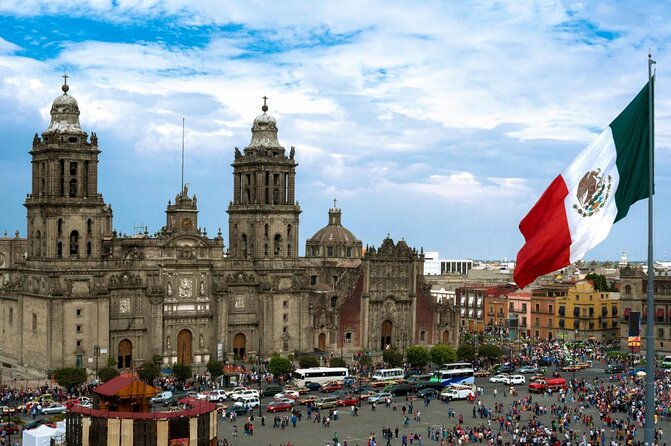
The stated meeting point is Parada Capital Bus Zócalo, on Monte de Piedad in the Centro Histórico. That puts you beside Mexico City’s central plaza, a powerful place to begin.
The Zócalo is dominated by the huge Mexican flag in the middle of the square and the National Palace along one side. Even if you do not get off here for a full visit, the area gives you an immediate sense of the capital’s scale and political importance.
The Zócalo is also a sensible place to start because the historic center is one of the city’s key areas. Use the bus ride to look outward from this central point, then decide how much time you want to spend on foot.
There is one point to watch: the tour description also says you can begin in Zona Rosa. The listed meeting point, however, is at the Zócalo. Confirm the boarding location and current route details when booking, especially if you are staying outside the center.
The activity returns to the meeting point, and buses are described as leaving regularly. That gives you more flexibility than a fixed sightseeing coach, though you should still allow extra time for city traffic.
Chapultepec, Mexico City’s great urban park
Bosque de Chapultepec is one of the most useful stops on the route. It is described as the largest urban park in the Western Hemisphere and contains several of Mexico City’s most important cultural sites.
The main draw for many visitors is the National Museum of Anthropology. The museum is not a quick photo stop. If you want to see it properly, plan a separate visit and use the bus only as your transportation link.
Chapultepec also includes the Museum of Modern Art and the Tamayo Museum in the route’s museum area. That makes this section a good match for you if you want to balance major Mexican archaeology with modern and contemporary art.
The park has archaeological importance, too. Historical remains and nearly 4,000 archaeological objects have been found in the area. That detail adds weight to what might otherwise look like a pleasant patch of city greenery from the top deck.
The listed stop time is 15 minutes with free admission to the stop itself. Do not read that as enough time for the museums. It is better understood as a route stop, while museum entry and sightseeing require your own schedule and likely a longer stay.
Plaza Carso and the Nuevo Polanco museums
Plaza Carso takes the bus into Nuevo Polanco, a very different part of the city. This large mixed-use development includes Museo Soumaya, Museo Jumex, and Teatro Telcel.
This is one of the route’s strongest combinations for an art-focused day. Museo Soumaya and Museo Jumex give you a reason to leave the bus rather than simply photograph the buildings from above. The stop also connects sightseeing with food and shopping in a modern district.
The stop description lists 15 minutes and free admission to the stop. Again, that does not mean you can visit the museums in 15 minutes. Use the bus timetable as a guide, then allow your own time for any museum you enter.
Plaza Carso may appeal less if your main goal is colonial architecture or traditional neighborhoods. It is a modern development, so the experience here feels quite different from the Zócalo and Chapultepec.
A few more Mexico City half-days to weigh up
- Mexico City: Hop-on Hop-off Bus Tour
★ 4.0 · 1,043 reviews - Mexico City: Hop-on Hop-off City Tour by Turibus 1-Day Pass
★ 4.1 · 691 reviews - Private City Tour in Frida Kahlo, Coyoacan, and Xochimilco
★ 5.0 · 626 reviews - Private City Tour Mexico City – Best Rated
★ 5.0 · 402 reviews
Moliere Avenue and Lincoln Park
The route crosses Avenida Moliere, an important avenue in the Polanco area. This section is useful for seeing how Mexico City shifts from grand civic spaces to upscale residential, office, and shopping districts.
Lincoln Park sits in southern Polanco, in the Miguel Hidalgo area. It was the first park designed for the neighborhood, and it is surrounded by early mansions, apartments, newer offices, and modern residential buildings.
I would use this stop for a slower walk rather than a rushed photograph. The park itself offers a break from traffic, while the surrounding buildings help you read Polanco as a neighborhood instead of only seeing it as a shopping stop.
The route information does not provide a separate admission charge for Lincoln Park. It is a public park area, so your main cost here is time. If you are already planning Plaza Carso or Auditorio Nacional, Lincoln Park can help link those stops into a more coherent Polanco outing.
Auditorio Nacional and Mexico City’s major avenues
Auditorio Nacional is the country’s main presentation venue and one of the world’s important performance spaces. Its scale matters even when there is no event on your schedule. The building represents Mexico City’s role as a major center for music, theater, and large public performances.
The listed stop time is 15 minutes, with no admission fee for the stop. You may want to get off for a look at the building, but the bus is not selling entry to a performance.
From here, the route continues through some of the city’s best-known avenues and monuments. The upper deck is particularly useful on this stretch because you can see broad roads, traffic circles, fountains, and changing city architecture without having to navigate traffic on foot.
The audio commentary is valuable here. Without context, a fountain or monument can pass by in seconds. With the commentary, you at least know what you are seeing and can decide if it deserves a later visit.
Reforma’s monuments: El Ángel, Diana, and Cibeles
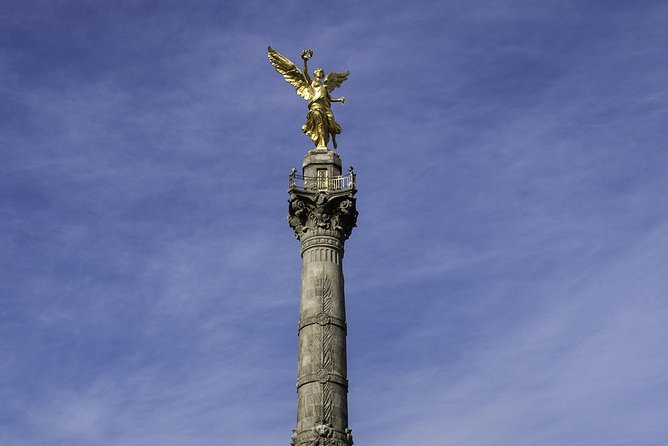
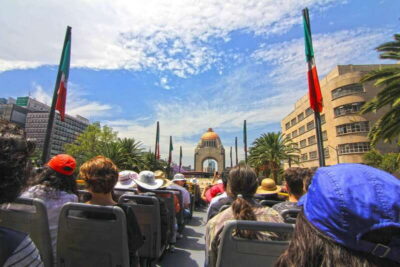
The Monumento a la Independencia, usually called El Ángel, is one of the most recognizable sights on Paseo de la Reforma. It was inaugurated in 1910 to mark the centennial of the beginning of the Mexican War of Independence.
The monument sits at a major traffic circle where Reforma meets Río Tíber, Florencia, and nearby streets. From the bus, you get a useful view of the column and the avenue’s grand scale. Getting off gives you more time for photographs, but traffic circles are not ideal places for a long, relaxed stop.
The Fountain of Diana the Huntress appears farther along Reforma. The statue represents Artemis, or Diana in Roman tradition, and was originally called The Arrow of the North Stars. It is a good example of how Reforma uses monumental sculpture to turn a major road into a sightseeing route.
The Cibeles Fountain offers a different connection. It is a replica of Madrid’s Plaza de Cibeles fountain and was placed in Mexico City as a symbol of friendship between Spanish and Mexican communities in 1980. It was remodeled in 2011.
These monuments are easy to miss when you are walking with a destination in mind. The bus puts them in sequence, which is one of the tour’s real strengths. You see how they relate to Reforma rather than treating each one as an isolated photo opportunity.
Santa Fe, shopping, and breaks from sightseeing
Santa Fe shopping mall is included as a place to stop for food or souvenirs. Paseo de la Reforma also offers many places to pause between attractions.
This matters because Mexico City sightseeing can become tiring quickly. A hop-on hop-off ticket lets you turn the day into sections: ride, visit a museum, eat, ride again, then stop for another walk.
The value depends on how you use it. If you stay on the bus for one short loop, the ticket may feel less useful. If you use several sections over a full day, it replaces a series of separate rides and saves you from arranging transportation between widely spaced sights.
No ticket price is provided here, so I cannot judge the exact cost against taxis or public transport. In practical terms, the strongest value comes from combining transport with orientation, open-air views, and audio information. It is less valuable if you already know the city and plan to spend the whole day in one walkable district.
Audio commentary, group size, and the overall feel
The bus includes onboard audio commentary in English. That is important for visitors who want basic explanations while riding but do not require a private guide. It also lets you keep moving while learning what the monuments and districts represent.
The experience is offered in English, and no individual guide names are provided. You should expect recorded or onboard commentary rather than a personal guide adapting the route to your questions.
The maximum group size is 45 people. That is a fairly ordinary coach-tour size, not a small-group outing. The advantage is a simple, organized ride. The tradeoff is that boarding and leaving the bus may take longer when many people are using the same stop.
Most people can participate, and the meeting point is near public transportation. The opening hours provided are Monday through Sunday, 9:15 a.m. to 8 p.m. The ticket is valid for 24 hours, so check how that period is counted when you plan an evening ride.
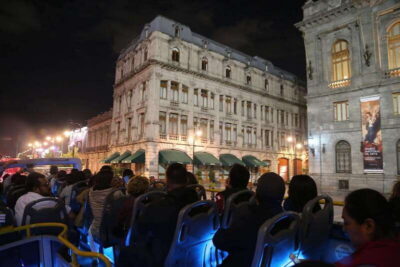
There is also a night tour option in the experience title. The supplied details do not provide a separate night route, timetable, or stop list, so confirm those specifics before choosing it.
How I would plan the day
I would begin at the Zócalo and take a full ride before getting off. That gives you a mental map of the route and helps you judge how much time city traffic is adding.
Next, I would choose Chapultepec if museums are a priority. The National Museum of Anthropology, Tamayo Museum, and Museum of Modern Art make this the strongest cultural section.
For modern art, shopping, and architecture, I would choose Plaza Carso and Nuevo Polanco. Lincoln Park works well as a quieter walk between the larger stops.
I would save Reforma for a late afternoon ride or a second loop. El Ángel, Diana the Huntress, and Cibeles are most useful as a connected sequence, and the open top gives you a better view than a sealed vehicle.
Carry your own day plan, since the audio commentary cannot decide how long you should spend inside a museum or over lunch. The bus gives you transport and context, but the best parts of Mexico City still require you to get off and walk.
Who should book this bus?
This experience suits you best if it is your first time in Mexico City, you want to cover several districts, or you prefer not to arrange separate transportation between major sights. It also fits families and visitors with limited time who want a broad look at the city.
It is less suitable if you want a personal guide, detailed historical storytelling, or a small group. The 3 out of 5 rating from 127 reviews suggests you should keep expectations measured. Think of the bus as a useful city sampler, not the complete Mexico City experience.
Book it if you value flexibility, open-air views, and a 24-hour transport option. Skip it if you plan to stay only around the Zócalo or prefer to explore one neighborhood slowly on foot.
Free cancellation is available when you cancel at least 24 hours before the start time. Cancellations or changes inside that window are not refunded or accepted.
FAQ
Where does the Mexico City bus tour start?
The stated meeting point is Parada Capital Bus Zócalo on Monte de Piedad in Mexico City’s Centro Histórico.
Where does the tour end?
The activity ends back at the meeting point.
How long is the experience?
The duration is approximately one to 11 hours, depending on how you use the route and how often you get off.
How long is the ticket valid?
The ticket is valid for 24 hours.
Is the tour offered in English?
Yes. English audio commentary is provided onboard.
Can I get off the bus more than once?
Yes. You can hop off as many times as you like during the 24-hour ticket period.
What attractions are included along the route?
Stops and sights include the Zócalo, Bosque de Chapultepec, Plaza Carso, Lincoln Park, Auditorio Nacional, El Ángel, the Diana the Huntress Fountain, and the Cibeles Fountain.
How large is the tour group?
The activity has a maximum of 45 participants.
Is cancellation free?
Yes, if you cancel at least 24 hours before the experience start time. Cancellations within 24 hours are not refunded.
Just added around Mexico City
- Mexico City: Hop-on Hop-off City Tour by Turibus 2-Day Pass★ 4.0 · 10 reviews
- Anthropology Museum, Chapultepec Castle & Cable Car Tour★ 4.5 · 10 reviews
- Multi-Variety Mole Class in a Condesa home or art gallery rooftop★ 5.0 · 10 reviews
- PRIVATE TOUR Colonial Town Taxco and Cuernavaca from CDMX.★ 5.0 · 10 reviews
- El Centro Street Food Walking Tour★ 5.0 · 10 reviews
- Private Round-Trip Transportation to Teotihuacan Pyramids★ 5.0 · 10 reviews
- Teotihuacan and My Grandma’s Food Tour★ 5.0 · 10 reviews
- Private Walking Tour Legends and Events Historic Center CDMX★ 4.8 · 10 reviews
City Tours, compared.

Private City Tour in Frida Kahlo, Coyoacan, and Xochimilco
Read our review →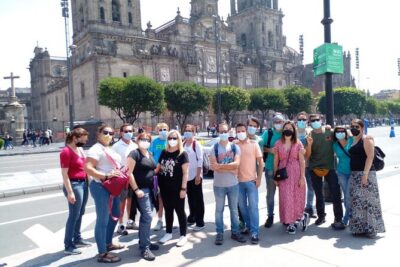

Puerto Vallarta: City Tour, Tequila and Coffee Factory Tour
Read our review →
Browse the lists this tour appears in