
Reviewed · FRIDA KAHLO & COYOACáN TOURS
La Catrina & Muralism: Diego Rivera’s Legacy & Frida Kahlo
Diego Rivera’s murals are not simply large paintings on public walls. They are history lessons, political arguments, folk stories, and family drama in full color. This three-hour tour follows that story from the former College of San Ildefonso to the Palace of Fine Arts, with La Catrina and Frida Kahlo woven into the route.
I like two things right away. A local art guide explains the symbols beneath the surface, rather than leaving you to admire the pictures without context. I also like the route itself: San Ildefonso, the Museo Vivo del Muralismo, the Diego Rivera Mural Museum, and Bellas Artes give you several different settings for understanding Rivera’s work.
The main consideration is pace. You cover several sites in three hours and use public transport for about 20 minutes, so this is a focused introduction, not a slow museum day. You will also need to reach the starting point yourself, and large bags, food, baby carriages, and flash photography are not allowed.
In This Review
- Key points about the Rivera and Kahlo art walk
- Why Rivera’s murals matter beyond the paint
- Starting at the former College of San Ildefonso
- Museo Vivo del Muralismo and the movement’s early ideas
- A 20-minute public transport connection
- The Diego Rivera Mural Museum
- Palace of Fine Arts and the final Rivera works
- How the guides shape the experience
- Is $58 a fair price for three hours?
- Who should book this mural tour?
- My recommendation
- FAQ
- How long does the tour last?
- Where does the tour begin?
- Where does the tour finish?
- Which places are visited?
- Is public transportation used?
- What languages are available?
- Is the tour wheelchair accessible?
- What should I bring?
- Can I cancel or pay later?
Key points about the Rivera and Kahlo art walk
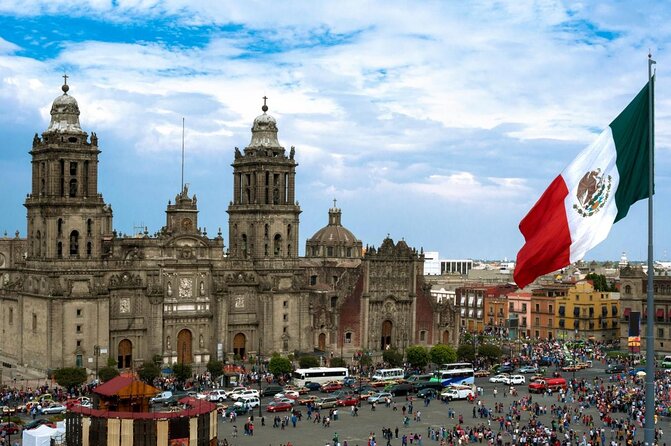
- La Catrina takes center stage: Learn how Rivera helped make this skeletal figure a widely recognized symbol of Día de Muertos.
- San Ildefonso begins the story: Start at the former college, a key setting for Mexico’s early mural movement and for the story of Rivera and Frida Kahlo.
- Several mural sites create useful contrast: Move from historic walls to dedicated museums and the grand Palace of Fine Arts.
- Guides connect art with history: Sam, Jesús, Luís, and Aldo are among the guides named for this experience, with tours offered in English or Spanish.
- Three hours keeps the visit manageable: You see major works without giving up an entire day, though the schedule leaves little room for lingering.
- The tour is wheelchair accessible: Comfortable shoes and sunscreen still matter because the route involves walking.
Why Rivera’s murals matter beyond the paint
Mexican muralism grew from a wish to bring art into public life. Instead of limiting important pictures to private galleries, muralists placed them in schools, civic buildings, museums, and government spaces. Their subjects included workers, Indigenous traditions, revolution, religion, education, and the unequal distribution of power.
That context changes how you look at a Rivera mural. You are not only asking whether you like the colors or the figures. You are also asking who is represented, who has control, and how Mexico wanted to define itself after years of political and social upheaval.
The guide’s role matters here. Rivera’s scenes can look crowded at first, with rows of people, historical figures, tools, costumes, and symbols competing for your eye. A good explanation helps you slow down and notice the choices, including the meaning behind a gesture, a character, or a small object.
This is where the tour has its strongest purpose. You get an introduction to muralism as a cultural movement, not just a parade of famous names. The focus remains on Rivera, but the route also points toward the wider effect of muralism on Mexican identity.
More Frida Kahlo and Coyoacán walks:
- Xochimilco, Coyoacan and Frida Kahlo with Optional Lunch
★ 4.5 · 7,320 reviews - CDMX: Xochimilco, Coyoacan, Frida Kahlo Museum & Murals Tour
★ 4.4 · 3,025 reviews - Frida Kahlo VIP [Museum Tickets Included] Bike, Markets & Churros
★ 5.0 · 1,072 reviews
Starting at the former College of San Ildefonso
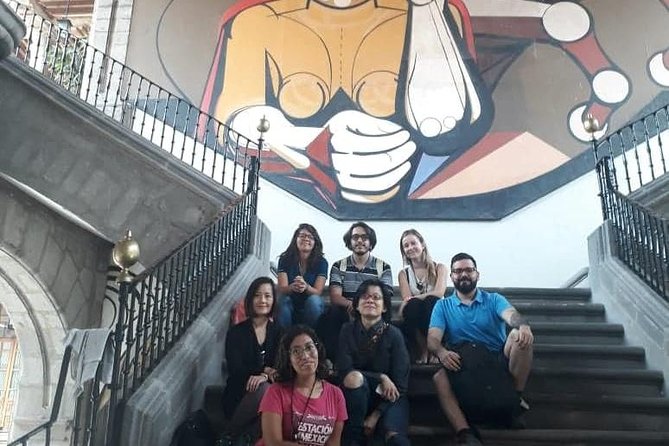
Meet your guide in front of the entrance to the former College of San Ildefonso. Look for the pink shirts and umbrellas. That detail is useful in a crowded city, especially if you are arriving with family or meeting the group for the first time.
San Ildefonso is the right place to begin because it connects education, art, and the early years of Mexican muralism. You receive background on Rivera’s artistic vision and learn why murals became such an important way to communicate with the public.
The building also brings a personal thread into the tour. Your guide explains where the romance between Diego Rivera and Frida Kahlo began. Their relationship was passionate and difficult, and it shaped the way both artists are remembered. This is not a simple love story added for entertainment. It helps you see how personal life, artistic ambition, and public reputation overlapped.
You may hear the story of the amphitheater where Rivera met Kahlo, an especially memorable detail included in the route. The setting gives the famous pair a physical place in the city rather than leaving them as distant names in an art textbook.
San Ildefonso is also a practical beginning. You start with a guided visit before moving on, so the opening portion provides the vocabulary you need for the later museums. Pay attention to the guide’s explanation of technique, scale, and placement. Murals are designed for walls and public spaces, not for close viewing in a quiet gallery, and that affects how you read them.
Museo Vivo del Muralismo and the movement’s early ideas
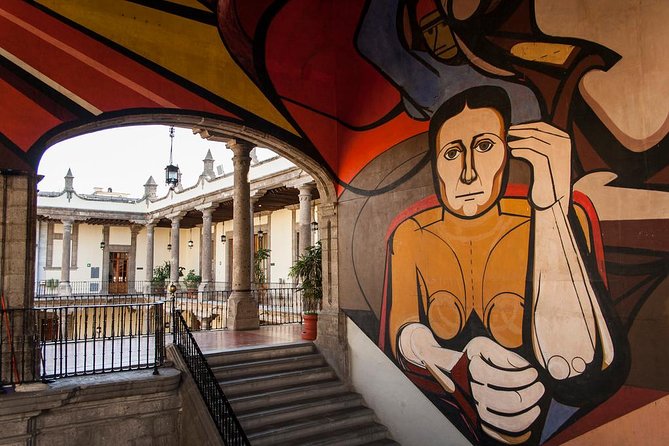
The next stop is the Museo Vivo del Muralismo, where the tour continues its look at muralism’s beginnings and purpose. The name points to an important idea: murals are not dead relics. They continue to speak through their setting, subject matter, and connection to Mexican public life.
Here, the guide helps you place Rivera’s work within a larger artistic story. You learn about the historical conditions that shaped the movement, along with the techniques used to build large scenes that could carry social criticism and traditional imagery at the same time.
This is a good point to ask questions. The tour is led by a local art enthusiast, and the format allows you to explore the meaning behind the images rather than simply collect photographs. The strongest explanations focus on what sits below the obvious subject. A mural showing a historical event may also comment on class, labor, education, or national identity.
The museum stop should appeal to you if you like seeing how art functions in a particular place. It is different from looking at a single framed painting because the architecture and public purpose are part of the work’s impact.
You should also keep the schedule in mind. Three hours does not allow unlimited time at each stop. If you want to study every panel or take detailed notes, you may find the visit brisk. For a first look at Mexican muralism, though, the pace gives you a useful framework without turning the tour into an all-day commitment.
A 20-minute public transport connection
After the first two visits, the group uses public transport for about 20 minutes. Transportation to the starting point is not included, but this short connection is part of the route.
That transfer has two effects. First, it links separate cultural sites instead of keeping you in one museum district. Second, it adds a small slice of ordinary city movement to an art-focused morning or afternoon. You are not sealed inside a private vehicle for the whole experience.
There is also a practical tradeoff. Public transport means the exact rhythm can feel less controlled than a private transfer. Stay close to the group, listen for instructions, and keep your belongings secure. Since large bags are not allowed, pack lightly from the beginning.
The tour information describes the experience as wheelchair accessible. If you use a wheelchair, it is still sensible to confirm the day’s exact route and transport arrangements before booking, since the experience includes walking and public transportation.
More mural and street art walks in Mexico City:
- Mexico City; ART NACO : Murals & Street Art Bike Tour
★ 5.0 · 284 reviews - Walking Tour – Impressive murals in Historical Center of Mexico City
★ 5.0 · 224 reviews - La Catrina & Muralism: Diego Rivera’s Legacy & Frida Kahlo
★ 4.5 · 197 reviews - Mexico City: Art Naco, murals & street art bike tour
★ 4.7 · 166 reviews
The Diego Rivera Mural Museum
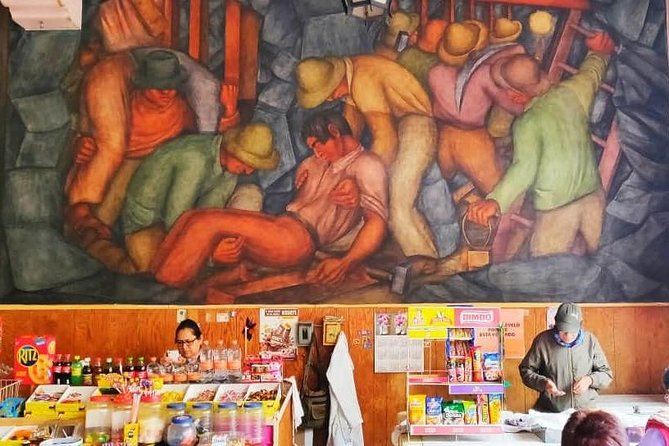
The Diego Rivera Mural Museum brings the focus back to Rivera himself. This stop is especially useful after the broader opening discussion because you can now look at his work with more questions in mind.
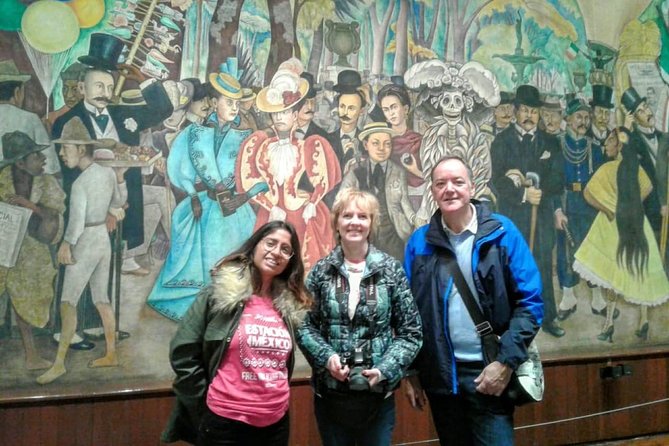
The museum is known for Rivera’s famous depiction of La Catrina, the elegant skeleton associated with Día de Muertos. The figure has become an international symbol of the holiday and appears in films and Mexico City’s well-known Day of the Dead parade.
La Catrina is more than a decorative skeleton. The guide explains the cultural and historical ideas tied to the image, helping you understand why it has such lasting force. You will see how humor, death, social commentary, and Mexican tradition can occupy the same scene.
This stop is likely to be one of the tour’s clearest highlights. La Catrina is instantly recognizable, but recognition is not the same as understanding. The guide gives you the background needed to see how the figure works within Rivera’s larger message.
I would give this museum your full attention. It is tempting to photograph the famous image and move on, but the surrounding figures and details help explain why the mural is important. Look at how Rivera arranged the composition and how the central character relates to the people around her.
The museum also makes a useful bridge between history and modern popular culture. You can connect the mural to the Day of the Dead celebrations you may have seen in Mexico or in films, while still learning about its original artistic and social setting.
Palace of Fine Arts and the final Rivera works
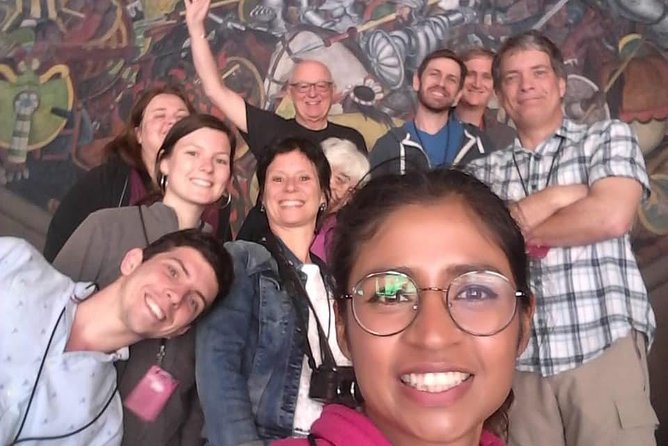
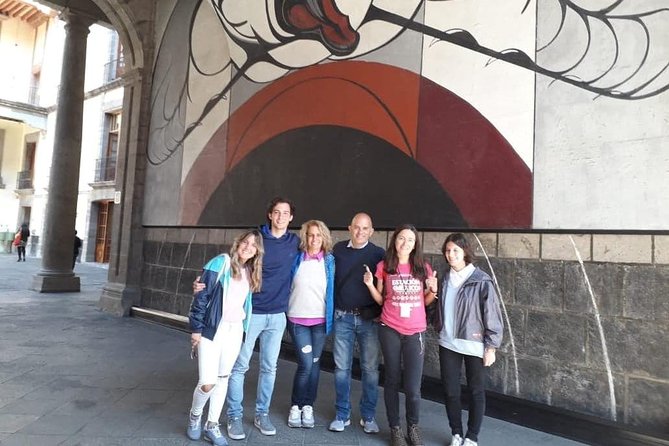
The last major stop is the Palace of Fine Arts, where the guided visit ends at Palacio de Bellas Artes. The building gives the tour a grand finish and places Rivera’s murals within one of Mexico City’s most important arts venues.
Here, the guide continues to explain the stories and techniques behind the murals. By this point, you have already discussed Rivera’s career, his relationship with Kahlo, the rise of muralism, and La Catrina. Bellas Artes brings those threads together in a formal public setting.
I like this ending because it leaves you with scale. Early muralism grew through public buildings and shared civic spaces, and the Palace of Fine Arts shows how seriously Mexico treated art as part of national culture. You are not simply looking at paintings in isolation. You are seeing how art occupies public memory.
The final stop also gives you a chance to compare settings. San Ildefonso introduces the movement’s origins. The Museo Vivo del Muralismo expands the historical picture. The Diego Rivera Mural Museum centers La Catrina. Bellas Artes gives the route a polished, monumental close.
The drawback is that the experience finishes at the Palace of Fine Arts rather than returning you to the starting point. That is not a problem if you plan to continue sightseeing in central Mexico City, but you should know where you will be at the end.
How the guides shape the experience
This tour depends heavily on the person leading it. Art can be intimidating when the walls are crowded with symbols, political references, and historical figures. A patient guide makes the difference between looking at a mural and understanding why it was made.
The named guides include Sam, Jesús, Luís, and Aldo. Sam has been praised for explaining the symbolism beneath Rivera’s images. Jesús is described as patient and enthusiastic, with an approach that included children aged 10 and 12. Luís led the tour in clear Portuguese according to one guest comment, but the listed tour languages are Spanish and English, so you should confirm your preferred language when booking. Aldo is noted for explaining Mexican history with patience and warmth.
Those details suggest a tour that can work well for mixed-age groups. Children may not follow every political point, but the large figures, skeleton imagery, personal story, and visual details give a guide several ways to hold their attention.
You should still take an active role. Ask about symbols you do not understand. Tell the guide if you need a slower explanation. The strongest part of this experience is not the number of stops. It is the conversation that helps you see why the murals matter.
Is $58 a fair price for three hours?
At $58 per person, this is not the cheapest way to see murals in Mexico City. The value depends on how much guidance you want.
You are paying for a three-hour route with several guided visits, a local art specialist, historical interpretation, and a clear connection between Rivera, Kahlo, La Catrina, and Mexican muralism. If you walked between the sites on your own, you could save money, but you would need to research the background and create the route yourself.
The price makes the most sense for a first visit, a short stay, or anyone who wants a strong introduction before exploring more museums independently. It also works well for families who prefer a planned route and explanations that keep younger visitors involved.
Meals and drinks are not included. Transportation to San Ildefonso is also not included, though the route itself includes a 20-minute public transport connection. Check what admission arrangements apply when you book, since the supplied details list the visits and guided tours but do not spell out separate entrance-ticket coverage.
Flexible booking adds some practical value. You can reserve now and pay later, and cancellation is available up to 24 hours before the start time for a full refund.
Who should book this mural tour?
I would choose this experience if you are visiting Mexico City for the first time and want cultural context quickly. It is also a good fit if you already know Rivera and Kahlo by name but want help reading their work rather than simply taking pictures.
Families can benefit from the short duration and the guide’s ability to connect art with stories and symbols. The tour is also suitable for English or Spanish speakers, and it is listed as wheelchair accessible.
You may want a different plan if your main goal is a slow, detailed museum study. Three hours, multiple stops, walking, and public transport create a lively introduction, but not enough time to examine every mural at length.
Wear comfortable shoes and use sunscreen. Do not bring luggage or a large bag, and leave food, baby carriages, and flash photography out of the plan. A small, practical day bag is the safest approach, subject to the site rules.
My recommendation
I recommend this tour for the reader who wants Mexican muralism explained by a person who cares about the art. Its best feature is the connection between public murals and the people, politics, traditions, and personal stories behind them.
Book it early in your Mexico City stay if you can. The route gives you useful context for later visits to museums and historic buildings. Choose it with realistic expectations: you will cover important ground, not linger at every work. At $58, it is a solid value when expert interpretation and a carefully linked route matter more to you than independent wandering.
FAQ
How long does the tour last?
The tour lasts three hours.
Where does the tour begin?
It begins in front of the entrance to the former College of San Ildefonso. Look for guides wearing pink shirts and carrying umbrellas.
Where does the tour finish?
The tour finishes at the Palace of Fine Arts, also called Palacio de Bellas Artes.
Which places are visited?
The route includes the former College of San Ildefonso, Museo Vivo del Muralismo, the Diego Rivera Mural Museum, and the Palace of Fine Arts.
Is public transportation used?
Yes. The itinerary includes a public transport connection of about 20 minutes.
What languages are available?
Live guides are available in Spanish and English.
Is the tour wheelchair accessible?
Yes, the activity is listed as wheelchair accessible.
What should I bring?
Bring comfortable shoes and sunscreen. The route involves walking.
Can I cancel or pay later?
You can cancel up to 24 hours in advance for a full refund. Reserve now and pay later is also available.
Just added around Mexico City
- Mexico City: Hop-on Hop-off City Tour by Turibus 2-Day Pass★ 4.0 · 10 reviews
- Anthropology Museum, Chapultepec Castle & Cable Car Tour★ 4.5 · 10 reviews
- Multi-Variety Mole Class in a Condesa home or art gallery rooftop★ 5.0 · 10 reviews
- PRIVATE TOUR Colonial Town Taxco and Cuernavaca from CDMX.★ 5.0 · 10 reviews
- El Centro Street Food Walking Tour★ 5.0 · 10 reviews
- Private Round-Trip Transportation to Teotihuacan Pyramids★ 5.0 · 10 reviews
- Teotihuacan and My Grandma’s Food Tour★ 5.0 · 10 reviews
- Private Walking Tour Legends and Events Historic Center CDMX★ 4.8 · 10 reviews
Frida Kahlo & Coyoacán Tours, compared.

Xochimilco, Coyoacan and Frida Kahlo with Optional Lunch
Read our review →
Xochimilco, Coyoacan, Frida Kahlo Museum & Murals Tour
Read our review →![Frida Kahlo VIP [Museum Tickets Included] Bike, Markets & Churros](https://9.mexicocityexplorer.com/wp-content/uploads/frida-kahlo-vip-museum-tickets-included-bike-markets-churros-400x300.jpg)
Frida Kahlo VIP [Museum Tickets Included] Bike, Markets & Churros
Read our review →![Frida Kahlo VIP [Museum Tickets Included] Walk, Markets & Churros](https://9.mexicocityexplorer.com/wp-content/uploads/frida-kahlo-vip-museum-tickets-included-walk-markets-churros-400x267.jpg)
Frida Kahlo VIP [Museum Tickets Included] Walk, Markets & Churros
Read our review →
EXCLUSIVE TOUR Frida Kahlo Museum – SMALL GROUPS
Read our review →
Frida Kahlo Museum Entry Ticket w/Digital Guide
Read our review →
Private City Tour in Frida Kahlo, Coyoacan, and Xochimilco
Read our review →
PREMIUM Frida Kahlo Museum and Xochimilco (Small Groups)
Read our review →Browse the lists this tour appears in