
Reviewed · DAY OF THE DEAD TOURS
Memorial Magic: A Downtown Day of the Dead Tour
Mexico City’s Day of the Dead customs make the city feel especially personal, and this tour takes you beyond a single plaza or photo stop. You’ll ride the Metro to Mercado de Jamaica, see marigolds and altar flowers up close, then walk through the Zócalo, Centro Histórico, and Alameda to find public displays, neighborhood traditions, and school-made altars.
I like the small maximum of eight people and the mix of Metro travel, street walking, snacks, drinks, and local explanation. I also like that guides such as Gabriel, Yaya, and Yardley have been praised for making the tour friendly, smart, and responsive. The main consideration is that five hours on foot and in crowded stations can be tiring, and vegan food choices are limited.
In This Review
- Key details at a glance
- Why this Day of the Dead tour works
- Mercado de Jamaica: start with the flowers
- The Zócalo: public Day of the Dead in the city center
- Centro Histórico: altars, snacks, and a longer walk
- Alameda and Palacio de Bellas Artes: finish with Mexico City icons
- What $95 buys you
- The small-group format and guide style
- Who should book this experience
- Practical planning before you go
- Should you book Memorial Magic?
- FAQ
- How long does the Day of the Dead tour last?
- Where does the tour begin?
- Where does the tour end?
- Is transportation included?
- How large is the group?
- Is the tour suitable for vegans?
Key details at a glance
- Mercado de Jamaica comes first: Ride the Metro to a major flower market, where Day of the Dead decorations take shape through flowers and offerings.
- Four central Mexico City stops: The route covers Jamaica, the Zócalo, Centro Histórico, and Alameda Square with Palacio de Bellas Artes.
- A small, personal format: The group is limited to eight people, with a local bilingual guide leading the way.
- Metro is part of the lesson: You’ll learn how to use Mexico City’s subway while moving between neighborhoods.
- Food is built in: Snacks and beverages are included, with a beer stop mentioned during the Centro Histórico portion.
- A useful first-day tour: The route helps you get your bearings and gives you practical ideas for the rest of your stay.
Why this Day of the Dead tour works
The best feature here is the route. Instead of keeping you in one tourist zone, it connects a working flower market with Mexico City’s grand civic center and historic core. That gives you two sides of the celebration: the supplies and symbols used at home, followed by public altars and city displays.
You also get a guide who can explain what you are seeing as the day unfolds. Gabriel, the founder and guide, is described as offering advice for the rest of your visit as well as looking after the group during the tour. Guide assignments can vary, and Yaya and Yardley are also named as guides who bring a warm, informed approach.
This matters because Day of the Dead is easy to reduce to painted faces, paper decorations, and colorful photographs. The route gives those images some setting. Flowers, food, altars, family remembrance, schools, public spaces, and local streets all become part of the picture.
The tour runs from about 10:30 AM to 3 PM. That is a useful block of time: long enough to see several parts of central Mexico City, but short enough to leave your afternoon open. I would consider taking it near the start of your stay, since the Metro practice and guide’s suggestions can help you move around afterward.
More Day of the Dead experiences:
- Mexico City: Day of the Dead Guided Tour
★ 3.4 · 97 reviews - Day of the Dead Tour in Mexico City
★ 3.5 · 78 reviews - Day of the Dead Tour in San Andres Míxquic From Mexico City
★ 3.7 · 52 reviews
Mercado de Jamaica: start with the flowers
The first stop is Mercado de Jamaica, reached by Metro. This is the practical opening to the tour. Before you see finished altars, you see the flowers and market activity that help create them.
During Day of the Dead season, vendors offer flowers commonly used for altars and offerings, including the bright orange flowers most closely linked with the holiday. The supplied description cuts off before naming every flower, so I would not expect a formal botany lesson. The value is in seeing the market as a place where decoration and remembrance begin.
You’ll spend about an hour here, with no admission charge. The guide can help you understand what is being sold and why the market matters during this season. It is also a good place to notice how a celebration is supported by ordinary commerce, rather than appearing only as a display arranged for visitors.
The Metro ride is part of the experience. You should expect stations, stairs, crowds, and a quick pace. The guide describes the subway as the quickest and safest way to get around for this route, but you still need to stay alert and close to the group.
Wear shoes you can walk in for several hours. Bring water, and check the weather before leaving. These are small preparations, but they matter when the day includes markets, sidewalks, stations, and open plazas.
The Zócalo: public Day of the Dead in the city center
After Jamaica, you take the Metro again to the Zócalo, Mexico City’s central plaza. The tour allows about an hour here, including time to see seasonal Day of the Dead installations.
The Zócalo gives you the broad public face of the holiday. Large displays and civic decorations can make the traditions feel shared across the city, not limited to private homes. Your guide’s role is especially useful here because a large plaza can be visually impressive without making its meaning clear.
I like the change in scale from the flower market. Jamaica is about materials, vendors, and preparation. The Zócalo is about the city presenting the holiday in a public setting. Moving between the two helps you connect the objects with the celebration.
Expect crowds and activity in the center. This is not a quiet museum visit. You may need to pause often for photographs, listen carefully to the guide, and keep track of personal belongings. The group size, capped at eight, should make it easier to stay together than on a large coach tour.
The Zócalo stop is also a good reminder that this is a walking and public-transport tour, not a private vehicle sightseeing trip. If you prefer to sit in a car between every stop, this will feel active. If you want to learn the city’s basic rhythm, the Metro adds real value.
Centro Histórico: altars, snacks, and a longer walk
The longest part of the day takes place in Centro Histórico. Plan on roughly two hours for walking, traditional altar displays, a snack, and a beverage stop.
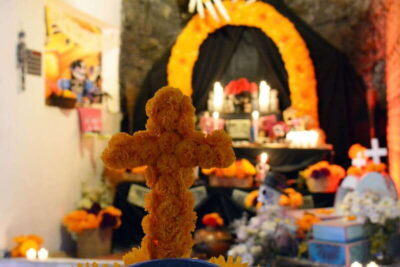
The route includes a pedestrian street where altars have been created by local residents and schools. That detail is important. School and neighborhood displays can show how the holiday is presented by communities in shared spaces, rather than only through major official installations.
You’ll have time to look at the altars and ask questions. The guide can point out details that are easy to miss, such as the arrangement of offerings and the way each display presents remembrance. The supplied information does not promise a specific number of altars or a fixed theme, so the exact displays may vary.
Food is part of this section. Snacks and beverages are included, and the description mentions a stop for beer. You should think of this as a light taste of the city during the walk, not a full meal. If you need substantial food, eat before the tour or plan a meal afterward.
Diet deserves some planning. The tour is not a perfect fit for strict vegans because meat and vegetables may share cooking surfaces, and not every stop offers a vegetable-focused choice. The guide can work with you to find suitable options, but you should explain your needs clearly before or at the start of the experience.
This two-hour segment is where the tour’s balance is strongest. You get local streets, public art and altars, something to eat, and time for conversation. It is also the portion most likely to feel tiring if you are not used to walking in a crowded city.
More walks through the historic centre:
- Historic Downtown Walking Tour
★ 5.0 · 1,289 reviews - Historic Center Food Tour in Mexico City
★ 5.0 · 1,263 reviews - Mexico City: Historic Downtown Walking Tour
★ 4.8 · 1,039 reviews - Walking Tour of the Historic Center of Mexico City
★ 5.0 · 870 reviews
Alameda and Palacio de Bellas Artes: finish with Mexico City icons
The final hour takes you to Alameda Square and Palacio de Bellas Artes. Alameda is described as the oldest urban park on the continent, and the stop gives you a chance to take in the park, nearby buildings, sounds, and more altars.
This is a fitting finish because it brings together open public space and some of the city center’s best-known architecture. You are not only looking at Day of the Dead displays. You are also seeing how the celebration shares space with parks, grand buildings, pedestrians, and daily city life.
The tour ends at Palacio de Bellas Artes on Avenida Juárez, rather than returning you to your hotel. That can work well if you want to continue exploring the center, visit another nearby attraction, or stop for lunch after the tour. It is less convenient if you have luggage, a tight appointment, or a hotel far from central Mexico City.
The guide will say goodbye here and can suggest more places and activities. That follow-up advice is useful, especially if this is your first day in town. The experience ends as a walking orientation, not simply at the final photo stop.
What $95 buys you
At $95 per person, this is not the cheapest way to see a market and a few central plazas. The value depends on how much you want from the guide.
The price includes a local bilingual guide, private-tour service, Metro transportation, snacks, and beverages. It also gives you about five hours with a group capped at eight people. You are paying for interpretation, route planning, public-transport help, food stops, and a more personal pace than a large group outing.
The included Metro transport is a useful cost detail, but it is not the main reason to book. The bigger benefit is having someone guide you through stations and the city center while explaining the displays. Guides have been praised for being friendly, smart, sensitive to group needs, and able to discuss history and architecture as well as the holiday.
Hotel pickup and drop-off are not included. If you want to use a taxi, the guide can help arrange a safe one, but you pay that cost separately and should bring cash. Tips for the guide are also separate.
For me, the price makes the most sense for a first or early-day activity, especially if you value personal guidance and want practical recommendations for the rest of your visit. If you only want to photograph major installations and do not need help with the Metro or context, you may find the cost harder to justify.
The small-group format and guide style
The group limit is eight people, which is one of the strongest practical features. A small group lets you hear explanations more easily and gives the guide a better chance to notice if someone is tired, confused in a station, or needs a food adjustment.
The experience provider is Pata de Perro MX. Gabriel is identified as the founder and guide, while Yaya and Yardley are also named in the guide feedback. You may not receive a particular guide unless that is confirmed when you book, but the descriptions point to a team that combines local knowledge with a relaxed, social manner.
Yaya is described as fun to spend time with and strong at explaining the city. Yardley is praised for being bilingual, attentive, and able to discuss history, architecture, and the group’s needs. One especially useful suggestion is to take the tour on your first day so you can learn the Metro and get a sense of the city’s layout.
That advice fits the route. This is not a narrow lesson about altars alone. It is also an orientation to moving through Mexico City, choosing places to eat, and understanding where the central neighborhoods fit together.
Who should book this experience
I would recommend this tour to you if you want Day of the Dead explained through several settings rather than presented as one large staged display. It is also a good match if you like walking tours, public transit, local markets, modest food stops, and time to ask questions.
It suits first-time visitors particularly well. The guide can help you get comfortable with the Metro, point out areas to revisit, and offer suggestions for the rest of your stay. Families can join, but children must be accompanied by an adult, and parents should be ready for crowds, stairs, and a five-hour outing.
You should think twice if you have trouble walking for long periods, dislike crowded public transportation, or need guaranteed vegan food. The tour notes that most people can participate, but there may be stairs and hectic conditions along the way.
It is also not a private car tour. You will be outdoors, moving between stops, and using public transportation. That is a strength for an authentic city orientation, but it requires more energy than a ride-based sightseeing trip.
Practical planning before you go
Meet at Special LeatherHuatabompo on Avenida Cuauhtémoc in the Roma Sur area at 10:30 AM. The tour ends at Palacio de Bellas Artes around 3 PM.
Bring a water bottle, comfortable walking shoes, and clothing suited to the weather. Check the forecast before leaving, since the route includes open public areas and several hours outside.
Keep your schedule flexible after the tour. The finish at Bellas Artes gives you options, but the tour does not include a ride back to your hotel. If you plan to take a taxi afterward, bring cash for that separate expense.
You receive confirmation when booking, and the experience offers free cancellation if you cancel at least 24 hours before the start time. Cancellations made less than 24 hours ahead are not refunded, and changes within that period are not accepted.
Should you book Memorial Magic?
Book it if you want a small, guide-led introduction to Mexico City during Day of the Dead season, with flowers, altars, Metro travel, snacks, and major central sights in one outing. The route is varied, the group is small, and the guide’s local advice can keep helping after the tour ends.
Skip it if you want a quiet, vehicle-based tour, a full meal, or dependable vegan cooking arrangements. For most visitors who enjoy walking and want to understand more than the holiday’s surface colors, $95 is a reasonable price for five hours of personal guidance and city orientation.
FAQ
How long does the Day of the Dead tour last?
The tour lasts approximately five hours, beginning at 10:30 AM and ending around 3 PM.
Where does the tour begin?
It begins at Special LeatherHuatabompo on Avenida Cuauhtémoc in Roma Sur, Mexico City.
Where does the tour end?
The tour ends at Palacio de Bellas Artes on Avenida Juárez in Centro Histórico.
Is transportation included?
Yes. Transportation by Mexico City Metro is included. Hotel pickup and drop-off are not included, and any taxi you choose costs extra.
How large is the group?
The tour has a maximum of eight participants.
Is the tour suitable for vegans?
Vegan options may be arranged, but the tour is not a perfect fit for strict vegans. Meat and vegetables may share cooking surfaces, and not every food stop is focused on vegetable dishes.
Just added around Mexico City
- Ticket to Frida Kahlo Museum (Blue House)★ 5.0 · 3 reviews
- Valle de Bravo: Forest Hiking Adventure★ 4.4 · 3 reviews
- Chapultepec Castle and Anthropology Tour, starting from CDMX★ 5.0 · 3 reviews
- La Roma Private Art Tour★ 5.0 · 3 reviews
- Private Transportation: Pickup and Drop-Off★ 5.0 · 3 reviews
- Mexico City: Relaxing or Decontracting Massage Experience★ 5.0 · 3 reviews
- Grutas de Tulantongo★ 3.0 · 3 reviews
- Mexico City: Local Walking Tour with Mezcal & Wrestling Show★ 5.0 · 3 reviews
Day of the Dead Tours, compared.
Day of the Dead Tour in San Andres Míxquic From Mexico City
Read our review →
The real “Dia de muertos” tour in Mixquic + secret cemetery
Read our review →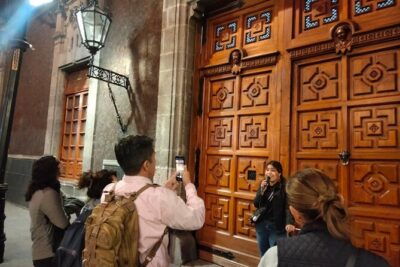
Day of the Dead Tour in Mixquic from Mexico City
Read our review →
Browse the lists this tour appears in