
Reviewed · ART & MURAL TOURS
Mexican muralism with a true Art lover
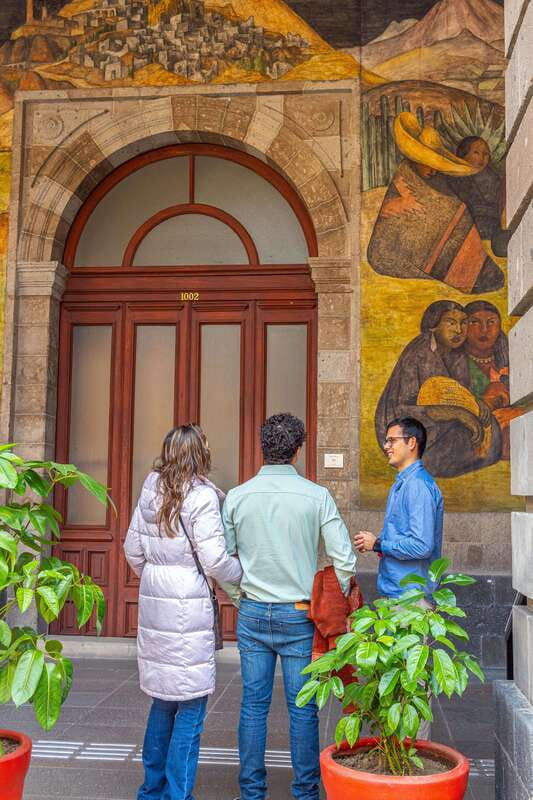
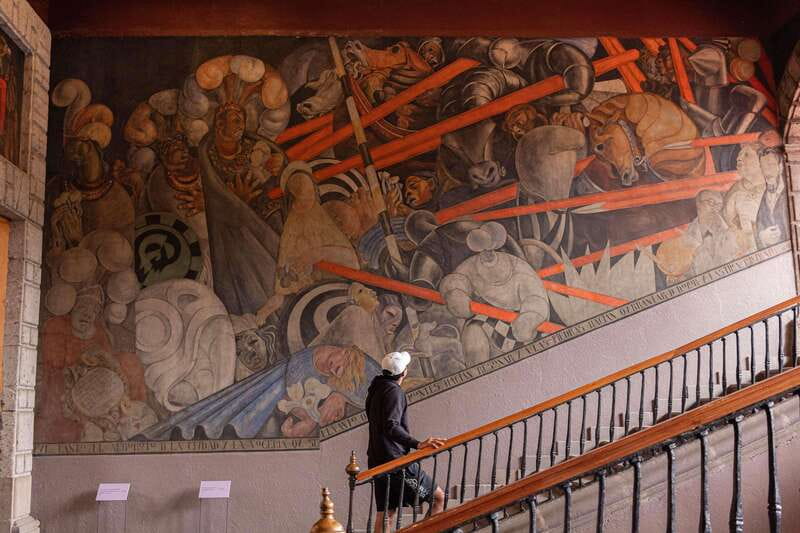
Mexico’s great muralists did not paint only for decoration. They used public walls to argue about conquest, class, revolution, religion, and power. This 2.5-hour walk makes that argument the center of the experience, moving from Palacio de Bellas Artes to San Ildefonso and ending at Museo Vivo del Muralismo.
I like the small-group format, which gives you room to ask real questions instead of listening to a speech. I also like the guide’s broad view: José Vicente Figueroa has led engaging discussions about Rivera, Orozco, Siqueiros, Mexican politics, and the relationship between Mexico and the United States. The main drawback is that the tour covers several major sites in a short time, and entrance tickets cost extra.
In This Review
- Key points at a glance
- Why Mexican muralism makes a strong Mexico City tour
- Starting beneath Bellas Artes’ white dome
- Madero Street connects art with the city
- San Ildefonso and the birth of the movement
- Ending with 248 Rivera murals
- What the guide adds to the murals
- Price, tickets, and the real value
- Who should book this experience
- Final call: a smart choice for art-focused visitors
- FAQ
- How long does the Mexican muralism tour last?
- Where does the tour begin?
- Where does the tour finish?
- What museums are included?
- Are entrance tickets included?
- Which artists are covered?
- What languages are available?
- How large is the group?
Key points at a glance
- Rivera’s Man Controller of the Universe: Begin at Bellas Artes with one of Mexico’s most politically charged murals.
- Three muralist giants: Learn how Rivera, Orozco, and Siqueiros approached history and public art in different ways.
- San Ildefonso’s early murals: See the former college where the mural movement took shape.
- A central Mexico City walk: Connect Bellas Artes, Madero Street, and the Zócalo on foot.
- Museo Vivo del Muralismo finale: Finish with 248 murals by Rivera, plus later works, ceramics, and pre-Hispanic murals.
- Small and multilingual: Groups are limited to 10, with tours offered in English, Spanish, Portuguese, German, Italian, and Russian.
Why Mexican muralism makes a strong Mexico City tour
Mexico City can overwhelm you with museums, churches, plazas, and historic buildings. A tour focused on muralism gives those sights a clear thread. Instead of seeing painted walls as separate attractions, you learn how they reflect the country’s political and cultural arguments.
The Mexican mural movement grew after the Revolution, when public art became a tool for teaching history and shaping national identity. The paintings often place workers, Indigenous people, soldiers, peasants, politicians, and historical figures side by side. They can be beautiful, but they are rarely neutral.
That is why a good guide matters here. You need more than a list of names and dates. You need help reading who has power in a scene, which symbols point to the Spanish conquest, and why a painter chose a factory worker or an Indigenous figure as the center of a composition.
José Vicente Figueroa is associated with this experience, and his guiding style is built around conversation. Departures may have different guides, including Fernando, who has also been praised for combining art and Mexican history. The important point is that the experience is designed around discussion, not a fixed recitation.
More mural and street art walks in Mexico City:
- CDMX: Xochimilco, Coyoacan, Frida Kahlo Museum & Murals Tour
★ 4.4 · 3,025 reviews - Mexico City; ART NACO : Murals & Street Art Bike Tour
★ 5.0 · 284 reviews - Walking Tour – Impressive murals in Historical Center of Mexico City
★ 5.0 · 224 reviews
Starting beneath Bellas Artes’ white dome
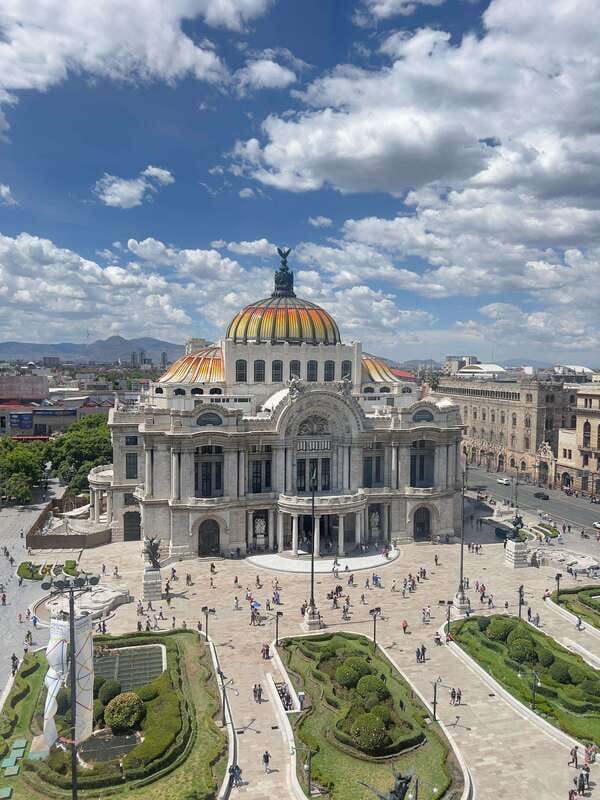
Meet outside the main gate of Palacio de Bellas Artes. The building itself is worth a few minutes before you even begin. Its neoclassical exterior and grand scale make it one of central Mexico City’s most recognizable landmarks.
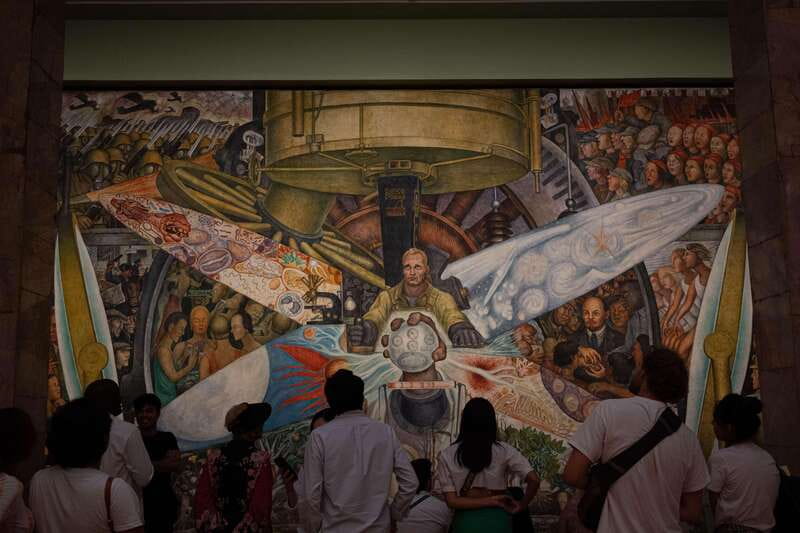
Inside, the focus shifts quickly to Mexican muralism. The key work here is Diego Rivera’s Man Controller of the Universe, a reworked version of a mural Rivera originally began for New York’s Rockefeller Center. The subject gives your guide plenty to discuss: technology, workers, political ideology, capitalism, and the tension between artistic freedom and public commissions.
This is a useful first stop because Rivera’s work can look crowded and confusing at first glance. Figures, machines, historical references, and political symbols compete for your attention. With guidance, you can slow down and identify the visual choices that make the mural a political statement rather than simply a large painting.
The conversation also reaches beyond the artwork. Expect discussion of the Mexican Revolution, the Spanish conquest, modern politics, and the way Mexico has represented its past. These subjects are not side notes. They explain why murals became such a powerful public medium.
You will spend about an hour at Bellas Artes. That is enough time for a serious introduction, though not enough to examine every mural and museum room at length. If you are already an art specialist, you may want extra time before or after the tour to return to works that catch your eye.
Madero Street connects art with the city
After Bellas Artes, walk along 5 de Mayo and Madero Street for about 15 minutes. This part is short, but it keeps the tour from becoming a string of indoor museum visits.
The route leads past neoclassical and baroque-style palaces before reaching the Zócalo, Mexico City’s central square. Along the way, your guide connects the buildings and public spaces to the city’s changing identity. You are not just moving between ticketed attractions. You are seeing how art, government, religion, commerce, and public life share the same historic center.
I like this transition because it gives you a sense of scale. Murals are often discussed as isolated works, yet they were made for a city shaped by conquest, revolution, and rapid modernization. Walking through the historic center helps you understand why public walls mattered so much.
The route does involve city walking, so comfortable shoes are sensible. The tour information does not give a separate accessibility description, so anyone with mobility concerns should confirm the route and entrance conditions before booking.
San Ildefonso and the birth of the movement
The next major stop is the Former College of San Ildefonso, now the San Ildefonso Museum. This is one of the most important parts of the experience because it moves the story from famous finished works to the early development of muralism.
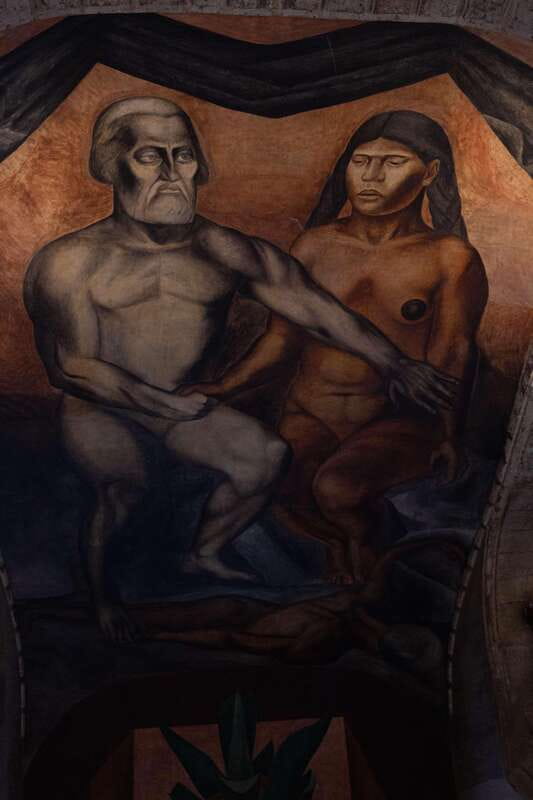
The building provides a different setting from Bellas Artes. Here, murals were painted into the architecture of a former educational institution. That setting helps explain the movement’s original public purpose. These works were not intended only for private collectors. They were placed where students and ordinary citizens could encounter them.
Your guide uses San Ildefonso to explain the relationships among artists, institutions, education, and politics. You will hear more about how muralism developed and why the walls themselves became part of the message.
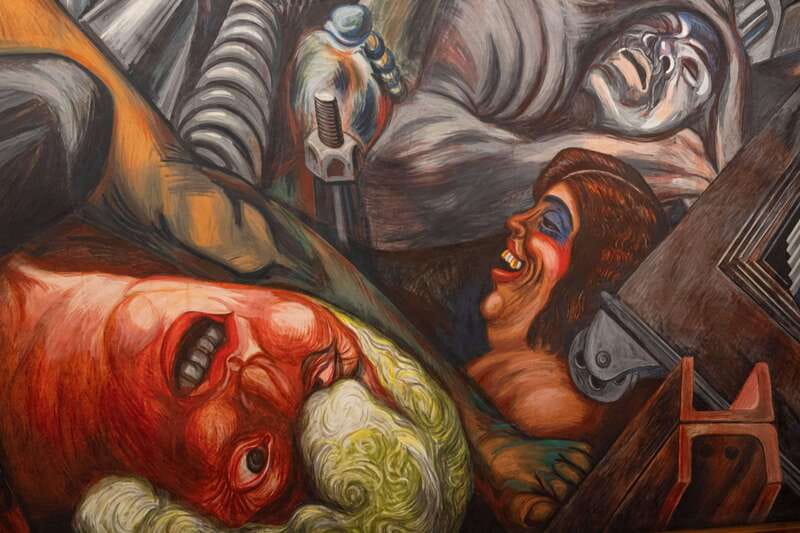
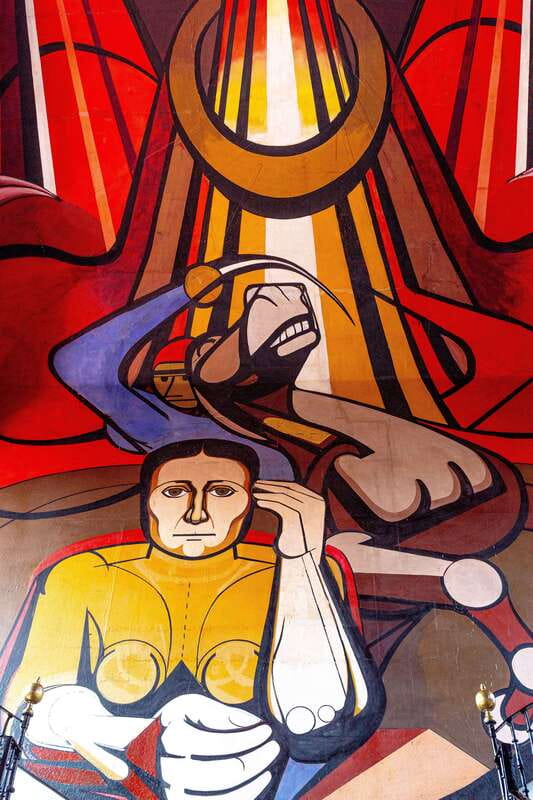
This is also where the differences among Rivera, José Clemente Orozco, and David Alfaro Siqueiros become easier to discuss. Rivera is often associated with readable historical scenes and strong social themes. Orozco’s work can feel darker and more skeptical, with a sharper view of violence and human suffering. Siqueiros pushed toward forceful movement, dramatic perspective, and experimental technique.
Those are broad starting points, not rigid labels. A good conversation lets you test them against the actual murals in front of you. That is one reason the small group helps. You can ask why a figure appears in a certain position, how a scene treats the past, or what separates one painter’s political outlook from another’s.
The visit to San Ildefonso is guided, but the supplied timing does not give a precise number of minutes. Plan for it to be a substantial stop within the 2.5-hour experience. If you want a slow museum visit with extensive photography, this tour may feel brisk.
A completely different day out, same corner of Mexico City:
- Teotihuacan, Guadalupe Shrine & Tlatelolco Day Tour with Lunch
★ 5.0 · 11,603 reviews - Xochimilco, Coyoacan and Frida Kahlo with Optional Lunch
★ 4.5 · 7,320 reviews - Balloon flight + Breakfast in cave + Pyramids + Pick up CDMX.
★ 5.0 · 6,335 reviews - Teotihuacan pyramids morning or afternoon without tourist traps
★ 5.0 · 6,186 reviews
Ending with 248 Rivera murals
The tour finishes at Museo Vivo del Muralismo, also called the Live Muralism Museum. This final stop broadens the story beyond the three best-known names.
The museum houses 248 murals by Rivera, along with recent art by various artists, ceramics, and pre-Hispanic murals. That range matters. It places Mexican muralism within a longer cultural story rather than treating the movement as a closed chapter belonging only to the early twentieth century.
You will have a chance to compare Rivera’s large-scale public art with later works and other forms of Mexican visual culture. The inclusion of ceramics and pre-Hispanic murals gives the ending more breadth, especially if you are interested in how artists draw on Indigenous traditions and older forms of visual expression.
This stop is also a practical finish. You can continue exploring the museum after the guided portion if you want more time, though the exact amount of included guidance is listed as about 45 minutes. Since the tour ends here, you are not rushed back to the starting point.
The museum may be the most useful stop for people who know Rivera but want to learn about artists beyond him. The experience includes discussion of Rufino Tamayo and Jorge González Camarena, along with Orozco and Siqueiros. That wider selection keeps the tour from becoming a single-artist biography.
What the guide adds to the murals
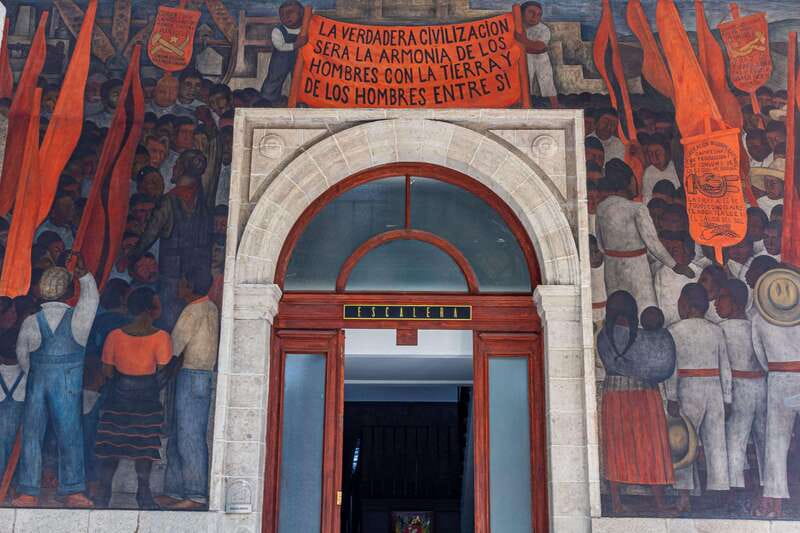
The strongest reason to book this experience is the guide’s role as an interpreter. The murals are large, famous, and visually dramatic, but fame does not automatically make them easy to understand.
You can expect a conversation that links art to:
- The Mexican Revolution
- The Spanish conquest
- Modern Mexican politics
- Relations between Mexico and the United States
- The roles of Rivera, Orozco, Siqueiros, Tamayo, and Camarena
- The development of muralism as a public art movement
The guide’s approach is especially useful if you enjoy asking questions. José Vicente has been praised for explaining the murals in detail while keeping the exchange personal and engaging. Some people who are serious about art may appreciate this more than a standard sightseeing talk.
Language choice also helps. The tour is available in English, Spanish, Portuguese, German, Italian, and Russian. Confirm your preferred language when booking, since the exact guide may vary by departure.
The group limit is 10 people. That is small enough for questions and eye contact, but it is not a private tour. If the group fills, the pace and discussion will depend partly on how much time others want to spend on each mural.
Price, tickets, and the real value
The tour costs $52 per person. You also need to budget about $8 for entrance tickets, bringing the expected total to roughly $60 per person.
The listed ticket prices are 90 Mexican pesos, about $5, for Bellas Artes and 50 pesos, about $3, for San Ildefonso. Prices can change, so treat those figures as a guide rather than a guarantee.
That total is fair if you want context, translation, and a planned route through several major art sites. You are paying less for transportation and more for interpretation. There is no separate vehicle transfer included, and the central route is walked.
I see the value most clearly for first-time visitors to Mexico City who want to understand what they are looking at. If you already have strong knowledge of Mexican art and prefer to read labels at your own pace, buying museum tickets independently may be better value.
The small group also affects the price. A large bus tour can be cheaper, but it cannot offer the same room for conversation. Here, the added cost supports a more focused experience with a guide who can respond to your interests.
Who should book this experience
I would recommend this tour to you if you:
- Want Mexican history explained through visual art
- Prefer discussion to a memorized speech
- Are curious about political symbolism
- Want to see more than Rivera
- Like walking between central Mexico City sights
- Have about half a day available
- Prefer a group limited to 10 people
It is especially good for someone who has seen Rivera’s name repeatedly but has not yet learned how his work differs from Orozco or Siqueiros. It also suits people who want to discover Tamayo, Camarena, and other artists included in the broader museum visit.
You may want another option if you dislike political discussion, need a slow and unhurried museum pace, or want a private guide guaranteed by name. The experience focuses on murals and their context, so it is not a general Mexico City history tour.
Book with a little flexibility in mind. Free cancellation is available up to 24 hours before the start, and you can reserve now and pay later. Check the available start times because the duration is fixed at 2.5 hours, but the schedule is not stated in advance.
Final call: a smart choice for art-focused visitors
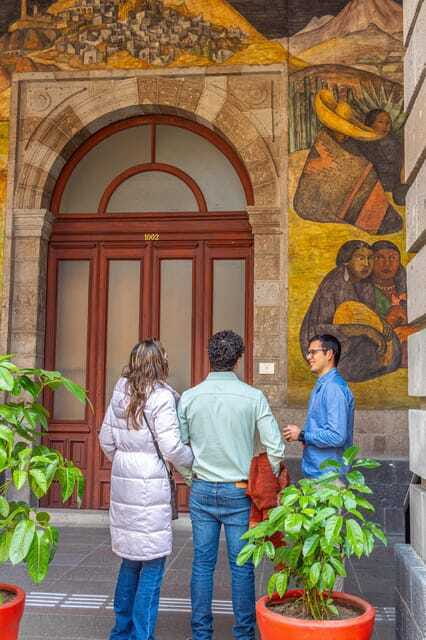
Book this tour if you want the murals to make sense, not just look impressive. The route gives you Rivera at Bellas Artes, the historic center between major sites, early muralism at San Ildefonso, and a wider collection at Museo Vivo del Muralismo.
The best feature is the conversation. Guides such as José Vicente Figueroa bring together art, revolution, conquest, and present-day politics in a way that helps you see why these paintings still matter. Just allow about $8 extra for tickets and remember that the itinerary is full for its 2.5 hours.
If your ideal Mexico City outing includes close looking, questions, and a strong sense of place, this is a worthwhile booking.
FAQ
How long does the Mexican muralism tour last?
The experience lasts 2.5 hours.
Where does the tour begin?
It begins outside the main gate of Palacio de Bellas Artes in Mexico City.
Where does the tour finish?
It finishes at Museo Vivo del Muralismo, also called the Live Muralism Museum.
What museums are included?
The route includes Palacio de Bellas Artes, the San Ildefonso Museum, and Museo Vivo del Muralismo.
Are entrance tickets included?
No. You should budget around $8 per person in total. Bellas Artes is listed at 90 Mexican pesos, about $5, and San Ildefonso at 50 pesos, about $3.
Which artists are covered?
The tour focuses on Diego Rivera, José Clemente Orozco, and David Alfaro Siqueiros. It also includes discussion of artists such as Rufino Tamayo and Jorge González Camarena.
What languages are available?
Tours are offered in English, Spanish, Portuguese, German, Italian, and Russian.
How large is the group?
The group is limited to 10 participants.
Just added around Mexico City
- Mexico City: Hop-on Hop-off City Tour by Turibus 2-Day Pass★ 4.0 · 10 reviews
- Anthropology Museum, Chapultepec Castle & Cable Car Tour★ 4.5 · 10 reviews
- Multi-Variety Mole Class in a Condesa home or art gallery rooftop★ 5.0 · 10 reviews
- PRIVATE TOUR Colonial Town Taxco and Cuernavaca from CDMX.★ 5.0 · 10 reviews
- El Centro Street Food Walking Tour★ 5.0 · 10 reviews
- Private Round-Trip Transportation to Teotihuacan Pyramids★ 5.0 · 10 reviews
- Teotihuacan and My Grandma’s Food Tour★ 5.0 · 10 reviews
- Teotihuacan Pyramids Tour from Mexico City★ 5.0 · 10 reviews
Art & Mural Tours, compared.
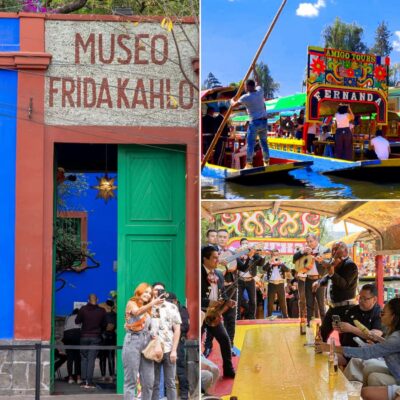
Xochimilco, Coyoacan, Frida Kahlo Museum & Murals Tour
Read our review →
Mexico City; ART NACO : Murals & Street Art Bike Tour
Read our review →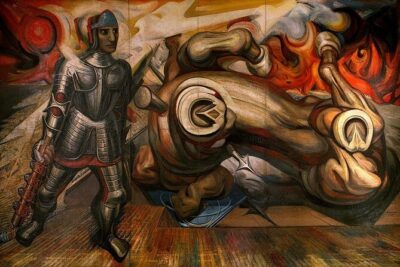
Walking Tour – Impressive murals in Historical Center of Mexico City
Read our review →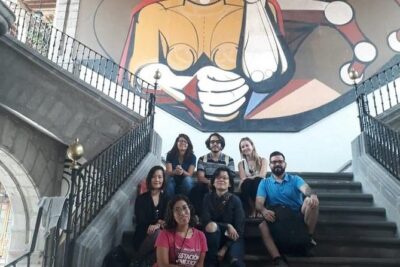
La Catrina & Muralism: Diego Rivera’s Legacy & Frida Kahlo
Read our review →
Xochimilco floating gardens, Coyoacan and UNAM murals
Read our review →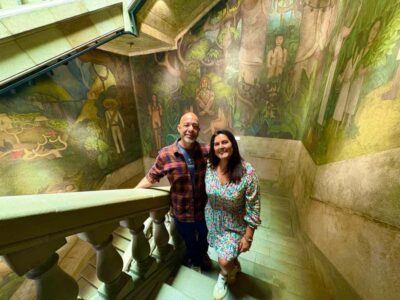
Browse the lists this tour appears in