
Reviewed · ANTHROPOLOGY MUSEUM TOURS
Mexico City: Guided Visit of the Museum of Anthropology
The Aztec Sun Stone is the star of this visit, but it is only one part of a much larger story. Inside Mexico City’s National Museum of Anthropology, you move from simple spearheads used more than 10,000 years ago to the complex art and beliefs of pre-Columbian societies. A guide helps connect the objects instead of leaving you to read labels one room at a time.
I like the way this tour combines a focused 2.5-hour explanation with free time afterward. I also like that the admission ticket is included, and that you can choose a Spanish- or English-speaking guide, with a private group option available.
The main consideration is transport: you must reach the museum yourself, and the meeting point may vary with the option you book. At $62 per person, this makes the most sense if you want context and a clear route through a very large museum, not simply entry.
In This Review
- Key points to know before you book
- Why the National Museum of Anthropology matters
- Meeting at Paseo de la Reforma
- The first rooms: from early hunters to daily life
- The Sun Stone and the Aztec story
- Aztec, Maya, Zapotec, and other cultures
- What the 2.5-hour guided format gives you
- Is $62 per person a fair price?
- Who will get the most from this visit?
- How to use your free time wisely
- Should you book the Museum of Anthropology tour?
- FAQ
- How long does the museum tour last?
- What does the $62 price include?
- Is transportation included?
- Where does the tour meet?
- Which languages are available?
- Will I see the Aztec Sun Stone?
- Do I have free time inside the museum?
- Is a private group available?
- Can I cancel for a full refund?
Key points to know before you book
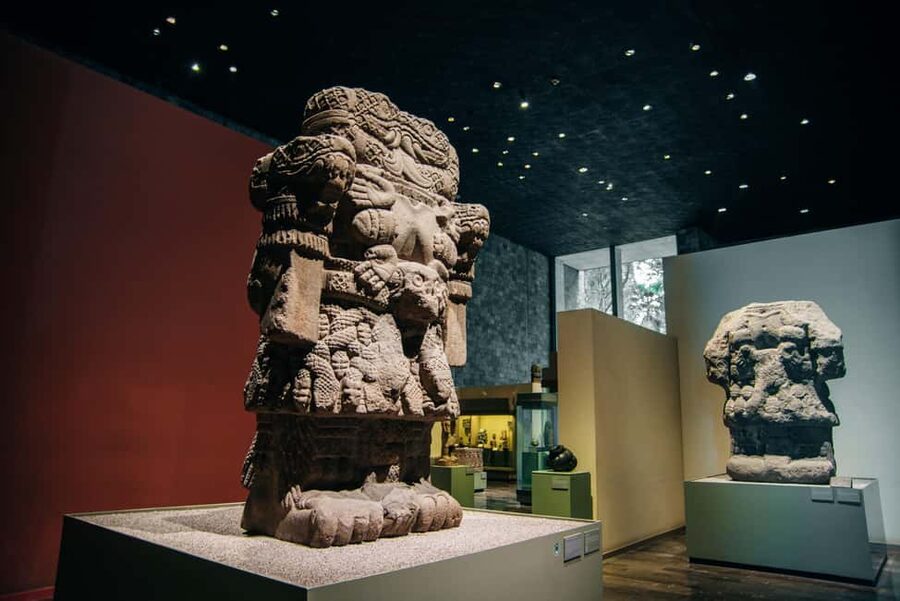
- The Sun Stone is the main event: Your guide explains the meaning of the museum’s famous Aztec artifact, also called the Aztec calendar.
- The collection covers thousands of years: You will see early hunting tools, household pottery, ritual objects, and major archaeological finds.
- The guide keeps the visit manageable: The museum is Mexico’s most popular museum and receives about 2 million visitors a year, so a planned route saves time.
- You get independent time afterward: Once the guided portion ends, you can return to rooms or objects that caught your attention.
- Spanish and English are offered: The live tour guide is available in both languages.
- Transportation is not included: You meet at or near the museum, with the exact meeting point depending on your selected option.
Why the National Museum of Anthropology matters
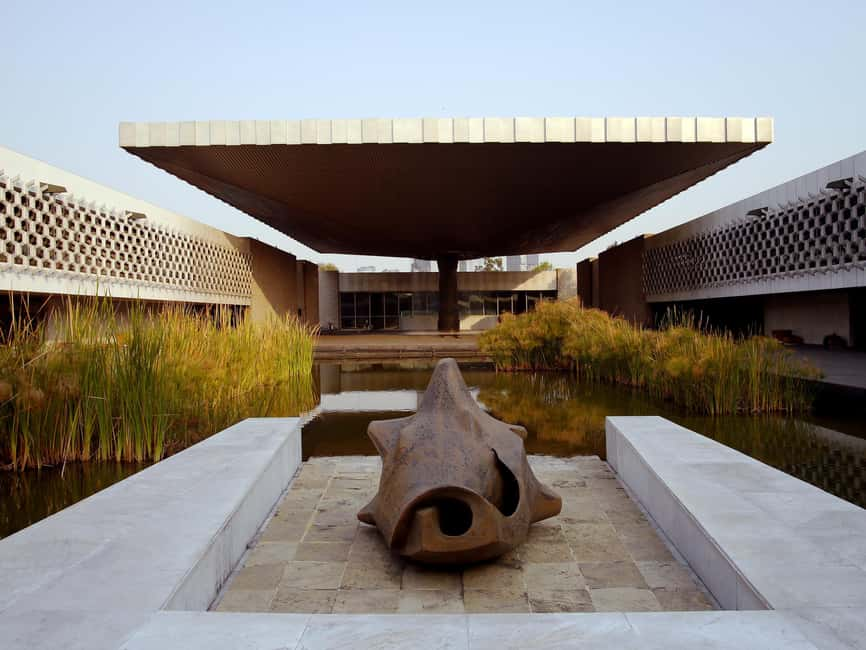
Mexico’s National Museum of Anthropology is more than a display of old objects. It protects the material record of the country’s Indigenous peoples and presents cultures that developed across what is now Mexico.
That broad scope is important. You are not visiting one archaeological site or one historical period. Instead, the museum brings together objects linked to the Aztec, Maya, Zapotec, and other societies, along with evidence of much earlier communities.
I find this useful because Mexican history can be hard to sort into neat chapters. The museum shows that different societies had their own traditions, beliefs, tools, and artistic styles. A guide can point out those differences while also explaining how discoveries have changed our understanding of Mesoamerican cultures.
The museum was founded more than 50 years ago and remains a major cultural landmark. Its popularity has a practical effect: you are entering a busy, important institution, not a small side attraction that can be covered casually in half an hour.
More visits to the Anthropology Museum:
- Chapultepec Castle & Anthropology Museum Tour
★ 4.5 · 1,348 reviews - Anthropology Museum Guided Tour
★ 4.5 · 1,035 reviews - Mexico City: Anthropology Museum Guided Visit
★ 4.4 · 708 reviews
Meeting at Paseo de la Reforma
The listed meeting area is at Avenida Paseo de la Reforma and Calzada Mahatma Gandhi, beside the museum. Your exact meeting point may change according to the option you select, so check the booking details before setting out.
This is a self-arrival experience. No hotel pickup or other transportation is included, and the tour finishes back at the same general Reforma and Mahatma Gandhi area.
That arrangement keeps the cost focused on the museum visit and guide rather than private transfers. It also means you need to plan your route and allow time to reach the entrance. If you are already spending the day in central Mexico City, this is fairly straightforward. If you are coming from farther away, give yourself extra time so you do not arrive rushed.
The activity information lists a duration of 2.5 hours, while the detailed schedule comes to roughly 2.83 hours. In practical terms, plan on around two and a half to nearly three hours at the museum, depending on how long the guided route and personal exploration last.
The first rooms: from early hunters to daily life
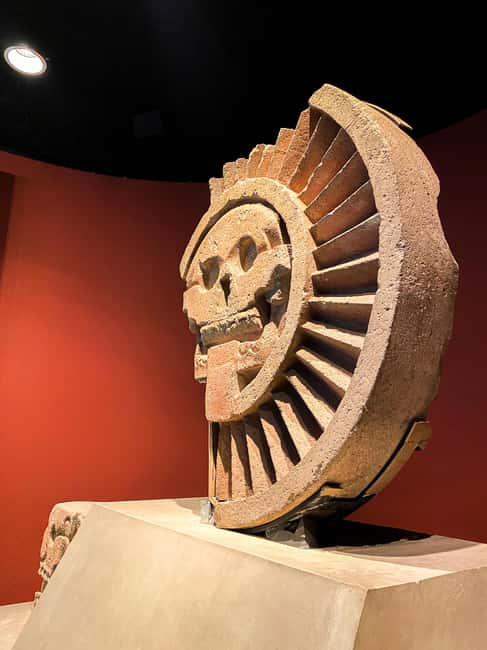
The tour begins with the archaeological collection, where even small objects can carry a large amount of information. Spearheads used by the continent’s first hunters more than 10,000 years ago show how much human history comes before the better-known Aztec and Maya periods.
These pieces are easy to overlook. They are not large statues or elaborate monuments, but they tell you about movement, survival, and technology. I like having a guide at this point because a short explanation can turn a small stone point into evidence of how early people lived and adapted.
You will also see clay utensils and other everyday objects. Some were made for ordinary household use, while others had symbolic roles in ceremonies or religious practice.
That mix is one of the museum’s strengths. You are not shown only royal or sacred objects. Common tools and vessels help explain daily life, while ritual pieces show how practical and spiritual life often overlapped.
Do not expect every object to receive equal attention during the guided portion. The museum holds far more material than anyone can absorb in one visit. The guide’s job is to select key examples and explain why they matter, not to describe every case.
The Sun Stone and the Aztec story
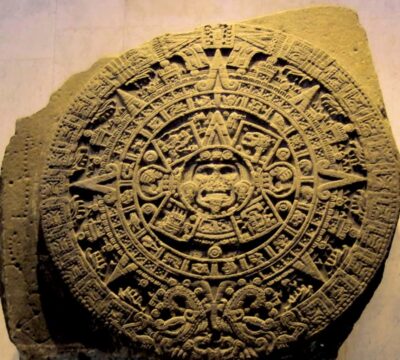
The famous Sun Stone is the clear centerpiece of the experience. It is often called the Aztec calendar, but the tour description presents it as a work with a more profound meaning than a simple date-keeping device.
This is where the guide’s interpretation adds real value. You will learn how the stone relates to Aztec beliefs and how archaeological discoveries have forced historians to reconsider the development of Mesoamerican cultures.
The object is visually impressive, but its importance is not limited to its size or fame. It offers a way into Aztec ideas about time, religion, power, and the order of the universe. Without explanation, you may simply see a large carved stone covered in symbols. With context, you can begin to understand why it has become such a strong symbol of Mexico’s Indigenous past.
I would give this part your full attention. If you have seen photographs of the Sun Stone before, the visit still adds something because you are looking at the original museum piece within a larger archaeological story.
At the same time, keep your expectations realistic. The tour is not a full course on Aztec civilization. It uses the Sun Stone as a central example, then connects it to wider themes in the museum. If you want every symbol explained in detail, your independent time afterward will be valuable.
More museums and galleries in Mexico City:
- CDMX: Xochimilco, Coyoacan, Frida Kahlo Museum & Murals Tour
★ 4.4 · 3,025 reviews - Frida Kahlo VIP [Museum Tickets Included] Bike, Markets & Churros
★ 5.0 · 1,072 reviews - Frida Kahlo VIP [Museum Tickets Included] Walk, Markets & Churros
★ 5.0 · 982 reviews - EXCLUSIVE TOUR Frida Kahlo Museum – SMALL GROUPS
★ 5.0 · 901 reviews
Aztec, Maya, Zapotec, and other cultures
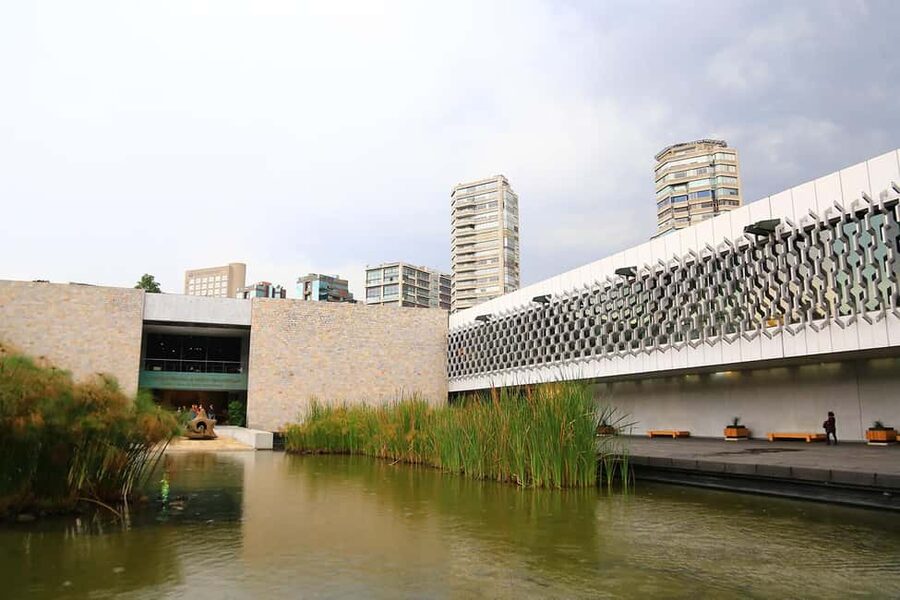
The museum’s collection covers a large part of present-day Mexico, so the tour moves beyond the Aztec world. You will encounter objects connected with cultures such as the Maya and Zapotec, along with other societies whose histories shaped Mesoamerica.
The benefit of seeing these collections in one building is comparison. You can look at different artistic traditions, religious objects, tools, and forms of daily life without traveling from one archaeological site to another.
Your guide explains the significance of selected pieces and places them within their cultural setting. That matters because an object’s original purpose is not always obvious. A vessel may have been used at home, in a ceremony, or for both. A carved figure may represent a religious idea rather than a portrait of a specific person.
The tour also helps guard against a common mistake: treating all pre-Columbian societies as one culture. The museum’s rooms show separate histories and legacies. The Aztec, Maya, and Zapotec worlds should not be collapsed into one general category, and a guided visit gives you a better chance of noticing the distinctions.
Since no detailed room-by-room route is provided, the precise sequence can depend on the guide and the selected option. That flexibility can be useful, though it means you should not expect a fixed script that covers every gallery in the same order.
What the 2.5-hour guided format gives you
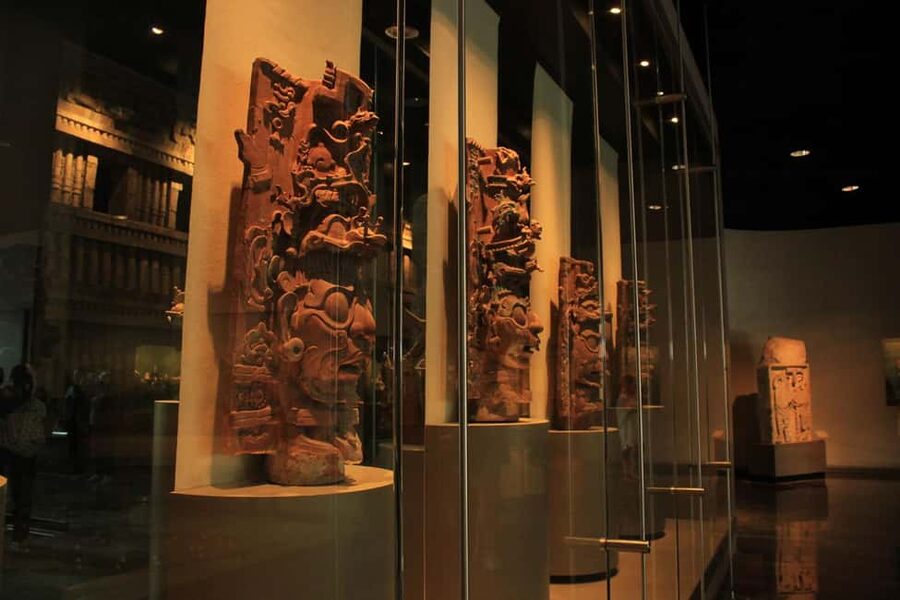
Two and a half hours is a useful middle ground for this museum. A much shorter visit would leave you with famous objects but little sense of how they fit together. A full-day visit could be tiring, especially if you are also exploring other parts of Mexico City.
The guided portion gives you a structure. You see major pieces, hear why they matter, and get an introduction to the cultures represented in the collection. This works especially well if you are visiting Mexico City for the first time or if you do not usually feel comfortable reading archaeological displays on your own.
I also like the built-in free time. After the guide finishes, you can return to a room that interested you, look more closely at pottery and tools, or simply slow down instead of keeping pace with a group.
The tradeoff is that your personal time is not the same as having a guide beside you. If you want to ask questions about every object, stay attentive during the guided section and make a note of the galleries you want to revisit.
The schedule includes a photo stop, a guided visit, sightseeing, and walking. Wear something suitable for a museum visit that involves moving through several exhibition spaces. The supplied information does not specify special access arrangements, so contact the provider if you need details about accessibility or other personal requirements.
Is $62 per person a fair price?
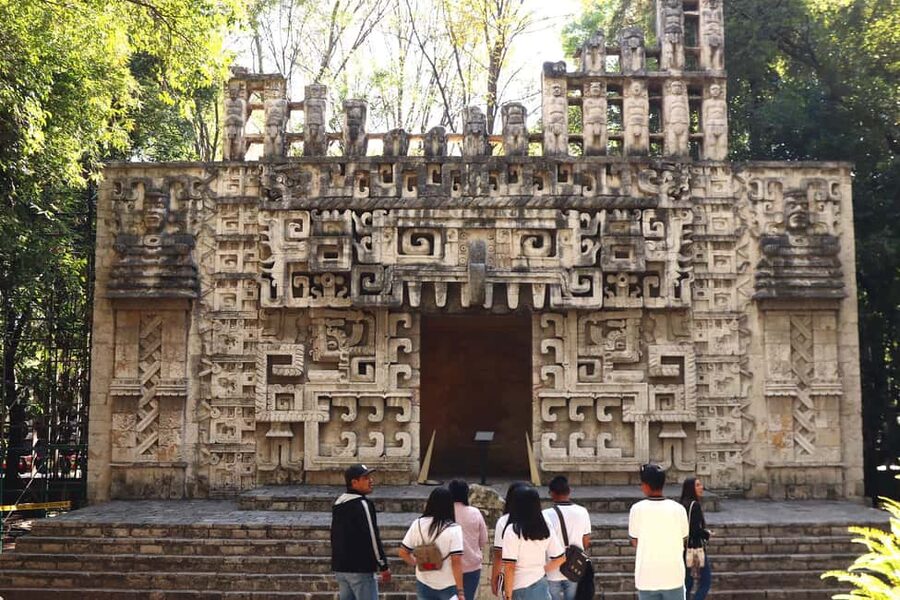
The price is $62 per person, including museum admission and the guided tour. Transportation, pickup, and drop-off are not included.
That is not the cheapest way to enter the museum. If you are happy to read displays on your own and plan to spend only a short time inside, buying admission separately could be better value. The tour earns its price through interpretation, organization, and the chance to ask questions in Spanish or English.
I would judge the value by your interest level. For someone who wants a quick look at the Sun Stone and a few famous objects, $62 may feel high. For someone who wants a clear introduction to Mexico’s archaeological legacy without trying to design a route through a huge museum, the price is easier to justify.
The private group option may also appeal if you prefer a more personal format. The information confirms that private groups are available, but it does not specify the additional cost or exact group size, so check those details before booking.
Free cancellation up to 24 hours before the activity and the option to reserve now and pay later make the booking less rigid. Those policies do not change the museum experience itself, but they can help if your Mexico City plans are still shifting.
Who will get the most from this visit?
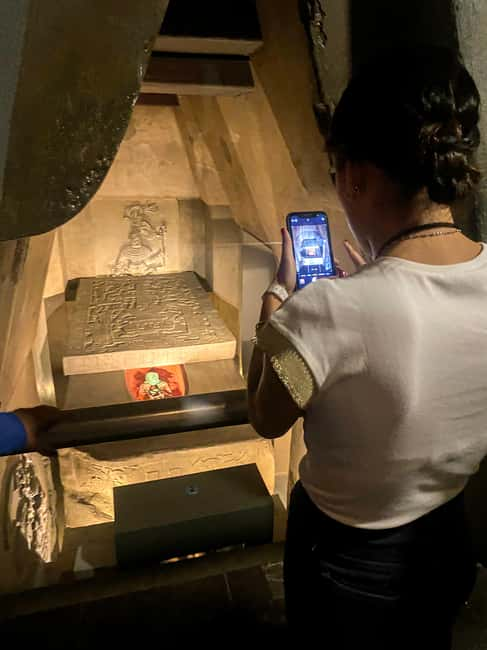
I would recommend this tour to you if you want history explained in plain language and prefer a planned introduction to a major museum. It is particularly suitable for first-time visitors, people with limited time, and anyone who wants to understand the Sun Stone rather than simply photograph it.
Families may also find the range of objects useful, since the visit includes tools, pottery, ritual items, and large archaeological pieces. The amount of walking and the length of the tour mean you should consider your group’s energy and attention span.
This may be less suitable if you prefer to move slowly through every case, sketch objects, or spend hours on one culture. A guide-led visit sets the pace for the first portion, even though free time follows.
Language is another simple factor. Live guiding is offered in Spanish and English. Some content is shown in its original language, so the guide’s spoken explanations will be especially useful if you are not comfortable reading all the exhibition material.
How to use your free time wisely
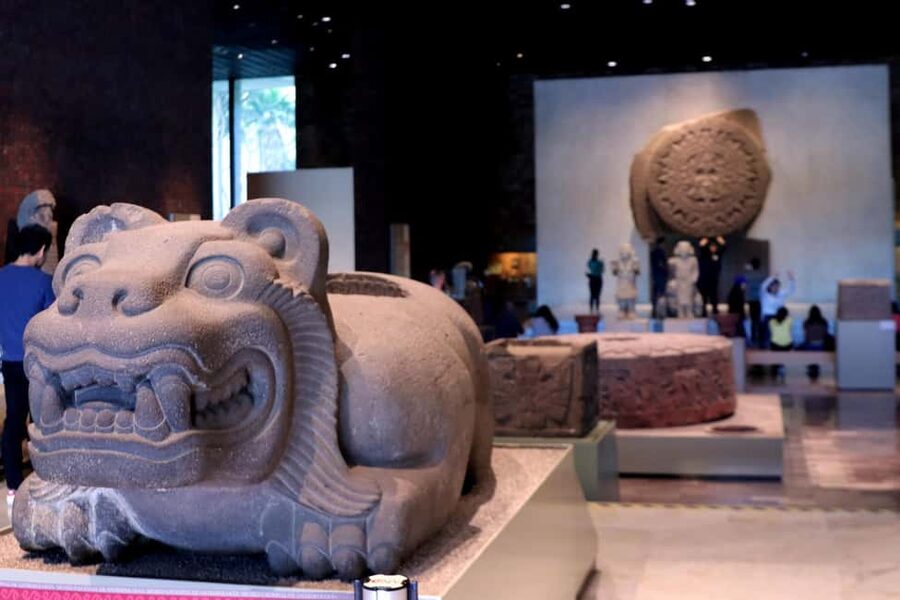
The independent portion is not just leftover time. It is your chance to shape the visit around your own interests.
If the Sun Stone captured your attention, stay with the related material and look again at the symbols after hearing the explanation. If you prefer everyday life to monumental objects, return to the clay utensils and smaller tools. Their modest appearance can make them easy to miss, but they help show how people cooked, worked, worshipped, and organized daily life.
You can also use this time to compare rooms connected with different cultures. Notice how the museum presents separate traditions rather than one single story of ancient Mexico.
Because the museum is large and receives about 2 million visitors annually, do not assume you can see everything in one sitting. The guided route gives you a foundation. Your free time lets you choose what deserves a second look.
Should you book the Museum of Anthropology tour?
Book it if you want the Aztec Sun Stone explained within a wider story about Mexico’s Indigenous peoples. The included admission, live Spanish or English guide, focused schedule, and free time make this a sensible introduction to one of Mexico City’s major cultural institutions.
Think twice if you only want independent exploration or if $62 feels too high for a museum visit without transport. In that case, entry on your own may suit you better.
For most first-time visitors who value context, I think the guided format is worth considering. You get more than a quick look at Mexico’s most famous archaeological museum pieces, while still having time to follow your own interests afterward.
FAQ
How long does the museum tour last?
The advertised duration is 2.5 hours. The detailed activity schedule lists approximately 2.83 hours, so plan on roughly two and a half to nearly three hours.
What does the $62 price include?
The price includes admission to the National Museum of Anthropology and a guided museum tour.
Is transportation included?
No. Transportation, pickup service, and drop-off are not included.
Where does the tour meet?
The listed meeting area is Museo Nacional de Antropología at Avenida Paseo de la Reforma and Calzada Mahatma Gandhi. The exact meeting point may vary according to the option booked.
Which languages are available?
The live guide is available in Spanish and English. Some content is shown in its original language.
Will I see the Aztec Sun Stone?
Yes. The tour includes the famous Sun Stone, also known as the Aztec calendar, with an explanation of its meaning.
Do I have free time inside the museum?
Yes. After the guided portion, you have free time to explore exhibits at your own pace.
Is a private group available?
Yes. A private group option is available, though the supplied information does not specify its additional price or exact group size.
Can I cancel for a full refund?
Yes. You can cancel up to 24 hours in advance for a full refund.
Just added around Mexico City
- Ticket to Frida Kahlo Museum (Blue House)★ 5.0 · 3 reviews
- Valle de Bravo: Forest Hiking Adventure★ 4.4 · 3 reviews
- La Roma Private Art Tour★ 5.0 · 3 reviews
- Private Transportation: Pickup and Drop-Off★ 5.0 · 3 reviews
- Chapultepec Castle and Anthropology Tour, starting from CDMX★ 5.0 · 3 reviews
- Mexico City: Relaxing or Decontracting Massage Experience★ 5.0 · 3 reviews
- Grutas de Tulantongo★ 3.0 · 3 reviews
- Mexico City: Local Walking Tour with Mezcal & Wrestling Show★ 5.0 · 3 reviews
Anthropology Museum Tours, compared.
Chapultepec Castle & Anthropology Museum Tour
Read our review →
Anthropology Museum Private Experience Walking Tour
Read our review →
5 Hour Tour through Chapultepec, Anthropology Museum and Castle
Read our review →
PRIVATE Tour in Chapultepec Castle and Museum of Anthropology
Read our review →
Teotihuacan & Anthropology Museum, Templo Mayor & City Tour
Read our review →Browse the lists this tour appears in