
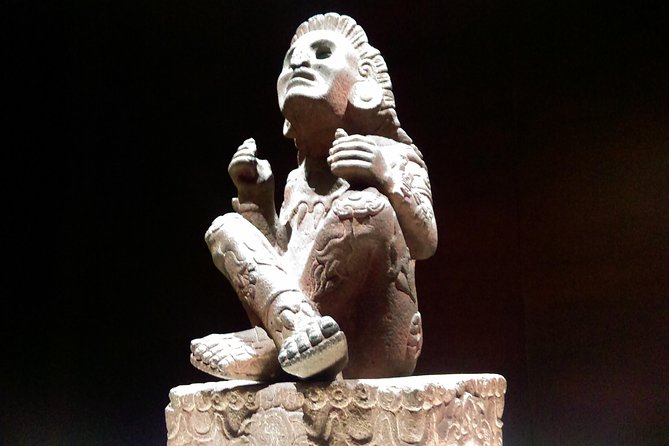
Reviewed · ANTHROPOLOGY MUSEUM TOURS
Museum of Anthropology: a look at Mexico’s past
Mexico City’s National Museum of Anthropology is too large and layered for a quick wander. This guided visit focuses on its most important rooms, using artifacts, myths, symbols, and political stories to explain the cultures that shaped Mexico before the Spanish arrival. Hector Banderas and Edith González are the guides most often named for their warm, engaging teaching.
I especially like the way the tour gives you a story instead of a pile of objects. I also like the small maximum group of six, which makes it easier to ask questions, hear the guide, and pause when your legs need a break. The main consideration is time: three hours can introduce the museum, but it cannot cover everything. One experienced visitor estimated that a complete visit could take several days.
In This Review
- Key points
- Why This Museum Needs a Guide
- Meeting at Chapultepec
- Inside the Most Important Museum Rooms
- Hector Banderas: Storytelling With Structure
- Edith González: Clear Explanations and Present-Day Connections
- How Much Can You See in Three Hours?
- Audio Equipment and Group Size
- Physical Effort and Comfort
- What You Are Paying For
- Who Will Get the Most From This Visit?
- Cancellation and Planning Details
- Should You Book the Anthropology Museum Tour?
- FAQ
- How long does the Museum of Anthropology tour last?
- What is included in the experience?
- Is the tour offered in English?
- Where does the tour begin?
- Where does the tour end?
- Is transportation included?
- Are meals or bottled water included?
- Can children join the tour?
- What happens if I need to cancel?
Key points
- A focused three-hour route: See the museum’s most emblematic rooms without trying to conquer every gallery.
- Hector and Edith bring the objects to life: Their explanations connect artifacts with mythology, daily life, religion, politics, and modern Mexican culture.
- Admission is included: You do not need to arrange the museum ticket separately.
- Small group size: The activity accepts a maximum of six people, with audio equipment provided for groups of six or more.
- English-language guidance: The tour is designed for English-speaking visitors and is led by a federally licensed SECTUR-certified guide.
- A physically active museum visit: Expect substantial walking and standing, with occasional places to sit while listening.
Why This Museum Needs a Guide
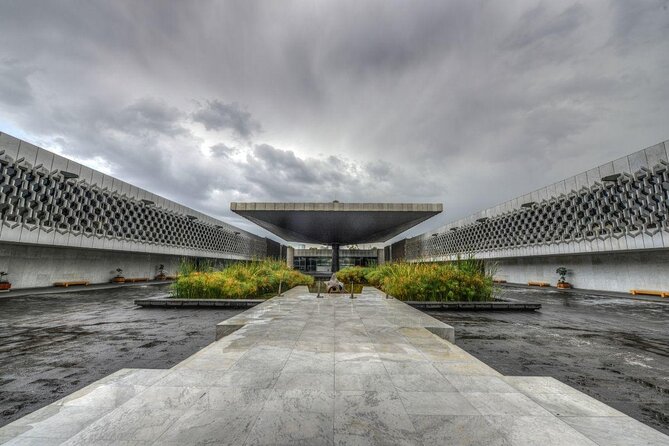
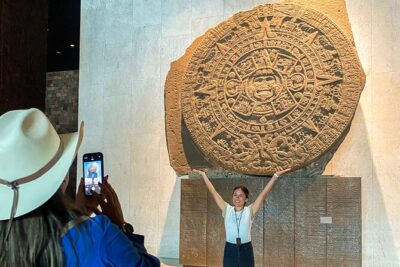
The National Museum of Anthropology is one of those places where the building and collection can overwhelm you before you have found your bearings. Its galleries cover the peoples and cultures of Mexico before Spanish conquest, and the displays contain far more detail than you can absorb in one pass.
I like having a guide here because the objects need context. A carved figure, stone monument, or ceremonial piece can look impressive on its own, but the meaning becomes clearer when someone explains the symbols, the beliefs behind them, and the role the object played in its society.
Hector has a gift for building a chronological story across roughly 3,500 years of Mexican history. His approach connects themes and symbols from one room to the next, so you begin to recognize ideas later in the museum and, perhaps, around Mexico City during the rest of your visit.
Edith takes a similarly clear and personal approach. She explains the museum’s purpose as well as the cultures represented inside it, then links older religious ideas with practices that continue in Mexico today. Her background in history gives her a strong base, but her real strength is making difficult material easy to follow.
More visits to the Anthropology Museum:
- Chapultepec Castle & Anthropology Museum Tour
★ 4.5 · 1,348 reviews - Anthropology Museum Guided Tour
★ 4.5 · 1,035 reviews - Mexico City: Anthropology Museum Guided Visit
★ 4.4 · 708 reviews
Meeting at Chapultepec
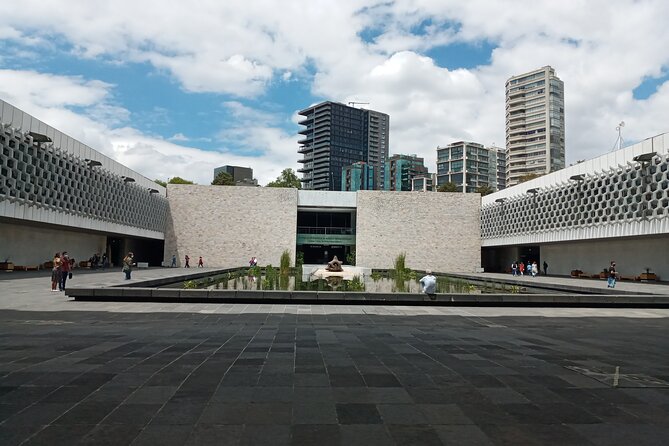
The meeting point is on Paseo de la Reforma, beside the Bosque de Chapultepec in the Polanco area. The exact location is listed as Av. P.º de la Reforma s/n, Bosque de Chapultepec I Secc, Miguel Hidalgo, Mexico City.
The museum is near public transportation, which helps if you are staying elsewhere in the city. You arrange your own way there, since private transportation is not included. The tour ends back at the same meeting point, so you do not need to plan a separate pickup or figure out a new destination afterward.
Give yourself enough time to arrive. One guide was especially gracious when a group arrived a few minutes late, but you should not count on that. Confirmation comes at booking, so check the meeting instructions carefully before setting out.
This is an adult-focused experience. The stated policy does not allow children under 18, even though one past party included a 13-year-old. If you are booking for a teenager, confirm the current rule before paying rather than assuming that the earlier exception applies.
Inside the Most Important Museum Rooms
The planned visit lasts about three hours and concentrates on the museum’s most emblematic rooms. That is the right strategy for a first visit. You get a guided framework rather than a rushed attempt to see every object.
The route is built around the cultures and peoples who lived in Mexico before the arrival of the Spaniards. Your guide explains how societies developed, how geography affected them, and how religion, power, conflict, trade, and daily life shaped the objects displayed in the cases.
The special value is the connection between rooms. Instead of treating each civilization as an isolated chapter, Hector or Edith can help you follow recurring ideas. Symbols, gods, legends, and artistic forms begin to make more sense as part of a longer story.
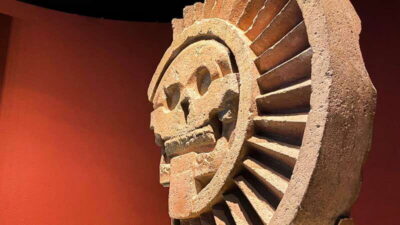
You may also spend time looking closely at objects that you would otherwise pass. A good guide does not simply identify an artifact. The explanation can include what it represented, how it may have been used, and what it tells you about the people who made it.
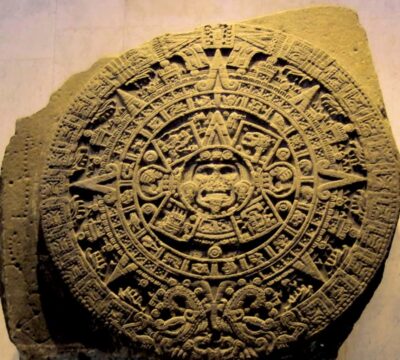
The tour is not only about famous pieces. It also gives you a way to read the less obvious material. Details that first look decorative may carry religious or political meaning. A symbol introduced early in the visit may reappear later, giving you a sharper eye for the rest of the museum.
Hector Banderas: Storytelling With Structure
Hector receives the strongest praise in the supplied feedback, and the descriptions point to a consistent strength: he teaches through stories. He uses parables, chronology, mythology, and visual symbols to make an enormous subject manageable.
I would choose Hector if you want a guide who gives you a clear beginning, middle, and end. He has been praised for explaining the mystery and mythology around the artifacts while still tying those stories to historical developments. That balance matters. The museum can become either a dry sequence of dates or a collection of attractive objects. His method aims for something more memorable.
He also appears attentive to the practical side of the visit. One couple appreciated that he stopped to let them sit several times while continuing the explanation. That small detail matters in a museum where three hours on your feet can catch up with you.
Hector also uses technology to help connect ancient material with present-day Mexico. For you, that can make the visit feel less remote. The goal is not simply to admire old objects, but to understand how older beliefs and symbols continue to influence Mexican culture.
More museums and galleries in Mexico City:
- CDMX: Xochimilco, Coyoacan, Frida Kahlo Museum & Murals Tour
★ 4.4 · 3,025 reviews - Frida Kahlo VIP [Museum Tickets Included] Bike, Markets & Churros
★ 5.0 · 1,072 reviews - Frida Kahlo VIP [Museum Tickets Included] Walk, Markets & Churros
★ 5.0 · 982 reviews - EXCLUSIVE TOUR Frida Kahlo Museum – SMALL GROUPS
★ 5.0 · 901 reviews
Edith González: Clear Explanations and Present-Day Connections
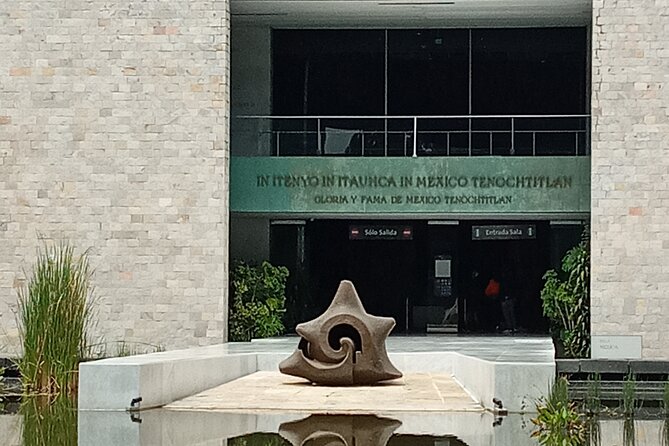
Edith’s style comes across as warm, grounded, and easy to understand. She explains the museum itself, then places the objects within the beliefs and customs of the people who created them.
I would look for Edith if you want a guide who can handle a large amount of information without making the experience feel like a lecture. She has been praised for explaining the lives, politics, geography, conflicts, and religious ideas behind the displays in a way that remains accessible.
One particularly useful aspect of her approach is the link between pre-Columbian religious practices and later Mexican traditions. She can help you see how stories about gods and the ways Indigenous communities honored them relate to religious practices found in Mexico today.
That connection gives the visit more meaning after you leave the museum. You may notice symbols and ideas elsewhere in Mexico City that you would have missed without the background. A museum visit becomes a tool for understanding the wider culture, not just a three-hour indoor stop.
How Much Can You See in Three Hours?
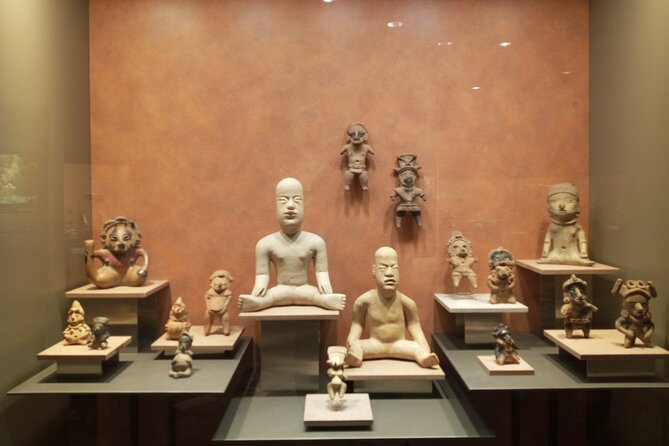
Three hours is enough for a strong introduction, not a complete survey. The museum is large, and the guided route deliberately selects the most important rooms rather than promising every gallery.
That focus is a benefit if you have limited time in Mexico City. You will leave with a working framework and a set of memorable examples. You are less likely to lose an hour wandering into rooms that do not fit your interests, then discover that you missed the major themes.
The tradeoff is obvious: you will not see everything. One past group spent more than four hours in the museum and still felt it could fill several days. If you are a serious museum enthusiast, plan to return on your own after the guided visit.
I like the idea of scheduling this tour early in your Mexico City stay. The symbols and cultural references your guide explains can help you understand other museums, historic sites, markets, and neighborhoods later in the week.
Do not schedule an important appointment immediately afterward. The official duration is about three hours, but questions and extra stops can extend the visit. One group found the time passed quickly, which is a good sign for engagement but a reminder not to plan too tightly.
Audio Equipment and Group Size
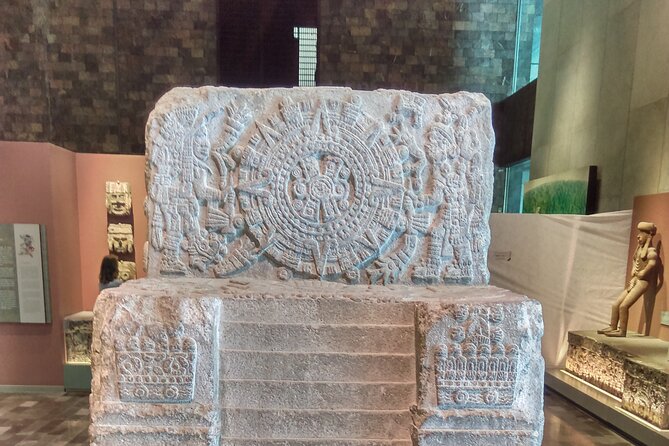
The activity has a maximum of six people. That is a meaningful advantage in a museum. A small group makes it easier for the guide to position everyone near an object, answer questions, and adjust the pace.
Audio equipment is provided for six clients or more. This can help when the gallery is noisy or when you need to stand a short distance away from the guide to see an exhibit.
The supplied information does not promise audio equipment for smaller groups, so do not assume that every booking includes it. In either case, stay close enough to hear clearly, especially in busy rooms.
The small group also gives the tour a more personal feel than a large walk-through. You can ask why a symbol appears repeatedly, request clarification about a culture, or pause over an object that catches your attention.
Physical Effort and Comfort
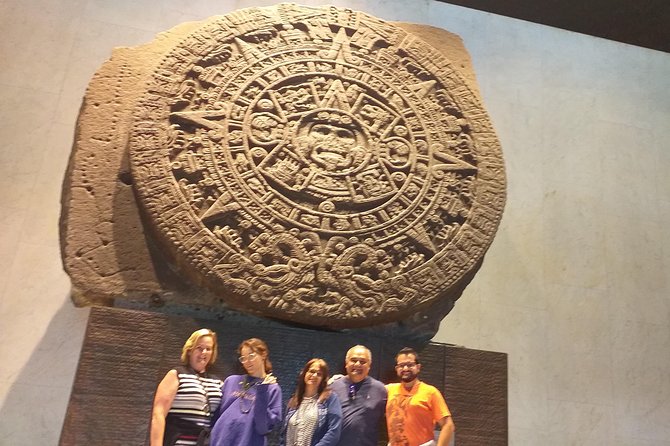
You should have a moderate level of physical fitness. The tour takes place inside a large museum and involves walking and standing, though the guide may provide chances to sit while listening.
Wear comfortable shoes. Bring water for before or after the visit, since bottled water is not included. Lunch is also not included, so plan your meal separately rather than expecting a break built into the tour.
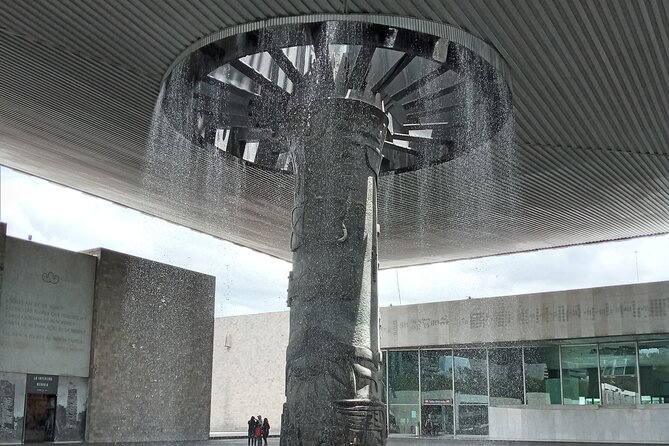
The museum’s famous inverted fountain provides a pleasant welcome, especially on a hot day. It is a small detail, but it helps set the tone before you begin the galleries.
Because the tour ends at the starting point, you can arrange lunch or another activity nearby afterward. The meeting area near Chapultepec and Paseo de la Reforma gives you several possible directions, but the tour itself does not include transport or a meal.
What You Are Paying For
The admission ticket is included, as is the service of a federally licensed guide certified by SECTUR. That makes the value easier to judge: your main benefit is not transport or food, but interpretation and a planned route through a very large museum.
I think the admission-plus-guide format works best for a first visit. The ticket gets you inside, while the guide helps you understand what deserves your attention and why it matters.
The value is less clear if you already know the museum well or prefer to read every label at your own pace. In that case, a self-guided visit may give you more freedom. For most first-time visitors, though, the cost of guidance can prevent a confusing and tiring museum experience.
No price is provided here, so compare the current booking total with the museum’s direct admission cost before reserving. Then ask yourself how much you value three hours of expert explanation, a focused route, and the chance to ask questions.
The experience is recommended by 96 percent of customers and carries a 4.8 rating from 52 reviews. Those figures are useful signals, but the more important point is the pattern of praise: guides are repeatedly recognized for clear explanations, passion, patience, and the ability to turn complicated material into a story.
Who Will Get the Most From This Visit?
I would recommend this tour to an adult visiting the National Museum of Anthropology for the first time, especially if you want to understand the objects rather than simply photograph them.
It also suits you if you enjoy mythology, ancient belief systems, history, and connections between past and present. Hector’s storytelling may be a particularly good fit if you like chronology and recurring symbols. Edith may suit you if you prefer a calm, clear explanation with links to modern Mexican religious and cultural life.
The tour is less suitable if you want a fast, casual museum stop. Three hours is a serious commitment, and the museum deserves attention. It is also not a good choice under the stated age policy for children younger than 18.
Families with older teenagers should confirm eligibility before booking. One past experience included a 13-year-old who asked many questions, but the current information says the activity is unavailable to children under 18.
Cancellation and Planning Details
You can cancel for a full refund up to 24 hours before the local start time. Changes or cancellations made less than 24 hours before the start are not accepted for a refund.
The experience requires a minimum number of participants. If that minimum is not met and the tour is canceled, you will be offered another date or experience, or a full refund.
Book with enough time to check the meeting point, arrange public transportation, and leave room for Mexico City traffic. Since there is no private transfer, getting to the museum is your responsibility.
Should You Book the Anthropology Museum Tour?
I would book it if this is your first time at the museum and you want the collection to make sense quickly. The guide is the main reason to choose this experience, and Hector and Edith both bring strong teaching skills, cultural context, and an obvious connection to Mexico’s past.
I would not book it if you want to explore every room independently or if you are looking for a short stop with no walking. Three hours is only an introduction, but it is a well-focused one. For most adult visitors, the guide can turn an overwhelming museum into one of the clearest cultural experiences in Mexico City.
FAQ
How long does the Museum of Anthropology tour last?
The tour lasts approximately three hours. The museum is large, so the visit focuses on its most emblematic rooms rather than covering every gallery.
What is included in the experience?
Museum admission and a federally licensed guide certified by SECTUR are included. Audio equipment is provided for groups of six clients or more.
Is the tour offered in English?
Yes. The experience is offered in English.
Where does the tour begin?
It begins at Av. P.º de la Reforma s/n, Polanco, Bosque de Chapultepec I Secc, Miguel Hidalgo, 11560 Ciudad de México, CDMX, Mexico.
Where does the tour end?
The activity ends back at the meeting point.
Is transportation included?
No. Private transportation is not included. The meeting point is near public transportation, so you arrange your own way there.
Are meals or bottled water included?
No. Lunch and bottled water are not included.
Can children join the tour?
The stated policy says the activity is not available for children under 18 years of age.
What happens if I need to cancel?
You can receive a full refund if you cancel at least 24 hours before the experience start time. Cancellations or changes made less than 24 hours beforehand are not accepted for a refund.
Just added around Mexico City
- Mexico City: Hop-on Hop-off City Tour by Turibus 2-Day Pass★ 4.0 · 10 reviews
- Anthropology Museum, Chapultepec Castle & Cable Car Tour★ 4.5 · 10 reviews
- Multi-Variety Mole Class in a Condesa home or art gallery rooftop★ 5.0 · 10 reviews
- PRIVATE TOUR Colonial Town Taxco and Cuernavaca from CDMX.★ 5.0 · 10 reviews
- El Centro Street Food Walking Tour★ 5.0 · 10 reviews
- Private Round-Trip Transportation to Teotihuacan Pyramids★ 5.0 · 10 reviews
- Teotihuacan and My Grandma’s Food Tour★ 5.0 · 10 reviews
- Private Walking Tour Legends and Events Historic Center CDMX★ 4.8 · 10 reviews
Anthropology Museum Tours, compared.
Chapultepec Castle & Anthropology Museum Tour
Read our review →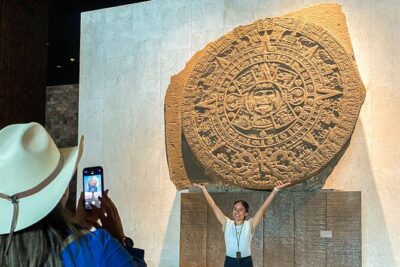
Anthropology Museum Private Experience Walking Tour
Read our review →
5 Hour Tour through Chapultepec, Anthropology Museum and Castle
Read our review →
PRIVATE Tour in Chapultepec Castle and Museum of Anthropology
Read our review →
Teotihuacan & Anthropology Museum, Templo Mayor & City Tour
Read our review →Browse the lists this tour appears in