
Reviewed · ANTHROPOLOGY MUSEUM TOURS
National Museum of Anthropology: a journey into Mexico’s past – English lang.
Ancient Mexico makes far more sense when you understand its symbols. On this three-hour visit, Hector Balderas Iglesias uses animals, gods, colors, celestial bodies, and human figures to explain how Indigenous peoples understood the world. A snake, eagle, jaguar, sun, or moon is not just decoration. Each carries a message.
I like the clear focus on worldview rather than dates alone, and I like the way Hector uses an iPad with reconstructions, historical images, and extra artwork to make small details easier to see. The main drawback is the pace: three hours on foot, with plenty of standing and serious discussion, may feel demanding if you want a quick museum sampler.
In This Review
- Key points to know before you go
- Why this museum makes more sense with a guide
- Meeting near the Mexican flag
- The Mural of Duality and the first big idea
- The museum umbrella and the living world
- Teotihuacan: order, power, and symbolic design
- The Mexica room and the symbols of empire
- Pakal’s tomb and the Maya connection
- Hector’s teaching style and the use of visual aids
- Three hours, then time to explore alone
- Is $75 a fair price?
- Who should book this museum experience?
- Should you book it?
- FAQ
- Where does the tour begin?
- How long does the experience last?
- What language is the tour conducted in?
- Is the museum admission included?
- Is this a private tour?
- Is the tour wheelchair accessible?
- Is the tour suitable for children?
- What should I wear or bring?
- Can I bring food, drinks, or a large bag?
Key points to know before you go
- Symbolism comes first: Learn how animals, celestial bodies, clothing, murals, and stone carvings express Mesoamerican ideas.
- Hector teaches interactively: Expect questions, discussion, and visual material on an iPad rather than a one-way speech.
- The route covers major rooms: See the Mural of Duality, the museum’s famous umbrella, Teotihuacan and Mexica galleries, and a replica of Pakal’s tomb.
- Museum admission is included: You do not need to buy a separate ticket for the permanent exhibitions.
- It is a private English tour: You get a more personal format, but the subject is best suited to people aged 16 and older.
- Plan for museum rules: Large bags, food, drinks, selfie sticks, tripods, flash photography, and audio recording are not permitted.
Why this museum makes more sense with a guide
The National Museum of Anthropology is a huge place. You can walk through its rooms, admire the stone figures, and read labels, but it is easy to leave with a pile of disconnected facts. This tour gives you a set of ideas to carry from room to room.
Hector begins with the larger question: how did ancient Mexican peoples understand their place in the universe? That approach helps you look at an object as part of a belief system, not simply as an old artifact behind glass.
I particularly like this method for visitors who have already seen Mesoamerican imagery but never felt sure what it meant. The guide may ask you to interpret a glyph or notice a detail in a sculpture before explaining it. That turns the museum into a conversation. You are not just waiting for the next date or dynasty.
The tour also makes useful connections between different cultures. Hector has been praised for explaining Maya and Mexica symbolism while drawing comparisons with ideas from other parts of the world. Those comparisons are not a replacement for Mexican history. They can help you recognize how different societies use animals, the sky, fertility, and duality to explain life.
This is not a chronological march through every period represented in the museum. If you want a room-by-room survey from the earliest settlements through the Spanish conquest, you will need more time afterward. Here, the goal is understanding. Once you grasp the main ideas, you can explore the museum’s remaining galleries with better questions.
More visits to the Anthropology Museum:
- Chapultepec Castle & Anthropology Museum Tour
★ 4.5 · 1,348 reviews - Anthropology Museum Guided Tour
★ 4.5 · 1,035 reviews - Mexico City: Anthropology Museum Guided Visit
★ 4.4 · 708 reviews
Meeting near the Mexican flag
The meeting point is near the Mexican flag at the museum entrance. That is useful because the museum grounds and entrance area can feel large, and a clear landmark removes some guesswork.
You are responsible for reaching the museum yourself. Transportation is not included, so allow time to arrive before the scheduled start. The tour takes place inside the National Museum of Anthropology in the Bosque de Chapultepec, in the State of Mexico according to the supplied activity details.
Wear comfortable shoes and clothes. This sounds basic, but it matters here. The visit lasts three hours, takes place on foot, and includes long periods of standing while Hector explains objects and ideas.
The museum is wheelchair accessible. Still, anyone who uses a wheelchair or has difficulty standing for long periods should consider the walking and listening demands when deciding if this particular format suits them.
The Mural of Duality and the first big idea
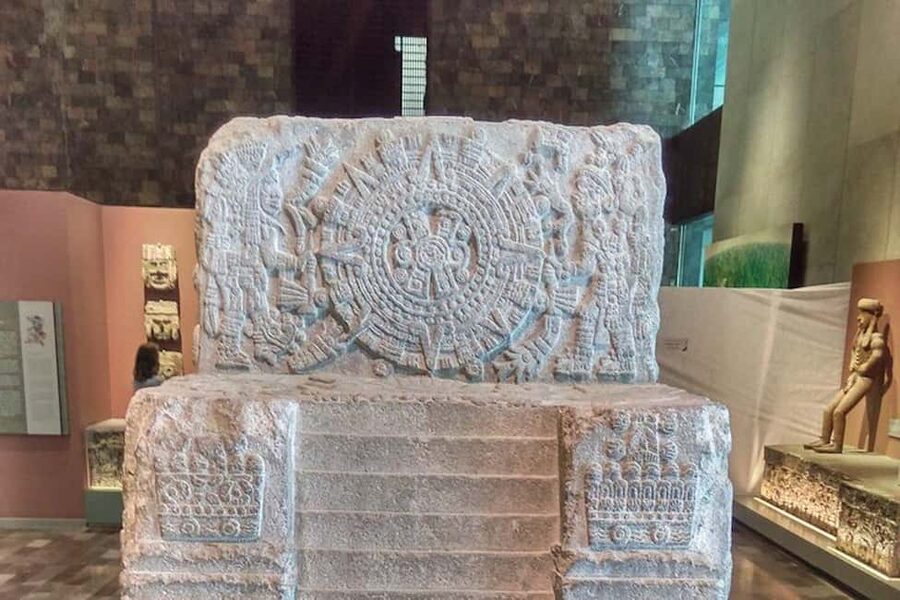
The Mural of Duality is one of the important early stops. Its purpose on this tour is not simply to admire the artwork. Hector uses it to introduce the idea of a world shaped by paired forces.
The concept of duality helps explain why opposites appear so often in Mesoamerican art and thought. Life and death, day and night, masculine and feminine, sky and earth, growth and decay can be understood as linked parts of one system rather than as simple enemies.
This is also where the tour’s attention to the importance of femininity in Mesoamerica becomes useful. You will not be asked to view ancient cultures through a modern European framework. Instead, the discussion aims to show how feminine forces fit into creation, fertility, nature, and the order of the universe.
The subject can be abstract. That is one reason this tour is not recommended for children or teenagers under 16. The point is to understand a different worldview, not to persuade you to adopt it.
The museum umbrella and the living world
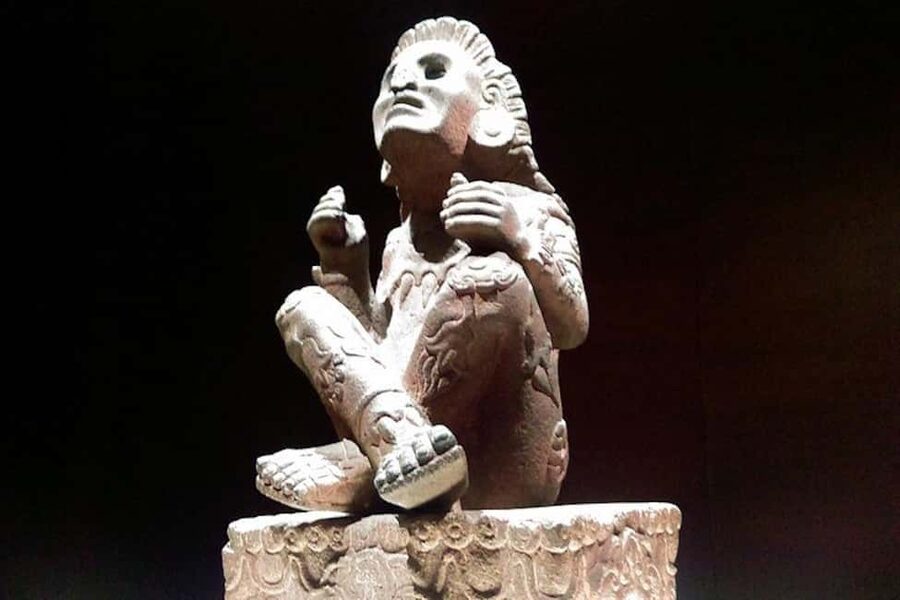
The museum’s umbrella is another key stop. It is a memorable architectural feature, but the guide treats it as more than a place to take a photograph. Hector explains how it relates to the museum’s larger presentation of Indigenous cultures and their view of the world.
This part helps connect the building to the objects inside. The museum is not arranged as a neutral warehouse. Its architecture, murals, courtyards, and displays shape the way you encounter Mexico’s past.
You will likely spend time looking upward and outward here, then return to details in the galleries. That change of scale is helpful. Ancient symbolism can appear on a monumental wall, a building feature, a vessel, a costume, or a tiny carved mark.
A laser pointer has also been used during the tour to draw attention to details that are easy to miss. That can be valuable in a crowded display, where an important feature may be only a small part of a larger sculpture or design.
More museums and galleries in Mexico City:
- CDMX: Xochimilco, Coyoacan, Frida Kahlo Museum & Murals Tour
★ 4.4 · 3,025 reviews - Frida Kahlo VIP [Museum Tickets Included] Bike, Markets & Churros
★ 5.0 · 1,072 reviews - Frida Kahlo VIP [Museum Tickets Included] Walk, Markets & Churros
★ 5.0 · 982 reviews - EXCLUSIVE TOUR Frida Kahlo Museum – SMALL GROUPS
★ 5.0 · 901 reviews
Teotihuacan: order, power, and symbolic design
The Teotihuacan Room gives the tour a chance to place architecture and objects within a larger social system. Teotihuacan is often reduced to its monumental pyramids, but the museum’s collection lets you look at the culture through sculpture, craft, imagery, and evidence of organized life.
Hector’s approach links art to ideas about power, trade, religion, and community. You may find yourself looking at familiar forms in a new way, asking why an animal appears, why a figure wears a certain outfit, or how a symbol relates to the sky and the earth.
This is one of the strongest reasons to take the tour early in your Mexico visit. If you later visit major archaeological sites, the museum’s explanations can give you a useful base. You will have a better sense of what to look for instead of seeing only large stones and impressive scale.
The limitation is time. Teotihuacan deserves far more than a short stop, and this tour must also cover the Mexica room, Pakal’s tomb, and the opening concepts. Think of this section as a guided foundation, not a complete study of the culture.
The Mexica room and the symbols of empire
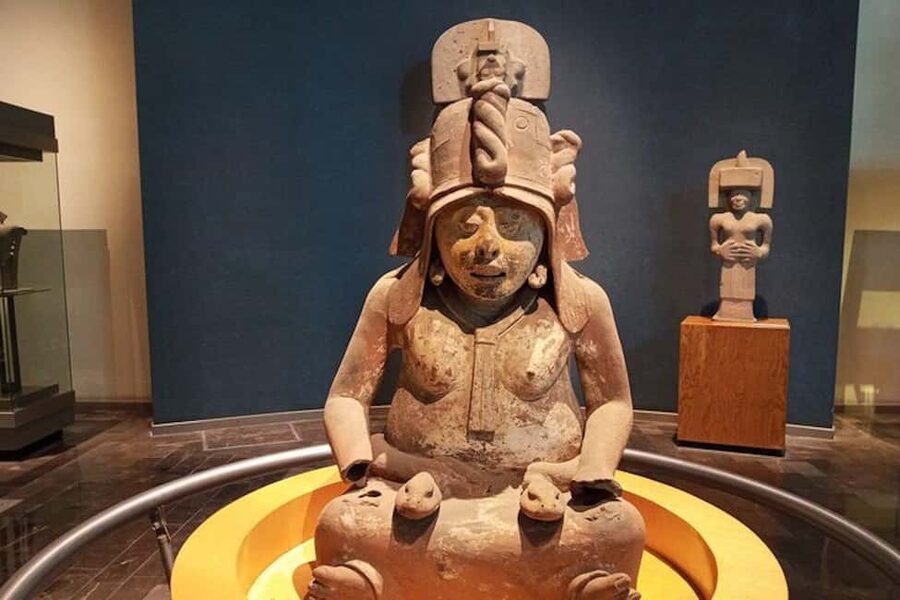
The Mexica, commonly called the Aztecs, receive one of the tour’s main explanations. This room is especially useful if you want to understand the people connected with Tenochtitlan and the later Spanish arrival.
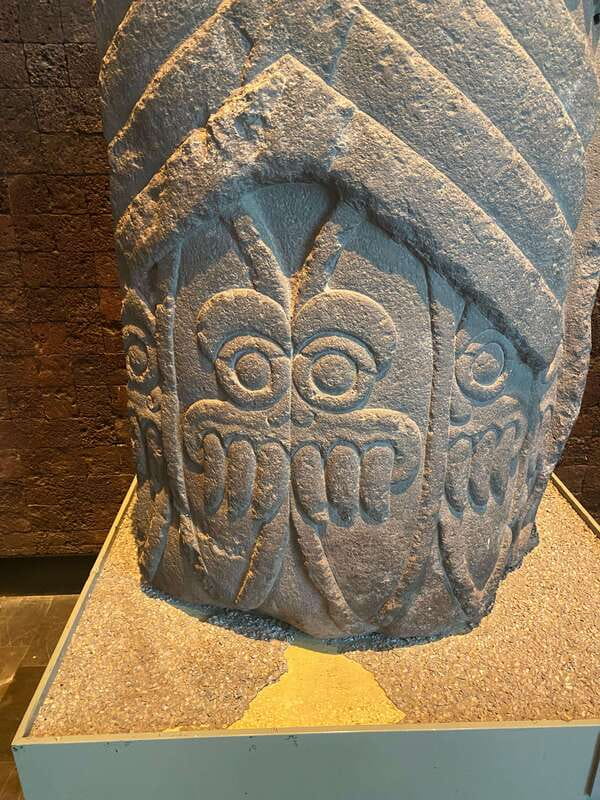
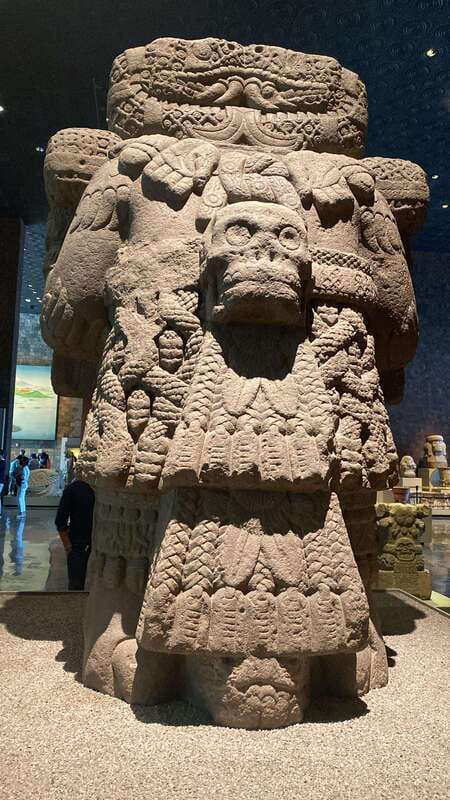
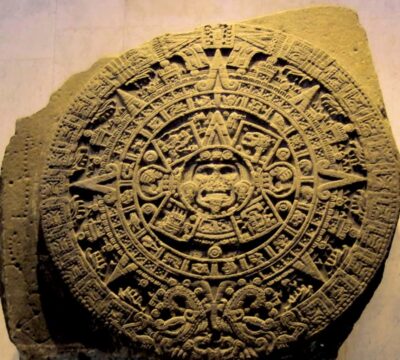
Rather than presenting the Mexica only as warriors or empire builders, Hector places their symbols within a wider belief system. Eagles, jaguars, snakes, celestial signs, and ritual objects become clues to how power and sacred order were expressed.
This is where the tour can change your view of ancient Mexico. The cultures of Mesoamerica were not isolated groups producing mysterious images. They developed calendars, mathematics, farming systems, architecture, trade networks, and complex social structures. Their art reflects those systems.
Hector also explains how Indigenous societies interacted through commerce and trade, and how Spanish influence changed the course of Mexican society. That broader context prevents the Mexica room from becoming a simple story of conquest.
You should not expect every object in the room to receive attention. The benefit is that the guide chooses examples that support the main ideas. Afterward, you can return to the displays that interest you most during your free time.
Pakal’s tomb and the Maya connection
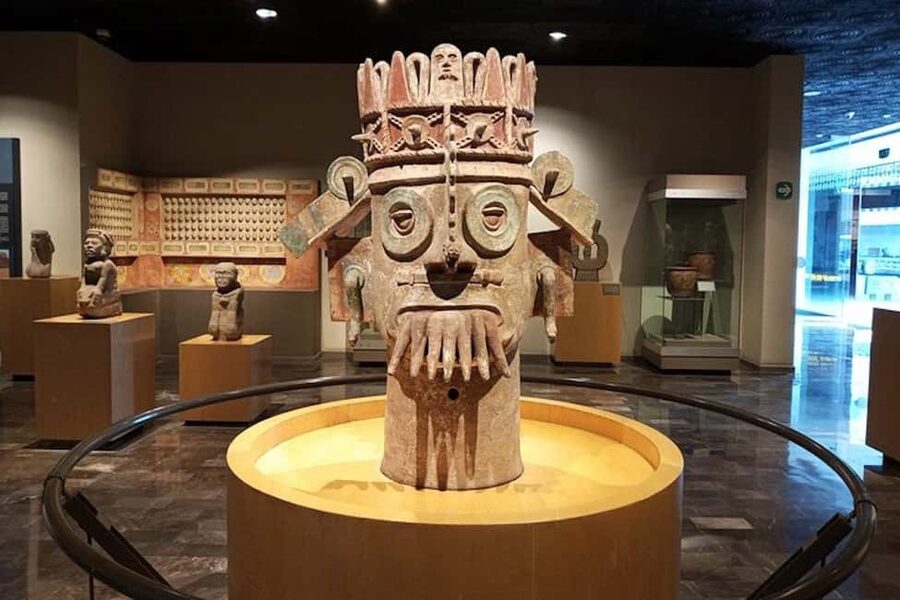
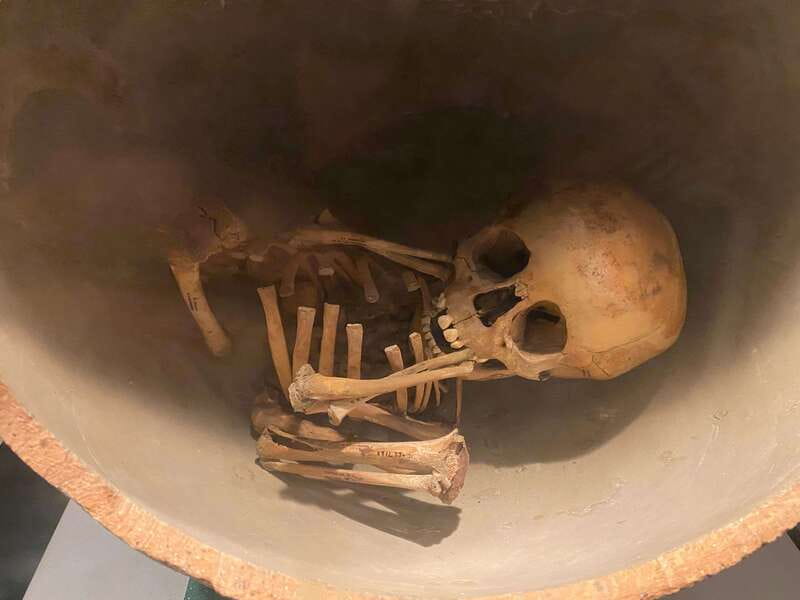
The replica of the tomb of Pakal the Great provides a different but related view of Mesoamerican thought. It allows you to consider Maya ideas about rulers, death, rebirth, and the relationship between the human world and the cosmos.
A replica is especially helpful because it lets you see the form and arrangement of the tomb in a museum setting. Hector can explain the imagery and use additional images on his iPad to show details that may be hard to understand from one view.
This stop also keeps the tour from becoming an Aztec-only introduction to ancient Mexico. The museum represents many cultures, and Pakal’s tomb offers a chance to compare how Maya and Mexica traditions used symbols to express authority and sacred order.
As with Teotihuacan, this is an introduction rather than a complete Maya course. If Maya history is your main interest, you may want to spend more time in the museum beyond the guided route. The advantage of taking the tour first is that you gain a framework for your own follow-up visit.
Hector’s teaching style and the use of visual aids
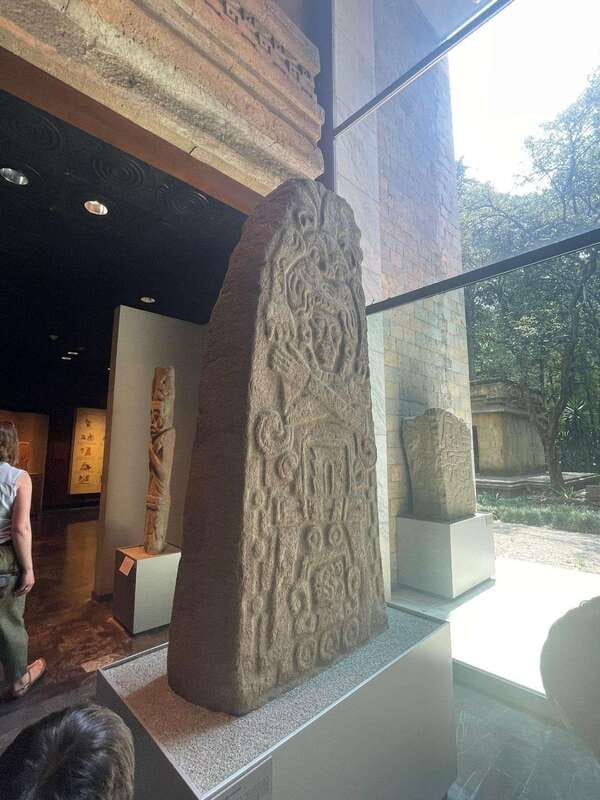
The guide is the heart of this experience. Hector Balderas Iglesias is described as an enthusiastic teacher who explains difficult material in plain language and keeps the discussion moving with questions.
That matters in a museum where some labels can feel dense and where the visual language is unfamiliar. Instead of asking you to memorize unfamiliar names, Hector helps you connect an image with an idea.
His iPad is a practical tool rather than a gimmick. It may show 3D reconstructions, additional photographs, artwork, or historical views that help you compare the past with the present. These images are useful when an artifact has been damaged, when a site no longer looks as it once did, or when a small design needs extra context.
The format is interactive, but you should still be ready to listen. This is not a casual walk with a few amusing facts. The guide discusses cosmology, philosophy, history, social systems, and symbolism. Some content may be presented in its original language, which can add authenticity but may require patience if you are used to everything being translated.
The private-group format is another advantage. You can ask questions and spend a little more time on a subject that catches your attention. It also means the quality of the experience depends heavily on the match between your interests and the guide’s teaching style. The available feedback gives Hector a strong record, with a 4.8 rating from 26 bookings, but you should still book this because you want serious interpretation, not just a quick orientation.
Three hours, then time to explore alone
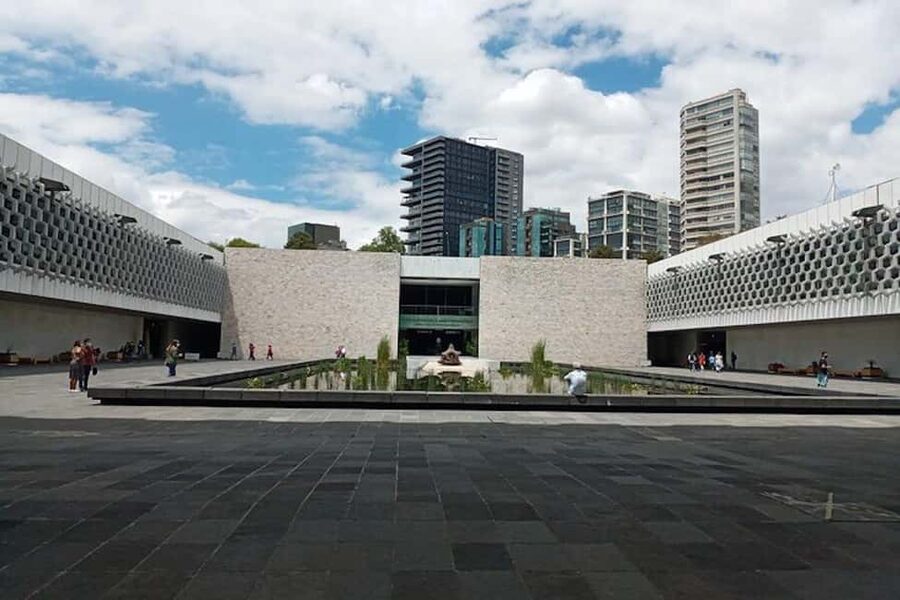
The guided portion lasts three hours. That is long enough to build a story and visit the main areas listed, but not long enough to cover the entire museum in detail.
Expect to walk between galleries, stand while listening, look closely at objects, and pause for questions. Comfortable footwear is essential. If you become tired easily, the amount of standing is the main practical concern.
Free time follows the guided visit. I like this arrangement because it gives you both structure and independence. Hector handles the difficult first reading of the museum, then you can return to a favorite gallery, study objects that were only briefly mentioned, or simply take a slower look at the building.
Food and drinks are not included, and the museum does not permit food or drinks inside. Souvenirs are also your own expense. Large bags, luggage, backpacks, plastic bags, bottles, baby carriages, bikes, scooters, skates, handcarts, and several photography accessories are not allowed. Pets, smoking, alcohol, drugs, chewing gum, and touching exhibits are prohibited as well.
Professional cameras, drones, tripods, selfie sticks, flash photography, speakers, and audio recording are not permitted. Pack light and keep your phone use discreet. The restrictions are strict enough that you should not arrive carrying a day’s worth of luggage.
Is $75 a fair price?
At $75 per person, this is not the cheapest way to enter the museum. The value depends on how much help you want interpreting what you see.
Admission to the museum’s permanent exhibitions is included. The real cost is for three hours of private English guiding, a focused route, discussion, and visual support. If you would otherwise wander without knowing what the symbols mean, the price can be sensible, especially for a first visit.
I would be less likely to recommend it to someone who already has strong training in Mesoamerican archaeology or who prefers to read labels independently. You may find the pace too guided and the explanations too broad.
For most first-time visitors with a serious interest in Mexico’s ancient cultures, the price buys more than entry. It gives you a way to read the museum. That can also improve later visits to archaeological sites, city museums, and places connected with Tenochtitlan or Maya culture.
The reserve-now, pay-later option keeps your plans flexible, and cancellation is allowed up to 24 hours before the activity for a full refund. Those terms reduce some of the risk when your schedule is still changing.
Who should book this museum experience?
I would choose this tour if you enjoy history when it is explained through stories, images, and questions. It suits adults and older teens, although children under 16 are specifically not accepted.
It is also a good fit if you plan to visit other ancient sites during your trip. Taking the tour early can give you background that makes later monuments and symbols easier to understand.
You should think twice if you want a short, relaxed visit with lots of sitting, or if your main goal is to see every gallery. The museum is large, and this route deliberately selects major rooms rather than trying to cover everything.
English speakers who want a private guide will find the format practical. People who prefer a strictly chronological lecture may find the emphasis on cosmology and symbolism less familiar, but that is also the feature that makes the tour different from a standard history talk.
Should you book it?
Book this tour if you want to understand why ancient Mexican art looks the way it does, not merely photograph famous objects. Hector’s strength is connecting symbols with worldview, then using the museum’s major rooms to show those ideas at work.
Skip it if you want to move quickly, avoid long explanations, or explore every exhibit at your own speed. For everyone else, the best plan is to take the guided visit early in your stay, wear good shoes, carry no large bag, and keep free time afterward to revisit the displays that stayed with you.
FAQ
Where does the tour begin?
The meeting point is near the Mexican flag at the entrance of the National Museum of Anthropology.
How long does the experience last?
The tour lasts three hours, followed by free time in the museum.
What language is the tour conducted in?
The live guided tour is conducted in English. Some content is shown in its original language.
Is the museum admission included?
Yes. The price includes admission to the museum and its permanent exhibitions.
Is this a private tour?
Yes. The activity is offered for a private group.
Is the tour wheelchair accessible?
Yes, the activity is listed as wheelchair accessible.
Is the tour suitable for children?
No. The activity is not suitable for children under 16 because of its cosmological explanations.
What should I wear or bring?
Wear comfortable clothes and comfortable shoes. The visit is on foot and can involve standing for long periods.
Can I bring food, drinks, or a large bag?
No. Food, drinks, luggage, backpacks, bags, plastic bottles, and many other items are not permitted. Flash photography, tripods, selfie sticks, professional cameras, audio recording, and drones are also prohibited.
Just added around Mexico City
- Mexico City: Hop-on Hop-off City Tour by Turibus 2-Day Pass★ 4.0 · 10 reviews
- Anthropology Museum, Chapultepec Castle & Cable Car Tour★ 4.5 · 10 reviews
- Multi-Variety Mole Class in a Condesa home or art gallery rooftop★ 5.0 · 10 reviews
- PRIVATE TOUR Colonial Town Taxco and Cuernavaca from CDMX.★ 5.0 · 10 reviews
- Teotihuacan and My Grandma’s Food Tour★ 5.0 · 10 reviews
- El Centro Street Food Walking Tour★ 5.0 · 10 reviews
- Private Round-Trip Transportation to Teotihuacan Pyramids★ 5.0 · 10 reviews
- Private Walking Tour Legends and Events Historic Center CDMX★ 4.8 · 10 reviews
Anthropology Museum Tours, compared.
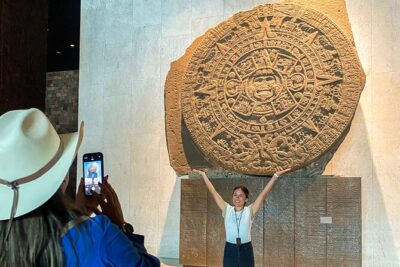
Chapultepec Castle & Anthropology Museum Tour
Read our review →
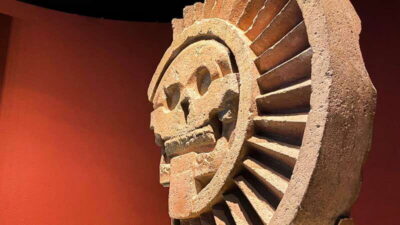
Anthropology Museum Private Experience Walking Tour
Read our review →
5 Hour Tour through Chapultepec, Anthropology Museum and Castle
Read our review →
PRIVATE Tour in Chapultepec Castle and Museum of Anthropology
Read our review →
Teotihuacan & Anthropology Museum, Templo Mayor & City Tour
Read our review →Browse the lists this tour appears in