
Reviewed · ANTHROPOLOGY MUSEUM TOURS
Private tour with Archaeologist at National Anthropology Museum
Mexico City’s National Anthropology Museum can leave you staring at a map and wondering where to begin. This private tour fixes that problem with David Huesca, known as Pakalito, an archaeologist who leads you through major Mesoamerican galleries and explains what you are seeing.
I like two things right away: the tour looks beyond the usual Maya and Aztec headlines, and the private format lets David adjust his explanations to your group. His iPad images, timelines, and visual aids also help turn difficult symbols and long stretches of history into something you can follow.
The main consideration is pace. Three hours is enough for a focused introduction, not a full study of this enormous museum. You will see important highlights, but anyone who wants every gallery deserves a second visit.
In This Review
- Key points to know before you book
- Why this museum needs a guide
- Meeting David Huesca at the museum entrance
- A three-hour route through Mesoamerica
- More than Maya and Aztec headlines
- A private format that works for families
- How David teaches, not just what he knows
- Is $98 per person a fair price?
- The best time to schedule it
- Who should book this museum experience?
- My call: a strong first visit to the museum
- FAQ
- How long does the private museum tour last?
- Where does the activity begin?
- Where does the tour end?
- Is museum admission included?
- What else is included?
- Are food and drinks included?
- What language is the tour offered in?
- Who leads the tour?
- Can only my group participate?
- What happens if I need to cancel?
Key points to know before you book
- An archaeologist leads the visit: David Huesca, also called Pakalito, brings academic training and a personal fondness for this museum.
- The focus reaches beyond Maya and Aztec culture: You look at several Mesoamerican peoples, regions, and time periods.
- The private setup changes the experience: Only your group participates, so questions and explanations can follow your interests.
- Visual aids make complex ideas clearer: David uses images, illustrations, and historical material on an iPad.
- The museum is best tackled with a plan: The three-hour route gives you a useful framework instead of an exhausting attempt to see everything.
- Admission is included: The $98 per-person price covers the entrance fee, guide, private tour, and digital support material.
Why this museum needs a guide
The National Anthropology Museum is not a small stop you can casually skim in half an hour. Its collection covers many cultures and periods, and the sheer number of objects can make the visit feel scattered if you do not know how the pieces connect.
That is where this tour earns its keep. David’s job is not simply to point at a display and repeat its label. He builds a timeline, places cultures in their regions, and explains how religion, politics, trade, architecture, and daily customs fit together.
This matters because museum labels often tell you what an object is, while a good guide helps you ask why it mattered. A carved figure, ceremonial object, architectural model, or symbol becomes easier to understand when you know the beliefs and systems around it.
I also like the tour’s stated goal: to show that pre-Hispanic Mexico was not one single civilization. Maya and Aztec history gets most of the attention in popular travel plans, but the museum presents a much wider story. You will consider Teotihuacan and other Mesoamerican cultures, along with the changing connections between peoples and regions.
The result should be a more useful visit to the museum and a better foundation for other archaeological sites in Mexico. Several people who took the tour later recognized themes and design elements at Teotihuacán. That is exactly what a museum guide should do: give you a mental framework you can carry outside the building.
More visits to the Anthropology Museum:
- Chapultepec Castle & Anthropology Museum Tour
★ 4.5 · 1,348 reviews - Anthropology Museum Guided Tour
★ 4.5 · 1,035 reviews - Mexico City: Anthropology Museum Guided Visit
★ 4.4 · 708 reviews
Meeting David Huesca at the museum entrance
The tour begins and ends at the Museo Nacional de Antropología, on Paseo de la Reforma in Chapultepec, in the Polanco area of Mexico City. You do not need to arrange a separate ride to a distant starting point, and the location is near public transportation.
The activity is offered in English and runs for about three hours. Available hours are Tuesday through Saturday, from 9:00 a.m. to 3:00 p.m., for the listed operating period. Confirmation is sent within 48 hours of booking, subject to availability, so do not treat a last-minute reservation as guaranteed.
Since the meeting point is the museum itself, plan your route across Mexico City with traffic in mind. One group arrived late because of traffic and David continued beyond the scheduled time to help make up for it, but you should not count on that as a formal policy. Give yourself a generous arrival cushion.
The tour is private, so only your party takes part. That is a meaningful difference from a large group visit. You can ask basic questions without feeling out of place, or press further into politics, religious symbolism, archaeology, and chronology if those subjects interest you.
A three-hour route through Mesoamerica
David takes you to the principal exhibition halls and selects important works from the museum’s major cultural sections. The exact sequence can depend on the group, but the purpose is clear: create a broad, connected view rather than race through every room.
You will discuss several parts of Mesoamerican life:
- History and changes over time
- Religious beliefs and possible meanings
- Political organization
- Economy and exchange
- Architecture
- Customs and traditions
- Regional differences between cultures
That list is useful because it keeps the tour from becoming a parade of famous objects. You are not just collecting names and dates. You are looking at how societies worked and how ideas appeared in art, buildings, rituals, and symbols.
The museum’s strongest displays can be visually overwhelming. A guide helps you stop at the right places long enough to understand them, then move on before one section consumes the entire afternoon. David’s route is intended to cover the major high points in a sensible way.
At times, he uses an iPad with pictures, illustrations, and historical documents. This is particularly helpful when a relief, symbol, or building is hard to interpret from the object alone. The digital material gives you a second visual reference, rather than forcing you to rely on a long label or a spoken description.
Three hours will not cover every room in detail. Think of this as a guided introduction with strong highlights. You should leave knowing what you saw, why it matters, and which sections deserve a closer return visit.
More than Maya and Aztec headlines
The tour’s most useful promise is its wider frame. Many first-time visitors arrive with a short list of famous names, then discover that the museum’s story is much broader. David presents Mesoamerica as a collection of cultures and regions that changed over time, not as a single block of ancient Mexico.
That approach helps correct a common travel mistake. It is easy to treat every monumental site or carved figure as part of one general Aztec or Maya world. A trained archaeologist can point out differences in period, place, design, belief, and political setting.
You can expect discussion of major traditions associated with Maya, Aztec, Teotihuacan, and other peoples represented in the museum. The point is not to force every object into a neat answer. David also addresses possible meanings, which leaves room for interpretation where the evidence is not certain.
I find that especially valuable in anthropology museums. Ancient objects often invite confident guesses, but the responsible question is sometimes what we can reasonably infer and what remains uncertain. A guide with archaeological training can help you tell the difference.
The visit also gives you useful context for the rest of Mexico City. If you later see Teotihuacán or other historical sites, names, forms, and ideas introduced in the museum may feel more familiar. The museum becomes a starting point for understanding the country, not just a box to check on a sightseeing list.
More museums and galleries in Mexico City:
- CDMX: Xochimilco, Coyoacan, Frida Kahlo Museum & Murals Tour
★ 4.4 · 3,025 reviews - Frida Kahlo VIP [Museum Tickets Included] Bike, Markets & Churros
★ 5.0 · 1,072 reviews - Frida Kahlo VIP [Museum Tickets Included] Walk, Markets & Churros
★ 5.0 · 982 reviews - EXCLUSIVE TOUR Frida Kahlo Museum – SMALL GROUPS
★ 5.0 · 901 reviews
A private format that works for families
A private tour gives David room to change his tone and level of detail. Families with young children, teenagers, and adults can all take part without being locked into a fixed lecture aimed at one age group.
That flexibility has real value. A seven-year-old may need a short story or visual example, while a history-focused teenager may want a longer explanation of chronology or symbolism. The tour has worked for families with children as young as six and with teens, and children have stayed engaged through interactive explanations and questions.
The private format also suits couples or small groups who want to ask more questions. You can pause on a subject that catches your attention, mention a specific interest in advance, or ask David to spend more time on a particular cultural area. It is worth telling him what you most want to see before the tour begins.
One practical point: this is not a seated museum talk. You will walk through exhibition halls for around three hours, and the activity recommends a moderate level of physical fitness. Breaks have been provided when needed, but comfortable shoes and a realistic sense of your stamina will make the visit better.
Service animals are allowed. Food and drinks are not included, so plan those separately before or after the museum visit.
How David teaches, not just what he knows
The strongest part of the experience is David’s presentation. He combines archaeological training with humor, warmth, patience, and storytelling. That combination matters because an expert can easily bury a museum visit under dates and specialist terms.
David is described as friendly without being forced or theatrical. He answers questions directly and uses visual material to explain difficult concepts efficiently. His passion for archaeology comes through, but the explanations are aimed at ordinary people, not only specialists.
I also like the way the tour appears to handle different levels of interest. A beginner can get a clear explanation of the major cultures and timelines, while someone already familiar with Mesoamerica can ask about symbolism or finer points of interpretation.
The digital support material is included, and the iPad presentation gives him a practical teaching tool. A picture or diagram can show relationships that are hard to explain while standing in front of a display. It also helps younger visitors stay involved.
David’s personal connection to the museum adds another layer. He considers it a favorite place, and that enthusiasm helps keep a large institution from feeling like a warehouse of unrelated objects. His role is part historian, part interpreter, and part navigator.
Is $98 per person a fair price?
The price is $98 per person. That includes the professional archaeologist guide, private access for your group, museum admission, and digital support material. Food and drinks are not included.
For one person, the cost is not a bargain in the ordinary museum-ticket sense. You are paying for David’s time, preparation, interpretation, and the chance to shape the visit around your group. If two people book, the total is $196. A family or group of four pays $392, but the private format can make the per-person cost easier to justify when several people are sharing the same guide.
The value depends on how you like to visit museums. If you enjoy reading every label and building your own route, you may prefer to enter independently and spend the money elsewhere. If the museum’s scale feels intimidating, three hours with an archaeologist can prevent a frustrating walk past objects you do not understand.
Admission being included also keeps the cost simple. You do not need to buy a separate museum ticket, though you still need to budget for meals and transportation to the meeting point.
I would especially consider the price worthwhile at the start of a Mexico City trip. The museum can give you a base for later visits to archaeological sites and historic areas. You are buying context that may improve several days of sightseeing, not only one museum morning.
The best time to schedule it
The available schedule runs Tuesday through Saturday, from 9:00 a.m. to 3:00 p.m. A morning booking gives you the rest of the day for other plans and may be the easiest way to use the tour as an introduction to Mexico City.
Booking it early in your trip makes sense if you plan to visit Teotihuacán or other archaeological sites afterward. The museum can introduce the broad themes first, then later places become easier to read.
If this is your only visit to the museum, use the three hours as a guided survey. Afterward, you can return independently to a gallery that caught your attention. Trying to absorb every room during a single guided outing would work against the tour’s main strength.
The museum is in Chapultepec, so you can pair the visit with other nearby plans, but keep the timing sensible. The tour itself takes around three hours, and Mexico City traffic can make cross-town appointments risky if you schedule them too tightly.
Free cancellation is available when you cancel at least 24 hours before the local start time. Changes or cancellations inside that window are not accepted for a refund. The experience also requires good weather, and if poor weather forces cancellation, you are offered another date or a full refund.
Who should book this museum experience?
I would choose this tour if you are visiting the Anthropology Museum for the first time and want the collection explained in a clear order. It is also a good match if you care more about meaning and context than simply seeing famous objects.
Families should take a close look at it. The private format, visual aids, and adjustable explanations can help keep younger children and teenagers involved. Couples who want a focused cultural experience will also get more room for questions than they would in a large group.
It suits people who plan to visit Teotihuacán, who want a wider view than Maya and Aztec history, or who find museum labels hard to follow in English. It is offered in English, which makes the cultural and historical explanations easier to absorb for English-speaking visitors.
I would skip it if you mainly want to wander alone, take your time in every gallery, or spend several hours reading without a guide. Three hours is a planned overview, and the private price is hard to justify if you already feel confident navigating anthropology museums.
My call: a strong first visit to the museum
Book this tour if you want the National Anthropology Museum to make sense, not merely look impressive. David Huesca brings archaeological training, visual aids, humor, and a clear interest in the many cultures represented here.
The best reason to go is the combination of structure and flexibility. You get a route through the museum’s major halls, but you can still ask questions and adjust the conversation to your group. That is especially useful in a museum this large.
The main limit is simple: three hours cannot cover everything. Treat the tour as your foundation, then return on your own if a gallery deserves more time. At $98 per person, it is a worthwhile purchase for first-time visitors who want cultural context, but less attractive for confident independent museum-goers.
FAQ
How long does the private museum tour last?
The tour lasts approximately three hours.
Where does the activity begin?
It begins at the Museo Nacional de Antropología, on Av. Paseo de la Reforma in the Polanco and Chapultepec area of Mexico City.
Where does the tour end?
The activity ends back at the museum meeting point.
Is museum admission included?
Yes. The entrance fee is included in the tour price.
What else is included?
The price includes a professional archaeologist guide, a private tour for your group, museum admission, and digital support material.
Are food and drinks included?
No. Food and drinks are not included.
What language is the tour offered in?
The tour is offered in English.
Who leads the tour?
The tour is led by archaeologist David Huesca, also known as Pakalito or the Young Archaeologist.
Can only my group participate?
Yes. This is a private activity, so only your group takes part.
What happens if I need to cancel?
You can cancel at least 24 hours before the local start time for a full refund. Cancellations or changes made less than 24 hours before the start time are not accepted for a refund. If poor weather cancels the experience, you are offered another date or a full refund.
Just added around Mexico City
- Mexico City: Hop-on Hop-off City Tour by Turibus 2-Day Pass★ 4.0 · 10 reviews
- Anthropology Museum, Chapultepec Castle & Cable Car Tour★ 4.5 · 10 reviews
- Multi-Variety Mole Class in a Condesa home or art gallery rooftop★ 5.0 · 10 reviews
- PRIVATE TOUR Colonial Town Taxco and Cuernavaca from CDMX.★ 5.0 · 10 reviews
- Private Round-Trip Transportation to Teotihuacan Pyramids★ 5.0 · 10 reviews
- Teotihuacan and My Grandma’s Food Tour★ 5.0 · 10 reviews
- El Centro Street Food Walking Tour★ 5.0 · 10 reviews
- Private Walking Tour Legends and Events Historic Center CDMX★ 4.8 · 10 reviews
Anthropology Museum Tours, compared.
Chapultepec Castle & Anthropology Museum Tour
Read our review →
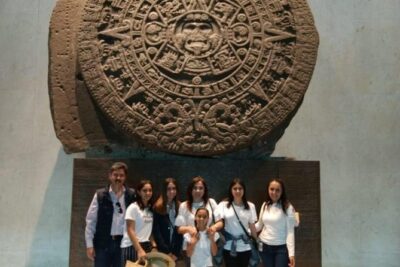
Anthropology Museum Private Experience Walking Tour
Read our review →
5 Hour Tour through Chapultepec, Anthropology Museum and Castle
Read our review →
PRIVATE Tour in Chapultepec Castle and Museum of Anthropology
Read our review →
Teotihuacan & Anthropology Museum, Templo Mayor & City Tour
Read our review →Browse the lists this tour appears in