
Reviewed · ART & MURAL TOURS
Guided Walking Tour Describing UNAM Murals and Revolution
UNAM’s campus is more than a university. It is a public storybook in stone, paint, and concrete, with Juan O’Gorman’s giant Biblioteca Central mural setting the tone. I like that this tour links architecture and politics instead of treating the murals as isolated decorations, and I like the compact two-hour route.
The bilingual format is useful if you want context without a long lecture, and guide Fernando has been praised for explaining both the university’s construction and the events of 1968. The main consideration is simple: at $53.46, you are paying for interpretation rather than admission, since all three stops are free to enter.
In This Review
- Key points to know before booking
- Why UNAM is a fine place to study Mexico through art
- Starting at Biblioteca Central and Juan O’Gorman’s design
- An hour with Siqueiros, Chávez, Eppens, and other muralists
- Estadio Olímpico Universitario and the meaning of 1968
- What the guide adds to the experience
- Is $53.46 a fair price for two hours?
- Timing, meeting point, and group size
- Who will get the most from this UNAM walk?
- Cancellation and booking details worth remembering
- Should you book this UNAM mural tour?
- FAQ
- How long does the UNAM mural tour last?
- Where does the tour begin?
- Where does the tour end?
- Is admission included?
- What language is the tour offered in?
- What is the price?
- How many people can join the tour?
- Which artists are covered?
- Does the tour discuss the 1968 Olympic Games?
- Can I cancel for a full refund?
Key points to know before booking
- O’Gorman’s Biblioteca Central: Begin with UNAM’s most famous architectural work and its huge exterior mural.
- Four mural traditions in one walk: See works connected with Siqueiros, Chávez, Eppens, and other artists.
- 1968 Olympic focus: The stadium stop ties UNAM’s art to one of Mexico’s most important modern events.
- Diego Rivera connection: The final stop includes discussion of Rivera’s mural at Estadio Olímpico Universitario.
- Small group format: The tour accepts a maximum of 15 people, making questions more manageable.
- Simple two-hour plan: Every stop is on the stated route, with free admission and a return to the meeting point.
Why UNAM is a fine place to study Mexico through art
Many Mexico City art tours focus on museums, historic plazas, or the work of Frida Kahlo and Diego Rivera. This walk takes a different route. You spend your time at the Universidad Nacional Autónoma de México, known as UNAM, where architecture, public murals, student life, national identity, and the memory of the 1968 Olympic Games meet in one setting.
That combination gives the tour its purpose. You are not simply looking at colorful walls. You are learning why a major university became a canvas for artists and why its buildings can tell part of Mexico’s modern story.
I especially like the connection between the three stops. The Biblioteca Central introduces the campus through design and symbolism. The broader mural visit shows how several artists used public space to communicate ideas. The stadium then shifts the focus toward sport, politics, and the 1968 Olympics.
The route lasts about two hours, so it is long enough to build a clear picture without taking over your day. You can pair it with another Coyoacán-area plan, though the tour itself ends back at the starting point.
More mural and street art walks in Mexico City:
- CDMX: Xochimilco, Coyoacan, Frida Kahlo Museum & Murals Tour
★ 4.4 · 3,025 reviews - Mexico City; ART NACO : Murals & Street Art Bike Tour
★ 5.0 · 284 reviews - Walking Tour – Impressive murals in Historical Center of Mexico City
★ 5.0 · 224 reviews
Starting at Biblioteca Central and Juan O’Gorman’s design
The first stop is UNAM’s Biblioteca Central, an extraordinary work by artist Juan O’Gorman. You receive about 20 minutes here, which is enough to get an introduction to the building and its place on campus.
The important point is that O’Gorman was not only involved with painting. His work here brings architecture and mural art together. That makes the library a strong opening stop because you begin with the entire building as an artistic object, not just one wall or plaque.
Your guide can help you look at the building with more purpose. Without context, a large mural-covered structure can become a quick photo stop. With an explanation of the construction and the university’s development, you can better understand why the library matters.
The admission cost is free, but that does not mean the stop lacks value. The cost of the tour comes from having someone explain what you are seeing and connect it to the rest of the walk. If you already know O’Gorman’s work well, this portion may feel brief. If you are new to UNAM, it gives you a useful foundation.
An hour with Siqueiros, Chávez, Eppens, and other muralists
The longest part of the tour is devoted to UNAM’s murals, with about one hour set aside for works by David Alfaro Siqueiros, Chávez, Eppens, and other artists. That timing matters. It gives the guide room to compare styles and subjects instead of rushing past each painting.
You can expect the discussion to move beyond naming artists. The tour is designed to explain the murals in relation to the university and the country. That is where the walk earns its keep. Public art on a campus can be easy to overlook when you are focused on getting from one building to another, but the guide gives you a reason to stop and look.
Siqueiros brings a clear connection to Mexico’s major mural movement. Chávez and Eppens add further voices to the campus setting. Seeing several artists in one outing lets you compare how public walls can carry different ideas, visual approaches, and messages.
The phrase and more is worth noting. The route is not limited to a single famous artist, so you should expect a wider look at UNAM’s mural program rather than a one-name biography. At the same time, the supplied details do not identify every mural or provide a full list of works. If you want a precise catalog of every artist and building, this short walk may not go that far.
The hour also gives you the best chance to ask questions. The group is capped at 15 people, a practical size for a walking tour. It is not private, but it should be easier to hear the guide and raise a point than in a large coach group.
Estadio Olímpico Universitario and the meaning of 1968
The final stop is Estadio Olímpico Universitario, with about 30 minutes devoted to the 1968 Olympic Games and Diego Rivera’s mural. This is where the tour broadens from campus art to national memory.
The 1968 Olympics were a major event for Mexico, and the stadium gives the guide a concrete place to explain that moment. You are not only looking at a sports venue. You are considering how the university and Mexico presented themselves on an international stage.
The Diego Rivera connection adds another layer. Rivera is one of the best-known names in Mexican mural art, and discussing his work at the stadium helps tie the final stop back to the artists seen earlier. The tour therefore closes with a clear artistic thread rather than ending after a random campus building.
Thirty minutes is a sensible amount of time here. You receive enough background to understand why the stadium matters, but the visit remains focused. If Olympic history is your main interest, you may wish the tour spent longer on the subject. The stated emphasis is shared between the Games and the mural, so this is not a full Olympic history program.
Still, I like the way the stop changes the mood of the walk. You begin with a library, spend the central hour looking at murals, then finish with sport and a significant year in modern Mexico. That progression gives the two hours a shape.
More walking tours in Mexico City:
- Historic Downtown Walking Tour
★ 5.0 · 1,289 reviews - Mexico City: Historic Downtown Walking Tour
★ 4.8 · 1,039 reviews - Frida Kahlo VIP [Museum Tickets Included] Walk, Markets & Churros
★ 5.0 · 982 reviews - Walking Tour of the Historic Center of Mexico City
★ 5.0 · 870 reviews
What the guide adds to the experience
The tour includes a bilingual guide, and it is offered in English. Guide Fernando has been singled out for his storytelling and for explaining the university’s construction, later development, and the events connected with 1968.
That detail is important. A mural tour can easily become a list of names and dates. Fernando’s praised strength is connecting the art to the place around it. You want that kind of explanation at UNAM because the campus is large and the meaning of its buildings is not always obvious at first glance.
The bilingual format also makes the walk more flexible for an English-speaking visitor. You can ask about the artists, the university, or the Olympic setting without relying only on written signs. The tour is not described as a private experience, so expect to share the guide with others, but the 15-person limit keeps the group from becoming unwieldy.
The guide is also the main reason to book rather than simply visit the campus on your own. Since admission is free, an independent visit costs less. The paid option makes sense if you want a structured route and a person who can explain how architecture, murals, and national events fit together.
Is $53.46 a fair price for two hours?
At $53.46 per person, this is not a bargain if you judge it only by entrance fees. All three stops list free admission, so you are not buying access to a ticketed monument.
You are paying for a guided interpretation of a place that can be difficult to read on your own. The fee includes a bilingual guide, a fixed route, and a small-group limit of 15 people. For you, the value depends on how much background you want.
I would consider it worthwhile if you are interested in Mexican mural art, modern university architecture, or the 1968 Olympics and do not want to spend time researching the campus before you arrive. The guide’s role is especially useful if you want the construction story and historical connections explained in English.
I would think twice if you prefer to wander slowly, photograph buildings at your own pace, or keep costs low. A two-hour group walk has a set rhythm. You may spend more time at one mural than you would choose, and less time at another.
The price also feels easier to justify for visitors who value a compact experience. You do not need to plan a long campus route yourself, and the tour returns to the meeting point. That makes it a practical addition to a busy Mexico City schedule.
Timing, meeting point, and group size
The tour begins at Rectoría de la UNAM, Ciudad Universitaria, in Coyoacán, and ends at the same meeting point. The meeting location is near public transportation, which helps if you are coming from another part of Mexico City.
Allow yourself enough time to find Rectoría before the start. The confirmation is provided at booking, so keep those details available when planning your day. The tour takes approximately two hours, though walking activities can vary slightly in pace.
The maximum group size is 15 people. This is small enough for a more personal feel, but it is still a shared tour. If you want a completely private conversation with the guide, the available information does not promise that.
Most people can participate. No special physical requirement is listed, but this is still a walking experience, so choose comfortable clothing and shoes as a sensible precaution. That advice is practical rather than a claim about the exact walking surface or distance, which are not specified.
You receive a mobile ticket, and the activity is offered in English. Tips are not included, so plan for that extra cost if you want to thank the guide for the service.
Who will get the most from this UNAM walk?
I would recommend this tour to first-time visitors who want a focused introduction to UNAM without spending half a day figuring out the campus. It also suits anyone who enjoys public art more than formal museum visits.
Students, teachers, architecture fans, and people interested in Mexico’s mural movement should find plenty to discuss. The 1968 Olympic material gives the walk added appeal if you want more than an art survey.
Families and mixed-interest groups may also find the format useful because the route changes subject three times. One person can focus on architecture, another on murals, and another on Olympic history.
I would be less likely to recommend it to someone who has already studied O’Gorman, Siqueiros, and Rivera in detail. The tour is only two hours, so it is meant as an introduction and overview, not a specialist seminar.
The perfect audience is someone who wants clear historical context and does not mind paying for a guide at a site where entry is free.
Cancellation and booking details worth remembering
You receive confirmation when you book, and free cancellation is available up to 24 hours before the experience starts. Cancel at least 24 hours ahead for a full refund.
Cancellations or changes made less than 24 hours before the start time are not accepted for a refund. The cut-off follows Mexico City local time, so pay attention to the time zone if you are booking before arrival.
The tour is often booked about 20 days ahead. That does not guarantee it will sell out, but it is a useful sign that you should not wait until the last minute if your schedule is fixed.
Should you book this UNAM mural tour?
Book it if you want a short, guided way to understand why UNAM’s architecture and murals matter. The strongest parts are the O’Gorman library, the hour devoted to several muralists, and Fernando’s historical storytelling about the university and 1968.
Skip it if your main goal is free, unstructured exploration or if $53.46 feels too high for a route with no admission charges. For the right visitor, the fee buys context, not doors opening. That is a fair trade when a guide helps you see meaning in the walls you might otherwise pass without noticing.
FAQ
How long does the UNAM mural tour last?
The experience lasts approximately two hours.
Where does the tour begin?
It begins at Rectoría de la UNAM, Ciudad Universitaria, in Coyoacán, Mexico City.
Where does the tour end?
The tour ends back at the meeting point.
Is admission included?
Admission is not a separate concern on this route because the listed stops have free admission.
What language is the tour offered in?
The tour is offered in English and includes a bilingual guide.
What is the price?
The listed price is $53.46 per person.
How many people can join the tour?
The activity has a maximum group size of 15 travelers.
Which artists are covered?
The tour includes murals connected with Siqueiros, Chávez, Eppens, and other artists. It also discusses Juan O’Gorman at Biblioteca Central and Diego Rivera at the Olympic stadium.
Does the tour discuss the 1968 Olympic Games?
Yes. The 30-minute visit to Estadio Olímpico Universitario includes discussion of the 1968 Olympic Games.
Can I cancel for a full refund?
Yes. You can cancel at least 24 hours before the start time for a full refund. Cancellations or changes made less than 24 hours before the start time are not accepted for a refund.
Just added around Mexico City
- Ticket to Frida Kahlo Museum (Blue House)★ 5.0 · 3 reviews
- Valle de Bravo: Forest Hiking Adventure★ 4.4 · 3 reviews
- Chapultepec Castle and Anthropology Tour, starting from CDMX★ 5.0 · 3 reviews
- La Roma Private Art Tour★ 5.0 · 3 reviews
- Private Transportation: Pickup and Drop-Off★ 5.0 · 3 reviews
- Mexico City: Relaxing or Decontracting Massage Experience★ 5.0 · 3 reviews
- Grutas de Tulantongo★ 3.0 · 3 reviews
- Mexico City: Local Walking Tour with Mezcal & Wrestling Show★ 5.0 · 3 reviews
Art & Mural Tours, compared.
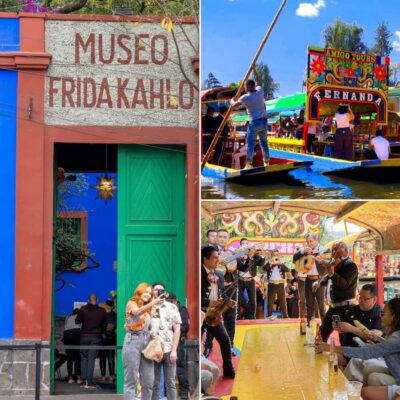
Xochimilco, Coyoacan, Frida Kahlo Museum & Murals Tour
Read our review →
Mexico City; ART NACO : Murals & Street Art Bike Tour
Read our review →
Walking Tour – Impressive murals in Historical Center of Mexico City
Read our review →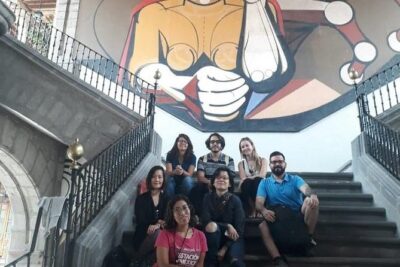
La Catrina & Muralism: Diego Rivera’s Legacy & Frida Kahlo
Read our review →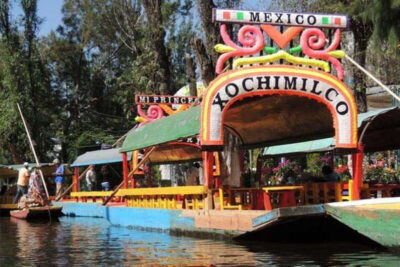
Xochimilco floating gardens, Coyoacan and UNAM murals
Read our review →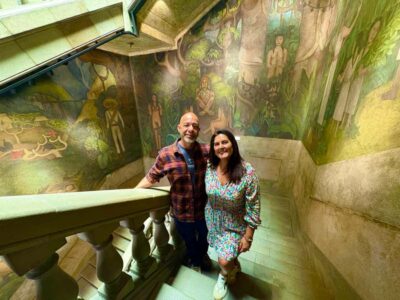
Browse the lists this tour appears in