
Reviewed · ANTHROPOLOGY MUSEUM TOURS
Walking Mexico City Tour with Anthropology Museum
Mexico City’s past comes at you in layers on this tour: Aztec temples under colonial churches, Diego Rivera murals inside a government palace, and world-class museum halls after a drive through Chapultepec Park. It is a useful way to connect the city’s key sights in one half-day.
I especially like the Zócalo-to-Anthropology Museum progression, which moves from the city’s political and religious center to its ancient cultures and living Indigenous traditions. I also like the mix of walking and driving, since Paseo de la Reforma and Chapultepec Park cover more ground than you could comfortably manage on foot.
The main caution is timing. Four to five hours is tight for this many major sites, and the museum entrance must be included in the option you book. Pickup delays and unexpected museum closures have also caused serious trouble in the past, so confirm the details before you set aside your only free morning.
In This Review
- Key points to know before booking
- Why this half-day route works
- Fine Arts Palace and the first look at downtown
- The Zócalo: Aztec foundations beneath a colonial center
- Palacio Nacional and Diego Rivera’s murals
- Metropolitan Cathedral and the work of colonial Mexico
- Paseo de la Reforma by vehicle
- Chapultepec Park and Mexico City’s open space
- One focused hour at the Anthropology Museum
- The guides and the quality of the explanation
- Is $44 a fair price?
- Timing, closures, and other practical cautions
- Who should book this Mexico City tour?
- Should you book it?
- FAQ
- How long does the Walking Mexico City Tour with Anthropology Museum last?
- Is the Anthropology Museum entrance fee included?
- Is hotel pickup available?
- Is the tour offered in English?
- What attractions are included in the route?
- What is the cancellation policy?
Key points to know before booking
- The Zócalo provides the tour’s strongest historical setting: You’ll see the cathedral, National Palace, City Hall, Justice Palace, and the remains of Templo Mayor around Mexico City’s central square.
- The Anthropology Museum is the main event: One hour is allotted, and the entrance fee is included only if you select the proper option.
- The tour covers ground by air-conditioned vehicle: You’ll pass along Paseo de la Reforma and through the first and second sections of Chapultepec Park.
- Several central sights are viewed from outside: The National Palace and Templo Mayor are listed as panoramic stops, not full interior visits.
- Guiding is available in English on request: Ask for this clearly when booking rather than assuming it is automatic.
- The group can reach 16 people: That keeps it smaller than a large coach outing, but it is not a private tour.
Why this half-day route works
This experience is designed as a city sampler, not a slow museum day. You begin in the Historic Center, see the main public buildings, travel through some of the city’s grandest avenues and parkland, then spend time at the National Museum of Anthropology.
That order makes sense. The Zócalo explains how Mexico City grew from the Aztec capital of Tenochtitlan into the seat of Spanish colonial power and modern government. The Anthropology Museum then gives you the objects and cultural background needed to make those earlier sights easier to understand.
I like that the route does not stay inside one neighborhood. You get architecture, archaeology, religion, politics, public monuments, and museum collections in a single outing. The tradeoff is depth. You will not have enough time to study every mural, ruin, gallery, and monument at leisure.
The tour lasts about four to five hours, with roughly one hour assigned to the Anthropology Museum. That leaves limited time for the downtown stops, the drive, and transfers. If you want a broad introduction on your first day, this is useful. If you already know the city and want long visits at each site, you may find the pace rushed.
More visits to the Anthropology Museum:
- Chapultepec Castle & Anthropology Museum Tour
★ 4.5 · 1,348 reviews - Anthropology Museum Guided Tour
★ 4.5 · 1,035 reviews - Mexico City: Anthropology Museum Guided Visit
★ 4.4 · 708 reviews
Fine Arts Palace and the first look at downtown
The Fine Arts Palace, or Palacio de Bellas Artes, is presented as an opening city sight. Its exterior brings together Art Deco and Renaissance influences, with Carrara marble and Mexican marble contributing to the grand effect. Inside, a famous Tiffany glass curtain adds another unusual detail, though this tour does not promise an extended interior visit.
This building is an excellent visual introduction to Mexico City’s taste for grand public architecture. It serves as one of the main cultural venues in the Historic Center, so even a short stop helps you understand the scale and ambition of the central district.
Do not count on a long, quiet look here. The stated route gives more defined time to the Zócalo and cathedral, so treat the palace as an important orientation point rather than a full museum visit.
The Zócalo: Aztec foundations beneath a colonial center
The Zócalo is the heart of the route. Officially called Plaza de la Constitución, it is described as the world’s third-largest square and is bordered by Mexico’s major civic and religious buildings.
You’ll see the National Palace, City Hall, the Justice Palace, and the Metropolitan Cathedral around the broad open space. The square can feel enormous, but a guide helps turn a wide view into a readable story. Look from one side to another and you can trace different chapters of power: government, church, courts, and the remains of the Aztec capital.
The key attraction is Templo Mayor, the great Aztec temple complex. The archaeological site includes foundations, buildings, towers, patios, walls, and gateways that once formed part of the ceremonial center of Tenochtitlan. Even from a panoramic viewpoint, its position beside the cathedral makes the city’s layered past unusually clear.
You are allotted about one hour here, which is a sensible amount for an introduction. Still, the Templo Mayor Museum and archaeological area require their own admission, and that entrance is not included in the listed tour price. If Aztec archaeology is your main interest, ask whether the route includes only a view or time to enter.
The Historic Center is also recognized by UNESCO and was once called the City of Palaces. That nickname makes more sense as you walk: imposing facades appear one after another, often with a church, government building, or former colonial residence nearby.
Palacio Nacional and Diego Rivera’s murals
The National Palace is the seat of Mexico’s federal executive power and one of the most important buildings around the Zócalo. The tour allows about 25 minutes here and lists it as a panoramic stop, with admission not included.
The major reason to visit is Diego Rivera’s fresco cycle, which presents Mexico’s story and the civilizations of Mesoamerica in mural form. These paintings are useful because they compress centuries of conflict, conquest, labor, and national identity into a public setting rather than a detached gallery.
With only 25 minutes, you should confirm exactly what your guide plans to show you. If interior access is not part of the day’s arrangement, you may see the building from outside and hear about Rivera’s work rather than spend time directly in front of the murals. That distinction matters if the palace is high on your list.
I see this stop as a context-builder. The museum later gives you objects and archaeological detail, while the palace offers a sweeping interpretation of Mexico’s past. The two work well together, but only if you understand that the National Palace is not being treated as a full tour.
More museums and galleries in Mexico City:
- CDMX: Xochimilco, Coyoacan, Frida Kahlo Museum & Murals Tour
★ 4.4 · 3,025 reviews - Frida Kahlo VIP [Museum Tickets Included] Bike, Markets & Churros
★ 5.0 · 1,072 reviews - Frida Kahlo VIP [Museum Tickets Included] Walk, Markets & Churros
★ 5.0 · 982 reviews - EXCLUSIVE TOUR Frida Kahlo Museum – SMALL GROUPS
★ 5.0 · 901 reviews
Metropolitan Cathedral and the work of colonial Mexico
The Metropolitan Cathedral occupies the north side of the Zócalo. You’ll have about 25 minutes here, and admission is listed as free.
The cathedral is dedicated to the Assumption of the Blessed Virgin Mary and is the seat of Mexico’s First Archdiocese. Its main altar is described as Churrigueresque, a highly decorative style associated with late Spanish colonial architecture.
The building’s engineering is also part of its appeal. It was built on soft, swampy ground, a difficult foundation for such a massive church. The result is one of the largest colonial-era temples in the Americas, with a long building history that reflects the changing styles and priorities of Mexico’s colonial period.
A short cathedral stop is enough to appreciate the scale, facade, and main interior features. It is not enough to inspect every chapel or detail. I would use the time to listen to the guide’s explanation of the building’s place beside Templo Mayor, since that physical relationship says more than either monument viewed alone.
Dress comfortably and wear shoes suitable for uneven streets and extended walking. The tour operates in all weather, so a light rain layer can be a sensible addition.
Paseo de la Reforma by vehicle
After the Historic Center, the route shifts from close walking to a scenic drive along Paseo de la Reforma. This is one of Mexico City’s most important avenues, linking the Historic Center with the financial, cultural, and Chapultepec areas.
You may see major monuments such as the Angel of Independence, the Diana monument, and the Christopher Columbus monument. The avenue is valuable in this tour because it shows a different Mexico City: broad, formal, modern, and built to connect major parts of the capital.
The air-conditioned vehicle makes this section practical. You can cover a long distance without spending your limited time walking between districts. The downside is that much of the experience depends on the guide’s commentary and traffic conditions. You should think of Reforma as a moving city overview, not a series of long monument visits.
Chapultepec Park and Mexico City’s open space
The vehicle continues through the first and second sections of Chapultepec Park, one of the largest urban parks in the Americas. It is more than a patch of trees. The park contains eight museums, over 100 fountains and monuments, lakes with rowboats, children’s areas, and paths for walking.
From the vehicle, you may see the Tamayo Museum of Modern Art, Chapultepec Lake, the National Auditorium, Los Pinos, the Chapultepec Fair, the Composers Fountain, Papalote Museo del Niño, and the Tlaloc Fountain.
This portion gives you scale. Mexico City is often understood through its dense streets and historic buildings, but Chapultepec shows how much open ground and public recreation sit within the capital. I appreciate this change of pace before the museum visit.
You should not expect to stop at every listed feature. The tour gives you a drive through the park, not a separate museum or lake visit. If you want to row on the lake, enter the Tamayo Museum, or spend time at Chapultepec Castle, you will need to return independently.
One focused hour at the Anthropology Museum
The National Museum of Anthropology is the tour’s strongest stop for many people. Its purpose is to present the archaeological cultures of Mesoamerica and the many Indigenous cultures of present-day Mexico.
The museum is large and important enough that one hour can pass quickly. Your guide can help you focus on the main displays and explain how the objects relate to the earlier sights in the Historic Center. That connection is the real value of including the museum after the Zócalo and Templo Mayor.
Admission is included only when you select the option that specifies the Anthropology Museum entrance fee. Check this carefully, since the base price is advertised at $44 per person but the inclusion depends on the selected booking choice.
One hour is enough for a guided introduction. It is not enough to see the entire museum at a slow pace. If you are especially interested in Aztec, Maya, Oaxaca, or other regional cultures, plan a separate return visit. The museum deserves more time than this route can give it.
The guides and the quality of the explanation
The best part of this experience depends heavily on the guide. Juan Castro has received especially strong praise for explaining Mexico’s origins and the development of its people and nation across several centuries. Gabriela and Jesus have also been described as friendly and clear when explaining the sights.
Those names are useful to know, but they do not guarantee who will lead your departure. The important point is that this route needs a guide who can connect places rather than simply name them. A list of buildings is easy. Explaining why a cathedral sits beside an Aztec temple, or how Rivera interpreted the past, is what gives the outing its value.
English guiding is available on request, so make that request explicit. The tour is capped at 16 people, which should allow more room for questions than a large bus tour, though the group size is still large enough that the guide may need to keep moving.
Is $44 a fair price?
At $44 per person, the tour can be good value if your selected option includes the Anthropology Museum entrance fee and hotel transport works as promised. You are paying for a professional guide, an air-conditioned vehicle, selected hotel pickup and drop-off, and a route that links several distant parts of the city.
The value is strongest for a first visit. You get a useful city orientation without arranging separate transport between the Historic Center, Reforma, Chapultepec, and the museum. You also avoid spending your first day figuring out how these districts fit together.
The price is less attractive if the museum fee is not included, if you plan to enter Templo Mayor and the National Palace separately, or if you want long visits at each location. Those extra admissions and return trips can add cost and time.
Pickup applies only to selected hotels. If your hotel lies outside the service area, you will be assigned a meeting point. Confirm that point before the day of the tour, since an unclear pickup plan can cut into an already compact schedule.
Timing, closures, and other practical cautions
This tour operates in all weather, so comfortable shoes and suitable clothing are essential. You will walk in the Historic Center, then move by vehicle through Reforma and Chapultepec before another museum visit.
A late pickup has been reported, and one delayed start can affect every later stop. I would keep this tour away from a flight, train, or fixed dinner reservation. Give yourself breathing room after the stated four to five hours.
Museum closures are another concern. A closure once left a participant without the main purpose of the outing, followed by an unscheduled drive through Polanco. That is not an equal substitute for the Anthropology Museum. Confirm that the museum is open close to departure, and ask what happens if it closes unexpectedly.
The cancellation rule is simple but strict: cancel at least 24 hours before the local start time for a full refund. Changes made inside that window are not accepted, and a health problem within the final day may not qualify for a refund. If your plans are uncertain, book only when you can meet that deadline.
Who should book this Mexico City tour?
I would choose this experience if you want a guided first look at Mexico City and prefer to cover several major districts in one organized outing. It suits you especially well if you want historical explanation, hotel pickup, and a manageable introduction to the Anthropology Museum.
It is also a good fit for families and mixed-interest groups. The route combines ruins, churches, government buildings, monuments, park scenery, and museum exhibits, so you are not locked into one type of sightseeing.
I would hesitate if you want a slow archaeological visit, extensive time inside Palacio Nacional, or a full day at the Anthropology Museum. Independent visitors with more time may prefer to split the Historic Center and museum into separate days.
Should you book it?
Book it if the museum is open, the entrance fee is included in your chosen option, and you want a broad, guided introduction to the capital. The route is thoughtfully arranged, and the strongest guides turn the city’s layers into a clear story.
Skip it if you need a guaranteed leisurely pace or have firm afternoon plans. Before paying, confirm the English guide, pickup location, museum status, and exact inclusions. Those four checks will tell you if this $44 outing is a smart shortcut or too compressed for your priorities.
FAQ
How long does the Walking Mexico City Tour with Anthropology Museum last?
The experience lasts approximately four to five hours.
Is the Anthropology Museum entrance fee included?
The entrance fee is included if you select the option that includes it. Check the specific option before booking.
Is hotel pickup available?
Pickup and drop-off are offered at selected hotels. If your hotel is outside the included area, a meeting point will be assigned.
Is the tour offered in English?
An English-speaking guide is available on request. You should make this request when booking.
What attractions are included in the route?
The route includes the Fine Arts Palace, Zócalo, National Palace, Templo Mayor, Metropolitan Cathedral, Paseo de la Reforma, Chapultepec Park, and the National Museum of Anthropology.
What is the cancellation policy?
You can cancel at least 24 hours before the local start time for a full refund. Cancellations or changes made less than 24 hours before the experience are not accepted for a refund.
More Walking Tours in Mexico City
- Historic Downtown Walking Tour
★ 5.0 · 1,289 reviews - Mexico City: Historic Downtown Walking Tour
★ 4.8 · 1,039 reviews - Walking Tour of the Historic Center of Mexico City
★ 5.0 · 870 reviews - Anthropology Museum Private Experience Walking Tour
★ 5.0 · 355 reviews
Just added around Mexico City
- Mexico City: Hop-on Hop-off City Tour by Turibus 2-Day Pass★ 4.0 · 10 reviews
- Anthropology Museum, Chapultepec Castle & Cable Car Tour★ 4.5 · 10 reviews
- Multi-Variety Mole Class in a Condesa home or art gallery rooftop★ 5.0 · 10 reviews
- PRIVATE TOUR Colonial Town Taxco and Cuernavaca from CDMX.★ 5.0 · 10 reviews
- El Centro Street Food Walking Tour★ 5.0 · 10 reviews
- Private Round-Trip Transportation to Teotihuacan Pyramids★ 5.0 · 10 reviews
- Teotihuacan and My Grandma’s Food Tour★ 5.0 · 10 reviews
- Private Walking Tour Legends and Events Historic Center CDMX★ 4.8 · 10 reviews
Anthropology Museum Tours, compared.
Chapultepec Castle & Anthropology Museum Tour
Read our review →
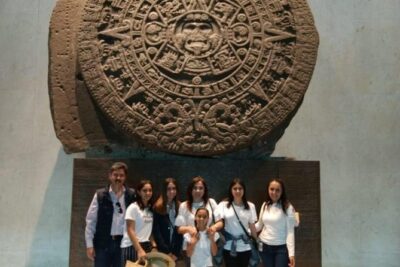
Anthropology Museum Private Experience Walking Tour
Read our review →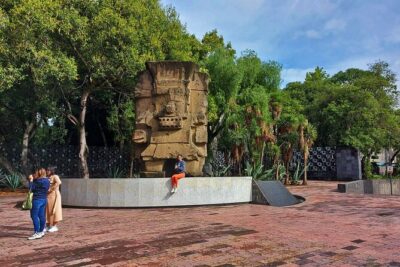
5 Hour Tour through Chapultepec, Anthropology Museum and Castle
Read our review →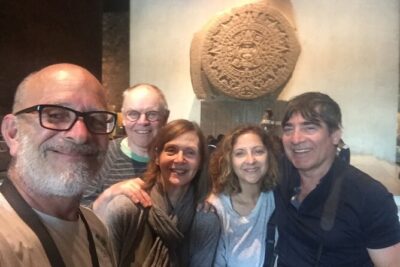
PRIVATE Tour in Chapultepec Castle and Museum of Anthropology
Read our review →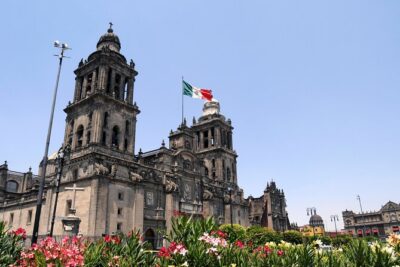
Teotihuacan & Anthropology Museum, Templo Mayor & City Tour
Read our review →Browse the lists this tour appears in