
Reviewed · HISTORICAL TOURS
Architecture and History of Mexico City – Small Groups
Mexico City’s Historic Center makes more sense when you read its buildings as layers rather than isolated sights. This walk links a skyscraper viewpoint, a former church atrium, a tiled palace, a grand post office, an archaeological site, and the Zócalo into one clear story. Raul’s historical and architectural explanations are the main attraction.
I like the small maximum of six people, which gives you room to ask questions, and I like that the route reaches inside or around several buildings instead of stopping only for photographs. The main consideration is that this is a walking tour with a moderate fitness requirement, and the Palacio de Bellas Artes admission is not included.
In This Review
- Key points to know before booking
- Why this small walk gives Mexico City a clear beginning
- Starting at Torre Latinoamericana
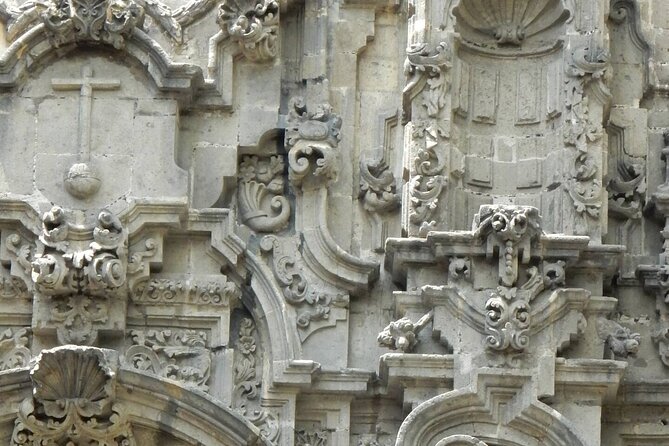
- San Francisco Temple and the city’s building materials
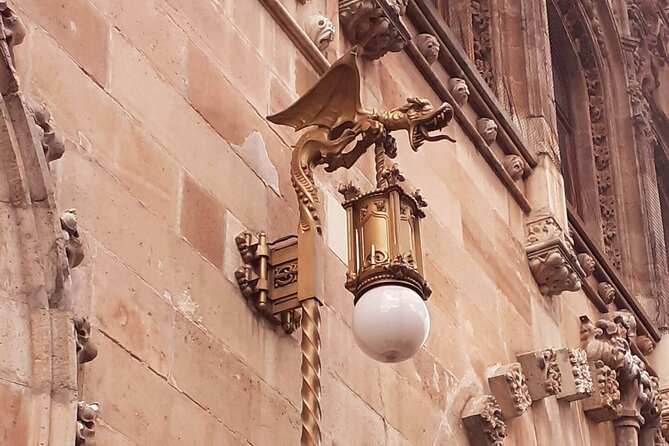
- House of Tiles: art, balconies, and three centuries of change
- Palacio de Bellas Artes and the politics of grand design
- Palacio Postal, an ornate early twentieth-century pause
- Plaza Tolsá and Mexico City’s eclectic center
- Templo Mayor and the older city beneath the center
- Finishing at the Zócalo
- What the $83.59 price delivers
- Who should book this walk
- Should you book Architecture and History of Mexico City?
- FAQ
- How long does the Architecture and History of Mexico City tour last?
- Where does the tour begin?
- Where does the tour end?
- How many people can join the tour?
- Is the tour offered in English?
- Is transportation included?
- Are admission tickets included?
- Does the tour include bottled water?
- What happens if bad weather cancels the tour?
Key points to know before booking
- A six-person maximum keeps the walk personal: You can ask questions and hear the guide without standing in a large crowd.
- The route connects many eras: Mexica foundations, Spanish colonial construction, nineteenth-century eclectic design, and twentieth-century architecture all appear within a compact area.
- Raul is the guide to look for: His talks link architecture with art, politics, sociology, and the muralist movement.
- The House of Tiles offers more than a quick photo: You’ll see artwork inside and use its balconies to look toward nearby buildings.
- The finish at the Zócalo is useful: Raul can answer questions and offer suggestions for the rest of your time in Mexico City.
- Plan for walking and changing conditions: The three to three-and-a-half-hour schedule includes travel time, but private transport is not provided.
Why this small walk gives Mexico City a clear beginning
I like tours that help you get your bearings before you start collecting individual sights. This one begins at Torre Latinoamericana and ends at the Zócalo, so you move through the center while following a timeline that reaches from pre-Hispanic Mexico to the modern city.
Raul’s approach, based on the available information, goes well beyond naming architectural styles. He connects buildings to political events, artistic movements, social change, construction materials, and the way Mexico City developed over time. That makes the route useful for first-time visitors who want a framework before visiting larger museums.
The small-group format matters here. Architecture is easy to miss when a guide is speaking to 30 people on a busy pavement. With no more than six participants, you should have a better chance to hear the explanations, ask about details, and request clarification when several periods begin to overlap.
The walk is offered in English and lasts about three to three-and-a-half hours. It is not a ride between sights, and no private transportation is included. The allotted travel time is already part of the total, so wear comfortable shoes and expect to remain on foot for most of the experience.
More history walks in Mexico City:
- Historic Downtown Walking Tour
★ 5.0 · 1,289 reviews - Historic Center Food Tour in Mexico City
★ 5.0 · 1,263 reviews - Mexico City: Historic Downtown Walking Tour
★ 4.8 · 1,039 reviews
Starting at Torre Latinoamericana
The first meeting point is Torre Latinoamericana, at Eje Central Lázaro Cárdenas 2. The tour uses the area around the tower as a visual introduction to Mexico City’s changing form.
This is a smart place to begin because the city’s architectural contrasts are close at hand. The discussion here focuses on how Mexico City has evolved and how different layers of its past can be read through the buildings around you. You are not simply looking at one landmark. You are learning how to compare periods and materials as the walk continues.
The opening stop lasts about 30 minutes and does not include an admission ticket. Since the tower itself is used as a meeting point and viewpoint area for the discussion, check the exact plan with the guide if you are expecting access to a paid observation deck. The supplied details identify this stop as free, while the separate ticket situation for Palacio de Bellas Artes is clearly noted later.
This opening section should suit you if you prefer context before close-up sightseeing. If you want a fast list of famous buildings, the pace may feel talk-heavy. The point is to train your eye before the route moves into the older core.
San Francisco Temple and the city’s building materials
The second stop is the atrium of the Temple of San Francisco, about 25 minutes. The building is used to explain construction materials and the historical processes that helped shape Mexico.
That focus is valuable because architecture is not only about decoration. Materials tell you what builders could obtain, how they adapted to local conditions, and how one period reused or changed what came before it. At San Francisco, the guide’s explanation places the building within the wider development of Mexico City.
The atrium also gives the tour a quieter architectural pause after the opening city view. You can look at the structure directly while Raul explains why it matters. This is the sort of stop that can change how you see later churches and civic buildings, since you have already been introduced to the practical side of construction.
Admission is listed as free. The tour does not promise a long interior visit, so expect the emphasis to be on the atrium and the historical explanation rather than a full museum-style exploration.
House of Tiles: art, balconies, and three centuries of change
The House of Tiles is one of the most distinctive stops. The visit lasts about 25 minutes and includes a look at an interesting piece of art inside the building, along with time on its balconies to view nearby structures.
The balconies are especially useful. Instead of seeing the building as a single facade, you get a chance to look outward and compare it with the surrounding city. That supports one of the walk’s main ideas: Mexico City’s past is visible in the way different buildings sit beside one another.
Raul also traces the building’s development across almost 300 years. That long time span gives the stop more substance than a simple photo opportunity. You learn how a building can change meaning and use while retaining visual features from earlier periods.
This is also where the guide’s interest in art and symbolism can add color to the walk. The tour’s discussion includes details such as mythical creatures, including griffins and mermaids, and the muralist movement. Those subjects help connect decorative features to larger ideas in Mexican art.
Admission is listed as free. The stop is brief, so you should not expect every room or feature to receive equal attention. Still, the mix of artwork, balconies, history, and nearby views makes this one of the route’s strongest stops.
A completely different day out, same corner of Mexico City:
- Teotihuacan, Guadalupe Shrine & Tlatelolco Day Tour with Lunch
★ 5.0 · 11,603 reviews - Xochimilco, Coyoacan and Frida Kahlo with Optional Lunch
★ 4.5 · 7,320 reviews - Balloon flight + Breakfast in cave + Pyramids + Pick up CDMX.
★ 5.0 · 6,335 reviews - Teotihuacan pyramids morning or afternoon without tourist traps
★ 5.0 · 6,186 reviews
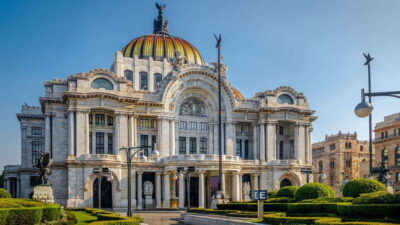
Palacio de Bellas Artes and the politics of grand design
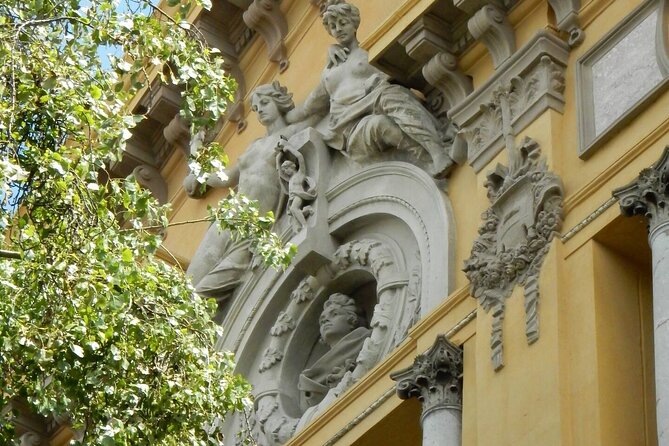
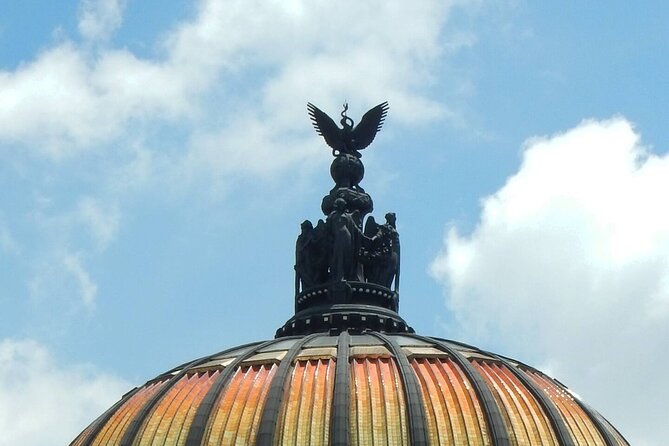
The walk spends about 20 minutes around Palacio de Bellas Artes. Here the conversation turns to the historical, political, and artistic conditions that shaped the building and its neighbors.
Bellas Artes is a good place to bring those themes together. A grand cultural building can tell you about more than its style. It can reflect what a government wanted to project, how artists were treated, and how a city imagined its modern identity. Raul’s explanations connect those issues instead of treating the palace as a pretty facade.
The nearby buildings matter as well. Looking at Bellas Artes in relation to its neighbors helps you see eclectic design and changing city priorities. You may hear more about the muralist movement here or at nearby stops, since art and public space are central to understanding this part of Mexico City.
One practical point matters: admission to Palacio de Bellas Artes is not included. The information does not specify whether the group enters the museum or discusses the building from outside, so confirm that detail if an interior visit is important to you. Budget for a possible ticket, and remember that this stop itself is scheduled for only about 20 minutes.
Palacio Postal, an ornate early twentieth-century pause
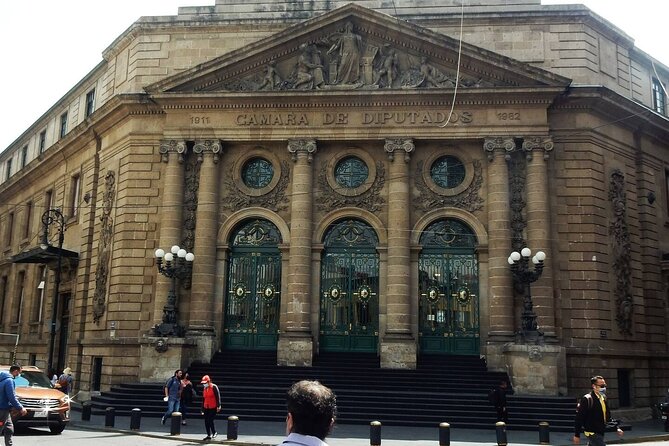
Palacio Postal is described as a beautiful post office from the beginning of the twentieth century. The visit lasts about 20 minutes, and the group may go inside depending on the time of day.
That flexible wording is worth noting. You should treat the interior as a possibility, not a guarantee. If the doors are open to the group, you can appreciate the building from within. If not, the guide still uses the exterior to explain its place in the city’s architectural story.
The stop adds a different period to the route. After the older religious and colonial buildings, Palacio Postal shows how Mexico City adopted more elaborate civic and commercial design in the early twentieth century. Its presence also reinforces the tour’s broad range: this is not only a walk through Spanish colonial history.
Admission is free. Since the interior depends on timing, the experience can vary slightly by departure hour. That is one reason to keep your expectations flexible and focus on the guide’s interpretation as much as access inside.
Plaza Tolsá and Mexico City’s eclectic center
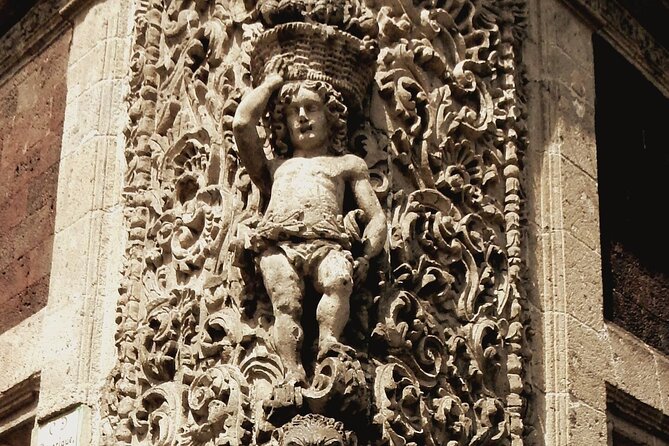
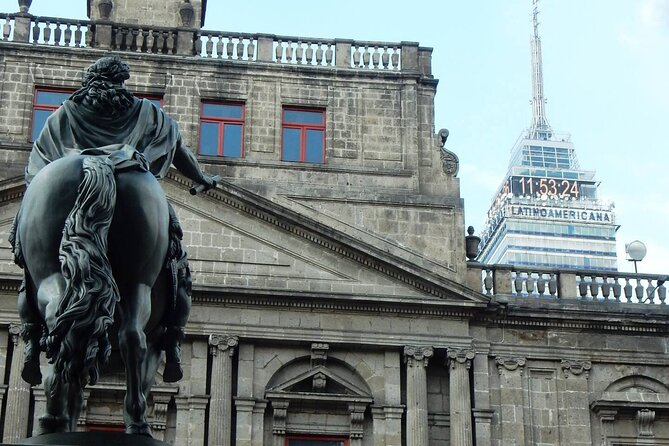
At Plaza Tolsá, the group spends about 20 minutes examining the buildings around the statue of Charles IV of Spain. This stop focuses on the city’s eclectic architecture.
A plaza is a useful classroom because you can compare several facades from one position. Instead of moving from one isolated landmark to another, you look at the whole setting and ask how the buildings work together. The statue provides a fixed reference point while Raul explains the mix of influences around it.
The subject also helps connect architecture with power. A statue of Charles IV carries a political story, while the surrounding buildings show changing tastes and civic ambitions. This is where the walk’s combination of architecture, history, and sociology becomes particularly useful.
The plaza stop lasts 20 minutes and is free. It may appeal most to you if you enjoy learning how cities are composed. If you mainly want to enter every building, this portion will feel more observational.
Templo Mayor and the older city beneath the center
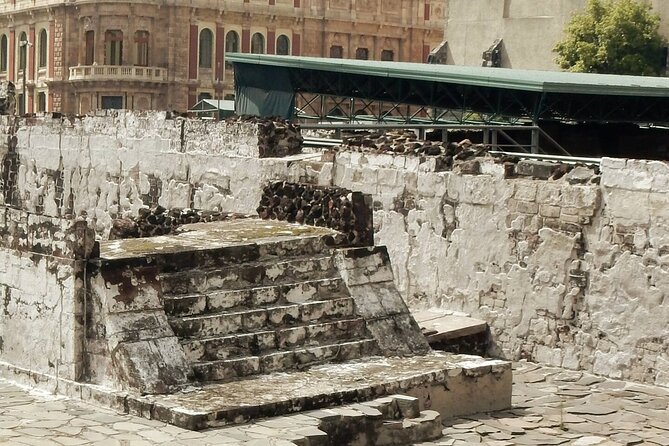
Near the end of the walk, you visit the archaeological site at Museo del Templo Mayor for about 20 minutes. This is an important shift in perspective because it places the modern Historic Center over the remains of an older Mexica city.
The stop helps explain why Mexico City can feel historically layered in such a physical way. Colonial buildings and modern streets do not erase the earlier city entirely. Archaeological remains offer a direct reminder that the center has been shaped by more than one civilization and more than one political order.
The visit is brief, but it gives you a foundation for a later museum visit. One useful benefit of taking this walk early in your trip is that the guide’s background can make a larger museum collection easier to understand. The information from the tour can help you recognize the links between architecture, conquest, art, and public memory.
The stop is described as an archaeological site within the center. The final Zócalo admission is marked as included, while the individual details do not state a separate Templo Mayor ticket arrangement. Ask Raul what access is planned on your date if entering the museum matters to you.
Finishing at the Zócalo
The route ends at the Constitution Plaza, better known as the Zócalo, Mexico City’s main square. The final discussion lasts about 20 minutes and brings the earlier stories together.
This ending works well because the Zócalo is not just a finish line. It is the place where many of the tour’s themes meet: Mexica foundations, Spanish colonial power, national politics, public art, and the modern capital. Raul also makes time for questions and recommendations for the rest of your visit or a future return.
I especially like that practical feature. You can use the final conversation to ask about museums, neighborhoods, or which parts of the city deserve more of your time. The tour is not only a lecture with a fixed ending. It gives you a chance to adjust your own plans based on what caught your interest.
The end point is at Plaza de la Constitución. You will need to arrange your own onward transportation, since private transport is not included.
What the $83.59 price delivers
At $83.59 per person, this is not the cheapest way to take a stroll through the Historic Center. Its value depends on how much you want explanation rather than simple access to famous sights.
The route covers eight stops over three to three-and-a-half hours, with bottled water included. Several admissions are listed as free, while Bellas Artes is not included and some interior access depends on timing. The main purchase is the guide’s time and the connected story that ties the buildings together.
That value is strongest if you are new to Mexico City, interested in architecture, or want a serious orientation on your first day. One person who took the walk early in a visit found it gave useful preparation for the Anthropology Museum. That makes sense: the tour introduces pre-Hispanic and post-Spanish history before you tackle a larger collection.
The price may feel less appealing if you already know the Historic Center well, prefer to explore alone, or want a tour with extensive interior access. You are paying for a focused explanation in a very small group, not for transportation or a long series of included admissions.
Who should book this walk
I would choose this for a first or early day in Mexico City. Raul’s style suits you if you like careful explanations, ask questions, and want architecture linked to political and artistic change.
It is also a good fit for visitors who have already seen some of these buildings but never understood their background. Familiar facades can take on new meaning when you learn how their materials, decoration, and neighbors relate to earlier periods.
The walk may not suit you if standing and walking for several hours is difficult. A moderate fitness level is required, and the schedule includes movement between stops. The experience also requires good weather. If rain or poor conditions cancel it, you are offered another date or a full refund.
The English-language format and six-person maximum make it a practical choice for people who want a personal explanation without booking a fully private tour. You should still confirm the meeting point carefully. The start is Torre Latinoamericana, while the tour finishes at the Zócalo, and one past participant needed help after going to the wrong meeting place.
Should you book Architecture and History of Mexico City?
Book it if you want Mexico City’s center to become a connected story instead of a checklist of buildings. The strongest reasons are Raul’s thoughtful approach, the small group, the House of Tiles balconies, the San Francisco atrium, and the way the route joins Mexica, colonial, artistic, and modern chapters.
Think twice if you want guaranteed access inside every landmark or a mostly passive sightseeing outing. Bellas Artes admission is extra, Palacio Postal access depends on the time of day, and the tour is entirely built around walking and discussion.
For a curious first-time visitor, I think the price is fair when you use it as an orientation for the rest of your trip. Start here, take notes about the places and art movements that interest you, then return to the museums and buildings with better questions.
FAQ
How long does the Architecture and History of Mexico City tour last?
The tour lasts approximately three to three-and-a-half hours, and the allotted travel time between stops is already included.
Where does the tour begin?
It begins at Torre Latinoamericana, Eje Central Lázaro Cárdenas 2, in Mexico City’s Centro Histórico.
Where does the tour end?
The walk ends at Constitution Plaza, also called the Zócalo, Mexico City’s main square.
How many people can join the tour?
The maximum group size is six travelers.
Is the tour offered in English?
Yes. The experience is offered in English.
Is transportation included?
Private transportation is not included. The experience is organized as a walking tour, and travel time between stops is part of the total duration.
Are admission tickets included?
Several stops are listed as free, and the Zócalo admission is included. Palacio de Bellas Artes admission is not included. Entry inside Palacio Postal depends on the time of day.
Does the tour include bottled water?
Yes. Bottled water is included.
What happens if bad weather cancels the tour?
The experience requires good weather. If poor weather causes cancellation, you are offered a different date or a full refund.
Just added around Mexico City
- Mexico City: Hop-on Hop-off City Tour by Turibus 2-Day Pass★ 4.0 · 10 reviews
- Anthropology Museum, Chapultepec Castle & Cable Car Tour★ 4.5 · 10 reviews
- Multi-Variety Mole Class in a Condesa home or art gallery rooftop★ 5.0 · 10 reviews
- PRIVATE TOUR Colonial Town Taxco and Cuernavaca from CDMX.★ 5.0 · 10 reviews
- Private Round-Trip Transportation to Teotihuacan Pyramids★ 5.0 · 10 reviews
- Teotihuacan and My Grandma’s Food Tour★ 5.0 · 10 reviews
- El Centro Street Food Walking Tour★ 5.0 · 10 reviews
- Private Walking Tour Legends and Events Historic Center CDMX★ 4.8 · 10 reviews
Historical Tours, compared.


Mexico City Historical Centre Food Tour with 7 Authentic Tastings
Read our review →
Walking Tour in Mexico City for Exploring their Cultural Heritage
Read our review →
Walking Tour – Impressive murals in Historical Center of Mexico City
Read our review →
Guided walking tour through the most historic parts of the city.
Read our review →Browse the lists this tour appears in