
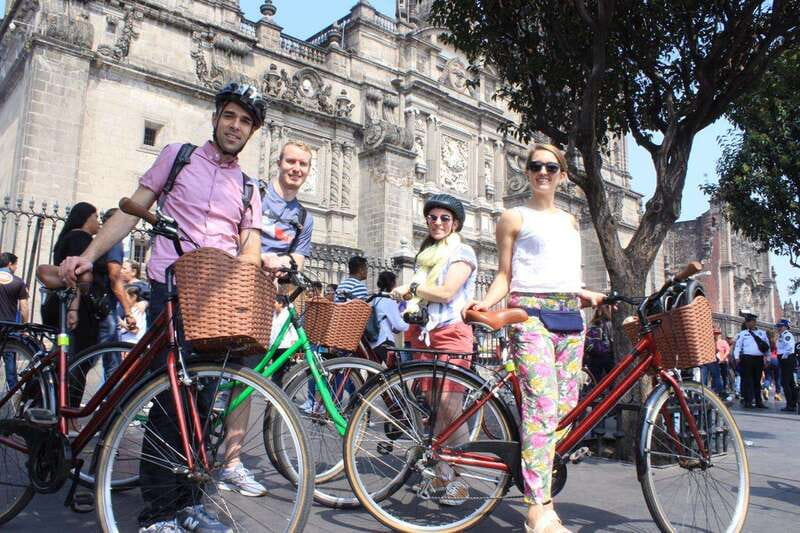
Reviewed · HISTORIC CENTRE WALKING TOURS
Cultural Ride: Historic center & Highlights of Mexico City
Mexico City’s story comes into focus when you pedal through the places where Aztec and Spanish cultures collided. This four-hour ride links the Metropolitan Cathedral, Palace of Fine Arts, Diego Rivera murals, Revolution Monument, and Angel of Independence without trapping you behind a bus window.
I like the small-group format, which gives guides such as Hector and Louis room to explain the city and keep an eye on the ride. I also like the practical green choice: your bike covers a lot of ground while keeping the focus on streets, courtyards, parks, and daily city life.
The main consideration is traffic. One rider felt safe despite the cars, but you need to feel comfortable riding in an urban setting. Children under 12, wheelchair users, and visually impaired participants cannot join.
In This Review
- Key points to know before you pedal
- A bike ride through Mexico City’s competing pasts
- From the Metropolitan Cathedral to the city’s colonial core
- Diego Rivera murals and the Palace of Fine Arts
- The Revolution Monument and the story of Pancho Villa
- Reaching the Angel of Independence
- Colonial streets, courtyards, and the offbeat route
- What the four-hour format means for you
- Guides, languages, and the small-group advantage
- Is the $70 price fair?
- Who should book this Mexico City ride?
- Should you book it?
- FAQ
- How long is the Cultural Ride in Mexico City?
- What sights are included?
- Is a bike and helmet included?
- What languages are available?
- Where is the meeting point?
- Who cannot join the tour?
Key points to know before you pedal
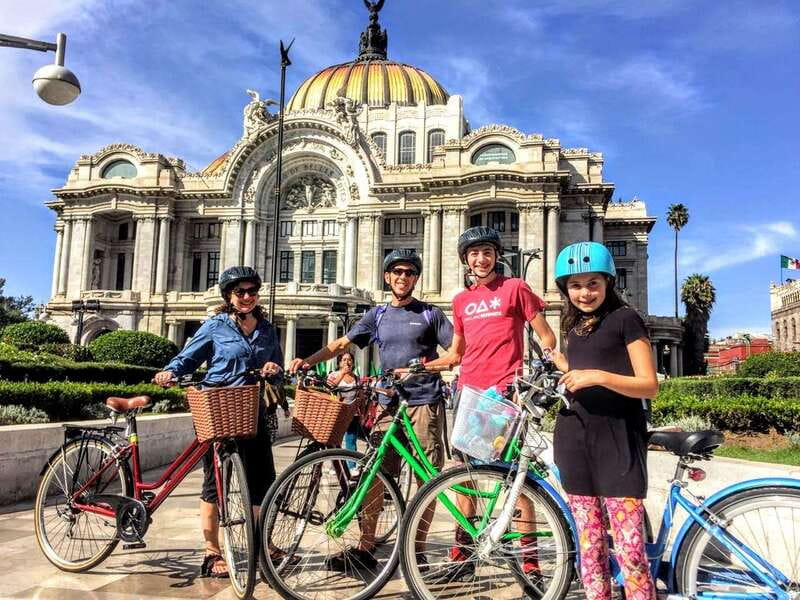
- Aztec and Spanish stories meet: See how Mexico City’s past survives in its cathedral, colonial streets, murals, and central monuments.
- Major sights in four hours: The route includes the Metropolitan Cathedral, Palace of Fine Arts, Revolution Monument, Angel of Independence, and Diego Rivera murals.
- A guide-led city ride: English and Spanish guides provide context while you move between downtown sights.
- Small groups mean closer help: The format suits you if you prefer personal attention over a large motorcoach tour.
- Traffic is part of the deal: You must be comfortable on a bike and ready to follow safety guidance.
- Simple inclusions: The price covers your guide, bike, helmet, and bottled water, but not food or hotel transfers.
A bike ride through Mexico City’s competing pasts
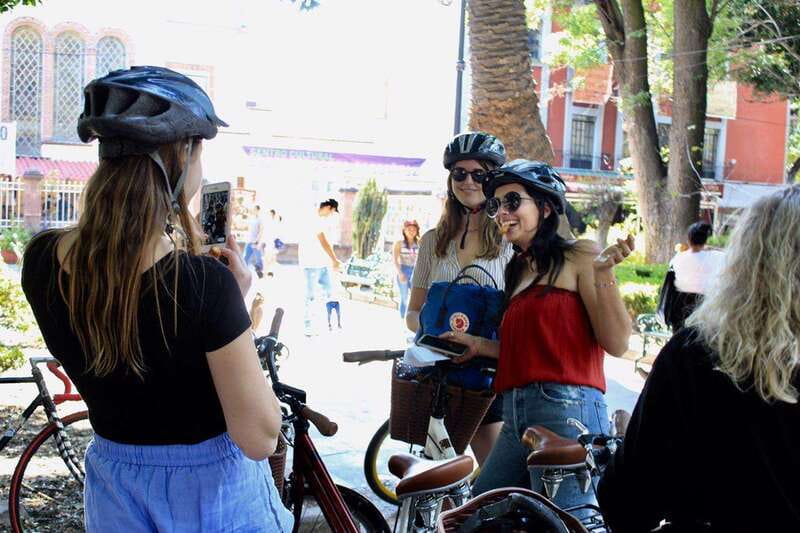
This is not just a sightseeing loop with a few photo stops. The appeal lies in the way the route connects different chapters of Mexico City. You move through the historic center and downtown, where Spanish colonial power, Aztec foundations, revolutionary politics, modern national identity, and public art all sit within the same broad city area.
That makes the bicycle useful. You are not restricted to one plaza or one museum entrance. You can pass through colonial streets, reach major monuments, and get a sense of how the center changes from one block to the next. I like this kind of tour early in a city visit because it helps you understand the layout before choosing where to return on foot.
The four-hour length gives the guide time to provide more than quick labels. You can expect a mix of riding, pauses near landmarks, and explanations of why each place matters. The exact order of stops is not specified, so think of the route as a guided overview rather than a fixed museum schedule.
More walks through the historic centre:
- Historic Downtown Walking Tour
★ 5.0 · 1,289 reviews - Historic Center Food Tour in Mexico City
★ 5.0 · 1,263 reviews - Mexico City: Historic Downtown Walking Tour
★ 4.8 · 1,039 reviews
From the Metropolitan Cathedral to the city’s colonial core
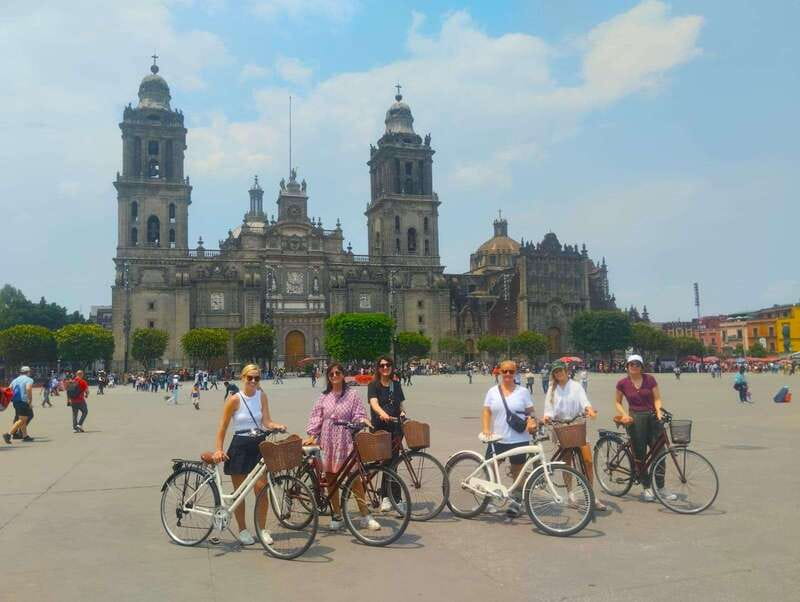
The Metropolitan Cathedral is one of the essential stops on a Mexico City introduction. Its scale and position make it a useful starting point for understanding the historic center, especially the shift from the Aztec capital to the Spanish colonial city built after conquest.
On a bicycle, you see the cathedral as part of the urban setting rather than as an isolated attraction. The surrounding streets and nearby buildings help tell the larger story of power, religion, and city planning. Your guide can connect the visible Spanish architecture with the older culture that preceded it.
Do not expect a long interior visit unless the guide specifically includes one. The experience is built around cycling and outdoor sightseeing, so the value here comes from the explanation and the wider setting. If cathedral interiors are a top priority, you may want to return separately with more time.
Diego Rivera murals and the Palace of Fine Arts
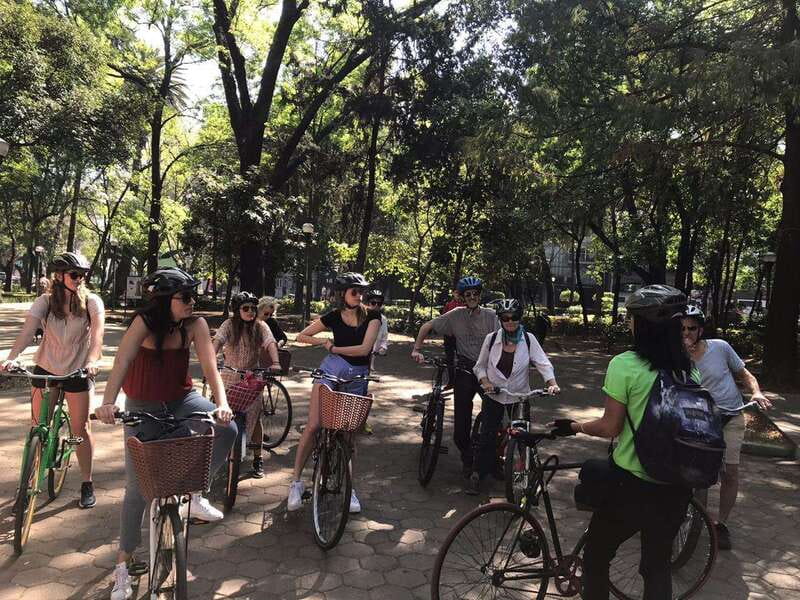
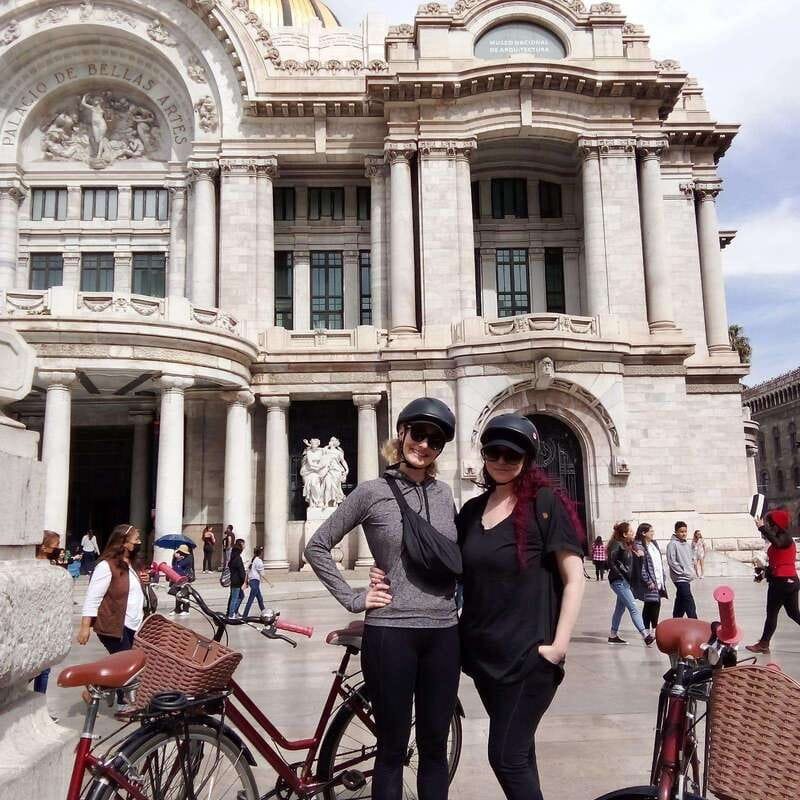
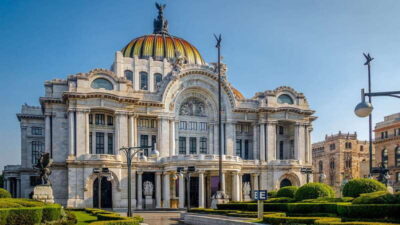
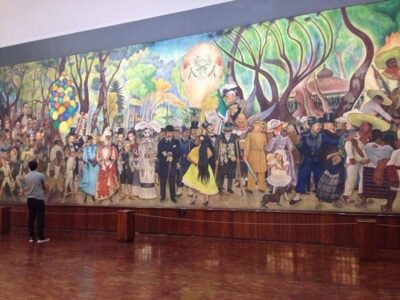
The Palace of Fine Arts is one of Mexico City’s most recognizable buildings, and the tour pairs it with Diego Rivera’s murals. That combination works well: the building represents the city’s grand cultural ambitions, while the murals bring politics, workers, historical figures, and national identity into public view.
Rivera’s work rewards context. A quick glance can show you color and scale, but a guide can point out the figures and themes that make the murals worth studying. I would listen closely here, especially if this is your first visit to Mexico City and you are still learning the country’s major historical names.
The Palace of Fine Arts area can be visually busy, and a bike is not always the best way to linger. You may have limited time to stand in front of every mural or study every architectural detail. Still, this is a strong part of the route for readers who want art and history without spending the whole afternoon inside a museum.
The Revolution Monument and the story of Pancho Villa
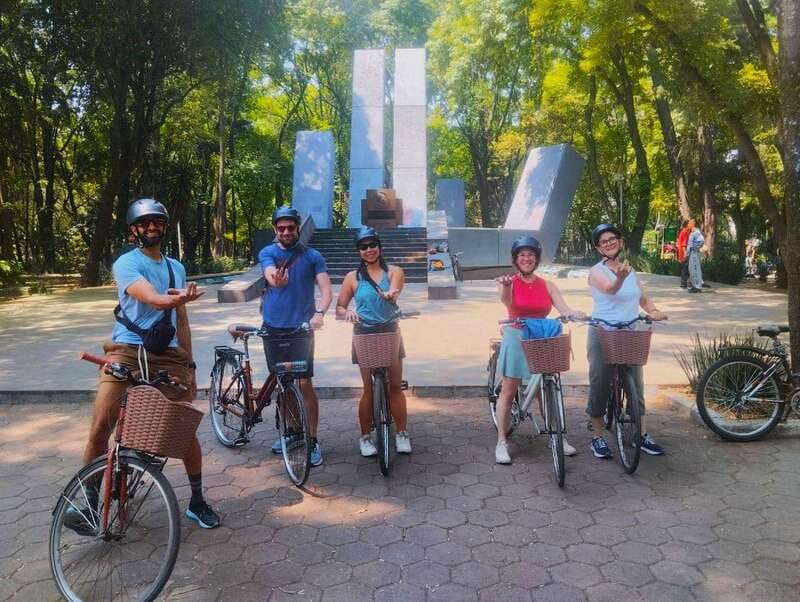
The Revolution Monument adds a different tone. Instead of focusing on colonial religion or fine art, it brings the modern political story of Mexico into the ride. The monument is tied to the Mexican Revolution, and its connection to famous revolutionaries, including Pancho Villa, gives your guide a natural opening to explain the people and conflicts behind the national story.
This stop is especially useful because a monument can otherwise become just another large structure on a photo list. Ask questions about who is commemorated and why the site matters. The supplied tour details specifically point to the revolutionaries buried there, so this is more than a quick exterior view.
The monument also helps break up the historic-center portion of the ride. You are not hearing only about colonial architecture. The route moves across periods, showing how Mexico City’s identity was shaped by conquest, independence, revolution, art, and public memory.
More history walks in Mexico City:
- Walking Tour of the Historic Center of Mexico City
★ 5.0 · 870 reviews - Mexico City Historical Centre Food Tour with 7 Authentic Tastings
★ 5.0 · 723 reviews - Walking Tour in Mexico City for Exploring their Cultural Heritage
★ 5.0 · 245 reviews - Walking Tour – Impressive murals in Historical Center of Mexico City
★ 5.0 · 224 reviews
Reaching the Angel of Independence
The Angel of Independence gives the tour another major symbol of Mexico City. Its location on one of the city’s best-known avenues makes it a natural marker of national pride and a useful contrast to the older streets of the historic center.
By reaching it on a bike, you see how the city’s central districts connect. That broader movement is one of the strongest reasons to choose a bicycle tour instead of a walking tour. You can cover more ground and compare different parts of the city within the same four-hour outing.
The drawback is the same one that comes with any city cycling experience: traffic and street conditions demand attention. A verified rider specifically felt safe despite the traffic, which is encouraging, but safety still depends on your own comfort level and on following the guide’s directions. This is not the right choice if you feel nervous riding near cars.
Colonial streets, courtyards, and the offbeat route
The most appealing part of the ride may be the space between the headline sights. The route includes colonial streets and hidden courtyards, giving you a break from the standard monument-to-monument pattern. These smaller settings can reveal how the historic center feels at street level.
I like tours that leave room for these transitions. A cathedral, palace, or monument tells you what the city wants you to notice. A side street or courtyard can show you how the city is arranged and how old spaces sit beside modern life. The information does not provide a detailed list of every lane or courtyard, so you should see these as route elements rather than guaranteed named attractions.
The phrase offbeat routes also matters. This is not marketed as a race between famous sights. Your guide’s job is to connect the well-known places with less obvious corners, while keeping the pace manageable for the group.
What the four-hour format means for you

Four hours is long enough for a proper introduction, but short enough to fit into a busy Mexico City schedule. You can book it as a morning or afternoon activity, since starting times vary and availability needs to be checked for your date.
I would place this ride near the start of a stay. It can help you decide which areas deserve a later visit, and it gives you a basic map of the center before you tackle it on foot. If you have only one day in Mexico City, the tour also makes efficient use of your time by combining several major sights.
The pace will not suit everyone. You need to be comfortable sitting on a bike for four hours, stopping, starting, and riding in city traffic. Wear suitable clothing, avoid skirts, and use closed shoes. A helmet is included, along with a bike and bottled water.
Food is not included, so plan to eat before or after the tour. Hotel pickup and drop-off are also not included. You make your own way to the bike shop, identified by a green flag and the Ikagai coffee shop.
Guides, languages, and the small-group advantage
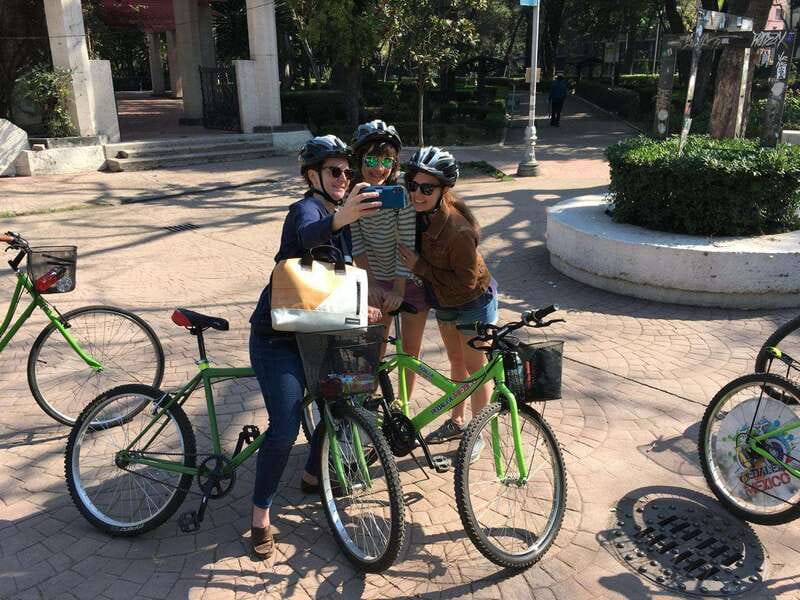
The tour runs in English and Spanish. The guide names connected with this experience include Hector and Louis. Hector received specific praise for making the ride informative, fun, interesting, and beautiful, while Louis was noted for leading an engaging introduction to Mexico City and for the appeal of the large parks along the way.
Those details suggest that the guide can shape the experience more than the bike itself. A good guide will explain the monuments in plain terms, point out details you might miss, and help you handle the city streets. The small-group setup matters here because it allows more direct contact than a large group with a fixed microphone.
You should still keep your expectations sensible. This is a four-hour overview, not a full history course or a private custom tour. The guide must balance riding time, safety, and group interests. If you want to linger at every mural or stop for a long meal, a private walking tour may suit you better.
Is the $70 price fair?
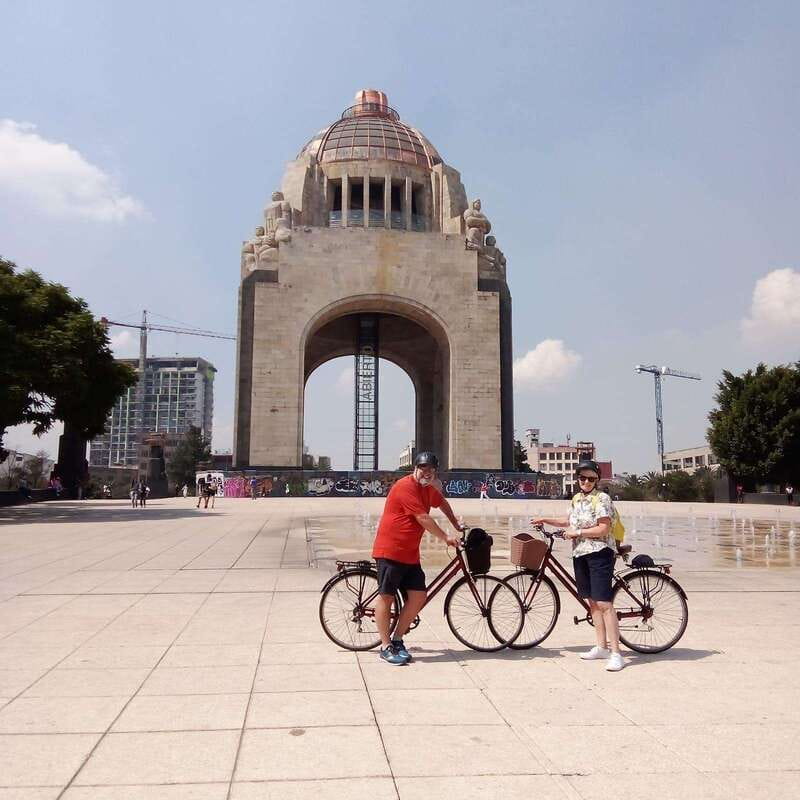
At $70 per person, the tour sits above the cost of simply renting a bicycle, but you are paying for more than the equipment. The fee includes the bike, helmet, bottled water, and a local guide who links several important areas in one outing.
I consider that fair if you value orientation and interpretation. The route covers major sights that would take planning to connect on your own, and a guide can reduce the stress of navigating an unfamiliar city by bike. The small-group format adds value if you want to ask questions or need closer guidance.
The price is less attractive if you mainly want transportation. Food, hotel transfers, and admission costs are not included, so add those expenses if your plans require them. The strongest value comes from the combination of city overview, historical explanation, and active transport, not from the basic bike rental.
Who should book this Mexico City ride?
I would recommend it to active adults and older children who already feel comfortable cycling. It suits first-time visitors who want a clear introduction to downtown and the historic center, especially those who prefer streets and monuments to a long indoor museum visit.
It is also a good fit if you care about lower-impact transport. The tour presents cycling as a practical way to see the city, rather than relying on a vehicle for every transfer.
I would hesitate if traffic makes you anxious, if you have trouble riding for several hours, or if you need step-free access. The activity is not suitable for children under 12, wheelchair users, or visually impaired people. Alcohol and drugs are not allowed, and everyone must sign a waiver before riding.
Free cancellation is available up to 24 hours before the tour for a full refund. You can also reserve now and pay later, which helps if your Mexico City schedule is still shifting.
Should you book it?
Book this ride if you want a lively, active introduction to Mexico City that connects Aztec and Spanish influences with the Revolution Monument, Diego Rivera’s murals, and the Angel of Independence. The guide quality matters, and Hector and Louis bring useful personal detail to the experience.
Skip it if you want a slow, highly detailed visit inside each landmark, or if you are not comfortable cycling around traffic. For the right rider, $70 buys a well-rounded four-hour orientation, practical city coverage, and a more direct feel for Mexico City than a bus tour usually provides.
FAQ
How long is the Cultural Ride in Mexico City?
The tour lasts four hours. Starting times vary, so check availability for your preferred date.
What sights are included?
The route includes the Metropolitan Cathedral, Palace of Fine Arts, Diego Rivera murals, Revolution Monument, Angel of Independence, colonial streets, and courtyards.
Is a bike and helmet included?
Yes. The tour includes a bike, helmet, bottled water, and a local guide.
What languages are available?
The tour is offered in English and Spanish.
Where is the meeting point?
Meet at the bike shop. Look for a green flag and the Ikagai coffee shop.
Who cannot join the tour?
The ride is not suitable for children under 12, wheelchair users, or visually impaired people. You must also feel comfortable riding a bike, wear suitable clothing and closed shoes, and sign a waiver before starting.
Just added around Mexico City
- Ticket to Frida Kahlo Museum (Blue House)★ 5.0 · 3 reviews
- Valle de Bravo: Forest Hiking Adventure★ 4.4 · 3 reviews
- Chapultepec Castle and Anthropology Tour, starting from CDMX★ 5.0 · 3 reviews
- La Roma Private Art Tour★ 5.0 · 3 reviews
- Private Transportation: Pickup and Drop-Off★ 5.0 · 3 reviews
- Mexico City: Relaxing or Decontracting Massage Experience★ 5.0 · 3 reviews
- Grutas de Tulantongo★ 3.0 · 3 reviews
- Mexico City: Local Walking Tour with Mezcal & Wrestling Show★ 5.0 · 3 reviews
Historic Centre Walking Tours, compared.


Muralist Art Semi Private Walking Tour in Mexico City Downtown
Read our review →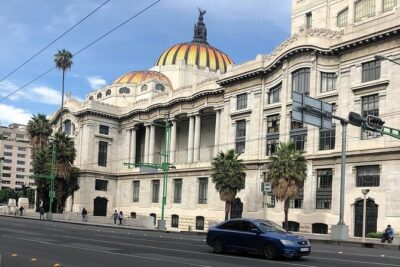
Mexico City Layover Tour: Downtown City Sightseeing
Read our review →
Browse the lists this tour appears in