
Reviewed · HISTORICAL TOURS
Explore Mexico City: A Journey Through History, Art, and Cuisine!
Mexico City’s historic center packs Aztec ruins, Spanish colonial power, grand public buildings, old-fashioned sweets, and Diego Rivera murals into a compact walk. This tour connects those pieces in about two hours, beginning near Templo Mayor and ending at the Palace of Fine Arts.
I like the clear route and the mix of major sights with places you might otherwise pass by, especially the century-old Celaya candy shop and the still-working Palacio Postal. I also like the guides’ personal touch. Belen, Sara, and Diego are repeatedly praised for explaining the city well and sharing local details. The main catch is simple: museum entry is not included, and one museum ticket cannot be bought as part of this $20 experience.
In This Review
- Key points to know before you book
- Why this walk works as a first look at Mexico City
- Templo Mayor: Mexico City begins beneath your feet
- The Zocalo and Metropolitan Cathedral
- Dulcería de Celaya brings a taste of old Mexico
- House of Tiles and Palacio Postal
- Bellas Artes is the grand finish
- Diego Rivera’s murals explain Mexico through pictures
- The guides are the heart of the experience
- What the $20 price really buys you
- Timing, meeting point, and practical choices
- Who should book this walking tour?
- FAQ
- How long does the Mexico City walking tour last?
- Where does the tour begin?
- Where does the tour end?
- What time does the tour start?
- Is the tour offered in English?
- Are museum admission tickets included?
- Can I cancel for a full refund?
- Should you book it?
Key points to know before you book
- Eight central stops in two hours: The route covers ruins, churches, palaces, shops, murals, and public squares without requiring a taxi between sights.
- English-speaking guides: Belen, Sara, and Diego have led this experience, with strong praise for their clear explanations and friendly manner.
- A useful first look at Centro Histórico: You get the main landmarks plus smaller details, including Dulcería de Celaya and the original post office.
- No admission tickets included: The guide explains the sights, but you must pay separately if you enter a museum or paid area.
- Small-group format: The maximum group size is 20, though some departures may be much smaller.
- Tip-based model: The experience is advertised as free at the point of guiding, but the booking price is $20 per person and tipping is optional at the end.
Why this walk works as a first look at Mexico City
The historic center can feel like a lot at once. Aztec ruins sit beside Spanish churches. Government buildings carry murals about revolution and labor. Art Nouveau and French-influenced architecture appear among crowded streets and older colonial facades.
This walk gives you a basic map of that story. It starts at República de Guatemala 4, close to Templo Mayor, then moves through the Zocalo and along some of the center’s most important buildings before finishing at Bellas Artes. You are not spending the whole morning inside one museum. Instead, you get short explanations at eight locations and a sense of how the city fits together.
That format suits me when I want to get my bearings early in a visit. The route is also useful if you have only a short stay in Mexico City and want a concentrated introduction to the center. At two hours, it leaves time for lunch, a museum visit, or further exploring on your own.
The pace is described as reasonable, but this remains a walking tour. Bring water, wear comfortable shoes, and expect city streets rather than a quiet guided corridor. The group can reach 20 people, so the quality of the experience may depend on the departure size and how clearly you can hear the guide.
More history walks in Mexico City:
- Historic Downtown Walking Tour
★ 5.0 · 1,289 reviews - Historic Center Food Tour in Mexico City
★ 5.0 · 1,263 reviews - Mexico City: Historic Downtown Walking Tour
★ 4.8 · 1,039 reviews
Templo Mayor: Mexico City begins beneath your feet
The tour opens at Museo del Templo Mayor, where the guide explains the Aztec capital, its major temple, and the rise of the empire. This is the right place to begin because modern Mexico City was built over the former Aztec capital of Tenochtitlan.
The guide’s talk covers where the Aztecs came from, how they lived, and how they became the leading power of their time. Even in a short stop, that background helps you read the rest of the center. The cathedral, government buildings, and plazas are not just isolated sights. They occupy ground shaped by the collision of Aztec and Spanish worlds.
Allow a practical distinction here. The scheduled stop is about 15 minutes, and the admission ticket listed for the stop is free in the tour description, but the broader museum admission issue needs attention. Past participants specifically warn that museum entry is not included. If you want to see the Templo Mayor museum or archaeological area beyond the guided explanation, plan to buy your own ticket and allow extra time after the walk.
The Zocalo and Metropolitan Cathedral
The Zocalo is the political and symbolic heart of the center. The guide explains why the square is called Zocalo and what occupied this area before the Spanish arrival. From here, you can also see the National Palace and understand why this broad plaza has mattered for centuries.
The stop lasts about 10 minutes, so expect an overview rather than a full tour of the National Palace. That is still useful. You learn to look beyond the open square and connect it with the buildings around it, including the cathedral and government offices.
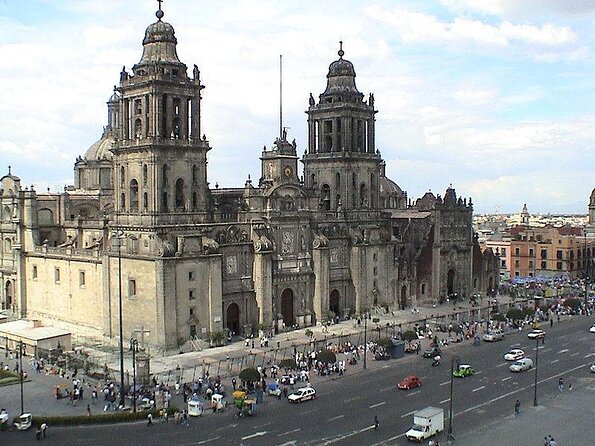
Next comes the Metropolitan Cathedral, with about eight minutes devoted to its architecture and story. This is the city’s most important church, and the guide points out its architectural style and place in Mexico City’s development.
The short timing is both an advantage and a limit. You get the essentials without losing half a morning, but you should not expect a detailed interior tour or time to study every chapel. If the cathedral captures your interest, treat this stop as a preview and return later on your own.
Dulcería de Celaya brings a taste of old Mexico
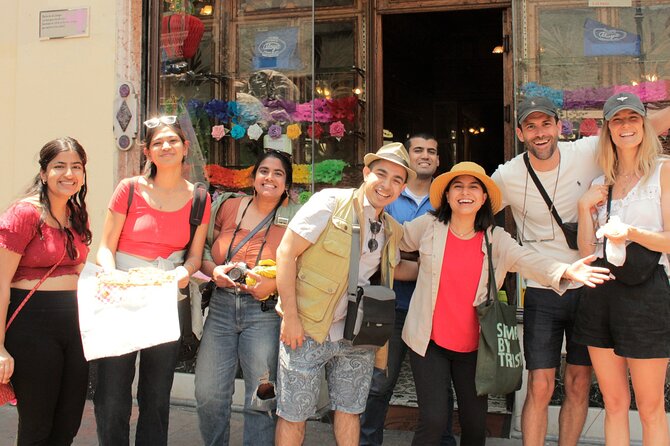
Dulcería de Celaya adds a welcome change of pace. The tour visits what is described as the city’s oldest candy store and explains the sweets it sells, which ones are traditional, how they are prepared, and where they came from.
This stop is one of the route’s best choices because it gives you something beyond dates, rulers, and architecture. Food tells you how culture travels and changes. Traditional sweets can show Spanish influence, local ingredients, family habits, and the way older shops preserve a city’s memory.
The visit lasts about 10 minutes. You should think of it as an introduction rather than a formal tasting session, since no tasting or purchase is specifically promised. Still, it gives you a useful place to browse and perhaps buy something for later. It also breaks up the long run of monuments with a small, human-scale stop.
A completely different day out, same corner of Mexico City:
- Teotihuacan, Guadalupe Shrine & Tlatelolco Day Tour with Lunch
★ 5.0 · 11,603 reviews - Xochimilco, Coyoacan and Frida Kahlo with Optional Lunch
★ 4.5 · 7,320 reviews - Balloon flight + Breakfast in cave + Pyramids + Pick up CDMX.
★ 5.0 · 6,335 reviews - Teotihuacan pyramids morning or afternoon without tourist traps
★ 5.0 · 6,186 reviews
House of Tiles and Palacio Postal

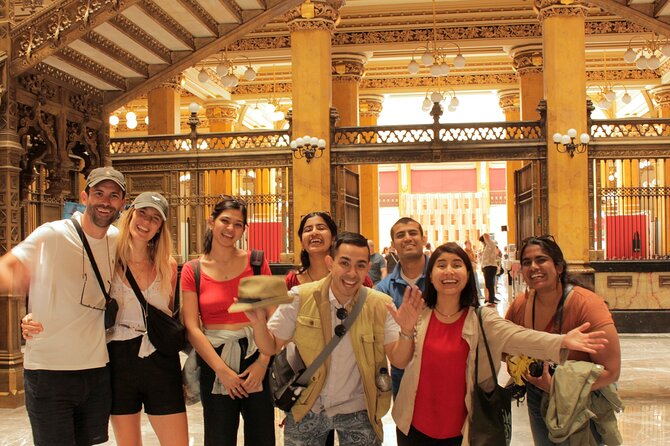
The House of Tiles, or Casa de los Azulejos, is one of the center’s most recognizable buildings. The tour enters the site, explains its past, and draws attention to its art. The tiled exterior makes it easy to spot, but the guided explanation helps you see more than a pretty facade.
The stop takes about 15 minutes. That is enough for a focused look, though not a full architectural study. Pay attention to the contrast between the building’s decorative surface and the busy commercial streets around it. This is the kind of place that can blur into the city’s visual overload if you do not know why it matters.
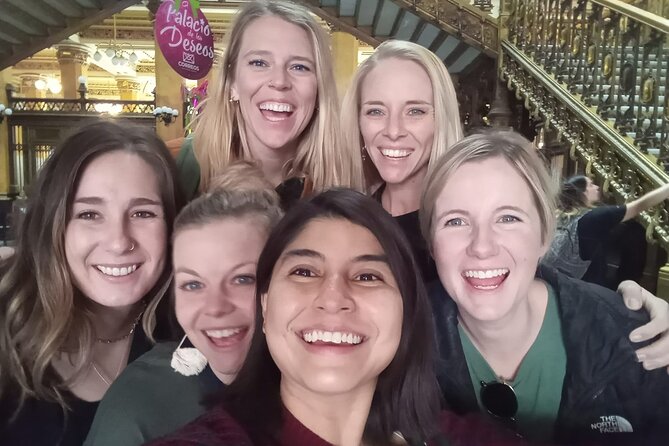
Palacio Postal follows with another 15-minute stop. The guide explains what the building was before, how it still functions, and its history. The post office remains in use, which makes the visit more than a look at a preserved shell. You see a historic public building continuing to serve its original civic purpose.
Several people who took this route singled out the original post office as a favorite. I understand why. It is easy to focus only on famous museums and overlook places where Mexico City’s past is still part of everyday life. This stop gives the tour a practical, lived-in quality.
Bellas Artes is the grand finish
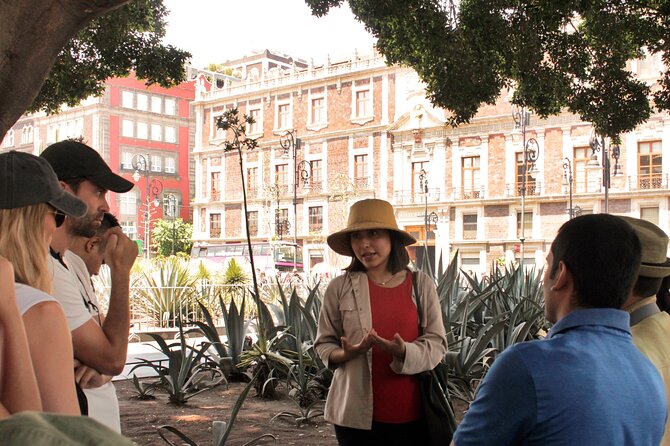
The route ends at Palacio de Bellas Artes, the Palace of Fine Arts, on Avenida Juárez. The guide covers its architectural style, curious facts, history, and current program.
The building is an ideal ending because it brings together many of the themes introduced earlier: national identity, public art, architecture, and Mexico’s effort to present its culture on a grand scale. The guide can explain the exterior and give you an idea of what is on the program, but the tour does not include a full museum visit.
A key planning note: entry to museums is not included, and a ticket for the Bellas Artes museum is not sold online according to a recent practical warning. If you want to go inside after the walk, check the ticket situation directly and keep your schedule flexible. Do not assume the $20 tour fee covers admission.
Ending here also gives you a sensible choice. You can continue exploring Bellas Artes if tickets are available, or use the nearby area as a launch point for your next stop. The tour itself is finished at the palace, still in the historic center.
Diego Rivera’s murals explain Mexico through pictures
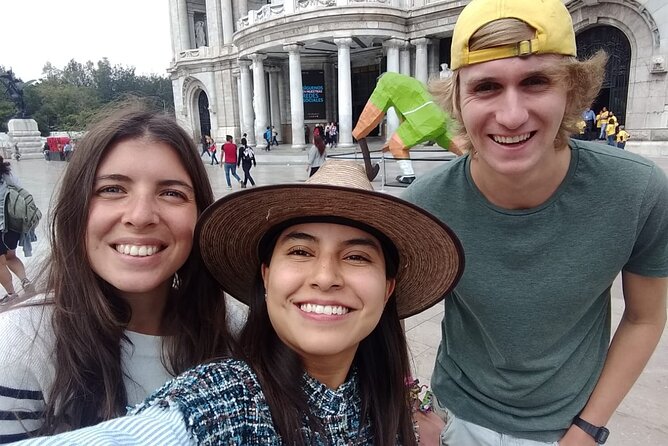
The final listed stop is the Diego Rivera mural collection at the Secretariat of Public Education, with about 20 minutes devoted to it. Rivera was one of Mexico’s most important painters of the 20th century, and his murals offer a visual way to understand Mexican traditions, work, politics, and daily life.
This part is especially valuable if you do not already know how to approach Mexican muralism. A guide can point out themes and connections that may not be obvious when you first enter a large mural-covered building. Instead of simply saying that the paintings are famous, the tour uses them to discuss customs and national identity.
The schedule places the mural stop before the final arrival at Bellas Artes, though the exact order may depend on the day’s route. Either way, it gives the walk a stronger cultural finish than a simple parade of facades.
As with the other indoor sights, do not assume every museum or interior area is covered by the tour price. The information provided specifically cautions that museum tickets are separate. Ask the guide on the day which spaces are available to enter and which parts are being viewed from outside.
The guides are the heart of the experience
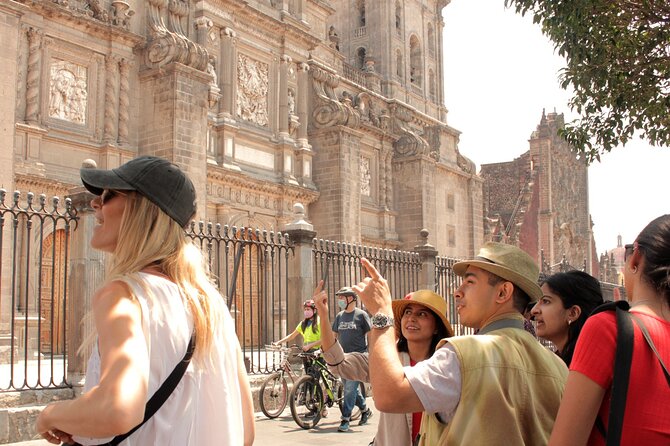
The strongest pattern in the guide feedback is not about speed or luxury. It is about the people leading the walk. Belen is praised for her clear, relevant explanations, kindness, and ability to add places not always found in guidebooks. Sara is described as professional, fluent in English, and good at sharing local experiences. Diego is praised for his friendly approach and command of Mexico City’s past and architecture.
One person joining alone ended up with a private-style experience because no one else was in the group. You should not count on that happening, since the maximum is 20, but it shows how the format can vary.
The best guide style for this route is conversational. You want someone who can explain why the Zocalo matters, not just recite its name. You want enough information to make the murals and buildings meaningful, but not so much that every stop becomes a lecture.
There is one etiquette point worth noting. One participant felt uncomfortable when the guide suggested how much to tip at the end. Tipping is optional, and you should decide what the guiding was worth to you. The experience provider describes the tour as free and invites a tip, while the booking information shows a $20 per-person price. Because that setup can seem confusing, check the payment terms when booking and carry some cash if you plan to tip.
What the $20 price really buys you
At $20 per person, this is inexpensive for a two-hour English tour in a major capital, especially with a route that includes eight substantial stops. You are paying mainly for orientation, interpretation, and the convenience of moving between the sights with a guide.
The value is strongest if you are new to Mexico City. A good introduction can save you time and help you choose where to return. The route also includes several places you might overlook, such as the candy shop and post office, rather than limiting itself to the most famous square and cathedral.
The value drops if you expect admission to museums, a meal, bottled water, or a long visit inside each building. None of those are included. Bring your own water, and budget separately for any tickets, food, or sweets you decide to buy.
The tour is also a good deal for solo visitors who prefer company for their first walk through the center. Couples and families can use it as a shared orientation before exploring independently. Children who can manage two hours of walking may enjoy the candy shop and colorful murals, though the historical explanations may be more useful for older children.
Timing, meeting point, and practical choices
The start time is 9:30 a.m. at República de Guatemala 4 in Centro Histórico. Arrive with enough time to locate the guide and settle in, since the tour begins on foot and does not include hotel pickup.
The finish is at Palacio de Bellas Artes on Avenida Juárez. This point matters because you can plan your next activity from there instead of returning to the start. The route remains in the historic center, and the meeting area is near public transportation.
The tour is offered in English, uses a mobile ticket, and confirmation is sent when you book. Service animals are allowed, and most people can participate. The group limit is 20, which keeps it smaller than a large bus tour but does not guarantee a quiet or private walk.
The cancellation policy is generous if your plans are still changing: cancel at least 24 hours before the local start time for a full refund. Changes or cancellations inside that window are not refunded.
Who should book this walking tour?
I would choose this experience if you want a fast, affordable introduction to Centro Histórico with enough cultural context to make later sightseeing easier. It is particularly useful on your first morning in Mexico City, when you want to learn the layout before deciding which museums deserve more time.
You should also book it if you enjoy architecture, public art, and everyday city history. The blend of Templo Mayor, a working post office, an old candy shop, and Rivera murals gives the walk more range than a standard landmark loop.
I would hesitate if your main goal is extended museum time. The two-hour schedule gives you short stops, and admission is separate. In that case, use this walk as an orientation, then return to Templo Mayor or Bellas Artes for a longer independent visit.
FAQ
How long does the Mexico City walking tour last?
The experience lasts approximately two hours.
Where does the tour begin?
It begins at República de Guatemala 4, Centro Histórico de la Ciudad de México, Centro, Cuauhtémoc, 06020 Ciudad de México, CDMX.
Where does the tour end?
It ends at Palacio de Bellas Artes on Avenida Juárez, in Mexico City’s historic center.
What time does the tour start?
The scheduled start time is 9:30 a.m.
Is the tour offered in English?
Yes. The experience is offered in English.
Are museum admission tickets included?
No. Admission to museums is not included. You must buy tickets separately if you want to enter paid museum areas.
Can I cancel for a full refund?
Yes, if you cancel at least 24 hours before the experience start time. Cancellations or changes made within 24 hours are not refunded.
Should you book it?
Book this walk if you want a well-priced introduction to Mexico City’s historic center, with guides such as Belen, Sara, and Diego bringing context to major sights and smaller local stops. Bring water, wear good walking shoes, and treat the tour as a smart first pass rather than a substitute for museum visits.
Skip it if you need included entry tickets or want to spend long stretches inside each attraction. For everyone else, the route offers a useful blend of Aztec history, colonial architecture, Mexican sweets, public art, and practical orientation in one manageable morning.
Just added around Mexico City
- Mexico City: Hop-on Hop-off City Tour by Turibus 2-Day Pass★ 4.0 · 10 reviews
- Anthropology Museum, Chapultepec Castle & Cable Car Tour★ 4.5 · 10 reviews
- Multi-Variety Mole Class in a Condesa home or art gallery rooftop★ 5.0 · 10 reviews
- PRIVATE TOUR Colonial Town Taxco and Cuernavaca from CDMX.★ 5.0 · 10 reviews
- El Centro Street Food Walking Tour★ 5.0 · 10 reviews
- Private Round-Trip Transportation to Teotihuacan Pyramids★ 5.0 · 10 reviews
- Teotihuacan and My Grandma’s Food Tour★ 5.0 · 10 reviews
- Private Walking Tour Legends and Events Historic Center CDMX★ 4.8 · 10 reviews
Historical Tours, compared.


Mexico City Historical Centre Food Tour with 7 Authentic Tastings
Read our review →
Walking Tour in Mexico City for Exploring their Cultural Heritage
Read our review →
Walking Tour – Impressive murals in Historical Center of Mexico City
Read our review →
Guided walking tour through the most historic parts of the city.
Read our review →Browse the lists this tour appears in