
Reviewed · WALKING TOURS
Mexico City: 1960s &1970s Mexican Architecture Walking Tour
Mexico City’s modern architecture makes the most sense when you see the ideas behind it. This three-hour tour links pre-Hispanic symbolism, postwar optimism, the 1968 Olympics, and Mexico’s changing political mood through buildings in and around Chapultepec Park.
I like the way the route connects several major cultural sites rather than treating each building as an isolated photo stop. I also like the small group limit of 10, especially since guides such as Natalia can adjust the discussion for people interested in art, architecture, or Mexican history. The main drawback is the price: at $192 per person, you need to care about guided interpretation to make the cost feel worthwhile.
In This Review
- Key points to know before booking
- Why 1960s Mexico City makes such a good architecture lesson
- Meeting at the Porrua Bookstore in Chapultepec Park
- National Museum of Anthropology and its Mesoamerican design
- Tamayo Museum and modernism beside Chapultepec
- The Space Age building and the optimism of the era
- Hotel Camino Real and the art of the 1968 Olympics
- What the guide adds to the experience
- Is $192 per person a fair price?
- Practical details for a smooth three hours
- Who should book this architecture tour?
- Should you book it?
- FAQ
- How long does the architecture tour last?
- Where does the tour begin?
- Which museums are included?
- Is the tour offered in English?
- How large is the group?
- Is transportation included?
- What should I bring?
Key points to know before booking
- The Anthropology Museum is the tour’s intellectual anchor: You’ll look at its 1960s design as a modern building shaped by Mesoamerican ideas.
- Three museums are included: Admission covers the National Museum of Anthropology, Tamayo Museum, and Modern Art Museum.
- Hotel Camino Real adds a surprising final chapter: This Olympic-era hotel contains an important collection of modern Mexican art.
- The tour is small and guide-led: Groups are limited to 10, with Spanish or English commentary from an art historian, historian, or architect.
- You will not spend three hours marching: The route is described as involving limited walking, though comfortable shoes remain sensible.
- The cost is high for a short tour: It offers strong value for serious architecture and art fans, but casual sightseers may find it expensive.
Why 1960s Mexico City makes such a good architecture lesson
Mexico City in the 1960s was not simply adding modern buildings for the sake of looking modern. Architects were trying to define a national identity after decades of political and social change. They had new materials, new engineering ideas, and a strong desire to show that modern Mexico could look forward without cutting itself off from its Indigenous past.
That tension gives this tour its real subject. You are not just comparing concrete forms or admiring unusual façades. You are looking at the question Mexican architects faced: how can a modern public building express a country whose roots reach far beyond the modern state?
The period also matters because Mexico City was preparing for the 1968 Olympic Games. The city wanted to present itself as modern, cultured, and internationally important. Architecture became part of that public message. Museums, hotels, sports facilities, and civic buildings all helped create a new image for the capital.
At the same time, the 1960s and 1970s were politically charged decades. Social inequality, student activism, state power, and debates about national identity shaped the atmosphere. A good guide helps you see those pressures in the buildings rather than giving you a list of dates and architects.
That is where this experience earns its place. It treats architecture as a record of ideas and power, not just as decoration.
More walking tours in Mexico City:
- Historic Downtown Walking Tour
★ 5.0 · 1,289 reviews - Mexico City: Historic Downtown Walking Tour
★ 4.8 · 1,039 reviews - Frida Kahlo VIP [Museum Tickets Included] Walk, Markets & Churros
★ 5.0 · 982 reviews
Meeting at the Porrua Bookstore in Chapultepec Park
The tour begins at the Porrua Bookstore in Chapultepec Park, close to the ticket booth. This detail matters because Mexico City has many Porrua bookstores, so you need the branch inside Chapultepec Park, not one elsewhere in the city.
Your guide waits inside with the Walk Mexico project logo. Allow enough time to find the correct entrance and get oriented in the park. Since hotel pickup is not included, you are responsible for reaching the meeting point.
The park provides a fitting setting. You begin among trees and cultural institutions rather than on a busy commercial street. It also lets the guide introduce the area as a major public and cultural center before the first museum visit.
The tour is offered in English or Spanish. Groups are limited to 10 people, and headsets are provided for larger groups so you can hear the guide clearly. That small-group format is one of the better features here. Architecture tours can lose their force when the guide is speaking to a crowd spread across a plaza, but a smaller group makes it easier to ask questions and look closely at details.
The guide is central to the experience. Natalia received especially strong praise for her friendly manner, clear explanations, and ability to tailor the discussion to individual interests. One couple even received help arranging a separate visit to Casa Pedregal after discussing Luis Barragán and missed opportunities in Mexico City. That extra help is not a promised part of the tour, but it suggests the kind of local art knowledge you may receive from a strong guide.
National Museum of Anthropology and its Mesoamerican design
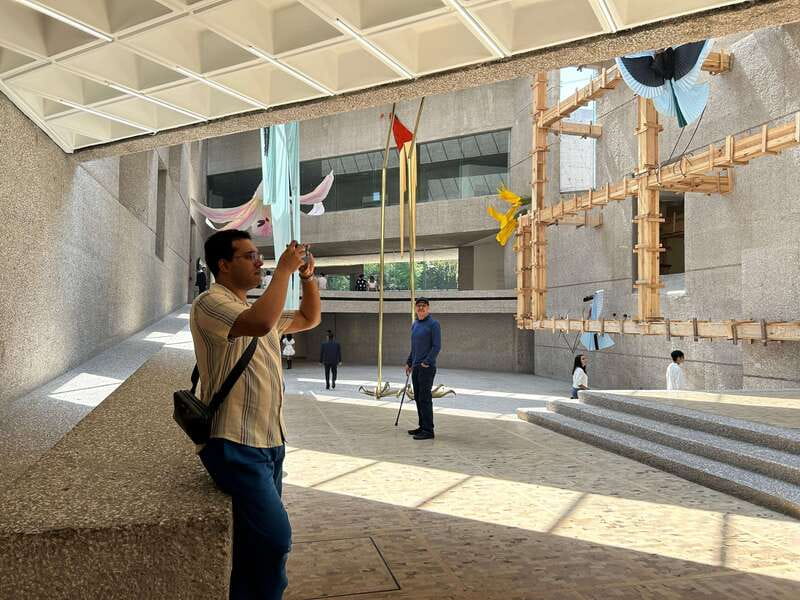
The National Museum of Anthropology is the major opening stop, and it gives the tour its clearest example of modern architecture speaking through ancient references.
The building was designed in the 1960s by one of Mexico’s most celebrated architects of the period. The guide explains how the museum’s design draws from pre-Hispanic cosmogony, or the way Mesoamerican cultures understood the ordering of the universe. The point is not that the museum copies an ancient temple. Its modern design uses ideas associated with Indigenous cultures and translates them into a large public institution.
You will also learn about the collaboration between the architect and artists who contributed sculpture and design. That partnership is important. The building is not treated as a single architect’s personal statement. Indigenous worldviews are brought into the museum through works of art, spatial planning, and symbolic elements.
I would allow yourself time to look up and around here. The museum’s scale can make it tempting to rush toward the collections, but this tour asks you to read the building first. Notice how the structure presents Mexican identity through a mix of modern engineering and references to the country’s older cultures.
This is also where the tour may feel more like an art and history lesson than a pure architecture walk. One rating specifically noted that the experience leaned more toward history than architecture. That is a fair warning, especially if you expect a technical discussion of floor plans, materials, or construction methods.
For me, that blend is a strength if you want to understand why the building looks the way it does. If you only want a survey of modernist form, you may wish for more architectural detail. The guide’s background makes a difference, and Natalia’s discussions were described as especially strong on the connection between Mesoamerican history and the museum’s modern design.
Museum admission is included, which helps the value. You are not paying for an exterior-only explanation and then facing three separate entrance fees. The museum is also one of Mexico City’s essential cultural sites, so this stop can work well even if architecture is only one of your interests.
Tamayo Museum and modernism beside Chapultepec
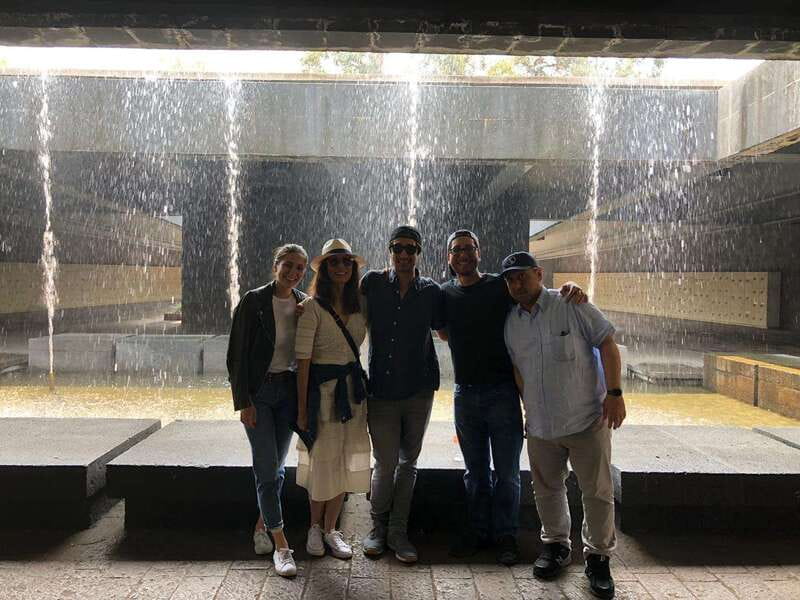
The next major stop is the Tamayo Museum of Contemporary Art, dedicated to Rufino Tamayo. The museum was conceived by two influential architects in the early 1980s, placing it slightly beyond the tour’s main 1960s and 1970s focus.
That date shift is useful. It lets you see how the architectural language developed after the earlier period. The building uses a modernist approach designed to work with its natural surroundings while honoring Mexico’s artistic tradition. Rather than presenting a loud, isolated object, it relates to the park and to the cultural purpose of the museum.
Rufino Tamayo is an important figure here because his work reflects a modern Mexican identity that is not limited to either European modernism or direct historical reconstruction. The museum’s architecture fits that wider discussion. It is a contemporary art institution rooted in Mexico, but open to international ideas.
The guide can help you compare the Tamayo building with the Anthropology Museum. One gives Indigenous cosmology a major role in a public institution. The other creates a more restrained modern setting for contemporary art. Together, they show that Mexican architecture did not follow one single formula.
Admission to the Tamayo Museum is included. That matters because the tour is not just a walk around the exterior. You have the chance to experience the museum as a working cultural space and to connect the building with the art it was made to house.
Keep your expectations realistic about the timing. The entire activity lasts three hours and includes several stops, so this is not a full museum day. You will receive interpretation and a focused look at each place, but you may not have time to inspect every gallery at length.
A completely different day out, same corner of Mexico City:
- Teotihuacan, Guadalupe Shrine & Tlatelolco Day Tour with Lunch
★ 5.0 · 11,603 reviews - Xochimilco, Coyoacan and Frida Kahlo with Optional Lunch
★ 4.5 · 7,320 reviews - Balloon flight + Breakfast in cave + Pyramids + Pick up CDMX.
★ 5.0 · 6,335 reviews - Teotihuacan pyramids morning or afternoon without tourist traps
★ 5.0 · 6,186 reviews
The Space Age building and the optimism of the era
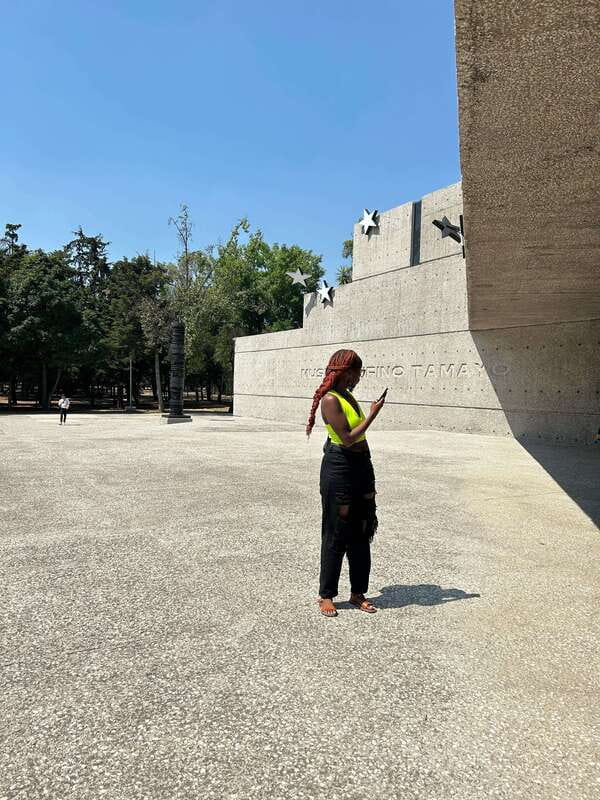
A short walk from the Tamayo Museum brings you to a striking example of 1960s design influenced by Space Age aesthetics. The building captures the futuristic confidence of its period through its shape and practical use.
The supplied details do not identify the building by name, so I would not book this tour expecting a specific famous landmark unless the provider confirms it before your visit. What you can expect is a discussion of how the Space Age shaped design. The 1960s were full of faith in science, technology, exploration, and new materials. Architecture often responded with bold forms that suggested movement and progress.
This stop helps break up the museum-heavy part of the route. Instead of focusing on cultural symbolism or art collections, you look at a structure that expresses the era’s forward-looking mood. It also gives the guide a chance to explain how form and function worked together in modern Mexican design.
For photographers, this is likely a useful pause. You are encouraged to bring a camera, and the sites on the route are described as safe and enjoyable for photography. Still, remember that the main value lies in the explanation. A photograph can show the shape, but it cannot explain why Space Age imagery appealed to Mexico City at that moment.
The walking involved is limited, according to the tour information. That is good news if you want a focused cultural outing rather than a long-distance city hike. Even so, you should wear comfortable shoes because you will move between sites and spend time standing.
Hotel Camino Real and the art of the 1968 Olympics
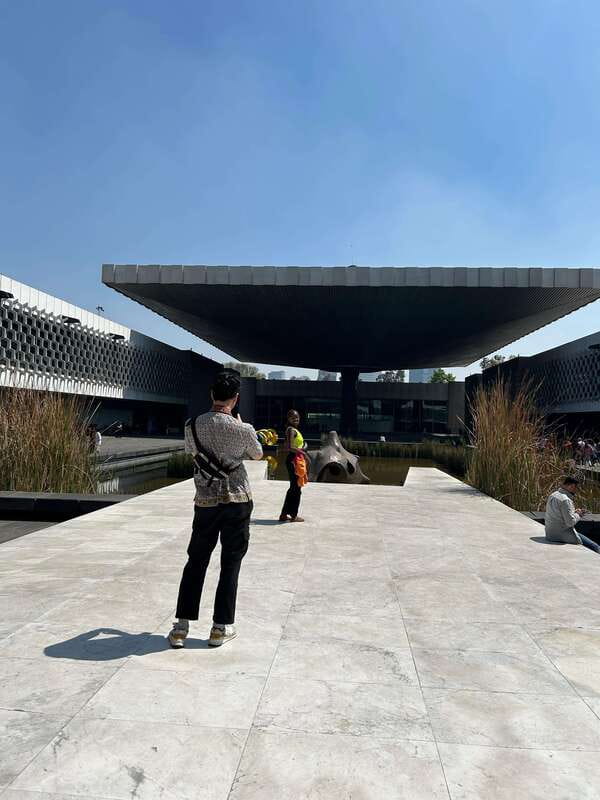
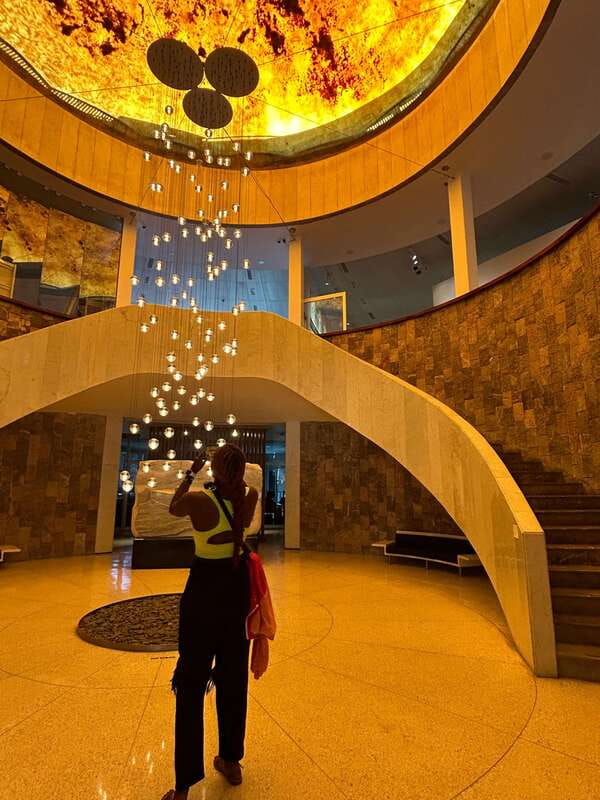
The tour ends at Hotel Camino Real, built to host VIP guests during the 1968 Olympic Games. This final stop shifts the story from public museums to hospitality, international image-making, and private collections.
The hotel is more than a place where Olympic visitors slept. Behind its walls is a substantial collection of modern Mexican art, turning the property into an art hotel. That combination gives the ending some surprise. You see how modern Mexican design entered an environment built for international visitors and elite guests.
The Olympic connection also brings the political and social context back into view. Mexico City wanted the 1968 Games to display progress and cultural confidence. A hotel designed for VIPs had a practical role, but it also helped stage the city for the world.
This is a particularly good final stop because it widens your idea of where architecture belongs. Museums are obvious subjects for an architecture tour. A hotel can reveal just as much about the priorities of a period, especially when art, design, tourism, and national image all meet in one place.
Do not expect a standard hotel tour with access to every room. The important point is the building’s role and its art collection. The guide’s interpretation turns the hotel into part of the modern Mexican story rather than a quick exterior stop.
The hotel also gives the tour a satisfying chronological arc. You begin with a 1960s museum looking back to Mesoamerican ideas, move through later modern art and Space Age design, and finish with a building tied to the global ambitions of the 1968 Olympics.
What the guide adds to the experience
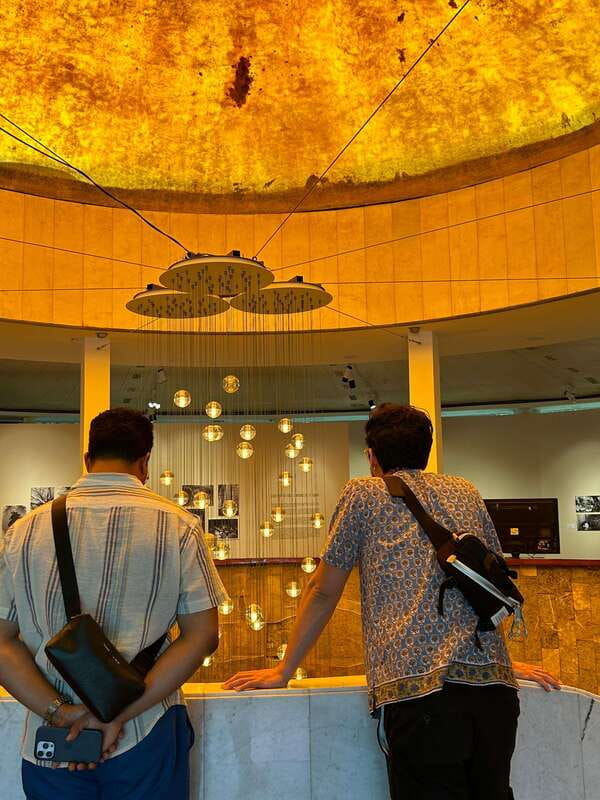
This tour depends heavily on the person leading it. The included guide has a graduate academic degree in art history, history, or architecture, which gives the experience more depth than a standard sightseeing walk.
Natalia is the guide named in the available feedback, and her strongest qualities are easy to identify: she explains clearly, answers questions patiently, and adjusts the discussion to match your interests. If you are an amateur architecture fan, you can ask about structure and design. If you care more about Mexican art or politics, the same buildings can open a different conversation.
That flexibility matters because the route covers a lot in three hours. A fixed script could feel rushed or overly academic. A responsive guide can decide when to linger at the Anthropology Museum, when to compare the two art museums, and when to focus on the Olympic setting.
The most praised part of the experience is the guide’s passion for Mexico City and the subject. The high rating of 4.6 from 10 reviews reflects that the tour generally delivers a strong personal and educational experience, though the sample is small.
I would ask questions as you go rather than saving everything for the end. The route offers many possible threads, including Indigenous symbolism, modernism, contemporary art, Space Age design, the Olympics, and Mexican political history.
Is $192 per person a fair price?
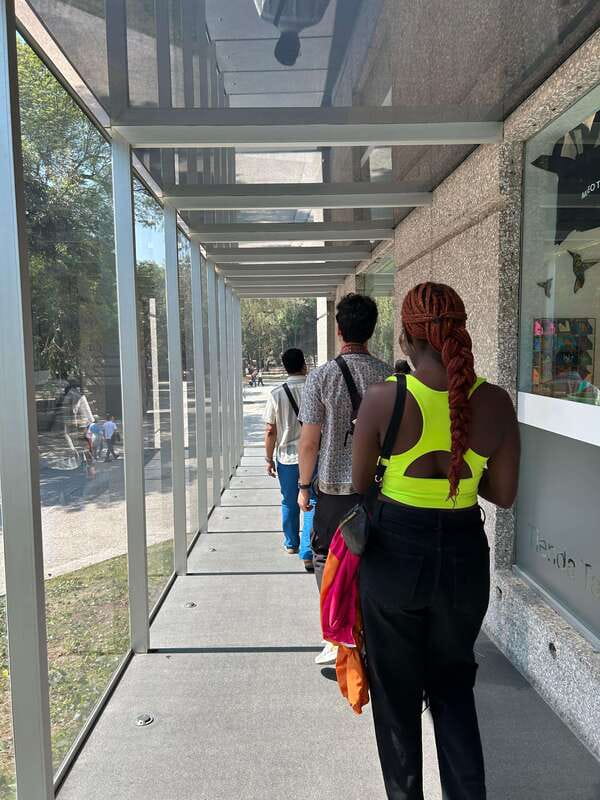
At $192 per person, this is an expensive three-hour activity by Mexico City sightseeing standards. The price needs to be judged against what you value.
The fee includes an academically trained guide, entry to the National Museum of Anthropology, Tamayo Museum, and Modern Art Museum, and headsets for larger groups. The group limit of 10 can also make the experience more personal than a large public tour.
For two people, the price adds up quickly. One person specifically felt the tour was costly compared with other options, and I think that criticism is reasonable. You are paying for interpretation and access, not transportation, meals, or a full day of guided sightseeing.
I would consider it worthwhile if you already care about architecture, Mexican art, or the cultural politics of the 1960s and 1970s. It can also be good value if you want a scholar-led introduction and would otherwise struggle to connect the buildings on your own.
If you simply want to visit the museums, you may prefer to buy admission separately and explore at your own pace. The tour makes its money through context, not convenience. You need to want the conversation.
The small group and strong guide reports improve the calculation. A private tour can cost much more, and one scheduled group occasionally becomes a private experience when other participants fail to attend. That is not guaranteed, so do not book on the assumption that you will have Natalia or a private guide.
Practical details for a smooth three hours
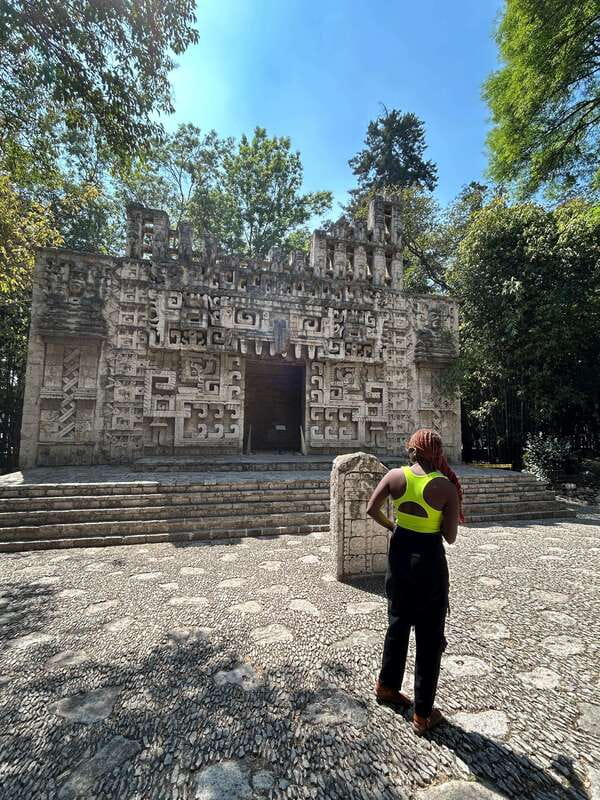
Plan to meet at the correct Porrua Bookstore in Chapultepec Park, near the ticket booth. Since there are many Porrua locations in Mexico City, double-check the Chapultepec Park branch before setting out.
Wear comfortable shoes, bring sunscreen, and carry rain gear. The tour runs rain or shine. Mexico City weather can change, and the route includes outdoor movement between buildings even though you will not be walking long distances.
Do not bring luggage or large bags. That rule is easy to overlook if you are touring between hotel checkout and an evening departure. Pack only what you need for the outing, including a camera, water if appropriate, sunscreen, and a light rain layer.
The activity is offered in English and Spanish. It is described as wheelchair accessible, but it is also marked as not suitable for people with mobility impairments. Those statements do not fully match, so anyone with mobility concerns should confirm the current route and access arrangements before booking.
Food and drinks are not included, and extra hours cost more. Three hours is enough for a focused introduction, but it is not enough for a leisurely visit to all three museums plus the hotel. You should plan a separate museum visit if you want extended gallery time.
Free cancellation is available up to 24 hours in advance, and you can reserve while paying later. Those policies are useful if your Mexico City schedule is still changing, but they do not alter the tour’s high price.
Who should book this architecture tour?
I would recommend it most strongly to travelers who enjoy asking why a building looks the way it does. You do not need a degree in architecture. An interest in art, Mexican history, public design, or the Olympic era is enough.
It also suits repeat visitors who have already seen Mexico City’s best-known sights and want a more focused theme. The route stays around Chapultepec Park, but the subject reaches across design, politics, art, and national identity.
You may enjoy it less if you want a fast-moving list of landmarks or a technical architecture lecture. The experience includes a good deal of history and cultural context. One person found that it felt more like a history tour than an architecture tour, so keep that balance in mind.
The tour is also a good match for couples or small groups who prefer conversation. With no more than 10 participants, you have a better chance to ask about buildings that catch your eye. The guide’s ability to adapt the commentary is especially useful for mixed interests.
Should you book it?
Book this tour if the idea of reading Mexico City through its museums, art, and Olympic-era buildings appeals to you. The Anthropology Museum is the strongest reason to go, while the Tamayo Museum, Space Age structure, and Hotel Camino Real broaden the story in useful ways.
The best part is the connection between modern design and older Mexican ideas. The most valuable extra is a guide such as Natalia, who can add art history, local context, and suggestions for further visits.
Skip it if $192 feels too high for three hours, if you want extensive museum time, or if you prefer to explore without a guide. For architecture fans and culturally curious first-time visitors, however, this is a focused way to understand a side of Mexico City that is easy to miss when you only visit the headline attractions.
FAQ
How long does the architecture tour last?
The tour lasts three hours. Starting times vary, so you should check availability when selecting a date.
Where does the tour begin?
You meet the guide inside the Porrua Bookstore in Chapultepec Park, near the ticket booth. Make sure you go to the Chapultepec Park location, since Mexico City has several Porrua bookstores.
Which museums are included?
Admission is included for the National Museum of Anthropology, Tamayo Museum, and Modern Art Museum.
Is the tour offered in English?
Yes. The tour is available in English or Spanish.
How large is the group?
The tour is limited to 10 participants. Headsets are provided for larger groups so you can hear the guide clearly.
Is transportation included?
No. Hotel pickup and drop-off are not included. You must make your own way to the Chapultepec Park meeting point.
What should I bring?
Bring comfortable shoes, sunscreen, rain gear, and a camera. Luggage and large bags are not allowed, and the tour takes place rain or shine.
Just added around Mexico City
- Mexico City: Hop-on Hop-off City Tour by Turibus 2-Day Pass★ 4.0 · 10 reviews
- Anthropology Museum, Chapultepec Castle & Cable Car Tour★ 4.5 · 10 reviews
- Multi-Variety Mole Class in a Condesa home or art gallery rooftop★ 5.0 · 10 reviews
- PRIVATE TOUR Colonial Town Taxco and Cuernavaca from CDMX.★ 5.0 · 10 reviews
- El Centro Street Food Walking Tour★ 5.0 · 10 reviews
- Private Round-Trip Transportation to Teotihuacan Pyramids★ 5.0 · 10 reviews
- Teotihuacan and My Grandma’s Food Tour★ 5.0 · 10 reviews
- Private Walking Tour Legends and Events Historic Center CDMX★ 4.8 · 10 reviews
Walking Tours, compared.
![Frida Kahlo VIP [Museum Tickets Included] Walk, Markets & Churros](https://9.mexicocityexplorer.com/wp-content/uploads/frida-kahlo-vip-museum-tickets-included-walk-markets-churros-400x267.jpg)
Frida Kahlo VIP [Museum Tickets Included] Walk, Markets & Churros
Read our review →
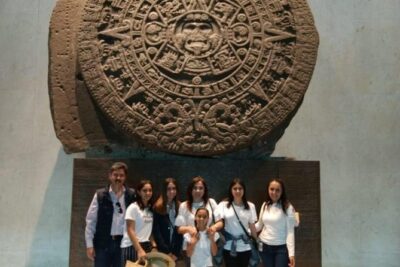
Anthropology Museum Private Experience Walking Tour
Read our review →
Walking Tour in Mexico City for Exploring their Cultural Heritage
Read our review →
Walking Tour – Impressive murals in Historical Center of Mexico City
Read our review →
Muralist Art Semi Private Walking Tour in Mexico City Downtown
Read our review →Browse the lists this tour appears in