
Reviewed · HISTORICAL TOURS
Mexico City: Historical walking tour of Tenochtitlan
Mexico City’s historic center makes the most sense when you see its layers side by side. This three-hour walk with Prof. Cristina Ríos connects Aztec Tenochtitlan, Spanish conquest, Mexican independence, and modern art without treating each landmark as a separate postcard stop.
I especially like the small groups of three to 10, which leave room for questions and route changes. I also like the attention to overlooked details, including the former Axayacatl Palace, the Calmecac site, and José Clemente Orozco’s mural inside Casa de los Azulejos. The main consideration is that this is a fact-heavy walking tour, and the Templo Mayor museum itself is not entered.
In This Review
- Key points
- A city built on its own past
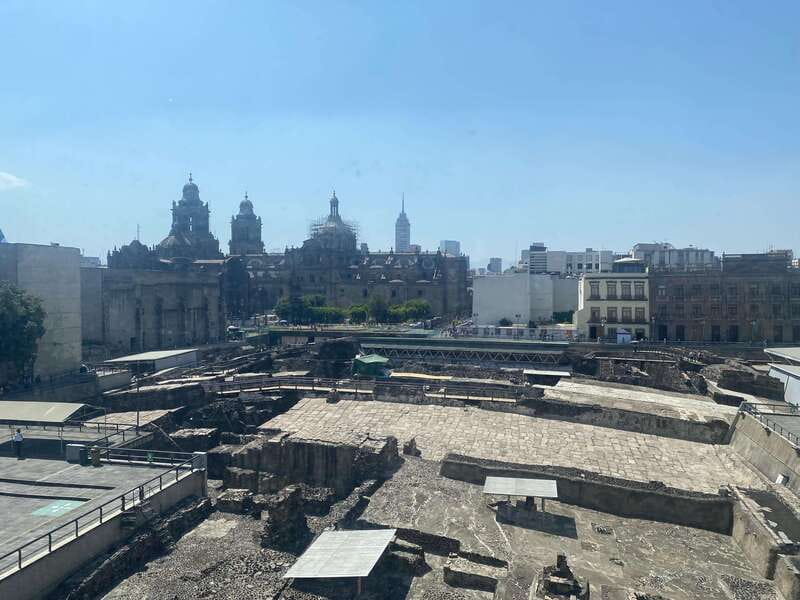
- Templo Mayor: seeing the Aztec capital from street level
- Behind the Cathedral and the Calmecac site
- Cortés, Moctezuma, and the old Axayacatl Palace
- Iturbide Palace and the city’s grand facades
- San Francisco Church and traces of colonial Mexico
- Casa de los Azulejos and an Orozco mural
- Bellas Artes: a grand finish without an interior visit
- Why Prof. Cristina Ríos matters to the experience
- Group size, pace, and practical comfort
- Is $43 a fair price?
- Who should book this walking tour?
- Should you book the Tenochtitlan history walk?
- FAQ
- Does the tour enter the Templo Mayor Museum?
- Where does the walking tour meet?
- Where does the tour finish?
- Is the tour offered in English?
- Are food and drinks included?
- Is the tour suitable for children?
Key points
- A 700-year story: Follow the city from Tenochtitlan through colonization, independence, and the 20th century.
- Prof. Cristina Ríos leads the walk: Her academic background and strong command of English and Spanish suit travelers who want serious historical context.
- Templo Mayor is viewed from outside: You see models and the archaeological zone, but museum tickets are not part of the tour.
- Architecture gets proper attention: The route explains the Cathedral, Iturbide Palace, San Francisco Church, Casa de los Azulejos, and Bellas Artes.
- Small groups help: With no more than 10 people, questions are easier and the pace can be adjusted.
- Optional sweet stop: You may visit Dulcería Celaya, one of the city’s classic traditional candy shops.
A city built on its own past
The best idea behind this walk is simple: Mexico City is not just built near its past. It is built directly over it.
You begin at the Centro Cultural de España at Guatemala #18, near the Templo Mayor models and archaeological zone. From there, Prof. Ríos sets up the basic story of Tenochtitlan and explains how the Aztec capital became the center of modern Mexico City.
That opening matters. Without it, the historic center can feel like a crowded mix of colonial facades, ruined temples, government buildings, and grand cultural halls. With a clear timeline, the streets become easier to read.
I would choose this tour early in a Mexico City stay. It gives you a working map of the center, and Prof. Ríos also offers suggestions for places to see and eat after the walk. Several people have found that her explanations made later visits to museums and buildings more rewarding because they already understood the setting.
The tour is conducted in English or Spanish. It is designed for adults and is not suitable for children under 10. That age limit makes sense: the presentation is detailed, and the subject matter is better suited to older children and adults who enjoy history, art, and architecture.
More history walks in Mexico City:
- Historic Downtown Walking Tour
★ 5.0 · 1,289 reviews - Historic Center Food Tour in Mexico City
★ 5.0 · 1,263 reviews - Mexico City: Historic Downtown Walking Tour
★ 4.8 · 1,039 reviews
Templo Mayor: seeing the Aztec capital from street level
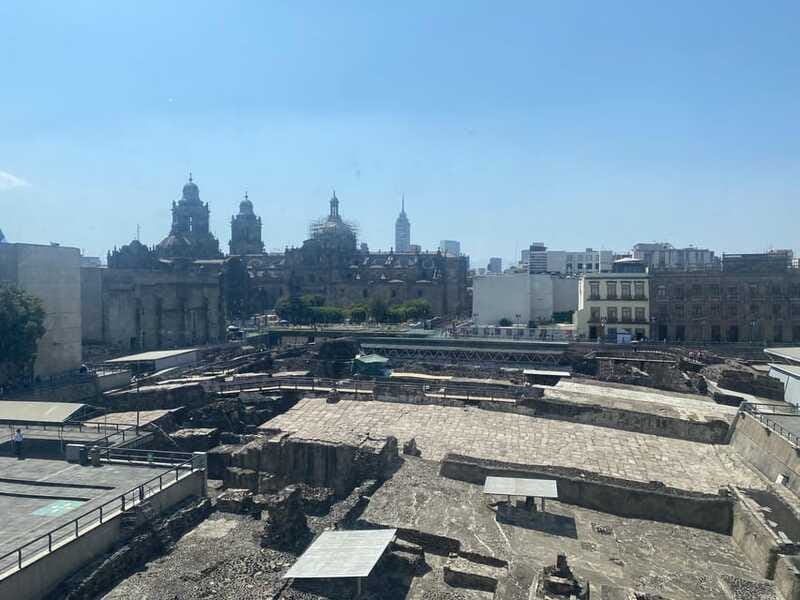
The first major stop is Templo Mayor, where you spend about 40 minutes with the guide.
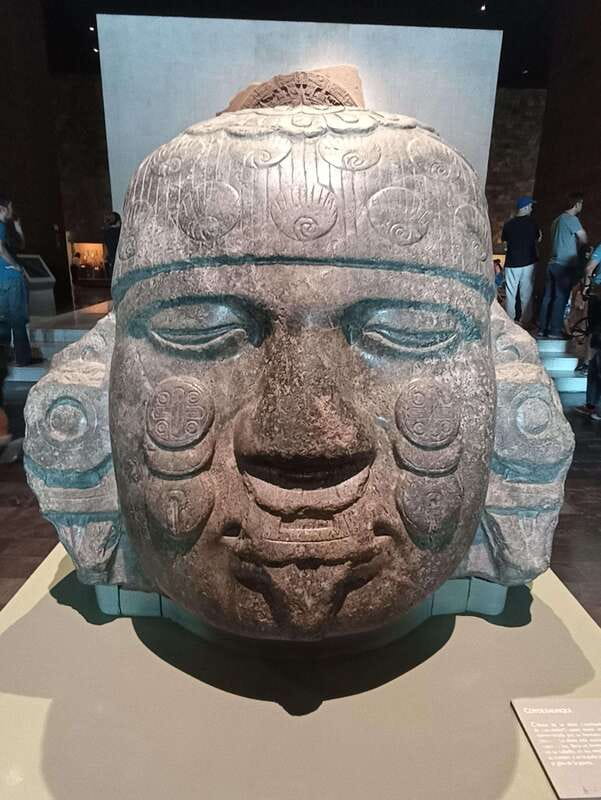
Be clear about what is included. You view the archaeological area and models from outside, but you do not enter the Templo Mayor Museum or the excavation site as part of this walk. Tickets are not included, so you can visit the museum separately if you want a closer look at the objects and remains.
Even from outside, this is an important beginning. Templo Mayor helps explain the shape of the city and the scale of what existed before the Spanish conquest. Prof. Ríos uses the models and visible remains to give you a sense of Tenochtitlan rather than simply pointing out ruins.
This is also where the tour’s academic tone becomes clear. You will hear explanations about Aztec society, the city’s founding, the Spanish arrival, and the way the old capital was transformed. If you want only a quick photo stop, 40 minutes may feel long. If you want the background that makes the rest of the route meaningful, the time is well spent.
I recommend setting aside extra time before or after the tour for the museum, since the guided walk does not cover the interior. Check the museum’s opening arrangements separately because your $43 tour price covers the guide and explanations, not entrance tickets.
Behind the Cathedral and the Calmecac site
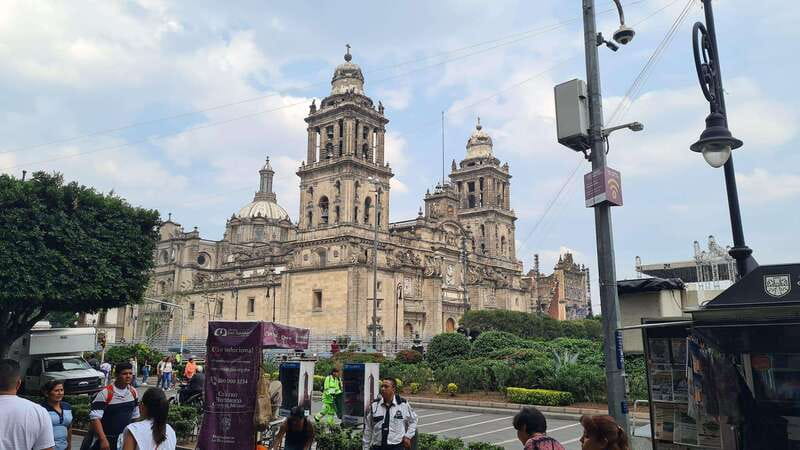
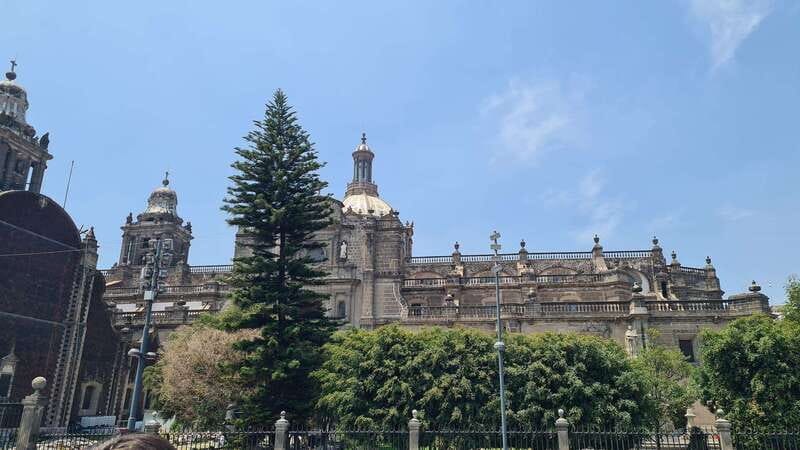
The route then moves behind the Metropolitan Cathedral for about 20 minutes.
This part is a good reminder that the most interesting details are not always on the main facade. The area includes the Animas del Purgatorio feature and leads toward the Calmecac site museum at the Centro Cultural de España. The Calmecac was connected with education in the pre-Hispanic city, so this stop adds a social and cultural layer to the story.
The Centro Cultural de España is both your meeting place and part of the historical setting. That makes the start convenient, but pay attention to the exact location. The meeting point is at the entrance on Guatemala #18, rather than at a hotel or a general plaza meeting area.
The Cathedral itself receives a guided explanation, but this is not presented as a full interior visit. The route is primarily about reading the building and its place in the city’s long sequence of power, religion, and public life.
Cortés, Moctezuma, and the old Axayacatl Palace
One of the most useful parts of the walk is the stop at the former Axayacatl Palace, also described as the old Houses of Moctezuma and the lodging associated with Cortés.
This is the kind of stop you could easily pass without understanding its importance. Prof. Ríos explains the connection between the pre-Hispanic palace and the Spanish occupation, helping you see how conquest was not an abstract event happening somewhere else. It unfolded in the very buildings and streets beneath your feet.
The route can sometimes include an additional stop, such as the tomb of Cortés, when timing and conditions allow. That is not listed as a guaranteed main stop, so I would treat it as a possible bonus rather than a promise. Still, it reflects the advantage of a small group and a guide who knows the surrounding streets well.
This section suits anyone interested in the transition from Aztec rule to Spanish colonial power. It also gives you a better way to think about historic buildings in Mexico City. They often carry several identities, and one structure may connect pre-Hispanic, colonial, and modern chapters.
More walking tours in Mexico City:
- Frida Kahlo VIP [Museum Tickets Included] Walk, Markets & Churros
★ 5.0 · 982 reviews - Walking Tour of the Historic Center of Mexico City
★ 5.0 · 870 reviews - Anthropology Museum Private Experience Walking Tour
★ 5.0 · 355 reviews - Walking Tour in Mexico City for Exploring their Cultural Heritage
★ 5.0 · 245 reviews
Iturbide Palace and the city’s grand facades
The walk continues to Iturbide Palace, now the Banamex Cultural Center, for roughly 20 minutes.
Here the emphasis shifts toward architecture and the later colonial city. The building gives Prof. Ríos a chance to explain how elite homes, commercial power, and artistic style shaped central Mexico City. The stop is not just about admiring a handsome facade. It is about understanding who built these places, who used them, and how their meaning changed over time.
The palace is particularly useful for anyone who wants more than an Aztec-focused tour. This experience begins with Tenochtitlan, but it continues through Spanish rule and the early republic. The full route reaches the 20th century, giving you a broader picture of Mexico City than a single-period archaeology tour.
If architecture is not your main interest, this may be one of the more lecture-like stops. Prof. Ríos has a strong focus on architectural styles, and the tour works best when you are willing to stop, look up, and listen.
San Francisco Church and traces of colonial Mexico
The facade of San Francisco Church receives about 20 minutes.
Because the stop focuses on the exterior, do not expect a long church interior visit. Instead, you get an explanation of the building’s place in the colonial center and the architectural clues visible from the street.
This is where good guiding makes a difference. A facade can look like a quick photograph unless someone explains its form, age, and setting. Prof. Ríos is especially effective for people who want to understand how architecture connects to politics, religion, and daily life.
The walk is also a chance to notice the changing character of central Mexico City. You move through areas where historic monuments share space with ordinary city activity. That mix is part of the appeal, though it means street noise and crowds can sometimes make listening difficult.
When the group is larger than seven, headsets are provided. The audio equipment is useful in louder areas, and the guide can be heard without everyone needing to stand directly beside her. For a group of seven or fewer, ask how the equipment will be handled if you have hearing concerns.
Casa de los Azulejos and an Orozco mural
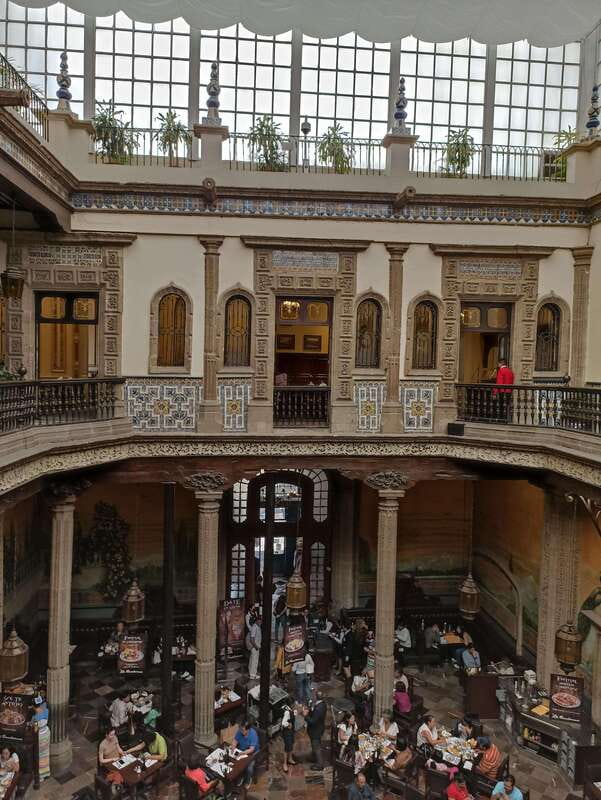
Casa de los Azulejos is one of the most visually rewarding stops, with about 30 minutes devoted to it.
The blue-and-white tile facade is easy to admire, but the inside adds another layer. The tour includes the José Clemente Orozco mural, with a detailed explanation of the artwork. This gives the stop more weight than a quick look at a famous building from the sidewalk.
I like this combination of architecture and art. You see the building’s exterior, then consider how a major Mexican mural fits into the country’s modern cultural story. It also shows why the tour is not limited to archaeology or colonial history. The route keeps moving forward, from Tenochtitlan to the art and public culture of modern Mexico.
Casa de los Azulejos is also a good place to slow down. The itinerary allows 30 minutes here, longer than some of the facade-only stops. Take the time to listen to the mural explanation rather than treating the interior as a quick photo opportunity.
An optional visit to Dulcería Celaya may be included as a chance to try traditional Mexican sweets. Food is not included in the price, so bring some pesos or a payment method if you want to buy something. The candy shop is optional, which is helpful for anyone who would rather keep the tour focused on history.
Bellas Artes: a grand finish without an interior visit
The route ends at the Palace of Fine Arts, or Palacio de Bellas Artes, after about 30 minutes.
The supplied route describes this as a pass-by stop, so you should not book the walk expecting a full interior tour of the palace. Prof. Ríos explains the building and its place in Mexico City, then the tour finishes outside.
That ending works well because Bellas Artes brings together several themes from the walk: monumental architecture, public art, national identity, and the city’s move into the 20th century. It also leaves you in a useful location for continuing on your own.
Plan separate time to enter Palacio de Bellas Artes if you want to see its interiors, murals, or exhibitions. The walking tour gives you context, but it does not replace an admission visit.
The finish is at Palacio de Bellas Artes, not back at Templo Mayor. That makes the route useful for building a full day in the center. You can continue exploring from there, subject to opening hours and ticket arrangements for anything you visit afterward.
Why Prof. Cristina Ríos matters to the experience
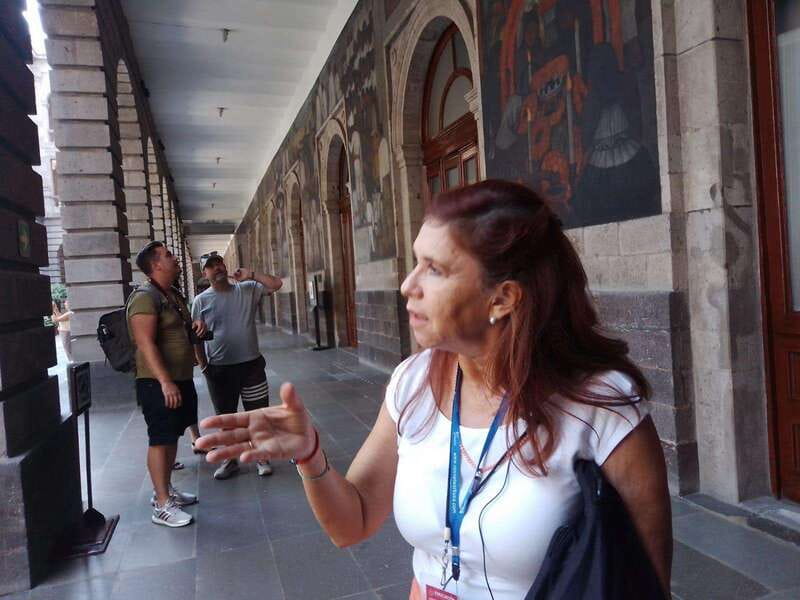
The guide is the main reason to book this particular walk.
Prof. Cristina Ríos, identified as holding a PhD, teaches rather than simply reciting a list of dates. Her explanations connect Aztec history, Spanish colonization, Mexican independence, art, architecture, and modern city life. She also answers questions carefully, which is important on a route with many overlapping eras.
The strongest praise centers on her passion, clarity, and ability to point out places you would otherwise miss. She has also been able to adjust the pace and route for very small groups. One person described being the only participant and receiving a customized walk, while another appreciated that the group moved at a comfortable pace with water and bathroom breaks.
Her English has been described as easy to understand, and headsets help in noisy parts of the center when the group is larger. The tour is available in English and Spanish, but you should select your preferred language when booking.
I would choose this experience for a history-minded first day in Mexico City. It is less suited to someone who wants entertainment, shopping, or a loose stroll with only a few facts. The tone is serious, but the guide’s energy and personal recommendations keep it from feeling dry.
Group size, pace, and practical comfort
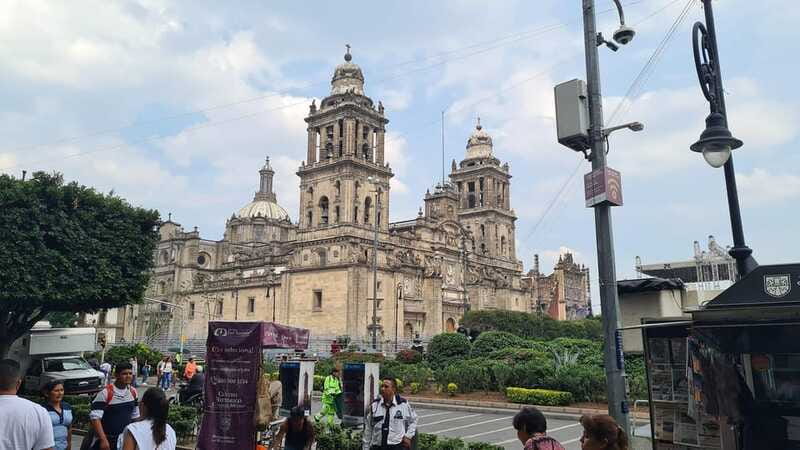
The group is limited to 10 people, with some departures much smaller. That size is a real advantage in the historic center, where large groups can block sidewalks and make questions awkward.
You walk for three hours, with several stops of 20 to 40 minutes. Comfortable shoes are essential. Bring a hat or sunglasses and use sunscreen, since much of the route is outdoors and shade can vary.
The tour is listed as wheelchair accessible, but the route includes city sidewalks, public streets, archaeological views, and historic buildings. If you use a wheelchair, confirm the exact access arrangements for each stop before booking, particularly where the tour enters cultural buildings.
Food and drinks are not included. Dulcería Celaya is optional, so you can decide whether the sweet stop fits your interests and budget.
Free cancellation is available up to 24 hours before the tour for a full refund. You can also reserve and pay later, which helps if your Mexico City schedule is still moving around.
Is $43 a fair price?
At $43 per person, this is not the cheapest way to walk around Centro Histórico. It is also not priced like a basic orientation stroll.
The value comes from the guide’s academic level, the small group, the three-hour duration, and the connections between stops. You are paying for interpretation, not admission tickets. If you entered Templo Mayor Museum or Palacio de Bellas Artes separately, those costs would be additional.
I think the price is fair if you want a serious introduction and plan to use the information for the rest of your stay. The tour covers a lot of ground, from the Aztec capital to modern Mexican art, and it can save you from walking past important places without knowing what you are seeing.
The value is weaker if you want to enter every major building. You will need extra time and money for the museums and interiors, and the tour itself offers outside views at Templo Mayor and Bellas Artes rather than full admissions.
Who should book this walking tour?
I would recommend it most strongly to:
- Adults interested in Aztec history and Spanish colonization
- People who enjoy architecture and art as much as famous landmarks
- First-time visitors who want a clear introduction to central Mexico City
- Travelers who prefer small groups and plenty of time for questions
- Anyone who wants local suggestions for further sightseeing and food
I would think twice if you are traveling with young children, dislike long explanations, or want a tour built around food and shopping. The route is accessible and manageable for many people, but it still involves three hours on city streets.
Should you book the Tenochtitlan history walk?
Book it if you want Mexico City’s historic center explained by someone with serious academic training and a personal feel for the city. Prof. Cristina Ríos brings together ruins, churches, palaces, murals, and political history in a way that gives the streets a clear order.
The best plan is to take it near the start of your visit, wear proper walking shoes, and leave another half-day for the Templo Mayor Museum and Palacio de Bellas Artes interiors. At $43, it is a strong choice for history and architecture fans, but less useful for anyone seeking a light, quick sightseeing loop.
FAQ
Does the tour enter the Templo Mayor Museum?
No. The tour views the Templo Mayor models, archaeological zone, and site from outside. Museum admission is not included.
Where does the walking tour meet?
The meeting point is the entrance of the Centro Cultural de España at Guatemala #18, near the Templo Mayor area.
Where does the tour finish?
The walk finishes at Palacio de Bellas Artes, also called the Palace of Fine Arts.
Is the tour offered in English?
Yes. The live guide can conduct the tour in English or Spanish.
Are food and drinks included?
No. Food and drinks are not included. A stop at Dulcería Celaya to try traditional Mexican sweets is optional.
Is the tour suitable for children?
The experience is not suitable for children under 10. It is designed as a detailed, adult-oriented history and architecture walk.
Just added around Mexico City
- Mexico City: Hop-on Hop-off City Tour by Turibus 2-Day Pass★ 4.0 · 10 reviews
- Anthropology Museum, Chapultepec Castle & Cable Car Tour★ 4.5 · 10 reviews
- Multi-Variety Mole Class in a Condesa home or art gallery rooftop★ 5.0 · 10 reviews
- PRIVATE TOUR Colonial Town Taxco and Cuernavaca from CDMX.★ 5.0 · 10 reviews
- El Centro Street Food Walking Tour★ 5.0 · 10 reviews
- Private Round-Trip Transportation to Teotihuacan Pyramids★ 5.0 · 10 reviews
- Teotihuacan and My Grandma’s Food Tour★ 5.0 · 10 reviews
- Private Walking Tour Legends and Events Historic Center CDMX★ 4.8 · 10 reviews
Historical Tours, compared.


Mexico City Historical Centre Food Tour with 7 Authentic Tastings
Read our review →
Walking Tour in Mexico City for Exploring their Cultural Heritage
Read our review →
Walking Tour – Impressive murals in Historical Center of Mexico City
Read our review →
Guided walking tour through the most historic parts of the city.
Read our review →Browse the lists this tour appears in