
Reviewed · HISTORICAL TOURS
Mexico City’s Historical Center Icons
Mexico City’s historic center makes the most sense when you connect its buildings to the civilizations and political changes beneath them. This private walking tour links the Cathedral, Mexica ruins, grand early-20th-century buildings, and Palacio de Bellas Artes in one well-paced introduction.
I like the private format, since your guide can adjust the conversation to your interests. I also like the chronological approach praised by several guests, especially when Alejandro guides, because it helps connect archaeology, architecture, politics, and modern city life. The main consideration is that the tour runs only on Saturday and Sunday from 10 a.m. to 2 p.m., and museum entrance costs may not be covered.
In This Review
- Key points to know before you book
- Why this makes a smart first morning in Mexico City
- Starting beneath the Cathedral’s massive façade
- Seeing Mexica remains at Templo Mayor
- Looking up inside the Gran Hotel Ciudad de México
- The House of Tiles and a change of visual mood
- Palacio Postal and the grand public city
- Ending at Palacio de Bellas Artes
- What the four-hour pace feels like
- Is $98 a fair price?
- Which guide style may suit you
- Practical details that affect your decision
- Who should book this walking tour?
- Should you book Mexico City’s Historical Center Icons?
- FAQ
- How long does the tour last?
- On which days is the tour offered?
- Is this a private tour?
- Is the tour offered in English?
- Where does the tour begin?
- Where does the tour finish?
- Is transportation included?
- Is cancellation free?
Key points to know before you book
- A private four-hour walk: Your group has the guide to itself, with no strangers setting the pace.
- A useful first-day orientation: The route gives you a clear framework for exploring the Centro Histórico on your own later.
- Six major sights in one compact route: You see the Cathedral, Templo Mayor, Gran Hotel, House of Tiles, Palacio Postal, and Bellas Artes.
- Strong English-language guiding: Alejandro and Tlilal are named guides associated with the experience, and the English service is a central part of the tour.
- Architecture gets equal billing with history: Interiors such as the Gran Hotel and Palacio Postal add visual rewards beyond the main monuments.
- Plan for walking and extras: Private transport, snacks, drinks beyond bottled water, and museum fees are not included.
Why this makes a smart first morning in Mexico City
The best reason to take this tour early in your stay is orientation. Mexico City’s Centro Histórico can feel like several cities layered on top of one another. Mexica remains appear beside Spanish colonial churches. Porfirian-era buildings sit near murals and modern commercial streets. Without a basic timeline, it is easy to admire the façades while missing what makes the area so unusual.
This route gives you that timeline in about four hours. You begin at Plaza de la Constitución, better known as the Zócalo, and finish near Palacio de Bellas Artes. Along the way, you move from the pre-Columbian Mexica capital to Spanish rule, then into the grand architectural projects of the late 19th and early 20th centuries.
I particularly like that this is not only a parade of famous buildings. The strongest guides use the stops to explain how Mexico City changed over time. Alejandro, for example, has been praised for linking archaeology, economics, politics, culture, and current events in clear English. That is useful if you want more than dates and names.
The private setup matters here. You can ask why a church was built where it was, how a building reflects its period, or what changed after the Spanish conquest. If you are interested in architecture, Mexican history, murals, or city life today, your guide can spend more time in those areas instead of following a fixed group script.
More history walks in Mexico City:
- Historic Downtown Walking Tour
★ 5.0 · 1,289 reviews - Historic Center Food Tour in Mexico City
★ 5.0 · 1,263 reviews - Mexico City: Historic Downtown Walking Tour
★ 4.8 · 1,039 reviews
Starting beneath the Cathedral’s massive façade
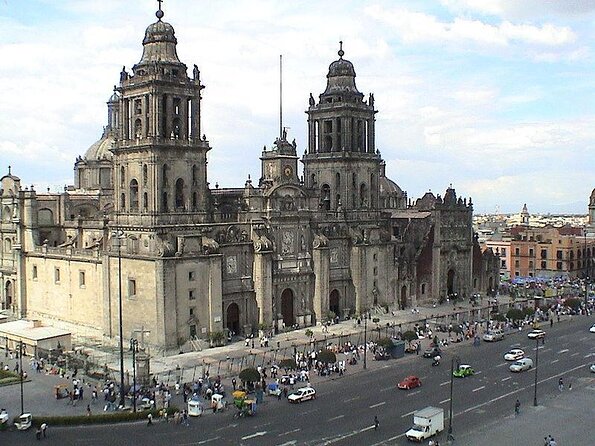
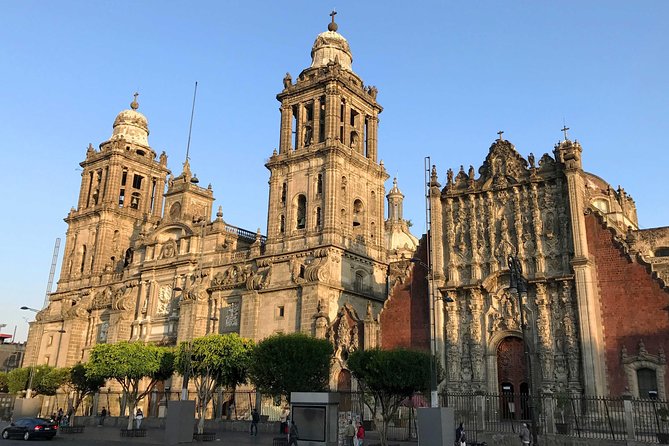
The tour begins at P.za de la Constitución 803, in the Centro Histórico. The first stop is the Catedral Metropolitana de la Ciudad de México, the leading Catholic church in Mexico and one of the defining buildings on the Zócalo.
You have about 30 minutes here. That is enough time for a focused introduction to the cathedral’s history and a look at its monumental presence without turning the morning into a full church study. Your guide can help you place the building within the wider story of Spanish Mexico and the development of the city center.
The cathedral is also a practical starting point because it gives you an immediate sense of scale. The Zócalo is not a small plaza with one photogenic church. It is the civic heart of the historic center, and this opening stop helps you understand why the surrounding streets matter.
The admission is listed as free, but conditions at active religious sites can change. Dress and behave respectfully, and remember that the cathedral is a working place of worship rather than only a sightseeing stop.
Seeing Mexica remains at Templo Mayor
From the cathedral, the experience turns to the Museo del Templo Mayor, where you see ruins from the pre-Columbian Mexica city. This is one of the most important contrasts on the route: the Spanish cathedral and the Mexica remains are next to one another, making the city’s layered past visible in a single short walk.
The scheduled visit is about 30 minutes. That is enough for an overview, not a full museum visit. You will want to listen closely while your guide explains what the ruins reveal about the Mexica capital and why this site changes the way you read the modern center.
This stop is especially valuable for first-time visitors because it prevents a common mistake: treating Mexico City as mainly colonial or modern. The archaeological remains show that the present-day streets occupy a place with a far older urban story.
There is one point to clarify before you go. The itinerary lists admission as free at each stop, while the general terms say entrance fees to museums not specified in the tour are excluded. Since Templo Mayor is a museum, ask about the current entrance arrangement when you confirm your booking. Do not assume every museum charge is included.
Looking up inside the Gran Hotel Ciudad de México
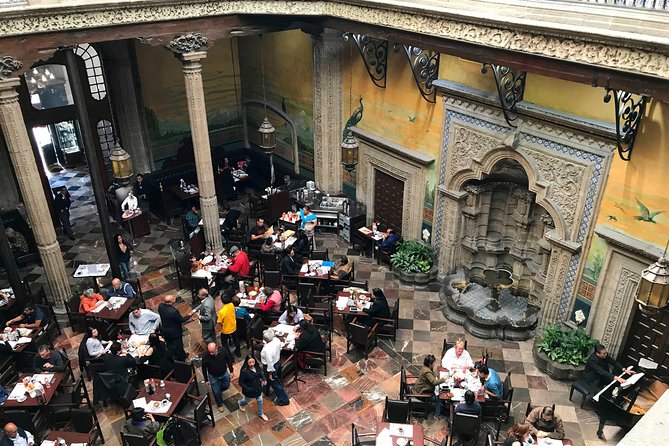
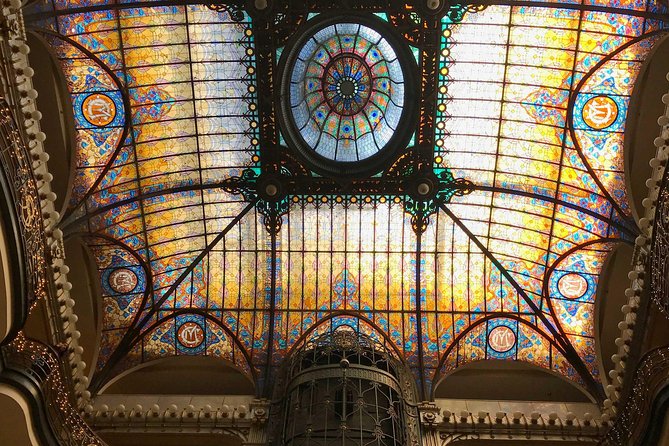
The Gran Hotel Ciudad de México receives about 15 minutes, but it can be one of the most memorable architectural pauses. The building reflects the change from the 19th to the 20th century and is known for its art nouveau character.
A short stop works well here. You are not trying to examine every room or learn the full story of the property. Instead, you get a chance to appreciate the design and understand how Mexico City’s center took on a more modern, international style around the turn of the century.
This is also where a private guide can add real value. Several accounts of the tour emphasize that the guides show visitors interiors they might otherwise miss. That detail matters because some of the historic center’s best features are indoors, above eye level, or easy to pass without context.
Keep your expectations realistic. The tour allows about 15 minutes, so this is an architectural visit rather than a long hotel exploration. Still, it adds welcome variety after the cathedral and archaeological site.
A completely different day out, same corner of Mexico City:
- Teotihuacan, Guadalupe Shrine & Tlatelolco Day Tour with Lunch
★ 5.0 · 11,603 reviews - Xochimilco, Coyoacan and Frida Kahlo with Optional Lunch
★ 4.5 · 7,320 reviews - Balloon flight + Breakfast in cave + Pyramids + Pick up CDMX.
★ 5.0 · 6,335 reviews - Teotihuacan pyramids morning or afternoon without tourist traps
★ 5.0 · 6,186 reviews
The House of Tiles and a change of visual mood
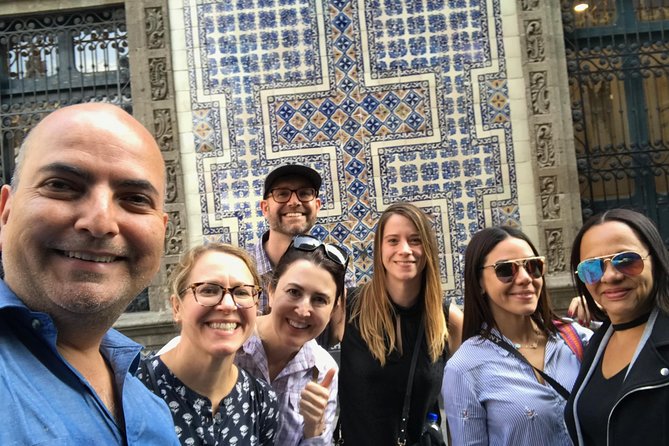
The House of Tiles, or Casa de los Azulejos, is given roughly 30 minutes. This 18th-century house is known for its distinctive tiled exterior and ornate appearance, making it a natural favorite for anyone who enjoys decorative architecture.
The stop broadens the tour’s focus. At the cathedral and Templo Mayor, the emphasis is on religion, conquest, and the city’s earliest layers. At the House of Tiles, you can pay closer attention to design, materials, and domestic or commercial architecture in the colonial center.
I like this kind of stop because it gives your eyes a break from monumental civic buildings. You see how a private building can become one of the city’s best-known landmarks through its surface details and setting.
The allotted half hour should let your guide explain why the building matters and give you time to look around. If your main interest is interiors, ask how much of the visit will be inside and how much will be spent viewing the exterior. The exact access available can affect how much you get from the stop.
Palacio Postal and the grand public city
The Palacio Postal is another 15-minute visit. This early-20th-century post office is a reminder that Mexico City’s historic center was not frozen in the colonial period. The building represents the city’s push toward grand public architecture at the beginning of the 20th century.
The short timing is sensible. You can admire the ornate structure, hear its place in the city’s development, and move on without spending the whole morning in a single style. Together, the Gran Hotel and Palacio Postal create a useful architectural comparison: both belong to the era when Mexico City was presenting itself as a modern capital, but each gives you a different visual experience.
This is a good place to let your guide interpret rather than simply identify details. Ask about the purpose of the building, the period it represents, and how it fits with the older streets around it. The tour works best when you treat these short stops as pieces of a larger story.
Ending at Palacio de Bellas Artes
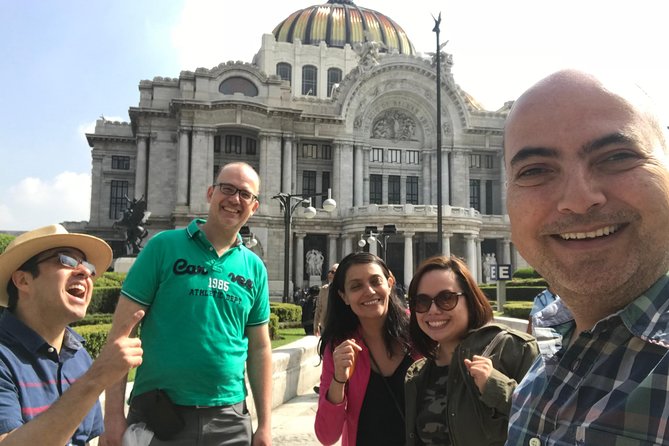
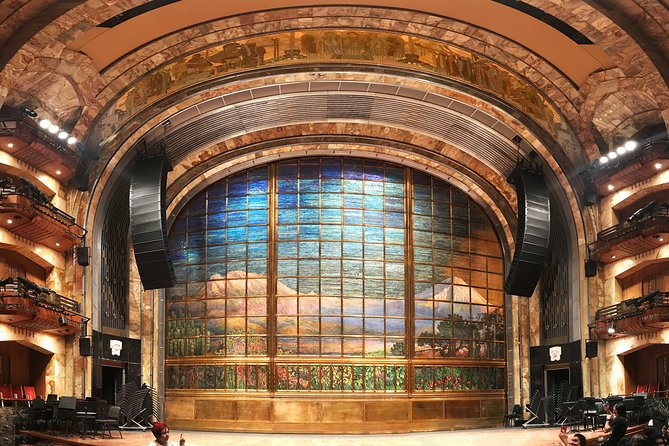
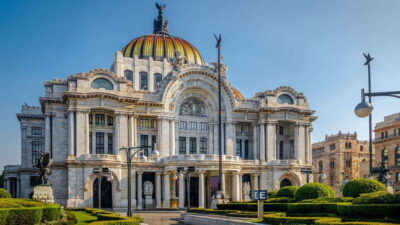
The final major stop is Palacio de Bellas Artes, the famous theater and cultural landmark at the end of the route. You have about 30 minutes here, and the tour finishes in the square at Av. Juarez S/N.
Bellas Artes gives the morning a strong finish. It is monumental, visually striking, and tied to Mexico City’s cultural identity. By the time you reach it, the route has moved from Mexica civilization through colonial rule and into the architecture and public culture of modern Mexico.
The building is also a useful place to end because you can continue exploring afterward. The tour does not provide private transport, so finishing in the square leaves you in a central location rather than returning you to the starting point. You can arrange your next activity from there, though the tour itself does not include further transportation or food.
One practical note: the scheduled timing places the tour from 10 a.m. to 2 p.m. on Saturdays and Sundays. If you are hoping to see a particular interior, mural collection, or museum afterward, check its opening hours separately. One guide, Alejandro, once adjusted the route when a planned mural visit was unavailable, taking the group to another place to see murals instead. That suggests flexibility is possible, but it is wise to raise special interests before the walk begins.
What the four-hour pace feels like
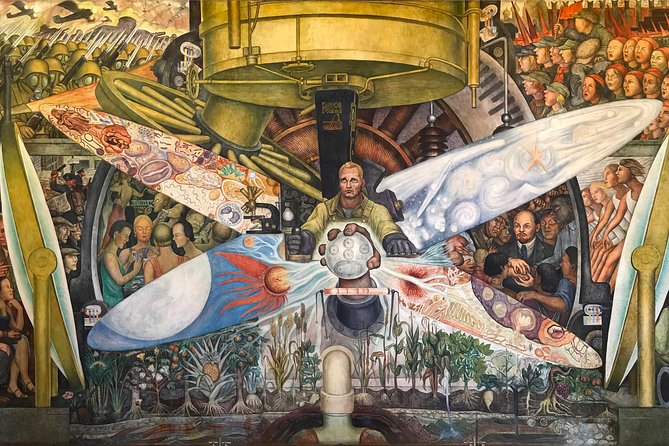
The listed stop times add up to about two and a half hours. The remaining time is used for walking between sites, explanations, questions, and pauses. That makes the four-hour length believable and gives the guide room to build connections rather than rush you from door to door.
You should still expect a real walking morning. The information advises a moderate fitness level, and one guest specifically praised the fact that the experience was done on foot. Wear comfortable shoes and prepare for city streets, standing, and moving between busy central sites.
Because the group is private, you can ask for a faster pace or more explanation, within reason. A group focused on architecture might spend more time on the Gran Hotel, House of Tiles, and Palacio Postal. A group focused on history might want longer explanations around the cathedral and Templo Mayor.
Bottled water is included. Snacks and other drinks are not, so carry money or arrange your own refreshment. Private transportation is also excluded, but the walk begins and ends in central locations that are served by public transportation.
Is $98 a fair price?
At $98 per person, this is not the cheapest way to walk around the historic center. You are paying for a private English-language guide, a four-hour route, and the ability to shape the conversation around your group’s interests.
The value is strongest for two or more people who want a personal introduction without joining a large group. It is also useful if you have only a short stay and want several major sights explained in one morning. A good guide can save you time and help you understand what you are seeing, which is more useful than simply collecting photographs.
The price is less attractive if you prefer to explore slowly on your own, already know Mexico City’s history, or plan to enter several museums at length. The stop durations are designed for orientation, not extended study. You may want a separate museum visit later.
The 100 percent recommendation rate and five-star average from 25 ratings point to a consistently strong experience, with particular praise for the guides’ English, historical explanations, kindness, and ability to adapt. I would treat those strengths as the main reason to book, not the promise of exhaustive access to every site.
Which guide style may suit you
Alejandro is the clearest named guide in the available information. His approach centers on chronology and broad context, moving from the 1500s through the 1950s while also answering questions about architecture, culture, politics, economics, and present-day Mexico.
That style suits you if you like a strong narrative. Instead of hearing isolated facts about six buildings, you get a sequence that explains how one era led into another.
Tlilal is also named as a guide and is described as friendly and well informed. If your group values a warm, conversational tone, that may be a good match. The booking is subject to availability, so you should not assume you can select a specific guide unless the operator confirms it.
The most useful step is to tell the operator what you care about. Mention archaeology, churches, murals, architecture, political history, or modern city life. On a private tour, those details can help shape the morning.
Practical details that affect your decision
The tour is offered in English and is private, so only your group participates. Confirmation is sent within 48 hours of booking, subject to availability, and the experience is scheduled for weekends from 10 a.m. to 2 p.m.
Service animals are allowed, and the starting point is near public transportation. The tour requires good weather. If poor weather forces a cancellation, you are offered another date or a full refund.
You can cancel for a full refund up to 24 hours before the start time. Cancellations or changes made less than 24 hours ahead are not refunded or accepted, and the cut-off uses Mexico City local time.
Who should book this walking tour?
I would choose this for a first or second day in Mexico City, especially if you want the historic center to make sense before exploring it alone. It is a good fit for couples, families, and small groups who value questions and personal attention.
History fans will appreciate the movement from Mexica ruins to colonial religion and modern public architecture. Architecture fans will enjoy the Gran Hotel, House of Tiles, Palacio Postal, and Bellas Artes. You should also book if you want a guide who can discuss more than buildings, including political, economic, cultural, and current topics.
I would hesitate if you want long museum visits, private transportation, included meals, or a full-day excursion. This is a concentrated walking introduction, not a museum marathon or a sightseeing bus tour.
Should you book Mexico City’s Historical Center Icons?
Book it if you want a clear four-hour orientation led by a private English-speaking guide. The route covers an unusually useful range of Mexico City’s past, and the strongest guides, especially Alejandro, make the connections easy to follow.
The $98 price makes the most sense when shared with a partner or small group, and when you value interpretation more than simply seeing buildings. Confirm museum fees, wear good walking shoes, and keep your schedule open for a weekend morning. For a first look at the Centro Histórico, this is a practical and focused choice.
FAQ
How long does the tour last?
The experience lasts approximately four hours, from 10 a.m. to 2 p.m.
On which days is the tour offered?
It is offered on Saturdays and Sundays.
Is this a private tour?
Yes. Only your group participates.
Is the tour offered in English?
Yes. English is the offered language.
Where does the tour begin?
It begins at P.za de la Constitución 803, Centro Histórico de la Ciudad de México, Centro, Cuauhtémoc, 06060 Ciudad de México, CDMX, Mexico.
Where does the tour finish?
It finishes at the Palacio de Bellas Artes square, at Av. Juarez S/N, Centro Histórico de la Ciudad de México, Centro, Cuauhtémoc, 06050 Ciudad de México, CDMX, Mexico.
Is transportation included?
No. Private transportation is not included. The tour takes place as a walking experience and begins near public transportation.
Is cancellation free?
You can cancel up to 24 hours before the start time for a full refund. Cancellations made less than 24 hours before the start time are not refunded.
Just added around Mexico City
- Mexico City: Hop-on Hop-off City Tour by Turibus 2-Day Pass★ 4.0 · 10 reviews
- Anthropology Museum, Chapultepec Castle & Cable Car Tour★ 4.5 · 10 reviews
- Multi-Variety Mole Class in a Condesa home or art gallery rooftop★ 5.0 · 10 reviews
- PRIVATE TOUR Colonial Town Taxco and Cuernavaca from CDMX.★ 5.0 · 10 reviews
- El Centro Street Food Walking Tour★ 5.0 · 10 reviews
- Private Round-Trip Transportation to Teotihuacan Pyramids★ 5.0 · 10 reviews
- Teotihuacan and My Grandma’s Food Tour★ 5.0 · 10 reviews
- Private Walking Tour Legends and Events Historic Center CDMX★ 4.8 · 10 reviews
Historical Tours, compared.


Mexico City Historical Centre Food Tour with 7 Authentic Tastings
Read our review →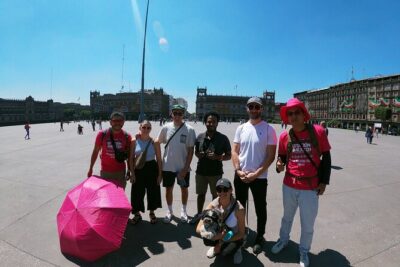
Walking Tour in Mexico City for Exploring their Cultural Heritage
Read our review →
Walking Tour – Impressive murals in Historical Center of Mexico City
Read our review →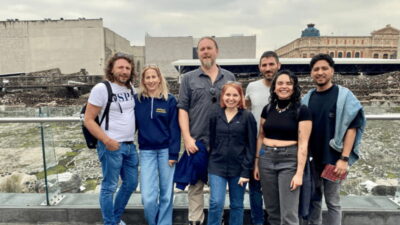
Guided walking tour through the most historic parts of the city.
Read our review →Browse the lists this tour appears in