
Reviewed · HISTORICAL TOURS
Walk around UNAM campus, a UNESCO World Heritage Site
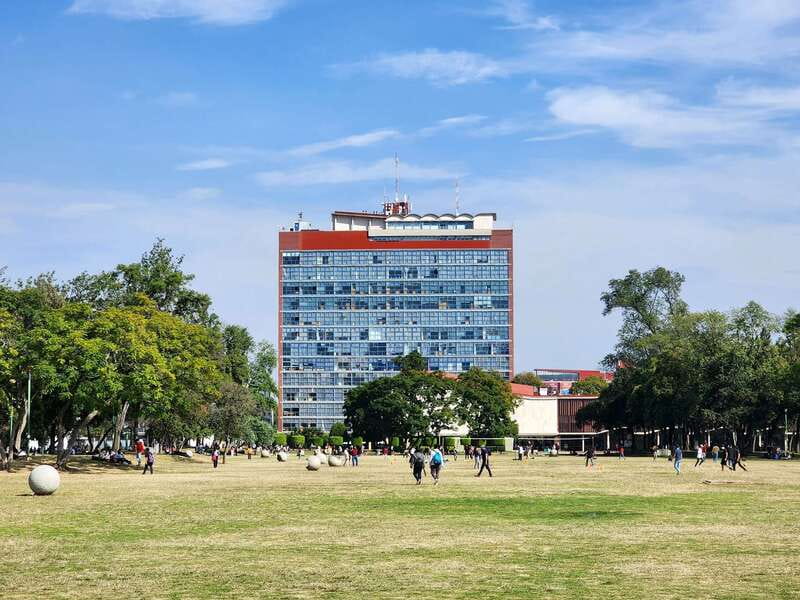
UNAM is not just a university campus. It is a 1950s modernist experiment built on volcanic ground, where bold buildings, giant murals, open plazas, and everyday student life meet. I like the way this tour treats the university as both an architectural work and a working institution, not as a frozen monument.
I especially like two things here: the close look at Juan O’Gorman’s Central Library and the wider story behind the murals by Diego Rivera, David Alfaro Siqueiros, and O’Gorman. Guide Sebastián, a former UNAM student and lecturer, also brings in the university’s social and political life. The main consideration is the 4-kilometer walk, often under open sky, with few reliable toilet stops and a rain-or-shine policy.
In This Review
- Key points at a glance
- Why UNAM belongs on your Mexico City plan
- Meeting the tour at the Olympic Stadium
- The Olympic Stadium and Mexico’s modernist ambition
- Reading the murals by O’Gorman, Rivera, and Siqueiros
- Juan O’Gorman’s Central Library
- Volcanic ground beneath the university
- Faculties, student life, and the university beyond the buildings
- What the three hours feel like
- Is $76 a fair price?
- Who will enjoy this most?
- Practical tips for a better visit
- Should you book this UNAM campus walk?
- FAQ
- Where does the UNAM tour meet?
- How can I reach the Olympic Stadium from Roma or Condesa?
- Which Metrobús station is closest to the meeting point?
- How long is the tour?
- How far do I walk?
- What languages are available?
- Is the tour wheelchair accessible?
- Does the tour run if it rains?
- Are food and drinks included?
- Is hotel pickup provided?
- Can I cancel for a full refund?
- Can I reserve now and pay later?
Key points at a glance
- Start at the Olympic Stadium: Meet in front of Estadio Olímpico Universitario, a major campus landmark with its own place in Mexico’s modern architectural story.
- See murals in their original setting: The art is not isolated in a gallery. It works with the buildings, plazas, paths, and public life of the university.
- Study O’Gorman’s Central Library: Its exterior imagery turns a functional library into one of Mexico City’s most recognizable buildings.
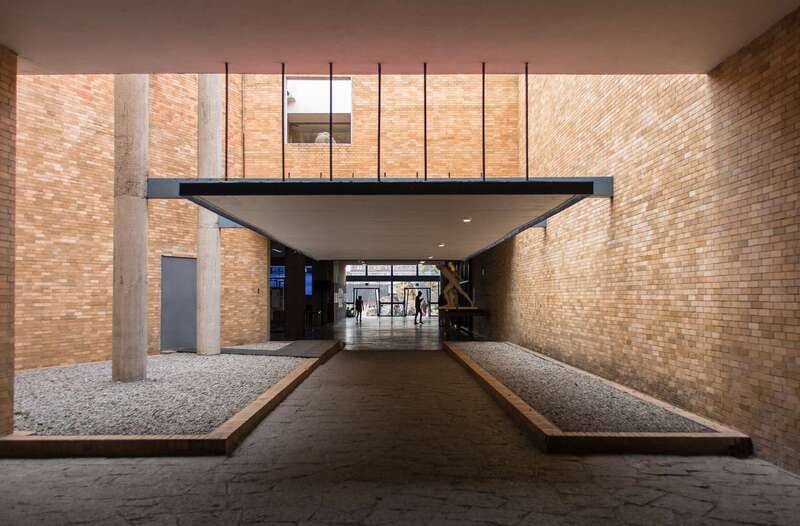
- Walk through volcanic terrain: UNAM rises from rough, rocky ground created by volcanic activity, and the terrain is part of the design.
- Connect art with student life: The tour can include discussion of campus politics, social class, access to education, graduation rates, and the different character of university faculties.
- Plan for a 4-kilometer outing: Wear comfortable shoes, carry water, and bring rain protection even if the forecast looks friendly.
Why UNAM belongs on your Mexico City plan
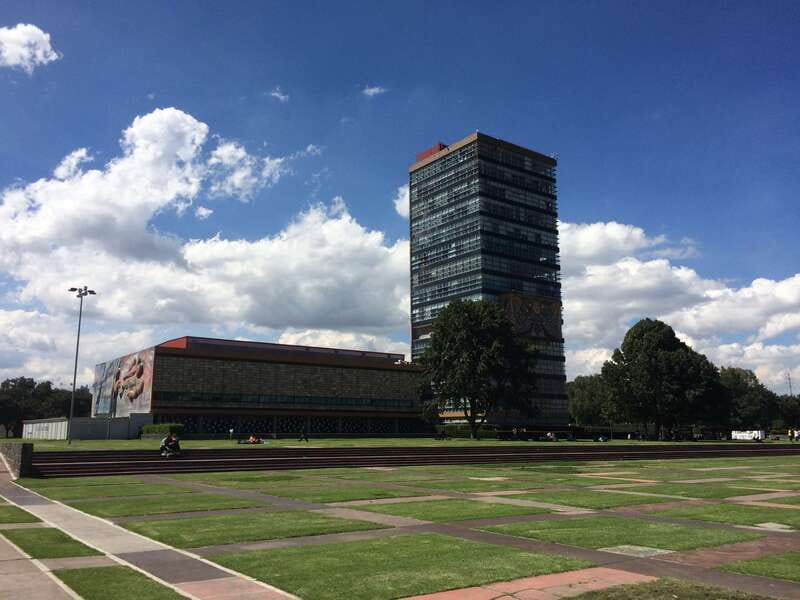
Mexico City has no shortage of famous museums, grand churches, and historic neighborhoods. UNAM offers something different: a large-scale view of how Mexico imagined its future in the middle of the 20th century.
The main campus, known as Ciudad Universitaria, was built in the 1950s, during a period when Mexico and the United States had close political and cultural ties. The project brought together architecture, public art, education, and national identity. Instead of keeping art inside a museum, the university placed it on walls, towers, and public buildings where students encounter it as part of daily life.
That setting matters. You are not simply looking at a mural and then moving on to another object. You are seeing how the art responds to the building beneath it, the volcanic ground around it, and the university’s purpose. A guide can help you notice symbols and political ideas that would be easy to miss on your own.
The campus is also a UNESCO World Heritage Site, which gives the walk extra weight. This is not just a pleasant stroll through an attractive school. It is a carefully planned modernist district with national cultural importance.
More history walks in Mexico City:
- Historic Downtown Walking Tour
★ 5.0 · 1,289 reviews - Historic Center Food Tour in Mexico City
★ 5.0 · 1,263 reviews - Mexico City: Historic Downtown Walking Tour
★ 4.8 · 1,039 reviews
Meeting the tour at the Olympic Stadium
The meeting point is in front of Estadio Olímpico Universitario. This is a practical starting place because the stadium is easy to identify and introduces the campus through one of its best-known structures.
From Condesa or Roma, an Uber ride usually takes about 30 minutes, depending on traffic. You can also use Metrobús Línea 1. Get off at Dr. Gálvez Station, then walk south from Insurgentes Avenue for about 10 minutes.
Give yourself extra time for the journey. Mexico City traffic can change the timing quickly, and a campus this large is not the place to arrive breathless and uncertain about the meeting point. The tour normally runs in the morning or afternoon, so you have some choice when fitting it around museums or other plans.
Starting at the stadium also helps you understand the scale of UNAM. This is not a compact historic center attraction where every stop is a minute apart. You will cover ground, and the open setting makes the walk feel more like a small campus expedition than a standard city tour.
The Olympic Stadium and Mexico’s modernist ambition
The stadium forms a natural opening chapter. From here, the tour introduces the design language of the campus and the period in which it was built.
The architecture reflects the confidence of a young, modern Mexico. The university was meant to serve large numbers of students while also expressing a national culture rooted in Mexican history. That combination explains why the campus can feel both practical and symbolic.
You will learn how the buildings relate to the rocky volcanic terrain. The ground was not simply cleared and covered over. The natural surface remains part of the experience, giving the campus a rougher, more elemental feel than a polished European-style plaza.
This is one of the tour’s best features for anyone interested in design. You are encouraged to look at materials, scale, placement, and the relationship between open space and structure. If you only want quick photographs, some of the discussion may feel slow. If you like understanding why a place looks the way it does, the stadium is a strong beginning.
Reading the murals by O’Gorman, Rivera, and Siqueiros
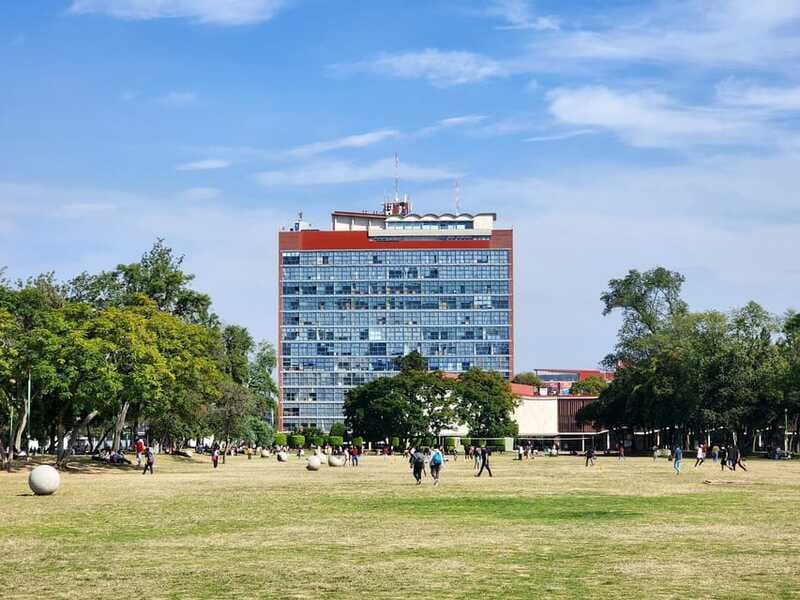
The murals are the visual heart of the experience. Mexico’s mural movement used public art to tell stories about history, labor, education, politics, and national identity. At UNAM, those stories are placed where young people study and pass through every day.
Juan O’Gorman’s work is especially important because he was both an architect and an artist. His approach helps explain why the campus feels like one connected project rather than a collection of unrelated buildings. The art and architecture speak to each other.
Diego Rivera and David Alfaro Siqueiros bring different artistic voices to the campus. Their murals are large, direct, and made for public settings. A guide can point out the imagery, social themes, and historical references, then explain how the works fit into Mexico’s wider mural tradition.
I would not rush these stops. Stand back first to take in the full composition, then look at smaller details. The scale can make it hard to absorb everything at once, especially in bright sun or with other activity around you.
The value of the tour lies partly in interpretation. Without context, you may recognize the names Rivera and Siqueiros but miss the argument each mural is making. With context, the walls become a way to discuss the country’s past and the university’s role in public life.
More walking tours in Mexico City:
- Frida Kahlo VIP [Museum Tickets Included] Walk, Markets & Churros
★ 5.0 · 982 reviews - Walking Tour of the Historic Center of Mexico City
★ 5.0 · 870 reviews - Anthropology Museum Private Experience Walking Tour
★ 5.0 · 355 reviews - Walking Tour in Mexico City for Exploring their Cultural Heritage
★ 5.0 · 245 reviews
Juan O’Gorman’s Central Library
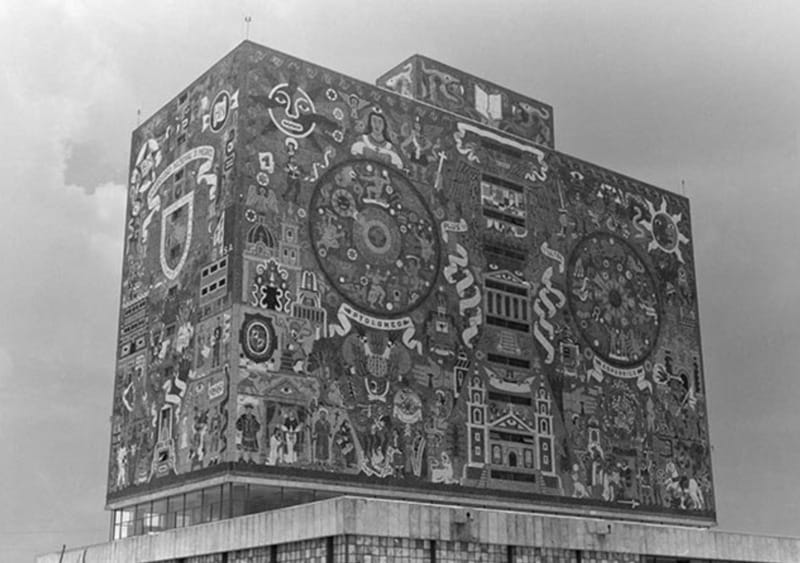
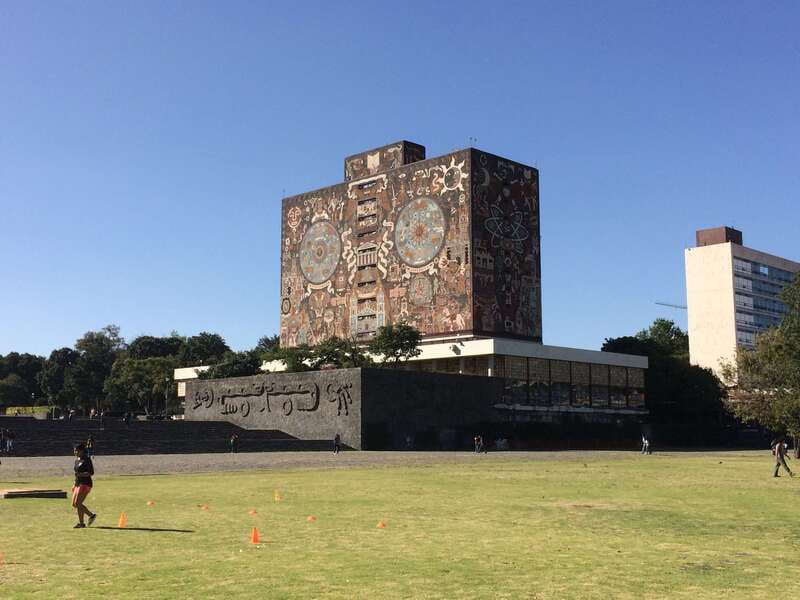
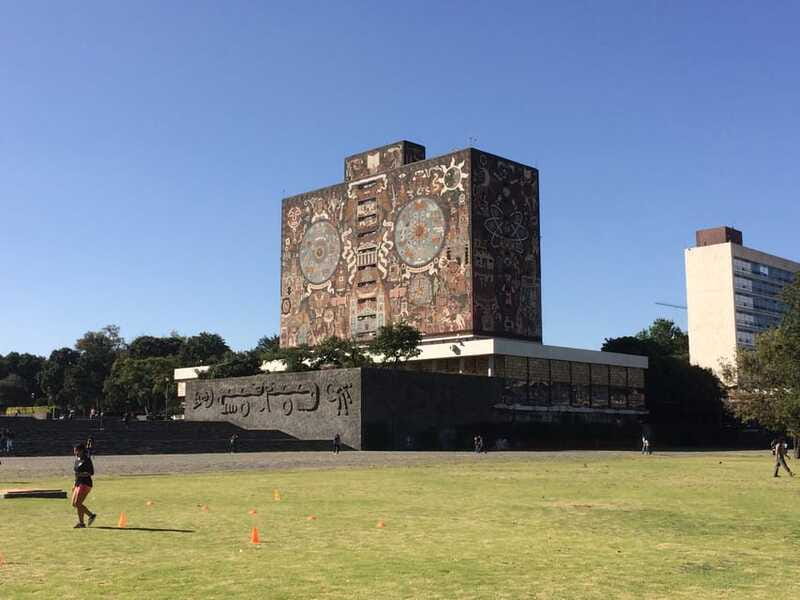
The Central Library is likely to be the tour’s most memorable architectural stop. Its exterior is covered with a vast mosaic designed by Juan O’Gorman, turning a library into a landmark that can be read from a distance.
The building is worth studying as both art and structure. The mosaic is not a decorative afterthought. It gives the library a strong identity and uses images to connect knowledge, history, and Mexican culture.
Your guide can help you understand how the four sides of the building work together and why the imagery matters. This is where a short explanation adds real value. A photograph records the color and pattern, but it cannot explain the ideas built into the design.
The Central Library also shows the unusual strength of UNAM’s campus plan. A place for books becomes a public statement. The university’s buildings are functional, but they are not visually shy.
If architecture is your main reason for booking, this stop alone makes the tour worthwhile. Just remember that the tour is broader than one building. You will spend time walking between sites and discussing the campus as a whole.
Volcanic ground beneath the university
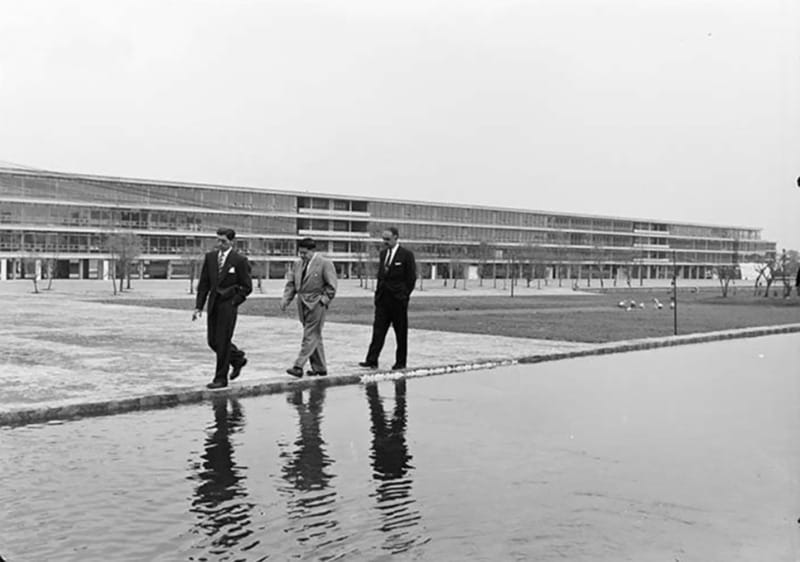
UNAM’s rocky terrain is not a minor detail. It shapes the way you move through the campus and helps explain the unusual contrast between rough ground and carefully planned modern buildings.
The campus rises from volcanic terrain, and the dark, uneven surfaces give some areas a raw quality. You are not walking through a perfectly manicured garden. Comfortable footwear matters, especially over a four-kilometer route.
This setting also helps you see the architects’ choices. The buildings do not exist on a blank sheet of paper. They respond to the ground, the open spaces, and the need to move large numbers of students through the site.
Bring water, even though water is included. You should still have enough for the entire walk, particularly if the day is warm. A hat and sunscreen are sensible, and a light rain jacket is useful because the tour operates rain or shine.
Faculties, student life, and the university beyond the buildings
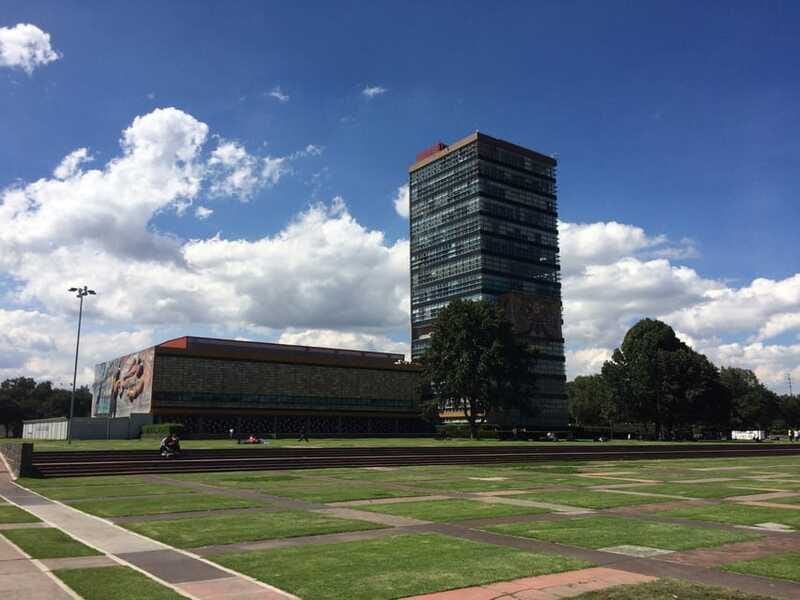
One of the strongest parts of the experience is the shift from architecture to daily life. UNAM is not presented only as a collection of celebrated walls. You also learn how the university works for its students.
Sebastián has discussed his own student experience, and that personal connection can make the campus easier to understand. He can explain the differences in feel between faculties, point out places where students study or meet, and describe how the university fits into Mexico’s social and political life.
The tour can also address access to education, economic differences, and the reasons graduation rates remain low despite the university being virtually free for students. These subjects give the campus a human dimension. You begin to see the buildings as part of a system that shapes real lives.
For the clearest view of student life, book during the week. You may see students heading to class, working in workshops, or meeting between buildings. The campus feels more like a living institution then. On a quieter day, you may have a calmer look at the architecture, but less of the everyday energy that makes the place distinctive.
The political dimension can be surprising if you expected only an architecture walk. The tour may include discussion of campus activism and the auditorium where Okupa Che is based. This is useful context, though it also means the experience can move into serious subjects. Come prepared for more than dates, architects, and photo stops.
What the three hours feel like
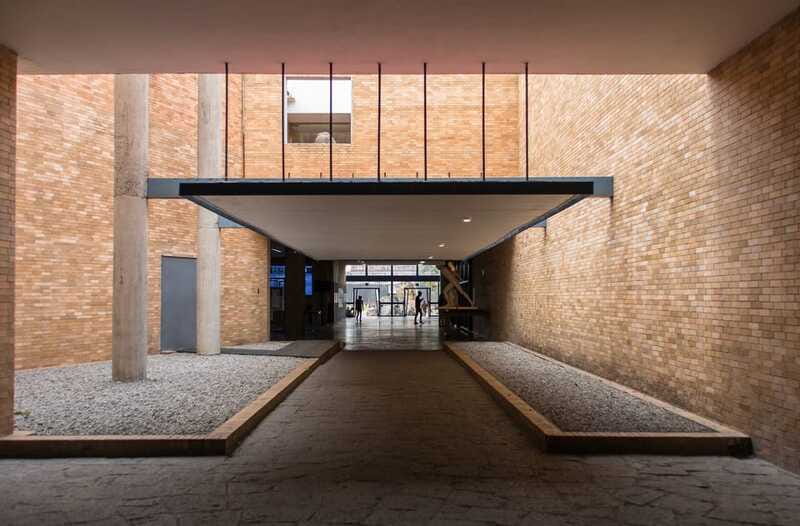
Three hours is a sensible length for this campus. A shorter visit would risk becoming a rushed list of buildings, while a much longer walk could become tiring in the open terrain.
Expect a steady 4-kilometer route with stops for explanation and questions. The pace is not described as a race, and the guide can accommodate personal needs, but you should still be comfortable walking for several hours.
The tour is offered in English or Spanish. Sebastián has led tours with a strong focus on architecture, campus history, murals, politics, and student life. The activity is provided by Joaquin Diez Canedo, and the guide for your departure should be confirmed when you book.
The walk is wheelchair accessible, but the distance and rocky ground are worth considering in advance. Accessibility does not remove the physical demands of a large outdoor campus. If you have mobility concerns, contact the provider before booking so you can discuss your needs.
Toilets may be hard to find during the tour. Use one before meeting the guide and avoid assuming that a convenient stop will appear halfway through the route.
Is $76 a fair price?
At $76 per person, this is not the cheapest way to see UNAM. The campus itself is not a conventional ticketed attraction, so you are paying mainly for the guide’s time, interpretation, route planning, and language support.
I think the price makes sense if you care about architecture, public art, Mexican history, or university life. The added value is not simply seeing the Central Library or taking photos of murals. It is learning how the parts connect, and how UNAM reflects larger social and political questions in Mexico.
The price is harder to justify if you prefer to wander alone, want only a quick look at the most photographed buildings, or have limited energy for a long walk. In that case, you may prefer a shorter independent visit, if your plans and access allow it.
Free cancellation up to 24 hours before the start and a reserve-now, pay-later option reduce the risk of committing too early. Still, the main value decision is simple: pay for interpretation, not transportation or food. Water is included, but food and other drinks are not, and hotel pickup is not included.
Who will enjoy this most?
I would choose this tour for:
- People who like modern architecture and public art
- Visitors who want a break from Mexico City’s historic center
- Anyone interested in Mexican muralism
- Students, teachers, and people curious about university life
- Visitors who enjoy social and political context alongside sightseeing
- First-time UNAM visitors who want help making sense of the large campus
It is less suited to anyone seeking a short, low-effort outing. It is also not suitable for pregnant women according to the activity information.
Families and mixed-interest groups should think about the walking distance and the subject matter. The murals and large buildings offer strong visual interest, but the discussion may be most rewarding for older children and adults who can manage a three-hour walk.
Practical tips for a better visit
Wear shoes with good support. Four kilometers is manageable, but uneven volcanic ground can make a casual pair of city shoes uncomfortable.
Bring sun protection and rain gear. The tour runs in all weather, so a clear morning does not guarantee a dry afternoon. A small bag with water, sunscreen, and a light jacket is more useful than carrying extra sightseeing gear.
Arrive early at the Olympic Stadium. From Roma or Condesa, allow about 30 minutes by Uber, and remember the additional walk from Dr. Gálvez if you use Metrobús Línea 1.
Book a weekday departure if seeing students in their normal routines matters to you. Choose a quieter time if your priority is looking closely at the murals and buildings without as much campus activity.
Ask questions. The tour is at its best when you connect the architecture to Mexico’s social structure, education system, and politics. Sebastián has answered detailed questions about the campus and also offered suggestions for further sightseeing, so it is worth arriving with a few subjects you want to explore.
Should you book this UNAM campus walk?
Book it if you want to understand why UNAM is important, not just photograph its famous buildings. The combination of O’Gorman’s Central Library, major murals, volcanic ground, modernist planning, and student life gives you a side of Mexico City that most visitors miss.
I would be especially keen to book with Sebastián when available, given his background as a former student and lecturer. His personal connection adds useful detail to the architecture and helps tie the campus to everyday Mexican life.
Skip it if you dislike long walks, outdoor weather, or discussions that move beyond art into politics and social issues. For everyone else, $76 is a reasonable price for three hours of focused guidance at one of Mexico City’s most important cultural sites.
FAQ
Where does the UNAM tour meet?
The meeting point is in front of Estadio Olímpico Universitario, or Olympic Stadium.
How can I reach the Olympic Stadium from Roma or Condesa?
You can take an Uber, which usually takes about 30 minutes from Roma or Condesa. You can also use Metrobús Línea 1.
Which Metrobús station is closest to the meeting point?
Exit at Dr. Gálvez Station, then walk south from Insurgentes Avenue for about 10 minutes.
How long is the tour?
The tour lasts three hours.
How far do I walk?
The route covers about 4 kilometers, or 2.5 miles.
What languages are available?
The tour is available in English and Spanish.
Is the tour wheelchair accessible?
Yes, the activity is listed as wheelchair accessible. The 4-kilometer distance and rocky volcanic ground are still worth considering.
Does the tour run if it rains?
Yes. The tour takes place rain or shine.
Are food and drinks included?
Food and drinks are not included. Water is included.
Is hotel pickup provided?
No. You need to make your own way to the Olympic Stadium meeting point.
Can I cancel for a full refund?
Yes. You can cancel up to 24 hours in advance for a full refund.
Can I reserve now and pay later?
Yes. The reserve-now, pay-later option lets you book without paying immediately.
Just added around Mexico City
- Mexico City: Hop-on Hop-off City Tour by Turibus 2-Day Pass★ 4.0 · 10 reviews
- Anthropology Museum, Chapultepec Castle & Cable Car Tour★ 4.5 · 10 reviews
- Multi-Variety Mole Class in a Condesa home or art gallery rooftop★ 5.0 · 10 reviews
- PRIVATE TOUR Colonial Town Taxco and Cuernavaca from CDMX.★ 5.0 · 10 reviews
- El Centro Street Food Walking Tour★ 5.0 · 10 reviews
- Private Round-Trip Transportation to Teotihuacan Pyramids★ 5.0 · 10 reviews
- Teotihuacan and My Grandma’s Food Tour★ 5.0 · 10 reviews
- Private Walking Tour Legends and Events Historic Center CDMX★ 4.8 · 10 reviews
Historical Tours, compared.


Mexico City Historical Centre Food Tour with 7 Authentic Tastings
Read our review →
Walking Tour in Mexico City for Exploring their Cultural Heritage
Read our review →
Walking Tour – Impressive murals in Historical Center of Mexico City
Read our review →
Guided walking tour through the most historic parts of the city.
Read our review →Browse the lists this tour appears in