
Reviewed · HISTORIC CENTRE WALKING TOURS
Walking Tour in Historic Center CDMX
Mexico City’s past unfolds in reverse on this walk. You begin with Diego Rivera’s politically charged mural and the colonial era, pass grand Porfirian buildings, then finish with the Aztec city of Tenochtitlan. That backward route gives the day a clear storyline, rather than a pile of unrelated sights.
I like the mix of art, politics, architecture, and archaeology. I also like the human touches: guides such as Diego, Delta, Jorge, and Jaime have been praised for clear English, thoughtful answers, and adjusting the pace for older visitors or solo walkers. The catch is simple: you see many places quickly, so this is an orientation tour, not a series of full museum visits.
In This Review
- Key points at a glance
- A smart way to read Mexico City’s story
- Diego Rivera’s mural sets the tone
- Alameda Central and the city’s public life
- Palacio de Bellas Artes, the grand centerpiece
- Porfirian ambition at Palacio Postal
- Silver and science at Palacio de Minería
- Museo Nacional de Arte and a remarkable sculpture
- Teatro de la Ciudad and Esperanza Iris
- Beneath Centro Cultural España
- Finishing at Templo Mayor
- The guides are a major part of the value
- What $83.64 buys you
- Pace, group size, and practical limits
- Who should book this walk?
- Final verdict: a strong first look at Centro Histórico
- FAQ
- How long does the walking tour last?
- What language is the tour offered in?
- Where does the tour begin?
- Where does the tour end?
- Is admission included?
- Does the tour include lunch or drinks?
- How large can the group be?
- Can I cancel for a full refund?
Key points at a glance
- A reverse journey through Mexican history: Start with Rivera’s twentieth-century mural and end with the Aztec capital.
- Nine stops in roughly three hours: Expect a brisk route through museums, palaces, a theater, a cultural center, and the Templo Mayor area.
- Strong guide element: Diego, Delta, Jorge, and Jaime are specifically noted for clear English, warm service, and useful local suggestions.
- Several admissions included: Entry is included at the Diego Rivera Mural Museum, Palacio de Bellas Artes, Palacio Postal, Palacio de Minería, and Museo Nacional de Arte.
- The final Templo Mayor explanation is from outside: You learn through models and commentary, rather than touring the archaeological museum galleries.
- Best for first-time orientation: Book early in the day if you want fewer crowds and a useful introduction to Centro Histórico.
A smart way to read Mexico City’s story
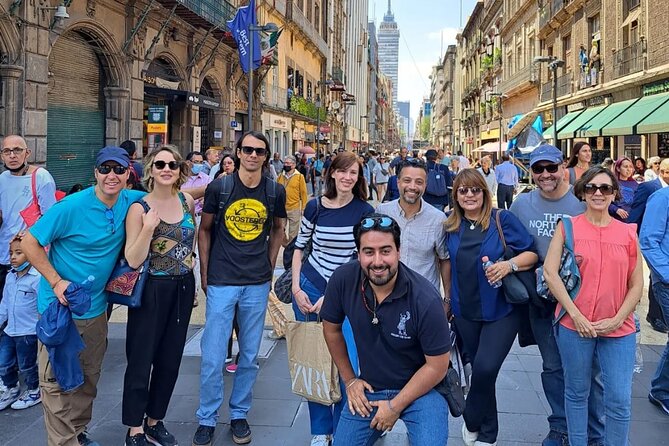
The tour begins at the Museo Mural Diego Rivera, then moves through Alameda Central and the grand buildings around the historic core before reaching the Aztec remains near the Zócalo. That order matters. You first get a modern interpretation of Mexico’s past, then see how power shaped the city under Spanish rule and the Porfirian government, and finally reach the foundations of Tenochtitlan.
I like this structure because Mexico City can feel confusing at first. Streets, monuments, churches, ruins, and government buildings sit close together, but their connections are not always obvious. A good guide gives you the thread tying them together.
The experience lasts about 2 hours 30 minutes to 3 hours 10 minutes. The difference probably comes from walking speed, questions, group size, and how much time the guide spends at each stop. The maximum group size is 25, which is large enough for a social outing but small enough to keep the route manageable if the guide handles the group well.
The tour is offered in English and includes a certified guide. Since the route covers a lot of ground, wear comfortable shoes and think of this as a city walk with short cultural visits, not as a museum day.
More walks through the historic centre:
- Historic Downtown Walking Tour
★ 5.0 · 1,289 reviews - Historic Center Food Tour in Mexico City
★ 5.0 · 1,263 reviews - Mexico City: Historic Downtown Walking Tour
★ 4.8 · 1,039 reviews
Diego Rivera’s mural sets the tone
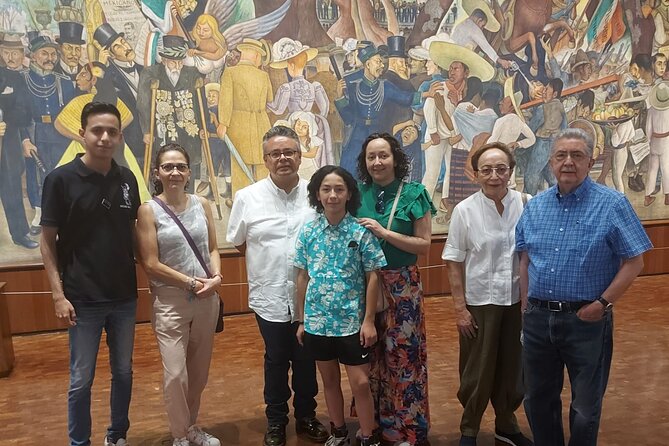
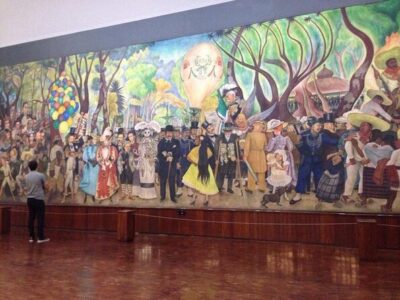
The first stop is the Museo Mural Diego Rivera, where you spend about 25 minutes. The key work is Rivera’s mural Dream of a Sunday Afternoon in Alameda Central, a sweeping scene filled with figures from Mexico’s political and cultural past.
The mural was censored because Rivera included the phrase God does not exist. That detail opens the door to Mexico’s long arguments about religion, government, education, and public life. The guide also explains the people shown in the mural and how they affected the country’s political, cultural, and ideological changes.
This is a smart opening stop. Instead of starting with dates and names, you begin with a single artwork packed with personalities and conflict. I would pay close attention here, because the explanation gives you useful context for the buildings and events that follow.
Admission is included. Still, 25 minutes is not enough for a slow museum visit, so you should expect a focused look at the mural rather than time to inspect every display.
Alameda Central and the city’s public life
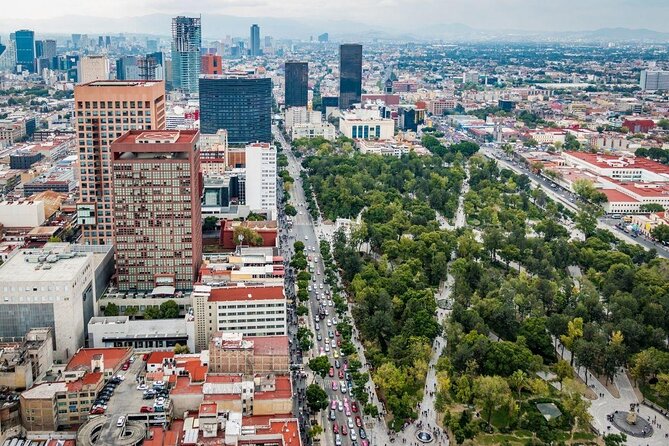
A short walk brings you to Alameda Central, described as the first public park in the Americas. You spend about 10 minutes here, looking at its classical sculptures and the way city residents use the space.
This is less about a formal sightseeing stop and more about seeing Mexico City as a living place. Parks reveal how people meet, rest, pass through, and share urban space. After the intense mural, Alameda gives you a change of pace.
Ten minutes is enough for an explanation and a quick look, but not for a leisurely stroll through every path. If you want photographs or a quiet break, you may need to take advantage of pauses between stops rather than expecting a long park visit.
Palacio de Bellas Artes, the grand centerpiece
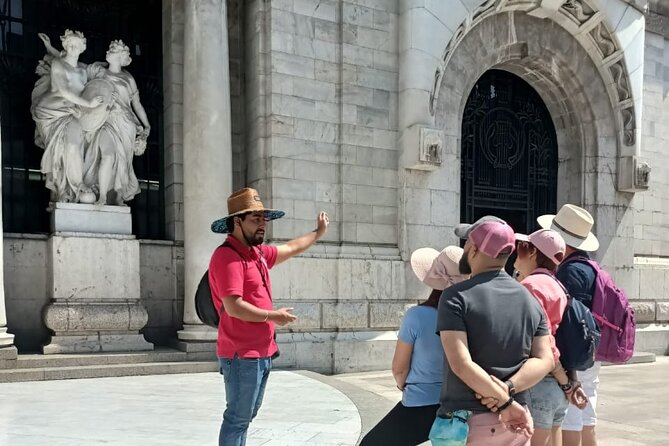
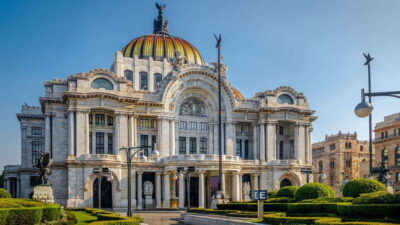
The Palacio de Bellas Artes receives about 20 minutes, and it is the visual centerpiece of the walk. Its white exterior, domes, and dramatic scale make it one of Mexico City’s most recognizable buildings.
The guide explains its history and its role in the city. The building also fits the tour’s larger theme of contrasts. Mexico City’s grand cultural institutions sit close to ordinary streets and older structures, so the route shows how the city grew in layers rather than according to one neat plan.
Admission is included, but do not assume you will have the time for a full visit to every gallery or mural. The practical value here is the guide’s explanation of the building, its design, and its place in Mexico’s cultural life. If Bellas Artes is high on your personal list, plan a separate visit so you can take it at a slower pace.
More history walks in Mexico City:
- Walking Tour of the Historic Center of Mexico City
★ 5.0 · 870 reviews - Mexico City Historical Centre Food Tour with 7 Authentic Tastings
★ 5.0 · 723 reviews - Walking Tour in Mexico City for Exploring their Cultural Heritage
★ 5.0 · 245 reviews - Walking Tour – Impressive murals in Historical Center of Mexico City
★ 5.0 · 224 reviews
Porfirian ambition at Palacio Postal
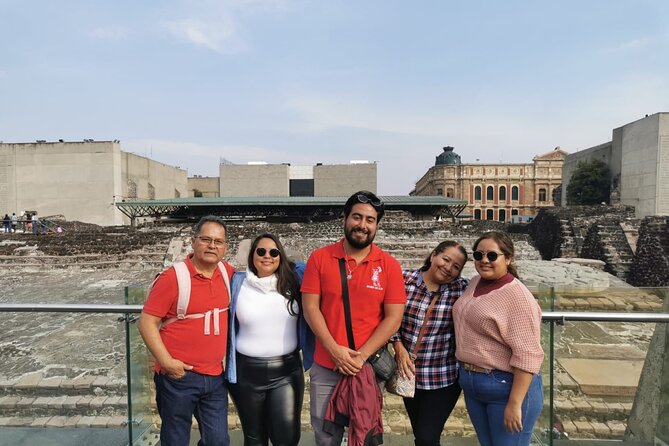
The Palacio Postal takes about 15 minutes. It belongs to the modernization campaign associated with Porfirio Díaz, whose government wanted Mexico City to look polished, modern, and connected to the wider world.
The building’s ornate interior and exterior details make it a rewarding quick stop. You get a clear example of how public architecture can serve a political message: a government uses grand design to announce order, progress, and national ambition.
This is one of the places where a guide adds real value. Without context, you might simply admire the decoration and move on. With an explanation of the Porfirian project, the building becomes evidence of a particular period and its goals.
Again, the time is short. Look up, notice the details, and listen closely rather than expecting an extended architectural study.
Silver and science at Palacio de Minería
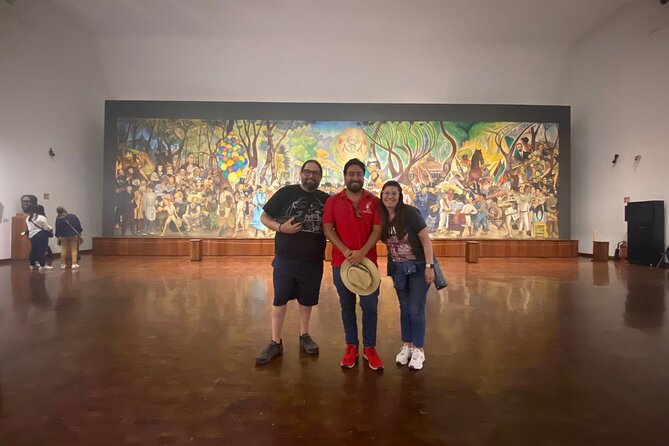
The next stop is Palacio de Minería, with about 10 minutes devoted to it. The focus is Mexico’s continuing importance as a silver-exporting country, still ranked first in silver exports according to the tour description.
The building connects mineral wealth with education, science, and national development. It also helps explain why Mexico City accumulated so many impressive institutions. Money from mining shaped trade, government, architecture, and the country’s relationship with Europe and the wider world.
Ten minutes will give you the main idea and a look at the architecture. If you enjoy economic history or historic buildings, this short stop may leave you wanting more. That is a fair trade on a route designed to cover the historic center in one morning or afternoon.
Museo Nacional de Arte and a remarkable sculpture
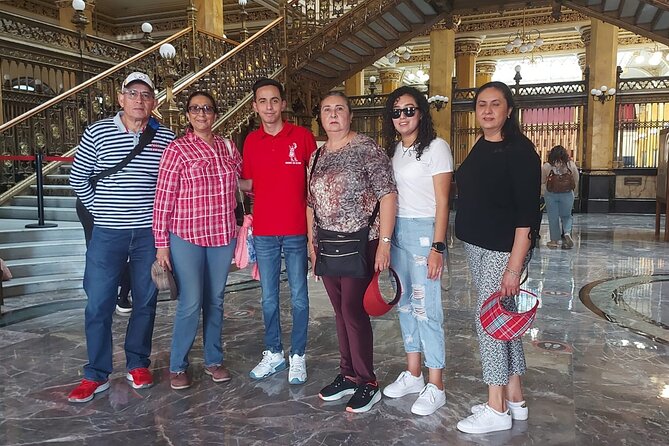
At the Museo Nacional de Arte, you spend roughly 10 minutes. The stop includes a look at the building’s architectural details and a sculpture made by an artist with one hand.
That unusual fact gives the stop a memorable human angle. Rather than treating the museum only as a grand shell, the guide points you toward a specific work and the story behind it.
As with Bellas Artes, the short visit is best understood as an introduction. You will not have time to explore the full collection. If art is your main interest, use this walk to decide which museum deserves a longer return visit.
Teatro de la Ciudad and Esperanza Iris
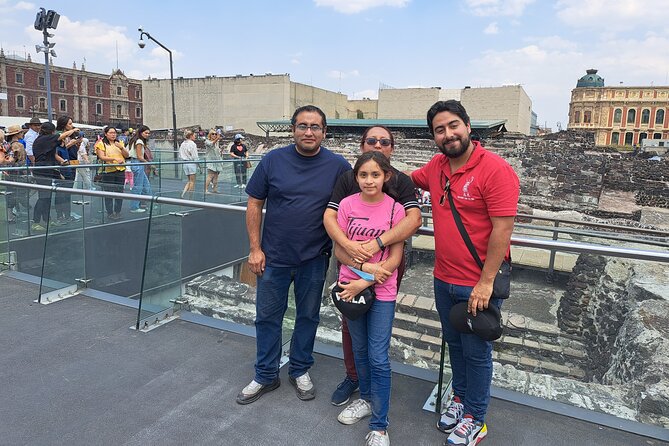
The Teatro de la Ciudad stop lasts about 15 minutes. Here the guide explains the history of theater in Mexico and tells the tragic story of Esperanza Iris, the theater’s namesake.
Across from the theater, you also hear about a former eighteenth-century asylum for women labeled as insane. That detail adds a darker side to the city’s cultural story. The route does not show only elegant facades and national pride. It also points to institutions, attitudes, and lives that reveal how earlier society treated vulnerable people.
This contrast is one of the tour’s strengths. You move from performance and glamour to confinement and suffering within a few steps. The guide’s storytelling matters here, since the meaning of the place is not obvious from the street.
Admission is free at this stop. The theater itself is not presented as a long performance or backstage visit, so expect an exterior or brief sightseeing explanation rather than a show.
Beneath Centro Cultural España
At the Centro Cultural España en México, the route goes underground to see ruins connected with the school for the sons of Aztec nobles. You spend about 20 minutes here.
This is one of the most striking transitions of the day. Above ground, you are in the modern historic center. Below ground, you encounter physical remains from before the Spanish conquest. Mexico City’s layers become literal, not just a metaphor.
The stop helps you understand that the Spanish colonial city was built over Tenochtitlan. Buildings, streets, and institutions did not erase the earlier city completely. Parts of it remain beneath the present-day center.
Admission is free. The exact amount of time you spend below ground can depend on the group and the guide’s explanation, but 20 minutes allows for a focused look at the ruins and their significance.
Finishing at Templo Mayor
The final stop is the Museo del Templo Mayor area, where the guide explains how the Aztecs built Tenochtitlan. You learn about the city’s organization, worldview, sacrifices, and the process of conquest through models and commentary.
There is an important practical detail here: the experience ends with an explanation from outside the main temple area. You do not receive a full visit through the Templo Mayor Museum galleries as part of this walk. The models and outdoor explanation help you picture the old city, but anyone wanting the archaeological exhibits should plan extra time afterward.
Ending here works well. You have just walked through the colonial and modern city, and now the guide brings you back to the foundations of Tenochtitlan. The final explanation also makes the earlier underground ruins easier to understand.
The meeting point is the Museo Mural Diego Rivera at Calle Colón Balderas, and the walk ends at the Templo Mayor Museum area on Seminario 8. Both points are in Centro Histórico and near public transportation. You should allow time to orient yourself at the start, especially if you are unfamiliar with Mexico City’s central streets.
The guides are a major part of the value
The strongest part of this experience is likely to be the person leading it. Diego is described as clear in English, relaxed, and willing to adapt the route for a group of Americans in their sixties and seventies. He also offered lunch ideas and advice on where to catch an Uber toward Roma after the walk.
Delta is praised for being personable, engaging, and good at managing the schedule. That skill matters here because nine stops can easily turn into a rushed march. Jorge is noted for his strong English and ability to answer unusual questions, while Jaime is described as kind, flexible, and especially attentive to individual needs.
Those details tell you what to look for from the guide. You want someone who can explain political and religious subjects without losing the group, keep the pace moving, and answer questions without allowing one stop to consume the whole morning.
The guide assignment may vary. You cannot book a particular person based on the information provided, so consider the named guides examples of the level of service you may receive, not a guarantee.
What $83.64 buys you
At $83.64 per person, this is not a bargain-priced stroll. Its value depends on how you use it.
You are paying for a certified English-speaking guide, a carefully ordered route, and admission at several stops. Those included entries cover the Diego Rivera Mural Museum, Palacio de Bellas Artes, Palacio Postal, Palacio de Minería, and Museo Nacional de Arte. The Teatro de la Ciudad, Centro Cultural España, and Templo Mayor portions are listed as free.
The price makes the most sense for a first visit, a short stay, or anyone who wants the historic center explained rather than simply photographed. A private guide could cost more, while a self-guided walk costs less but requires your own research and navigation.
I would not book this expecting full access to every museum. You are getting a guided sampler with historical connections. If you prefer to spend an hour or two at one painting, palace, or archaeological site, put that money toward a dedicated admission and visit instead.
Pace, group size, and practical limits
The route is limited to 25 people, and most people can participate. Service animals are allowed, and the meeting points are near public transportation.
The main physical demand is the steady walking and standing. The supplied information does not give an exact distance, stair count, or accessibility design for each building, so you should ask the operator directly if you have mobility concerns.
Book earlier in the day if possible. That advice comes directly from the practical rhythm of the center: fewer crowds make it easier to hear the guide, gather near buildings, and keep the group together. You will also have the rest of the day to return to the sites that caught your attention.
Tips, lunch, and drinks are not included. Bring water and plan your meal after the walk, especially since the route ends near the Templo Mayor area, where you can continue exploring.
Free cancellation is available if you cancel at least 24 hours before the local start time. Inside that window, the payment is not refunded, and changes are not accepted.
Who should book this walk?
I recommend it for first-time visitors who want a strong introduction to Centro Histórico. It also suits families, solo visitors, and older adults who prefer a guide to connect the sights and adjust the pace.
It is especially useful if you are curious about the relationship between Aztec, colonial, Porfirian, and modern Mexico. The route does not isolate these periods. It shows how one city was built over another and how art and architecture reflect arguments about power.
You should think twice if you dislike quick stops or already know the center well. The tour covers a lot, but no single museum receives enough time for a full visit. The reward is range and explanation, not a slow, specialized study.
Final verdict: a strong first look at Centro Histórico
I would book this walk if I had limited time in Mexico City and wanted the center to make sense quickly. The sequence from Rivera to Templo Mayor is intelligent, the subjects are varied, and the best guides add warmth, flexibility, and useful local advice.
The price is fair only if you value the guide and included admissions. The short visits and outdoor ending at Templo Mayor are the key limitations. Go in expecting a well-paced introduction, not a full museum tour, and you should get a rewarding first look at the city’s many layers.
FAQ
How long does the walking tour last?
The tour lasts approximately 2 hours 30 minutes to 3 hours 10 minutes.
What language is the tour offered in?
The tour is offered in English.
Where does the tour begin?
It begins at the Museo Mural Diego Rivera on Calle Colón Balderas in Centro Histórico, Mexico City.
Where does the tour end?
It ends at the Templo Mayor Museum area on Seminario 8 in Centro Histórico. The final explanation of the main temple is given from outside.
Is admission included?
Admission is included at the Museo Mural Diego Rivera, Palacio de Bellas Artes, Palacio Postal, Palacio de Minería, and Museo Nacional de Arte. The stops at Teatro de la Ciudad, Centro Cultural España en México, and Museo del Templo Mayor are listed as free.
Does the tour include lunch or drinks?
No. Lunch, food, and drinks are not included.
How large can the group be?
The maximum group size is 25 people.
Can I cancel for a full refund?
Yes. You can cancel at least 24 hours before the experience start time for a full refund. Cancellations or changes made less than 24 hours before the start time are not refunded or accepted.
More Walking Tours in Mexico City
- Frida Kahlo VIP [Museum Tickets Included] Walk, Markets & Churros
★ 5.0 · 982 reviews - Anthropology Museum Private Experience Walking Tour
★ 5.0 · 355 reviews - Muralist Art Semi Private Walking Tour in Mexico City Downtown
★ 5.0 · 188 reviews - Coyoacán Walking Tour: Access to Frida Kahlo Museum & Tacos
★ 5.0 · 181 reviews
Just added around Mexico City
- Mexico City: Hop-on Hop-off City Tour by Turibus 2-Day Pass★ 4.0 · 10 reviews
- Anthropology Museum, Chapultepec Castle & Cable Car Tour★ 4.5 · 10 reviews
- Multi-Variety Mole Class in a Condesa home or art gallery rooftop★ 5.0 · 10 reviews
- PRIVATE TOUR Colonial Town Taxco and Cuernavaca from CDMX.★ 5.0 · 10 reviews
- El Centro Street Food Walking Tour★ 5.0 · 10 reviews
- Private Round-Trip Transportation to Teotihuacan Pyramids★ 5.0 · 10 reviews
- Teotihuacan and My Grandma’s Food Tour★ 5.0 · 10 reviews
- Private Walking Tour Legends and Events Historic Center CDMX★ 4.8 · 10 reviews
Historic Centre Walking Tours, compared.



Muralist Art Semi Private Walking Tour in Mexico City Downtown
Read our review →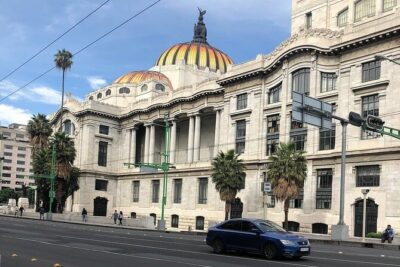
Mexico City Layover Tour: Downtown City Sightseeing
Read our review →
Browse the lists this tour appears in