
Reviewed · HISTORICAL TOURS
Gay Side of History through Plazas & Temples
Mexico City’s LGBTQ+ past is not kept in one museum. It is woven through temples, churches, government buildings, and public squares. This three-and-a-half-hour walk follows those threads from the Mexica capital through Spanish rule and into modern Mexico, with guide Carlos supplying the historical context.
I like the opening coffee with a rooftop view of Templo Mayor, and I like the small-group format, limited to 10 people. The main caution is that the operator has had at least one last-minute cancellation, so I would confirm the tour before setting your whole day around it.
In This Review
- Key points at a glance
- Why this walk is different from a standard Mexico City tour
- Starting above the ruins at Librería Porrúa
- Templo Mayor and the Catholic Cathedral
- The Zócalo, Mexico City’s civic stage
- Centro Cultural de España and the old customs district
- Plaza de Santo Domingo and the Portal of Evangelists
- What Carlos adds to the walk
- What the $99 price includes
- Who should book this experience
- Timing, meeting points, and one practical warning
- Should you book Gay Side of History through Plazas & Temples?
- FAQ
- How long does the tour last?
- How far will I walk?
- What time and where does the tour begin?
- Where does the tour end?
- What is included in the price?
- Is admission included?
- How many people can join the tour?
- Can I cancel for a full refund?
Key points at a glance
- Start with coffee above Templo Mayor: The first hour uses a rooftop balcony at Librería Porrúa to frame the ruins, the Palace of the Royal Duty, and Frida Kahl’s hideaway rooms.
- History told through an LGBTQ+ lens: You cover Mexica society, Spanish conquest, Catholic power, the Inquisition, and later Mexican history rather than taking a standard point-and-name walk.
- Carlos is the key to the experience: He is described as an engaging storyteller who welcomes questions and adjusts the conversation to your interests.
- A compact route through the Historic Center: You walk about one mile over three hours, with stops at the Zócalo, Centro Cultural de España, and Plaza de Santo Domingo.
- Useful take-home material: The digital LGBT+ map and Rainbow Mexico PDF give you resources to revisit after the walk.
- Best for curious adults: The minimum age is 18, and you need moderate fitness for several hours on foot in all weather.
Why this walk is different from a standard Mexico City tour
Many Historic Center walks point out the cathedral, National Palace, Templo Mayor, and grand plazas. This one asks a different question: where do LGBTQ+ lives, relationships, persecution, and influence appear in the official story of Mexico?
That change in viewpoint matters. You still learn about the Mexica capital, Spanish rule, Catholic institutions, and the growth of Mexico City. But the guide connects those subjects to people and communities often left out of a conventional tour.
The route includes the Spanish Inquisition and its role in executing men convicted of homosexuality between 1521 and 1821. It also addresses Santo Domingo Church and the old Camino Real, described here as a trading route and a safe haven for gay male couples. These are serious subjects, but the walk is not presented as a grim lecture.
Carlos is central to the experience. He has been praised for turning a large amount of material into an entertaining conversation. One particularly useful feature is his habit of giving historical background before you examine a site, rather than rushing from one facade to the next.
More history walks in Mexico City:
- Historic Downtown Walking Tour
★ 5.0 · 1,289 reviews - Historic Center Food Tour in Mexico City
★ 5.0 · 1,263 reviews - Mexico City: Historic Downtown Walking Tour
★ 4.8 · 1,039 reviews
Starting above the ruins at Librería Porrúa
Meet at 10:00 a.m. at República de Argentina 15 in the Centro Histórico. The first stop is Librería Porrúa, a bookstore with a rooftop balcony overlooking several major sights.
This is a smart beginning. From the balcony, you can see the ruins of Templo Mayor, the Palace of the Royal Duty, and the hideaway rooms associated with Frida Kahl. The setting gives Carlos room to explain the city before the walking portion begins, and coffee or tea makes the early start easier.
The first stop lasts about an hour, which is longer than a quick photo stop. That time is valuable because the Historic Center can feel like a jumble of periods and powers. Mexica foundations, Spanish churches, government buildings, and modern city life sit almost on top of one another.
Templo Mayor was the main temple of the Mexica people in their capital city. You do not simply hear its name and move on. The view from above helps you understand how the archaeological site fits into the present-day city.
The balcony is also one of the more distinctive parts of the outing. You are not beginning in a crowded square with a guide holding up a flag. You are starting with a seated conversation and a broad view.
The drawback is simple: the route depends heavily on listening. If you want a tour built around entering many monuments, taking photographs, or covering a long list of attractions, this may feel slow. Its strength is interpretation, not a parade of admissions.
Templo Mayor and the Catholic Cathedral
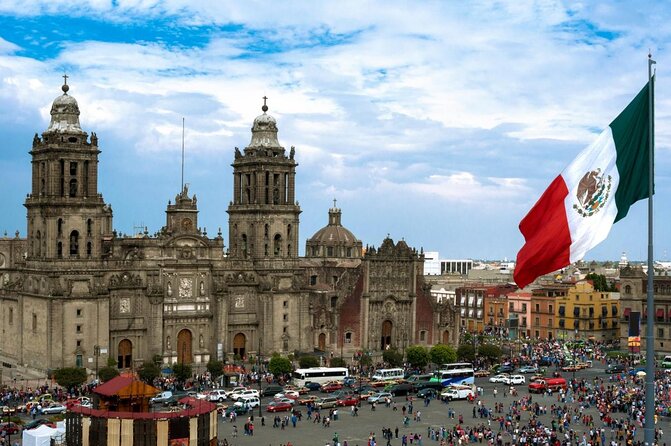
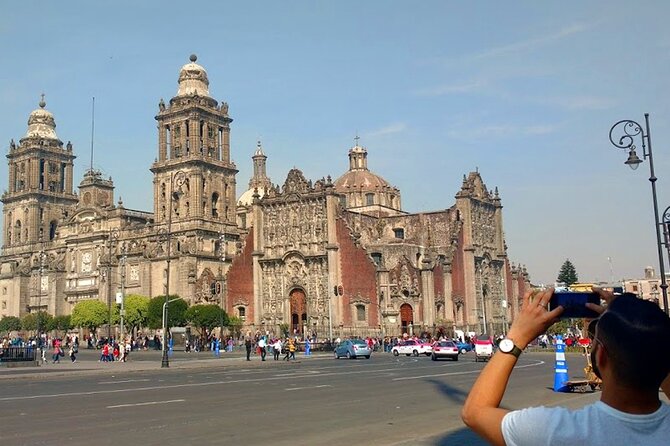
From the rooftop, the tour turns toward the two institutions that define much of the Historic Center: Templo Mayor and the Metropolitan Cathedral.
Templo Mayor was the central temple of the Mexica capital. The Metropolitan Cathedral is the cathedral of the Catholic Archdiocese of Mexico. Placing these sites in the same walk makes the shift from Mexica power to Spanish Catholic authority clear.
The LGBTQ+ focus gives this familiar contrast another layer. You are encouraged to consider how law, religion, conquest, and public power shaped the lives of people whose stories rarely appear on a standard city tour.
The Cathedral is especially important as part of the colonial story. The tour does not treat it only as an architectural stop. It helps place the institution within the system of authority that followed the Spanish conquest.
You should expect to spend time outside and around the sites rather than assume every building is entered. The supplied details identify admission at Librería Porrúa, while the public stops are listed as free. Ask Carlos directly if you want clarification about access on the day.
The Zócalo, Mexico City’s civic stage
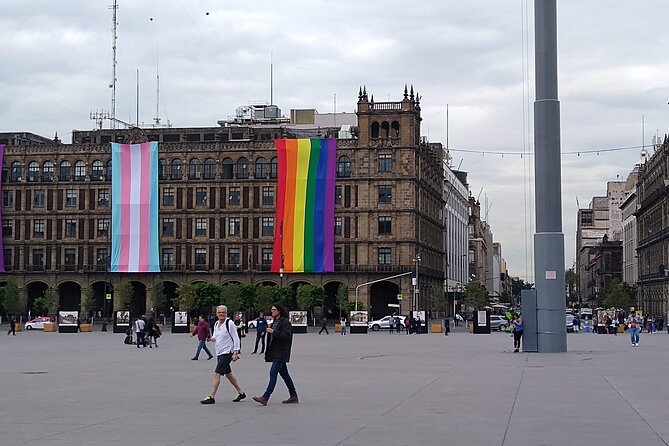
The walk continues to the Zócalo, the central plaza and meeting place of the city and country since the 16th century. The stop lasts about 30 minutes.
This is where the tour shifts from archaeology and religious power to civic life. The Zócalo has long been a place for public gatherings, demonstrations, ceremonies, and daily movement. Its scale can be overwhelming, so a guide who gives it political and social context is useful.
The National Palace borders the plaza. It is the seat of Mexico’s federal executive and, since 2018, has also served as the official residence of the President of Mexico. That fact gives the square an immediate connection to present-day government.
I like this part of the route because it shows that LGBTQ+ history is not confined to nightlife districts or modern pride events. It belongs in the center of national life, beside the buildings where power is displayed and decisions are made.
The half-hour stop also keeps the schedule manageable. You have time to take in the scale of the square without spending the entire morning in one place. Expect street activity, changing weather, and plenty of visual distractions. Stay close enough to hear the guide.
A completely different day out, same corner of Mexico City:
- Teotihuacan, Guadalupe Shrine & Tlatelolco Day Tour with Lunch
★ 5.0 · 11,603 reviews - Xochimilco, Coyoacan and Frida Kahlo with Optional Lunch
★ 4.5 · 7,320 reviews - Balloon flight + Breakfast in cave + Pyramids + Pick up CDMX.
★ 5.0 · 6,335 reviews - Teotihuacan pyramids morning or afternoon without tourist traps
★ 5.0 · 6,186 reviews
Centro Cultural de España and the old customs district
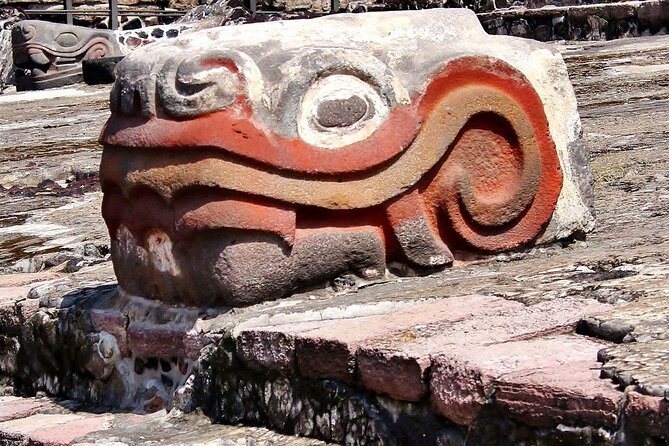
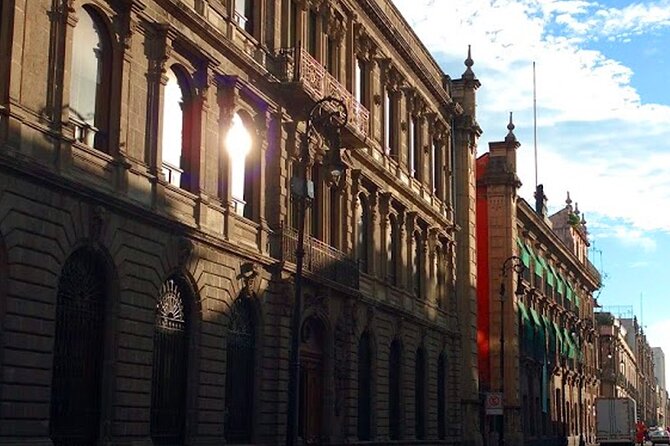
Next comes the Centro Cultural de España at 18 Guatemala Street, behind the Cathedral. The restored mansion was in ruins in the late 1990s before the Mexico City government ceded it to the Spanish government. Restoration finished in time for an inauguration by the King of Spain and Mexico’s President in 2002.
This stop offers a useful reminder that the Historic Center is not frozen in the colonial past. Buildings are reused, governments change, and old structures can gain new public purposes.
The cultural center’s location also helps you read the surrounding streets. From there, the route takes in the Old Customs Building, on the east side of Santo Domingo Plaza between República de Venezuela and Luis González Obregón streets.
Customs buildings are practical places, but they reveal how trade and administration shaped the city. Here, the tour links architecture to movement, commerce, and the official systems that controlled colonial Mexico.
The stop at the cultural center lasts about 30 minutes and admission is free. Since the outing is only about a mile in total, the pace should be comfortable for most people with moderate fitness. Still, three and a half hours on city streets is not the same as a short stroll. Wear shoes you can trust and dress for the weather.
Plaza de Santo Domingo and the Portal of Evangelists
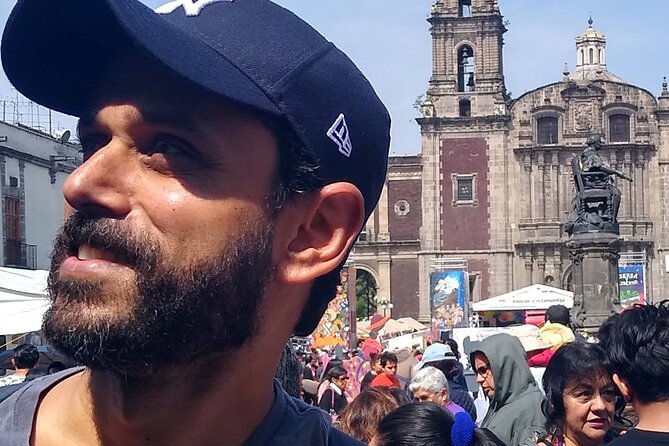
The final major stop is Plaza de Santo Domingo, the Historic Center’s second-largest plaza. The route ends nearby at the former Palace of the Holy Inquisition, at the corner of República de Venezuela and República de Brasil.
The plaza is flanked on its western side by the Portal de Evangelistas, a Tuscan colonnade with round arches. Scribes work there with typewriters and antique printing machines, a detail that gives the square a living connection to its older role as a place of writing and paperwork.
This is the kind of stop that benefits from a guide. On your own, you might photograph the arches and walk on. With context, the portal becomes part of a larger story about documents, authority, communication, and the people who helped Mexico City function.
The plaza also carries the weight of the Spanish Inquisition. The tour addresses the civilian institution’s execution of people convicted of homosexuality during the period from 1521 to 1821. That material may be uncomfortable, and it should be. The value is in facing how law and religion were used against sexual minorities rather than treating LGBTQ+ history as only a story of celebration.
Santo Domingo Church sits on the north side of the plaza. It marks the beginning of the El Camino Real route from Old Mexico to New Mexico, and the tour connects it with a safe haven for gay male couples. This is one of the route’s most unusual historical details, and one reason the experience offers something different from a general city introduction.
What Carlos adds to the walk
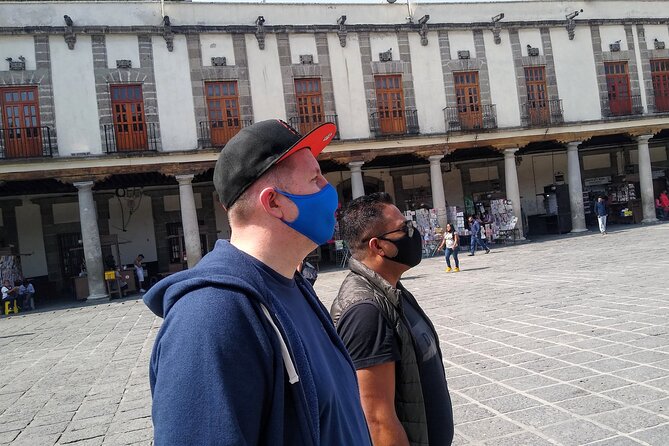
The guide can make or break a history tour, and Carlos appears to be the main reason this one works so well. He has a reputation for combining serious research with humor, personal attention, and a willingness to answer questions.
That last point matters. Mexico’s history can quickly expand from the Mexica world to Spanish royal politics, the Inquisition, the independence period, Benito Juárez, Porfirio Díaz, the 1910 Revolution, and modern LGBTQ+ life. Carlos has used that wider frame during longer conversations, especially when the group asks questions.
The tour is also suitable for an ally or anyone interested in Mexican history. You do not need to identify as LGBTQ+ to get value from the walk. The subject is specific, but the historical material is broad.
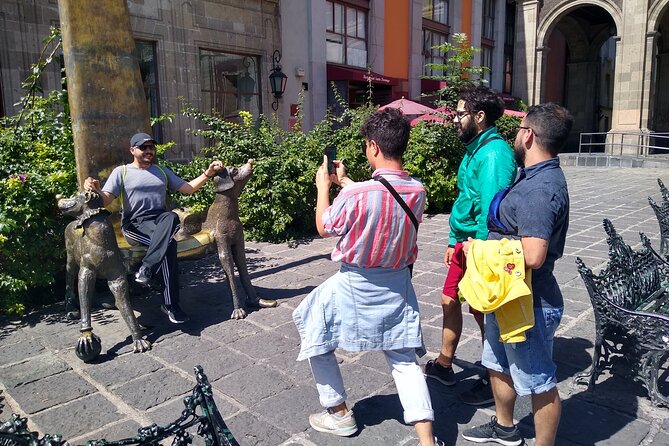
A small group of no more than 10 people gives you a better chance to hear clearly and ask questions. It also allows Carlos to learn what interests you and adjust the discussion. That personal approach is a real advantage over a large group moving at the pace of the slowest person.
Do not expect a neutral list of dates and building names. Expect a point of view, careful attention to overlooked stories, and a conversation that may continue beyond the official end if the group has questions.
What the $99 price includes
The cost is $99 per person. That is not the cheapest way to see the Historic Center, since you can walk around the Zócalo and view several exterior landmarks without paying a guide.
The value comes from the structure and specialist subject. You receive a local guide, coffee or tea, bottled water, a digital LGBT+ map of the Historic Center, extra resources, and a downloadable PDF of Rainbow Mexico: Bridging Forgotten Pasts and Vibrant Futures.
The rooftop start is also included, with admission listed for Librería Porrúa. The public stops, including the Zócalo, Centro Cultural de España, and Plaza de Santo Domingo, do not carry an admission charge in the tour details.
I would consider the price fair if you want interpretation you cannot easily get from a guidebook. It is less compelling if you only want landmark photos or a quick orientation walk. The tour earns its fee through the guide’s preparation, the focused LGBTQ+ subject, and the digital material you can use afterward.
Coffee, tea, and water are modest inclusions, but useful ones. You do not need to plan a separate drink stop at the start, and the water is welcome on a three-hour city walk.
Who should book this experience
I would choose this tour if you enjoy history, social questions, and the stories behind famous buildings. It is especially well suited to LGBTQ+ visitors who want Mexican history presented through their own community’s experiences, rather than added as a brief note to a general city tour.
It also suits solo visitors and couples who prefer a conversation over a large scripted group. The age minimum is 18, and the material includes persecution and state violence, so it is aimed at adults.
An ally can also get plenty from it. The walk presents Mexico City as a place shaped by many kinds of people, not just rulers, soldiers, priests, and presidents.
I would think twice if you dislike walking, need a fast-paced checklist of sights, or want extensive interior visits. You cover only about one mile, but the total time is long because the guide spends time explaining the meaning of each place.
The tour operates in all weather. Bring suitable clothing, and remember that the city’s public spaces may be crowded or noisy even when the walking distance is modest. Service animals are allowed, and the starting and ending areas are near public transportation.
Timing, meeting points, and one practical warning
The tour begins at 10:00 a.m. at República de Argentina 15 in the Centro Histórico. It finishes at the former Palace of the Holy Inquisition, República de Brasil 33, at the corner of República de Venezuela and República de Brasil in Plaza de Santo Domingo.
The end point is useful for continuing your day in the Historic Center, but plan your next activity with some flexibility. The advertised duration is approximately three hours and 30 minutes, and thoughtful questions can extend the conversation.
Free cancellation is available up to 24 hours before the start time for a full refund. Changes or cancellations made less than 24 hours before the start time are not accepted for a refund.
There is one service concern worth noting. A reported cancellation came only an hour before departure, with no clear reason and no response to messages. That appears to be an exception among the otherwise strong feedback, but I would still confirm the morning tour before leaving your hotel and keep a backup plan for the day.
Should you book Gay Side of History through Plazas & Temples?
Book it if you want Mexico City’s famous center explained through LGBTQ+ lives, power, religion, and law. The best parts are the rooftop opening, the serious but lively storytelling, the small group, and the unusual route from Templo Mayor to Santo Domingo Plaza.
The $99 price makes sense for a traveler who values a specialist guide and take-home resources. It is not the right pick for someone seeking a cheap orientation stroll or a museum-heavy outing.
If Carlos is leading your date, I would give this experience strong consideration. You should leave with more than a list of monuments. You will have a clearer sense of how Mexico City’s public spaces carry stories that official history often leaves out.
FAQ
How long does the tour last?
The tour lasts approximately three hours and 30 minutes.
How far will I walk?
You will walk about one mile over the three-hour route.
What time and where does the tour begin?
It begins at 10:00 a.m. at República de Argentina 15 in Mexico City’s Centro Histórico.
Where does the tour end?
It ends at the former Palace of the Holy Inquisition, República de Brasil 33, at the corner of República de Venezuela and República de Brasil in Plaza de Santo Domingo.
What is included in the price?
The price includes a local guide, coffee or tea, bottled water, a digital LGBT+ map of the Historic Center with extra resources, and a downloadable PDF of Rainbow Mexico: Bridging Forgotten Pasts and Vibrant Futures.
Is admission included?
Admission is included at Librería Porrúa. The Zócalo, Centro Cultural de España, and Plaza de Santo Domingo are listed as free stops.
How many people can join the tour?
The group has a maximum of 10 people.
Can I cancel for a full refund?
Yes. You can cancel at least 24 hours before the experience’s start time for a full refund. Cancellations or changes made less than 24 hours before the start time are not accepted for a refund.
Just added around Mexico City
- Mexico City: Hop-on Hop-off City Tour by Turibus 2-Day Pass★ 4.0 · 10 reviews
- Anthropology Museum, Chapultepec Castle & Cable Car Tour★ 4.5 · 10 reviews
- Multi-Variety Mole Class in a Condesa home or art gallery rooftop★ 5.0 · 10 reviews
- PRIVATE TOUR Colonial Town Taxco and Cuernavaca from CDMX.★ 5.0 · 10 reviews
- El Centro Street Food Walking Tour★ 5.0 · 10 reviews
- Private Round-Trip Transportation to Teotihuacan Pyramids★ 5.0 · 10 reviews
- Teotihuacan and My Grandma’s Food Tour★ 5.0 · 10 reviews
- Private Walking Tour Legends and Events Historic Center CDMX★ 4.8 · 10 reviews
Historical Tours, compared.

Mexico City Historical Centre Food Tour with 7 Authentic Tastings
Read our review →
Walking Tour in Mexico City for Exploring their Cultural Heritage
Read our review →
Walking Tour – Impressive murals in Historical Center of Mexico City
Read our review →
Guided walking tour through the most historic parts of the city.
Read our review →Browse the lists this tour appears in